, um zu prüfen, ob Sie einen Vollzugriff auf diese Publikation haben.
Monographie Kein Zugriff
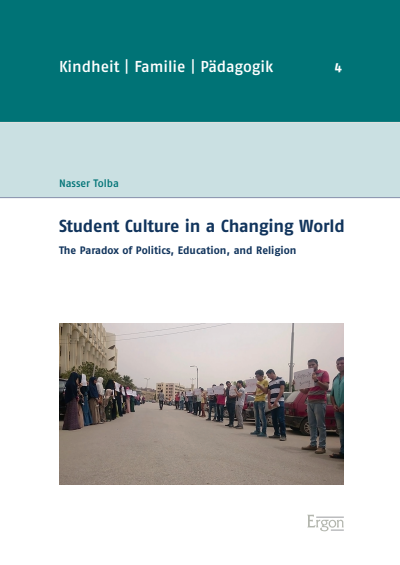
Student Culture in a Changing World
The Paradox of Politics, Education, and Religion- Autor:innen:
- Reihe:
- Kindheit, Familie, Pädagogik, Band 4
- Verlag:
- 2019
Zusammenfassung
Der Arabische Frühling hat sich auch auf das Leben an den Universitäten ausgewirkt. In dieser Studie werden die Veränderungen, die sich nach der Ägyptischen Revolution 2011 innerhalb der studentischen Kultur ergeben haben, untersucht und die politischen, religiösen und gesellschaftlichen Dynamiken dahinter identifiziert. So hat das politische Engagement der Studierenden nach der Revolution zugenommen, zusätzlich werden Schnittstellen zwischen studentischem Aktivismus in Ägypten und auf internationaler Ebene sichtbar.
Publikation durchsuchen
Bibliographische Angaben
- Auflage
- 1/2019
- Copyrightjahr
- 2019
- ISBN-Print
- 978-3-95650-588-1
- ISBN-Online
- 978-3-95650-589-8
- Verlag
- Ergon, Baden-Baden
- Reihe
- Kindheit, Familie, Pädagogik
- Band
- 4
- Sprache
- Englisch
- Seiten
- 296
- Produkttyp
- Monographie
Inhaltsverzeichnis
KapitelSeiten
- Titelei/Inhaltsverzeichnis Kein Zugriff Seiten 1 - 28
- 1.1 Introduction Kein Zugriff
- 1.2 Questions of the Study Kein Zugriff
- 1.3 Purpose of the Study Kein Zugriff
- 1.4 A Note on Language Used in This Text Kein Zugriff
- 1.5 Definition of Terms Kein Zugriff
- 2.1.1 The Elements of Student Culture Kein Zugriff
- 2.2.1 Sources of Student Culture Kein Zugriff
- 2.2.2 The Elements of Student Culture at Egyptian Universities Kein Zugriff
- 2.3 University Student Culture after Revolutions Kein Zugriff
- 2.4 University Student Culture in Egypt after the January 25th Revolution of 2011 Kein Zugriff
- 3.1 The January 25TH Revolution of 2011 Kein Zugriff
- 3.2 The Events of the Revolution Kein Zugriff
- 3.3 The Aims of the January 25th Revolution of 2011 in Egypt Kein Zugriff
- 3.4.1.1 The political reasons. Kein Zugriff
- 3.4.1.2 The economic reasons. Kein Zugriff
- 3.4.1.3 The social reasons. Kein Zugriff
- 3.4.2.1 Kifaya movement (Enough). Kein Zugriff
- 3.4.2.2 The popular democratic movement for change (Al-Harakah Al-Dimauqratiah Al-Shaʿbiah lill Taghiir). Kein Zugriff
- 3.4.2.3 The 6th April movement (Harakat 6 Apriil). Kein Zugriff
- 3.4.2.4 The 9th March movement (Harakat 9 mariis). Kein Zugriff
- 3.4.2.5 The Egyptian campaign against entailment (Al-Hamlah Al-Miṣrīyah ḍiid Al- Tauwreth) “Mayhkomsh.” Kein Zugriff
- 3.4.2.6 The National Association for Change (Al-Jamʿiah Al-Wataniah lill). Kein Zugriff
- 3.4.2.6 Revolutionaries Socialists’ Movement (Al-Ishtarkiien Al-Thawriien). Kein Zugriff
- 3.4.2.7 Youth for justice and freedom (Shabab Men Agil Al-ʿAdalah wal Hurriah). Kein Zugriff
- 3.4.2.8 We Are All Khaled Said “kullina Khaled Said.” Kein Zugriff
- 3.5.1.1 Judicial trials for the former regime figures. Kein Zugriff
- 3.5.1.2 The return of the authority’s legitimacy. Kein Zugriff
- 3.5.1.3 Change the Constitution and end the totalitarian reign. Kein Zugriff
- 3.5.1.4 Dissolve the state’s security apparatus. Kein Zugriff
- 3.5.1.5 Increasing political awareness. Kein Zugriff
- 3.5.1.6 The balance between political forces. Kein Zugriff
- 3.5.1.7 Providing social justice among Egyptians. Kein Zugriff
- 3.5.1.8 Increasing community participation. Kein Zugriff
- 3.5.1.9 Emergence of a new culture. Kein Zugriff
- 3.5.2 Second: The Outcomes on the External Level Kein Zugriff
- 3.6.1 First: Political Challenges Kein Zugriff
- 3.6.2 Second: The Social Challenges Kein Zugriff
- 3.6.3 Third: Economic Challenges Kein Zugriff
- 3.6.4 Fourth: Cultural Challenges Kein Zugriff
- 4.1 Appropriateness of Qualitative Design Kein Zugriff
- 4.2 The Choice of Ground Theory and Case Study Research Method Kein Zugriff
- 4.3.1 A Public University in a Small Rural City Kein Zugriff
- 4.3.2 Fayoum University and Community Service. Kein Zugriff
- 4.4 Participants Kein Zugriff
- 4.5.1 Participant Observation Kein Zugriff
- 4.5.2 Semi-Structured Interview Kein Zugriff
- 4.5.3 Documents, Records, and Photography Kein Zugriff
- 4.6 Preparation and Organization of the Field Work. Kein Zugriff
- 4.7.1 Narrative Writing as a Way of Knowing Kein Zugriff
- 4.7.2 Researcher’s Position / Reflexivity Kein Zugriff
- 4.7.3 Validity and Reliability Issues Kein Zugriff
- 4.8 The difficulties of the study Kein Zugriff
- 5.1.1.1 Time management. Kein Zugriff
- 5.1.1.2 Attending lectures. Kein Zugriff
- 5.1.2 Clothes Kein Zugriff
- 5.1.3 Food Habits Kein Zugriff
- 5.1.4 Hobbies and Leisure Time Kein Zugriff
- 5.2.1.1 The university textbook. Kein Zugriff
- 5.2.1.2 Programs, courses, and teaching methods. Kein Zugriff
- 5.2.1.3 University professor. Kein Zugriff
- 5.2.1.4 Testing and evaluation methods. Kein Zugriff
- 5.2.1.5 Coordination Office and the absent justice. Kein Zugriff
- 5.2.2 University administration Kein Zugriff
- 5.2.3 Higher Education and the Labor Market Kein Zugriff
- 5.3.1.1 Social justice. Kein Zugriff
- 5.3.1.2 Democracy. Kein Zugriff
- 5.3.1.3 Freedom. Kein Zugriff
- 5.3.2.1 The Parliamentary elections. Kein Zugriff
- 5.3.2.2 The Presidential elections. Kein Zugriff
- 5.3.3.1 The Regulation of freedoms. Kein Zugriff
- 5.3.3.2 The Student Affairs Circles and the Regulation. Kein Zugriff
- 5.3.3.3 The Regulation and the Constitution. Kein Zugriff
- 5.3.4.1 The participants in the elections. Kein Zugriff
- 5.3.4.2 The mechanisms of advertising and propaganda in the Student Union elections. Kein Zugriff
- 5.3.4.3 Candidate and the selection criteria (list vs. individual). Kein Zugriff
- 5.3.4.4 Criteria for selecting candidates. Kein Zugriff
- 5.3.5.1 Demonstrations. Kein Zugriff
- 5.3.5.2 Political Violence inside the University Kein Zugriff
- 4.5.1.1 Solidarity relations. Kein Zugriff
- 4.5.1.2 Competitive relations. Kein Zugriff
- 4.5.1.3 Conflict relations. Kein Zugriff
- 4.5.2.1 Forms and distribution of power in the student community. Kein Zugriff
- 4.5.2.2 methods of reward and punishment. Kein Zugriff
- 5.5.1 Volunteerism as a Human Situation Kein Zugriff
- 5.5.2 Volunteerism as Creativity and Innovation Kein Zugriff
- 5.5.3 Volunteerism: Crises, Plans, and Mechanisms Kein Zugriff
- 5.6.1 Terms of Study and Educational Process Kein Zugriff
- 5.6.2 Greetings Kein Zugriff
- 5.6.3 Phrases of Praise and Disparagement Kein Zugriff
- 5.6.4 Political Phrases of Events and Situations Kein Zugriff
- 5.6.5 Phrases of Insults Kein Zugriff
- 5.6.5 Gestures Kein Zugriff
- 5.6.6 Written Symbols Kein Zugriff
- 6.1 The Features of Change in Student Culture of Fayoum University Kein Zugriff
- 6.2.1 The Axes of the Theory Kein Zugriff
- 6.2.2 Testing and Validating the Suggested Theory Kein Zugriff
- 6.3 Implications for Student Affairs Professionals and Policy Makers Kein Zugriff
- 6.4 Recommendations for Further Research Kein Zugriff
- 6.5 Strengths and Limitations of the Study Kein Zugriff
- Appendix A Kein Zugriff
- Appendix B Kein Zugriff
- Appendix C Kein Zugriff
- The Interview Guide Kein Zugriff
- Appendix E Kein Zugriff
- APPENDIX F Kein Zugriff
- BIBLIOGRAPHY Kein Zugriff Seiten 271 - 294
- ABSTRACT Kein Zugriff Seiten 295 - 296
Literaturverzeichnis (340 Einträge)
Es wurden keine Treffer gefunden. Versuchen Sie einen anderen Begriff.
- ʿAbbas, R. (1995). Tārykẖ jāmʿt al-Qāhirh [The history of Cairo University]. Cairo, Egypt: Al-Hyʼh Al-ʿāmh lill Kitāb [Egyptian General Authority for Book], [Arabic]. Google Scholar öffnen DOI: 10.5771/9783956505898
- ʿAbdallah, A. (1985). The student movement and national politics in Egypt 1923-1973. London, UK: Al-Saqi Books. Google Scholar öffnen DOI: 10.5771/9783956505898
- ʿAbdallah, N. (2013). Egypt’s revolutionary youth: From street politics to party politics. SWP comments11, the project “Elite change and new social mobilization in the Arab world”.German Institute for International and Security Affairs, Germany. Google Scholar öffnen DOI: 10.5771/9783956505898
- ʿAbdel-Fatah, S. (2013). Al-mārhalhal-intkālyah, krāāh fī al-mashhāād al-māsry [Transition period, insights in the Egyptian situation]. Cairo, Egypt: Dar Al-Bashīīr, [Arabic]. Google Scholar öffnen DOI: 10.5771/9783956505898
- ʿAbdel-Hamed, M. (1994). Al-ṭabaqah al-wasṭaī fī miṣr [The middle class in Egypt]. In Ahmed Abdallah(ed.), Humoum miṣr wa azmat al-ʿaquwal al-shabāb [The concerns of Egypt and the crisis of young minds] (pp. 11-28). Cairo, Egypt: Marakaz Al-Giil Lill Darasāt Al-Ijtmaizah Wa Darasāt Al-shabāb [The Generation Center for Social and Youth Studies], [Arabic]. Google Scholar öffnen DOI: 10.5771/9783956505898
- ʿAbdel-Satar, sh. (2016). īshāmāt al-ānshṭah al-ṭolābīh fī tanmīat maharāt al-hīyaāt liṭolāb āl- jāmʿt: Drāsāt min manẓūr al-khidmah al-ījtmāih [The contributions of the student activities for the development of life skills for university students: study form perspective of general practice in social work]. Master dissertation, Assuit University, Assuit, Egypt, [Arabic]. Google Scholar öffnen DOI: 10.5771/9783956505898
- ʿAbdel-ʿaal, N. (2015). Fāʿlyat mūāqʿ al-tawṣl al-ijtmāy fī tanmīat bʿad āl-kīyam al-ījtmāih ladī ṭolāb al- jāmʿt [The effectiveness of the social media sites in developing social values for university students]. Master dissertation, Mansoura University, Mansoura, Egypt, [Arabic]. Google Scholar öffnen DOI: 10.5771/9783956505898
- ʿAbdel-Rahman, M. (2015). Egypt’s long revolution: Protest movements and uprisings. New York, USA: Routledge. Google Scholar öffnen DOI: 10.5771/9783956505898
- ʿAbdel-Muwguwd, S. (2014). Al-athar al-ījtmāih wa-al-mjttmāih tāmoul al-shabāb āl-jāmʿt maʿ mūāqʿ al-tawṣl al-ijtmāy āl-īalīktrawinyh [Social and societal impacts for university youth interaction with Social Media: A Comparative ecological study in Upper, lower Egypt and Cairo]. Doctoral dissertation, Ain Shams University, Cairo, Egypt, [Arabic]. Google Scholar öffnen DOI: 10.5771/9783956505898
- ʿAbdel-Wahed, M. (2005). Taquwim al-ānshṭah al-ṭolābīh be jāmʿt Assuit [An evaluative study of the student activities in Assuit University]. Doctoral dissertation, Assuit University, Assuit, Egypt, [Arabic]. Google Scholar öffnen DOI: 10.5771/9783956505898
- ʿAbdou, D., and Zaazou, Z. (2013). The Egyptian revolution and post sosco-econmic impact. Topics in Middle Eastern and African Economies,15(1), 92-115. Google Scholar öffnen DOI: 10.5771/9783956505898
- Abu-Al-Ftuwh, A. (2010). Shāhid alá tārykẖ al-harkah āl- īslāmīah fī miṣr 1970-1984.[Witiness for the history of the Islamic Movement in Egypt]. Cairo, Egypt: Dar Al-Shuruwk, [Arabic]. Google Scholar öffnen DOI: 10.5771/9783956505898
- Abu-Alʿla, A. (1984). Al-tārbih āl-syāsiah lill shābāb [Political education for youth]. Cairo, Egypt: Dar Nahadit Miṣr, [Arabic]. Google Scholar öffnen DOI: 10.5771/9783956505898
- Abu-Khres, H. (2015). Thaūrt 25 yaniir watāthirh alá manẓūmāt al-kīyam al-ījtmāih lill shābāb āl-jāmʿt maʿ[The January 25th Revaluation and its impact on social value system for University youth]. Master dissertation, Fayoum University, Fayoum, Egypt, [Arabic]. Google Scholar öffnen DOI: 10.5771/9783956505898
- Abu-Omer, H. (2015). Duwr al-bārāmij al-hawāryāh āl-syāsiah fī al-faḍā’yiāt al-miṣrīyah fī tāshkiyl ma’ārif al-shābāb al-jāmʿt maʿ wa-itiyjahāthm nahwa al-kaḍāiyah al-syāsiah al-muʿāṣrah [The role of political talk show programs in Egyptian channels in the formation of the young Egyptian university knowledge and attitudes towards contemporary political issues in Egypt during the period from June 2011 to June 2013. Field study]. Master dissertation, Mansoura University, Mansoura, Egypt, [Arabic]. Google Scholar öffnen DOI: 10.5771/9783956505898
- Abu-Nuwr, A. (2013). ṭolāb ṭib biytiray al-Wadiy al-Jadiyd yughlyqwn al-kullīyat īʿtarāḍa ‘alá naqaṣ al-khadamāt [Veterinary students at the New Valley University closing the college doors in protest at the lack of services]. El youm7 newspaper, March 31/2013 Retrieved at: http://www1.youm7.com/News.asp?NewsID=1000735&SecID=296, [Arabic]. Google Scholar öffnen DOI: 10.5771/9783956505898
- Abu-Sikiin, H. (2013). Al-wataniyah wa- al-mūwātnah fī miṣr al-thaūrah [Nationalism and Citizenship in Egypt Revolution]. Magālat al-Diymuqrāṭiah [Journal of Democracy] (52), 161-151, [Arabic]. Google Scholar öffnen DOI: 10.5771/9783956505898
- Achard, P. (1993). La sociologie du langage. Paris, France: Presses Universitaires de France. Google Scholar öffnen DOI: 10.5771/9783956505898
- Adieb, N. (2009). Al-thakāfa al-syāsiah lill shābāb fī al-jāmʿt maʿ al-Miṣrīyah [Political culture of the university youth in the Egyptian society, study of the main tributaries of the formation of the political culture]. Cairo, Egypt: al-Hyʼh āl-ʿāmh lill Kitāb[The General Authority for Book], [Arabic]. Google Scholar öffnen DOI: 10.5771/9783956505898
- Adieb, S. (1990). Marhālat al-ta’līm al-‘āli fī miṣr al-qadiymah [Higher education in ancient Egypt]. Master dissertation, Zagazeg University, Zagazeg, Egypt, [Arabic]. Google Scholar öffnen DOI: 10.5771/9783956505898
- Ahmed, A. (1993). Drāsāt fī ʿalm al-ījattmʿa al-tarbiwaī [Studies in Educational Sociology]. Alexandria, Egypt: Dar Al-Maʿāraf Al-jāmʿiyah, [Arabic]. Google Scholar öffnen DOI: 10.5771/9783956505898
- Ahmed, A. (1987). ẓāhirat al-īghtirāb bayna ṭolāb al- jāmʿt [The phenomenon of alienation among university students]. Doctoral dissertation, Ain Shames University, Cairo, Egypt, [Arabic]. Google Scholar öffnen DOI: 10.5771/9783956505898
- Akhbar Altaalim (2013). Amn kullīyat al-ṣaidalah fī jāmʿt al-Qāhirh yamnaʿ al-ṣahafiin man taghaṭizat al-Muẓahrat al-ṭolābiah [The security of College of Pharmacology at Cairo University prevents journalists from covering student demonstrations]. Akhbar Altaalim Newspaper, April 21/2013 Retrieved at: http://www.akhbaraltaalim.com/index.php/news/onenews/6970, [Arabic]. Google Scholar öffnen DOI: 10.5771/9783956505898
- ʿAli, A. (2012). State and revolution in Egypt: The paradox of change and politics. Brandeis University Crown Center for Middle East Studies. Google Scholar öffnen DOI: 10.5771/9783956505898
- ʿAli, A. (2011). Thaūrt 25 yaniir: Al-shābāb yaṣnʿ al-mustahiil [January revolution, people makes impossible. Cairo, Egypt: Al-Hiy’ah Al-ʿāmah leh Quṣuwr Al-Thaqāfah [The General Authority for Cultural Palaces], [Arabic]. Google Scholar öffnen DOI: 10.5771/9783956505898
- ʿAli, M. (2009). Mumārasat al-ānshitah al- ṭolābiya al-ghiyir taqlidiah fī tanmīat simāt al-mūwātin al- ṣālih ladī ṭolāb āl- jāmʿt [The role of practicing the untraditional student activities in developing citizenship among university students]. Doctoral dissertation, Cairo University, Giza, Egypt, [Arabic]. Google Scholar öffnen DOI: 10.5771/9783956505898
- ʿAli, S. (1996). Al-ta’līm fi al-haḍārah al-miṣrīyah al-qadiymah [Education at the Egyptian ancient civilization]. Cairo, Egypt:ʿĀlam Al-Kutub, [Arabic]. Google Scholar öffnen DOI: 10.5771/9783956505898
- ʿAli, S. (2007). Nahwa īstarātiyjiah litaṭūiyr al-ta’līm al-‘āli fi miṣr [Towards a strategy for developing the higher education in Egypt]. Cairo, Egypt: Al-Ahram Al-Āqtaṣādiy, [Arabic]. Google Scholar öffnen DOI: 10.5771/9783956505898
- ʿAli, S. (2008). Jāmʿaāt taḥatt al-hiṣār [Universities under siege]. Cairo:ʿAllam Al-Kitāb, [Arabic]. Google Scholar öffnen DOI: 10.5771/9783956505898
- ʿAmar, H. (1964). Banāʿ al-bashar [Build humans]. Cairo, Egypt: Dar Al-Maʿāraf, [Arabic]. Google Scholar öffnen DOI: 10.5771/9783956505898
- ʿAmar, H. (1996). Al- jāmʿt bayna al-rasālah wa- al-mu’ūssah [University between mission and institution]. Cairo, Egypt: Al-Dar al-ʿArabiyah lill Kitāb, [Arabic]. Google Scholar öffnen DOI: 10.5771/9783956505898
- ʿAllam, R. (2012). Al-thaūrt al-moḍādah [Counter Revolution]. In Mahmoud Abd Al-fadeel(ed.), Al-thaūrt al-Miṣrīyah, al-dawāfaʿ, al-atajāhat wa al-tahadiyāt [Egyptian revolution motivations, trends and challenges] (pp. 375-416). Doha, Qatar: Al-Mararkaz Al-ʿAarabiy Lill Abahath Wa Darāsāt Al-syāsisāt [Arab Center for Research and Policy Studies], [Arbic]. Google Scholar öffnen DOI: 10.5771/9783956505898
- Al-ʿAdly, F. (1981). Anthropologia al-tarbiyah [Educational Anthropology]. Cairo, Egypt: Dar Al-Kitāb Al-Gāmʿiy, [Arabic]. Google Scholar öffnen DOI: 10.5771/9783956505898
- Al-Asdudiy, N. (2012). Dūwr mūwāqʿ al-tawṣl al-ijtmāy fī idrdarāk al-shābāb al-jāmʿt maʿ hurriyāt al-rā’ī wa- al-mushārikah āl-syāsiah fī thaūrt 25 yaniir [The role of the social media in the students’ perception of freedom of speech and political participation in the January 25th Revolution]. Master dissertation, Mansoura University, Mansoura, Egypt, [Arabic]. Google Scholar öffnen DOI: 10.5771/9783956505898
- Al-ʿAzabawy, Y. (2014). Duwr al-shābāb wa-al-harākāt al-ījattmʿiah al-jadidah fī thaūrt 25 yaniir [The Role of the youth and the new protest movements in the January 25th Revolution]. Al- bwaba News, January 5/2014 Retrieved at: http://www.albawabhnews.com/62037, [Arabic]. Google Scholar öffnen DOI: 10.5771/9783956505898
- Al-Bana, D. (2011). Al-ʿamāl al-taṭaūʿiy ladī ṭolāb āl- jāmʿt, al-wakiʿ wa-al-māmu’l: Drasa maydania bi jāmʿt Al-Azhr [Voluntary work for university students, hopes and realty.: Field study in al-Azhar University]. Magāliyat Kullīyat al-Tarbiyah bel al-Azhr, [ Journal of College of Education at Al-Azhar University], 145,130-152, [Arabic]. Google Scholar öffnen DOI: 10.5771/9783956505898
- Al-Barbary, A. (2013). Tahadiyāt al-marhalah: Mawaqāt al-īntaqāl al-dimuqraty fī miṣr baʿd thaūrt 30 yawnyah. [The progressive challenges of the democratic transition in Egypt after the 30th of June Revolution]. Magāliyat Al-Syāsiah Al-Dawaliyah [Journal of International policy], Novemeber, 12/2013. Retrieved at: http://www.siyassa.org.eg/NewsContent/, [Arabic]. Google Scholar öffnen DOI: 10.5771/9783956505898
- Al-Bashary, T. (2014). Thaūrt 25 yaniir wa-al-ṣraʿ hawla al-sultah [The January 25th Revolution and conflict on the Authority]. Cairo, Egypt: Dar Al-Bashīīr, [Arabic]. Google Scholar öffnen DOI: 10.5771/9783956505898
- Albrecht, H. (2005). How can opposition support authoritarianism? Lessons from Egypt. Democratization, 12(3), 378-397. Google Scholar öffnen DOI: 10.5771/9783956505898
- Alexander, A., and Aouragh, M. (2014). Egypt’s unfinish revolution: The role of the media. International Journal of Communication, (8), 890-915. Google Scholar öffnen DOI: 10.5771/9783956505898
- Alexander, R. (1982). Participant observation, ethnography and their use in educational evaluation: A review of selected works. Studies in Art Education, 24(1), 63-69. Google Scholar öffnen DOI: 10.5771/9783956505898
- Al-Gamiry, A. (2012). Miṣr tastʿiyd rouh: Thaūrt 25 yaniir wa iʿādat biynā’ al-dawlah [Egypt restores its soul: The January 25th Revolution and reconstruct the state]. Cairo, Egypt: Dar Nahadit Miṣr, [Arabic]. Google Scholar öffnen DOI: 10.5771/9783956505898
- Al-Ghubashy, M. (2011). The praxis of the Egyptian revolution. Middle East Report, 258, 2-13. Published by: Middle East Research and Information Project, Inc. (MERIP). Google Scholar öffnen DOI: 10.5771/9783956505898
- Al-Hadiddy, D., and Rifʿat, I. (2013). Ātahād ṭolāb jāmʿt Al-Azhar yuṭālibuwn befaṣl mas’uwliy al-mudon al-jāmʿiyh baʿd tasamum 228 ṭālabān basabab suwa’ al-ṭaʿām [Students' union of Al-Azhar University are demanding to dismissal students’ hostel officials after the poisoning of 228 students because poor conditions of food]. El youm7 Newspaper, April 1/2013 Retrieved at: http://www1.youm7.com/News.asp?NewsID=1002218&SecID=12, [Arabic]. Google Scholar öffnen DOI: 10.5771/9783956505898
- Al-Hadiniy, A. (1999). Al-muhamshiyn wa-al-syāsah fī miṣr [The marginalized people and politics in Egypt]. Cairo, Egypt: Marakaz Al-Ahrām Lill Darasāt Al-Syāsiah Wal Al-Istarātijiyah [Al-Ahram Center for Political and Strategic Studies], [Arabic]. Google Scholar öffnen DOI: 10.5771/9783956505898
- Al-Jimy‘iy, A. (1982). Al–jāmiʼh al-Miṣrīyah wal al-mujtamaʼ 1908-1940 [The Egyptian University and society 1908-1940]. Cairo, Egypt: Marakaz Al-Ahrām Lill Darasāt Al-Syāsiah Wal Al-Istarātijiyah [Al-Ahram Center for Politics and Strategies Studies], [Arabic]. Google Scholar öffnen DOI: 10.5771/9783956505898
- Al-Kuwari, A., and Madi, A. (2009). Limādhā intaqal al-ākharun ilá al-dimuqrātih wa-tākhrah al- ʿrab? Drāsah muqārnah le-al-dūwall al-ʿrabih maʿ al-dūwall al-ākhrah [Why the others transmuted to democracy and the Arab not: A comparting analysis]. Beirut, Lebanon: Marakaz Darāsāt Al-Wahida al-ʿArabiyah, [Arabic]. Google Scholar öffnen DOI: 10.5771/9783956505898
- Al-Mahdy, A. (2015). Drāsah taquymiyah lill al-ānshitah al-ṭolābiya bkullīyat al-ṭab al-bashary bejāmʿt Banha [Evaluation of the students’ activities at the faculty of medicine –Banha University]. Master dissertation, Banha University, Banha, Egypt, [Arabic]. Google Scholar öffnen DOI: 10.5771/9783956505898
- Al-Nagar, A. (2009). Al-inhiyār al-iqtaṣādiy fī ʿṣar Mubarak [The economic collapse in Mubaruk’s ear]. Cairo, Egypt: Marakaz Al-Maharusah, [Arabic]. Google Scholar öffnen DOI: 10.5771/9783956505898
- Al-Rafaʿy, A. (1989). ʿṣar Mohamed Ali [The age of Mohamed Ali].The 5th edition, Cairo, Egypt: Dar Al-Maʿāraf, [Arabic]. Google Scholar öffnen DOI: 10.5771/9783956505898
- Al-Sabaʿy, I. (2016). īstarātiyjiah muwqtarah le-tamuwiil al-ānshitah al- ṭolābiya be- al- jāmiʼat al-Miṣrīyah fī duwʿ al-ātajāhāt al-muaʿsrah [Asugessted strategy for funding the students’ activities at the Egyptian universities in the light of contemporary trends]. Doctoral dissertation, Assuit University, Assuit, Egypt, [Arabic]. Google Scholar öffnen DOI: 10.5771/9783956505898
- Al-Sayīd, S. (2015). Muʿḍalat al- īstiʿab: Al-harakat al-shababiah fī Miṣr Khra’ṭ al-faʿlien wa ʿawamil al-taghier [The dilemma of accommodates. Youth movements in Egypt, actors' maps and stumbling factors]. Cairo, Egypt: Al-Mararkaz Al-Aqlimy Lill Darasāt Al-Istarātijiyah [The Regional Center for Stratigic studies], [Arabic]. Google Scholar öffnen DOI: 10.5771/9783956505898
- Al-Sayīd, M. (2002). Al-āqtāṣād al-miṣriy wa-al-tahadiāt al-āuwdāʿ al-rāhinah :al-āsbāb wa- al-hilawl [The Egyptian economy and the challenges of the current situations: Causes and solutions]. Cairo, Egypt: Dar Al-Shuruwk, [Arabic]. Google Scholar öffnen DOI: 10.5771/9783956505898
- Al-Sharkawy, B. (2012). Al-majliys al-iʿalī lill kuwāt al-muwsalhah hākmin syāsian [The Supreme Council of the Armed Forces as a governor]. In Mahmoud Abd Al-fadeel(ed.), Al-thaūrt al-Miṣrīyah, al-dawāfaʿ, al-atajāhat wa al-tahadiyāt [Egyptian revolution motivations, trends and challenges] (pp.522- 495). Doha, Qatar: Al-Mararkaz Al-ʿAarabiy Lill Abahath Wa Darāsāt Al-syāsisāt [Arab Center for Research and Policy Studies], [Arabic]. Google Scholar öffnen DOI: 10.5771/9783956505898
- Al-Talidy, B. (2012). Al-islāmiiuwn wa-al-rabiʿ al-ʿrabiy: Al-ṣaʿwd, al-tahadiyāt, tadābiyr al-hukim[Islamists and the Arab spring: Ascension, challenges and governors tactics]. Beirut, Lebanon: Marakaz Namā’ Lill Abahath Wa Al-Darāsāt [Namaa Center for Research and Studies], [Arabic]. Google Scholar öffnen DOI: 10.5771/9783956505898
- Altbach, Ph. (1989). Perspectives of student political activism. Comparative Education, 25(1), 97-110. Google Scholar öffnen DOI: 10.5771/9783956505898
- Altbach, Ph., and Cohen, R. (1990). American student activism: The post-Sixties transformation. The Journal of Higher Education, 61(1), 32-49. Google Scholar öffnen DOI: 10.5771/9783956505898
- Altbach, Ph. (1991). Student politics and culture. Higher Education, 22(2), 117-118. Google Scholar öffnen DOI: 10.5771/9783956505898
- Amin, G. (2011). Thaūrt miṣr [The revolution of Egypt]. Cairo, Egypt: Dar ʿiyn, [Arabic]. Google Scholar öffnen DOI: 10.5771/9783956505898
- Amin, G. (2011). Mādhā hadath lill al-thaūrah al-Miṣrīyah [What happened to the Egyptian revolution]. Cairo, Egypt: Dar Al-Shuruwk, [Arabic]. Google Scholar öffnen DOI: 10.5771/9783956505898
- Aouragh, M. (2012). Framing the internet in the Arab revolutions: Myth meets modernity. Cinema Journal, 52(1), 148-156. Google Scholar öffnen DOI: 10.5771/9783956505898
- Arendt, H. (1970). On violence. New York, USA: Harcourt Brace Jovanovich, Inc. Google Scholar öffnen DOI: 10.5771/9783956505898
- Arendt, H. (1963). On revolution. New York, USA: Viking Press. Google Scholar öffnen DOI: 10.5771/9783956505898
- Arnold, C., and Kuh, G. (1992). Brotherhood and the bottle: A cultural analysis of the role of Alcohol in fraternities. Bloomington, IN: Center for the Study of the College Fraternity. Google Scholar öffnen DOI: 10.5771/9783956505898
- Astin, W. (1998). The changing American college student: Thirty-year trends, 1966-1996 (Electronic version). The Review of Higher Education, 21(2), 115-135. Google Scholar öffnen DOI: 10.5771/9783956505898
- ʿAttallah, F. (2012). Dūr jāmʿt januwb al-wadiy fī al-tanmīat āl-syāsiah lill ṭolāb: Drāsah mydāniah bjāmʿt januwb al-wadiy [The role of South Valley University in development of the students’ political participation. Field study]. Master dissertation, South Valley University, Qina, Egypt, [Arabic]. Google Scholar öffnen DOI: 10.5771/9783956505898
- ʿAzaam, H. (2013). With photos students for Egypt organize the conference “we will develop our university" in Fayoum. Al-Dostor Newspaper, March 10/2013, retrieved at: http://www.dostor.org/159712 Google Scholar öffnen DOI: 10.5771/9783956505898
- Baldwin, J. (1988). Habit, emotion and self-conscious action. Sociological Perspectives, 31 (1), 35-57. Google Scholar öffnen DOI: 10.5771/9783956505898
- Barany, Z. (2012). Comparing the Arab revolts: The role of the military. Journal of Democracy, 22(4), 28-39. Google Scholar öffnen DOI: 10.5771/9783956505898
- Barhoum, M. (1983). Attitudes of university students toward women's work: The case of Jordan. International Journal of Middle East Studies, 15(3), 369-376. Google Scholar öffnen DOI: 10.5771/9783956505898
- Beinin, J. (2011). Workers and Egypt's January 25 revolution. International Labour and Working-Class History, 80, 189-196. Google Scholar öffnen DOI: 10.5771/9783956505898
- Beissinger, M., Jamal, A., and Mazur, K. (2015). Explaining divergent revolutionary coalitions: Regime strategies and the structuring of participation in the Tunisian and Egyptian revolutions. Comparative Politics, 48(1), 1-21. Google Scholar öffnen DOI: 10.5771/9783956505898
- Bennett, T., Grossberg, L., and Morris, M. (2005). New keywords: A revised vocabulary of culture and society. Oxford, UK: Black Publishing ltd. Google Scholar öffnen DOI: 10.5771/9783956505898
- Berry, R. (1954). Realms of value: A critique of human civilization. Harvard University Press. Google Scholar öffnen DOI: 10.5771/9783956505898
- Biber, Sh., and Leavy, P. (2006). The practice of qualitative research. 2nd Edition. California, USA: Thousand oaks, Sage Publications, Inc. Google Scholar öffnen DOI: 10.5771/9783956505898
- Bickford, M., and Reynolds, N. (2002). Activism and service-learning: Reframing volunteerism as acts of dissent. Pedagogy, 2(2), 229-252. Google Scholar öffnen DOI: 10.5771/9783956505898
- Biraimah, K. (1994). Class, gender, and societal inequalities: A study of Nigerian and Thai undergraduate students. Higher Education, 27(1), 41-58. Google Scholar öffnen DOI: 10.5771/9783956505898
- Bishop, J., Lacour, M., Nutt, N., Yamada, V., and Lee, J. (2004). Reviewing a decade of change in the student culture. Journal of College Student Psychotherapy, 18, 3-30. Google Scholar öffnen DOI: 10.5771/9783956505898
- Bishop, J., Bishop, M., Gelbwasser, L., Green, Sh., Zuckerman, A., Schwartz, A., and Labaree, D (2003). Nerds and freaks: A theory of student culture and norms. Brookings Papers on Education Policy, 6, 141-213. Google Scholar öffnen DOI: 10.5771/9783956505898
- Birkholz, S. (2013). Confronting gerontocracy: The youthful character of the Egyptian revolution. Working Papers, No 9, for Middle Eastern and North African Politics. Freie Universität Berlin. Google Scholar öffnen DOI: 10.5771/9783956505898
- Bogdan, R., and Biklen, S. (2006). Qualitative research for education: An introduction to theories and methods (5th edition). Boston, USA: Education Group. Google Scholar öffnen DOI: 10.5771/9783956505898
- Boktor, A. (1963). The development and expansion of education in the United Arab Republic. Cairo, Egypt: The American University in Cairo Press. Google Scholar öffnen DOI: 10.5771/9783956505898
- Bradley, J. (2012). After the Arab Spring: How Islamists hijacked the Middle East revolts. New York, USA: Palgrave Macmillan. Google Scholar öffnen DOI: 10.5771/9783956505898
- Bradley, J. (2008). Inside Egypt: The land of the Pharaohs on the brink of a revolution. New York, USA: Palgrave Macmillan. Google Scholar öffnen DOI: 10.5771/9783956505898
- Brake, M. (2003). Comparative youth culture: The sociology of youth cultures and youth subcultures in America, Britain and Canada. New York, USA: Routledge. Google Scholar öffnen DOI: 10.5771/9783956505898
- Bray, Z. (2008). Ethnographic approaches. In Donatella della Porta and Michael Keating(ed.), Approaches and Methodologies in the Social Sciences. A pluralist perspective (pp 296-316). Cambridge University Press. Google Scholar öffnen DOI: 10.5771/9783956505898
- Breckler, S., and Wiggins, E. (1989). On defining attitude and attitude theory: once more with feeling. In A. R Pratkanis, S. J. Brecker, and A.G. Greenwald, (Eds.). Attitudes structure and function (pp. 407-427). Hillsdale, NJ: Erlbaum Google Scholar öffnen DOI: 10.5771/9783956505898
- Brimeyer, T., Miller, J., and Perrucci, L. (2006). Social class sentiments in formation: influence of class socialization, college socialization, and class aspirations. The Sociological Quarterly, 47(3), 471-495. Google Scholar öffnen DOI: 10.5771/9783956505898
- Broido, E. M., and Reason, R. D. (2005). The development of social justice attitudes and actions: An overview of current understandings. New Directions for Student Services (110), 17-28. Google Scholar öffnen DOI: 10.5771/9783956505898
- Brown, R. (1968). An investigation of the relationship between the intellectual and the academic aspects of college life. The Journal of Educational Research, 61(10), 439-441. Google Scholar öffnen DOI: 10.5771/9783956505898
- Bu-Nuʿman, S. (2012). Falsaf āt al-thaūrt al-ʿrabiyah [The philosophy of the Arab Revolutions]. Beirut, Lebanon: Marakaz Namā’ Lill Abahath Wa Al-Darāsāt [Namaa Center for Studies and Research], [Arabic]. Google Scholar öffnen DOI: 10.5771/9783956505898
- Bush, R. (2007). Politics, power and poverty: Twenty years of agricultural reform and market liberalisation in Egypt. Third World Quarterly, 28(8), 1599-1615 Google Scholar öffnen DOI: 10.5771/9783956505898
- Byrd, W. (2014). Cross-racial interactions during college: A longitudinal study of four forms of interracial interactions among elite white college students. Societies, 4, 265–295 Google Scholar öffnen DOI: 10.5771/9783956505898
- Cnaan, R., Smith, K., Holmes, K., Haski Levenhal, D., Handy, F., and Brudney, J. (2010). Motivations and benefits of student volunteering: Comparing regular, occasional and non-volunteers in five countries. Canadian Journal of Non-Profit and Social Economy Research, 1(1), 65-81. Google Scholar öffnen DOI: 10.5771/9783956505898
- Caplan, S. (2003). Preference for online social interaction: A theory of problematic internet use and psychosocial well-being. Communication Research, 30(6), 625-648 Google Scholar öffnen DOI: 10.5771/9783956505898
- Cermakova, Z., and Holda, D. (1992). Changing values among Czech students: Before and after November 1989. European Journal of Education, 27(3), 303-314. Google Scholar öffnen DOI: 10.5771/9783956505898
- César, M., and Kumpulainen, K. (2009). Social Interactions in Multicultural Settings. Netherlands: Sense Publishers. Google Scholar öffnen DOI: 10.5771/9783956505898
- Chalcraft, J. (2012). Horizontalism in the Egyptian revolutionary process. Middle East Report, 262, 6-11. Google Scholar öffnen DOI: 10.5771/9783956505898
- Chang, J., Denson, N., Saenz, V., and Misa, K. (2006). The educational benefits of sustaining cross-race interaction among undergraduates. Journal of Higher Education, 77, 430–455. Google Scholar öffnen DOI: 10.5771/9783956505898
- Change, J. (2005). Faculty-student interaction at the Community College: A focus on students of color. Research in Higher Education, 46(7), 769-802 Google Scholar öffnen DOI: 10.5771/9783956505898
- Chung, K., Liu, C., and Chen, E. (2001). University students' attitudes towards mental patients and psychiatric treatment. International journal of social psychiatry, 47(2), 63-72. Google Scholar öffnen DOI: 10.5771/9783956505898
- Chaney, A. (2013). Revolt on the Nile: Economic shocks, religion, and political power. Econometrica, 81(5), 2033–2053. Google Scholar öffnen DOI: 10.5771/9783956505898
- Charmaz, K. (2007). Constructing grounded theory. A practical guide through practical analysis. London, UK: Sage Publications. Google Scholar öffnen DOI: 10.5771/9783956505898
- Clarke, K. (2014). Unexpected brokers of mobilization: Contingency and networks in the 2011 Egyptian uprising. Comparative Politics, 46(4), 379-397. Google Scholar öffnen DOI: 10.5771/9783956505898
- Cole, D (2010). The effects of student-faculty interactions on minority students’ college grades: Differences between aggregated and disaggregated data. The Journal of the Professoriate, an affiliate of the Center for African American Research and Policy. Google Scholar öffnen DOI: 10.5771/9783956505898
- Cole, J. (1982). Anthropology for the Eighties: Introductory readings. New York: Free Press, 1982. Google Scholar öffnen DOI: 10.5771/9783956505898
- Collins dictionary (2016). July 10/2016, Retrieved at: http://www.collinsdictionary.com/dictionary/english/habit. Google Scholar öffnen DOI: 10.5771/9783956505898
- Cook, B. (2001). Islam and Egyptian higher education: Students attitudes. Comparative Education Review, 45(3), 379-411. Google Scholar öffnen DOI: 10.5771/9783956505898
- Cotton, R. and Wilson, B. (2006). Student-faculty interactions: Dynamics and determinants. Higher Education, 51, 487–519. Google Scholar öffnen DOI: 10.5771/9783956505898
- Cox, O. (1974). The problem of societal transition. American Journal of Sociology, 79(5), 1120-1133 Google Scholar öffnen DOI: 10.5771/9783956505898
- Croswell, J. (2007). Qualitative inquiry and research design: Choosing among five traditions. (2nd Edition). California, USA: Thousand Oaks, CA: Sage Publications, Inc. Google Scholar öffnen DOI: 10.5771/9783956505898
- Crotty, M. (1998). The foundation of social research: Meaning and perspective in the research process. London, UK: Sage Publication, Inc. Google Scholar öffnen DOI: 10.5771/9783956505898
- Della Porta, D. (1995). Social movements, political violence, and the state A comparative analysis of Italy and Germany. Cambridge University Press. Google Scholar öffnen DOI: 10.5771/9783956505898
- Denzin, N., and Lincoln, Y. (1998). The landscape of qualitative research: Theories and issues. California, USA: Thousand Oaks, Sage Publication, Inc. Google Scholar öffnen DOI: 10.5771/9783956505898
- Denzin, N., and Lincoln, Y. (1994). "Introduction: Entering the field of qualitative research." In N.K Denzin and Y.S Lincoln (eds.) Handbook of Qualitative Research, (pp. 1-18). California, USA: Thousand Oaks, Sage Publication, Inc Google Scholar öffnen DOI: 10.5771/9783956505898
- Dey, I. (1993). Qualitative data analysis, a user-friendly guide for social scientists. London, UK: Routledge. Google Scholar öffnen DOI: 10.5771/9783956505898
- DeWalt, K., and DeWalt, B. (2011). Participant observation: A guide for fieldworkers. London, UK: AltaMira Press, a Division of Rowman & Littlefield Publishers, Inc. Google Scholar öffnen DOI: 10.5771/9783956505898
- Douglass, P. (1966). Campus subculture and academic achievement. Improving College and University teaching, 14(1), 43-45. Google Scholar öffnen DOI: 10.5771/9783956505898
- Dressman, M. (2008). Using social theory in educational research. New York, USA: Routledge. Google Scholar öffnen DOI: 10.5771/9783956505898
- Eagleton, T. (2000). The idea of culture. Malden, USA: Blackwell publishing. Google Scholar öffnen DOI: 10.5771/9783956505898
- Eargle, Z. (1963). Social class and student success. The High School Journal,46(5), 162-169 Google Scholar öffnen DOI: 10.5771/9783956505898
- Egyptian Cabinet: Information and Decision Support Center, (2006). Future issues: the Egyptian youth culture. Vol 2. pp 2-31. Quarterly series, Center for Future Studies. Google Scholar öffnen DOI: 10.5771/9783956505898
- Eisner, W. (1991). The enlightened eye: Qualitative inquiry and the enhancement of educational practice. New York, USA: Macmillan Publishing Company. Google Scholar öffnen DOI: 10.5771/9783956505898
- Eisenhart, M. (1988). The ethnographic research tradition and mathematics education research. Journal for Research in Mathematics Education, 19(2), 99-114. Google Scholar öffnen DOI: 10.5771/9783956505898
- Elizabeth A., and Marie, S. (1991). College students' attitudes, beliefs and behaviours about AIDS: Implications for Family Life Educators: Family Relations, 40 (3), 258-263. Google Scholar öffnen DOI: 10.5771/9783956505898
- Engle, T. (2002). CIRP press release: CIRP freshman survey. Retrieve, July 9, 2002, from the University of California, Los Angeles, the Graduate, School of Education & Information Studies, the Higher Education Research Institute. Google Scholar öffnen DOI: 10.5771/9783956505898
- Englesberg, P. M. (1992). University student culture in China, 1978-1990: Formal and informal organization. Doctoral Dissertations, University of Massachusetts Amherst. Google Scholar öffnen DOI: 10.5771/9783956505898
- Emme, E. (1943). Changes in student attitudes. The Phi Delta Kappan, 25(5), 109-111. Google Scholar öffnen DOI: 10.5771/9783956505898
- Farag, M. (2013). Al-muqadamāt āl-syāsiah lill thaūrt al-Miṣrīyah [The political foregrounds of the Egyptian Revolution]. In Abd-Alkader Yassen(ed.), 25 yanāiir mabāheth wa shihādāt [The January 25th investigation and witnesses] (pp.77-98). Beirut, Lebanon: Al-Mararkaz Al-ʿAarabiy Lill Abahath Wa Darāsāt Al-Syāsisāt [The Arab Center for Research and Policy Studies], [Arabic]. Google Scholar öffnen DOI: 10.5771/9783956505898
- Farghaly, R. (2012). Āṭafāl al-shawarʿ, al-jans wa -al-ʿduwan [The street children, sex and aggression]. Cairo, Egypt: Al-Dar Al-Miṣrīyahal Al-Lubanāinia. Google Scholar öffnen DOI: 10.5771/9783956505898
- Farhaat, H. (2015). Tʿraḍ āl-shabāb āl-jāmʿt leh qaḍāiya al-fasād al-idāriy bmūāqʿ al- ākhbāriah waʿlāqtah bmuwstwī al-ṭamuwh [The exposition of university students to administrative corruption issues at news programs and its relation of their ambitions]. Master Thesis, Monifiya University, Monifiya, Egypt, [Arabic]. Google Scholar öffnen DOI: 10.5771/9783956505898
- Fayoum University (2015). Fayoum University website. Retrieved at 15/2/2015 time 9, 00 pm: http://www.fayoum.edu.eg/FUAboutcollegepage2.aspx Google Scholar öffnen DOI: 10.5771/9783956505898
- Fayoum University (2014). Dalīl al-Darasāt al-ʿaliah [Post graduate booklet]. Fayoum, Egypt: Al-Karmah, [Arabic]. Google Scholar öffnen DOI: 10.5771/9783956505898
- Fayoum University (2014). Dalīl al- jāmʿt fī ʿīd al-ʿalīm [University’s yearly book at the festival of science]. Fayoum, Egypt: Al-Karmah, [Arabic]. Google Scholar öffnen DOI: 10.5771/9783956505898
- Ferjani, N. (2011). Yawmyaat thaūrt al-fuol [The diary of the Jasmine Revolution]. Cairo, Egypt: Al-Hyʼh Al-ʿāmh lill Kitāb [The Egyptian General Book Authority], [Arabic]. Google Scholar öffnen DOI: 10.5771/9783956505898
- Fetterman, D. (2010). Ethnography step by step. 3rd edition. California, USA: Thousand Oaks, Sage publication, Inc. Google Scholar öffnen DOI: 10.5771/9783956505898
- Flick, U. (2007). Designing qualitative research. London, UK: Sage publications, Ltd. Google Scholar öffnen DOI: 10.5771/9783956505898
- Flick, U. (2009). An introduction to qualitative research. 4th Edition. London, UK: Sage publications, Ltd Google Scholar öffnen DOI: 10.5771/9783956505898
- Foran, J. (2009). Theorizing the Cuban revolution. Latin American Perspectives, 36(2), 16-30. Google Scholar öffnen DOI: 10.5771/9783956505898
- Foran, J. (1993). Theories of revolution revisited: Toward a fourth generation. Sociological Theory, 11(1), 1-20. Google Scholar öffnen DOI: 10.5771/9783956505898
- Furnhum, A., and McManus, C. (2004). Students attitudes to university education. Higher Education Review, 36(2), 29-38. Google Scholar öffnen DOI: 10.5771/9783956505898
- Geertz, C. (1973). The interpretation of cultures: Selected essays. New York, USA: Basic Books. Google Scholar öffnen DOI: 10.5771/9783956505898
- Given, L. (2008). The sage encyclopaedia of qualitative research methods. California, USA Thousand Oaks, CA: Sage Publications, Inc. Google Scholar öffnen DOI: 10.5771/9783956505898
- Glaser, B. (1992). Emerging vs. forcing: Basics of grounded theory analysis. USA, Mill Valley: Sociology Press. Google Scholar öffnen DOI: 10.5771/9783956505898
- Glaser, B., and Strauss, A. (1967). The discovery of grounded theory. USA, Chicago: Aldine. Google Scholar öffnen DOI: 10.5771/9783956505898
- Golafshani, N. (2003). Understanding reliability and validity in qualitative research. The Qualitative Report, 8(4), 597-606. Google Scholar öffnen DOI: 10.5771/9783956505898
- Goldberg, E. (1992). Peasants in revolt- Egypt 1919. International Journal of Middle East Studies, 24(2), 261-280. Google Scholar öffnen DOI: 10.5771/9783956505898
- Goldstone, A. (2001). Toward a fourth generation of revolutionary theory. Annual Review of Political Science, 4, 139-187. Google Scholar öffnen DOI: 10.5771/9783956505898
- Ghoniem, A. (2014). The roots of economic challenges facing Egypt in the aftermath of the January 25th Revolution. Jean Monnet Occasional Paper No. 9. Institute for European Studies (Malta). Google Scholar öffnen DOI: 10.5771/9783956505898
- Ghonimah, KH. (2008). Barnāmig muqtarah lill al-kīyam al-ījtmāih lizyādat mushārkat al- shābāb fī al-ʿamal al-taṭawyī [A suggested program in social work to increase the students in voluntary work]. Doctoral dissertation, Cairo University, Giza, Egypt, [Arabic]. Google Scholar öffnen DOI: 10.5771/9783956505898
- Gray, M. (1998). Economic reform, privatization and tourism in Egypt. Middle Eastern Studies, 34 (2), 91-112. Google Scholar öffnen DOI: 10.5771/9783956505898
- Gray, L., and Saracino, M. (1991). College students' attitudes, beliefs and behaviors about AIDS: Implications for family life. Family Relations, 4(3), 258-263. Google Scholar öffnen DOI: 10.5771/9783956505898
- Graham, H., and Gurr, T. (1970). Violence in America: Historical and comparative perspectives. American Sociological Review,35(1), 118-120. Google Scholar öffnen DOI: 10.5771/9783956505898
- Guba, E., and Lincoln, Y. (1985). Naturalistic inquiry. California, USA: Newbury Park, Sage Publications, Inc. Google Scholar öffnen DOI: 10.5771/9783956505898
- Gumʿah, S. (1984). Al-shabāb wa al-mushārikah āl-syāsiah [Youth and political particpation]. Cairo, Egypt: Dar Al-Thaqāfiah, [Arabic]. Google Scholar öffnen DOI: 10.5771/9783956505898
- Gurr, T. (2016). Why men rebel. Forties anniversary edition. New York, USA: Rutledge. Google Scholar öffnen DOI: 10.5771/9783956505898
- Habashy, M. (2012). Manẓūmāt al-kīyam lad ṭolāb al- jāmʿt fī miṣr fī duw’ baʿḍ al-mutagāyrāt wa duwr al- jāmʿt fī al-tʿāmul maʿhā [The core value for the university students in Egypt in the light of some contemporary issues and the role of university in dealing with]. Magāliyat Kullīyat al-Tarbiyah [The Journal of College of Education], Suez Canal University, (22),1-84, [Arabic]. Google Scholar öffnen DOI: 10.5771/9783956505898
- Haferkamp, H., and Smelser, N. (1992). Social change and modernity. University of California Press. Google Scholar öffnen DOI: 10.5771/9783956505898
- Hamada, A. (2012). 25 Yaniir 2011 Al-qa’id Al-faʿil wa Al-midan [25 January, the leader, the activist and the field). In Abd-Alkader Yassen(ed.), 25 yanāiir mabāheth wa shihādāt [The January 25th investigation and witnesses] (pp. 79-100). Beirut, Lebanon: Al-Mararkaz Al-ʿAarabiy Lill Abahath Wa Darāsāt Al-Syāsisāt [The Arab Center for Research and Policy Studies], [Arabic]. Google Scholar öffnen DOI: 10.5771/9783956505898
- Hamersley, M., and Atkinson, P. (2007). Ethnography: Principle and practice. 3rd edition, London, UK: Taylor and Francis laniary. Google Scholar öffnen DOI: 10.5771/9783956505898
- Hammad, A. (2013). Al-thaūrt al-tā’aha ṣarāʿ al-khawadhah wa al-liyhiah wa al-miydān [The lost revolution: the conflict of helmet, Beard and field, 3rd Edition. Cairo, Egypt: Marakaz Al-Maharusah Lill Nashir [Al-Maharusah Center for Publishing], [Arabic]. Google Scholar öffnen DOI: 10.5771/9783956505898
- Hamza, M. (2011).ʿish [Braed]. In Mamdouh Hamza (ed.), Rasā’il al-thaūrt [Messages of the revolution1] (pp. 10-35). Cairo, Egypt: Al-Marakaz Al-Qawmay Al-Miṣrī [The Egyptian National Council], [Arabic]. Google Scholar öffnen DOI: 10.5771/9783956505898
- Harb, M. (2001). Al-waʿī al-syasi lad ṭolāb al- jāmʿt: Al-wāqʿ wa al-mustaqbal [Political awareness among university students: reality and future]. Master dissertation, University of Alexandria, Alexandria, Egypt [Arabic]. Google Scholar öffnen DOI: 10.5771/9783956505898
- Harman, K. (2002). Merging divergent campus cultures into coherent educational communities: Challenges for higher education leaders. Higher Education, 44(1), 91-114. Google Scholar öffnen DOI: 10.5771/9783956505898
- Harrington, A. (2005). Modern social theory: An introduction. Oxford University Press. Google Scholar öffnen DOI: 10.5771/9783956505898
- Hays, Sh. (1994). Structure and agency and the sticky problem of culture. Sociological Theory, 12(1), 57-72. Google Scholar öffnen DOI: 10.5771/9783956505898
- Heaton, J. (2004). Reworking qualitative data. London, UK: Sage Publication, Inc. Google Scholar öffnen DOI: 10.5771/9783956505898
- Heikal, M. (2013). Miṣr ilá āyana mābaʿd Mubarak wa zamānh [Egypt to where; After Moubark]. Cairo, Egypt: Dar Al-Shuruwk, [Arabic]. Google Scholar öffnen DOI: 10.5771/9783956505898
- Helmy, M. (1981). Al-qaim al-Muʿaṣrah byen ṭolāb āl- jāmʿt wa ʿalaqitha bel tanmiah: Drāsah mydāniah leh ṭolāb āl- jāmʿt Helwan [Contemporary values among university students and its relationship to development: A field study for students of Helwan University]. Doctoral dissertation, Helwan University, Helwan, Egypt, [Arabic]. Google Scholar öffnen DOI: 10.5771/9783956505898
- Hirschkind, C. (2012). Interview with Alaa Abd Al-Fattah, Tahrir Square, 12 pm, July 19th. Anthropological Quarterly, 85(3), 917-925. Google Scholar öffnen DOI: 10.5771/9783956505898
- Horowitz, H. (1986). The 1960s and the transformation of campus cultures. History of Education Quarterly, 26(1), 1-38. Google Scholar öffnen DOI: 10.5771/9783956505898
- Human Rights Watch’s Report, (2014). All according to plan, the Rab’ah massacre and mass killings of protesters in Egypt. USA, Scott Nelson/Redux. https://www.hrw.org/sites/default/files/related_material/egypt0814_brochure_web.pdf Google Scholar öffnen DOI: 10.5771/9783956505898
- Hummon, D. (1994). College slang revisited: Language, culture and undergraduate life. The Journal of Higher Education, 65(1), 75-98. Google Scholar öffnen DOI: 10.5771/9783956505898
- Hurs, B., Wallac, R., and Nixo, S. (2013). The impact of social interaction on student learning. Reading Horizons, 52(4), 375-398. Google Scholar öffnen DOI: 10.5771/9783956505898
- Husneen, M. (1981). Al-banā’ al-ṭabaqiy fī miṣr 1952-1970.[Construction class in Egypt 1952-1970]. Cairo, Egypt: Dar Al-Thaqāfiya Lill Tabaa wal Nasher, [Arabic]. Google Scholar öffnen DOI: 10.5771/9783956505898
- Hussien, S. (2007). Al-ʿuwlamah al-thaqāfiyah wa tātherha ‘alá al-thaqāfah al-tarawyhiah lill shābāb fī al-jāmʿt maʿ [The cultural globalization and effect on recreational culture for university students]. Master dissertation, Banha University, Banha, Egypt, [Arabic]. Google Scholar öffnen DOI: 10.5771/9783956505898
- Hussien, B. (2015). Thaūrt 25 yaniir al-miṣrīyah: Al-syāsiah al-amirykiyah tigāh ṣaʿwad wa ṣaqwat houkm al-akhwān al-muslimiyn [The Egyptian January 25th Revolution: American policy toward the rise and fall of the Muslim Brotherhood]. Master dissertation, Birzeit University, Birzeit, Palestine, [Arabic]. Google Scholar öffnen DOI: 10.5771/9783956505898
- Hussein, M. (1972). The revolt of the Egyptian students. MERIP Reports, (11), 10-14. Stable URL: http://www.jstor.org/stable/23567678 Google Scholar öffnen DOI: 10.5771/9783956505898
- Hutcheson, S., and Chapman, D. (1979). Patterns of Student Interaction in Clark-Trow Subgroups. Research in Higher Education,11(3), 233-247. Google Scholar öffnen DOI: 10.5771/9783956505898
- Idris, M. (2011). Muqadamāt āl-thaūrt [The introductions of the revolution]. In Amr Hashm Rabiaa(Ed.), 25 yaniir qra’at āuwalia wa ruwīah mustāqbliah [January 25 revolution preliminary reading and future vision] (pp.7-22). Cairo, Egypt: Marakaz Al-Ahrām Lill Darasāt Al-Syāsiah Wal Al-Istarātijiyah [Al-Ahram Center for Political and Strategic Studies], [Arabic]. Google Scholar öffnen DOI: 10.5771/9783956505898
- Inglis, D., and Hughson, J. (2003). Confronting culture, sociological vistas. London, UK: Polity press in association with Blackwell publishing ltd. Google Scholar öffnen DOI: 10.5771/9783956505898
- Jadallah, M. (2011). Lughat al-shabāb wa lughat al-thaūrt [The language of youth and the language of revolution]. Alexandria, Egypt: Dar Al-Maʿāraf Al-jāmʿiyah, [Arabic]. Google Scholar öffnen DOI: 10.5771/9783956505898
- Jerome, T. (2001). Changes in locus of control beliefs in polish university students before and after democratization. The journal of social psychology, 132(2), 217-222. Google Scholar öffnen DOI: 10.5771/9783956505898
- Johansson, T. (2007). The transformation of sexuality gender and identity in contemporary youth culture. Hampshire: Gower House. Google Scholar öffnen DOI: 10.5771/9783956505898
- Kashif, E. (2001). Namaṭ al-qaim byen ṭolāb āl- jāmʿt wa ʿalaqitha beṭurqhum fī Muwagahat azmat al-huwiah [Value pattern among university students and its relationship to their methods in facing identity crisis]. Al-Magālah Al-Miṣrīyah Lill Darasāt Al-Nafsiah [The Egyptian Journal of Psychological Studies] (3), 465-528, [Arabic]. Google Scholar öffnen DOI: 10.5771/9783956505898
- Katz, D., and Kahn, R. (1978). The social psychology of organization, (2th.). New York, USA: john Wiley. Google Scholar öffnen DOI: 10.5771/9783956505898
- Kayla, S. (2013). Waḍ‘ al-thaūrt al-ʿrabiyah wa al-miṣrīyah [The case of the Arab revolutions and its destiny]. Damascus, Syria: Dar Al-Kawthir Lill Nashir [Al- Kawthir for Publishing], [Arabic]. Google Scholar öffnen DOI: 10.5771/9783956505898
- Kefaya Movement (2014). The movement of Kefaya Facebook page, January 10, 2014 retrieved at: https://ar-ar.facebook.com/Kefaya.Movement/ Google Scholar öffnen DOI: 10.5771/9783956505898
- Kenneth, G. (1999). Campus culture and the experiences of Chicano students in predominantly white colleges and universities. paper presented at the annual meetings of the association for the study of higher education (24th, San Antonio, TX, November18-21,1999). Google Scholar öffnen DOI: 10.5771/9783956505898
- Khatib, L. (2013). Political participation and democratic transition in the Arab World. Journal of International Law, 34(2), 314-340. Google Scholar öffnen DOI: 10.5771/9783956505898
- Kimbrough, W. (2003). Black Greek 101: The culture, customs and challenges of Black fraternities and sororities. 2end Edition: Rosemont Publishing & Printing Crop. Google Scholar öffnen DOI: 10.5771/9783956505898
- Kleinberg, O. (1979). Students, values and politics: A cross cultural comparison. New York, USA: free press. Google Scholar öffnen DOI: 10.5771/9783956505898
- Kneller, G. (1968). Educational anthropology: An introduction. New York, USA: John Willey and Son. Google Scholar öffnen DOI: 10.5771/9783956505898
- Kolar, N. (2012). Civil disobedience and university politics in post-revolution Egypt, Higher Education Blog, Retrieved at: http://www.hanoverresearch.com/2012/04/civil-disobedience-and-university-politics-in-post-revolution-egypt/. Google Scholar öffnen DOI: 10.5771/9783956505898
- Konings, P. (2002). University students' revolt, ethnic militia and violence during political liberalization in Cameroon. African Studies Review, 45(2), 179-204. Google Scholar öffnen DOI: 10.5771/9783956505898
- Krober, A., and Kluckhohn.C. (1952). A critical review of concept and definitions. Papers of the peabagy Museum of American. Archaeology and Ethnology, 47(1), 1-18. Google Scholar öffnen DOI: 10.5771/9783956505898
- Kuh, D., and Whitt, E. (1988). The Invisible tapestry: Culture in American colleges and universities. ASHE-ERIC Higher Education Report No. 1. Washington, D.C. Association for the Study of Higher Education. Google Scholar öffnen DOI: 10.5771/9783956505898
- Kuh, G., and Shouping, H. (2001). The effects of student-faculty, interaction in the 1990. The Review of Higher Education, 24(3), 309-332. Google Scholar öffnen DOI: 10.5771/9783956505898
- Kuh, G. (1995). Cultivating high-stakes student culture research. Research in Higher Education, 36(5), 563-576. Google Scholar öffnen DOI: 10.5771/9783956505898
- Kullina Khaled Saeid (2013). Kolinā Khaled Saeid Facebook page. August 16, 2013. Retrieved at: https://ar-ar.facebook.com/KolenaKhaledSaeid. Google Scholar öffnen DOI: 10.5771/9783956505898
- Kuper, A. (1999). Culture: The anthropologists' account. Harvard University Press, Google Scholar öffnen DOI: 10.5771/9783956505898
- Lacy, W. (1978). Interpersonal relationships as mediators of structural effects: College student socialization in a traditional and an experimental university environment. Sociology of Education, 51(3), 201-211. Google Scholar öffnen DOI: 10.5771/9783956505898
- Lafore, L. (1964). One campus, two cultures. Science, New Series, 145(3634), 790-795. Google Scholar öffnen DOI: 10.5771/9783956505898
- Lal, Z. (2007). Al-ʻuwnf fi ʻalam mutaghyr [Violence in a changing time]. Riyad, KSA: Ramdk, [Arabic]. Google Scholar öffnen DOI: 10.5771/9783956505898
- Lane, D. (1973). The impact of revolution: The case of selection of students for higher education in Soviet Russia, 1917-1928. Sociology 1973 7: 241 is available at: http://soc.sagepub.com/content/7/2/241 Google Scholar öffnen DOI: 10.5771/9783956505898
- Lawler, A. (2010). Collapse? What collapse? Societal change revisited. Science, New Series, 330(6006), 907-909. Google Scholar öffnen DOI: 10.5771/9783956505898
- Laylah, A. (2012). Limāzā qāmat al-thaūrt? Bahith fī āhawāl al-duwalah wa al-mujtmaʿ [Why the revolution has occurred? A survey of the state and society]. In Mahmoud Abd Al-fadeel(ed.), Al-thaūrt al-Miṣrīyah, al-dawāfaʿ, al-atajāhat wa al-tahadiyāt [Egyptian revolution motivations, trends and challenges] (pp. 23- 50). Doha, Qatar: Al-Mararkaz Al-ʿAarabiy Lill Abahath Wa Darāsāt Al-syāsisāt [Arab Center for Research and Policy Studies], [Arabic]. Google Scholar öffnen DOI: 10.5771/9783956505898
- Laylah, A. (2007). Halt al- ṭabaqah al-mutawasṭah; Madkhal raṣd āwaḍā‘ al-mujtmaʿ al-ʿarabiy [The Status of the Arab middle cases, an approach to monitor the situation of the Arab society]. Alexandria, Egypt: Makatabt Al-Āskandriyah [the Library of Alexandria], [Arabic]. Google Scholar öffnen DOI: 10.5771/9783956505898
- LeCompte, M., and Goetz, J. (1982). Problems of reliability and validity in ethnographic research. Review of Educational Research, 52(1), 31-60. Google Scholar öffnen DOI: 10.5771/9783956505898
- Lesch, M. (2011). Egypt’s spring: Causes of revolution. Middle East policy council, XVIII, (3), Pp35-48. Google Scholar öffnen DOI: 10.5771/9783956505898
- Levine, A., and Cureton, J. (1998): Student politics: The new localism. Reviews of Higher Education,(21), 137-150. Google Scholar öffnen DOI: 10.5771/9783956505898
- Levine, A., and Keith, W. (1979). Student activism in the 1970s: Transformation not decline. Higher Education, 8(6), 627-640. Google Scholar öffnen DOI: 10.5771/9783956505898
- Levy, D. (1981). Student politics in contemporary Latin America. Canadian Journal of Political Science / Revue canadienne de science politique, 14(2), 353-376. Google Scholar öffnen DOI: 10.5771/9783956505898
- Liping, S. (2008). Societal transition: New issues in the field of the sociology of development. Modern China, 34 (1), 88-113. Google Scholar öffnen DOI: 10.5771/9783956505898
- Lipset, S. (1964). The political behaviour of university students in developing nations. Social and Economic Studies, 14(1), 35-75. Google Scholar öffnen DOI: 10.5771/9783956505898
- Lipset, S. (1972). Rebellion in the university: A history of student’s activism in America. New York, USA: basic books. Google Scholar öffnen DOI: 10.5771/9783956505898
- Madi, A. (2015). Al-ʻuwnf wa al-tahawiylat al-dymuqratiyah fī miṣr baʿd al-thaūrt [Violence and democratic transition in Egypt after revolution]. Cairo, Egypt: Dar Al-Bashīīr, [Arabic]. Google Scholar öffnen DOI: 10.5771/9783956505898
- Mahmoud, M. (1986). Al-Azhahr jāmʿ wa jāmʿt [Al-Azhar mosque and university]. Cairo, Egypt: Al-Hyʼh Al-ʿāmh lill Maṭabʿ [The General Authority for Printers], [Arabic]. Google Scholar öffnen DOI: 10.5771/9783956505898
- Mahmoud, Y. (2008). Āzmat al-jāmʿāt al-ʿarabiah [The crisis of the Arab universities]. Cairo, Egypt: Al-Dar Al-Miṣrīyah Al-Lubnaniah, [Arabic]. Google Scholar öffnen DOI: 10.5771/9783956505898
- Mahmoud, Y. (1991). Muwshklaat liṭolāb āl- jāmʿt fī misr wa torkhm fī moghhtaha [The problems of university students in Egypt and their methods to facing it]. Magāliyat Darasāt Tarbuwyah [Journal of Educational Studies], (49 -50), 200-245, [Arabic]. Google Scholar öffnen DOI: 10.5771/9783956505898
- Mahmoud, Y. (1991). Taghāyrāt al-kīyam liṭolāb āl- jāmʿt khilal 30 sanah [Change the values of university student’s during thirty years]. Magāliyat Darasāt Tarbuwyah [Journal of Educational Studies] (51), 17-195, [Arabic]. Google Scholar öffnen DOI: 10.5771/9783956505898
- Mariam Webster (2016). July 10/2016, Retrieved at: http://www.merriam-webster.com/dictionary/custom. Google Scholar öffnen DOI: 10.5771/9783956505898
- Mariam Webster (2016). July 28/2016, Retrieved at: http://www.merriam-webster.com/dictionary/attitude. Google Scholar öffnen DOI: 10.5771/9783956505898
- Mars, P. (1975). The Nature of Political Violence. Social and Economic Studies. 24(2), 221 238. Google Scholar öffnen DOI: 10.5771/9783956505898
- Marvasti, A. (2004). Qualitative research in sociology. London, UK: Sage Publication Ltd. Google Scholar öffnen DOI: 10.5771/9783956505898
- Marzouk, A. (2011). Takuwin al- ʿaqal al-miṣrīy wa īshkaliyat najah thaūrt 25th yaniir: Ru’yah tarbauwyah [The formation of the Egyptian mind and the challenges of success for the 25th January Revolution: An educational vision]. Mu’wtamar thaūrt 25th yaniir wa mustaqabal al-taʿlim fī Miṣr [The January 25th Revolution Conference and the Future of Education in Egypt], Cairo University, Institute of Educational Studies and Research 13-14 July 2011. Google Scholar öffnen DOI: 10.5771/9783956505898
- Mashayekhi, M. (2001). The revival of the student movement in post-revolutionary Iran. International Journal of Politics, Culture and Society, 15(2), 283-313. Google Scholar öffnen DOI: 10.5771/9783956505898
- Mason, J. (2002). Qualitative researching. 2nd Edition, London, UK: SAGE Publications Ltd. Google Scholar öffnen DOI: 10.5771/9783956505898
- Marshal, SH., and Stacher, J. (2012). Egypt's generals and transnational capital. Middle East Report, (262), 12-18. Google Scholar öffnen DOI: 10.5771/9783956505898
- Martini, J., and Taylor, J. (2011). Commanding democracy in Egypt: The military's attempt to manage the future. Foreign Affairs, 90(5), 127-137. Google Scholar öffnen DOI: 10.5771/9783956505898
- Mauch, J. (1994). Universities in transition in the Czech Republic: The case of the University of South Bohemia, Paper presented at the Annual Meeting of the Association for the Study of Higher Education (19th, Tucson, AZ, November 10-13. Google Scholar öffnen DOI: 10.5771/9783956505898
- Maxwell, J. (1996). Qualitative research design. California, USA: Newbury Park, CA: Sage. Google Scholar öffnen DOI: 10.5771/9783956505898
- McCabe, T., White, K., and Obst, P. (2007). The importance of volunteer functions to university students. Australian Journal on Volunteering, 12(2),50-58. Google Scholar öffnen DOI: 10.5771/9783956505898
- McQuail, D, (1987). Mass communication theory: An introduction. 2nd Edition, California, USA: Thousand Oaks, Sage publication Inc. Google Scholar öffnen DOI: 10.5771/9783956505898
- Meringolo, A. (2015). The struggle over the Egyptian public sphere. Instituto Affari Internazionali. Google Scholar öffnen DOI: 10.5771/9783956505898
- Miner, J. (1971). Changes in student attitudes toward bureaucratic role prescriptions during the 1960s. Administrative Science Quarterly, 16(3), 351-364. Google Scholar öffnen DOI: 10.5771/9783956505898
- Michiya Shimbori, T., Ban, K. Kono., H, Yamazaki, Y., and Kano, M., Murakami (1980). Japanese student activism in 1970s. Higher Education, 9(2), 139-154. Google Scholar öffnen DOI: 10.5771/9783956505898
- Milem, J. (1998). Attitude change in college students: Examining the effect of college peer groups and faculty normative groups. The Journal of Higher Education, 69 (2), 117-140 Google Scholar öffnen DOI: 10.5771/9783956505898
- Misr El Kheir (2015). Miṣr el-kheir web site, March 20, 2015. Retrieved at: http://misrelkheir.org/, [Arabic]. Google Scholar öffnen DOI: 10.5771/9783956505898
- Mitchell, N (2010). The participant researcher relationship in educational research. Doctoral dissertation, university of Nottingham, Nottingham, United Kingdom. Google Scholar öffnen DOI: 10.5771/9783956505898
- Mittermaier, A. (2014). Bread, freedom, social justice: The Egyptian uprising and a Sufi Khidmah. Cultural Anthropology, 29(1), 54–79. Google Scholar öffnen DOI: 10.5771/9783956505898
- Moffatt, M. (1991). College life: Undergraduate culture and higher education. Journal of Higher Education, 62(1), 44-61. Google Scholar öffnen DOI: 10.5771/9783956505898
- Morgan, E (2004). Collective political violence: An introduction to the theories and cases of violent conflicts. New York, USA: Rutledge. Google Scholar öffnen DOI: 10.5771/9783956505898
- Morin, M., Glickman, J., and Brooks-gun, J. (2015). Parenting and the home environment. In Ann Farrell, Sharon Kagan and E.kay.M. Tisdall “The SAGE Handbook of Early Childhood Research” , PP 15- 35. London, UK: SAGE Publications Ltd. Google Scholar öffnen DOI: 10.5771/9783956505898
- Mughiyth, K. (2009). University and politics: Glorious past, rich experiences, miserable Reality. Journal of Comparative Poetics, 29, 64-88. Google Scholar öffnen DOI: 10.5771/9783956505898
- Mughiyth, K. (2014). Hitafat al-thaūrt al-miṣrīyah wa nuṣuwṣha al-kamilah [Chants of the Egyptian revolution and its full texts]. Cairo Egypt: Al-Majlis Al-ʼAlī Lill Thaqāfiya [The Supreme Council of Culture], [ Arabic] Google Scholar öffnen DOI: 10.5771/9783956505898
- Mughiyth, F. (2004). Al-mushārikah āl-syāsiah liṭolāb āl- jāmʿt, al-waqaʿ wa al-mustakabal [The political participation for the university students, reality and future. Doctoral dissertation, University of Tanta, Tanta, Egypt, [Arabic]. Google Scholar öffnen DOI: 10.5771/9783956505898
- Muhammad, A. (2012). Duwr al-ānshṭah al-thaqāfiya fī tahiyqyq al-āmin al-fakiry ladī ṭolāb jāmʿt Al-Suwes: Drāsah mydāniah [The role of student activities in achieving the ideological security for the students of university of Canal Suez, filed study]. Master dissertation, university of Canal Suez, Al-Ismaʿiliyya, Egypt, [Arabic]. Google Scholar öffnen DOI: 10.5771/9783956505898
- Mustafa, N. (2011). Al-thaūrt al-Miṣrīyah namudhaj haḍārī [Egyptian revolution as a civilized example]. Cairo, Egypt: Dar Al-Bashīīr, [Arabic]. Google Scholar öffnen DOI: 10.5771/9783956505898
- Mutlu, K. (1996). Examining religious beliefs among university students in Ankara. The British Journal of Sociology, 47(2), 353-359 Google Scholar öffnen DOI: 10.5771/9783956505898
- Najjar, F. (1976). State and university in Egypt during the period of socialist transformation, 1961-1967. The Review of Politics, 38(1), 57-87. Google Scholar öffnen DOI: 10.5771/9783956505898
- Naṣif, H. (2012). Why the Egyptian Army did not shoot? Middle East Report, (265),18-21. Google Scholar öffnen DOI: 10.5771/9783956505898
- Naṣr, H. (2005). Al-thaqāfiya al-syāsiah liṭolāb kullīyat al-tarbiyah waʿlāqtah bel al- mumārasah al-syāsiah [The political culture of faculty of education students and its relationship with political participation]. Master dissertation, Mansoura University, Mansoura, Egypt, [Arabic]. Google Scholar öffnen DOI: 10.5771/9783956505898
- Nelson Laird, t., Bridges, B., Holmes, M., Morelon, C., and Williams, j. (2004). African American and Hispanic student engagement at minority serving and predominantly white institutions. Paper presented at the Annual Meeting of the Association for the Study of Higher Education, November 4 – 7, 2004 Kansas City, MO. Google Scholar öffnen DOI: 10.5771/9783956505898
- Nichols, W. (1993). Partying and the mysteries of student culture. The Antioch Review, 51(4), 537-550. Google Scholar öffnen DOI: 10.5771/9783956505898
- Nieburg, H. (1969). Political violence. the behavioural process. New York, USA: St Martin's Press. Google Scholar öffnen DOI: 10.5771/9783956505898
- Nkomo, M. (1984). Student culture and activism in black South African universities: The roots of resistance. London, UK: Westport, Conn: Greenwood Press. Google Scholar öffnen DOI: 10.5771/9783956505898
- Northedge, L. (2011). Egypt: First steps. The World Today, 67(3), 4-7. Google Scholar öffnen DOI: 10.5771/9783956505898
- Nusīr, M. (2013). Duwr al-internet fī tashkel al-kīyam al-ījtmāih ladī al-shabāb āl-jāmʿt: :Drāsah mydāniah alá ʿaynah man liṭolāb jāmʿt al-Monufia [The role of the internet in formation the social values for university students : Filed study on the students of Monufia University]. Master dissertation, Menoufia University, Menoufia, Egypt, [Arabic]. Google Scholar öffnen DOI: 10.5771/9783956505898
- Oxford Dictionary. (2016). Definition of value. June13/2016 retrieved at http://www.oxforddictionaries.com/definition/english/value Google Scholar öffnen DOI: 10.5771/9783956505898
- Oxford Dictionary (2013). March 10/2013, Retrieved at: http://oxforddictionaries.com/us/definition/american_english/belief Google Scholar öffnen DOI: 10.5771/9783956505898
- Oxford Dictionary (2016). July 18/2016, Retrieved at: http://oxforddictionaries.com/us/definition/american_english/norm Google Scholar öffnen DOI: 10.5771/9783956505898
- Oxford Dictionary (2016). July 18/2016, Retrieved at: http://oxforddictionaries.com/us/definition/american_english/expectation Google Scholar öffnen DOI: 10.5771/9783956505898
- Patton, M. Q. (2002). Qualitative evaluation and research methods (3rd edition.). California, USA: Thousand Oaks: Sage Publications, Inc. Google Scholar öffnen DOI: 10.5771/9783956505898
- Petras, J. (1965). A student comments on the significance of the 'Berkeley revolution': Politics of democracy: The Free Speech Movement. The Phi Delta Kappan, 46(7), 343-346. Retrieved from http://www.jstor.org/stable/20343367 Google Scholar öffnen DOI: 10.5771/9783956505898
- Petrie, F. (1923). Social life in ancient Egypt. England, Kessinger Publishing, LLC (September 10, 2010). Google Scholar öffnen DOI: 10.5771/9783956505898
- Qandil, A. (2003). Al-mushārikah al-syāsiah lill-shābāb al-jāmʿt [The political participation for university youth]. Master dissertation, Mounifia University, Mounifia, Egypt, [Arabic]. Google Scholar öffnen DOI: 10.5771/9783956505898
- Qashquwsh, M. (2013). Hidud al-duwr al-syāsiy lill jiyush [The limits of the political role of the armies]. Magāliyat Al-Dimuqratiah [The Journal of Democracy], 52, 50-58, [Arabic]. Google Scholar öffnen DOI: 10.5771/9783956505898
- Qayati, M. (2013). Faj’ayatah al-thaūrt al-miṣrīyah [The suddenness of the Egyptian revolution] In Abd-Alkader Yassen (ed.), 25 yanāiir mabāheth wa shihādāt [The 25th January investigation and witnesses] (pp141-170). Beirut, Lebanon: Al-Mararkaz Al-ʿAarabiy Lill Abahath Wa Darāsāt Al-Syāsisāt [The Arab Center for Research and Policy Studies], [Arabic]. Google Scholar öffnen DOI: 10.5771/9783956505898
- Rabiaʿ,W. (2013). ṭolāb kullīyat al-handasah be Jāmʿt Al-Qāhirh aʿlanuwh ʿan īḍarab shamil fī al- kullīyat [Engineering college students at Cairo University declare a comprehensive strike within the college. El youm7 newspaper, April 14/2013 Retrieved at: http://www.youm7.com/News.asp?NewsID=1018211. Google Scholar öffnen DOI: 10.5771/9783956505898
- Radwan, A. (2016). Duwr al-faḍā’iyāt al-ʿrabiyah fī nashir al-thaqāfiya al-qānuniyah ladī al-shabāb āl-jāmʿt fī miṣr [The role of the Arab satellite channels in spreading the lawful culture for the university youth in Egypt]. Master dissertation, Mansoura University, Mansoura, Egypt, [Arabic]. Google Scholar öffnen DOI: 10.5771/9783956505898
- Ramadan, A. (2012). Al-ṣarāʿ al-ijtamāʿiy wa al-syāsī fī ʿaṣr Mubarak [Social and political conflict in the era of Mubarak], 2nd Edition. Cairo, Egypt: Al-Hyʼh Al-Miṣrīyah Al-ʿāmh lill Kitāb [The Egyptian General Book Authority], [Arabic]. Google Scholar öffnen DOI: 10.5771/9783956505898
- Ramadan, A. (1998). Taṭawur al- harakah al-kawmiyah [The evolution of the national movement]. Cairo, Egypt: Al-Hyʼh Al-Miṣrīyah Al-ʿāmh Lill Kitāb [The Egyptian General Book Authority], [Arabic]. Google Scholar öffnen DOI: 10.5771/9783956505898
- Rashwan, D. (2011). Mawaghat al-thaūrtal al-muḍāḍah wa isatkamāl al-thaūrtal: Kiyf? [Counter Revolution and complete the revolution: How?] . In Amr Hashm Rabiaa(Ed.) 25 yaniir qra’at āuwalia wa ruwīah mustāqbliah [January 25th Revolution preliminary reading and future vision] (pp417-426), 3nd Edition. Cairo, Egypt: Marakaz Al-Ahrām Lill Darasāt Al-Syāsiah Wal Al-Istarātijiyah [Al-Ahram Center for Political and Strategic Studies], [Arabic]. Google Scholar öffnen DOI: 10.5771/9783956505898
- Reid, D. (1990). Cairo University and the making of modern Egypt. Cambridge university press. Google Scholar öffnen DOI: 10.5771/9783956505898
- Reyes, D. (2015). Inhabiting Latin politics: How college shape students’ political styles. Sociology of Education, 88(4), 302-319. Google Scholar öffnen DOI: 10.5771/9783956505898
- Roccu, R. (2013). The political economy of the Egyptian revolution: Mubark, econmic reforms and failed hegemony. UK: Palgrave Macmillan. Google Scholar öffnen DOI: 10.5771/9783956505898
- Robson, P., and Sell, L. (1998). Perceptions of college life, emotional well-being and patterns of drug and Alcohol use among Oxford undergraduates. Oxford Review of Education, 24, (2), 235-243 Google Scholar öffnen DOI: 10.5771/9783956505898
- Russell, B. (2006). Research methods in anthropology, qualitative and quantitative approaches. 4th Edition, UK: Altamira Press, Google Scholar öffnen DOI: 10.5771/9783956505898
- Saied, S. (2007). Al-dimukratiah [Democracy]. Cairo, Egypt: Dar Nahadit Miṣr, [Arabic]. Google Scholar öffnen DOI: 10.5771/9783956505898
- Sakran, M. (2001). Waẓā’f āl- jāmʿt al-miṣrīyah fi duw’ al-ātajahāt al-muʿāṣrah [Functions of the Egyptian university in light of traditional and contemporary trends]. Cairo, Egypt: Dar Al-Thaqāfiya Lill Nashir Wa Al-Tawziʿ, [Arabic]. Google Scholar öffnen DOI: 10.5771/9783956505898
- Sakran, M. (2001). Al-ṭolāb wa al-āstaz āl-jāmʿī [Student and the university professor]. Cairo, Egypt: Dar Al-Thaqāfiya, [Arabic]. Google Scholar öffnen DOI: 10.5771/9783956505898
- Sakran, M. (1989). Mawakif ṭolāb āl- jāmʿt fī miṣr man bad al-kadaiyah al-muʿāṣrah[The position of the university students in Egypt from some contemporary issues]. Magāliyat Darasāt Tarbuwyah [Journal of Educational Studies], 4(16), 80-120, [Arabic]. Google Scholar öffnen DOI: 10.5771/9783956505898
- Sakurai, K. (2004). University entrance examination and the making of an Islamic society in Iran: A study of the post-revolutionary approach to “Konkur”. Iranian Studies,37(3),385-406. Google Scholar öffnen DOI: 10.5771/9783956505898
- Saldaña, R. (2009). The coding manual for qualitative researcher. London, UK: Sage Publication. Google Scholar öffnen DOI: 10.5771/9783956505898
- Sayīd, A. (2008). Al-ʿlaqah bayna mumārasat al-ānshaṭah al-riyādivah wa al-mas’wliah al-ījtmāih ladī ṭolāb jāmʿt Assuit [The relationship between practicing the sport activities and social responsibility for students of Assuit University]. Master dissertation, Assuit university, Assuit, Egypt [Arabic]. Google Scholar öffnen DOI: 10.5771/9783956505898
- Shaaban, A. (2013). Men al-nutfah ala al- thaūrt [ From the beginning to the revolution] In Abd-Alkader Yassen, 25 yanāiir mabāheth wa shihādāt [The January 25th investigation and witnesses] (pp. 21-38). Beirut, Lebanon: Al-Mararkaz Al-ʿAarabiy Lill Abahath Wa Darāsāt Al-Syāsisāt [The Arab Center for Research and Policy Studies], [Arabic]. Google Scholar öffnen DOI: 10.5771/9783956505898
- Schutt, R. (2006). Investigating the social work: the process and practice of research. 5th edition. California, USA: Thousand Oaks. Sage publications, Inc. Google Scholar öffnen DOI: 10.5771/9783956505898
- Shaheen, R. (2011). Al-tahadyāt allty tuwājyhaha miṣr baʿd al- thaūrt [The challenges that confront Egypt after the revolution]. Ahram Digital Magazine, June 27/2011. Retrieved at: http://digital.ahram.org.eg/articles.aspx?Serial=553105&eid=361 Google Scholar öffnen DOI: 10.5771/9783956505898
- Shan, X., and Guo, Z. (2011). Angry youth of the new century and the patriotism of young People: Chinese Education and Society, 44(2–3), 95–103. Google Scholar öffnen DOI: 10.5771/9783956505898
- Shann, M. (1992). The Reform of higher education in Egypt. Higher Education, 24(2), 225-246 Google Scholar öffnen DOI: 10.5771/9783956505898
- Shehata, D. (2011).The fall of the Pharaoh: How Hosni Mubarak's reign came to an end. Foreign Affairs, 90(3), 26-32. Google Scholar öffnen DOI: 10.5771/9783956505898
- Shimey, Sh. (2016). Al-mujtamāt al-iftrāḍih wa duwrhā fī tanmīat al-mahāarat al-ījtmāih lill ṭolāb [Virtual communities and their roles in the development of social skills for students]. Master dissertation, Fayoum University, Fayoum, Egypt, [Arabic]. Google Scholar öffnen DOI: 10.5771/9783956505898
- Sheppard, P. (1989). The relationship between student activism and change in the university: with particular reference to McGill University in the 1960S. Master dissertation, McGill University, Montreal, Québec, Canada. Google Scholar öffnen DOI: 10.5771/9783956505898
- Shillito, M., and Marle, D. (1992). Value its measurement, design and management. New Yok, USA: John Wiley& sons Inc. Google Scholar öffnen DOI: 10.5771/9783956505898
- Sīliym, M. (2014). Duwr al- jāmʿt fī tanmiyat al-shakhsiyah al-qauwmiah al-Miṣrīyah fī duw’ al-mutagāyrāt al-muʿāṣrah [The role of the university in the development of the Egyptian national character in the light of contemporary challenges]. Doctoral dissertation, Ain Shames University, Cairo, Egypt, [Arabic]. Google Scholar öffnen DOI: 10.5771/9783956505898
- ṣiyam, Sh. (2009). Thaqāfiat al-ihatyjāj man al-ṣamt ilá- al-ʿyṣiān [The culture of protest from silence to disobedience]. Cairo, Egypt: Miṣr Al-ʿArabiyah Lill Nashir Wa Tawziʿ [Arabic Egypt for Publishing], [Arabic]. Google Scholar öffnen DOI: 10.5771/9783956505898
- Shīrīff, S. (2006). Al- thaqāfiat al-syāsiah lṭolāb al-Azhar wa ʿlaqataha maʿ baʿḍ al-mutaghyirāt [Political culture for al-Azhar University students and its relationship with some variables. Field study] . Magāliyat Kullīyat al-Tarbiyah [the Journal of College of Education] 131, (2), 19-49. [Arabic] Google Scholar öffnen DOI: 10.5771/9783956505898
- Smircich, L. (1983). Concepts of culture and organizational analysis. Administrative science Quarterly, 28, 339-358. Google Scholar öffnen DOI: 10.5771/9783956505898
- Shokr, A. (2011). The price of stability: Egypt's democratic uprising. Economic and Political Weekly, 46(7), 10-12. Google Scholar öffnen DOI: 10.5771/9783956505898
- Shokr, A. (2011). Harakāt al-ihatyjāj man al-istʿadād al-māḍawī ilá qalab al- thaūrt [Protest movements from the last preparation to the heart of the revolution]. In Amr Hashm Rabiaa(Ed.), 25 yaniir qra’at āuwalia wa ruwīah mustāqbliah [January 25th Revolution preliminary reading and future vision] (pp. 27-61), 3nd Edition. Cairo, Egypt: Marakaz Al-Ahrām Lill Darasāt Al-Syāsiah Wal Al-Istarātijiyah [ Al-Ahram Center for Political and Strategic Studies], [Arabic]. Google Scholar öffnen DOI: 10.5771/9783956505898
- Shuwman, M. (2012). Al-jawānib al-thaqāfiya fī al-thaūrt al-miṣrīyah [The cultural dimensions of the Egyptian revolution]. In Kamal Abed-Alatef and Waled Abd- Al-hay (ed.), Al-īnfagar al-ʿArabī al-kabiir, fī al-ābaʿd al-thaqāfiya wal al-syāsiah [The great Arab explosion, the cultural and political dimensions.] (pp119-146). Doha, Qatar: Al-Mararkaz Al-ʿAarabiy Lill Abahath Wa Darāsāt Al-syāsisāt [The Arab Center for Research and Policy Studies], [Arabic]. Google Scholar öffnen DOI: 10.5771/9783956505898
- Silver, H. (2003). Does a university have a culture? Studies in Higher Education, 28(2),157-169. Google Scholar öffnen DOI: 10.5771/9783956505898
- Simplicio, J. (2012). The university culture. Education, 133(2), 336-339. Google Scholar öffnen DOI: 10.5771/9783956505898
- Statera, G. (1979). Students politics in Italy from utopia to terrorism. Higher Education, 8(6), 657-667. Google Scholar öffnen DOI: 10.5771/9783956505898
- Stevens, G. (1969). Egypt since the Revolution by P. J. Vatikiotis. Middle East Journal, 23(2), 236-237. http://www.jstor.org/stable/4324442. Google Scholar öffnen DOI: 10.5771/9783956505898
- Stone, A. (1974). The Korean student revolution: A political analysis. Occasional papers on Korea, (2), 132-143. Retrieved from http://www.jstor.org/stable/41490394 Google Scholar öffnen DOI: 10.5771/9783956505898
- Strauss, A., & Corbin, J. (1990). Basics of qualitative research: Grounded theory procedures and techniques. California, USA: Newbury Park, Sage Publications, Inc. Google Scholar öffnen DOI: 10.5771/9783956505898
- Strauss, A. & Corbin, J. (1998). Basics of qualitative research techniques and procedures for developing grounded theory. 2nd edition. California, USA: Thousand Oaks. Sage publications, Inc. Google Scholar öffnen DOI: 10.5771/9783956505898
- Suchlicki, J. (1969). University students and revolution in Cuba, 1920-1968: Coral Gables, Fla., University of Miami Press. Google Scholar öffnen DOI: 10.5771/9783956505898
- Suliman, H. (2013). Miṣr al-taghayrāt al-syāsiah wa -al-tahdiāt al-dimoqrātiah bʿd thaūrt 2011[Egypt: Political changes and challenges of democratization post 2011 revolution], Master dissertation, Birzeit University, Birzeit, Palestine, [Arabic]. Google Scholar öffnen DOI: 10.5771/9783956505898
- Swedberg, R. (2012). Theorizing in sociology and social science: turning to the context of discovery. Theory and Society, 41(1), 1-40. Google Scholar öffnen DOI: 10.5771/9783956505898
- Tadros, M. (2011). Sectarianism and its discontents in post-Mubarak Egypt. Middle East Research and Information Project, Inc. (MERIP), Middle East Report, No. 259, North Africa: The Political Economy of Revolt, pp. 26-31. Google Scholar öffnen DOI: 10.5771/9783956505898
- Tanter, R., and Midlarsky, M. (1967). A theory of revolution. The Journal of Conflict Resolution, 11(3), 264-280. Google Scholar öffnen DOI: 10.5771/9783956505898
- Tantawi, M. (1992). Al-ʿauwāmil al-mo’ūthrah fī thaqāfat ṭolāb āl- jāmʿt: Drāsah mydāniah [The factors that influence the university student’s culture. A filed study on Zagaziek University].Doctoral dissertation, Zagazek University, Zagazek, Egypt, [Arabic]. Google Scholar öffnen DOI: 10.5771/9783956505898
- Tawil-Souri, H. (2011). Egypt's uprising and the shifting spatialities of politics. Cinema Journal, 52(1), 160-166. Google Scholar öffnen DOI: 10.5771/9783956505898
- Teti, A. (2011). Political parties and movements in post-revolutionary Egypt. Istituto per gli studi di politica internazionale, 42, October2011. Google Scholar öffnen DOI: 10.5771/9783956505898
- Teti, A. & Gervasio, G. (2012). After Mubarak, before transition: The challenges for Egypt’s democratic opposition. Journal for and about social movements, 4(1), 102-112. Google Scholar öffnen DOI: 10.5771/9783956505898
- The Egyptian Ministry of Higher Education (2017). Higher education in numbers between 2014 -2017. March 11, 2018, Retrieved at: http://portal.mohesr.gov.eg/ar-eg/Pages/Higher-education-in-numbers.aspx Google Scholar öffnen DOI: 10.5771/9783956505898
- The Movement of 9th March (2013). Majmuat al- ʿaml man ājgl istaqlāl al- jāmʿt [The 9th March movement: A group working for the university independence]. Facebook page. 9 March Facebook page, October,18,2013 Retrieved at: https://arar.facebook.com/%D8%AD%D8%B1%D9%83%D8%A9-9-%D9%85%D8%A7%D8%B1%D8%B3%D9%85%D8%AC%D9%85%D9%88%D8%B9%D8%A9%D8%A7%D9%84%D8%B9%D9%85%D9%84%D9%85%D9%86%D8%A3%D8%AC%D9%84%D8%A7%D8%B3%D8%AA%D9%82%D9%84%D8%A7%D9%84%D8%A7%D9%84%D8%AC%D8%A7%D9%85%D8%B9%D8%A-188384427861990/. , [Arabic]. Google Scholar öffnen DOI: 10.5771/9783956505898
- Tignor, R. (1967). The revolution in egypt's economic system: From private enterprise to socialism, 1952-1965. The American Historical Review, 72(4), 1455-1456. Google Scholar öffnen DOI: 10.5771/9783956505898
- Tilly, C. (2003) The Politics of Collective Violence. Cambridge University Press. Google Scholar öffnen DOI: 10.5771/9783956505898
- Touraine, A. (1994). Qu'est-ce que la démocratie. Paris, France: Librairie Arthème Fayard. Google Scholar öffnen DOI: 10.5771/9783956505898
- Tucker, J. (1978). While Sadat shuffles: Economic decay, political ferment in Egypt. MERIP Reports, 65, 3-9+26 Google Scholar öffnen DOI: 10.5771/9783956505898
- Stable URL: http://www.jstor.org/stable/3010875 Google Scholar öffnen DOI: 10.5771/9783956505898
- Van Maanen, J., and Barley,S. (1984). Occupational communities: Culture and control in organizations. Research in Organizational Behavior, 6, 287-365. Google Scholar öffnen DOI: 10.5771/9783956505898
- Wahba, KH. (2011). The Egyptian revolution 2011: The fall of the virtual wall -the revolution systems thinking archetype. The29th International System Dynamics Conference, Washington, DC, USA, July 24-28, 2011. Google Scholar öffnen DOI: 10.5771/9783956505898
- Wallace, W. (1966). Student culture: Social structure and continuity in a Liberal Arts College. Chicago, USA: Aldine Publishing Company. Google Scholar öffnen DOI: 10.5771/9783956505898
- Warnath, C. (1961). What college students think. A review. The Family Life Coordinator, 10(4), 85-86. Google Scholar öffnen DOI: 10.5771/9783956505898
- Webster Dictionary (2016). Retrieved at: http://www.merriamwebster. com/dictionary/Violence. Google Scholar öffnen DOI: 10.5771/9783956505898
- Wells, A., Hirshberg, D., Lipton, M., and Oakes, J. (1995). Bounding the case within its context: A constructivist approach to studying detracting reform. Educational researcher, 24(5), 18-24. Google Scholar öffnen DOI: 10.5771/9783956505898
- Williams, R. (1989). Culture is ordinary 'in resources of hope. London, UK: Arnold McGuigan. Google Scholar öffnen DOI: 10.5771/9783956505898
- William, L. (1978). Interpersonal relationships as mediators of structural effects: College student socialization in a traditional and an experimental university. American Sociological Association, 51(3), 201-211. Google Scholar öffnen DOI: 10.5771/9783956505898
- Willis, J. (2007). Foundations of qualitative research. California, USA: Thousand Oaks, Sage Publications, Inc. Google Scholar öffnen DOI: 10.5771/9783956505898
- Wilson, B. (1969). Youth culture, the universities and student unrest source: Critical Survey, 4(1), 70-77. Google Scholar öffnen DOI: 10.5771/9783956505898
- Winegar, J. (2012). The privilege of revolution: Gender, class, space and affect in Egypt. American Ethnologist, 39(1), 67-70. Google Scholar öffnen DOI: 10.5771/9783956505898
- Yassien, A. (2013). Tarākumāt al-shuruwt al-iqtaṣādiah wa- al-ijatmāiah lill al-thaūrt [The accumulation of the economic and social reasons for the revolution]. In Abd-Elkader Yassen(ed.), 25 yanāiir mabāheth wa shihādāt [25 January investigation and witnesses] (pp.39- 76). Beirut, Lebanon: Al-Mararkaz Al-ʿAarabiy Lill Abahath Wa Darāsāt Al-Syāsisāt [The Arab Center for Research and Policy Studies], [Arabic]. Google Scholar öffnen DOI: 10.5771/9783956505898
- Yin, R. (2003). Case study research design and methods. 3rd edition, California, USA: Thousand Oaks, Sage Publications, Inc. Google Scholar öffnen DOI: 10.5771/9783956505898
- Zahran, G. (2012). Al-itigāhāt al-manāṭyqiyah wa-ʿlaqtha balmarkaz āthnā’ Thaūrt 25 yaniir fī miṣr [Spatial trends and their relationship to the center during the January 25 revolution in Egypt] . In Mahmoud Abd Al-Fadeel(ed.) Al-thaūrt al-Miṣrīyah, al-dawāfaʿ, al-atajāhat wa al-tahadiyāt [Egyptian revolution motivations, trends and challenges] (pp.156- 133). Doha: Doha, Qatar: Al-Mararkaz Al-ʿAarabiy Lill Abahath Wa Darāsāt Al-syāsisāt [Arab Center for Research and Policy Studies], [Arabic]. Google Scholar öffnen DOI: 10.5771/9783956505898
- Zimmermann, E. (2011). Political Violence, crises and revaluation. Theories and research. 2nd edition, New York, USA: Rutledge. Google Scholar öffnen DOI: 10.5771/9783956505898