, to see if you have full access to this publication.
Monograph No access
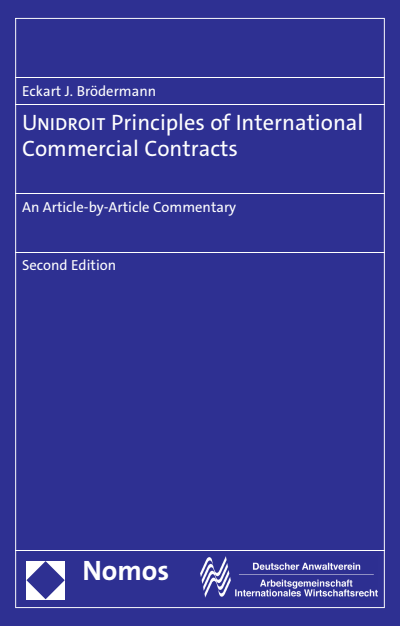
UNIDROIT Principles of International Commercial Contracts
An Article-by-Article Commentary- Authors:
- Publisher:
- 2023
Keywords
Search publication
Bibliographic data
- Copyright Year
- 2023
- ISBN-Print
- 978-3-7560-0243-6
- ISBN-Online
- 978-3-7489-3770-8
- Publisher
- Nomos, Baden-Baden
- Language
- English
- Pages
- 676
- Product Type
- Monograph
Table of contents
ChapterPages
- Titelei/Inhaltsverzeichnis No access Pages V - CLIV
- A. A Wake-Up Call No access
- B. Conception No access
- C. A Practitioner’s Perspective No access
- D. Wording of the Choice of the Unidroit Principles Clause No access
- E. Cross-Cultural Background No access
- F. Twelve and more Languages No access
- G. Structure No access
- H. Interpretation and Case Law No access
- I. Limits of the Unidroit Principles No access
- J. A General Note of Caution on Contract Perception No access
- 1. Background No access
- 2. Goals No access
- 3. Language No access
- 4. Method and Materials No access
- L. Burden of Proof No access
- M. A Recommendation and an Invitation No access
- 1. Para. 1: General rules for international commercial contracts No access
- 2. Para. 2: Choice of Unidroit Principles as governing contractual regime No access
- 3. Para. 3: Application of Unidroit Principles to supplement a more general choice of the parties No access
- 4. Para. 4: Application of Unidroit Principles in the absence of any choice of law No access
- 5. Para. 5: Use of Unidroit Principles to interpret or supplement international uniform law instruments No access
- 6. Para. 6: Use of Unidroit Principles to interpret or supplement domestic law No access
- 7. Para. 7: The Unidroit Principles as a model for legislators No access
- 1. Incorporation No access
- 2. A Tool for Contract Drafting No access
- 3. A Contribution to Harmonisation of Private Contract Law No access
- A. Introduction No access
- B. Wording and Purpose of the Preamble No access
- C. Universally Compatible Contents No access
- D. A History of Comparative Legal Research and Compromise No access
- 1. Arbitral Awards Using the Unidroit Principles as an Expression of General Principles of Contract Law No access
- 2. An Arbitral Award Using the Unidroit Principles as Anglo-Saxon Principles of Law No access
- 3. Arbitral Awards using the Unidroit Principles as a Tool to Supplement the Application of International Uniform Law Instruments No access
- 4. Arbitral Awards using the Unidroit Principles as a Tool to Confirm or Supplement the Interpretation or Application of a National Law No access
- 5. Arbitral Awards Using Unidroit Principles as an Expression of Customs or Usages of International Trade or lex mercatoria No access
- 6. Arbitral Awards Applying the Unidroit Principles by Party Agreement No access
- 1. The Unidroit Principles as General Principles of Law before National Courts No access
- 2. National Courts using the Unidroit Principles to Supplement International Instruments No access
- 3. National Courts using the Unidroit Principles as a Tool to Confirm or Supplement the Interpretation or Application of a National Law No access
- I. UNCITRAL Resolutions No access
- II. Endorsements by International Lawyers’ Organisations No access
- III. Academic Writing No access
- G. Assessment No access
- I. International Arbitration No access
- II. International Litigation No access
- III. International Contracting: Use of a Descriptive Choice of the Unidroit Principles Clause Emphasising their Character as General Principles of Law No access
- A. The First of a Series of Fundamental Principles No access
- B. Freedom of Contract No access
- C. Limits No access
- A. Principle of Informality No access
- B. Limits No access
- C. Options No access
- A. Pacta sunt servanda No access
- B. Limits No access
- C. Options No access
- A. Priority of Private International Law with Respect to Mandatory Law No access
- 1. Restriction of the Scope of Mandatory Laws in Case of Combination of the Unidroit Principles with an Arbitration Clause No access
- 2. More Mandatory Law in Case of Combination of the Unidroit Principles with a Choice of Court Clause No access
- C. Effects No access
- A. Party Autonomy Emphasised No access
- B. Limits of Mandatory Principles No access
- 1. A Global Approach to Interpretation No access
- 2. On Interpretation No access
- 1. On Supplementation No access
- 2. The Underlying General Principles No access
- A. Good Faith and Fair Dealing as a Mandatory Core of the Unidroit Principles pursuant to Art. 1.5 and 1.6 (2) No access
- B. Standard and Options No access
- C. Limited Practical Relevance No access
- A. Part of the Mandatory Core of the Unidroit Principles Pursuant to Art. 1.5 No access
- B. Priority of More Detailed Principles No access
- C. Examples No access
- D. Remedies: Art. 1.8 as a Sword No access
- E. Options No access
- A. Two Kinds of Usages and a Limit No access
- B. Hierarchy No access
- C. Proof and Options No access
- A. Risk Allocation to the Sender No access
- B. Abusive Prevention of Giving Notice No access
- C. Withdrawal of a Notice No access
- A. A Few Key Definitions No access
- B. Further Definitions in the Unidroit Principles No access
- A. Impact of Holidays etc. No access
- B. Relevant Time Zone No access
- C. Options and Interpretation No access
- 1. The Classical Offer-and-Acceptance Test No access
- 2. Conduct Sufficient to Show Agreement No access
- B. A ‘Relaxed’ Approach towards Contract Negotiation No access
- C. Options: Form No access
- D. ‘Sham’ or ‘Simulation’ No access
- A. Sufficient ‘Definiteness’ plus ‘Intention’ No access
- B. Interrelationship of the Two Criteria No access
- A. Para. 1 is Declaratory No access
- B. Any Withdrawal Must be Clear No access
- A. An International Middle Ground No access
- B. A Self-Explanatory Principle with two exceptions No access
- A. Interpretation of Possibly Implicit Rejections No access
- B. Termination of an Offer by Other Means No access
- A. Function and Systematic Place of the Principle No access
- 1. The Basic Principle in Para. 1 Sentence 1 No access
- 2. Conduct without Notice (Para. 3) No access
- 3. Possible Impact of Silence (Para. 1 Sentence 2) No access
- C. When Does the Offeree’s Expression of Assent Become Effective to Establish a Binding Contract? No access
- D. Options No access
- A. Impact of Time No access
- B. ‘Oral’ Offer No access
- C. Risk Allocation No access
- A. Calculation of Relative Time Periods No access
- B. Uncertainty of Time of Dispatch No access
- A. Principle (Para. 1) No access
- B. Exception (Para. 2) No access
- A Self-Explanatory Addendum to 2.1.6(2) No access
- A. AModifications in the Acceptance Notice Generate a Counter-Offer No access
- B. But Non-Material Alterations Generate a Duty on the Offeror to Speak Up No access
- C. Options for the Offeror No access
- D. Special Rule for Standard Terms No access
- A. Exception: Changes Contained in Written ‘Confirmations of the Contract’ Might Alter a Contract No access
- B. Burden of Proof and Test No access
- C. An International Compromise No access
- D. Options No access
- A. Freedom to Insist on Substantive or Formal Specifics No access
- B. Waiver No access
- A. Possible Contract Conclusion Despite a Term Deliberately Left Open No access
- B. Three Requirements for Contract Conclusion No access
- C. Three Contractual Options (Para. 1) No access
- 1. Alternative Means contained in the Unidroit Principles No access
- 2. Special Circumstances (Long-term Contracts) No access
- 3. Contractual Options No access
- 4. Arbitration No access
- A. Avoiding a Cultural Clash, Functions of Art. 2.1.15 No access
- B. Bad Faith Examples No access
- C. Damage Calculation, Burden of Proof No access
- D. Options No access
- A. Implied or Express Duty of Confidentiality (Sentence 1) No access
- B. Remedies (Sentence 2) No access
- A. Another Contribution to Cross Cultural Understanding No access
- B. Limits No access
- A. ‘No Oral Modifications’ Clauses No access
- B. Limits No access
- C. Options No access
- A. A Straightforward Regime on Standard Terms in Four Articles No access
- B. Definition (Para. 2) No access
- C. Incorporation (Para. 1) No access
- A. Safeguard of Basic Fairness No access
- B. Test No access
- Priority of the Individual Term No access
- A. A Favor Contractus Approach to Competing Standard Terms No access
- B. Limits No access
- C. Filling the Gaps No access
- D. Options in View of Paramount Practical Importance of the Issue No access
- A. Only Agency in the Contract Formation Process No access
- B. Large Concept of Agency No access
- A. Authority Granted by the Principal (Para. 1) No access
- B. Incidental Authority (Para. 2) No access
- A. ‘Actual Disclosed Agency’ No access
- B. ‘Classical’ Consequences No access
- C. ‘Indirect’ or ‘Commission Agency’ No access
- A. Another Compromise No access
- B. Only a Relation with the ‘Agent’ No access
- C. One Narrow Exception (Para. 2) No access
- D. Option for the Principal No access
- A. Principle: No Direct Legal Consequence for the Principal (Para. 1) No access
- B. Exception by the Principal’s Own Action (Para. 2) No access
- C. Options No access
- D. Cherry Picking under Overriding Mandatory Non-Contractual Law No access
- A. Strict Liability (Para. 1) No access
- B. Defences (incl. Para. 2) No access
- A. Coping with a Range of Conflicts (Para. 1 sentence 1) No access
- B. Distinction to Excess of Authority Cases No access
- C. Legal Consequences and Options: Avoidance or Confirmation No access
- D. Avoidance Excluded (Para. 2) No access
- E. Applicability beyond Contract Conclusion No access
- A. Sub-Agency When ‘Reasonable’ No access
- B. Details and Legal Consequences No access
- A. Ratification With Retroactive Effect (Para. 1) No access
- B. Timing; a First Option for Third Party (Para. 2) No access
- C. A Second Option: Escape Clause for the Third Party (Para. 3) No access
- A. A Clarification No access
- B. Some Subsisting Actual Authority No access
- A. A Self-Explanatory Distinction No access
- B. Practical Consequences No access
- A. Merely Consensual Contracts No access
- B. Limits No access
- A. A Compromise following the CISG No access
- B. Legal Consequences: Claim for Damages No access
- A. Part of the Mandatory Core of Unidroit Principles pursuant to Art. 1.5 No access
- 1. By Contract No access
- 2. By Law No access
- A. A Broad Concept of Mistake … No access
- B. … With Numerous Boundaries (Test Scheme) No access
- C. Legal Consequences and Options No access
- A. Two-Prong ‘Reasonableness-Test’ (Para. 1) No access
- B. Exception for Gross Negligence and Assumed or Allocated Risks (Para. 2) No access
- C. Legal Consequences No access
- A. Errors in Expression or Transmission as Mistakes No access
- B. Legal Consequences No access
- A. Remedies for Non-Performance Trump Avoidance No access
- B. Legal Consequences No access
- A. Intended Leading Into Error and Thereby Gaining an Advantage No access
- B. Legal Consequences and Option No access
- A. Two Kinds of Unjustified Threats No access
- B. Legal Consequences No access
- A. Avoidance in Case of Excessive Advantage No access
- 1. The ‘Triplet’ of Consequences (Avoidance, Restitution and Reliance Damages) No access
- 2. Alternative Option of Adaptation No access
- C. Liquidated Damages and Penalty Clauses No access
- A. Third Party from the Sphere of a Contracting Party No access
- B. Avoidance Even Without ‘Responsibility’ if the Other Party Needs No Protection No access
- C. Legal Consequences No access
- A. A Logical Consequence of Freedom of Contract (and of the Good Faith Principle) No access
- B. Confirmation Requires … No access
- A. Function: Part of the Regime for Mistakes No access
- B. Right of the Other Party to Uphold the Contract in an Amended Version No access
- C. Requirements No access
- A. Avoiding a Cultural Clash No access
- B. Requirement No access
- A. A ‘Reasonable’ Time Limit No access
- B. A Special Rule for Avoidance of Individual Terms No access
- Article 3.2.13 (Partial avoidance) No access
- A. Retroactivity No access
- B. Limits No access
- A. Principle of Concurrent Restitution in Kind (Para. 1) No access
- 1. First Step: Determination of ‘Impossible’ or ‘Inappropriate’ Restitution in Kind No access
- 2. Second Step: Determination of an Allowance in Money ‘Whenever Reasonable’ No access
- C. Compensation for Expenses (Para. 4) No access
- D. Application of General Rules No access
- E. Contractual Options No access
- F. Limits of the Restitution Regime No access
- A. Compensation of the ‘Reliance Interest’ No access
- B. Supplemental Application of General Rules on Damages No access
- Article 3.2.17 (Unilateral declarations) No access
- A. The Second Leg to Art. 1.4 No access
- 1. Kinds of Infringement No access
- 2. Consequences Provided for in the Applicable Mandatory Rules No access
- C. The Supplementary Regime of Para. 2–3 No access
- A. Art. 3.3.1 (1) trumps Art. 3.3.2 No access
- B. A Reasonableness Test for Restitution No access
- C. Application of Art. 3.2.15 No access
- A. Chapter 4: One of the Most Important Chapters of the Unidroit Principles No access
- B. Overcoming National Distinctions No access
- C. Structure No access
- D. An Important Template No access
- A. Step 1: Determination of a Joint Intention, if Possible (Para. 1) No access
- B. Step 2 in Case of Default: Interpretation under an Individualised and Contextualised ‘Reasonable Person’ Test (Para. 2) No access
- A. A Rule Which is Often Incorporated Implicitly No access
- B. Again a Two Step Approach to Interpretation No access
- A. Two Groups of Criteria No access
- B. … Which are Non-Exhaustive No access
- C. Long-term Contracts No access
- D. Options No access
- A. A Supplement to Art. 4.3: Reference to the (Contractual) Context of the Term to be Interpreted No access
- B. The Role of Art. 4.3 in Applying Art. 4.4 No access
- A. Avoiding to Deprive Any Clause of An Effect No access
- B. Standard Terms (Art. 2.1.19 (2)) No access
- Interpretation Against the Supplier, as a Rule of Last Resort No access
- A. A Default Rule to a Missing or to an Extreme Equal Language Clause No access
- B. Options No access
- A. At the Edge of ‘Interpretation’ No access
- B. Relationship to ‘Interpretation’ No access
- C. Relationship to Art. 5.1.1-5.1.2 No access
- A. A Cultural Bridge to Common Law No access
- B. The Arbitrator’s Perspective No access
- List of Criteria No access
- A. Consequence of a ’Common Project’ No access
- B. Limits No access
- C. Legal Consequence of a Violation No access
- D. Contractual Options No access
- A. A Cultural Bridge to the French Law Family No access
- B. Legal Consequences No access
- C. Limitation of Liability (contractual option) No access
- Assistance in the Classification of an Obligation No access
- A. A System of Default Rules No access
- B. An Autonomous Standard Characterised by ‘Reasonableness’ No access
- C. Limits No access
- D. Options No access
- A. Part of a System of Default Rules No access
- B. General Default Rule (Para. 1), Contractual Option No access
- 1. Paragraph 3 (Non Performance of a Price Determination) No access
- 2. Paragraph 4 (Non Existing Factors) No access
- 1. The Rule No access
- 2. Contractual Options No access
- E. Unreasonable Price Determination by a Third Party (Para. 3), Contractual Option No access
- A. Contracts for an Indefinite Period of Time No access
- B. Function of Art. 5.1.8 No access
- C. Reasonable Time in Advance No access
- D. Legal Consequences No access
- E. Contractual Options No access
- A. A Clarification to Avoid Cultural Misunderstanding No access
- B. Action Required; Silence can Constitute Consent No access
- C. Distinction No access
- A. Party Autonomy No access
- B. Contracts of Sale (Checklist) No access
- C. Service Contracts (Checklist) No access
- D. Construction Contracts No access
- Introduction to Section 5.2 No access
- A. Concentration on Contracts in Favour of Third Parties (para. 1) No access
- B. Shaping the Content (para. 2) No access
- A. Invalidity in case of Impossibility of Identification No access
- B. Future Beneficiaries No access
- A. Function of Art. 5.2.3-5.2.5 No access
- B. A ‘Shield’ to the Beneficiary No access
- A ‘Shield’ to the Promisor No access
- A. Modification or Revocation No access
- B. Limits No access
- C. Options No access
- Right of Refusal No access
- A. Function No access
- B. Types No access
- C. Distinctions No access
- D. Option No access
- A. A System of Default Rules No access
- B. Suspensive Condition (lit. a): Special Characteristics No access
- C. Resolutive Condition (lit. b): Special Characteristics No access
- D. Joint Features No access
- E. Options No access
- A. The Watch-Dog for the Condition No access
- B. The Devil lies in the Detail No access
- A. The Watch-Dog for the Conditioned Right No access
- B. Options No access
- A. Details on the Effects of Resolutive Conditions No access
- B. Optional: A Rule of Relevance if Parties Chose Retroactivity No access
- Introduction to Section 6.1 No access
- A. Notion of and Restrictions on Performance No access
- B. A ‘Fixed’ Time or Period of Time No access
- C. A Reasonableness-Test as Default Rule No access
- D. Option: Special Exemption Clause for Delay No access
- Partial Performance is Principally Non-performance No access
- A. Protection of the Obligee against Imposed Partial Performance of the Obligor No access
- B. Limits No access
- C. Further Options for the Obligee If Partial Performance Amounts to Non-Performance No access
- A. Principle of Simultaneous Performance No access
- B. Limits No access
- A. Protection of the Obligee against Earlier Performance No access
- B. The Good Faith Exception; Additional Costs No access
- C. Other Remedies No access
- A. Expectation Management No access
- B. Default Rule Favouring the Obligor … No access
- C. … Except for Monetary Obligations No access
- D. Change of Place of Business No access
- A. Core Principles on Payment No access
- B. A Choice of the Obligor No access
- C. Protection of the Obligee in Case of ‘Pull-Orders’ No access
- A. A Regime for Push-Orders No access
- B. Options of the Obligor as Controlled by the Obligee No access
- C. Moment of Discharge of the Obligor No access
- A. Two Articles on Currency Issues No access
- B. Importance of the Place of Payment No access
- C. Some Protection of the Obligee Against Currency Fluctuation No access
- A. Currency of Place of Payment as a Default Rule No access
- B. Limits No access
- Each Party Bears its Own Costs as a Default Rule No access
- A. A Balanced International Compromise No access
- 1. Layer 1: Decision of the Obligor (Para. 1) No access
- 2. Layer 2: Decision of the Obligee (Para. 2) No access
- 3. Layer 3: Default system of Para. 3 No access
- C. Limits No access
- Extension to Non-Monetary Obligations No access
- A. A Default System to Cope with Public Permission No access
- B. Determination of the ‘Who’ No access
- A. Regulating the ‘How’ No access
- B. Information of the Other Party No access
- A. Right and Effect of Termination in Case of a ‘Stuck Process’ No access
- B. Exception: Only Part of the Contract is Affected No access
- 1. A Refusal Affecting the Validity of the Contract No access
- 2. A Refusal Which Merely Renders the Performance Impossible No access
- 3. Usually No Damages No access
- B. Permission with Extremely Burdensome Conditions No access
- Introduction to Hardship No access
- A. Inspired by International Contract Practice No access
- B. A Reminder to Pacta Sunt Servanda as a ‘Mission Statement’ No access
- C. Option in Case of a Deteriorating Financial Ability of the Obligee No access
- A. A Fundamental Alteration for the Equilibrium of the Contract No access
- 1. Knowledge After Contract Conclusion (lit. a) No access
- 2. Anticipation Reasonably Impossible (lit. b) No access
- 3. Beyond Control (lit. c) No access
- 4. No Risk Allocation to the Disadvantaged Party (lit. d) No access
- C. Contractual Options (Corona Clause) No access
- A. Renegotiation No access
- B. Continued Performance of the Contract No access
- C. Application by the Court No access
- D. Contractual Options (Corona Clause) No access
- A. Overview No access
- B. A Concept based on ‘Spheres’, not on Fault No access
- C. Six Kinds of Rights and Remedies in Four Sections, with Limitations and Exclusions No access
- D. Often a Choice between Several Options No access
- E. Options at the Contract Drafting Stage No access
- F. A Note on Comparative Law No access
- A. A Unitary Concept … No access
- B. … Based on ‘Spheres’ as Defined in the Contract, Not on Fault No access
- C. Impact on Contract Drafting No access
- A. A Shield for the Obligor No access
- B. Partial Relevance of the Interference No access
- C. Most Relevant for Duties to Achieve a Specific Result No access
- A. A Shield for Both Parties Based on Timing No access
- 1. Non-performance of the Other Party of an Obligation with Sufficient Connection to the Duty Underlying the Withheld Performance No access
- 2. Anticipatory Suspension No access
- 3. ‘Clean Hands’ No access
- 4. Procedural Consideration No access
- C. Options No access
- A. A Right to Cure for the Obligor No access
- B. Parallel Options for the Obligee (Subject to Meeting the Individual Requirements of the Other Provisions) No access
- A. A Proactive Way for the Obligee to Cope with Non-Performance No access
- B. A Privileged Way to Termination in Case of Delay (Para. 3) No access
- C. Parallel Options for the Obligee (Para. 2) No access
- A. The Importance in Practice No access
- B. A Basic Assumption that Exemption Clauses are Valid No access
- C. A Prohibition to Rely on Grossly Unfair Exemption Clauses is Part of the Mandatory Core of Unidroit Principles No access
- D. A Test of Severity No access
- E. Limits and Contractual Options No access
- A. A Shield for the Obligor No access
- B. Conditions No access
- C. Management of Force Majeure by the Obligor No access
- D. Options and Obligations for the Obligee, including Termination No access
- 1. General Function (Drafting) No access
- 2. Long-term Contracts, Combination with Hardship No access
- 3. Impact of Practice and Usages No access
- An Introductory Comparative Remark on Section 2: Right to Performance No access
- A. Action for an Agreed Sum as ‘Specific Performance’ No access
- B. Parallel Options for the Obligee (Subject to Meeting the Individual Requirements of the Other Provisions) No access
- A. A Pragmatic Compromise between Civil and Common Law No access
- B. The Exceptions (for the Benefit of the Obligor) No access
- C. Further Options for the Obligor No access
- D. Parallel Options for the Obligee No access
- A. A Reminder No access
- B. Restitution No access
- C. Parallel Options No access
- A. A Contribution to the French Legal Family (para. 1) No access
- B. Tactical Considerations (Para. 2 Sentence 1) No access
- C. Refusal to Obey No access
- D. Parallel Options (Para. 2 Sentence 2) No access
- Article 7.2.5 (Change of remedy) No access
- Limited Freedom to Change the Mind No access
- Overview No access
- A. Termination as a Last Resort (Para. 1) No access
- 1. Factors Focussing on the Contract from the Perspective of the Obligee (lit. a-b) No access
- 2. Factors Focussing on the Action of the Obligor (lit. c-d) No access
- 3. One Factor Focussing on the Economic Impact to the Obligor (lit. e) No access
- C. Nachfrist-Procedure as an Alternative in Case of Delay (Para. 3) No access
- D. Partial termination No access
- E. Parallel Options for Obligees and Obligors No access
- F. Legal Consequences No access
- A. A Concept of Clarity by Notice (Para. 1) No access
- B. Balanced by a ‘Reasonable Time’ – Constraint (Para. 2) No access
- C. Options No access
- A. ‘Clear’ Cases of Anticipatory Non-Performance No access
- B. Notice No access
- C. Effects No access
- D. Alternative Options No access
- A. Avoiding a ‘Dilemma’ for the Obligee No access
- 1. Tool 1: Request for Adequate Assurance of Due Performance No access
- 2. Tool 2: A Withholding Right No access
- 3. Tool 3 (which may follow the use of tool 1 or 2): An Extraordinary Right to Termination No access
- C. Possible Alternative Options No access
- A. A Compromise Between Different Approaches No access
- B. Limitation of the Effect of Termination to the Future No access
- 1. In Case of a Lawful Contract Termination No access
- 2. In Case of an Unfounded Contract Termination (Unlawful Termination) No access
- A. Principle of Concurrent Restitution in Kind (Para. 1) No access
- B. ‘Impossible’ or ‘Inappropriate’ Restitution in Kind (Para. 2) No access
- C. Risk Allocation, Options No access
- D. Compensation for Expenses (Para. 4) and Other Options No access
- E. General Rules Governing the Obligations under Art. 7.3.6 No access
- F. Impact of Art. 7.3.6: A Quasi-Unified Approach to Restitution No access
- A. Limitation of Restitution Rights No access
- 1. Principle Rule No access
- 2. Exception No access
- C. Reference to Art. 7.3.6 No access
- D. Other Options No access
- Introductory Remarks No access
- A. Damages for Non-Performance unless Excused No access
- B. Application in Addition to Parallel Options No access
- C. Analogical Application, Special Rules with Priority No access
- A. Principle of Full Compensation No access
- B. Adaptation in Cases of Analogical Application No access
- 1. Harms Established by a Reasonable Degree of Certainty (Para. 1) No access
- 2. Loss of a Chance Depending on Probability of its Occurrence (Para. 2) No access
- 3. Assessment at the Discretion of the Court (Para. 3) No access
- B. Contractual Options No access
- A. An International Standard Meeting Comparative Legal Benchmarks No access
- B. Specifics of the Unidroit Principles’ Foreseeability Test No access
- C. Impact on Risk Management at the Contract Drafting Stage No access
- A. Function of Art. 7.4.5 No access
- B. Four Requirements No access
- C. Legal Consequences No access
- D. Options No access
- A. Function of Art. 7.4.6 No access
- B. Three Requirements No access
- C. Legal Consequences No access
- D. Options No access
- A. Function of the Concept of Contributory Causation No access
- B. Requirements No access
- C. Legal Consequences No access
- D. Options No access
- A. Function of Mitigation No access
- 1. A Partial Shield for the Obligor No access
- 2. A Basis for A Claim by the Aggrieved Party No access
- C. Options No access
- A. Function and Practical Importance, Relation to the CISG No access
- B. Two Requirements and One Clarification No access
- C. Interest Rate No access
- D. Additional Damages, Compound interest No access
- E. Options No access
- A. Scope of Application and Function No access
- B. Application No access
- C. Avoidance of Double Compensation No access
- A. Flexibility to the Court No access
- B. Indexation No access
- A. An Option for the Aggrieved Party No access
- B. Alternative and Distinction No access
- A. Function No access
- B. Freedom to Negotiate an Agreed Payment for Non-Performance No access
- C. Judicial Control of Grossly Excessive Clauses as Part of the Mandatory Core of Unidroit Principles No access
- D. Contractual Option No access
- A. Definition and Relevance No access
- B. A Neutral Compromise on Set-Off No access
- C. A Liberal Approach No access
- 1. Relation to Art. 8.2-8.5 No access
- 2. Special Rules with Priority No access
- 1. Mutuality (or Reciprocity) No access
- 2. ‘Money or Other Performance of the Same Kind’ No access
- 3. Principle Claim: Entitlement to Performance by the First Party ((1) lit. a) No access
- 4. Cross-Claim: An ‘Ascertained’ and ‘Due’ Obligation of the Other Party ((1) lit. b) No access
- 5. Exception to the ‘Ascertainability’ Requirement No access
- C. Legal Consequences and Terminology No access
- 1. Contractual Options and/or Restrictions No access
- 2. Other Restrictions No access
- A. Function and Principle No access
- 1. Currency No access
- 2. Exchange rate No access
- 1. No ‘freely convertible currencies’ No access
- 2. Currency Imposed by Agreement No access
- D. Contractual Options No access
- A. A Straightforward Instruction to the First Party No access
- B. Form No access
- C. Limits No access
- D. Options No access
- 1. The Basic Rule of Para. 1 No access
- 2. Further Contents of the Notice No access
- 1. The Default Rule for Missing Specifications in Case of Multiple Obligations of the Other Party No access
- 2. Missing Specifications in Case of Multiple Obligations of the First Party No access
- 3. Multiple Obligations on Both Sides No access
- 1. Substantive Effect of Set-Off (Para. 1) No access
- 2. Different Amounts (Para. 2) No access
- 3. Prospective Effect (Para. 3) No access
- 4. Limits No access
- B. Practical Consequences, Options No access
- Introduction No access
- A. Perspective and Scope No access
- B. Beyond ‘Definitions’: Mere Agreement, No Consent for Assignments of Monetary Rights No access
- C. Limits No access
- A. A Reminder of Priority of Certain Laws No access
- B. Lit. a No access
- C. Lit. b No access
- A. Purpose No access
- B. Requirements for an Effective Assignment of Non-Monetary Obligations No access
- C. Effects No access
- D. Options No access
- A. Principle No access
- 1. Rights to the Payment of a Monetary Sum (Para. 1) No access
- 2. Rights to Other Performance than the Payment of a Monetary Sum (Para. 2) No access
- C. Options No access
- A. Principle No access
- B. Identification as Requirement No access
- C. Effect No access
- D. Options No access
- A. Assignment of a Bundle of Rights No access
- 1. Identifiability at the Relevant Time No access
- 2. Partial Validity No access
- 1. Assignment of Rights to Receive Payment of a Sum of Money No access
- 2. Assignment of Rights to Non-Monetary Performance No access
- B. Options No access
- C. Limits No access
- A. An Innovative Concept No access
- B. Requirements No access
- C. Legal Consequence: Joint and Several Liability No access
- D. Options No access
- A. A Balance Between Conflicting Interests No access
- B. The System No access
- C. Options No access
- 1. Until Receipt of Notice No access
- 2. After Receipt of Notice No access
- 1. Silent Assignments No access
- 2. Requirements If Notice is Given No access
- 3. Revocation of Notice No access
- C. Limited Options No access
- A. Rare Relevance No access
- B. Purpose and Functioning of the Rule No access
- C. Open Issues No access
- D. Options No access
- A. Protection of the Obligor No access
- 1. Request for Proof No access
- 2. Risk Allocation No access
- 3. Consequences of Insufficient Proof and Withholding Right No access
- C. Options No access
- A. Scope of Application No access
- 1. Principle No access
- 2. Examples for Available Defences No access
- 3. Rights of the Assignee Confronted with such an Objection No access
- 1. Principle (Until Receipt of a Notice of Assignment) No access
- 2. Restrictions No access
- D. Options No access
- A. Scope of Application No access
- B. Another Useful Compromise Between Civil and Common Law No access
- C. Limits No access
- D. Options No access
- A. Self-explanatory Undertakings No access
- B. Effect No access
- C. Limits and Options No access
- A. One Option for Each Contract Partner No access
- 1. Agreement between the Original Obligor and the New Obligor No access
- 2. Legal Consequence No access
- C. Agreement between the Obligee and the New Obligor (lit. b) No access
- D. Limits No access
- E. Options No access
- A. Principle No access
- B. Exception No access
- A. A Supplement to Art. 9.2.1 (a) No access
- 1. Contents No access
- 2. Communication No access
- A. A Useful Tool in Practice No access
- B. Application of the Rule No access
- C. Options No access
- A. Options for the Affected Third Party No access
- B. Options for the Obligee under Para. 1 and 2 No access
- C. Default Rule in Para. 3 No access
- D. Additional Option by the Obligee No access
- E. Option for the Original Obligor No access
- A. Freedom for the Obligor as a Rule No access
- B. Extensive Interpretation No access
- C. Limits No access
- A. Scope of Application No access
- B. No Cut Off of Obligor’s Defences Through the Transfer (Para. 1) No access
- 1. No Transfer of Set-Off Rights No access
- 2. Limits No access
- A. Scope of Application No access
- B. Rights to Performance No access
- 1. Securities given by the original obligor No access
- 2. Securities given by a third party No access
- 3. Securities given by the new obligor No access
- D. Limits No access
- A. A Useful Tool No access
- B. Definitions No access
- C. Overview No access
- D. Options No access
- Limitation of the Scope of Application No access
- A. Coping with a Need for Consent No access
- B. Modalities of Consent No access
- C. Options No access
- A. A Useful Tool in Practice No access
- B. Advance Consent No access
- C. Effect Upon the Transfer of Contract No access
- D. Option No access
- A. Three Options for the Other Party No access
- B. Modalities of Execution No access
- C. Advance Discharge No access
- A. Overview No access
- 1. Defences No access
- 2. Set-Off No access
- 1. Defences No access
- 2. Set-Off No access
- D. Referral No access
- A. Overview and Distinction to Rights of Performance No access
- B. Rights Related to the Rights Assigned in the Context of Assignment of Contract No access
- 1. Security Rights Regarding a Transferred Obligation Given by the Original Obligor No access
- 2. Securities given by a Third Party No access
- 3. Securities Given by the New Obligor No access
- D. Referral No access
- A. A Balance Between Competing Interests of the Parties No access
- B. Issues No access
- A. A Useful Compromise between Different Systems No access
- 1. Examples of Applicability No access
- 2. Counter-Examples to Which Limitation Periods under Chapter 10 Do Not Apply No access
- 3. An Observation on the Application of Chapter 10 from a Private International Law Perspective No access
- 4. Options No access
- 1. A Two-Tier System No access
- 2. Starting Point on ‘The Day After’ No access
- 3. Gregorian Calendar No access
- 4. Official holidays or non-business days No access
- 1. General Limitation Period (3 years) No access
- 2. Maximum Limitation Period (10 Years) No access
- C. Options No access
- A. Principle of Party Autonomy as a Starting Point No access
- B. Modalities No access
- 1. Limits for the General Limitation Period No access
- 2. Limits for the Maximum Limitation Period No access
- 3. Violations No access
- 1. Principle: No Deviation No access
- 2. Exception by Dépeçage No access
- 3. Arbitration Clauses No access
- A. Principle, Timing and Effect No access
- B. Form of Acknowledgement No access
- A. A Concept of Suspension No access
- 1. Reference to the Law of the Court for the Beginning of Suspension No access
- 2. End of Suspension No access
- C. Contractual Options: Suspension by Negotiation No access
- D. Effect of the Judicial Proceedings on Joint and Several Obligors No access
- A. Adaptation of the Concept of Suspension to Arbitration No access
- 1. Beginning of Suspension No access
- 2. End of Suspension No access
- C. Effect of the Arbitral Proceedings on Joint and Several Obligors No access
- A. Formal Mediation and Conciliation as Suspending Event No access
- 1. Commencement of Suspension No access
- 2. End of Suspension No access
- C. Effect of the Alternative Dispute Resolution on Joint and Several Obligors No access
- D. Option: Third Party Involvement to Determine Contractual Terms No access
- A. Force Majeure as an Excuse for the Obligee with Regard to the General Limitation Period No access
- 1. Definition of Force Majeure No access
- 2. Effects of force majeure No access
- 3. Death and Incapacity No access
- A. The First of Three Articles on the Effects of the Expiration of the Limitation Period No access
- 1. Introduction No access
- 2. A Requirement to Actually Assert the Right No access
- 3. A Remaining Right to Defend No access
- C. No Effect on Collaterals No access
- D. Options No access
- A. Supplement to Art. 10.9 No access
- B. Supplement to Art. 8.1 et seq. No access
- C. Contractual Options No access
- A. Time-Barred Claims as a Valid Basis for Performance No access
- B. Restitution Based on Other Grounds No access
- A. Overview No access
- B. Language No access
- C. Scope No access
- A. Two Kinds of Obligations No access
- B. Joint and Several Obligations (lit. a) No access
- C. Separate Obligations (lit. b) No access
- D. Options No access
- A. A Default Rule No access
- B. Contractual Interpretation No access
- C. Options No access
- A. A Choice of the Obligee No access
- B. Non-Performance No access
- C. Contractual Option No access
- A. A Clear Distinction Between Common and Personal Defences No access
- 1. The Principle and Examples No access
- 2. Assertion No access
- 1. The Principle No access
- 2. Legal Impact on Contributory Action No access
- D. Set-Off No access
- E. Communication No access
- F. Contractual Options No access
- A. A Generally Accepted Rule on Discharge by Performance or Performance Substitute No access
- B. Merger No access
- C. Contractual Option No access
- A. Principle of Partial Discharge of Remaining Obligors No access
- 1. General Impact No access
- 2. Increase of Contributory Shares Subsequent to the Release No access
- C. Contractual Options No access
- A. Individual Effect of an Expiration of a Limitation Period No access
- 1. The Effect of Para. 2 No access
- 2. Limits No access
- 1. Regarding the Contract between Obligee and Obligors No access
- 2. Regarding the Relationship between Co-Obligors No access
- 1. No Binding Effect on Co-Obligors No access
- 2. Freedom of the Obligee No access
- B. Exception in case of Personal Defences No access
- A. The Foundation for Contributory Claims and Subrogation No access
- B. A Default Rule No access
- A. Contributory Claim of an Obligor No access
- 1. Qualification of Contributory Claims as Separate No access
- 2. Extent of the Contributory Claim – Calculation Example No access
- 3. Cost and Interest No access
- 4. Contribution in Money No access
- 5. Prescription No access
- C. Contractual Options No access
- 1. Conditions No access
- 2. Legal Consequences No access
- B. Priority for the Obligee No access
- A. A Straightforward Rule No access
- 1. Common Defences No access
- 2. Personal Defences in General No access
- 3. Special Personal Defences No access
- 4. Set-Off No access
- C. Options No access
- A. A Possible Change of the Apportionment No access
- B. Conditions No access
- C. Calculation No access
- A. Three Kinds of Obligations Offered by the Unidroit Principles, No Presumption No access
- 1. Principle No access
- 2. Selected Advantages or Disadvantages No access
- 3. Contractual Options Within This Kind of Obligation No access
- 1. Principle No access
- 2. Selected Advantages or Disadvantages No access
- 3. Contractual Options Within This Kind of Obligation No access
- 1. Principle No access
- 2. Selected Advantages or Disadvantages No access
- 3. Contractual Options within this Kind of Obligation No access
- E. Absence of an Explicit Choice No access
- F. Options to Agree on Other Concepts No access
- A. A Supplement to Art. 11.2.1 lit. b No access
- 1. Formal Procedures with One Obligee No access
- 2. Performance in Circumstances Governed by Chapter 7 No access
- 3. Merger No access
- C. Contractual Options No access
- A. Function and Principle No access
- 1. Defences which are Common to the Obligor’s Relationship with All Obligees No access
- 2. Defences Which are Personal to the Obligor’s Relationship with One Obligee No access
- 3. Contractual Options No access
- 4. Set-Off No access
- 1. Performance and Rights of Set-Off No access
- 2. Effect of Release and Settlement No access
- 3. Effect of Expiration and Suspension of Limitation Period No access
- 4. Special Rules on Effect of Judgement No access
- A. Purpose No access
- B. Apportionment No access
- 1. Obligation to Transfer the Excess No access
- 2. Set-Off with Expenses No access
- 3. Contractual Options No access
- D. Merger of the Obligor with One Obligee No access
- INDEX No access Pages 647 - 676