, to see if you have full access to this publication.
Edited Book No access
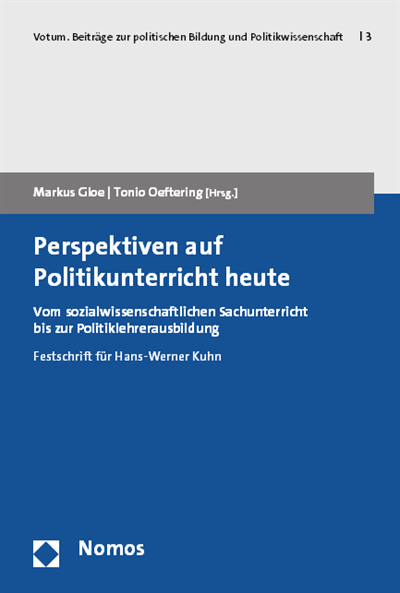
Perspektiven auf Politikunterricht heute
Vom sozialwissenschaftlichen Sachunterricht bis zur Politiklehrerausbildung- Editors:
- |
- Series:
- Votum. Beiträge zur politischen Bildung und Politikwissenschaft, Volume 3
- Publisher:
- 2017
Search publication
Bibliographic data
- Edition
- 1/2017
- Copyright Year
- 2017
- ISBN-Print
- 978-3-8487-3835-9
- ISBN-Online
- 978-3-8452-8163-6
- Publisher
- Nomos, Baden-Baden
- Series
- Votum. Beiträge zur politischen Bildung und Politikwissenschaft
- Volume
- 3
- Language
- German
- Pages
- 338
- Product Type
- Edited Book
Table of contents
ChapterPages
- Titelei/Inhaltsverzeichnis No access Pages 1 - 8
- Perspektiven auf Politikunterricht heute: Vom sozialwissenschaftlichen Sachunterricht bis zur Politiklehrerausbildung No access Pages 9 - 18Authors: |
- Vielfach unterschätzte Potenziale politischen Lernens in der Grundschule – Sozialwissenschaftlicher Sachunterricht No access Pages 19 - 23Authors: |
- Authors:
- Projektrahmen No accessAuthors:
- Programmfunktionen No accessAuthors:
- Spielverlauf und angestrebte Kompetenzentwicklung No accessAuthors:
- Beobachtungen und Fragen No accessAuthors:
- Resümee und Ausblick No accessAuthors:
- Authors:
- 1. Einleitung No accessAuthors:
- 2. Philosophieren mit Kindern No accessAuthors:
- 3. Philosophieren mit Kindern und Demokratielernen No accessAuthors:
- 4. Kinder und Demokratie No accessAuthors:
- 5. Möglichkeiten des Philosophierens mit Kindern im sozialwissenschaftlichen Sachunterricht No accessAuthors:
- 6. Fazit No accessAuthors:
- Befunde von «Politikferne» und «Politikverdrossenheit» in Frage stellen: Medien und handlungsorientierte Methoden in der Politischen Bildung No access Pages 55 - 61Authors: |
- Authors:
- 1. Geschichtliche Aspekte der Verknüpfung von Projektunterricht und Demokratie-Lernen No accessAuthors:
- 2. Demokratie-Lernen No accessAuthors:
- 3. Demokratie-Lernen und Projektorientierung No accessAuthors:
- 4. Das Didaktikdilemma der politischen Bildung No accessAuthors:
- 5. Politikvernetzte Projektarbeit als Strategie No accessAuthors:
- 6. Aufbau der Studie No accessAuthors:
- 7. Fragen zur Kompetenzentwicklung und zum Interesse an Politik No accessAuthors:
- 8. Fragen zur Politikvernetzten Projektarbeit No accessAuthors:
- 9. Ergebnisse No accessAuthors:
- 10. Fazit No accessAuthors:
- Authors:
- Authors:
- 1.1 Ökologie und Ökonomie No accessAuthors:
- 1.2 Folgen struktureller Gewalt No accessAuthors:
- Authors:
- 2.1 Lifestyleänderung als notwendige Konsequenz No accessAuthors:
- 2.2 Erich Fromm: Haben oder Sein No accessAuthors:
- Authors:
- Authors:
- … in der Grundschule No accessAuthors:
- … in der Sekundarstufe No accessAuthors:
- 3.2 Schülerfirmen zwischen unternehmerischem Wohlklang und postwachstumsökonomischer Herausforderung No accessAuthors:
- Authors:
- 1. Zwei Länder – ein Vergleich No accessAuthors:
- 2. Schulbücher und Unterrichtsmaterial No accessAuthors:
- 3. Politische Bildung und Unterrichtsmaterial No accessAuthors:
- Authors:
- 4.1 Aktuelle politische Entwicklungen No accessAuthors:
- Authors:
- 4.2.1 Lehr- und Bildungspläne in Deutschland No accessAuthors:
- 4.2.2 Schulbücher in Deutschland No accessAuthors:
- Authors:
- 4.3.1 Lehr- und Bildungspläne No accessAuthors:
- 4.3.2 Schulbücher No accessAuthors:
- 5. Fazit No accessAuthors:
- Authors: |
- 1. Easy Voting Tools in der politischen Bildung No accessAuthors: |
- 2. Der Wahl-O-Mat und die Landtagswahl 2016 in Baden-Württemberg No accessAuthors: |
- 3. Der Wahl-O-Mat: Wahlempfehlung für Populisten und Entmündigung von Jungwählern? No accessAuthors: |
- 4. Fazit: der Wahl-O-Mat als politisches Vergleichsportal No accessAuthors: |
- Authors:
- 1. Das Versprechen der „Medienkompetenz“ No accessAuthors:
- Authors:
- 2.1 Machtkonzentration und Verhaltenssteuerung No accessAuthors:
- 2.2 Demokratisierungsillusionen No accessAuthors:
- 2.3 Bildung oder Ent-Bildung? No accessAuthors:
- 2.4 Der drohende Verlust des kulturellen Gedächtnisses No accessAuthors:
- 3. Konsequenzen für die politische Bildung No accessAuthors:
- Mehr als abstrakte Werte ... – Menschenrechte und politische Bildung No access Pages 149 - 154Authors: |
- Authors:
- 1. Die Ankunft der Flüchtlinge bis zum Mai 2016 No accessAuthors:
- Authors:
- Authors:
- Spontanes Urteil No accessAuthors:
- Urteilsbildung nach eigener Interessenlage No accessAuthors:
- Überprüfung des eigenen Urteils No accessAuthors:
- Authors:
- Spontanes Urteil No accessAuthors:
- Urteilsbildung nach eigener Interessenlage No accessAuthors:
- Überprüfung des eigenen Urteils No accessAuthors:
- 2.3 Urteilsmöglichkeiten No accessAuthors:
- 2.4 Urteilsbildung im Familienkreis No accessAuthors:
- 3. Empathie No accessAuthors:
- 4. „Mit Leidenschaft und Augenmaß zugleich“ No accessAuthors:
- 5. Konsequenzen für das kommunikative politische Handeln No accessAuthors:
- Authors:
- 6.1 Demokratisches Wertebewusstsein beim politischen Urteilen und Handeln No accessAuthors:
- 6.2 Aufgaben für den Politikunterricht No accessAuthors:
- Authors: |
- 1. Einleitung No accessAuthors: |
- 2. Der Bedarf an menschenrechtlichem Wissen No accessAuthors: |
- 3. Menschenrechte als übergreifendes implizites Thema? No accessAuthors: |
- 4. Menschenrechtliche Urteilsfähigkeit No accessAuthors: |
- 5. Menschenrechte als explizites Thema der politischen Bildung No accessAuthors: |
- Authors:
- 1. Frankreich als Einwandererland No accessAuthors:
- 2. Die „Banlieue“ No accessAuthors:
- 3. Das französische Integrationskonzept No accessAuthors:
- 4. Ursachen für die Vorstadt-Unruhen No accessAuthors:
- 5. Welche Einstellungen haben jugendliche Migranten vor allem aus Nord- bzw. Westafrika gegenüber Frankreich? No accessAuthors:
- 6. Welche Konsequenzen sind erforderlich? No accessAuthors:
- Authors:
- 1. Umriss des Themas No accessAuthors:
- 2. Bestandsaufnahme und Pluralitätskompetenz No accessAuthors:
- 3. Religion als Möglichkeit der Lebensdeutung No accessAuthors:
- 4. Menschenrechte und religiöse Bildung No accessAuthors:
- 5. Interreligiöse Bildung No accessAuthors:
- Politikdidaktische Hermeneutik als Instrument der qualitativen Unterrichtsforschung No access Pages 221 - 226Authors: |
- Authors:
- 1. Verständigungsprobleme über Unterricht – zwei Situationen No accessAuthors:
- 2. Reportagen als Gesprächshilfe No accessAuthors:
- 3. Ein hochschuldidaktisches Übungsbeispiel No accessAuthors:
- 4. Kino im Kopf: Stilistische Kriterien für gute Unterrichtsreportagen No accessAuthors:
- 5. Darstellungsformen: Textsorten in der Unterrichtsforschung No accessAuthors:
- 6. 10 000 Stunden Beobachter – von Sichtstrukturen zum fachdidaktischen Blick No accessAuthors:
- Authors:
- 1. Der Einsatz von Unterrichtsvideos No accessAuthors:
- Authors:
- 2.1. Der Anfang: Das Projekt CULT No accessAuthors:
- 2.2. Der Projektkurs: Das politische System der Bundesrepublik Deutschland und seine Behandlung im Politikunterricht No accessAuthors:
- 2.3. Das Referat für politische Bildungsarbeit No accessAuthors:
- 2.4. Unterrichtsvideos im Auftrag No accessAuthors:
- 3. Unterrichtsvideos heute No accessAuthors:
- Authors: | |
- 1. Einleitung No accessAuthors: | |
- 2. Methodischer Rahmen - die politikdidaktische Rekonstruktion No accessAuthors: | |
- Authors: | |
- 3.1 Historische Dimension No accessAuthors: | |
- 3.2 Normative Dimension No accessAuthors: | |
- 3.3 Bedingungsdimension No accessAuthors: | |
- 3.4 Institutionelle Dimension No accessAuthors: | |
- 3.5 Didaktische Dimension No accessAuthors: | |
- 3.6 Wissenschaftsdimension No accessAuthors: | |
- 3.7 Zukunftsdimension No accessAuthors: | |
- Authors: | |
- 4.1 Die Erfassung von Lernerperspektiven No accessAuthors: | |
- Authors: | |
- 4.2.1 Fragenbogenerhebung und Auswertungsresultate No accessAuthors: | |
- 4.2.2 Die Interviewstudie und erste Einblicke in die Ergebnisse No accessAuthors: | |
- 5. Zielklärung und Didaktische Strukturierung – Ausblick No accessAuthors: | |
- Authors:
- Authors:
- 1.1 Defining Lesson Study in Japan No accessAuthors:
- 1.2 Defining Lesson Analysis in Japan No accessAuthors:
- Authors:
- 1.3.1 Previous Studies on Transcription of Information in Japan No accessAuthors:
- 1.3.2 Previous works on interpreting remarks in Japan No accessAuthors:
- 1.3.3 Studies Aiming at the Visualization of Interpretation Through Forms of Description No accessAuthors:
- 1.4 Questions and Issues No accessAuthors:
- 2. Research Background No accessAuthors:
- 3. The Purpose of This Paper No accessAuthors:
- Authors:
- 4.1 The Process of Producing Verbatim Records of Lessons No accessAuthors:
- 5. Data Collection No accessAuthors:
- Authors:
- 6.1 A Case Study of the Integrated Study Subject “Relief Sketches” No accessAuthors:
- Authors:
- 6.2.1 Interpretation 1 No accessAuthors:
- 6.2.2 Interpretation 2 No accessAuthors:
- Authors:
- 6.3.1 Segmentation and Choice of Remarks No accessAuthors:
- 6.3.2 Description by Intermediate Factors No accessAuthors:
- 6.3.3 Description by Intermediate Factors No accessAuthors:
- 6.3.4 Abstraction of Factors No accessAuthors:
- 7. Conclusions No accessAuthors:
- 8. Perspectives No accessAuthors:
- Authors: |
- 1. Introduction: Political education in Japan – fundamental principles in practice No accessAuthors: |
- Authors: |
- 2.1 Research Question (RQ) No accessAuthors: |
- Authors: |
- Authors: |
- Measure 1 for RQ1: To roll out studies which a student learns in local communities No accessAuthors: |
- Measure 2 for RQ1: To create a class with facts which students investigated by interviews used as materials No accessAuthors: |
- Authors: |
- Measure 1 for RQ2: To facilitate a class in which students present “what they found.” No accessAuthors: |
- Measure 2 for RQ2: A reflective class No accessAuthors: |
- Authors: |
- 3.1 Context of political issue No accessAuthors: |
- 3.2 Context of Learner (Case Student “Yumiko”) No accessAuthors: |
- 3.3 Context of Lesson No accessAuthors: |
- 3.4 Data Collection No accessAuthors: |
- 3.5 Lesson Unit No accessAuthors: |
- Authors: |
- 4.1 Teacher had raised students´ interest in social issues using the school diary of student G (Phase A) No accessAuthors: |
- 4.2 To become aware of the need for a footbridge by interviewing people in the community (Phase B) No accessAuthors: |
- 4.3 To continue looking at the problem multi-dimensionally and in a multi-faceted manner through interviewing the administration (Phase C) No accessAuthors: |
- 4.4 “Is anyone troubled by the construction of the footbridge?” Find a new action assignment (Phase D) No accessAuthors: |
- 4.5 Becoming aware of and realize seriousness through interviewing and discussing (Phase E) No accessAuthors: |
- 4.6 To identify problems by reflecting in class and identifying new action assignments (Phase F) No accessAuthors: |
- 4.7 Initial thoughts about the form that future local administration should take (Phase G) No accessAuthors: |
- Authors: |
- Authors: |
- Measure 1 No accessAuthors: |
- Measure 2 No accessAuthors: |
- Authors: |
- Measure 1 No accessAuthors: |
- Measure 2 No accessAuthors: |
- 6. Conclusion No accessAuthors: |
- Autorenverzeichnis No access Pages 335 - 338