, to see if you have full access to this publication.
Monograph No access
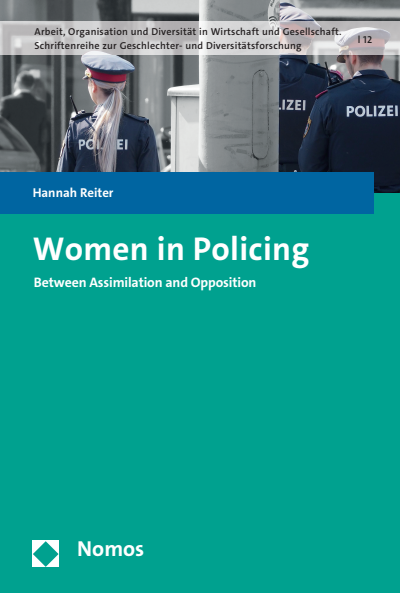
Women in Policing
Between Assimilation and Opposition- Authors:
- Series:
- Arbeit, Organisation und Diversität in Wirtschaft und Gesellschaft. Schriftenreihe zur Geschlechter- und Diversitätsforschung, Volume 12
- Publisher:
- 2022
Summary
Based on extensive interview data, this study argues that in the countries it studies (Austria, England & Wales) the police force consists of highly entrenched structures that perpetuate gender divisions and the hegemonic position of masculinity. In order to create a fully inclusive workplace, the police force needs to be rethought rather than the proportion of women in this masculinised work environment simply being increased. Existing gender equality measures in the police force are merely fighting symptoms instead of addressing causes. Structural change, reinforced by legal measures, seems to be stagnating, while broader discursive and cultural change is being neglected.
Keywords
Search publication
Bibliographic data
- Edition
- 1/2022
- Copyright Year
- 2022
- ISBN-Print
- 978-3-8487-8657-2
- ISBN-Online
- 978-3-7489-3028-0
- Publisher
- Nomos, Baden-Baden
- Series
- Arbeit, Organisation und Diversität in Wirtschaft und Gesellschaft. Schriftenreihe zur Geschlechter- und Diversitätsforschung
- Volume
- 12
- Language
- English
- Pages
- 229
- Product Type
- Monograph
Table of contents
ChapterPages
- Titelei/Inhaltsverzeichnis No access Pages 1 - 10
- 1. Introduction No access Pages 11 - 12
- 2.1 Police as Research Subject No access
- 2.2 Police in England and Wales & Police in Austria No access
- 2.3 Women in the Police No access
- 2.4 A Short Remark on Gender No access
- 2.5 Police Culture and Masculinity No access
- 2.6.1 Why Equality Policies No access
- 2.6.2 Equality Policies in the Police No access
- 2.7 Background of the Study No access
- 3.1 Research Question No access
- 3.2 Research Design No access
- 3.3 Method – Semi-structured Interviews No access
- 3.4 Method – Participatory Observation No access
- 3.5 Method – Grounded Theory No access
- 3.6 Ethical Issues No access
- 4.1 Access and Sample No access
- 4.2 Research Process No access
- 4.3 Data Analysis No access
- 4.4 Reflection on the Research Process No access
- 5.1.1 Doing Something Meaningful No access
- 5.1.2 Career Plan vs. Spontaneous Application No access
- 5.1.3 The Importance of Previous Experiences No access
- 5.1.4 Nature of the Job No access
- 5.1.5 Career Opportunities No access
- 5.1.6 Exposure to Police No access
- 5.1.7 Interim Findings No access
- 5.2.1 Recruitment and Application No access
- 5.2.2 Training No access
- 5.2.3 Policing as a Career No access
- 5.2.4 Special Issues No access
- 5.2.5 Interim Findings No access
- 5.3.1 The Variety of Police Work No access
- 5.3.2 What Constitutes (“Good”) Policing? No access
- 5.3.3 Dealing with the Job No access
- 5.3.4 Structural Issues No access
- 5.3.5 Interim Findings No access
- 5.4.1 The Acceptance of Female Officers in the “Boys’ Club” No access
- 5.4.2 Perceived Gender Differences in Policing No access
- 5.4.3 Getting Along and Getting Ahead No access
- 5.4.4 Incidents of Sexism and Misogyny No access
- 5.4.5 Internal Developments No access
- 5.4.6 Interim Findings No access
- 5.5.1.1 The Issue of Respect and Prejudice No access
- 5.5.1.2 De-escalation Strategies No access
- 5.5.1.3 Dealing with Sexism No access
- 5.5.2 Witness Questioning and Protection No access
- 5.5.4 Interim Findings No access
- 5.6.1 Women’s Issues in a Male Environment No access
- 5.6.2.1 Part-Time Work No access
- 5.6.2.2 Care Work No access
- 5.6.3.1 Equality, Equity, Diversity No access
- 5.6.3.2 The Reception within the Police Force No access
- 5.6.3.3 Self-Perception No access
- 5.6.3.4 Women’s Networks and Equality Commissioners No access
- 5.6.3.5 Perceived Gendered Difficulties No access
- 5.6.4 Improvements and Changes in Police Culture No access
- 5.6.5 Interim Findings No access
- 5.7.1 Diversity and Inclusivity No access
- 5.7.2 Networks and Visibility No access
- 5.7.3 Interim Findings No access
- 6. Conclusion No access Pages 203 - 212
- Online Sources No access
- Legal Sources No access
- Literature No access
Bibliography (157 entries)
No match found. Try another term.
- Adensamer, A. and Sagmeister, M. (2016). Die Ausweitung von Polizeibefugnissen und deren politische Dimensionen. Juridikum Zeitschrift Für Kritik | Recht | Gesellschaft, 2016(4), 516-526. Open Google Scholar DOI: 10.5771/9783748930280
- Angrosino, M. and Rosenberg, J. (2011). Observations on observation: Continuities and challenges. In: N. Denzin & Y. Lincoln (eds), The Sage handbook of qualitative research (4th ed.,). Thousand Oaks, CA: Sage. 467–478. Open Google Scholar DOI: 10.5771/9783748930280
- Bayley, D. H. (2001). Policing hate: What can be done? Policing & Society, 12(2), 83–91 Open Google Scholar DOI: 10.5771/9783748930280
- Baylis, M. and Matczak, A. (2019). Tracking the evolution of police training and education in Poland: Linear developments and exciting prospects. Police Practice and Research, 20(3), 273-287. Open Google Scholar DOI: 10.5771/9783748930280
- Bazley, T.D., Lersch, K.M. and Mieczkowski, T. (2007) Officer force versus suspect resistance: A gendered analysis of patrol officers in an urban police department, Journal of Criminal Justice, 35 (2), 183-192. doi:10.1016/j.jcrimjus.2007.01.005. Open Google Scholar DOI: 10.5771/9783748930280
- Behr, R. (2003) Polizeikultur als institutioneller Konflikt des Gewaltmonopols. In: Lange HJ. (eds) Die Polizei der Gesellschaft. Studien zur Inneren Sicherheit, vol 4. VS Verlag für Sozialwissenschaften, Wiesbaden. Open Google Scholar DOI: 10.5771/9783748930280
- Behr, R. (2008) Cop Culture – Der Alltag des Gewaltmonopols. Männlichkeit, Handlungsmuster und Kultur in der Polizei, VS Verlag für Sozialwissenschaften, 2.Auflage. Open Google Scholar DOI: 10.5771/9783748930280
- Behr, R. (2016) Diversität und Polizei: Eine polizeiwissenschaftliche Perspektive. In: Genkova P., Ringeisen T. (eds) Handbuch Diversity Kompetenz: Perspektiven und Anwendungsfelder. Springer NachschlageWissen. Springer, Wiesbaden. Open Google Scholar DOI: 10.5771/9783748930280
- Behr, R. (2017). Maskulinität in der Polizei: Was Cop Culture mit Männlichkeit zu tun hat: Ein Essay. Juridikum. Zeitschrift Für Kritik | Recht | Gesellschaft, 2017(4), 541-551. Open Google Scholar DOI: 10.5771/9783748930280
- Behr, R. (2019) “Die Polizei muss … an Robustheit deutlich zulegen”: Zur Renaissance aggressiver Maskulinität in der Polizei, In: Loick, D. (ed) Kritik der Polizei. Campus Verlag GmbH. Open Google Scholar DOI: 10.5771/9783748930280
- Ben-Galim, D., Campbell, M. and Lewis, J. (2007). Equality and diversity: A new approach to gender equality policy in the UK. International Journal of Law in Context, 3(1), 19-33. Open Google Scholar DOI: 10.5771/9783748930280
- Blum, S. Dobrotić, I., Koslowski, A. Macht, A., Moss. P. (2018). 14th International Review of Leave Policies and Related Research 2018. DOI: 10.13140/RG.2.2.18149.45284. Open Google Scholar DOI: 10.5771/9783748930280
- Brand, R. and Matranga, M. (1993). The Relevance of Basic Law Enforcement Training in Nevada: Does the Curriculum Prepare Recruits for Police Work?, ProQuest Dissertations and Theses. Open Google Scholar DOI: 10.5771/9783748930280
- Bratich, J. (2018) Observation in a Surveilled World. In: Denzin, N., & Lincoln, Y. (eds) The SAGE handbook of qualitative research (Fifth ed.). Los Angeles London New Delhi Singapore Washington DC Melbourne: SAGE. page 911-945. Open Google Scholar DOI: 10.5771/9783748930280
- Brinkmann, S. (2013). Qualitative interviewing (Series in understanding qualitative research). Oxford: Oxford Univ. Press. Open Google Scholar DOI: 10.5771/9783748930280
- Brown, J. (1998). Comparing Charges: The Experience of Discrimination and Harassment among Women Police Officers Serving in Australia, the British Isles and the United States of America. International Journal of Police Science & Management, 1(3), 227–240. Open Google Scholar DOI: 10.5771/9783748930280
- Brown, J. (2000a) Occupational culture as a factor in the stress experiences of police officers. In: Leishman, F.; Loveday, B.; Savage, S. P. (ed) Core issues in policing. 2nd ed. Harlow, England, New York: Longman. Open Google Scholar DOI: 10.5771/9783748930280
- Brown, J. (2000b) Discriminatory Experiences of Women Police. A Comparison of Officers Serving in England and Wales, Scotland, Northern Ireland and the Republic of Ireland, International Journal of the Sociology of Law, 28 (2), 91-111. doi:http://dx.doi.org/10.1006/ijsl.2000.0119. Open Google Scholar DOI: 10.5771/9783748930280
- Brown, J. (2018). Do Graduate Police Officers Make a Difference to Policing? Results of an Integrative Literature Review. Policing: A Journal of Policy and Practice, 11/15/2018. Open Google Scholar DOI: 10.5771/9783748930280
- Brown, J., Fleming, J., Silvestri, M., Linton, K., and Gouseti, I. (2019). Implications of police occupational culture in discriminatory experiences of senior women in police forces in England and Wales. Policing and Society, 29(2), 121-136. Open Google Scholar DOI: 10.5771/9783748930280
- Brown, J., and Gillick, M. (1998). Differing Perspectives on a Police Force's Equal Opportunities Grievance Procedure: Viewpoints of Police Managers and Front-Line Personnel. International Journal of Police Science & Management, 1(2), 122-132. Open Google Scholar DOI: 10.5771/9783748930280
- Brown, J., Gouseti, I., and Fife-Schaw, C. (2018). Sexual harassment experienced by police staff serving in England, Wales and Scotland: A descriptive exploration of incidence, antecedents and harm. Police Journal (Chichester), 91(4), 356-374. Open Google Scholar DOI: 10.5771/9783748930280
- Brown, J. and Heidensohn F. (2000) Gender and policing: comparative perspectives. Basingstoke: Basingstoke: Macmillan. Open Google Scholar DOI: 10.5771/9783748930280
- Brown, J., and King, J. (1998). Gender differences in police officers attitudes towards rape; Results of an exploratory study. Psychology, Crime & Law, 4(4), 265-279. Open Google Scholar DOI: 10.5771/9783748930280
- Brown, J., and Sargent, S. (1995). Policewomen and firearms in the British police service. Police Studies, 18(2), 1-16. Open Google Scholar DOI: 10.5771/9783748930280
- Brown, J., and Silvestri, M., (2020). A police service in transformation: Implications for women police officers. Police Practice & Research, 21(5), 459-475. Open Google Scholar DOI: 10.5771/9783748930280
- Brown, J., and Woolfenden, S. (2011). Implications of the Changing Gender Ratio amongst Warranted Police Officers. Policing: A Journal of Policy and Practice, 5(4), 356-364. Open Google Scholar DOI: 10.5771/9783748930280
- Bryman, A. (2008) Social research methods (3rd ed.). Oxford: Oxford University Press. Open Google Scholar DOI: 10.5771/9783748930280
- Burgess, R. G. (1982) Elements of Sampling in Field Research. In: Burgess, R.G. (ed) Field Research: A Sourcebook and Field Manual. London: George Allen&Unwin. Open Google Scholar DOI: 10.5771/9783748930280
- Burke, M. (1994) Homosexuality as deviance: The case of the gay police officer. The British Journal of Criminology, 34(2), 192-203. Open Google Scholar DOI: 10.5771/9783748930280
- Butler, J. (1997) The Psychic Life of Power. Theories in Subjection. Stanford University Press Stanford, California. Open Google Scholar DOI: 10.5771/9783748930280
- Carbado, D., Crenshaw, K., Mays, V. and Tomlinson, B. (2013) INTERSECTIONALITY Mapping the Movements of a Theory. Du Bois Review: Social Science Research on Race. Volume 10, Issue 2, 303-312. Open Google Scholar DOI: 10.5771/9783748930280
- Charlesworth, S. and Whittenbury, K. (2007) ‘Part-time and Part-committed’?: The Challenges of Part-time Work in Policing. Journal of Industrial Relations, 49(1), 31-47. Open Google Scholar DOI: 10.5771/9783748930280
- Charmaz, K. (2014) Constructing grounded theory (2.nd ed., Introducing qualitative methods). London: SAGE Publ. Open Google Scholar DOI: 10.5771/9783748930280
- Cockburn, C. (1991) In the Way of Women. Men's Resistance to Sex Equality in Organizations, London. Open Google Scholar DOI: 10.5771/9783748930280
- Cockcroft, T. (2020) Police Occupational Culture, Policy Press, Bristol. Open Google Scholar DOI: 10.5771/9783748930280
- Collins, P. H. (2000) Black feminist thought: Knowledge, consciousness, and the politics of empowerment (Rev. 10th anniversary ed.). New York: Routledge. Open Google Scholar DOI: 10.5771/9783748930280
- Colvin, R. (2017) Female Police Officers and Their Experiences: The Metropolitan Police of Buenos Aires Context. Women & Criminal Justice, 27(4), 219-234. Open Google Scholar DOI: 10.5771/9783748930280
- Connell, R. W. and Messerschmidt, J.W. (2005) Hegemonic masculinity: rethinking the concept. Gender and society, 19(6), 829-859. Open Google Scholar DOI: 10.5771/9783748930280
- Connell, R. W. (2013) Embodying Serious Power. Managerial Masculinities in the Security Sector. In: Hearn, J., Blagojević, M., Harrison, K. (eds) Rethinking Transnational Men: Beyond, Between and Within Nations. Routledge. 1. Edition. Open Google Scholar DOI: 10.5771/9783748930280
- Cordes, M. (2010) “Gleichstellungspolitiken: Von der Frauenförderung zum Gender Mainstreaming”, In: Becker, R.; Kortendiek, B. (eds) Handbuch Frauen- und Geschlechterforschung: Theorie, Methoden, Empirie, Wiesbaden: VS, Verlag für Sozialwissenschaften. 3., extended and rev. Ed. 2010, S. 924 – 932. Open Google Scholar DOI: 10.5771/9783748930280
- Cordner, G. and Cordner, A. (2011) Stuck on a Plateau?: Obstacles to Recruitment, Selection, and Retention of Women Police. Police Quarterly, 14(3), 207–226. https://doi.org/10.1177/1098611111413990. Open Google Scholar DOI: 10.5771/9783748930280
- Crank, J. P. (1998) Understanding Police Culture. Second ed. [Cincinnati, OH]: Anderson Pub., 2004. Web. Open Google Scholar DOI: 10.5771/9783748930280
- Crenshaw, K. (1991) Mapping the margins: Intersectionality, identity politics, and violence against women of color. (Women of Color at the Center: Selections from the Third National Conference on Women of Color and the Law). Stanford Law Review, 43(6), 1241. Open Google Scholar DOI: 10.5771/9783748930280
- Davies, M. (2016) To What Extent Can We Trust Police Research? - Examining Trends in Research ‘on’, ‘with’, ‘by’ and ‘for’ the Police. Nordisk Politiforskning, 3(02), 154-164. Open Google Scholar DOI: 10.5771/9783748930280
- Dedeoglu, S. (2012) Equality, Protection or Discrimination: Gender Equality Policies in Turkey. Social Politics, 19(2), 269-290. Open Google Scholar DOI: 10.5771/9783748930280
- De Haas, S. and Timmerman, G. (2010) Sexual harassment in the context of double male dominance., European Journal of Work and Organizational Psychology, 19(6), 717-734. Open Google Scholar DOI: 10.5771/9783748930280
- De Haas, S., Timmerman, G., Höing, M. and Tetrick, L. E. (2009) Sexual Harassment and Health Among Male and Female Police Officers. Journal of Occupational Health Psychology, 14(4), 390-401. Open Google Scholar DOI: 10.5771/9783748930280
- Dick, P. (2006) The psychological contract and the transition from full to part‐time police work. Journal of Organizational Behavior, 27(1), 37-58. Open Google Scholar DOI: 10.5771/9783748930280
- Dixon, D. (1997) Law in Policing: Legal Regulation and Police Practices. Oxford: Clarendon Press. Open Google Scholar DOI: 10.5771/9783748930280
- Dowler, K. and Arai, B. (2008) Stress, Gender and Policing: The Impact of Perceived Gender Discrimination on Symptoms of Stress. International Journal of Police Science and Management 10(2):123-135. Open Google Scholar DOI: 10.5771/9783748930280
- Dworkin, R. (1977) Taking Rights Seriously. 16. Print. ed. Cambridge, Mass.: Harvard U Pr., 1997. Open Google Scholar DOI: 10.5771/9783748930280
- Edwards, C. Y. and Robinson, O. (1999) Managing part-timers in the police service: A study of inflexibility. Human Resource Management Journal, 9(4), 5-18. Open Google Scholar DOI: 10.5771/9783748930280
- Edwards, C. Y. and Robinson, O. (2001) “Better” part-time jobs?: A study of part-time working in nursing and the police. Employee Relations, 23(5), 438-454. Open Google Scholar DOI: 10.5771/9783748930280
- Edwards, R. and Holland, J. (2013) What is Qualitative Interviewing? London: Bloomsbury Publishing. Open Google Scholar DOI: 10.5771/9783748930280
- Ellis, L. K. (2016) Policemoms: Perceptions of Motherhood and Policy in Ohio Police Organizations, Walden University, Ann Arbor. ProQuest. Open Google Scholar DOI: 10.5771/9783748930280
- Ermer, V. B. (1978) Recruitment of female police officers in New York City. Journal of Criminal Justice, 6, 233– 246. Open Google Scholar DOI: 10.5771/9783748930280
- Ertan, S. (2016) How to Study Gender Equality Policy Cross-Nationally? Aggregate or Disaggregate Gender Equality Policy Indices? Social Indicators Research, 125(1), 47-76. Open Google Scholar DOI: 10.5771/9783748930280
- Fassin, D. (2013). Enforcing order: An ethnography of urban policing. Cambridge [u.a.]: Politiy Press. Open Google Scholar DOI: 10.5771/9783748930280
- Fejes, A. and Haake, U. (2013) Caring and Daring Discourses at Work: Doing Gender Through Occupational Choices in Elderly Care and Police Work. Vocations and Learning, 6(2), 281-295. Open Google Scholar DOI: 10.5771/9783748930280
- Fenn, L., Marks, J., Christoforides, K. and Coupar, F. (2019) Applying Research beyond the Ivory Tower: Reflections from Police Now. Policing: A Journal of Policy and Practice, 01/23/2019. Open Google Scholar DOI: 10.5771/9783748930280
- Fielding, N. (1988) Joining forces: police training, socialization and occupational competence. London: London: Routledge. Open Google Scholar DOI: 10.5771/9783748930280
- Fischer-Kowalski, M. and Steinert, H. (1982) Polizei und Öffentlichkeit: Endbericht; eine Untersuchung der Wiener Sicherheitswache und ihres Verhältnisses zur Bevölkerung 1972 (Institut für Höhere Studien, Wien: Sonderpublikationen). Wien: Inst. für Höhere Studien. Open Google Scholar DOI: 10.5771/9783748930280
- Flood, M., and Pease, B. (2006) Undoing Men’s Privilege and Advancing Gender Equality in Public Sector Institutions, Policy and Society, 24(4), 2005. Open Google Scholar DOI: 10.5771/9783748930280
- Foley, P., Guarneri, C. and Kelly, M. (2008) Reasons for Choosing a Police Career: Changes over Two Decades. International Journal of Police Science & Management, 10(1), 2-8. Open Google Scholar DOI: 10.5771/9783748930280
- Frankenberg, R. (1995) White women, race matters: The social construction of whiteness (5. print.; 7. print. ed.). Minneapolis, Minn.: Univ. of Minnesota Press. Open Google Scholar DOI: 10.5771/9783748930280
- Franklin, C.A. (2007) Male Peer Support and the Police Culture, Women Open Google Scholar DOI: 10.5771/9783748930280
- & Criminal Justice, 16:3, 1-25, DOI: 10.1300/J012v16n03_01. Open Google Scholar DOI: 10.5771/9783748930280
- Frederiksen, A. (2008) Gender differences in job separation rates and employment stability: New evidence from employer-employee data, Labour Economics, Volume 15, Issue 5, 2008, Pages 915-937, ISSN 0927-5371, https://doi.org/10.1016/j.labeco.2007.07.010. Open Google Scholar DOI: 10.5771/9783748930280
- Gass, S. and Mackey, A. (2000). Stimulated recall methodology in second language research (Second language acquisition research). Mahwah, NJ: Erlbaum. Open Google Scholar DOI: 10.5771/9783748930280
- Haarr, R. and Morash, M. (2013) The Effect of Rank on Police Women Coping With Discrimination and Harassment., Police Quarterly, 16(4), 395-419. Open Google Scholar DOI: 10.5771/9783748930280
- Hanak, G. and Hofinger, V., (2005) Dokumentation und Kommentierung polizeirelevanter Forschung in Österreich 1945-2004. In: SIAK-Journal − Zeitschrift für Polizeiwissenschaft und polizeiliche Praxis 4, 32–41, Online: http://dx.doi.org/10.7396/2005_4_D. Open Google Scholar DOI: 10.5771/9783748930280
- Hanak, G. and Hofinger, V. (2008) Polizeirelevante Forschung in Österreich. 2004-2007. In: SIAK Journal − Zeitschrift für Polizeiwissenschaft und polizeiliche Praxis 4, 10–18, Online: http://dx.doi.org/10.7396/2008_4_B. Open Google Scholar DOI: 10.5771/9783748930280
- Hassell, D., Archbold, A. and Stichman, J. (2011) Comparing the workplace experiences of male and female police officers: Examining workplace problems, stress, jobs satisfaction and consideration of career change. International Journal of Police Science & Management, 13(1), 37–53. Open Google Scholar DOI: 10.5771/9783748930280
- Heidensohn, F. (2005) Women in control? In: Newburn, T. (ed) Policing: key readings. Cullompton: Willan. Open Google Scholar DOI: 10.5771/9783748930280
- Heidensohn, F. and Silvestri, M. (2012) Gender and Crime. In: Maguire, M., Morgan, R. and Reiner, R. (eds) The Oxford Handbook of Criminology., pp 336-369 5th ed. Oxford: Oxford University Press. Open Google Scholar DOI: 10.5771/9783748930280
- Herrnkind, M. (1999) “Der Polizei”: Geschichte und Gegenwart der Männerdomäne im Spiegel der Wissenschaft, In: Unbequem, Juni, 11-19. Open Google Scholar DOI: 10.5771/9783748930280
- Hoffman, P.B. and Hickey, E.R. (2005) Use of force by female police officers, Journal of Criminal Justice, 33 (2), 145-151. doi:10.1016/j.jcrimjus.2004.12.006. Open Google Scholar DOI: 10.5771/9783748930280
- Holdaway, S. and Parker, S. (1998) Policing women police – Uniform patrol, promotion and representation in the CID. British Journal Of Criminology, 38(1), 40–60. Open Google Scholar DOI: 10.5771/9783748930280
- Holliday, A. (2016) Doing and Writing Qualitative Research (3rd ed.) Los Angeles. London. New Delhi. Singapore. Washington DC. Melbourne. SAGE Publications Ltd. Open Google Scholar DOI: 10.5771/9783748930280
- Holzleithner, E. (2002) Recht, Macht, Geschlecht: Legal Gender Studies; eine Einführung. Wien: WUV-Univ.-Verl. Open Google Scholar DOI: 10.5771/9783748930280
- Holzleithner, E. (2015) Legal Gender Studies: Grundkonstellationen und Herausforderungen. Juridikum Zeitschrift Für Kritik | Recht | Gesellschaft, 2015(4), 471-481. Open Google Scholar DOI: 10.5771/9783748930280
- Holzleithner, E. (2016) Gerechtigkeit und Geschlechterrollen. Rechtsphilosophie, 2(2), 133-151. Open Google Scholar DOI: 10.5771/9783748930280
- Holzleithner, E. (2017) Gender Equality and Physical Requirements, in: European Equality Law Review 2017/1, 13-22. Open Google Scholar DOI: 10.5771/9783748930280
- Holzleithner, E. (2019) Geschlecht als Anerkennungsverhältnis. Perspektiven einer Öffnung der rechtlichen Kategorie im Lichte gleicher Freiheit, In: Baer, S.; Lepsius, O.; Schönberger, C.; Waldhoff, C.; Walter, C. (eds) Jahrbuch des öffentlichen Rechts der Gegenwart. Neue Folge/Band 67, 457-485 Open Google Scholar DOI: 10.5771/9783748930280
- Horn, R. (1997) "Not ‘one of the Boys’: Women Researching the Police." Journal of Gender Studies. 6.3 (1997): 297-308. Web. Open Google Scholar DOI: 10.5771/9783748930280
- Houdmont, J. (2013) UK police custody officers’ psychosocial hazard exposures and burnout. Policing: An International Journal of Police Strategies and Management, 36, 620-635. Open Google Scholar DOI: 10.5771/9783748930280
- Huang, Q. and Sverke, M. (2007) Women’s occupational career patterns over 27 years: Relations to family of origin, life careers, and wellness. Journal of Vocational Behavior, 70(2), 369-397. Open Google Scholar DOI: 10.5771/9783748930280
- Innes, M. (2003) Understanding social control. Deviance, crime and social order (Crime and justice). Open University Press. Open Google Scholar DOI: 10.5771/9783748930280
- Jacobs, P. (1987) How female police officers cope with a traditionally male position. Sociology and Social Research, 72, 4–6. Open Google Scholar DOI: 10.5771/9783748930280
- Jensen, H., Larsen, J. and Thomsen, T. (2018) The impact of shift work on intensive care nurses’ lives outside work: A cross‐sectional study. Journal of Clinical Nursing, 27(3-4), E703-E709. Open Google Scholar DOI: 10.5771/9783748930280
- Jordan, J. (2002) Will any woman do? Police, gender and rape victims. Policing: An International Journal of Police Strategies & Management, 25(2), 319-344. Open Google Scholar DOI: 10.5771/9783748930280
- Jordan, W., Fridell, L., Faggiani, D. and Kubu, B. (2009) Attracting females and racial/ethnic minorities to law enforcement. Journal Of Criminal Justice, 37(4), 333-341. Open Google Scholar DOI: 10.5771/9783748930280
- Lester, D. (1983) Why do people become police officers: A study of reasons and their predictions of success. Journal of Police Science and Administration, 11, 170−174. Open Google Scholar DOI: 10.5771/9783748930280
- Lichtenberg, I. D. and Smith, A. (2001) How dangerous are routine police–citizen traffic stops?: A research note, Journal of Criminal Justice, Volume 29, Issue 5, 2001, Pages 419-428, ISSN 0047-2352, https://doi.org/10.1016/S0047-2352(01)00106-4. Open Google Scholar DOI: 10.5771/9783748930280
- Loftus, B. (2008) Dominant Culture Interrupted: Recognition, Resentment and the Politics of Change in an English Police Force, British Journal of Criminology, 48 (6), 756-777. doi:10.1093/bjc/azn065. Open Google Scholar DOI: 10.5771/9783748930280
- Lombardo, E. (2003) EU gender policy: Trapped in the 'Wollstonecraft dilemma'? European Journal of Women's Studies, 10(2), 159-180. Open Google Scholar DOI: 10.5771/9783748930280
- Lorde, A. (1984) Sister Outsider: Essays and Speeches. Feminist Series. Freedom, CA: Crossing Press. Open Google Scholar DOI: 10.5771/9783748930280
- Lonsway, K., Paynich, R. and Hall, J. (2013) Sexual Harassment in Law Enforcement., Police Quarterly, 16(2), 177-210. Open Google Scholar DOI: 10.5771/9783748930280
- Lueger, M. (2010) Interpretative Sozialforschung: Die Methoden. Facultas Verlags- und Buchhandles AG: Wien Österreich. Open Google Scholar DOI: 10.5771/9783748930280
- MacKinnon, C. (1987) Feminism Unmodified: Discourses on Life and Law. Cambridge, MA: Harvard University Press. Open Google Scholar DOI: 10.5771/9783748930280
- Martin, S. and Jurik, N. (2007) Doing justice, doing gender: Women in legal and criminal justice occupations (2nd ed., Women in the criminal justice system). Thousand Oaks, Calif: Sage Publications. Open Google Scholar DOI: 10.5771/9783748930280
- McCarthy, D. J. (2013) Gendering ‘Soft’ Policing: Female Cops, Multi-agency Working and the Fragilities of Police Culture/s. Policing and Society, 23 (2), 261-278. Open Google Scholar DOI: 10.5771/9783748930280
- McKenzie, I. (2000) Policing force: rules, hierarchies and consequences. In: Leishman, F.; Loveday, B.; Savage, S. P. (eds) Core issues in policing. 2nd ed. Harlow, England, New York: Longman. Open Google Scholar DOI: 10.5771/9783748930280
- Meagher, S. and Yentes, N. (1986) Choosing a career in policing: A comparison of male and female perceptions. Journal of Police Science and Administration, 14(4), 320– 327. Open Google Scholar DOI: 10.5771/9783748930280
- Mensching, A. (2008) Gelebte Hierarchien. Mikropolitische Arrangements und organisationskulturelle Praktiken am Beispiel der Polizei. VS Verlag für Sozialwissenschaften: Wiesbaden. Open Google Scholar DOI: 10.5771/9783748930280
- Miller, S., Forest, K. and Jurik, N. (2003) Diversity in Blue: Lesbian and Gay Police Officers in a Masculine Occupation. Men and Masculinities, 5(4), 355-385. Open Google Scholar DOI: 10.5771/9783748930280
- Morash, M., Kwak D. and Haarr, R. (2006a) Gender differences in the predictors of police stress, Policing, vol. 29, no. 3, 541-563. Open Google Scholar DOI: 10.5771/9783748930280
- Morash, M., Kwak D. and Haarr, R. (2006b) Multilevel Influences on Police Stress, Journal of Contemporary Criminal Justice, vol. 22, no. 1, 26-43. Open Google Scholar DOI: 10.5771/9783748930280
- Müller, U. (2007) Body and Culture in German Police. In: Lenz, I.; Ullrich, C.; Fersch, B. (eds) Gender Orders Unbound? Globalisation, Restructuring and Reciprocity. Barbara Budrich Publishers, Opladen & Farmington Hills 2007. 327-344. Open Google Scholar DOI: 10.5771/9783748930280
- Nguyen, A. (2008) Patriarchy, Power, and Female Masculinity. Journal of Homosexuality, 55(4), 665-683. Open Google Scholar DOI: 10.5771/9783748930280
- Notz, G. (2010) Arbeit, Politik und Ökonomie, In: Becker, R., Hortendiek, B (eds), Handbuch Frauen- und Geschlechterforschung. Theorie, Methoden, Empirie (3., erweiterte und durchgesehene Auflage, Vol. Bd. 35). Wiesbaden: VS Verlag für Sozialwissenschaften, 480-488. Open Google Scholar DOI: 10.5771/9783748930280
- O’Connor Shelley, T., Schaefer, M., Tobin-Gurley, M. and Tobin-Gurley, J. (2011) Gendered institutions and gender roles: understanding the experience of women in policing, Criminal Justice Studies, 24:4, 351-367, DOI: 10.1080/1478601X.2011.625698. Open Google Scholar DOI: 10.5771/9783748930280
- Oliva, J. and Compton, M. (2010) What do police officers value in the classroom? Policing: An International Journal of Police Strategies & Management, 33(2), 321-338. Open Google Scholar DOI: 10.5771/9783748930280
- Pagon, M. and Lobnikar, B. (2000) Reasons for Joining and Beliefs about the Police and Police Work among Slovenian Female Police Rookies. International Journal of Police Science & Management, 2(3), 252–266. https://doi.org/10.1177/146135570000200306. Open Google Scholar DOI: 10.5771/9783748930280
- Panter, H. (2018) ‘We’re the ugly child of the LGBT world’: Trans police occupational experiences within police culture. In Transgender Cops: The Intersection of Gender and Sexuality Expectations in Police Cultures (1st ed., Vol. 1, 145-169). Routledge. Open Google Scholar DOI: 10.5771/9783748930280
- Pateman, C. (1989) The Disorder of Women. Cambridge: Polity Press. Open Google Scholar DOI: 10.5771/9783748930280
- Paterson, C. (2011) Adding value? A review of the international literature on the role of higher education in police training and education, Police Practice and Research, 12:4, 286-297, DOI: 10.1080/15614263.2011.563969 Open Google Scholar DOI: 10.5771/9783748930280
- Prokos, A. and Padavic, I. (2002) 'There Oughtta Be a Law against Bitches': Masculinity Lessons in Police Academy Training. Gender, Work and Organization, vol. 9, no. 4, 439-459. Open Google Scholar DOI: 10.5771/9783748930280
- Rabe-Hemp, C. (2008a) Female officers and the ethic of care: Does officer gender impact police behaviors? Journal of Criminal Justice, 36(5), 426-434. Open Google Scholar DOI: 10.5771/9783748930280
- Rabe-Hemp, C. (2008b) Survival in an “all boys club”: policewomen and their fight for acceptance, Policing: An International Journal of Police Strategies & Management, Vol. 31 Iss 2 251 – 270. Open Google Scholar DOI: 10.5771/9783748930280
- Raganella, A. and White, M. (2004) Race, gender, and motivation for becoming a police officer: Implications for building a representative police department. Journal of Criminal Justice, 32(6), 501–513. Open Google Scholar DOI: 10.5771/9783748930280
- Reiner, R. (2000) The Politics of the Police (3rd edn). Oxford: Oxford University Press. Open Google Scholar DOI: 10.5771/9783748930280
- Reiner, R. (2016) Opinion. Is Police Culture Cultural? In: Policing, paw046. DOI: 10.1093/police/paw046. Open Google Scholar DOI: 10.5771/9783748930280
- Ridgeway, G., Lim, N., Gifford, B., Koper, C., Matthies, C., Hajiamiri, S. and Huynh, A. (2008) Strategies for improving officer recruitment in the San Diego Police Department. Santa Monica, CA: Rand. Open Google Scholar DOI: 10.5771/9783748930280
- Riegraf, B. (2005) “Frauenbereiche” und “Männerbereiche”. In: Ahrens, J.-R.; Apelt, M.; Bender, C. (eds) Frauen im Militär. Empirische Befunde und Perspektiven zur Integration von Frauen in die Streitkräfte. VS Verlag für Sozialwissenschaften, Wiesbaden. 1. Auflage. 134-155. Open Google Scholar DOI: 10.5771/9783748930280
- Riggins, E.S. (2015) Career Goals for Joining Law Enforcement and Subsequent Career Stress, Walden University. Open Google Scholar DOI: 10.5771/9783748930280
- Rogers, D. (2004) Recruitment and Retention of Minorities and Women in Law Enforcement, ProQuest Dissertations and Theses. Open Google Scholar DOI: 10.5771/9783748930280
- Saini, A. (2017) Inferior. How Science Got Women Wrong-and the New Research That's Rewriting the Story. Harper Collins Publ. UK. Open Google Scholar DOI: 10.5771/9783748930280
- Sbraga, T. P. and O’Donohue, W. (2000) Sexual harassment., Annual Review of Sex Research, 11, 258–285. Open Google Scholar DOI: 10.5771/9783748930280
- Scharff, C. (2011) Disarticulating feminism: Individualization, neoliberalism and the othering of ‘Muslim women’. European Journal of Women's Studies, 18(2), 119-134. Open Google Scholar DOI: 10.5771/9783748930280
- Schulze, C. (2010) Institutionalized masculinity in US police departments: how maternity leave policies (or lack thereof) affect women in policing, Criminal Justice Studies, 23:2, 177-193, DOI: 10.1080/1478601X.2010.485485. Open Google Scholar DOI: 10.5771/9783748930280
- Silvestri, M. (2003) Women in Charge: Policing, Gender and Leadership. Cullompton, Devon: Willan Publishing. Open Google Scholar DOI: 10.5771/9783748930280
- Silvestri, M. (2017) Police Culture and Gender: Revisiting the ‘Cult of Masculinity’. Policing: A Journal of Policy and Practice 11.3 (2017): 289-300. Web. Open Google Scholar DOI: 10.5771/9783748930280
- Silvestri, M., Tong, S. and Brown, J. (2013) Gender and Police Leadership: Time for a Paradigm Shift? International Journal of Police Science & Management, 15(1), 61-73. Open Google Scholar DOI: 10.5771/9783748930280
- Skolnick, J. (1966) Justice without Trial. New York: Wiley. Open Google Scholar DOI: 10.5771/9783748930280
- Smart, C. (1995) Law, crime and sexuality: essays in feminism. London: London: Sage. Open Google Scholar DOI: 10.5771/9783748930280
- Spasić, D. (2011) Police Culture And Gender Identity. Western Balkans Security Observer – English Edition, (19), 25-35. Open Google Scholar DOI: 10.5771/9783748930280
- Spasić, D., Djurić, S. and Mršević, Z. (2015) Survival in an “all boys club”: Policewomen in Serbia. Women's Studies International Forum, 48(C), 57-70. Open Google Scholar DOI: 10.5771/9783748930280
- Steinert, H. (1997) Schwache Patriarchen – gewalttätige Krieger, In: Kersten, J., Steinert, H. (eds) Starke Typen: Iron Mike, Dirty Harry, Crocodile Dundee und der Alltag von Männlichkeit 1. Ed., Baden-Baden: Nomos-Verl.-Ges. Open Google Scholar DOI: 10.5771/9783748930280
- Stölting, E. (2009) Geleitwort zur Soziologie der Polizei. In: Grutzpalk, J.; Bruhn, A.; Fatianova, J; Harnisch, F.; Mochan, C.; Schülzke, B.; Zischke, T. (eds) Beiträge zu einer vergleichenden Soziologie der Polizei. Universitätsverlag Potsdam 2009. 7-12. Open Google Scholar DOI: 10.5771/9783748930280
- Strauss, A. L. (1991) Grundlagen qualitativer Sozialforschung. Datenanalyse und Theoriebildung in der empirischen soziologischen Forschung. München: Fink. Open Google Scholar DOI: 10.5771/9783748930280
- Teubner, U. (2010) Beruf: Vom Frauenberuf zur Geschlechterkonstruktion im Berufssystem, In: Becker, R., Hortendiek, B (ed), Handbuch Frauen- und Geschlechterforschung. Theorie, Methoden, Empirie (3., erweiterte und durchgesehene Auflage, Vol. Bd. 35). Wiesbaden: VS Verlag für Sozialwissenschaften, 499-506. Open Google Scholar DOI: 10.5771/9783748930280
- Thürmer-Rohr, C. (2010) Mittäterschaft von Frauen: Die Komplizenschaft mit der Unterdrückung. In: Becker, R., Hortendiek, B (eds), Handbuch Frauen- und Geschlechterforschung. Theorie, Methoden, Empirie (3., erweiterte und durchgesehene Auflage, Vol. Bd. 35). Wiesbaden: VS Verlag für Sozialwissenschaften, 88-93. Open Google Scholar DOI: 10.5771/9783748930280
- Urquhart, C. (2013) Grounded theory for qualitative research: A practical guide. Los Angeles, Calif.; London: SAGE. Open Google Scholar DOI: 10.5771/9783748930280
- Van der Lippe, T., Graumans, A. and Sevenhuijsen, S. (2004) Gender policies and the position of women in the police force in European countries. Journal of European Social Policy, 14(4), 391-405. Open Google Scholar DOI: 10.5771/9783748930280
- Venditti, V. (2018) Exponential territorialization. Reduce, refuse or reuse? An exploration of the territories of inclusive legal norms and gender binary. In: Agha, P. (ed) Law, Politics and the Gender Binary (1st ed.). Boca Raton, FL: Routledge, an imprint of Taylor and Francis. 21-32. Open Google Scholar DOI: 10.5771/9783748930280
- Verro, M.A. (2009) Psychosocial motivation of career choice for contemporary law enforcement officers, Walden University. Open Google Scholar DOI: 10.5771/9783748930280
- Walklate, S. (2000) Equal opportunities and the future of policing. In: Leishman F., Loveday, B., Savage, S.P. (eds) Core issues in policing. Pearson Education Limited. Second Edition 2000. 232-248. Open Google Scholar DOI: 10.5771/9783748930280
- Weinberger, B. (1995) The Best Police in the World: An Oral History of British Policing Aldershot: Scolar Press. Open Google Scholar DOI: 10.5771/9783748930280
- Weiss, V. (2009) Die österreichischen Gewaltschutzgesetze. Ein Überblick, SIAK Journal − Zeitschrift für Polizeiwissenschaft und polizeiliche Praxis (3), 49-54, Online: http://dx.doi.org/10.7396/2009_3_G. Open Google Scholar DOI: 10.5771/9783748930280
- Werdes, B. (2003) Frauen in der Polizei – Einbruch in eine Männerdomäne. In: Lange, H.J. (ed) Die Polizei in der Gesellschaft; Zur Soziologie der Inneren Sicherheit. Springer Fachmedien Wiesbaden. 195-211. Open Google Scholar DOI: 10.5771/9783748930280
- West, C; Zimmerman, D.H. (1987) Doing Gender. Gender and Society, Vol. 1, No. 2. (Jun., 1987), 125-151. Open Google Scholar DOI: 10.5771/9783748930280
- Wilson, J. M. (2012) Articulating the dynamic police staffing challenge: An examination of supply and demand, Policing: An International Journal, Vol. 35 No. 2, 327-355. https://doi-org.uaccess.univie.ac.at/10.1108/13639511211230084 Open Google Scholar DOI: 10.5771/9783748930280
- Wilson, J. Q. (1968) Varieties of Police Behavior: The management of law and order in eight communities. Cambridge, MA: Harvard University Press. Open Google Scholar DOI: 10.5771/9783748930280
- Workman-Stark, A. L. (2017) Understanding Police Culture. In: Workman-Stark, A. L. Inclusive Policing from the Inside Out. Advanced Sciences and Technologies for Security Applications. Springer, Cham. 19-36. Open Google Scholar DOI: 10.5771/9783748930280
- Yesberg, J.A., Bradford, B. and Dawson, P. (2020) An experimental study of responses to armed police in Great Britain. J Exp Criminol 17, 1–13 (2021). https://doi.org/10.1007/s11292-019-09408-8. Open Google Scholar DOI: 10.5771/9783748930280