, to see if you have full access to this publication.
Edited Book No access
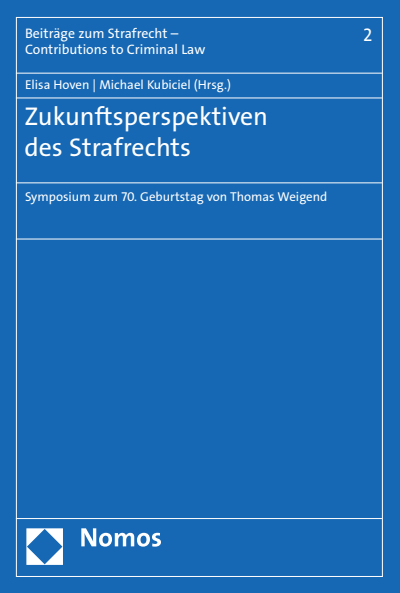
Zukunftsperspektiven des Strafrechts
Symposium zum 70. Geburtstag von Thomas Weigend- Editors:
- |
- Series:
- Beiträge zum Strafrecht - Contributions to Criminal Law, Volume 2
- Publisher:
- 2020
Search publication
Bibliographic data
- Edition
- 1/2020
- Copyright Year
- 2020
- ISBN-Print
- 978-3-8487-6685-7
- ISBN-Online
- 978-3-7489-0797-8
- Publisher
- Nomos, Baden-Baden
- Series
- Beiträge zum Strafrecht - Contributions to Criminal Law
- Volume
- 2
- Language
- German
- Pages
- 402
- Product Type
- Edited Book
Table of contents
ChapterPages
- Titelei/Inhaltsverzeichnis No access Pages 1 - 8
- Thomas Weigend und die Zukunftsperspektiven der Strafrechtswissenschaft No access Pages 9 - 12Authors: |
- Authors:
- I. Einführung No accessAuthors:
- II. Logik und Grundlagen von Prognosen No accessAuthors:
- Authors:
- 1. Abnahme des Kriminalitätsaufkommens No accessAuthors:
- 2. Veränderte Zusammensetzung des Kriminalitätsaufkommens No accessAuthors:
- Authors:
- 1. Wirtschaftliche, technologische und gesellschaftliche Rahmenbedingungen No accessAuthors:
- 2. Strafrechtspolitische Entwicklungen No accessAuthors:
- V. Abschließende Folgerungen No accessAuthors:
- Authors:
- I. Zur Schwierigkeit von Prognosen No accessAuthors:
- Authors:
- 1. Ausweislich der Polizeilichen Kriminalstatistik der Jahre 1998 und 2018 No accessAuthors:
- 2. Ausweislich der Strafverfolgungsstatistik der Jahre 1997 und 2017 No accessAuthors:
- III. Thesen zur Entwicklung der Kriminalität in der Zukunft No accessAuthors:
- Authors:
- 1. Introduction No accessAuthors:
- 2. Observations made by Ralf Kölbel and some extending remarks No accessAuthors:
- 3. Cybercrime No accessAuthors:
- 4. Mass victimization No accessAuthors:
- 5. The State as perpetrator No accessAuthors:
- 6. Closing remarks No accessAuthors:
- Authors:
- Authors:
- 1. Ein Streiflicht vorweg … No accessAuthors:
- 2. Zwischenbemerkung zum Feindstrafrecht No accessAuthors:
- Authors:
- 1. Genome Editing der Keimbahn – auch zur „Verbesserung“ des Menschen? No accessAuthors:
- Authors:
- a) Normativer Status No accessAuthors:
- b) Perspektiven der Entwicklung No accessAuthors:
- c) Normative Grenzen? Strafrechtliche Verbote? No accessAuthors:
- Authors:
- 1. Ein Eskalationsmodell der Autonomiegefährdung durch CL-BCIs No accessAuthors:
- 2. Strafrechtliche Fragen No accessAuthors:
- 3. Ein Blick voraus: Was bleibt zu klären? No accessAuthors:
- Authors:
- Authors:
- A. The system as a whole – criminal law included No accessAuthors:
- B. Criminal law as a specific discipline No accessAuthors:
- 2. Authoritarian regimes and criminal law No accessAuthors:
- 3. Will criminal law be able to stand up against the temptation to prevent future crimes? No accessAuthors:
- 4. Is criminal law affordable? No accessAuthors:
- 5. Criminal law and equality No accessAuthors:
- 6. Instead of a summary No accessAuthors:
- Authors:
- Authors:
- 1. Strafzwecke No accessAuthors:
- 2. Die Funktion der Strafe No accessAuthors:
- 3. Die Institution der Strafe No accessAuthors:
- 4. Verhältnis zwischen Institution, Funktion und Zweck der Strafe No accessAuthors:
- Authors:
- 1. Feindstrafrecht No accessAuthors:
- 2. Remoralisierung des Strafrechts No accessAuthors:
- Authors:
- 1. Strafrecht als Schutz der Identität der Gesellschaft? No accessAuthors:
- 2. Einwände No accessAuthors:
- IV. Alternative Deutungen der Aufgabe des Strafrechts in der Gesellschaft No accessAuthors:
- Authors:
- 1) Populismus als Diskursstrategie No accessAuthors:
- Authors:
- a) Der Straftäter als Feindbild No accessAuthors:
- b) Politik der Eliten als Ursache für Kriminalität No accessAuthors:
- c) Gefahren populistischer Kriminalpolitik No accessAuthors:
- 3) „Populismus-Kritik-Kritik“ No accessAuthors:
- Authors:
- a) Kriminalpolitik am Scheideweg? No accessAuthors:
- Authors:
- aa) Transparenz No accessAuthors:
- bb) Einbindung in kriminalpolitische Entscheidungen No accessAuthors:
- Authors:
- Zusammenfassend sollen folgende Thesen aufgestellt werden: No accessAuthors:
- Authors:
- I. No accessAuthors:
- II. Wesentliche Punkte des Referats Hoven No accessAuthors:
- Wesentliche und überwiegende Übereinstimmungen No accessAuthors:
- Fragen, Zweifel und Kritik No accessAuthors:
- Abschließend zur Kritik No accessAuthors:
- Fazit No accessAuthors:
- Authors:
- Introduction No accessAuthors:
- There and Back Again No accessAuthors:
- Populist politics as a threat to the rule of law No accessAuthors:
- Conclusions No accessAuthors:
- Authors:
- I. Neue Technologien und ihre Konvergenz No accessAuthors:
- Authors:
- (1) Neue Arbeitsmittel und Arbeitsmethoden im Recht No accessAuthors:
- (2) Rechtsanwendung: Anpassungsleistungen des Rechts No accessAuthors:
- (3) Rechtspolitik No accessAuthors:
- (4) Algorithmisierung des Rechts No accessAuthors:
- (5) Veränderte Formen der Darstellung und der Nutzung von Recht No accessAuthors:
- (6) Folgen der Digitalisierung für Wahrnehmung, Akzeptanz und Funktion von Recht No accessAuthors:
- (7) Weitergehende gesellschaftliche und politische Folgen No accessAuthors:
- III. Zusammenfassung und Ausblick No accessAuthors:
- Authors:
- I. Digitalisierung der Lebenswelt: Von der Euphorie zur Ernüchterung No accessAuthors:
- Authors:
- 1. Ambivalenz digitaler Systeme No accessAuthors:
- 2. Konsolidierung des materiellen Strafrechts No accessAuthors:
- 3. Fortlaufende Anpassung des Strafverfahrensrechts No accessAuthors:
- III. Der Roboter als Richter: Rechtsdurchsetzung mit Hilfe von digitalen Systemen No accessAuthors:
- III. Fazit No accessAuthors:
- Authors:
- I. Hinführung No accessAuthors:
- II. Gründe für legitime Effizienzbestrebungen No accessAuthors:
- Authors:
- Authors:
- a) Ein alter Bekannter: § 153a StPO No accessAuthors:
- b) Noch ein Geburtstagskind: § 257c StPO No accessAuthors:
- Authors:
- a) Erhöhte Anforderungen an die Begründung von Beweisanträgen No accessAuthors:
- b) Längere Fortsetzung der Hauptverhandlung nach Befangenheitsanträgen No accessAuthors:
- 3. Ausblick: Mehr Effizienz durch „legal tech“? No accessAuthors:
- IV. Ein kurzes Fazit No accessAuthors:
- Authors:
- I. Values of the Criminal Process No accessAuthors:
- II. Fairness, Efficiency, and Truthseeking in Contemporary Criminal Procedure: The Case of Plea Bargaining No accessAuthors:
- III. Efficiency, Fairness, Truthseeking, and the Future of Criminal Procedure: The Effects of New Technology No accessAuthors:
- IV. Conclusion No accessAuthors:
- Authors:
- 1. Introduction No accessAuthors:
- 2. The Art of Doubt No accessAuthors:
- 3. Defence Rights Crunch No accessAuthors:
- 4. Unprepared to Deal with the Digitalisation of Criminal Evidence and Criminal Investigations? The Case of Italy No accessAuthors:
- 5. Adapting Old Principles to New Legal Challenges in the Field of Surveillance No accessAuthors:
- 6. Devolving the Responsibility to Adjudicate to Science and Technology. No accessAuthors:
- 7. Risks of algorithms No accessAuthors:
- 8. How to Face Future Challenges – Is There Still Room for Dialectic? No accessAuthors:
- 9. Conclusions No accessAuthors:
- Authors:
- I. Einleitung No accessAuthors:
- Authors:
- Authors:
- a) Treaty based crimes No accessAuthors:
- b) Core crimes No accessAuthors:
- c) Menschenrechte No accessAuthors:
- Authors:
- a) Europarat No accessAuthors:
- b) Supranationales Recht der EG/EU No accessAuthors:
- c) Menschenrechte No accessAuthors:
- III. Ausblick No accessAuthors:
- Authors:
- 1. Umfang der Internationalisierung des nationalen Strafrechts No accessAuthors:
- 2. Legitimitätsfragen: Grenzen der Übertragung von Strafgesetzgebungskompetenz No accessAuthors:
- 3. Qualitätsfragen: Bewertung der Qualität von Strafnormen No accessAuthors:
- Authors:
- 1. Introduction No accessAuthors:
- Authors:
- 2.1 International level No accessAuthors:
- 2.2 Domestic level No accessAuthors:
- 2.3 New Challenges: International Outlaws No accessAuthors:
- Authors:
- 3.1 'On Call Justice' No accessAuthors:
- 3.2 Regional Criminal Justice No accessAuthors:
- Authors:
- Reintegration No accessAuthors:
- Subsequent prosecutions No accessAuthors:
- 4. The Discipline No accessAuthors:
- 5. Conclusion No accessAuthors:
- Authors:
- Authors:
- 1. Emerging Critical Voices No accessAuthors:
- 2. The Court’s Performance: The Visible Achievements No accessAuthors:
- Authors:
- a) Harmonization of Jurisprudence No accessAuthors:
- b) Victim’s Participation No accessAuthors:
- c) Investigations No accessAuthors:
- d) Witness Testimonies No accessAuthors:
- e) E-Court Proceedings No accessAuthors:
- f) Languages No accessAuthors:
- Authors:
- 1. Investigations No accessAuthors:
- 2. Efficient Proceedings No accessAuthors:
- 3. Political challenges No accessAuthors:
- III. Concluding Remarks: The Court in the Next 20 Years No accessAuthors:
- Authors:
- 1. Zustand I: Dogmatisierung des materiellen Völkerstrafrechts No accessAuthors:
- 2. Zustand II: Architektur der Völkerstrafrechtspflege No accessAuthors:
- 3. Zukunft: Drei Thesen No accessAuthors:
- Authors:
- 1 Transitional Justice: allgemein und in Kolumbien No accessAuthors:
- 2 Das völker(straf)rechtliche Argument gegen (absolute) Amnestien für völkerrechtliche Kernverbrechen No accessAuthors:
- Authors:
- 3.1 Allgemeine Bemerkungen No accessAuthors:
- 3.2 Straf(zweck)gerechtigkeit und Amnestie No accessAuthors:
- 3.3 Amnestiefähige (politische und konnexe) versus nicht amnestiefähige (allgemeine und völkerrechtliche) Straftaten No accessAuthors:
- 3.4 Drogenhandel als im Zusammenhang mit einer politischen Straftat stehende und damit amnestiefähige Straftat? No accessAuthors:
- 4 Die effektive Umsetzung des Amnestiegesetzes No accessAuthors:
- 5. Schlussfolgerungen No accessAuthors:
- Schlusswort No access Pages 367 - 372Authors:
- I. Bücher No access
- II. Kommentierungen No access
- III. Aufsätze No access
- IV. Entscheidungsanmerkungen No access
- V. Buchbesprechungen No access
- VI. Verschiedenes No access
- Zeitschriften und Buchreihen No access
- Bücher No access