, to see if you have full access to this publication.
Edited Book No access
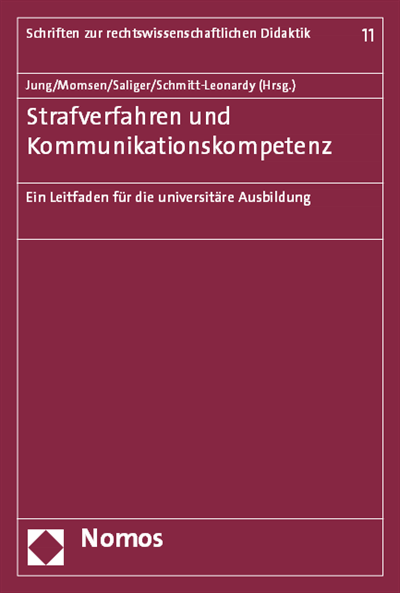
Strafverfahren und Kommunikationskompetenz
Ein Leitfaden für die universitäre Ausbildung- Editors:
- | | |
- Series:
- Schriften zur rechtswissenschaftlichen Didaktik, Volume 11
- Publisher:
- 2018
Keywords
Search publication
Bibliographic data
- Edition
- 1/2018
- Copyright Year
- 2018
- ISBN-Print
- 978-3-8487-4269-1
- ISBN-Online
- 978-3-8452-8532-0
- Publisher
- Nomos, Baden-Baden
- Series
- Schriften zur rechtswissenschaftlichen Didaktik
- Volume
- 11
- Language
- German
- Pages
- 231
- Product Type
- Edited Book
Table of contents
ChapterPages
- Titelei/Inhaltsverzeichnis No access Pages 1 - 10
- Authors: |
- I. Prolog No accessAuthors: |
- Authors: |
- 1. Kurs Schlüsselqualifikation & Strafprozess: Planungsphase No accessAuthors: |
- Authors: |
- a) Inhalte – konkret No accessAuthors: |
- b) Methoden No accessAuthors: |
- c) Evaluation – Vorgehen – Ergebnisse No accessAuthors: |
- III. Epilog No accessAuthors: |
- Authors:
- Authors:
- 1. Begriff – Schlüsselqualifikationen No accessAuthors:
- 2. Bereiche – Schlüsselqualifikationen No accessAuthors:
- 3. Kommunikative Kompetenz als Schlüsselqualifikation No accessAuthors:
- 4. Kommunikationsmodell No accessAuthors:
- 5. Lernziel – Kommunikative Kompetenz als Schüsselqualifikation No accessAuthors:
- II. Juristenausbildung – Kommunikative Kompetenz als Schlüsselqualifikation No accessAuthors:
- Authors:
- 1. Maklerübung No accessAuthors:
- 2. Grundsätzliches zum Rollenspiel No accessAuthors:
- 3. Gerichtssimulation im Rollenspielformat No accessAuthors:
- Authors: |
- Authors: |
- 1. Was ist eine Law Clinic? No accessAuthors: |
- Authors: |
- a) Erstes Modul: Einführung in das Strafverfahrensrecht aus Verteidigungsperspektive No accessAuthors: |
- b) Zweites Modul: Einführung in Verfahrensstrategie und ‑taktik durch Strafverteidiger No accessAuthors: |
- c) Drittes Modul: Praktikum No accessAuthors: |
- d) Viertes Modul: Kleingruppenarbeit No accessAuthors: |
- e) Fünftes Modul: Präsentation No accessAuthors: |
- f) Sechstes Modul: Seminararbeit No accessAuthors: |
- g) Weitere Optionen No accessAuthors: |
- 3. Ausbildungsziele No accessAuthors: |
- 4. Alternative Modelle der Clinical Legal Education No accessAuthors: |
- II. Fazit No accessAuthors: |
- Authors:
- A. Einleitung No accessAuthors:
- Authors:
- Authors:
- Authors:
- a) Die zu vergebenden Rollen sind: No accessAuthors:
- b) Die beobachtenden Teilnehmer orientieren sich an den folgenden Fragen: No accessAuthors:
- Authors:
- Authors:
- aa) Utilitaristische Argumente: No accessAuthors:
- bb) Überlebenschancen No accessAuthors:
- cc) Abstufungen des Wertes der einzelnen Leben No accessAuthors:
- dd) Die Situation transzendierende Aspekte No accessAuthors:
- b) Kommunikationstrategien No accessAuthors:
- c) Entscheidungsverfahren No accessAuthors:
- 3. Diskussionsimpulse No accessAuthors:
- Authors:
- Authors:
- a) Die zu vergebenden Rollen sind: No accessAuthors:
- b) Ablauf der Gerichtssimulation No accessAuthors:
- Authors:
- Authors:
- aa) Überblick über den Standpunkt No accessAuthors:
- bb) Argumente und Positionen No accessAuthors:
- cc) Variation: Forderung der Todesstrafe No accessAuthors:
- Authors:
- aa) Überblick über den Standpunkt No accessAuthors:
- bb) Argumente (auch in Abgrenzung zur Vergeltungstheorie) No accessAuthors:
- Authors:
- aa) Argument gegen eine strafrechtliche Verantwortung No accessAuthors:
- bb) Argumente gegen eine Vergeltungsstrafe und/oder Präventionstheorie der Strafe No accessAuthors:
- cc) Argumente gegen die Todesstrafe No accessAuthors:
- d) Richter No accessAuthors:
- 3. Analyse der Simulation No accessAuthors:
- C. Fazit No accessAuthors:
- Authors:
- I. Einleitung No accessAuthors:
- Authors:
- 1. Richterkollegen und sonstige Justizmitarbeiter No accessAuthors:
- 2. Schöffen No accessAuthors:
- Authors:
- a) Kommunikative Verfahrensführung No accessAuthors:
- b) Verständigung No accessAuthors:
- c) Konfliktverteidigung No accessAuthors:
- 4. Angeklagter No accessAuthors:
- 5. Staatsanwalt No accessAuthors:
- 6. Zeugen No accessAuthors:
- 7. Fazit No accessAuthors:
- Authors:
- 1. Studium No accessAuthors:
- 2. Referendariat No accessAuthors:
- 3. Berufseinstieg als Assessor bei Gericht oder Staatsanwaltschaft No accessAuthors:
- Authors:
- I. Wahrnehmung als Rekonstruktion der Wirklichkeit No accessAuthors:
- II. Wahrnehmung und Aufmerksamkeit No accessAuthors:
- III. Wahrnehmung und Langzeiterinnern No accessAuthors:
- IV. Gedächtnisfehler durch Testen No accessAuthors:
- V. Falsche Erinnerungen No accessAuthors:
- VI. Schlussbemerkungen No accessAuthors:
- Authors: |
- Authors: |
- I. Auch ein später Siegeszug der Sozialwissenschaften im Strafrecht No accessAuthors: |
- II. Informelle Programme in der strafjuristischen Ausbildung No accessAuthors: |
- III. Soft Skills im konsensualen Strafverfahren No accessAuthors: |
- Authors: |
- I. Begriffliche Klärungen No accessAuthors: |
- II. Überblick über bisherige Veranstaltungsformate No accessAuthors: |
- Authors: |
- Authors: |
- 1. Kommunikation durch den Verteidiger No accessAuthors: |
- 2. Kommunikation durch die Staatsanwaltschaft No accessAuthors: |
- 3. Kommunikation durch das Gericht No accessAuthors: |
- Authors: |
- 1. Kompensation fehlenden Erlebens No accessAuthors: |
- 2. Kompensation fehlender Dynamik No accessAuthors: |
- Authors: |
- I. Die studentische Perspektive No accessAuthors: |
- II. Die Perspektive der Veranstalter und teilnehmenden Praktiker No accessAuthors: |
- Authors: |
- I. Der Ablauf im Überblick No accessAuthors: |
- Authors: |
- 1. Teilnehmerkreis No accessAuthors: |
- 2. Öffentlichkeitsarbeit und Einbindung weiterer Beteiligter No accessAuthors: |
- 3. Definition des Erwartungshorizontes No accessAuthors: |
- 4. Erwartungsbrüche No accessAuthors: |
- 5. Die Hauptverhandlung No accessAuthors: |
- 6. Das Nachgeschehen No accessAuthors: |
- F. Fazit No accessAuthors: |
- Authors:
- 1. Einleitung No accessAuthors:
- 2. Vorfragen im Bereich des Wirtschaftsstrafrechts und der Compliance No accessAuthors:
- Authors:
- a) Warum kann ein Perspektivenwechsel hilfreich sein? – Der Korrektor No accessAuthors:
- b) Wie wechselt man die Perspektive? No accessAuthors:
- Authors:
- a) „Füllwörter“ und der gelbe Zettel No accessAuthors:
- b) Ein lesbarer Text bedeutet harte Arbeit – Diktiergeräte No accessAuthors:
- c) Aber wie schreibt man nun einfacher? No accessAuthors:
- 5. Zusammenfassung No accessAuthors:
- Authors:
- I. Einführung in die Problematik No accessAuthors:
- II. Die „Sockelverteidigung“ und die damit verbundenen Problematiken No accessAuthors:
- III. Schwierigkeiten bei der Kommunikation in Unternehmen im Zusammenhang mit Sockelverteidigungen No accessAuthors:
- IV. Konkretes Übungs- bzw. Veranstaltungsmodell: Erkennen der Interessenlagen an einem konkreten Fall No accessAuthors:
- V. Konkretes Übungs- bzw. Veranstaltungsmodell: Vertiefung anhand von Einzelsituationen No accessAuthors:
- VI. Schlussbemerkungen und ergänzende Vorgaben für die Durchführung von Übungen No accessAuthors:
- Authors:
- Die Institutionalisierung der Mediation No accessAuthors:
- Das Rechtssystem No accessAuthors:
- Die juristische Ausbildung No accessAuthors:
- Das Berufsfeld der Juristen No accessAuthors:
- Das Berufsfeld der Akteure der Restorative Justice No accessAuthors:
- Grundkonflikte im Spannungsfeld von Strafprozess und Mediation No accessAuthors:
- Die rechtsstaatliche Perspektive No accessAuthors:
- Die Perspektive der Restorative Justice No accessAuthors:
- Eigenverantwortung No accessAuthors:
- Freiwilligkeit No accessAuthors:
- Vertraulichkeit No accessAuthors:
- Mediation als (strafrechtsbezogener) Lehrgegenstand in der Juristenausbildung No accessAuthors:
- Fazit No accessAuthors:
- Autorenverzeichnis No access Pages 231 - 231