, to see if you have full access to this publication.
Edited Book No access
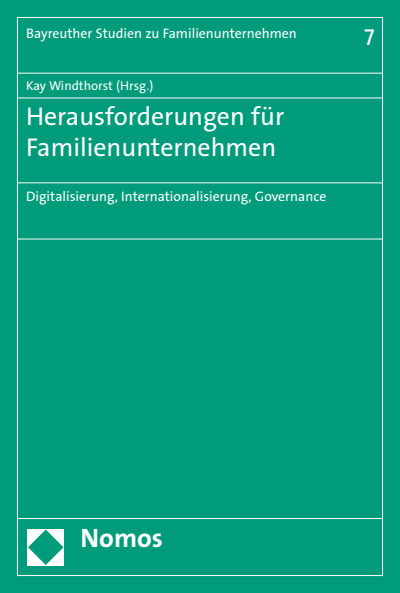
Herausforderungen für Familienunternehmen
Digitalisierung, Internationalisierung, Governance- Editors:
- Series:
- Bayreuther Studien zu Familienunternehmen, Volume 7
- Publisher:
- 2020
Search publication
Bibliographic data
- Edition
- 1/2020
- Copyright Year
- 2020
- ISBN-Print
- 978-3-8487-4671-2
- ISBN-Online
- 978-3-8452-8898-7
- Publisher
- Nomos, Baden-Baden
- Series
- Bayreuther Studien zu Familienunternehmen
- Volume
- 7
- Language
- German
- Pages
- 142
- Product Type
- Edited Book
Table of contents
ChapterPages
- Titelei/Inhaltsverzeichnis No access Pages 1 - 8
- Authors:
- I. Einleitung No accessAuthors:
- II. Digitalisierung ermöglicht neue Geschäftsmodelle No accessAuthors:
- III. Der Trend zur Digitalisierung No accessAuthors:
- IV. Handlungsfelder der digitalen Transformation No accessAuthors:
- V. Digitale Geschäftsmodelle durch das Internet der Dinge No accessAuthors:
- Authors: |
- I. Einleitung No accessAuthors: |
- Authors: |
- 1. Vertrauen als Voraussetzung für die Digitalisierung No accessAuthors: |
- 2. Differenz zwischen wahrgenommener und tatsächlicher Bedrohungslage No accessAuthors: |
- 3. Risiken No accessAuthors: |
- 4. Schutzmaßnahmen No accessAuthors: |
- III. Sicherheit als Geschäftsmodell No accessAuthors: |
- Zu Digitalisierung, Datenschutz und Datensicherheit von Unternehmen No access Pages 29 - 42Authors:
- Authors:
- I. Einleitung No accessAuthors:
- II. Der Trend zur Digitalisierung No accessAuthors:
- III. Limitationen des gegenwärtigen IT-Management-Paradigmas No accessAuthors:
- IV. Ein mögliches neues Paradigma: Innovate-Design-Transform No accessAuthors:
- V. Übergang: IT der zwei Geschwindigkeiten No accessAuthors:
- VI. Ein Blick in die Zukunft des IT-Managements No accessAuthors:
- VII. Schluss No accessAuthors:
- Auswirkungen der Digitalisierung auf IT-Prozesse No access Pages 55 - 62Authors:
- Authors:
- I. Einleitung: Entwicklung der Digitalisierung am praktischen Beispiel der rwt GmbH No accessAuthors:
- II. Was hat Maschinenstillstand mit Energieeffizienz zu tun? No accessAuthors:
- III. Datenverwaltung zur Vermeidung von Maschinenstillstand No accessAuthors:
- IV. Auf welche Prozessdaten kann der Werker heutzutage schnellstmöglich zugreifen, um einen drohenden Maschinenstillstand zu erkennen? No accessAuthors:
- V. Wie funktioniert WDE® (WerkzeugDatenErfassung)? No accessAuthors:
- Authors:
- 1. Fehlende Werkzeuge No accessAuthors:
- 2. Rüstzeiten No accessAuthors:
- 3. Unvollständige oder fehlerhafte Informationen No accessAuthors:
- Authors:
- I. Der Begriff „Digitalisierung“ No accessAuthors:
- II. Geschäftsbereich und Geschäftsmodell des Unternehmens No accessAuthors:
- III. Umgang von Familienunternehmen mit den Herausforderungen der Digitalisierung No accessAuthors:
- Authors:
- I. Einleitung No accessAuthors:
- II. Sind Familienunternehmen die Dinosaurier des digitalen Zeitalters? No accessAuthors:
- III. Digitalisierung darf nicht mit der Optimierung von IT-Prozessen gleichgesetzt werden No accessAuthors:
- IV. Besonderes Wertesystem von Familienunternehmen No accessAuthors:
- V. Fördert oder behindert diese Unternehmenskultur die digitale Reife? No accessAuthors:
- Authors:
- 1. Kostenreduzierung wichtiger als neue digitale Produkte No accessAuthors:
- 2. Diskrepanzen zwischen Innensicht und Außensicht des Unternehmens No accessAuthors:
- 3. Diskrepanzen zwischen älterer Generation und Next Gen No accessAuthors:
- 4. Digitale Transformationskompetenz als Faktor des familiären Zusammenhalts No accessAuthors:
- Authors:
- 1. Unternehmensstrategie No accessAuthors:
- 2. Entscheidungsstruktur des Unternehmens No accessAuthors:
- 3. Organisationsstruktur des Unternehmens No accessAuthors:
- 4. Innovationskultur No accessAuthors:
- 5. Kultur der Mitarbeiterführung No accessAuthors:
- 6. Kundenstruktur No accessAuthors:
- 7. Wettbewerbsstruktur No accessAuthors:
- VIII. Aufbruch zu neuen Ufern No accessAuthors:
- Der ehrbare Kaufmann No access Pages 83 - 94Authors:
- Authors:
- I. Einleitung No accessAuthors:
- II. Methodischer Ansatz und Gang der Überlegungen No accessAuthors:
- Authors:
- 1. Begriff No accessAuthors:
- 2. Strukturelle Komponente der Family Governance No accessAuthors:
- 3. Funktionelle Komponente der Family Governance No accessAuthors:
- 4. Merkmale der Family Governance No accessAuthors:
- Authors:
- 1. Begriff No accessAuthors:
- 2. Strukturelle Komponente der Corporate Governance No accessAuthors:
- 3. Funktionelle Komponente der Corporate Governance No accessAuthors:
- 4. Merkmale der Corporate Governance No accessAuthors:
- Authors:
- Authors:
- a) Perspektive der Unternehmensführung und der Eigentümerfamilie No accessAuthors:
- b) Wechselseitige Beeinflussung von Corporate und Family Governance No accessAuthors:
- 2. Unterschiedliche Funktionsbedingungen No accessAuthors:
- Authors:
- a) Nachfolgeregelung No accessAuthors:
- b) Vertraulichkeit No accessAuthors:
- c) Kollision zwischen Unternehmens- und Familieninteressen No accessAuthors:
- Authors:
- 1. Offener Dialog statt Abschottung No accessAuthors:
- 2. Klare Trennung zwischen Corporate und Family Governance statt Verschmelzung No accessAuthors:
- Authors:
- Authors:
- 1. Zunahme von Privatstiftungen No accessAuthors:
- 2. Gründe für diese Entwicklung No accessAuthors:
- 3. Der Chor der Protagonisten No accessAuthors:
- 4. Stiftungslösung – der Königsweg? No accessAuthors:
- Authors:
- 1. Begriff der Stiftung No accessAuthors:
- Authors:
- a) Private Stiftung No accessAuthors:
- b) Familienangehörige als überwiegend Bezugsberechtigte No accessAuthors:
- 3. Organe einer Familienstiftung No accessAuthors:
- Authors:
- a) Gemeinnützige Stiftungen No accessAuthors:
- b) Ausländische Privatstiftungen No accessAuthors:
- Authors:
- a) Familienstiftung als Unternehmensträgerstiftung No accessAuthors:
- b) Familienstiftung als Beteiligungsträgerstiftung No accessAuthors:
- Authors:
- 1. Festlegung der Beurteilungsparameter No accessAuthors:
- Authors:
- a) Unternehmenskontinuität No accessAuthors:
- b) Nachfolge in der Unternehmensführung No accessAuthors:
- c) Zusammenhalt des Familienvermögens No accessAuthors:
- Authors:
- a) Begrenzung des Zugriffs der Gläubiger No accessAuthors:
- b) Steuerliche Optimierung No accessAuthors:
- Authors:
- a) Wahrung des Familienfriedens No accessAuthors:
- b) Wirtschaftliche Absicherung der Nachkommen No accessAuthors:
- c) Gemeinnützige Ziele No accessAuthors:
- IV. Fazit No accessAuthors:
- Authors:
- I. Einleitung No accessAuthors:
- II. Strategische Vorfragen No accessAuthors:
- III. Einstiegsalternativen No accessAuthors:
- Authors:
- 1. Rechtsform No accessAuthors:
- 2. Finanzierung No accessAuthors:
- 3. Konzernstruktur No accessAuthors:
- Authors:
- 1. Vorbereitungs- und Verhandlungsphase No accessAuthors:
- 2. Abschluss- und Vollzugsphase No accessAuthors:
- 3. Integrationsphase No accessAuthors:
- Authors:
- 1. Gründungsphase No accessAuthors:
- 2. Betriebsphase No accessAuthors:
- 3. Exitphase No accessAuthors:
- VII. Investitionsrecht No accessAuthors:
- VIII. Resümee No accessAuthors:
- Verzeichnis der Autoren No access Pages 141 - 142