, to see if you have full access to this publication.
Edited Book No access

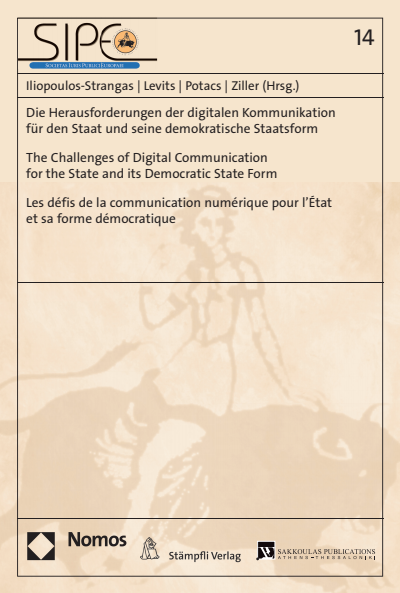
Die Herausforderungen der digitalen Kommunikation für den Staat und seine demokratische Staatsform | The Challenges of Digital Communication for the State and its Democratic State Form | Les défis de la communication numérique pour l’État et sa forme démocratique

Editors:
Publisher:
 2021


Bibliographic data

Copyright year
2021
ISBN-Print
978-3-8487-7986-4
ISBN-Online
978-3-7489-2378-7
Publisher
Nomos, Baden-Baden
Series
Societas Iuris Publici Europaei (SIPE)
Volume
14
Language
German
Pages
269
Product type
Edited Book

Table of contents

ChapterPages
  1. Titelei/Inhaltsverzeichnis No access Pages 1 - 24
    1. Workshop of junior scholars No access
    2. Atelier des jeunes chercheurs No access
  2. Irēna Kucina
    1. I. Introduction No access Irēna Kucina
    2. II. Algorithms in courts and their possible qualification No access Irēna Kucina
    3. III. Supporting algorithms that could support the judiciary and ensure the right to a fair trial. No access Irēna Kucina
    4. IV. Decision-making algorithms: significant risk to fundamental rights No access Irēna Kucina
    5. V. Conclusion No access Irēna Kucina
  3. Anna Ludin
    1. I. From world champion in data protection to AI pioneer? No access Anna Ludin
    2. Anna Ludin
      1. A. Transparency and explainability No access Anna Ludin
      2. B. Non-discrimination No access Anna Ludin
      3. C. Accountability and liability No access Anna Ludin
      4. D. Risk management and institutional framework No access Anna Ludin
    3. Anna Ludin
      1. A. We cannot regulate before we know the risks (ex-post regulatory approach) No access Anna Ludin
      2. B. Sector-specific vs. horizontal regulation No access Anna Ludin
      3. C. Fora flexible European approach No access Anna Ludin
    4. IV. Towards a policy approach of deregulation in the field of AI No access Anna Ludin
  4. Sabine Schäufler
    1. I. Einleitung: Ethische und rechtliche Herausforderungen durch die „künstliche Intelligenz“ (KI) No access Sabine Schäufler
    2. Sabine Schäufler
      1. A. KI als Datenverarbeitungsprogramm No access Sabine Schäufler
      2. B. Gefährdung der Privatheit durch die KI No access Sabine Schäufler
      3. C. Bisherige grundrechtliche Konzeptionen des Schutzes der Privatheit No access Sabine Schäufler
      4. D. Defizite des grundrechtlichen Schutzes im Anwendungsbereich der KI No access Sabine Schäufler
    3. Sabine Schäufler
      1. A. Schutzziel der Privatheit No access Sabine Schäufler
      2. B. Übertragung auf Gefährdungen durch die KI: Schutz vor KI-basierten persönlichkeits- und freiheitsbeschränkenden Profilen No access Sabine Schäufler
      3. C. Schutz von KI-basierten Profilen im Verhältnis zwischen Privaten No access Sabine Schäufler
    4. IV. Schluss: Konsequenz für mögliche Schutzinstrumente No access Sabine Schäufler
    1. The Challenges of Digital Communication for the State and its Democratic State Form No access
    2. Les défis de la communication numérique pour l’État et sa forme démocratique No access
    3. Erste Sitzung – First Session – Première Séance No access
    4. Der Strukturwandel der Öffentlichkeit durch die digitale Kommunikation No access
    5. The Structural Transformation of the Public Sphere through Digital Communication No access
    6. La transformation structurelle de la sphère publique au travers de la communication numérique No access
  5. Ineta Ziemele
    1. I. Introduction No access Ineta Ziemele
    2. II. Critiques against the democracy No access Ineta Ziemele
    3. III. Internet as the new Pnyx – the angelic vision of the early days No access Ineta Ziemele
    4. IV. Liberal values in post-liberal world No access Ineta Ziemele
    5. V. Algorithms and democracy – enclosing the users into bubbles No access Ineta Ziemele
    6. VI. Concluding remarks No access Ineta Ziemele
  6. Dimitris Charalambis
    1. I. Das Politische und die Politik in der Ära der Deregulierung No access Dimitris Charalambis
    2. II. Die Ursprünge des herrschenden ökonomischen Paradigmas No access Dimitris Charalambis
    3. III. Demokratisierungsprozess und Anerkennung: Vernunft, Reaktion und Irrationalität No access Dimitris Charalambis
    4. IV. Das Politische und die Selbstregulierung des Marktes No access Dimitris Charalambis
    5. V. Die „trente glorieuses“, die dreißig glorreichen Jahre der Nachkriegsstabilität und das soziale Prinzip No access Dimitris Charalambis
    6. VI. Die neoliberale oder die Ungleichheitswende No access Dimitris Charalambis
    7. VII. Finanzkapital und Marktradikalismus No access Dimitris Charalambis
    8. VIII. Die Bankenkrise von 2007/2008 und die Implosion des kreditgestützten Wohlstandbooms No access Dimitris Charalambis
    9. IX. Die Resistenz des neoliberalen Paradigmas No access Dimitris Charalambis
    10. X. Die Eurozone und die eigentümliche Hegemonie des deutschen Ordoliberalismus No access Dimitris Charalambis
    11. XI. Das Irrationale als Systemrationalität des Neoliberalismus No access Dimitris Charalambis
    12. XII. Spontane Ordnung, Ungleichheit, Abwertung der sozialen Anerkennung und postmoderne Unbestimmtheit No access Dimitris Charalambis
    1. Zwischen erforderlicher und legitimer Einflussnahme und illegitimer Manipulation der öffentlichen Meinung. Kann das Konzept der „wehrhaften Demokratie“ weiterentwickelt und an die neuen Herausforderun... No access
    2. Between Necessary and Legitimate Influence and Illegitimate Manipulation of Public Opinion. Can the Concept of "Militant Democracy" Be Further Developed and Adapted to the New Challenges? No access
    3. Entre influence nécessaire et légitime de l’opinion publique et manipulation illégitime. Le concept de démocratie militante peut-il être développé et adapté aux nouveaux défis ? No access
  7. Lorenzo Cotino Hueso
    1. Lorenzo Cotino Hueso
      1. A. Why is this topic interesting now? No access Lorenzo Cotino Hueso
      2. B. What are we talking about? No access Lorenzo Cotino Hueso
      3. C. Who originates disinformation? No access Lorenzo Cotino Hueso
    2. Lorenzo Cotino Hueso
      1. A. What is the legal concept, in democratic countries? No access Lorenzo Cotino Hueso
      2. B. And other countries as clear examples not to follow … No access Lorenzo Cotino Hueso
      3. C. The apparently easier way to act: the security or defense approach No access Lorenzo Cotino Hueso
    3. Lorenzo Cotino Hueso
      1. A. Freedom of expression is close to protecting the lies, especially in elections No access Lorenzo Cotino Hueso
      2. B. In the United States it is particularly difficult to control contents, especially in the political discourse No access Lorenzo Cotino Hueso
    4. IV. Disinformation threatens the democratic principle, electoral processes and equality in elections No access Lorenzo Cotino Hueso
    5. V. The measures taken by platforms and their regulation and guarantees No access Lorenzo Cotino Hueso
  8. Dominik Steiger
    1. Dominik Steiger
      1. A. Die Wehrhafte Demokratie – Ein ursprünglich deutsches Konzept No access Dominik Steiger
      2. Dominik Steiger
        1. 1. Interventionsverbot – Wehrhaftigkeit des Völkerrechts No access Dominik Steiger
        2. Dominik Steiger
          1. a. Wehrhafte Demokratie im engeren Sinne No access Dominik Steiger
          2. b. Wehrhafte Demokratie im weiteren Sinne: Die einfachen Schrankenregelungen nach der EMRK No access Dominik Steiger
          3. c. Fazit: Zwei Normstränge – Menschenrechte und Interventionsverbot No access Dominik Steiger
    2. Dominik Steiger
      1. Dominik Steiger
        1. 1. Prinzipielle Anwendbarkeit des Völkerrechts im Internet No access Dominik Steiger
        2. 2. Manipulation von Wählerregistrierungssystemen als Verstoß gegen das Interventionsverbot No access Dominik Steiger
        3. 3. Psychologische Manipulationen als Ausübung von Zwang? No access Dominik Steiger
      2. Dominik Steiger
        1. 1. Anwendbarkeit von Menschenrechten No access Dominik Steiger
        2. Dominik Steiger
          1. a. Wehrhafte Demokratie im weiteren Sinne: Rechtfertigungsgrund Demokratie und Recht auf freie Wahlen No access Dominik Steiger
          2. b. Wehrhafte Demokratie im engeren Sinne – Das Unwerturteil der wehrhaften Demokratie als Mehrwert No access Dominik Steiger
    3. III. Conclusio – Demokratie und Rechtsstaatlichkeit als zwei Seiten derselben Medaille No access Dominik Steiger
    1. Sind Völkerrecht und europäisches Recht für das Zeitalter der Digitalisierung bereit? No access
    2. Are International Public Law and European Law Ready for the Era of Digitisation? No access
    3. Le droit international public et le droit européen sont-ils prêts pour l’ère de la digitalisation ? No access
  9. Gabriele Della Morte
    1. I. Introduction No access Gabriele Della Morte
    2. II. L’inadéquation de la règlementation normative No access Gabriele Della Morte
    3. III. La problématique spécifique introduite par le big data No access Gabriele Della Morte
    4. IV. Les ‘axes de tensions’ entre les big data et protection des droits de l’homme No access Gabriele Della Morte
    5. V. L’origine de ces tensions: fonction prédictive et fonction prescriptive en opposition No access Gabriele Della Morte
  10. Herwig C.H. Hofmann
    1. Herwig C.H. Hofmann
      1. Herwig C.H. Hofmann
        1. 1. Linking Data Collections to Automated Decision-Making No access Herwig C.H. Hofmann
        2. 2. The Advent of Distribute Ledger Technologies in Decision-Making No access Herwig C.H. Hofmann
      2. Herwig C.H. Hofmann
        1. 1. Quantitative Effects No access Herwig C.H. Hofmann
        2. 2. Qualitative Effects No access Herwig C.H. Hofmann
        3. 3. Algorithms as Instances of Rule-Making No access Herwig C.H. Hofmann
        4. 4. Effects on Accountability Mechanisms and the Role of Transparency No access Herwig C.H. Hofmann
    2. Herwig C.H. Hofmann
      1. A. Normative Standards Arising from EU Public Law of Information No access Herwig C.H. Hofmann
      2. B. Linking EU Law of Information and Digitalisation No access Herwig C.H. Hofmann
      3. C. Algorithms as Administrative Rule-Making No access Herwig C.H. Hofmann
      4. D. Automated Decision-Making and Human Review No access Herwig C.H. Hofmann
    3. III. Outlook on Digitalisation and the Law of Information No access Herwig C.H. Hofmann
    1. Setzt das bisherige Konzept des Staates als eine menschliche Organisationsform der Enthumanisierung (Algorithmen, künstliche Intelligenz) der staatlichen (und privaten) Entscheidungen eine Grenze? No access
    2. Does the Present Concept of the State as an Organisation of Humans Pose a Limit to the De-Humanisation (Algorithms, Artificial Intelligence) of State (and Private) Decisions? No access
    3. Le concept actuel de l’État en tant que forme d’organisation humaine constitue-t-il une limite à la déshumanisation (algorithmes, intelligence artificielle) de la prise de décision étatique et individ... No access
  11. Annette Guckelberger
    1. I. Einführung No access Annette Guckelberger
    2. II. Voll- und Teilautomatisierung No access Annette Guckelberger
    3. Annette Guckelberger
      1. Annette Guckelberger
        1. 1. Elektronische Kommunikation zwischen Beteiligten und Behörden No access Annette Guckelberger
        2. 2. Beratung No access Annette Guckelberger
        3. 3. Anhörung No access Annette Guckelberger
        4. 4. Akteneinsichtsrecht No access Annette Guckelberger
        5. 5. Bekanntgabe des Verwaltungsakts No access Annette Guckelberger
      2. Annette Guckelberger
        1. 1. Anhörung No access Annette Guckelberger
        2. 2. Akteneinsichtsrecht No access Annette Guckelberger
        3. 3. Begründung der Verwaltungsentscheidungen No access Annette Guckelberger
        4. 4. Herbeiführung der Befassung eines menschlichen Amtswalters No access Annette Guckelberger
    4. IV. Fazit No access Annette Guckelberger
    1. Aktuelle Entwicklung der Akzeptanz des Vorrangs des Unionsrechts durch die nationalen Höchstgerichte – Ist eine Konvergenz möglich? No access
    2. Recent Developments in the Acceptance of the Primacy of EU Law by the National Supreme Courts – Is Convergence Possible? No access
    3. Développements actuels de la réception de la primauté du droit de l’Union par les cours suprêmes nationales – Une convergence est-elle possible ? No access
  12. Ezio Perillo
    1. I. First aspect: EU primacy and direct effect No access Ezio Perillo
    2. II. Second aspect: the EU’s competences No access Ezio Perillo
    3. III. The third aspect: the “Acquis communautaire” No access Ezio Perillo
  13. Vojtěch Šimíček
    1. I. Imperativ der eurokonformen Auslegung von innerstaatlichen Rechtsvorschriften No access Vojtěch Šimíček
    2. Vojtěch Šimíček
      1. A. Fall – Zuckerquoten III No access Vojtěch Šimíček
      2. B. Fall – Europäischer Haftbefehl No access Vojtěch Šimíček
      3. C. Fälle – Lissabon I, II No access Vojtěch Šimíček
    3. III. „Kurze Umleitung“ – Fall der slowakischen Altersrenten No access Vojtěch Šimíček
    4. IV. Rückkehr auf die „europäische Autobahn“ No access Vojtěch Šimíček
    5. V. Fazit No access Vojtěch Šimíček
  14. Armanas Abramavičius
    1. I. Allgemeine Bestimmungen No access Armanas Abramavičius
    2. II. Der Einfluss des EU-Rechts auf Strafverfahren No access Armanas Abramavičius
    3. III. Schlussbemerkungen No access Armanas Abramavičius
  15. Conclusions - Schlussbemerkungen No access Pages 253 - 264 Jacques Ziller
  16. SOCIETAS IURIS PUBLICI EUROPAEI No access Pages 265 - 269

Similar publications

from the topics "European Law & International Law & Comparative Law"
Cover of book: Der Volkseinwand
Book Titles No access
Florian Feigl
Der Volkseinwand
Cover of book: Wie fördert die EU Menschenrechte in Drittstaaten?
Book Titles No access
Dennis Traudt
Wie fördert die EU Menschenrechte in Drittstaaten?
Cover of book: Future-Proofing in Public Law
Edited Book No access
Nicole Koblenz LL.M., Nicholas Otto, Gernot Sydow
Future-Proofing in Public Law