, to see if you have full access to this publication.
Edited Book No access
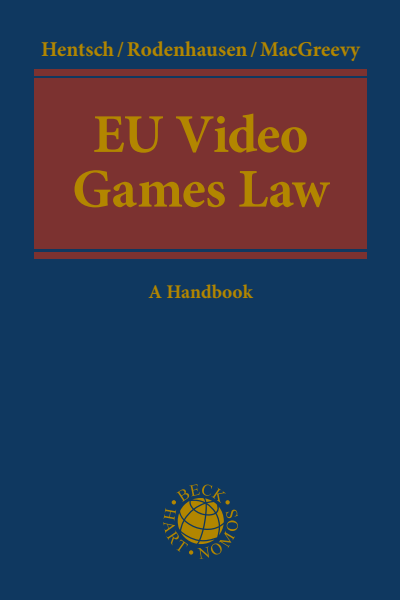
EU Video Games Law
A Handbook- Editors:
- | |
- Publisher:
- 2026
Summary
This book explores the legal issues that arise at every stage of a video game’s lifecycle in a practical and solution-oriented way, taking into account commercial and economic conditions. It serves as a comprehensive guide to both current and emerging legal challenges in the video game industry. As a concise and accessible handbook, it also provides guidance on key topics such as:
Search publication
Bibliographic data
- Edition
- 1/2026
- Copyright Year
- 2026
- ISBN-Print
- 978-3-7560-0130-9
- ISBN-Online
- 978-3-7489-4737-0
- Publisher
- Nomos, Baden-Baden
- Language
- English
- Pages
- 580
- Product Type
- Edited Book
Table of contents
ChapterPages
- Foreword No access
- Authors No access
- Abbreviations No access
- § 1 The Importance of the Video Games Industry to Europe’s economy No access Pages 3 - 3Authors:
- Authors:
- The industry value chain No access
- B. What is the market – methodology? No access
- C. What is the market? No access
- I. Age demographics No access
- II. Male/female split and average player age No access
- III. Time spent playing No access
- Authors:
- A. Introduction No access
- B. Cultural impact No access
- C. The power of video games No access
- D. The heartbeat of the cultural world No access
- E. A unique culture No access
- Authors: |
- A. Introduction No access
- I. Diversity of games No access
- II. Games in the EU single market No access
- III. Games in distinction to other media No access
- IV. Games as digital services No access
- I. EU video game law No access
- II. Horizontal games regulation No access
- III. Games-specific regulation No access
- IV. ECJ case law and other landmark cases on games No access
- I. Cloud gaming No access
- II. Metaverse No access
- III. Games and AI No access
- Authors:
- I. The industry you’re entering No access
- II. Studio identity and leadership alignment No access
- III. Business foundations No access
- IV. Funding realities No access
- V. Product development and community building No access
- VI. Today’s European political landscape No access
- VII. Founders’ principles for building in 2025 No access
- B. Conclusion – profits are the fuel, but purpose drives us No access
- Authors:
- A. Risk and reward No access
- B. How games are made No access
- C. Waterfall vs. iterative development No access
- D. Making money No access
- E. Marketing – community-building vs. buying users No access
- F. Marketing case: Minecraft No access
- G. Invest in games No access
- I. Pre-seed funding: 10,000–300,000 EUR No access
- II. Seed funding: 50,000 to 3 million EUR No access
- III. Series A, B, C No access
- I. Fundraising model problems No access
- J. Debt financing No access
- K. Publisher funding No access
- L. IPO No access
- M. Other kinds of game companies No access
- Authors: |
- I. Undertakings No access
- II. Advantage – State aid can take various forms No access
- III. State resources and imputability to the state No access
- IV. Selective advantage No access
- V. Distortion of competition and effect on trade between Member States No access
- B. Notification obligation No access
- I. General Block Exemption Regulation (GBER) No access
- II. No specific guidelines for video games No access
- I. General legality principle No access
- II. Promotion of culture: requirement of ‘verifiable national criteria’ No access
- III. Appropriateness, necessity and proportionality test No access
- IV. Limited distortion of competition and effect on trade No access
- E. Conclusion No access
- Authors:
- I. The foundations of the EU state aid framework No access
- II. The impact of the EU state aid framework No access
- I. Cultural aid No access
- II. R&D aid No access
- III. SME aid No access
- C. Different aid instruments and their target groups in the video game industry ecosystem No access
- D. Conclusion No access
- Authors:
- A. Introduction No access
- I. Company law No access
- II. Register law and procedure in company law No access
- a) Hobby and leisure projects No access
- aa) No supranational legal form No access
- bb) Legal issues arise from national law No access
- c) Exit-driven (venture capital-financed studios) No access
- d) Project companies No access
- a) Societas Europaea (SE) No access
- b) European Economic Interest Grouping (EEIG) No access
- a) Preparation of the foundation No access
- b) Notarisation (if required) No access
- c) Payment of the share capital No access
- d) Entry in the commercial register No access
- 2. Online justification No access
- 3. Articles of association content No access
- a) Authorisations No access
- b) Registered office abroad No access
- Typical CLAs No access
- 2. SAFE No access
- II. VC financing and ‘Series A round’ No access
- III. Other aspects No access
- E. Exit No access
- Authors:
- A. Who this chapter is for and what it is about No access
- B. From why you buy to what you buy: Follow the value No access
- C. Preparing for a deal No access
- D. Due diligence: Value meets risk No access
- E. Deal structuring No access
- F. Regulatory and compliance (merger control and beyond) No access
- G. Post-merger integration (PMI) No access
- H. Final thoughts No access
- Authors:
- I. Tax types No access
- 1. Location No access
- 2. Legal form of incorporation No access
- 3. Business model No access
- 1. Reliable accounting No access
- 2. The miracle of different results (and deferred taxes) No access
- II. Tax deductibility and add-backs No access
- III. Transfer Pricing No access
- IV. Tax breaks and other funding sources No access
- C. Tax notes & tax instalments No access
- D. Tax audits and litigations No access
- Authors: |
- 1. The different video game genres No access
- a) Video game development categories and their characteristics No access
- b) Deciding to stay indie vs. going big No access
- a) Selecting a video game concept: original IP, licensed properties and revivals No access
- b) Choosing game features and business models No access
- a) In-house development vs. external collaboration No access
- b) Self-publishing vs. partnering with a publisher? No access
- c) Game engine choice: developing a proprietary engine vs. licensing a third-party engine No access
- 1. Ideation and prototyping No access
- 2. Key stakeholders and roles No access
- a) Licensing and technology use No access
- b) Intellectual property (IP) protection No access
- c) Funding and publishing agreements No access
- 1. Preproduction, Alpha and Beta milestones No access
- 2. Key stakeholders and roles No access
- 3. Outsourcing No access
- 4. Involving the players in the development No access
- 5. Legal and business considerations during production No access
- 1. Game’s release and post-launch lifecycle No access
- 2. Key stakeholders and roles in live phase No access
- 3. Legal and business considerations during live phase No access
- Authors:
- A. Introduction No access
- B. The importance of copyright for video games No access
- C. The classification of video games No access
- I. The originality test No access
- II. The expression vs. ideas divide No access
- 1. Source code and software No access
- 2. Visual elements and artwork No access
- 3. Audio components No access
- 4. Written content No access
- a) Game mechanics and rules No access
- b) Functional elements No access
- c) Short phrases and titles No access
- d) Scenes à faire No access
- 1. Documentation No access
- 2. Joint ownership No access
- 3. Work-for-hire No access
- a) ‘I cannot copyright gameplay’ No access
- b) ‘Open-source means no copyright’ No access
- c) ‘Copyright requires registration’ No access
- 5. Key takeaways No access
- I. The Court of Justice ruling in Sony v Datel (case C-159/23) No access
- II. Why the ruling in Sony v Datel is not a game changer No access
- III. Conclusions from case analysis No access
- IV. A parallel to Lewis Galoob Toys, Inc. v Nintendo of America, Inc. No access
- V. UK cases No access
- VI. Springer v Eyeo and ad-blocking software No access
- F. The principle of exhaustion No access
- Authors:
- A. Introduction No access
- Art. 5(3)(a): Exception/limitation for illustration for teaching No access
- Art. 5: Exception/limitation for digital use of works for illustration for teaching No access
- 1. Conditions set out in Art. 5 of the DSM Copyright Directive No access
- a) Limitations imposed by the wording of Art. 5 and respective Recitals No access
- b) Limitations imposed by the three-step test No access
- c) Let’s Play No access
- 1. TDM exceptions No access
- 2. Rights reservation – is Art. 4 like the Hotel California? No access
- 3. Rights reservations as applied to video game distribution No access
- 4. Examples from rights reservation practices No access
- 5. Emerging rights reservation techniques No access
- Authors:
- A. Introduction: What is EU copyright contract law? No access
- I. Preliminary remarks No access
- II. Appropriate and proportionate remuneration No access
- III. Transparency obligation No access
- IV. Contract adjustment mechanism No access
- V. Alternative dispute resolution procedure No access
- VI. Right of revocation No access
- VII. Mandatory nature of Artt. 19, 20 and 21 DSMD No access
- VIII. Conclusion No access
- I. Peculiarities in the games industry No access
- II. Rules on copyright contract law shaped by traditional use cases No access
- 1. Art. 18 DSMD No access
- 2. Art. 19 DSMD No access
- 3. Art. 20 DSMD No access
- 4. Art. 21 DSMD No access
- 5. Art. 22 DSMD No access
- 6. Conclusion No access
- Authors:
- A. Introduction No access
- I. Historical foundations of musical rights in Europe No access
- II. Key stakeholders and ecosystem No access
- I. Authors’ rights No access
- II. Related rights No access
- III. A practical application No access
- 1. Essential contractual provisions No access
- 2. European and American systems comparison No access
- II. Licensed music No access
- 1. Purpose of CMOs and role in the gaming industry No access
- 2. Enforceability of direct licences No access
- 3. Potential approaches No access
- II. Impact of new technologies and business models No access
- III. AI-generated music No access
- I. Short excerpts and modifications No access
- II. Split ownership and licensing complexities No access
- III. Music and video streaming No access
- IV. Music and UGC No access
- Authors: |
- A. Introduction No access
- I. The role and importance of trademark registration in the video game industry No access
- II. Territory No access
- III. Goods and services No access
- 1. Eligibility for protection No access
- 2. Absolute grounds for refusal No access
- 3. Relative grounds for refusal No access
- 1. Video game title No access
- 2. Game’s logotypes and other symbols No access
- 3. Characters’ names No access
- 4. In-game assets No access
- 5. Slogans No access
- 6. Non-conventional trademarks No access
- VI. Registration Strategy No access
- I. Scope of protection – the texts No access
- II. Case law in the EU No access
- Authors:
- A. Unpacking the European video game publishing landscape No access
- I. Market size and growth: a continental powerhouse No access
- II. Diverse European markets: a multitude of choices No access
- III. Platform distribution: from PC master race to mobile domination No access
- IV. Digital vs. physical sales: the rise of the download No access
- I. Language localisation No access
- II. Cultural nuances: sensitivity and adaptation No access
- III. Case studies: successes and failures in localisation No access
- IV. Impact of globalisation No access
- I. Traditional publishing No access
- II. Indie publishing No access
- III. Free-to-play and Games as a Service (GaaS) No access
- IV. Esports and competitive gaming No access
- I. Funding and incentives No access
- II. PEGI and content regulation No access
- III. Data protection and privacy: respecting user rights No access
- 1. Cloud Gaming No access
- 2. Virtual Reality (VR) No access
- 3. Augmented Reality (AR/XR) No access
- II. Brexit and its implications: navigating uncertainty No access
- III. Sustainability and social responsibility No access
- IV. Embracing the future of play No access
- Authors: |
- I. Benefits of the publishing contract No access
- II. Considerations when approaching a publishing contract No access
- III. Negotiating the publishing contract No access
- IV. Term sheets No access
- Mapping the contract No access
- I. Pre-release obligations, milestones and approvals No access
- II. Post-release obligations No access
- III. Limitations on licensing and exploitation No access
- IV. IP ownership No access
- V. Step-in and escrow No access
- VI. Territory No access
- VII. Term and termination No access
- VIII. Derivative works No access
- I. Overview No access
- II. Development budget No access
- III. Publisher costs No access
- IV. Recoupment No access
- V. Reporting and payment No access
- I. Warranties, indemnities and limitations on liability No access
- II. Boilerplate No access
- F. Conclusions No access
- Authors:
- A. The landscape of cultural perception No access
- B. What is game localisation and how it works No access
- C. When localisation should occur in development No access
- D. The importance of game culturalisation No access
- E. Degrees of culturalisation No access
- I. History: past and present No access
- II. Religion and faith: sacred vs. secular No access
- III. Ethnicity: inclusion vs. exclusion No access
- IV. Geopolitics: imaginations of sovereignty No access
- G. The role of subject-matter expertise No access
- H. Organisational considerations No access
- I. Conclusion: key actions and a word about intent No access
- Authors: |
- A. Introduction No access
- B. Environmental footprint of the video games sector No access
- I. Corporate Sustainability Reporting Directive (CSRD) No access
- II. Corporate Sustainability Due Diligence Directive (CSDDD) No access
- III. Waste Electronic and Electric Equipment Directive (WEEED) No access
- IV. Ecodesign Regulation and GCVA No access
- V. Right to Repair Regulation No access
- VI. Data centres reporting delegated regulation No access
- I. Development No access
- II. Publishing No access
- III. Playing No access
- E. Conclusion No access
- Authors: |
- A. Introduction No access
- B. History of PEGI No access
- I. Organisation No access
- II. Legal status of PEGI No access
- III. Geographical scope of PEGI No access
- I. The PEGI age ratings and descriptors No access
- II. Age rating criteria No access
- Process for obtaining an age rating No access
- Sub-licensing No access
- Downloadable content No access
- Appeals No access
- 2. IARC age rating procedure No access
- Legal requirements applicable to video games No access
- Child rights and safety by design No access
- Age ratings No access
- In-game monetisation (Art. 8) No access
- Safe online gameplay (Art. 9) No access
- Privacy No access
- Clear language No access
- Labelling and advertising No access
- UK No access
- G. PEGI advertising rules No access
- H. Enforcement No access
- Authors: |
- I. Youth protection in the media in transition No access
- II. Protection of minors in the gaming industry No access
- a) Defining developmental impairment No access
- b) Impairment of personal integrity No access
- c) Labeling requirements in accordance with JuSchG No access
- d) Additional information/descriptors pursuant to § 14 2(a) No access
- e) Precautionary measures No access
- 2. Interstate Treaty on the Protection of Minors in the Media (JMStV) No access
- a) Procedure No access
- b) Review hierarchy and evaluation levels No access
- c) Impact of usage risks on the ruling practice of the USK No access
- a) Structure and objectives of USK.online No access
- b) International Age Rating Coalition No access
- III. Monitoring compliance with regulations No access
- C. Conclusion No access
- Authors: |
- A. Introduction No access
- B. Evolution of business models No access
- I. Premium/buy-to-play No access
- II. Free-to-play (F2P) and freemium No access
- III. Subscription and cloud gaming No access
- IV. Microtransactions and in-app purchases No access
- V. Games as a Service (GaaS) No access
- VI. Blockchain gaming and NFTs No access
- I. Consumer protection No access
- II. Data protection No access
- III. Protection of minors No access
- IV. Competition law No access
- E. Concluding remarks No access
- Authors: |
- A. Introduction No access
- I. Offer and acceptance No access
- II. Inclusion of terms and conditions No access
- III. Written form No access
- IV. Information requirements No access
- I. The right of withdrawal – background No access
- II. Exclusion of the right of withdrawal for digital content No access
- III. Exclusion of the right of withdrawal for digital services No access
- IV. Withdrawal button No access
- I. Modification of the digital content or digital service No access
- II. Price adjustment (clause) No access
- III. T&Cs adjustment clause No access
- I. Term and automatic renewal No access
- II. Termination No access
- III. Termination button No access
- F. Sanctioning of players No access
- Authors: | |
- A. Introduction No access
- B. Legislative framework for consumer law No access
- I. Acquisition through payment No access
- II. Acquisition through gameplay No access
- III. Acquisition via exchange of personal data No access
- IV. Acquisition through random elements No access
- 1. Legal position as digital content No access
- 2. Digital representation of value No access
- 1. European Union guidance on the UCPD No access
- 2. Digital Fairness Act No access
- 3. Upcoming national legislation No access
- 1. The Pan European Game Information System – PEGI No access
- 2. Unterhaltungssoftware Selbstkontrolle – USK No access
- 1. Italy: AGCM decision on the application of the Unfair Commercial Practices Directive No access
- 2. PEGI enforcement No access
- 3. UK: Advertising Standards Authority rulings No access
- 4. European Commission: letter to the European trade associations No access
- 1. Belgium No access
- 2. The Netherlands No access
- 3. Austria No access
- Authors: | |
- A. Introduction No access
- B. Legislative Framework under Intellectual Property Law No access
- a) In-House Creation No access
- b) User-Generated Content No access
- c) Third-Party IP No access
- a) Copyright No access
- b) Design Rights No access
- II. Transferability No access
- III. Centralised or De-Centralised Administration No access
- IV. Uniqueness No access
- Authors: |
- 1. Identifying the infringer No access
- 2. First step: cease and desist No access
- a) Ex-parte or inter-parte proceedings No access
- b) Proceedings on the merits or preliminary injunctions No access
- 4. Criminal proceedings No access
- 1. Definitions No access
- 2. Blocking injunctions in theory No access
- a) Applicants No access
- b) Targets No access
- c) Intellectual property rights No access
- d) Evidence required No access
- e) Implementing the blocking No access
- 1. General considerations No access
- 2. Streaming and let’s play No access
- 1. National authorities and the CPC No access
- 2. Consumer protection organisations No access
- a) Friction areas No access
- b) In court and out of court No access
- II. Dealing with law enforcement No access
- Authors:
- A. Introduction: The importance of data for the video games industry No access
- I. Device and network data No access
- II. Account data No access
- III. Gameplay data No access
- IV. Communication and interaction data No access
- V. Third-party data No access
- I. Processing necessary for the performance of a contract No access
- II. Legitimate interests No access
- III. Consent No access
- IV. Processing for legal compliance or to protect vital data subject interests No access
- I. Transparency No access
- II. Processing of personal data of minors No access
- III. Fraud prevention No access
- IV. Data transfers outside the European Union No access
- E. Conclusion No access
- Authors:
- A. Introduction and scope No access
- I. Nature of supply – electronically provided services No access
- 1. Supply for consideration No access
- 2. Place of supply No access
- 3. VAT rates No access
- 4. When does VAT become due? No access
- 5. Invoicing No access
- 6. Filing of VAT returns No access
- 1. Fiction of a supply chain No access
- 2. Denial of a supply chain No access
- I. Background No access
- II. Steps to check tax liability in the third country No access
- III. Tax registration, calculation and declaration of VAT No access
- Annex 1 – EU VAT rates (May 2025) No access
- Annex 2 – VAT on electronic services outside the EU (not a complete list) No access
- Authors:
- A. The relevance of content No access
- I. Consoles No access
- II. Digital platforms No access
- III. Mobile games platforms No access
- I. Development No access
- II. Release No access
- III. Distribution No access
- IV. Marketing No access
- V. Responsibility as a platform and commission No access
- D. Account systems No access
- E. First-party games, third-party games and information barriers No access
- F. Summary No access
- Authors: |
- A. Playing it safe in the EU No access
- I. Scope No access
- 1. Communication features No access
- 2. User-generated content No access
- 3. Gameplay No access
- 4. Workarounds No access
- 1. Points of contact No access
- a) Formal requirements No access
- b) Content requirements No access
- c) Specific requirements for services that are directed towards minors No access
- 3. Transparency reports No access
- 4. Obligations for hosting services No access
- a) Disclosure of monthly active users No access
- b) Internal complaint-handling system and out-of-court dispute resolution No access
- c) Trusted flaggers No access
- d) Measures and protection against misuse No access
- e) Transparency No access
- f) Prohibition of manipulative and deceptive practices No access
- g) Online protection of minors No access
- h) Special platforms No access
- IV. Conclusion No access
- I. Digital Markets Act No access
- II. Platform-to-Business-Regulation No access
- III. Artificial Intelligence Act No access
- IV. E-evidence package No access
- V. CSAM-Regulation (Draft) No access
- D. Summary No access
- Authors:
- I. Video game platforms No access
- II. Third-party content and activity: the case of toxic players No access
- III. Information, activity and content No access
- IV. Illegal and inappropriate No access
- I. Illegal content under EU law No access
- 1. Public morality No access
- 2. Youth protection No access
- 3. Hate speech and discrimination No access
- 4. Consumer protection and economic law No access
- 5. Moral integrity, harassment, stalking and defamation No access
- 6. Conclusion No access
- 1. Sectoral obligations and charters No access
- 2. The DSA No access
- 3. TCO No access
- 4. Contractual obligation to act No access
- I. General legal provisions No access
- II. Terms of Use No access
- III. Burden of proof No access
- D. Conclusion No access
- Authors:
- A. Introduction No access
- 1. Age verification No access
- 2. Age estimation No access
- 3. Self-declaration No access
- II. Parental control systems No access
- III. Proactive content monitoring permitted but not required No access
- 1. Statutory protection requirements No access
- 2. General regulatory strategy guidance No access
- a) Age assurance No access
- b) Default settings No access
- c) Parental controls No access
- 1. Express statutory requirements No access
- 2. Implied statutory requirements No access
- 3. Regulatory guidance No access
- 1. Scope No access
- 2. Statutory requirements No access
- I. Germany No access
- II. France No access
- III. Ireland No access
- IV. Spain No access
- V. Italy No access
- Authors: | |
- A. Introduction No access
- a) Pricing restrictions No access
- b) Territorial restrictions No access
- a) Vertical Block Exemption Regulation (VBER) No access
- b) Technology Transfer Block Exemption Regulation (TTBER) No access
- II. Damages litigation No access
- Recent example: Microsoft/Activision No access
- 1. Jurisdiction No access
- 2. Minority acquisitions No access
- 3. Acqui-hires No access
- I. Art. 102 TFEU No access
- II. Recent example: Epic Games and Apple No access
- 1. Overview No access
- 2. Relevance to video games No access
- II. Geo-blocking regulation No access
- Authors:
- I. The people and players No access
- II. Choice in gaming No access
- III. Gaming as big business No access
- IV. Author’s disclaimer No access
- I. Art of persuasion No access
- II. Supporting act No access
- III. Power of words No access
- IV. Marketing slogans vs. marketing claims No access
- I. One team No access
- II. Prepare for change No access
- 1. General Data Protection Regulation (GDPR) No access
- 2. Digital Services Act (DSA) and Digital Markets Act (DMA) No access
- 3. Consumer protection directives No access
- 4. The EU AI Act No access
- 5. Sustainability laws No access
- IV. Conclusion on legal frameworks No access
- I. Defining marketing tools No access
- II. Above the line (ATL) marketing No access
- III. Below the line (BTL) marketing No access
- IV. Digital marketing No access
- V. Online tools No access
- VI. Promotions and competitions No access
- VII. Artificial intelligence No access
- VIII. Defining marketing partnerships No access
- IX. Traditional brand partnerships No access
- X. Celebrity endorsements and influencer collaborations No access
- XI. Partnering with ‘the competition’ No access
- XII. Co-branding with other entertainment verticals No access
- XIII. Agency relationships No access
- I. ‘The department of “No”’ No access
- II. The bigger picture No access
- III. Conclusion No access
- Authors:
- A. General remarks No access
- B. Unfair commercial practices No access
- C. DSA and dark patterns No access
- D. Advertising ethics No access
- E. Unfair competition No access
- I. Comarketing, partnership deals No access
- II. Trailers, TV, AV, radio, print commercials No access
- III. Dynamic web advertisements, mass mailing, push notifications, pop-ups No access
- IV. Competitions, lotteries, draws No access
- V. Price reductions, bundles, game or discount in exchange for data No access
- Authors: |
- A. Introduction No access
- 1. Professional Standards relating to the identification of in-game ads No access
- 2. European and national legal provisions relating to the identification of in-game ads No access
- 1. Identifying the advertiser behind in-game ads No access
- 2. Regulating the content of in-game ads No access
- 3. Regulating the content of in-game ads aimed at minors No access
- 1. The prohibition of deceptive interfaces and dark patterns No access
- 2. Players’ consent to receive targeted advertising No access
- 3. Other obligations of the data controller No access
- 1. Examples of issues raised by in-game advertising No access
- 2. Litigation concerning advertising personal data processing in video games No access
- Authors: | |
- A. ‘Influencer marketing’: what is it all about? No access
- I. Most relevant European regulations No access
- II. A patchwork of national regulatory and co-regulatory requirements No access
- I. Transparency and disclosure of commercial intents No access
- II. Content-related obligations and applicable prohibitions No access
- III. Minor protection obligations No access
- D. Conclusion No access
- Authors: |
- A. Introduction No access
- B. Definition No access
- I. IP rights No access
- 1. Story or fable No access
- 2. Game design No access
- 3. Music and sound No access
- 4. Game as whole No access
- 1. Production No access
- 2. Publication/Dissemination No access
- 1. Toleration No access
- 2. Platforms and collective rights management No access
- I. Subject of the guidelines or licences No access
- II. Commercial use No access
- III. Content and behaviour-related regulations No access
- IV. Limitations for specific assets No access
- V. Revocation and changes to guidelines and licences No access
- Authors: |
- A. Introduction No access
- B. Defining ‘esports’ No access
- I. Main stakeholders No access
- II. Other stakeholders No access
- D. A multi-level governance No access
- I. Copyright No access
- II. Trademarks, patents, trade secrets, and industrial designs No access
- F. A heavily contractualised sector No access
- G. The professional player: employee, freelancer, athlete or artist? No access
- Index No access Pages 545 - 562