, to see if you have full access to this publication.
Edited Book No access
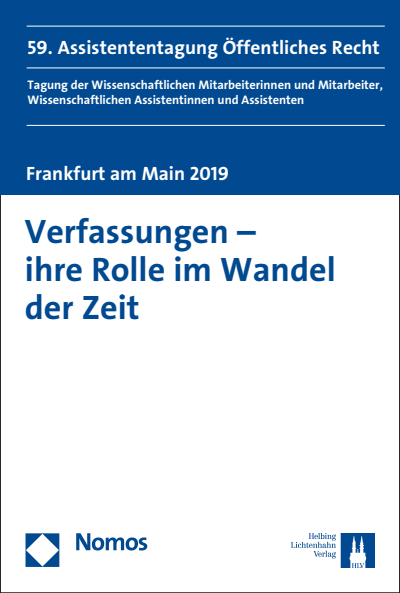
Verfassungen - ihre Rolle im Wandel der Zeit
59. Assistententagung Öffentliches Recht Frankfurt am Main 2019- Editors:
- | | | | | | | | | | | | | | | |
- Publisher:
- 2019
Search publication
Bibliographic data
- Edition
- 1/2019
- Copyright Year
- 2019
- ISBN-Print
- 978-3-8487-5954-5
- ISBN-Online
- 978-3-7489-0083-2
- Publisher
- Nomos, Baden-Baden
- Language
- German
- Pages
- 357
- Product Type
- Edited Book
Table of contents
ChapterPages
- Titelei/Inhaltsverzeichnis No access Pages 1 - 16
- Authors:
- Authors:
- 1. Traditionelle Erklärungsmuster No accessAuthors:
- 2. Verfassungsentstehung am historischen Beispiel No accessAuthors:
- Authors:
- Authors:
- a) Entäußerung des Rechtstexts No accessAuthors:
- b) Deontische Kraft No accessAuthors:
- 2. Rekonstruktion des Erschaffungsvorgangs No accessAuthors:
- Authors:
- 1. Die Verfassungsvereinbarung als Deklaration No accessAuthors:
- Authors:
- Authors:
- aa) Sprache als Voraussetzung des Sprechakts No accessAuthors:
- bb) Sprache als Ursprung der deontischen Kraft No accessAuthors:
- Authors:
- aa) Beschreibung kollektiver Anerkennung No accessAuthors:
- bb) Rekonstruktion kollektiver Anerkennung No accessAuthors:
- 3. Entstehen oder Scheitern einer Verfassung No accessAuthors:
- IV. Verfassungswerdung No accessAuthors:
- Authors:
- Authors:
- 1. Begriffsverständnis bei Sternberger und Habermas No accessAuthors:
- 2. Institutionelle Perspektive: Einfluss eines starken Bundesverfassungsgerichts No accessAuthors:
- 3. Materieller Bezugspunkt: Die Grundrechte als „objektive Wertordnung“ No accessAuthors:
- II. Renaissance: Wertorientierung in der „Gesellschaft der Singularitäten“ No accessAuthors:
- III. Kritik: Nicht Wert- sondern Rechtsordnung No accessAuthors:
- Authors:
- I. Einleitung No accessAuthors:
- II. Diskutanten No accessAuthors:
- III. Erfolge No accessAuthors:
- IV. Hemmnisse No accessAuthors:
- V. Ausgrenzungen No accessAuthors:
- VI. Schluss No accessAuthors:
- Authors:
- I. Einleitung No accessAuthors:
- Authors:
- 1. Realität: Die Handlungslogik der Politik No accessAuthors:
- 2. Normativität: Leitbilder in der Politik No accessAuthors:
- III. Die Enttäuschung normativer Erwartungen als Verfassungsgefährdung No accessAuthors:
- Authors:
- 1. Realitätsorientierung No accessAuthors:
- 2. Beeinflussbarkeit im repräsentativ-demokratischen System als Leitgedanke No accessAuthors:
- Authors:
- 1. Parlamentsrecht: Trennung und Trennbarkeit von Partei und Fraktion No accessAuthors:
- 2. Parteienrecht: Das Parteienstaatsproblem No accessAuthors:
- 3. Wahlrecht: Sperrklauseln und Wahlrechtsgleichheit No accessAuthors:
- VI. Fazit No accessAuthors:
- Authors:
- I. Evolution oder Revolution? Zwei Erzählungen der Verfassungsgenese No accessAuthors:
- II. Die politische Dimension: Freiheit als Gestaltung No accessAuthors:
- III. Die individuelle Dimension: Freiheit oder Freiheiten? No accessAuthors:
- Authors:
- 1. Tradierte Freiheiten als Herausforderung der Verfassunggebung No accessAuthors:
- 2. Politische Gestaltungsfreiheit als Bedingung allgemeiner Freiheit No accessAuthors:
- Authors:
- Authors:
- 1. Die Unterscheidung von Gewaltenteilung und Gewaltengliederung No accessAuthors:
- Authors:
- a) Herausbildung transnationaler Bereichsordnungen No accessAuthors:
- b) Transnationalisierung No accessAuthors:
- 3. Grenzen der verfassungsstaatlichen Lesart der Gewaltenteilung No accessAuthors:
- Authors:
- 1. Gewaltenteilung: von der Staatsgewalt zur Pluralität gesellschaftlicher Kräfte No accessAuthors:
- 2. Gewaltengliederung: vom verfassungsstaatlichen Organisationsprinzip zum Merkmal rechtlicher Normativität No accessAuthors:
- Authors:
- Authors:
- a) Gewaltenteilung in Alteritätsverhältnissen No accessAuthors:
- b) Gewaltenteilung gegen transnationale Hegemonieverhältnisse No accessAuthors:
- c) Gewaltenteilung im Anthropozän No accessAuthors:
- Authors:
- a) Legislative Elemente als Produktion von Rechtsgeltung No accessAuthors:
- b) Judikative Elemente als Prozeduralisierung des Hiatus von Regel und Regelanwendung No accessAuthors:
- c) Exekutive Elemente als Ausdruck des Geltungsanspruchs rechtlicher Normativität No accessAuthors:
- Authors: |
- I. 70 Jahre Verfassung – 70 Jahre Gesellschaft No accessAuthors: |
- II. Verfassungswandel – zum Begriff No accessAuthors: |
- III. Von der sozialen Norm zum Recht – oder umgekehrt? No accessAuthors: |
- Authors: |
- 1. (Männliche) Homosexualität als Straftat – das Homosexuellen-Urteil vom 10.5.1957 No accessAuthors: |
- 2. Kein Wandel des Eheverständnisses (?) – Beschluss vom 4.10.1993 No accessAuthors: |
- 3. Die „Homo-Ehe“ – Entscheidung zur Verfassungsmäßigkeit des Lebenspartnerschaftsgesetzes vom 17.7.2002 No accessAuthors: |
- 4. „Hinterbliebenenversorgung“ – Entscheidung zur rechtfertigungsbedürftigen Ungleichbehandlung der Lebenspartnerschaft vom 7.7.2009 No accessAuthors: |
- 5. Ehegattensplitting – Beschluss vom 7.5.2013 No accessAuthors: |
- V. Die Ehe für alle No accessAuthors: |
- VI. Gesamtschau einer Entwicklung No accessAuthors: |
- VII. Sozialwissenschaftliche Limitationen No accessAuthors: |
- VIII. Rechtsmethodische Limitationen und Ausblick No accessAuthors: |
- Authors:
- I. Kinderrechte im/ins Grundgesetz? No accessAuthors:
- II. Beispielsfall: Sorgerecht bei Geschlechtsdysphorie No accessAuthors:
- Authors:
- 1. Elternrecht oder Kindeswohl? No accessAuthors:
- 2. Wille des Kindes beachtlich? No accessAuthors:
- 3. Trennung von Eltern- und Kindessphäre möglich? No accessAuthors:
- 4. Der Trick: Der Wille als Indiz für das Wohl No accessAuthors:
- Authors:
- 1. Problematische Interessenvermischung No accessAuthors:
- 2. Prozessfähigkeit von Minderjährigen in der Verfassungsbeschwerde? No accessAuthors:
- Authors:
- 1. Die „familienrechtliche“ Lösung und ihre Probleme No accessAuthors:
- Authors:
- a) Verhältnis von Grundrechtsmündigkeit und Prozessfähigkeit klären No accessAuthors:
- Authors:
- (1) Kleinkinder – fehlende Grundrechtsmündigkeit und Prozessfähigkeit No accessAuthors:
- (2) Ältere Kinder – bestehende Grundrechtsmündigkeit bei fehlender Prozessfähigkeit No accessAuthors:
- (3) Jugendliche – bestehende Grundrechtsmündigkeit und Vermutung der Prozessfähigkeit No accessAuthors:
- c) Keine „fremden Rechte im eigenen Namen“ über Art. 6 Abs. 1 S. 1 GG No accessAuthors:
- 3. Anwendung auf Beispielsurteil No accessAuthors:
- Authors:
- I. Algorithmisierung und Recht No accessAuthors:
- II. Menschenwürde und Technisierung No accessAuthors:
- Authors:
- 1. Technologiebezogene Konkretisierungen in Europa und Bremen No accessAuthors:
- Authors:
- a) Allgemeine Menschenwürdegarantie (Art. 1 DGRC-E) No accessAuthors:
- b) Automatisierte Systeme und Entscheidungen (Art. 5 DGRC-E) No accessAuthors:
- c) Diskriminierung durch Verwendung von automatisierten Verfahren (Art. 3 Abs. 2 DGRC-E) No accessAuthors:
- IV. Abwehrschlachten und Alternativen No accessAuthors:
- Authors:
- Authors:
- 1. Historie No accessAuthors:
- Authors:
- a) Prämissen No accessAuthors:
- b) Folgerungen No accessAuthors:
- c) Ergebnis No accessAuthors:
- 3. Wortlaut und Systematik No accessAuthors:
- 4. Gegenbild Pressefreiheit No accessAuthors:
- 5. Fazit No accessAuthors:
- Authors:
- Authors:
- a) Digitale „Sondersituation“ No accessAuthors:
- b) Konvergenz No accessAuthors:
- c) „Intermediäre“ No accessAuthors:
- Authors:
- a) Rundfunkbegriff No accessAuthors:
- Authors:
- aa) „Grundversorgung“ No accessAuthors:
- bb) „Positive Ordnung“ und Vielfaltssicherung No accessAuthors:
- 3. Fazit No accessAuthors:
- Authors:
- 1. Skizze No accessAuthors:
- 2. Konsequenz No accessAuthors:
- 3. Reform No accessAuthors:
- IV. Schluss No accessAuthors:
- Authors:
- I. Einleitung No accessAuthors:
- Authors:
- 1. Soziale Gleichheit als Programm No accessAuthors:
- 2. Soziale Gleichheit als faktische Legitimationsvoraussetzung No accessAuthors:
- 3. Soziale Gleichheit als Funktionsbedingung No accessAuthors:
- Authors:
- 1. Normative Ausgangslage: Sozialstaatsprinzip No accessAuthors:
- Authors:
- a) Begrenzung von Armut: Hartz IV-Urteil No accessAuthors:
- Authors:
- aa) Vagheit des Sozialen und Risiken durch extreme Ungleichheit No accessAuthors:
- bb) Würdigung der Tatsachengrundlage No accessAuthors:
- cc) Politische Signalwirkung No accessAuthors:
- 3. Zwischenergebnis No accessAuthors:
- IV. Ausblick: Soziale Ungleichheit und Protestwahl No accessAuthors:
- V. Fazit: Soziale Ungleichheit als Herausforderung für die Verfassungsrechtswissenschaft No accessAuthors:
- Authors:
- I. Einleitung No accessAuthors:
- II. Forschungsfrage und Aufbau No accessAuthors:
- Authors:
- 1. Prämissen No accessAuthors:
- 2. Relevanz der Frage nach der Konstitutionalisierung No accessAuthors:
- Authors:
- 1. Wahlrechtliche Regeln als Spielregeln des demokratischen Prozesses No accessAuthors:
- 2. Flexibilität und Stabilität No accessAuthors:
- 3. Grundrechtlicher (individueller) und organisationsrechtlicher Gehalt No accessAuthors:
- 4. Nationale und internationale Rechtsquellen No accessAuthors:
- Authors:
- 1. Verfassungsvergleich No accessAuthors:
- 2. Überblick: Wahlrecht und Verfassung in Deutschland, Österreich und der Schweiz No accessAuthors:
- 3. Fallbeispiel 1: Mexiko No accessAuthors:
- 4. Fallbeispiel 2: USA No accessAuthors:
- 5. Zwischenergebnis No accessAuthors:
- Authors:
- 1. Verlangsamung der Möglichkeit der Änderungen der Spielregeln No accessAuthors:
- 2. Zeitfenster zur Änderung von Wahlrecht No accessAuthors:
- 3. Limitierung der Anzahl der Änderungen wahlrechtlicher Regelungen No accessAuthors:
- 4. Kurz vor Wahlen keine Änderung des Wahlrechts mehr No accessAuthors:
- 5. Keine Änderungen des Wahlrechts durch Notverordnungen No accessAuthors:
- 6. Periodische Änderungen No accessAuthors:
- 7. Präventive Normenkontrolle im Bereich Wahlrecht No accessAuthors:
- VII. Schlussbetrachtungen No accessAuthors:
- Authors:
- I. Begriff der Verfassungskrise No accessAuthors:
- Authors:
- 1. Rolle und Funktion des Bundesverfassungsgerichts No accessAuthors:
- 2. Spezielle Verfahren der Verfassungssicherung No accessAuthors:
- 3. Fortentwicklung durch das Bundesverfassungsgericht No accessAuthors:
- Authors:
- 1. Einstweiliger Rechtsschutz und Entscheidungswirkungen No accessAuthors:
- Authors:
- a) Allgemeine Vorgaben No accessAuthors:
- b) Regelung im BVerfGG No accessAuthors:
- c) Anwendungsfälle des § 35 BVerfGG No accessAuthors:
- IV. Institutionelle Absicherung des Bundesverfassungsgerichts No accessAuthors:
- V. Fazit No accessAuthors:
- Authors:
- Einleitung No accessAuthors:
- I. Verfassung als dauerhafte und stabile Grundordnung No accessAuthors:
- II. Verfassungskontinuität No accessAuthors:
- Authors:
- Authors:
- a) Verfassungsänderungsklauseln No accessAuthors:
- b) Umfang und Regelungsdichte No accessAuthors:
- c) Inklusion No accessAuthors:
- Authors:
- a) Diversität einer Gesellschaft No accessAuthors:
- b) Alter eines Staates, seiner Verfassung und Verfassungstradition No accessAuthors:
- c) Außerverfassungsrechtliche informelle Institutionen No accessAuthors:
- d) Externe Schocks und Notstände No accessAuthors:
- Authors:
- 1. Die Erlassung des B‑VG 1920 und sein Untergang 1933–1934 No accessAuthors:
- 2. Die Unabhängigkeitserklärung 1945 und das Wiederinkraftsetzen des B‑VG No accessAuthors:
- V. Schluss No accessAuthors:
- Authors:
- I. Einleitung No accessAuthors:
- II. Direkte Demokratie in der Schweiz No accessAuthors:
- Authors:
- 1. Direktdemokratische Dynamik vs. Beständigkeit der Verfassung No accessAuthors:
- 2. Volkswillen vs. rechtsstaatliche Grundwerte No accessAuthors:
- 3. Abstimmungspropaganda vs. Verfassungsfortbildung No accessAuthors:
- Authors:
- 1. Erhöhung der formellen Zugangshürden für Volksinitiativen No accessAuthors:
- Authors:
- a) Inhaltliche Schranken No accessAuthors:
- b) Kontrollzeitpunkt No accessAuthors:
- c) Kontrollorgan No accessAuthors:
- d) Wirkungen der Kontrolle No accessAuthors:
- 3. Stärkung direktdemokratischer Kompetenzen No accessAuthors:
- 4. Aktive Politik No accessAuthors:
- 5. Garantie sachlicher und freier Abstimmungsprozesse No accessAuthors:
- V. Schlussfolgerungen No accessAuthors:
- Authors:
- I. Akzentverschiebung No accessAuthors:
- Authors:
- 1. Revisionsstagnation seit 2009 No accessAuthors:
- Authors:
- a) Rigidität der Änderungsklausel No accessAuthors:
- b) Geänderte Revisionskultur No accessAuthors:
- Authors:
- Authors:
- a) Ausgangssituation und Problemlage No accessAuthors:
- b) Theorieangebote No accessAuthors:
- Authors:
- a) Definitionsversuch No accessAuthors:
- b) Kriterien zur Identifikation und Abgrenzung No accessAuthors:
- 3. Illustration No accessAuthors:
- Authors:
- 1. Funktionserhaltende Wandlung bei Revisionsstagnation No accessAuthors:
- 2. Auslösung von Wandlung nach erfolgreicher Revision No accessAuthors:
- 3. Kodifikation von Wandlung durch Revision No accessAuthors:
- 4. Konkludente Zustimmung zur Verfassungswandlung No accessAuthors:
- 5. Korrektur der Wandlung durch verfassungsänderndes „Overruling“ No accessAuthors:
- V. Die duale Unionsverfassungsentwicklung – eine Medaille mit zwei Seiten No accessAuthors:
- Autorenverzeichnis No access Pages 349 - 352
- Herausgeberverzeichnis No access Pages 353 - 356
- Fördererverzeichnis No access Pages 357 - 357