, to see if you have full access to this publication.
Monograph No access
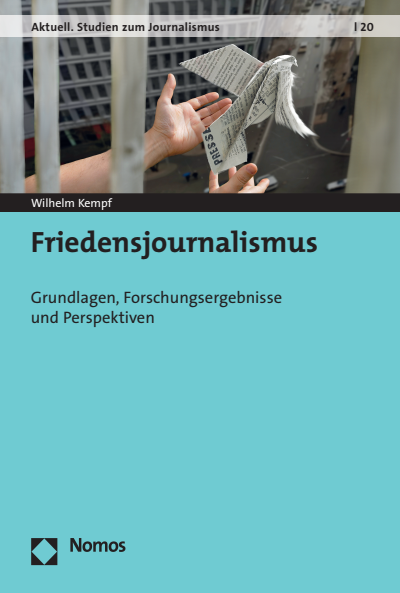
Friedensjournalismus
Grundlagen, Forschungsergebnisse und Perspektiven- Authors:
- Series:
- Aktuell. Studien zum Journalismus, Volume 20
- Publisher:
- 2021
Keywords
Search publication
Bibliographic data
- Edition
- 1/2021
- Copyright Year
- 2021
- ISBN-Print
- 978-3-8487-7142-4
- ISBN-Online
- 978-3-7489-1193-7
- Publisher
- Nomos, Baden-Baden
- Series
- Aktuell. Studien zum Journalismus
- Volume
- 20
- Language
- German
- Pages
- 160
- Product Type
- Monograph
Table of contents
ChapterPages
- Titelei/Inhaltsverzeichnis No access Pages 1 - 12
- 1. Einleitung No access
- 2.1 Konstruktive Konfliktberichterstattung nach Kempf No access
- 2.2 Friedensjournalismus nach Galtung No access
- 2.3 Praktische und wissenschaftliche Anwendungen des Friedensjournalismus No access
- 2.4 Kritik am Friedensjournalismus No access
- 2.5 Konfliktsensitiver Journalismus No access
- 3.1 Diskursiver Journalismus als verständigungsorientiertes Handeln No access
- 3.2 Berichterstattungsmuster: Konstruktiver Journalismus No access
- 4. Ausblick No access
- Literatur No access
- 1. Erkenntnisinteresse No access
- 2. Grundlagen No access
- 3. Kriegsdiskurse vs. Friedensdiskurse No access
- 4. Ein Zwei-Stufen Modell No access
- 5. Journalistisches Handwerkszeug No access
- 6. Kritik des Friedensjournalismus No access
- 7. Medienanalysen No access
- 8. Rezeptionsstudien No access
- 9. Produktionsbedingungen und Reichweite No access
- 10. Konzeptuelle Weiterentwicklungen No access
- 1. Grundlagen in Propaganda- und Kommunikationstheorie No access
- 2. Konflikttheoretische Grundlagen No access
- 3. Ein Modell der Kriegspropaganda No access
- 4. Immanente Widersprüche der Kriegspropaganda No access
- 5. Ein Modell des Friedensjournalismus No access
- 6. Früherkennung von Konflikten No access
- 1. Grundbegriffe des Friedensjournalismus No access
- 2. Konzeptionen des Friedensjournalismus No access
- 3. Der Begriff der Fehlwahrnehmung No access
- 1. Einleitung No access
- 2. Kooperative Konfliktbearbeitung No access
- 3. Konstruktive Verhandlungsführung No access
- 4. Kompetitive Konfliktaustragung No access
- 5. Kompetitive Verhandlungsführung No access
- 6. Friedensverhandlungen No access
- 7. Friedensprozesse No access
- 8. Regelverletzungen No access
- 9. Grenzen konstruktiver Berichterstattung No access
- Literatur No access Pages 141 - 154
- Dank No access Pages 155 - 156
- Die Autor:innen No access Pages 157 - 158
- Register No access Pages 159 - 160
Bibliography (223 entries)
No match found. Try another term.
- Annabring, U. (2000). Protagonisten und Konfliktkonstellationen im israelisch-palästinensischen Friedensprozess. Univ. Konstanz: Diplomarbeit. Open Google Scholar DOI: 10.5771/9783748911937
- Annabring, U., Bläsi, B. & Möckel, J. (2004). The German press coverage of former Yugoslavia after the fall of Miloševic. conflict & communication online, 3/1&2. Open Google Scholar DOI: 10.5771/9783748911937
- Annabring, U., Ditlmann, R. & Kempf, W. (2005). Die kognitive Repräsentation von Nachkriegskonflikten im Spannungsfeld zwischen Mainstream-Diskurs und abweichender Berichterstattung. In: Projektgruppe Friedensforschung Konstanz (Hg.), Nachrichtenmedien als Mediatoren von Peace-Building, Demokratisierung und Versöhnung in Nachkriegsgesellschaften. Berlin: regener, 235-254. Open Google Scholar DOI: 10.5771/9783748911937
- Annabring, U. & Jaeger, S. (2005). Der Wandel des Feindbildes Serbien nach dem Machtwechsel. In: PFKN (Projektgruppe Friedensforschung Konstanz) (ed.). Nachrichtenmedien als Mediatoren von Peace-Building, Demokratisierung und Versöhnung in Nachkriegsgesellschaften. Berlin: regener, 129-148. Open Google Scholar DOI: 10.5771/9783748911937
- Asmal, K., Asmal, S. & Roberts, R.S. (1996). Reconciliation through truth: A reckoning of apartheid’s criminal governance 74. Xape Town & Johannesburg: David Philip Publishers. Open Google Scholar DOI: 10.5771/9783748911937
- ASPR (Austrian Study Center for Peace and Conflict Resolution) (ed.) (2003). Constructive conflict coverage. A social psychological approach. Berlin: regener. Open Google Scholar DOI: 10.5771/9783748911937
- Babcock, L & Olson, C. (1992). The causes of impasses in labor disputes. Ind. Relat., 31, 348-60. Open Google Scholar DOI: 10.5771/9783748911937
- Bandura, A. (1986). Social foundations of thought and action: A social cognitive theory. Englewood Cliffs, NJ: Prentice Hall. Open Google Scholar DOI: 10.5771/9783748911937
- Bandura, A. (1999). Moral disengagement in the perpetration of inhumanities. Personality and Social Psychology Review, 3, 193-209. Open Google Scholar DOI: 10.5771/9783748911937
- Bar-Tal, D. (1998). Societal beliefs in times of intractable conflict: The Israeli case. The International Journal of Conflict Management, 9/1, 22-50. Open Google Scholar DOI: 10.5771/9783748911937
- Bar-Tal, D. (2004). Nature, rationale and effectiveness of education for coexistence. Journal of Social Issues 60, 253-271. Open Google Scholar DOI: 10.5771/9783748911937
- Bar-Tal, D. (2005). Psychological obstacles to peace-making in the Middle East and proposals to overcome them. conflict & communication online, 4/1. Open Google Scholar DOI: 10.5771/9783748911937
- Bar-Tal, D. (2015). "Love your neighbor as yourself". This is the core requirement for overcoming blindness caused by hate and fear needed for peacemaking. conflict & communication online, 14/1. Open Google Scholar DOI: 10.5771/9783748911937
- Bastian, T. (1991). Kurdischer Nachkrieg. Blätter für deutsche und internationale Politik, 36, 519-520. Open Google Scholar DOI: 10.5771/9783748911937
- Bateson, G., Jackson, D.D., Haley, J. & Weakland, J. (1956): Toward a theory of schizophrenia. Behavioral Science, 1, 251-264. Open Google Scholar DOI: 10.5771/9783748911937
- Bazerman, M.H. (19984). Judgment in managerial decision making. New York: Wiley. Open Google Scholar DOI: 10.5771/9783748911937
- Bazerman, M.H. & Carroll, J.S. (1987). Negotiator cognition. Res. Organ. Behav., 9, 247-88. Open Google Scholar DOI: 10.5771/9783748911937
- Bazerman, M.H., Magliozzi, T. & Neale, M.A. (1985). The acquisition of an integrative response in a competitive market. Organ. Behav. Hum. Decis. Process. 34, 294-313. Open Google Scholar DOI: 10.5771/9783748911937
- Bazerman, M.H., Moore, D.A. & Gillespie, J.J. (1999). The human mind as a barrier to wiser environmental agreements. Am. Behav. Sci., 42, 1254-76. Open Google Scholar DOI: 10.5771/9783748911937
- Bazerman, M.H. & Neale, M.A. (1982). Improving negotiation effectiveness under final offer arbitration: the role of selection and training. J. Appl. Psychol, 67, 543-48. Open Google Scholar DOI: 10.5771/9783748911937
- Bazerman, M.H. & Neale, M.A. (1983). Heuristics in negotiation: limitations to effective dispute resolution. In: Bazerman, M.H. & Lewicki, R.J. (eds.). Negotiating in organizations. Beverly Hills, CA: Sage, 51-67. Open Google Scholar DOI: 10.5771/9783748911937
- Becker, J. (2004). Contributions by the media to crisis prevention and conflict settlement. conflict & communication online, 3/1+2. Open Google Scholar DOI: 10.5771/9783748911937
- Bell, M. (1997). TV news: how far should we go? Bristish Journalism Review, 8/1. Open Google Scholar DOI: 10.5771/9783748911937
- Benn, J. (2015). From passive to active: The spectrum of peace journalism. conflict & communication online, 14/2. Open Google Scholar DOI: 10.5771/9783748911937
- Besemer, C. (1993). Mediation. Vermittlung in Konflikten. Königsfeld: Stiftung Gewaltfreies Leben. Open Google Scholar DOI: 10.5771/9783748911937
- Betzler, L. & Glittenberg, M. (2015). Antisemitismus im deutschen Mediendiskurs. Eine Analyse des Falls Jakob Augstein. Baden-Baden: Nomos Verlagsgesellschaft. Open Google Scholar DOI: 10.5771/9783748911937
- Biacoto, J. (2011). Peace journalism where there is no war. Conflict-sensitive reporting on urban violence and public security in Brazil and its potential role in conflict transformation. conflict & communication online, 10/2. Open Google Scholar DOI: 10.5771/9783748911937
- Bilke, N. (2002). Friedensjournalismus. Wie Medien deeskalierend berichten können. Münster: agenda. Open Google Scholar DOI: 10.5771/9783748911937
- Bilke, N. (2008). Qualität in der Krisen- und Kriegsberichterstattung. Ein Modell für einen konfliktsensitiven Journalismus. Wiesbaden: Verlag für Sozialwissenschaften. Open Google Scholar DOI: 10.5771/9783748911937
- Bizman, A. & Hoffman, M. (1993). Expectations, emotions, and preferred responses regarding the Arab-Israeli conflict: an attributional analysis. Journal of Conflict Resolution, 37,139-59. Open Google Scholar DOI: 10.5771/9783748911937
- Blake, R.R. & Mouton, J.S. (1961). Comprehension of own and outgroup positi¬ons un¬der intergroup competition. Journal of Conflict Resolution, 5, 304-310. Open Google Scholar DOI: 10.5771/9783748911937
- Blake, R.R. & Mouton, J.S. (1962). Overevaluation of own groups’s product in intergroup competition. Journal of Abnormal and Social Psychology, 64, 237-238. Open Google Scholar DOI: 10.5771/9783748911937
- Bläsi, B. (2004). Peace journalism and the news production process. conflict & communication online, 3/1&2. Open Google Scholar DOI: 10.5771/9783748911937
- Bläsi, B. (2005). Produktionsbedingungen konstruktiver Konfliktberichterstattung. In: Projektgruppe Friedensforschung Konstanz (ed.). Nachrichtenmedien als Mediatoren von Peace-Building, Demokratisierung und Versöhnung in Nachkriegsgesellschaften. Berlin: regener, 257-276. Open Google Scholar DOI: 10.5771/9783748911937
- Bläsi, B. (2006). Keine Zeit, kein Geld, kein Interesse …? Konstruktive Konfliktberichterstattung zwischen Anspruch und medialer Wirklichkeit. Berlin: regener. Open Google Scholar DOI: 10.5771/9783748911937
- Bläsi, B. (2009). Implementing peace journalism: The role of conflict stages. conflict & communication online, 8/2). Open Google Scholar DOI: 10.5771/9783748911937
- Bläsi, B. & Jaeger, S. (2004). Katalog konstruktiver Aspekte in der Nachkriegsberichterstattung. Nr. 54. Diskussionsbeiträge der Projektgruppe Friedensforschung Konstanz Nr. 54. Berlin: regener. Open Google Scholar DOI: 10.5771/9783748911937
- Bläsi, B., Jaeger, S., Kempf, W. & Möckel, J. (2004). A catalog of escalation- and de-escalation-oriented aspects of conflict coverage. Diskussionsbeiträge der Projektgruppe Friedensforschung Konstanz Nr. 53. Berlin: regener. Open Google Scholar DOI: 10.5771/9783748911937
- Bläsi, B., Jaeger, S., Kempf, W., Kondopoulou, M. & Paskoski, D. (2005). Konstruktive Aspekte des serbischen, deutschen und griechischen Nachkriegsdiskurses – qualitative Vergleichsstudien. In: PFKN (Projektgruppe Friedensforschung Konstanz) (ed.). Nachrichtenmedien als Mediatoren von Peace-Building, Demokratisierung und Versöhnung in Nachkriegsgesellschaften. Berlin: regener, 149-200. Open Google Scholar DOI: 10.5771/9783748911937
- Bläsi, B., Jaeger, S., Kempf, W. & Spohrs, M. (2005). Glaubwürdigkeit und Attraktivität von eskalations- und de-eskalationsorientierten Nachrichtentexten. In: Projektgruppe Friedensforschung Konstanz (Hg.), Nachrichtenmedien als Mediatoren von Peace-Building, Demokratisierung und Versöhnung in Nachkriegsgesellschaften. Berlin: regener, 203-234. Open Google Scholar DOI: 10.5771/9783748911937
- Blumer, H. (1973). Der methodologische Standort des symbolischen Interaktionismus. In: Arbeitsgruppe Bielefelder Soziologen (Hg.), Alltagswissen, Interaktion und gesellschaftliche Wirklichkeit. Hamburg: Rowohlt, 80-146. Open Google Scholar DOI: 10.5771/9783748911937
- Bottom, W.P & Studt, A. (1993). Framing effects and the distributive aspect of integrative bargaining. Organ. Behav. Hum. Decis. Process. 56, 459-74. Open Google Scholar DOI: 10.5771/9783748911937
- Carroll, J.S., Bazerman, M.H. & Maury, R. (1988). Negotiator cognitions: a descriptive approach to negotiators' understanding of their opponents. Organ. Behav. Hum. Decis. Process., 41, 352-70. Open Google Scholar DOI: 10.5771/9783748911937
- Chomsky, N. (1990). Barmherzigkeit ist nicht zu erwarten. Der Süden in der neuen Weltordnung. Blätter für deutsche und internationale Politik, 35, 1319-1326. Open Google Scholar DOI: 10.5771/9783748911937
- Cohen, Y. (1986). Media diplomacy. The foreign office in the mass communication age. London: Frank Cass and Company Ltd. Open Google Scholar DOI: 10.5771/9783748911937
- Creighton, J.L. (1991). Don't go away mad: how to make peace with your partner. New York: Doubleday Books. Open Google Scholar DOI: 10.5771/9783748911937
- Deutsche Übersetzung: Creighton, J. (1992). Schlag nicht die Türe zu. Konflikte aushalten lernen. Reinbek bei Hamburg: Rowohlt. Open Google Scholar DOI: 10.5771/9783748911937
- Curhan, J.R., Neale, M.A. & Ross, L. (1998). Dynamic valuation: preference change in the context of active face-to-face negotiations. Paper presented at Annual Stanford/Berkeley talks, Stanford, CA. Open Google Scholar DOI: 10.5771/9783748911937
- De Dreu, C.K.W. (1996). Gain-loss frame in outcome-interdependence: Does it influence equality or equity considerations? Eur. J. Soc. Psychol., 26, 315-24. Open Google Scholar DOI: 10.5771/9783748911937
- De Dreu, C.K.W. & McCusker, C. (1997). Gain-loss frames and cooperation in two-person social dilemmas: a transformational analysis. J. Pers. Soc. Psychol., 72, 1093-106. Open Google Scholar DOI: 10.5771/9783748911937
- Deutsch, M. (1973). The resolution of conflict. New Haven: Yale University Press. Open Google Scholar DOI: 10.5771/9783748911937
- Deutsche Übersetzung: Deutsch, M. (1976). Konfliktregelung. München: Reinhardt. Open Google Scholar DOI: 10.5771/9783748911937
- Deutsch, M. (2000). Cooperation and competition. In: Deutsch, M. & Coleman, P.T. (Hg.). The handbook of conflict resolution. Theory and practice. San Francisco: Jossey-Bass, 21-40. Open Google Scholar DOI: 10.5771/9783748911937
- Diekmann, K.A. (1997). 'Implicit justifications' and self-serving group allocations. J. Organ. Behav., 18, 3-16. Open Google Scholar DOI: 10.5771/9783748911937
- Diekmann, K.A., Samuels, S.M., Ross, L. & Bazerman, M.H. (1997). Self-interest and fairness in problems of resource allocation: allocators versus recipients. J. Pers. Soc. Psychol., 72,1061-74. Open Google Scholar DOI: 10.5771/9783748911937
- Diekmann, K.A., Tenbrunsel, A.E. & Bazerman, M.H. (1999). Escalation and negotiation: two central themes in the work of Jeffrey Z. Rubin. In: Kolb, D. (ed.). Negotiation Ethics: Essays in memory of Jeffrey Z. Rubin. Cambridge, MA: PON Books. Open Google Scholar DOI: 10.5771/9783748911937
- Eilders, C. (2016). Journalismus und Nachrichtenwert. In: Handbuch Journalismustheorien. Springer VS, Wiesbaden, 2016, 431-442. Open Google Scholar DOI: 10.5771/9783748911937
- Entman, R.M. (1993): Framing: Toward clarification of a fractured paradigm. Journal of Communication, 43/4, 51-58. Open Google Scholar DOI: 10.5771/9783748911937
- Festinger, L. (1957). A theory of cognitive dissonance. Evanston, Ill.: Row, Peterson. Open Google Scholar DOI: 10.5771/9783748911937
- Fisher, R.F. & Ury, W. (1984). Das Harvard-Konzept. Sachgerecht verhandeln – erfolgreich verhandeln. Frankfurt/Main: Campus. Open Google Scholar DOI: 10.5771/9783748911937
- Fuchs, A. (1993). Gewaltbegriff und Funktion von Gewalt. In Kempf, W., Frindte, W., Sommer, G. & Spreiter, M. (eds.). Gewaltfreie Konfliktlösungen. Heidelberg: Asanger. Open Google Scholar DOI: 10.5771/9783748911937
- Gaisbauer, F. (2012). Representations of victimization and responsibility during the Second Intifada and the Gaza War in German quality newspapers / Darstellungen von Viktimisierung und Verantwortlichkeit während Zweiter Intifada und Gazakrieg in deutschen Qualitätstageszeitungen. conflict & communication online, 11/2. Open Google Scholar DOI: 10.5771/9783748911937
- Galtung, J. (1969). Violence, peace and peace research. Journal of Peace Research, 6/3, 167-191. Open Google Scholar DOI: 10.5771/9783748911937
- Deutsche Übersetzung: Galtung, J. (1975). Gewalt, Frieden und Friedensforschung. In: Galtung, J. Strukturelle Gewalt. Beiträge zur Friedens- und Konfliktforschung. Reinbek bei Hamburg: Rowohlt, 7-36. Open Google Scholar DOI: 10.5771/9783748911937
- Galtung, J. (1975). Konflikt als Lebensform. In: Galtung, J. Strukturelle Gewalt. Beiträge zur Friedens- und Konfliktforschung. Reinbek bei Hamburg: Rowohlt, 108-136. Open Google Scholar DOI: 10.5771/9783748911937
- Galtung, J. (1990). Cultural violence. Journal of Peace Research 27/3, 291-305. Open Google Scholar DOI: 10.5771/9783748911937
- Galtung, J. (1998). Friedensjournalismus: Warum, was, wer, wo, wann? In: Kempf, W. & Schmidt-Regener, I. (Hg.) Krieg, Nationalismus Rassismus und die Medien. Münster: Lit, 3-20. Open Google Scholar DOI: 10.5771/9783748911937
- Englische Fassung: Galtung, J. (2008). Peace journalism: What, why, who, how, when, where? In: Kempf, W. (ed.). The Peace Journalism Controversy. Berlin: regener, 19-33. Open Google Scholar DOI: 10.5771/9783748911937
- Galtung, J. (2004): Building peace through harmonious diversity. Vortrag auf der Konferenz: The security approach and the peace approach. https://www.transcend.org/files/article491.htmlhttps://www.transcend.org/files/article491.html. Open Google Scholar DOI: 10.5771/9783748911937
- Galtung, J. & Ruge, M.H. (1965). The structure of foreign news: The presentation of the Congo, Cuba and Cyprus crises in four Norwegian newspapers. Journal of Peace Research 2/1, 64-90. Open Google Scholar DOI: 10.5771/9783748911937
- Galtung, J. & Vicent, R.C. (1992). Global Glasnost: toward a new world information and communication order? Cresskill: Hampton Press. Open Google Scholar DOI: 10.5771/9783748911937
- Glasl, F. (1992). Konfliktmanagement. Bern: Haupt. Open Google Scholar DOI: 10.5771/9783748911937
- Grossmann, D. (2014): Erinnern wir uns an die Zukunft. In: TagesAnzeiger vom 4.8.2014. https://www.tagesanzeiger.ch/kultur/diverses/Erinnern-wir-uns-an-die-Zukunft/story/10216028https://www.tagesanzeiger.ch/kultur/diverses/Erinnern-wir-uns-an-die-Zukunft/story/10216028 Open Google Scholar DOI: 10.5771/9783748911937
- Gutiérrez-Villalobos, S. (2005). Pro-conflict and pro-cooperation coverage: The San Juan River conflict. conflict & communication online, 4/1. Open Google Scholar DOI: 10.5771/9783748911937
- Hackett, R.A. (2017). From frames to paradigms: civic journalism, peace journalism and alternative media. In: Hackett, R.A., Forde, S., Gunstler, S. & Foxwell-Norton, K.: Journalism and climate crisis. Public engagement, media alternatives. London: Routledge, 94-119. Open Google Scholar DOI: 10.5771/9783748911937
- Haack, P. (2007). Talking Intervention. Foreign policy frames and their conditional impact on individual attitudes. Saarbrücken: VDM. Open Google Scholar DOI: 10.5771/9783748911937
- Haller, M. (1994). Recherche und Nachrichtenproduktion als Konstruktionsprozesse. In Merten, K., Schmidt, S.J., Weischenberg, S. (eds.). Die Wirklichkeit der Medien. Eine Einführung in die Kommunikationswissenschaft. Opladen: Westdeutscher Verlag. Open Google Scholar DOI: 10.5771/9783748911937
- Hamdorf, T. (2001). Zweidimensionales Bild der Wirklichkeit. Das No5rdirland Friedensabkommen in der Berliner Zeitung als ein Beispiel für Friedensjournalismus? Rollenkonstruktion im Bosnien-Konflikt: Westliche Kriegsberichterstattung zwischen Ambivalenz und Anteilnehme. In: Richter, J. (ed.). Deutschland: (un-) bewältigte Vergangenheiten. Tübingen: dgvt-Verlag, 141-150. Open Google Scholar DOI: 10.5771/9783748911937
- Handke, P. (1996). Gerechtigkeit für Serbien. Eine winterliche Reise zu den Flüssen Donau, Save, Morawa und Drina. Süddeutsche Zeitung, 5./6. u. 13./14. Januar 1996. Open Google Scholar DOI: 10.5771/9783748911937
- Hanitzsch, T. (2004). Journalisten zwischen Friedensdienst und Kampfeinsatz. Journalisten im Kriegsjournalismus aus kommunikationswissenschaftlicher Perspektive. In: Löffelholz, M. (ed.). Krieg als Medienereignis II. Krisenkommunikation im 21. Jahrhundert. Wiesbaden: Verlag für Sozialwissenschaften, 169–193. Open Google Scholar DOI: 10.5771/9783748911937
- Hanitzsch, T. (2008). Situating peace journalism in journalism studies: a critical appraisal. In: Kempf, Wilhelm (ed.): The peace journalism controversy. Berlin: regener, 69-80. Open Google Scholar DOI: 10.5771/9783748911937
- Harcup, T. (2011). Alternative journalism as active citizenship. Journalism, 12(1), 15-31. Open Google Scholar DOI: 10.5771/9783748911937
- Herman, E.S. & Chomsky, N. (1988). Manufacturing consent. The political economy of the mass media. New York: Pantheon Books. Open Google Scholar DOI: 10.5771/9783748911937
- Hoyningen-Huene, P. (1983). Autonome historische Prozesse –kybernetisch betrachtet. Geschichte und Gesellschaft, 9/1, 119-123. Open Google Scholar DOI: 10.5771/9783748911937
- Hussain, S. (2014). Reporting on terror: Why are the voices of peace unheard? conflict & communication online, 13/2). Open Google Scholar DOI: 10.5771/9783748911937
- Hussain, S. & Rehman (2015). Balochistan: Reaping the benefits of peace journalism. conflict & communication online, 14/2. Open Google Scholar DOI: 10.5771/9783748911937
- Iqbal, M.Z. & Hussain, S. (2017). Reporting sectarian incidents: Examining the escalatory and de-escalatory discourses in the Pakistan news media. Journal of Political Studies, 24/2, 469-484. Open Google Scholar DOI: 10.5771/9783748911937
- Jackson, L.E. (2006). Moral Disengagement. How media use can affect the support of war. Berlin: VDM. Open Google Scholar DOI: 10.5771/9783748911937
- Jaeger, S. (1998). Propaganda mit Frauenschicksalen? Die deutsche Presseberichterstattung über Vergewaltigung im Krieg in Bosnien-Herzegowina. In: Kempf, W., Schmidt-Regener, I. (Hrsg.). Krieg Nationalismus, Rassismus und die Medien. Münster: Lit, 75-88. Open Google Scholar DOI: 10.5771/9783748911937
- Jaeger, S. (2001). Rollenkonstruktion im Bosnien-Konflikt: Westliche Kriegsberichterstattung zwischen Ambivalenz und Anteilnehme. In: Richter, J. (ed.). Deutschland: (un-) bewältigte Vergangenheiten. Tübingen: dgvt-Verlag, 151-160. Open Google Scholar DOI: 10.5771/9783748911937
- Jaeger, S. (2002). Compatibility of peace and news media. Communicator, 37/1, 27-30. Open Google Scholar DOI: 10.5771/9783748911937
- Jaeger, S. (2005a). Themenauswahl in der Nachkriegsberichterstattung – eine quantitative Langzeitstudie. In: PFK (Projektgruppe Friedensforschung Konstanz) (Hg.) (2005). Nachrichtenmedien als Mediatoren von Peace-Building, Demokratisierung und Versöhnung in Nachkriegsgesellschaften. Berlin: regener, 51-80. Open Google Scholar DOI: 10.5771/9783748911937
- Jaeger, S. (2005b). Von Nachhall und Überwindung deutsch-französischer Gegnerschaft – qualitative Fallstudien. In: PFK (Projektgruppe Friedensforschung Konstanz) (Hg.) (2005). Nachrichtenmedien als Mediatoren von Peace-Building, Demokratisierung und Versöhnung in Nachkriegsgesellschaften. Berlin: regener, 81-126. Open Google Scholar DOI: 10.5771/9783748911937
- Jaeger, S. (2009). Nachrichtenmedien als Ressource für Frieden und Versöhnung. Inhaltsanalytische Pressestudien zur westdeutschen Berichterstattung über Frankreich nach dem Zweiten Weltkrieg. Berlin: regener. Open Google Scholar DOI: 10.5771/9783748911937
- Jaeger, S. & Möckel, J. (2004). Die Berichterstattung in der Frankfurter Rundschau über Jugoslawien nach dem Sturz von Slobodan Miloševic. Diskussionsbeiträger der Projektgruppe Friedensforschung Konstanz Nr. 57. Berlin: regener. Open Google Scholar DOI: 10.5771/9783748911937
- Kahnemann, D. & Tversky, A. (1979). Prospect theory: An analysis of decision under risk. Econometrica, 47, 263-291. Open Google Scholar DOI: 10.5771/9783748911937
- Kamlah, W. & Lorenzen, P. (1967). Logische Propädeutik. Vorschule des vernünftigen Redens. Mannheim: Bibliographisches Institut. Open Google Scholar DOI: 10.5771/9783748911937
- Keiffer, M.G. (1968). The Effect of Availability and Precision of Threat on Bargaining Behavior. Ph.D. Dissertation. Columbia University: Teachers College. Open Google Scholar DOI: 10.5771/9783748911937
- Keltner, D. & Robinson, R.J. (1993). Imagined ideological differences in conflict escalation and resolution. Int. J. Confl. Manage., 4, 249-62. Open Google Scholar DOI: 10.5771/9783748911937
- Kempf, W. (1978). Konfliktlösung und Aggression. Zu den Grundlagen einer psychologischen Friedensforschung. Bern: Huber. Open Google Scholar DOI: 10.5771/9783748911937
- Kempf, W. (1986). Emotionalität und Antiintellektualismus der Friedensbewegung? In: Evers, T., Kempf, W. & Valtink, E. (Hg.). Sozialpsychologie des Friedens. Protokoll 229/1986. Hofgeismar: Evangelische Akademie. Open Google Scholar DOI: 10.5771/9783748911937
- Kempf, W. (1993). Konflikteskalation durch autonome Prozesse. In Kempf, W., Frindte, W., Sommer, G. & Spreiter, M. (eds.). Gewalt¬freie Konfliktlösungen. Heidelberg: Asanger. Open Google Scholar DOI: 10.5771/9783748911937
- Kempf, W. (Hg.) (1994). Manipulierte Wirklichkeiten. Medienpsychologische Untersuchungen der bundesdeutschen Presseberichterstattung im Golfkrieg. Münster: Lit. Open Google Scholar DOI: 10.5771/9783748911937
- Kempf, W. (1996). Konfliktberichterstattung zwischen Eskalation und Deeskalation. Ein sozialpsychologisches Modell. Wissenschaft und Frieden, 14, 51-54. Open Google Scholar DOI: 10.5771/9783748911937
- Englische Übersetzung: Kempf, W. (2008). News coverage of conflict: Between escalation and de-escalation. In: Kempf, W. (ed.). The Peace Journalism Controversy. Berlin: regener, 11-18. Open Google Scholar DOI: 10.5771/9783748911937
- Kempf, W. (1997). Kriegspropaganda versus Friedens-Journalismus. In: Caließ, J. (Hg.). Das erste Opfer eines Krieges ist die Wahrheit. Oder: die Medien zwischen Kriegsberichterstattung und Friedensberichterstattung. Loccumer Protokolle 69/95, 137-149 (1997). Open Google Scholar DOI: 10.5771/9783748911937
- Englische Übersetzung: Kempf, W. (2010). War propaganda versus peace journalism. In: Kempf, W. (ed.). Readings in Peace Journalism. Foundations – Studies – Perspectives. Berlin: Regener, 13-26. Open Google Scholar DOI: 10.5771/9783748911937
- Kempf, W. (1998). Die Berichterstattung über Friedensinitiativen dritter Parteien während des Golfkrieges. In: Kempf, W., & Schmidt-Regener, I. (Hg.). Krieg Nationalismus, Rassismus und die Medien. Münster: Lit, 35-46. Open Google Scholar DOI: 10.5771/9783748911937
- Kempf, W. (1999). De-escalation-oriented conflict coverage? The Northern Ireland and Israeli-Palestinian peace processes in the German press. Diskussionsbeiträge der Projektgruppe Friedensforschung Konstanz, Nr. 45. http://www.ub.uni-konstanz.de/serials/kempf.htmhttp://www.ub.uni-konstanz.de/serials/kempf.htm. Open Google Scholar DOI: 10.5771/9783748911937
- Kempf, W. (2000). Gewaltursachen und Gewaltdynamiken. In: Kempf, W. (Koord.). Konflikt und Gewalt. Herausgegeben vom Österreichischen Studienzentrum für Frieden und Konfliktlösung (ÖSFK). Münster: agenda, 44-65. Open Google Scholar DOI: 10.5771/9783748911937
- Kempf, W. (2001). News media and conflict escation. A comparative study of Gulf War coverage in US and European media. In: Nohrstedt, S.A. & Ottosen, R. (eds.). Vol. 1: Journalism and the New World Order. Gulf War, National News Discourses and Globalization. Göteborg: Nordicom, 149-174. Open Google Scholar DOI: 10.5771/9783748911937
- Kempf, W. (2002). Escalating and deescalating aspects in the coverage of the Bosnia conflict. A comparative study. In: Kempf, W. & Luostarinen, H. (eds.). Journalism and the New World Order. Vol. 2: Studying War and the Media. Göteborg: Nordicom, 227-255. Open Google Scholar DOI: 10.5771/9783748911937
- Kempf, W. (2003). Konstruktive Konfliktberichterstattung - Ein sozialpsychologisches Forschungs- und Entwicklungsprogramm / Constructive conflict coverage - A social-psychological research and development program. conflict & communication online, 2/2. Open Google Scholar DOI: 10.5771/9783748911937
- Kempf, W. (2005). Two experiments focusing on de-escalation oriented coverage of post-war conflicts. conflict & communication online, 4/2. Open Google Scholar DOI: 10.5771/9783748911937
- Kempf, W. (2006). Social constructivism and its implications for critical media studies. Conflict & communication online, 5/1. Open Google Scholar DOI: 10.5771/9783748911937
- Kempf, W. (2008a). Peace journalism: A tightrope walk between advocacy journalism and constructive conflict coverage. In: Kempf, W. (ed.). The peace journalism controversy. Berlin: regener, 145-156. Open Google Scholar DOI: 10.5771/9783748911937
- Kempf, W. (2008b). The impact of political news on German students' assessments of the Israeli-Palestinian conflict. conflict &communication online, 7/2. Open Google Scholar DOI: 10.5771/9783748911937
- Kempf, W. (2008c). Forschungsmethoden der Psychologie. Zwischen naturwissenschaftlichem Experiment und sozialwissenschaftlicher Hermeneutik. Band II: Quantität und Qualität. Berlin: regener. Open Google Scholar DOI: 10.5771/9783748911937
- Kempf, W. (2009). Die soziale Konstruktion der Wirklichkeit. In: Kempf, W. & Kiefer, M. (eds.). Forschungsmethoden der Psychologie. Zwischen naturwissenschaftlichem Experiment und sozialwissenschaftlicher Hermeneutik. Band III: Natur und Kultur. Berlin: regener, 51-99. Open Google Scholar DOI: 10.5771/9783748911937
- Kempf, W. (2012). Peace journalism, the Israeli-Palestinian conflict, the German media and the German public. Bulletin du Centre de Recherche Français à Jérusalem, 23. http://bcrfj.revues.org/6788http://bcrfj.revues.org/6788. Open Google Scholar DOI: 10.5771/9783748911937
- Kempf, W. (2015). Israelkritik zwischen Antisemitismus und Menschenrechtsidee. Eine Spurensuche. Berlin : regener. Open Google Scholar DOI: 10.5771/9783748911937
- Kempf, W. (2016a). Gefahren des Friedensjournalismus / Dangers of peace journalism. conflict & communication online, 15/2. Open Google Scholar DOI: 10.5771/9783748911937
- Kempf, W. (2016b). Rezension des Buches „Antisemitismus im deutschen Mediendiskurs“ von Lukas Betzler & Manuel Glittenberg. conflict & communication online, 15/2. Open Google Scholar DOI: 10.5771/9783748911937
- Kempf, W. (2017). Towards a theory and (better) practice of peace journalism. conflict & communication online, 16/2. Open Google Scholar DOI: 10.5771/9783748911937
- Kempf, W. (2018). Konstruktive Konfliktberichterstattung? Der Fall Israel/Palästina. Communicatio Socialis, 51/1, 21-32. Open Google Scholar DOI: 10.5771/9783748911937
- Kempf, W. (2019). Begriffe und Konzepte des Friedensjournalismus. conflict & communication online, 18/2. Open Google Scholar DOI: 10.5771/9783748911937
- Kempf, W. & Luostarinen, H. (eds.) (2002). Journalism in the New World Order. Vol. 2. Studying war and the media. Göteborg: Nordicom. Open Google Scholar DOI: 10.5771/9783748911937
- Kempf, W. & Reimann, M. (1994). Die Berichterstattung über alliierte Kriegsgefangene. In: Kempf, W. (Hrsg.). Manipulierte Wirklichkeiten. Medienpsychologische Untersuchungen der bundesdeutschen Presseberichterstattung im Golfkrieg. Münster: Lit, 82-101. Open Google Scholar DOI: 10.5771/9783748911937
- Kempf, W. & Reimann, M. (2002). The presentation of alternative ways of settling the Gulf conflict in German, Norwegian and Finnish media. In Kempf, W. & Luostarinen, H. (eds.). Journalism and the New World Order. Vol. II. Studying war and the media. Göteborg: Nordicom, 203-226. Open Google Scholar DOI: 10.5771/9783748911937
- Kempf, W., Reimann, M. & Luostarinen, H. (2001). New World Order rhetoric in American and European media. In: Nohrstedt, S.A. & Ottosen, R. (eds.). Journalism and the New World Order. Vol. I. Gulf War, National News Discourses and Globalization. Göteborg: Nordicom, 125-148. Open Google Scholar DOI: 10.5771/9783748911937
- Kempf, W. & Thiel, S. (2012). On the interaction between media frames and individual frames of the Israeli-Palestinian conflict. conflict & communication online, 11/2. Open Google Scholar DOI: 10.5771/9783748911937
- Keßler, C., 2002. Jugoslawien zwischen Ende des Kosovo-Krieges und Sturz Milosevics - Berichterstattung zwischen Eskalation und Deeskalation. Univ. Konstanz: Diplomarbeit. Open Google Scholar DOI: 10.5771/9783748911937
- Kinder, D.R. (2003). Communication and politics in the age of information. In: Sears, D., Huddy, L & Jervis, R. (Eds.), Oxford Handbook of Political Psychology. New York: Oxford University Press. Open Google Scholar DOI: 10.5771/9783748911937
- Kondopoulou, M. (2002). The Greek media and the Kosovo Crisis. Conflict & communication online, 1/2. Open Google Scholar DOI: 10.5771/9783748911937
- Koltermann, F. (2017). Fotoreporter im Konflikt. Der internationale Fotojournalismus in Israel/Palästina. Bielefeld: transcript. Open Google Scholar DOI: 10.5771/9783748911937
- Kracauer, F. (1952). The challenge of qualitative content analysis. Public Opinion Quaterly, 16, 631-642. Open Google Scholar DOI: 10.5771/9783748911937
- Kramer, R,M. (1994). The sinister attribution error: paranoid cognition and collective distrust in organizations. Motiv. Emot., 18, 199-230. Open Google Scholar DOI: 10.5771/9783748911937
- Kramer, R.M, Newton, E. & Pommerenke, P.L. (1993). Self-enhancement biases and negotiator judgment: effects of self-esteem and mood. Organ. Behav. Hum. Decis. Process., 56, 110-33. Open Google Scholar DOI: 10.5771/9783748911937
- Kunczik, M. (1990). Die manipulierte Meinung: Nationale Image-Politik und internationale Public Relations. Köln: Böhlau. Open Google Scholar DOI: 10.5771/9783748911937
- Lasswell, H.D. (1927). Propaganda Technique in the World War. London: Kegan Paul. Open Google Scholar DOI: 10.5771/9783748911937
- Lee, S.T. & Maslog, C.C. (2006). War or peace journalism? Asian newspaper coverage of conflicts. Journal of Communication, 55/2, 311–329. Open Google Scholar DOI: 10.5771/9783748911937
- Levine, J.M., (1989). Reactions to opinion deviance in small groups. In: Paulus, P.B. (ed.). Psychology of group influence. Hillsdale, New York: Lawrence Erlbaum. 187-231. Open Google Scholar DOI: 10.5771/9783748911937
- Liegl, P. & Kempf, W. (1994). Die Auseinandersetzung mit der bundesdeutschen Friedensbewegung. In: Kempf, W. (Hg.). Manipulierte Wirklichkeiten. Medienpsychologische Untersuchungen der bundesdeutschen Presseberichterstattung im Golfkrieg. Münster: Lit, 122-138. Open Google Scholar DOI: 10.5771/9783748911937
- Lim, R.G. (1997). Overconfidence in negotiation revisited. Int. J. Confl. Manage., 8, 52-79. Open Google Scholar DOI: 10.5771/9783748911937
- Lim, R.G. & Carnevale, P.J. (1995). Influencing mediator behavior through bargainer framing. Int. J. Confl. Manage, 6, 349-68. Open Google Scholar DOI: 10.5771/9783748911937
- Lorenzen, P. & Schwemmer, O. (1975). Konstruktive Logik, Ethik und Wissenschaftstheorie. 2. Auflage. Mannheim: Bibliographisches Institut. Open Google Scholar DOI: 10.5771/9783748911937
- Loyn, D. (2008). Good journalism or peace journalism? In: Kempf, W. (ed.). The peace journalism controversy. Berlin: regener, 53-68. Open Google Scholar DOI: 10.5771/9783748911937
- Lumsdaine, A.A. & Janis, I.L. (1953). Resistance to “Counter Propaganda” produced by one-sided and two-sided “Propaganda” presentations. Public Opinion Quaterly, 17, 311-318. Open Google Scholar DOI: 10.5771/9783748911937
- Lumsden, M. (1997). Breaking the cycles of violence. Journal of Peace Research, Vol. 34, No. 4, 377-383. Open Google Scholar DOI: 10.5771/9783748911937
- Luostarinen, H. (1986). Perivihollinen (The Ancient Foe). Tampere: Vastapaino. Open Google Scholar DOI: 10.5771/9783748911937
- Luostarinen, H. (2002). Propaganda Analysis. In: Kempf, W. & Luostarinen, H. (eds.). Journalism and the New World Order. Vol. II. Studying war and the media. Göteborg: Nordicom,17-38. Open Google Scholar DOI: 10.5771/9783748911937
- Luostarinen, H. & Kempf, W. (2000). Krieg und Medien. In: ÖSFK (ed.). Konflikt und Gewalt. Münster: agenda, 334-371. Open Google Scholar DOI: 10.5771/9783748911937
- Lynch, J. (2008). Peace journalism and its discontents. In: Kempf, W. (ed.). The peace journalism controversy. Berlin: regener, 83-103. Open Google Scholar DOI: 10.5771/9783748911937
- Lynch, J. (2018). Where I stand on peace journalism and the academic boycott of Israel. conflict & communication online, 17/1. Open Google Scholar DOI: 10.5771/9783748911937
- Lynch, J. & McGoldrick, A. (2004): News from the Holy Land. Theory and Practice of Reporting Conflict. Gloucestershire UK: Hawthorn Press. Open Google Scholar DOI: 10.5771/9783748911937
- Lynch, J. & McGoldrick, A. (2005). Peace Journalism. Gloucestershire UK: Hawthorn Press. Open Google Scholar DOI: 10.5771/9783748911937
- Lynch, J., & McGoldrick, A. (2013). Responses to peace journalism. Journalism, 14(8), 1041-1058. Open Google Scholar DOI: 10.5771/9783748911937
- Mandelzis, L. (2003). The changing image of the enemy in the news discourse of Israeli newspapers, 1993-1994. conflict & communication online, Vol. 2, No. 1. Open Google Scholar DOI: 10.5771/9783748911937
- Mandelzis, L. (2007). Representations of peace in news discourse: Viewpoint and opportunity for peace journalism. conflict & communication online, Vol. 6, No. 1. Open Google Scholar DOI: 10.5771/9783748911937
- Martin Baró, I. (1991). Die psychischen Wunden der Gewalt. In: Kempf, W. (Hg.). Verdeckte Gewalt. Psychosoziale Folgen der Kriegsführung niedriger Intensität in Zentralamerika. Hamburg: Argument. Open Google Scholar DOI: 10.5771/9783748911937
- Maurer, M. & Kempf, W. (2011). Israelkritik und Antisemitismus? Eine vergleichende Analyse der deutschen Presseberichterstattung über 2. Intifada und Gaza-Krieg. Conflict & communication online, 10/2. Open Google Scholar DOI: 10.5771/9783748911937
- McCombs, M.E. & Shaw, D.L. (1972). The agenda-setting function of mass media. Public Opinion Quaterly, 36, 176-187. Open Google Scholar DOI: 10.5771/9783748911937
- McGoldrick, A. (2006). War journalism and "objectivity". conflict & communication online, 5/2. Open Google Scholar DOI: 10.5771/9783748911937
- McGoldrick, A. (2015) ‘Boycott, Divestment and Sanctions (BDS): an important part of the dialogue process’, Online Opinion, March 31. http://www.onlineopinion.com.au/view.asp?article=17219&page=1http://www.onlineopinion.com.au/view.asp?article=17219&page=1 Open Google Scholar DOI: 10.5771/9783748911937
- Meder, G. (1994). Die Funktionalisierung der Vereinten Nationen. In: Kempf, W. (Hg.). Manipulierte Wirklichkeiten. Medienpsychologische Untersuchungen der bundesdeutschen Presseberichterstattung im Golfkrieg. Münster: Lit, 139-157. Open Google Scholar DOI: 10.5771/9783748911937
- Menkel-Meadow, C. (ed.) (2018). Mediation: theory, policy and practice. London: Routledge. Open Google Scholar DOI: 10.5771/9783748911937
- Messick, D.M. (1999). Alternative logics for decision making in social settings. J. Econ. Behav. Organ., 39, 11-28. Open Google Scholar DOI: 10.5771/9783748911937
- Messick, D.M. & Sentis, K.P. (1979). Fairness and preference. J. Exp. Soc. Psychol., 15, 418-34. Open Google Scholar DOI: 10.5771/9783748911937
- Meyers, R. (1994). Begriffe und Probleme des Friedens. Opladen: Westdeutscher Verlag. Open Google Scholar DOI: 10.5771/9783748911937
- Mitchell, C.R. (1981). Peacemaking and the consultatnt’s role. New York: Nichols Publishing Company. Open Google Scholar DOI: 10.5771/9783748911937
- Moscovici, S. (1979). Sozialer Wandel durch Minoritäten. München: Urban & Schwarzenberg. Open Google Scholar DOI: 10.5771/9783748911937
- Moscovici, S. (1980). Toward a theory of coversation behaviour. In Berkowitz, L. (ed.). Advances in Experimental and Social Psychology, 13, 209-239. Open Google Scholar DOI: 10.5771/9783748911937
- Möckel, J. (2009). News from the Holy Land. Akzeptanz und Wirkung von Konfliktberichterstattung im Fernsehen. conflict & communication online, 8/1. Open Google Scholar DOI: 10.5771/9783748911937
- Mummendey, A. (1982). Zum Nutzen des Aggressionsbegriffs für die psychologische Aggressionsforschung. In Hilke, R. & Kempf, W. (eds.), Aggression. Bern: Huber, 317-333. Open Google Scholar DOI: 10.5771/9783748911937
- Müller, B. & Büttner, C. (1996). Optimierungschancen von Peacekeeping, Peacemaking und Peacebuiling durch gewaltfreie Interventionen? Arbeitspapier Nr. 4. Wahlenau: Institut für Friedensarbeit und Gewaltfreie Konfliktaustragung. Open Google Scholar DOI: 10.5771/9783748911937
- Naveh, Ch. (2002). The role of the media in foreign policy decision making: A theoretical framework. Conflict & communication online, 1/2. Open Google Scholar DOI: 10.5771/9783748911937
- Nerad, M. (2009). Integration, Textframing und Konfliktwahrnehmung. conflict & communication online, 8/1. Open Google Scholar DOI: 10.5771/9783748911937
- Nohrstedt, S.A. & Ottosen, R. (eds.) (2001). Journalism and the New World Order. Vol. 1. Gulf War, national news discourses and globalization. Göteborg: Nordicom. Open Google Scholar DOI: 10.5771/9783748911937
- Olekalns, M. (1997). Situational cues as moderators of the frame-outcome relationship. Br. J. Soc. Psychol., 36, 191-209. Open Google Scholar DOI: 10.5771/9783748911937
- Ordóñez, J. (2010). The possibilities of journalism as peace building on the periphery: The Colombian case. conflict & communication online, 9/2. Open Google Scholar DOI: 10.5771/9783748911937
- Palmbach, U. & Kempf, W. (1994). Die Konstruktion des Feindbildes Saddam. In: Kempf, W. (Hg.). Manipulierte Wirklichkeiten. Medienpsychologische Untersuchungen der bundesdeutschen Presseberichterstattung im Golfkrieg. Münster: Lit, 58-81. Open Google Scholar DOI: 10.5771/9783748911937
- Paskoski, D. (2004). Elemente des Friedensjournalismus: konstruktive Berichterstattung in bleiernen Zeiten. - Serbische Berichterstattung nach Milošević. Eine qualitative Inhaltsanalyse. Diskussionsbeiträge der Projektgruppe Friedensforschung Konstanz, Nr. 55. Berlin: regener. Open Google Scholar DOI: 10.5771/9783748911937
- Peleg, S. & Alimi, E. (2005). A Palestinian State – Yes or No? Constructing political discourse in the Israeli print news media. An experimental design. conflict & communication online, 4/2. Open Google Scholar DOI: 10.5771/9783748911937
- PFK (Projektgruppe Friedensforschung Konstanz) (Hg.) (2005). Nachrichtenmedien als Mediatoren von Peace-Building, Demokratisierung und Versöhnung in Nachkriegsgesellschaften. Berlin: regener. Open Google Scholar DOI: 10.5771/9783748911937
- Pinter, H. (Nobelpreisrede am 7.12.2005). Kunst, Wahrheit & Politik. http://www.freace.de/artikel/200512/071205b.htmlhttp://www.freace.de/artikel/200512/071205b.html Open Google Scholar DOI: 10.5771/9783748911937
- Pinkley, R.L. (1990). Dimensions of conflict frame: disputant interpretations of conflict. J. Appl. Psychol., 75, 117-26. Open Google Scholar DOI: 10.5771/9783748911937
- Plontz, A. (2006). Der deutsch-französische Konflikt um die Präsidentschaft der Europäischen Zentralbank in der deutschen und französischen Presse. conflict & communication online, 5/1. Open Google Scholar DOI: 10.5771/9783748911937
- Pruitt, D.G. & Carnevale, P.J. (1993). Negotiation in social conflict. Pacific Grove, CA: Brooks/Cole. Open Google Scholar DOI: 10.5771/9783748911937
- Pruitt, D.G. & Rubin, J.Z. (1986). Social conflict: Escalation, stalemate and settlement. New York: Random House. Open Google Scholar DOI: 10.5771/9783748911937
- Reimann, M. (2002). Communication disorders in conflict coverage. In: Kempf, W. & Luostarinen, H. (eds.). Journalism and the New World Order. Vol. 2: Studying war and the media. Göteborg: Nordicom, 173-181. Open Google Scholar DOI: 10.5771/9783748911937
- Reimann, M. (2019). Friedensjournalismus in geringfügig bis moderat eskalierten Konflikten: Konflikttheoretische Grundlagen, Variablen und Berichterstattungsmuster / Peace journalism in marginally to moderately escalated conflicts: Conflict theoretical foundations, variables and reportage patterns. conflict & communication online, 18/2. Open Google Scholar DOI: 10.5771/9783748911937
- Robinson, R.J. & Keltner, D. (1997). Defending the status quo: power and bias in social conflict. Pers. Soc. Psychol. Bull., 23, 1066-77. Open Google Scholar DOI: 10.5771/9783748911937
- Rodny-Gumede, Y. (2015). Coverage of Marikana: war and conflict and the case for peace journalism. Social Dynamics, 41/2, 359-374. Open Google Scholar DOI: 10.5771/9783748911937
- Ross, L. & Stillinger, C. (1991). Barriers to conflict resolution. Negot. J., 7, 389-404. Open Google Scholar DOI: 10.5771/9783748911937
- Rueß, V. (2009). US-Truppen im Irak: Amerikanische Printmedien als Moderatoren des gesellschaftlichen Wandels. Eine Inhaltsanalyse von New York Times und Washington Post. conflict & communication online, 8/1. Open Google Scholar DOI: 10.5771/9783748911937
- Sabellek, C. (2001). Die Entwicklung des Kosovokonflikts und die Wahrnehmung durch die Medien. Rollenkonstruktion im Bosnien-Konflikt: Westliche Kriegsberichterstattung zwischen Ambivalenz und Anteilnehme. In: Richter, J. (ed.). Deutschland: (un-) bewältigte Vergangenheiten. Tübingen: dgvt-Verlag, 161-172. Open Google Scholar DOI: 10.5771/9783748911937
- Sadiq, N. & Hassan, S. (2017). Coverage of Pakistani tribal areas conflict: Prospects of peace journalism. conflict & communication online, 16/2. Open Google Scholar DOI: 10.5771/9783748911937
- Sadiq, N. & Naeem, W. (2016). Waziristan: Escalation and de-escalation orientation of war- and peace-journalism op-eds in Pakistani newspapers. Conflict Studies Quarterly, 17, 73-92. Open Google Scholar DOI: 10.5771/9783748911937
- Samayoa, J. (1987). Guerra y deshumanizacion. Una perspectiva psicosocial. Estudios Centroamericanos (ECA), No 461, 213-225. Open Google Scholar DOI: 10.5771/9783748911937
- Samuelson, W.F. & Bazerman, M.H. (1985). Negotiation under the winner's curse. In: Smith, V. (ed.). Research in Experimental Economics, 3, 105-38. Greenwich, CT: JAI Open Google Scholar DOI: 10.5771/9783748911937
- Schaefer, C.D. (2006). The effects of escalation vs. de-escalation-orientated conflict coverage on the evaluation of military measures. conflict & communication online, 5/1. Open Google Scholar DOI: 10.5771/9783748911937
- Schudson, M. (2003). The sociology of news. New York: W.W. Norton. Open Google Scholar DOI: 10.5771/9783748911937
- Schulz von Thun, F. (1981). Miteinander Reden 1. Störungen und Klärungen. Allgemeine Psychologie der Kommunikation. Reinbek: rororo. Open Google Scholar DOI: 10.5771/9783748911937
- Seppmann, W. (1993). Medien-Bewusstsein. Marxistische Blätter, 1/93, 21-29. Open Google Scholar DOI: 10.5771/9783748911937
- Shapiro, D.L. (1991). The effects of explanation on negative reactions to deceit. Adm. Sci. Q., 36, 614-30. Open Google Scholar DOI: 10.5771/9783748911937
- Sparr, J. (2004). Konfliktberichterstattung! Wer mag's konstruktiv? Zur Akzeptanz konstruktiver Konfliktberichterstattung durch die Leserschaft. Universität Konstanz: Psychol. Diplomarbeit. Open Google Scholar DOI: 10.5771/9783748911937
- Spohrs, M. (2014). Kognitive Repräsentation von Konfliktdarstellungen und ihr Einfluss auf Einstellung und Verhalten. Universität Konstanz: Dissertation. Open Google Scholar DOI: 10.5771/9783748911937
- Stuntebeck, M. (2007). Bundeswehreinsätze im Ausland - der Einfluss von Medienframes auf die Einstellung der Rezipienten und die Rolle der mentalen Modelle. Universität Leipzig: Diplomarbeit. Open Google Scholar DOI: 10.5771/9783748911937
- Tenbrunsel, A.E. (1998). Misrepresentation and expectations of misrepresentation in an ethical dilemma: the role of incentives and temptation. Acad. Manage. J., 41, 330-39. Open Google Scholar DOI: 10.5771/9783748911937
- Tenenboim-Weinblatt, K., Hanitzsch, T. & Nagar, R. (2016). Beyond peace journalism: Reclassifying conflict narratives in the Israeli news media. Journal of Peace Research, 53/1, 151-165. Open Google Scholar DOI: 10.5771/9783748911937
- Tetlock, P.E, Peterson, R.S. & Lerner, J.S. (1996). Revising the value pluralism model: incorporating social content and context postulates. In: Seligman, C., Olson, J. & Zanna, M. (eds.). Values: 8th Annual Ontario Symposium on Personality and Social Psychology. Hillsdale, N.J: Erlbaum, 25-51. Open Google Scholar DOI: 10.5771/9783748911937
- Thiel, S. & Kempf, W. (2014). Audience reactions to peace journalism: How supporters and critics of the Israeli policy process escalation and de-escalation oriented media frames. conflict & communication online 13/1. Open Google Scholar DOI: 10.5771/9783748911937
- Thompson L & DeHarpport T. (1994). Social judgment, feedback, and interpersonal learning in negotiation. Organ. Behav. Hum. Decis. Process. 58, 327-45. Open Google Scholar DOI: 10.5771/9783748911937
- Thompson L. & Hastie R. (1990). Social perception in negotiation. Organ. Behav. Hum. Decis. Process. 47, 98-123. Open Google Scholar DOI: 10.5771/9783748911937
- Thompson L. & Hrebec D. (1996). Lose-lose agreements in interdependent decision making. Psychol. Bull., 120, 396-409. Open Google Scholar DOI: 10.5771/9783748911937
- Thompson L. & Loewenstein G. (1992). Egocentric interpretations of fairness and interpersonal conflict. Organ. Behav. Hum. Decis. Process,. 51, 176-97. Open Google Scholar DOI: 10.5771/9783748911937
- Valley, K.L., Moag, J. & Bazerman, M.H. (1998). A matter of trust: effects of communication on the efficiency and distribution of outcomes. J. Econ. Behav. Organ., 34, 211-38. Open Google Scholar DOI: 10.5771/9783748911937
- Watzlawick, P., Beavin, J.H. & Jackson, D.D. (1967). Pragmatics of human communication. A study of interactional patterns, pathologies, and paradoxes. New York: Norton & Company. Open Google Scholar DOI: 10.5771/9783748911937
- Willaschek, M., Stolzenberg, J. Mohr, G. & Bacin, S. (Hg.) (2015). Kant-Lexikon, Band 1. Berlin: De Gruyter. Open Google Scholar DOI: 10.5771/9783748911937
- Wolfer, R. (2001). Der Kosovo-Konflikt in der überregionalen Presse - Die Behandlung des Kosovo-Konflikts in den Printmedien. Univ. Konstanz: Diplomarbeit. Open Google Scholar DOI: 10.5771/9783748911937
- Wolfsfeld, G. (2004). Media and the path to peace. Cambridge: Cambridge University Press. Open Google Scholar DOI: 10.5771/9783748911937
- Zandberg, E. & Neiger, M. (2005). Between the nation and the profession: Journalists of members of contradicting communities. Media Culture & Society, 27/1, 131-141. Open Google Scholar DOI: 10.5771/9783748911937
- Zia, A., & Syedah, H. (2015). Use of print media for conflict resolution and peace building: A case study of Kashmir dispute. NDU Journal, 161-180. Open Google Scholar DOI: 10.5771/9783748911937