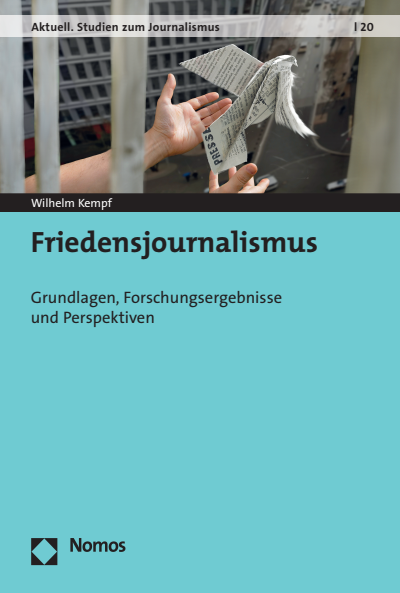
Friedensjournalismus
Grundlagen, Forschungsergebnisse und Perspektiven- Autor:innen:
- Reihe:
- Aktuell. Studien zum Journalismus, Band 20
- Verlag:
- 2021
Zusammenfassung
25 Jahre nachdem das Projekt eines Friedensjournalismus auf den Weg gebracht wurde, unternimmt der Autor eine Bestandsaufnahme dessen, was seither an theoretischer, empirischer und experimenteller Forschung und Entwicklung geleistet wurde, und wie sich der Friedensjournalismus selbst dabei weiterentwickelt hat: von einer Alternative zur Propagandaträchtigkeit herkömmlicher Kriegsberichterstattung hin zu einem Modell der konstruktiven Berichterstattung über zwischen- und innergesellschaftliche Konflikte jeglichen Eskalationsgrades bis hin zu alltäglichen Interessenkonflikten, wie sie auch aus einer demokratischen Gesellschaft nicht wegzudenken sind, und über Verhandlungen zum Zwecke einer konstruktiven Streitbeilegung.
Schlagworte
Publikation durchsuchen
Bibliographische Angaben
- Auflage
- 1/2021
- Copyrightjahr
- 2021
- ISBN-Print
- 978-3-8487-7142-4
- ISBN-Online
- 978-3-7489-1193-7
- Verlag
- Nomos, Baden-Baden
- Reihe
- Aktuell. Studien zum Journalismus
- Band
- 20
- Sprache
- Deutsch
- Seiten
- 160
- Produkttyp
- Monographie
Inhaltsverzeichnis
- Titelei/Inhaltsverzeichnis Kein Zugriff Seiten 1 - 12
- 1. Einleitung Kein Zugriff
- 2.1 Konstruktive Konfliktberichterstattung nach Kempf Kein Zugriff
- 2.2 Friedensjournalismus nach Galtung Kein Zugriff
- 2.3 Praktische und wissenschaftliche Anwendungen des Friedensjournalismus Kein Zugriff
- 2.4 Kritik am Friedensjournalismus Kein Zugriff
- 2.5 Konfliktsensitiver Journalismus Kein Zugriff
- 3.1 Diskursiver Journalismus als verständigungsorientiertes Handeln Kein Zugriff
- 3.2 Berichterstattungsmuster: Konstruktiver Journalismus Kein Zugriff
- 4. Ausblick Kein Zugriff
- Literatur Kein Zugriff
- 1. Erkenntnisinteresse Kein Zugriff
- 2. Grundlagen Kein Zugriff
- 3. Kriegsdiskurse vs. Friedensdiskurse Kein Zugriff
- 4. Ein Zwei-Stufen Modell Kein Zugriff
- 5. Journalistisches Handwerkszeug Kein Zugriff
- 6. Kritik des Friedensjournalismus Kein Zugriff
- 7. Medienanalysen Kein Zugriff
- 8. Rezeptionsstudien Kein Zugriff
- 9. Produktionsbedingungen und Reichweite Kein Zugriff
- 10. Konzeptuelle Weiterentwicklungen Kein Zugriff
- 1. Grundlagen in Propaganda- und Kommunikationstheorie Kein Zugriff
- 2. Konflikttheoretische Grundlagen Kein Zugriff
- 3. Ein Modell der Kriegspropaganda Kein Zugriff
- 4. Immanente Widersprüche der Kriegspropaganda Kein Zugriff
- 5. Ein Modell des Friedensjournalismus Kein Zugriff
- 6. Früherkennung von Konflikten Kein Zugriff
- 1. Grundbegriffe des Friedensjournalismus Kein Zugriff
- 2. Konzeptionen des Friedensjournalismus Kein Zugriff
- 3. Der Begriff der Fehlwahrnehmung Kein Zugriff
- 1. Einleitung Kein Zugriff
- 2. Kooperative Konfliktbearbeitung Kein Zugriff
- 3. Konstruktive Verhandlungsführung Kein Zugriff
- 4. Kompetitive Konfliktaustragung Kein Zugriff
- 5. Kompetitive Verhandlungsführung Kein Zugriff
- 6. Friedensverhandlungen Kein Zugriff
- 7. Friedensprozesse Kein Zugriff
- 8. Regelverletzungen Kein Zugriff
- 9. Grenzen konstruktiver Berichterstattung Kein Zugriff
- Literatur Kein Zugriff Seiten 141 - 154
- Dank Kein Zugriff Seiten 155 - 156
- Die Autor:innen Kein Zugriff Seiten 157 - 158
- Register Kein Zugriff Seiten 159 - 160
Literaturverzeichnis (223 Einträge)
Es wurden keine Treffer gefunden. Versuchen Sie einen anderen Begriff.
- Annabring, U. (2000). Protagonisten und Konfliktkonstellationen im israelisch-palästinensischen Friedensprozess. Univ. Konstanz: Diplomarbeit. Google Scholar öffnen DOI: 10.5771/9783748911937
- Annabring, U., Bläsi, B. & Möckel, J. (2004). The German press coverage of former Yugoslavia after the fall of Miloševic. conflict & communication online, 3/1&2. Google Scholar öffnen DOI: 10.5771/9783748911937
- Annabring, U., Ditlmann, R. & Kempf, W. (2005). Die kognitive Repräsentation von Nachkriegskonflikten im Spannungsfeld zwischen Mainstream-Diskurs und abweichender Berichterstattung. In: Projektgruppe Friedensforschung Konstanz (Hg.), Nachrichtenmedien als Mediatoren von Peace-Building, Demokratisierung und Versöhnung in Nachkriegsgesellschaften. Berlin: regener, 235-254. Google Scholar öffnen DOI: 10.5771/9783748911937
- Annabring, U. & Jaeger, S. (2005). Der Wandel des Feindbildes Serbien nach dem Machtwechsel. In: PFKN (Projektgruppe Friedensforschung Konstanz) (ed.). Nachrichtenmedien als Mediatoren von Peace-Building, Demokratisierung und Versöhnung in Nachkriegsgesellschaften. Berlin: regener, 129-148. Google Scholar öffnen DOI: 10.5771/9783748911937
- Asmal, K., Asmal, S. & Roberts, R.S. (1996). Reconciliation through truth: A reckoning of apartheid’s criminal governance 74. Xape Town & Johannesburg: David Philip Publishers. Google Scholar öffnen DOI: 10.5771/9783748911937
- ASPR (Austrian Study Center for Peace and Conflict Resolution) (ed.) (2003). Constructive conflict coverage. A social psychological approach. Berlin: regener. Google Scholar öffnen DOI: 10.5771/9783748911937
- Babcock, L & Olson, C. (1992). The causes of impasses in labor disputes. Ind. Relat., 31, 348-60. Google Scholar öffnen DOI: 10.5771/9783748911937
- Bandura, A. (1986). Social foundations of thought and action: A social cognitive theory. Englewood Cliffs, NJ: Prentice Hall. Google Scholar öffnen DOI: 10.5771/9783748911937
- Bandura, A. (1999). Moral disengagement in the perpetration of inhumanities. Personality and Social Psychology Review, 3, 193-209. Google Scholar öffnen DOI: 10.5771/9783748911937
- Bar-Tal, D. (1998). Societal beliefs in times of intractable conflict: The Israeli case. The International Journal of Conflict Management, 9/1, 22-50. Google Scholar öffnen DOI: 10.5771/9783748911937
- Bar-Tal, D. (2004). Nature, rationale and effectiveness of education for coexistence. Journal of Social Issues 60, 253-271. Google Scholar öffnen DOI: 10.5771/9783748911937
- Bar-Tal, D. (2005). Psychological obstacles to peace-making in the Middle East and proposals to overcome them. conflict & communication online, 4/1. Google Scholar öffnen DOI: 10.5771/9783748911937
- Bar-Tal, D. (2015). "Love your neighbor as yourself". This is the core requirement for overcoming blindness caused by hate and fear needed for peacemaking. conflict & communication online, 14/1. Google Scholar öffnen DOI: 10.5771/9783748911937
- Bastian, T. (1991). Kurdischer Nachkrieg. Blätter für deutsche und internationale Politik, 36, 519-520. Google Scholar öffnen DOI: 10.5771/9783748911937
- Bateson, G., Jackson, D.D., Haley, J. & Weakland, J. (1956): Toward a theory of schizophrenia. Behavioral Science, 1, 251-264. Google Scholar öffnen DOI: 10.5771/9783748911937
- Bazerman, M.H. (19984). Judgment in managerial decision making. New York: Wiley. Google Scholar öffnen DOI: 10.5771/9783748911937
- Bazerman, M.H. & Carroll, J.S. (1987). Negotiator cognition. Res. Organ. Behav., 9, 247-88. Google Scholar öffnen DOI: 10.5771/9783748911937
- Bazerman, M.H., Magliozzi, T. & Neale, M.A. (1985). The acquisition of an integrative response in a competitive market. Organ. Behav. Hum. Decis. Process. 34, 294-313. Google Scholar öffnen DOI: 10.5771/9783748911937
- Bazerman, M.H., Moore, D.A. & Gillespie, J.J. (1999). The human mind as a barrier to wiser environmental agreements. Am. Behav. Sci., 42, 1254-76. Google Scholar öffnen DOI: 10.5771/9783748911937
- Bazerman, M.H. & Neale, M.A. (1982). Improving negotiation effectiveness under final offer arbitration: the role of selection and training. J. Appl. Psychol, 67, 543-48. Google Scholar öffnen DOI: 10.5771/9783748911937
- Bazerman, M.H. & Neale, M.A. (1983). Heuristics in negotiation: limitations to effective dispute resolution. In: Bazerman, M.H. & Lewicki, R.J. (eds.). Negotiating in organizations. Beverly Hills, CA: Sage, 51-67. Google Scholar öffnen DOI: 10.5771/9783748911937
- Becker, J. (2004). Contributions by the media to crisis prevention and conflict settlement. conflict & communication online, 3/1+2. Google Scholar öffnen DOI: 10.5771/9783748911937
- Bell, M. (1997). TV news: how far should we go? Bristish Journalism Review, 8/1. Google Scholar öffnen DOI: 10.5771/9783748911937
- Benn, J. (2015). From passive to active: The spectrum of peace journalism. conflict & communication online, 14/2. Google Scholar öffnen DOI: 10.5771/9783748911937
- Besemer, C. (1993). Mediation. Vermittlung in Konflikten. Königsfeld: Stiftung Gewaltfreies Leben. Google Scholar öffnen DOI: 10.5771/9783748911937
- Betzler, L. & Glittenberg, M. (2015). Antisemitismus im deutschen Mediendiskurs. Eine Analyse des Falls Jakob Augstein. Baden-Baden: Nomos Verlagsgesellschaft. Google Scholar öffnen DOI: 10.5771/9783748911937
- Biacoto, J. (2011). Peace journalism where there is no war. Conflict-sensitive reporting on urban violence and public security in Brazil and its potential role in conflict transformation. conflict & communication online, 10/2. Google Scholar öffnen DOI: 10.5771/9783748911937
- Bilke, N. (2002). Friedensjournalismus. Wie Medien deeskalierend berichten können. Münster: agenda. Google Scholar öffnen DOI: 10.5771/9783748911937
- Bilke, N. (2008). Qualität in der Krisen- und Kriegsberichterstattung. Ein Modell für einen konfliktsensitiven Journalismus. Wiesbaden: Verlag für Sozialwissenschaften. Google Scholar öffnen DOI: 10.5771/9783748911937
- Bizman, A. & Hoffman, M. (1993). Expectations, emotions, and preferred responses regarding the Arab-Israeli conflict: an attributional analysis. Journal of Conflict Resolution, 37,139-59. Google Scholar öffnen DOI: 10.5771/9783748911937
- Blake, R.R. & Mouton, J.S. (1961). Comprehension of own and outgroup positi¬ons un¬der intergroup competition. Journal of Conflict Resolution, 5, 304-310. Google Scholar öffnen DOI: 10.5771/9783748911937
- Blake, R.R. & Mouton, J.S. (1962). Overevaluation of own groups’s product in intergroup competition. Journal of Abnormal and Social Psychology, 64, 237-238. Google Scholar öffnen DOI: 10.5771/9783748911937
- Bläsi, B. (2004). Peace journalism and the news production process. conflict & communication online, 3/1&2. Google Scholar öffnen DOI: 10.5771/9783748911937
- Bläsi, B. (2005). Produktionsbedingungen konstruktiver Konfliktberichterstattung. In: Projektgruppe Friedensforschung Konstanz (ed.). Nachrichtenmedien als Mediatoren von Peace-Building, Demokratisierung und Versöhnung in Nachkriegsgesellschaften. Berlin: regener, 257-276. Google Scholar öffnen DOI: 10.5771/9783748911937
- Bläsi, B. (2006). Keine Zeit, kein Geld, kein Interesse …? Konstruktive Konfliktberichterstattung zwischen Anspruch und medialer Wirklichkeit. Berlin: regener. Google Scholar öffnen DOI: 10.5771/9783748911937
- Bläsi, B. (2009). Implementing peace journalism: The role of conflict stages. conflict & communication online, 8/2). Google Scholar öffnen DOI: 10.5771/9783748911937
- Bläsi, B. & Jaeger, S. (2004). Katalog konstruktiver Aspekte in der Nachkriegsberichterstattung. Nr. 54. Diskussionsbeiträge der Projektgruppe Friedensforschung Konstanz Nr. 54. Berlin: regener. Google Scholar öffnen DOI: 10.5771/9783748911937
- Bläsi, B., Jaeger, S., Kempf, W. & Möckel, J. (2004). A catalog of escalation- and de-escalation-oriented aspects of conflict coverage. Diskussionsbeiträge der Projektgruppe Friedensforschung Konstanz Nr. 53. Berlin: regener. Google Scholar öffnen DOI: 10.5771/9783748911937
- Bläsi, B., Jaeger, S., Kempf, W., Kondopoulou, M. & Paskoski, D. (2005). Konstruktive Aspekte des serbischen, deutschen und griechischen Nachkriegsdiskurses – qualitative Vergleichsstudien. In: PFKN (Projektgruppe Friedensforschung Konstanz) (ed.). Nachrichtenmedien als Mediatoren von Peace-Building, Demokratisierung und Versöhnung in Nachkriegsgesellschaften. Berlin: regener, 149-200. Google Scholar öffnen DOI: 10.5771/9783748911937
- Bläsi, B., Jaeger, S., Kempf, W. & Spohrs, M. (2005). Glaubwürdigkeit und Attraktivität von eskalations- und de-eskalationsorientierten Nachrichtentexten. In: Projektgruppe Friedensforschung Konstanz (Hg.), Nachrichtenmedien als Mediatoren von Peace-Building, Demokratisierung und Versöhnung in Nachkriegsgesellschaften. Berlin: regener, 203-234. Google Scholar öffnen DOI: 10.5771/9783748911937
- Blumer, H. (1973). Der methodologische Standort des symbolischen Interaktionismus. In: Arbeitsgruppe Bielefelder Soziologen (Hg.), Alltagswissen, Interaktion und gesellschaftliche Wirklichkeit. Hamburg: Rowohlt, 80-146. Google Scholar öffnen DOI: 10.5771/9783748911937
- Bottom, W.P & Studt, A. (1993). Framing effects and the distributive aspect of integrative bargaining. Organ. Behav. Hum. Decis. Process. 56, 459-74. Google Scholar öffnen DOI: 10.5771/9783748911937
- Carroll, J.S., Bazerman, M.H. & Maury, R. (1988). Negotiator cognitions: a descriptive approach to negotiators' understanding of their opponents. Organ. Behav. Hum. Decis. Process., 41, 352-70. Google Scholar öffnen DOI: 10.5771/9783748911937
- Chomsky, N. (1990). Barmherzigkeit ist nicht zu erwarten. Der Süden in der neuen Weltordnung. Blätter für deutsche und internationale Politik, 35, 1319-1326. Google Scholar öffnen DOI: 10.5771/9783748911937
- Cohen, Y. (1986). Media diplomacy. The foreign office in the mass communication age. London: Frank Cass and Company Ltd. Google Scholar öffnen DOI: 10.5771/9783748911937
- Creighton, J.L. (1991). Don't go away mad: how to make peace with your partner. New York: Doubleday Books. Google Scholar öffnen DOI: 10.5771/9783748911937
- Deutsche Übersetzung: Creighton, J. (1992). Schlag nicht die Türe zu. Konflikte aushalten lernen. Reinbek bei Hamburg: Rowohlt. Google Scholar öffnen DOI: 10.5771/9783748911937
- Curhan, J.R., Neale, M.A. & Ross, L. (1998). Dynamic valuation: preference change in the context of active face-to-face negotiations. Paper presented at Annual Stanford/Berkeley talks, Stanford, CA. Google Scholar öffnen DOI: 10.5771/9783748911937
- De Dreu, C.K.W. (1996). Gain-loss frame in outcome-interdependence: Does it influence equality or equity considerations? Eur. J. Soc. Psychol., 26, 315-24. Google Scholar öffnen DOI: 10.5771/9783748911937
- De Dreu, C.K.W. & McCusker, C. (1997). Gain-loss frames and cooperation in two-person social dilemmas: a transformational analysis. J. Pers. Soc. Psychol., 72, 1093-106. Google Scholar öffnen DOI: 10.5771/9783748911937
- Deutsch, M. (1973). The resolution of conflict. New Haven: Yale University Press. Google Scholar öffnen DOI: 10.5771/9783748911937
- Deutsche Übersetzung: Deutsch, M. (1976). Konfliktregelung. München: Reinhardt. Google Scholar öffnen DOI: 10.5771/9783748911937
- Deutsch, M. (2000). Cooperation and competition. In: Deutsch, M. & Coleman, P.T. (Hg.). The handbook of conflict resolution. Theory and practice. San Francisco: Jossey-Bass, 21-40. Google Scholar öffnen DOI: 10.5771/9783748911937
- Diekmann, K.A. (1997). 'Implicit justifications' and self-serving group allocations. J. Organ. Behav., 18, 3-16. Google Scholar öffnen DOI: 10.5771/9783748911937
- Diekmann, K.A., Samuels, S.M., Ross, L. & Bazerman, M.H. (1997). Self-interest and fairness in problems of resource allocation: allocators versus recipients. J. Pers. Soc. Psychol., 72,1061-74. Google Scholar öffnen DOI: 10.5771/9783748911937
- Diekmann, K.A., Tenbrunsel, A.E. & Bazerman, M.H. (1999). Escalation and negotiation: two central themes in the work of Jeffrey Z. Rubin. In: Kolb, D. (ed.). Negotiation Ethics: Essays in memory of Jeffrey Z. Rubin. Cambridge, MA: PON Books. Google Scholar öffnen DOI: 10.5771/9783748911937
- Eilders, C. (2016). Journalismus und Nachrichtenwert. In: Handbuch Journalismustheorien. Springer VS, Wiesbaden, 2016, 431-442. Google Scholar öffnen DOI: 10.5771/9783748911937
- Entman, R.M. (1993): Framing: Toward clarification of a fractured paradigm. Journal of Communication, 43/4, 51-58. Google Scholar öffnen DOI: 10.5771/9783748911937
- Festinger, L. (1957). A theory of cognitive dissonance. Evanston, Ill.: Row, Peterson. Google Scholar öffnen DOI: 10.5771/9783748911937
- Fisher, R.F. & Ury, W. (1984). Das Harvard-Konzept. Sachgerecht verhandeln – erfolgreich verhandeln. Frankfurt/Main: Campus. Google Scholar öffnen DOI: 10.5771/9783748911937
- Fuchs, A. (1993). Gewaltbegriff und Funktion von Gewalt. In Kempf, W., Frindte, W., Sommer, G. & Spreiter, M. (eds.). Gewaltfreie Konfliktlösungen. Heidelberg: Asanger. Google Scholar öffnen DOI: 10.5771/9783748911937
- Gaisbauer, F. (2012). Representations of victimization and responsibility during the Second Intifada and the Gaza War in German quality newspapers / Darstellungen von Viktimisierung und Verantwortlichkeit während Zweiter Intifada und Gazakrieg in deutschen Qualitätstageszeitungen. conflict & communication online, 11/2. Google Scholar öffnen DOI: 10.5771/9783748911937
- Galtung, J. (1969). Violence, peace and peace research. Journal of Peace Research, 6/3, 167-191. Google Scholar öffnen DOI: 10.5771/9783748911937
- Deutsche Übersetzung: Galtung, J. (1975). Gewalt, Frieden und Friedensforschung. In: Galtung, J. Strukturelle Gewalt. Beiträge zur Friedens- und Konfliktforschung. Reinbek bei Hamburg: Rowohlt, 7-36. Google Scholar öffnen DOI: 10.5771/9783748911937
- Galtung, J. (1975). Konflikt als Lebensform. In: Galtung, J. Strukturelle Gewalt. Beiträge zur Friedens- und Konfliktforschung. Reinbek bei Hamburg: Rowohlt, 108-136. Google Scholar öffnen DOI: 10.5771/9783748911937
- Galtung, J. (1990). Cultural violence. Journal of Peace Research 27/3, 291-305. Google Scholar öffnen DOI: 10.5771/9783748911937
- Galtung, J. (1998). Friedensjournalismus: Warum, was, wer, wo, wann? In: Kempf, W. & Schmidt-Regener, I. (Hg.) Krieg, Nationalismus Rassismus und die Medien. Münster: Lit, 3-20. Google Scholar öffnen DOI: 10.5771/9783748911937
- Englische Fassung: Galtung, J. (2008). Peace journalism: What, why, who, how, when, where? In: Kempf, W. (ed.). The Peace Journalism Controversy. Berlin: regener, 19-33. Google Scholar öffnen DOI: 10.5771/9783748911937
- Galtung, J. (2004): Building peace through harmonious diversity. Vortrag auf der Konferenz: The security approach and the peace approach. https://www.transcend.org/files/article491.htmlhttps://www.transcend.org/files/article491.html. Google Scholar öffnen DOI: 10.5771/9783748911937
- Galtung, J. & Ruge, M.H. (1965). The structure of foreign news: The presentation of the Congo, Cuba and Cyprus crises in four Norwegian newspapers. Journal of Peace Research 2/1, 64-90. Google Scholar öffnen DOI: 10.5771/9783748911937
- Galtung, J. & Vicent, R.C. (1992). Global Glasnost: toward a new world information and communication order? Cresskill: Hampton Press. Google Scholar öffnen DOI: 10.5771/9783748911937
- Glasl, F. (1992). Konfliktmanagement. Bern: Haupt. Google Scholar öffnen DOI: 10.5771/9783748911937
- Grossmann, D. (2014): Erinnern wir uns an die Zukunft. In: TagesAnzeiger vom 4.8.2014. https://www.tagesanzeiger.ch/kultur/diverses/Erinnern-wir-uns-an-die-Zukunft/story/10216028https://www.tagesanzeiger.ch/kultur/diverses/Erinnern-wir-uns-an-die-Zukunft/story/10216028 Google Scholar öffnen DOI: 10.5771/9783748911937
- Gutiérrez-Villalobos, S. (2005). Pro-conflict and pro-cooperation coverage: The San Juan River conflict. conflict & communication online, 4/1. Google Scholar öffnen DOI: 10.5771/9783748911937
- Hackett, R.A. (2017). From frames to paradigms: civic journalism, peace journalism and alternative media. In: Hackett, R.A., Forde, S., Gunstler, S. & Foxwell-Norton, K.: Journalism and climate crisis. Public engagement, media alternatives. London: Routledge, 94-119. Google Scholar öffnen DOI: 10.5771/9783748911937
- Haack, P. (2007). Talking Intervention. Foreign policy frames and their conditional impact on individual attitudes. Saarbrücken: VDM. Google Scholar öffnen DOI: 10.5771/9783748911937
- Haller, M. (1994). Recherche und Nachrichtenproduktion als Konstruktionsprozesse. In Merten, K., Schmidt, S.J., Weischenberg, S. (eds.). Die Wirklichkeit der Medien. Eine Einführung in die Kommunikationswissenschaft. Opladen: Westdeutscher Verlag. Google Scholar öffnen DOI: 10.5771/9783748911937
- Hamdorf, T. (2001). Zweidimensionales Bild der Wirklichkeit. Das No5rdirland Friedensabkommen in der Berliner Zeitung als ein Beispiel für Friedensjournalismus? Rollenkonstruktion im Bosnien-Konflikt: Westliche Kriegsberichterstattung zwischen Ambivalenz und Anteilnehme. In: Richter, J. (ed.). Deutschland: (un-) bewältigte Vergangenheiten. Tübingen: dgvt-Verlag, 141-150. Google Scholar öffnen DOI: 10.5771/9783748911937
- Handke, P. (1996). Gerechtigkeit für Serbien. Eine winterliche Reise zu den Flüssen Donau, Save, Morawa und Drina. Süddeutsche Zeitung, 5./6. u. 13./14. Januar 1996. Google Scholar öffnen DOI: 10.5771/9783748911937
- Hanitzsch, T. (2004). Journalisten zwischen Friedensdienst und Kampfeinsatz. Journalisten im Kriegsjournalismus aus kommunikationswissenschaftlicher Perspektive. In: Löffelholz, M. (ed.). Krieg als Medienereignis II. Krisenkommunikation im 21. Jahrhundert. Wiesbaden: Verlag für Sozialwissenschaften, 169–193. Google Scholar öffnen DOI: 10.5771/9783748911937
- Hanitzsch, T. (2008). Situating peace journalism in journalism studies: a critical appraisal. In: Kempf, Wilhelm (ed.): The peace journalism controversy. Berlin: regener, 69-80. Google Scholar öffnen DOI: 10.5771/9783748911937
- Harcup, T. (2011). Alternative journalism as active citizenship. Journalism, 12(1), 15-31. Google Scholar öffnen DOI: 10.5771/9783748911937
- Herman, E.S. & Chomsky, N. (1988). Manufacturing consent. The political economy of the mass media. New York: Pantheon Books. Google Scholar öffnen DOI: 10.5771/9783748911937
- Hoyningen-Huene, P. (1983). Autonome historische Prozesse –kybernetisch betrachtet. Geschichte und Gesellschaft, 9/1, 119-123. Google Scholar öffnen DOI: 10.5771/9783748911937
- Hussain, S. (2014). Reporting on terror: Why are the voices of peace unheard? conflict & communication online, 13/2). Google Scholar öffnen DOI: 10.5771/9783748911937
- Hussain, S. & Rehman (2015). Balochistan: Reaping the benefits of peace journalism. conflict & communication online, 14/2. Google Scholar öffnen DOI: 10.5771/9783748911937
- Iqbal, M.Z. & Hussain, S. (2017). Reporting sectarian incidents: Examining the escalatory and de-escalatory discourses in the Pakistan news media. Journal of Political Studies, 24/2, 469-484. Google Scholar öffnen DOI: 10.5771/9783748911937
- Jackson, L.E. (2006). Moral Disengagement. How media use can affect the support of war. Berlin: VDM. Google Scholar öffnen DOI: 10.5771/9783748911937
- Jaeger, S. (1998). Propaganda mit Frauenschicksalen? Die deutsche Presseberichterstattung über Vergewaltigung im Krieg in Bosnien-Herzegowina. In: Kempf, W., Schmidt-Regener, I. (Hrsg.). Krieg Nationalismus, Rassismus und die Medien. Münster: Lit, 75-88. Google Scholar öffnen DOI: 10.5771/9783748911937
- Jaeger, S. (2001). Rollenkonstruktion im Bosnien-Konflikt: Westliche Kriegsberichterstattung zwischen Ambivalenz und Anteilnehme. In: Richter, J. (ed.). Deutschland: (un-) bewältigte Vergangenheiten. Tübingen: dgvt-Verlag, 151-160. Google Scholar öffnen DOI: 10.5771/9783748911937
- Jaeger, S. (2002). Compatibility of peace and news media. Communicator, 37/1, 27-30. Google Scholar öffnen DOI: 10.5771/9783748911937
- Jaeger, S. (2005a). Themenauswahl in der Nachkriegsberichterstattung – eine quantitative Langzeitstudie. In: PFK (Projektgruppe Friedensforschung Konstanz) (Hg.) (2005). Nachrichtenmedien als Mediatoren von Peace-Building, Demokratisierung und Versöhnung in Nachkriegsgesellschaften. Berlin: regener, 51-80. Google Scholar öffnen DOI: 10.5771/9783748911937
- Jaeger, S. (2005b). Von Nachhall und Überwindung deutsch-französischer Gegnerschaft – qualitative Fallstudien. In: PFK (Projektgruppe Friedensforschung Konstanz) (Hg.) (2005). Nachrichtenmedien als Mediatoren von Peace-Building, Demokratisierung und Versöhnung in Nachkriegsgesellschaften. Berlin: regener, 81-126. Google Scholar öffnen DOI: 10.5771/9783748911937
- Jaeger, S. (2009). Nachrichtenmedien als Ressource für Frieden und Versöhnung. Inhaltsanalytische Pressestudien zur westdeutschen Berichterstattung über Frankreich nach dem Zweiten Weltkrieg. Berlin: regener. Google Scholar öffnen DOI: 10.5771/9783748911937
- Jaeger, S. & Möckel, J. (2004). Die Berichterstattung in der Frankfurter Rundschau über Jugoslawien nach dem Sturz von Slobodan Miloševic. Diskussionsbeiträger der Projektgruppe Friedensforschung Konstanz Nr. 57. Berlin: regener. Google Scholar öffnen DOI: 10.5771/9783748911937
- Kahnemann, D. & Tversky, A. (1979). Prospect theory: An analysis of decision under risk. Econometrica, 47, 263-291. Google Scholar öffnen DOI: 10.5771/9783748911937
- Kamlah, W. & Lorenzen, P. (1967). Logische Propädeutik. Vorschule des vernünftigen Redens. Mannheim: Bibliographisches Institut. Google Scholar öffnen DOI: 10.5771/9783748911937
- Keiffer, M.G. (1968). The Effect of Availability and Precision of Threat on Bargaining Behavior. Ph.D. Dissertation. Columbia University: Teachers College. Google Scholar öffnen DOI: 10.5771/9783748911937
- Keltner, D. & Robinson, R.J. (1993). Imagined ideological differences in conflict escalation and resolution. Int. J. Confl. Manage., 4, 249-62. Google Scholar öffnen DOI: 10.5771/9783748911937
- Kempf, W. (1978). Konfliktlösung und Aggression. Zu den Grundlagen einer psychologischen Friedensforschung. Bern: Huber. Google Scholar öffnen DOI: 10.5771/9783748911937
- Kempf, W. (1986). Emotionalität und Antiintellektualismus der Friedensbewegung? In: Evers, T., Kempf, W. & Valtink, E. (Hg.). Sozialpsychologie des Friedens. Protokoll 229/1986. Hofgeismar: Evangelische Akademie. Google Scholar öffnen DOI: 10.5771/9783748911937
- Kempf, W. (1993). Konflikteskalation durch autonome Prozesse. In Kempf, W., Frindte, W., Sommer, G. & Spreiter, M. (eds.). Gewalt¬freie Konfliktlösungen. Heidelberg: Asanger. Google Scholar öffnen DOI: 10.5771/9783748911937
- Kempf, W. (Hg.) (1994). Manipulierte Wirklichkeiten. Medienpsychologische Untersuchungen der bundesdeutschen Presseberichterstattung im Golfkrieg. Münster: Lit. Google Scholar öffnen DOI: 10.5771/9783748911937
- Kempf, W. (1996). Konfliktberichterstattung zwischen Eskalation und Deeskalation. Ein sozialpsychologisches Modell. Wissenschaft und Frieden, 14, 51-54. Google Scholar öffnen DOI: 10.5771/9783748911937
- Englische Übersetzung: Kempf, W. (2008). News coverage of conflict: Between escalation and de-escalation. In: Kempf, W. (ed.). The Peace Journalism Controversy. Berlin: regener, 11-18. Google Scholar öffnen DOI: 10.5771/9783748911937
- Kempf, W. (1997). Kriegspropaganda versus Friedens-Journalismus. In: Caließ, J. (Hg.). Das erste Opfer eines Krieges ist die Wahrheit. Oder: die Medien zwischen Kriegsberichterstattung und Friedensberichterstattung. Loccumer Protokolle 69/95, 137-149 (1997). Google Scholar öffnen DOI: 10.5771/9783748911937
- Englische Übersetzung: Kempf, W. (2010). War propaganda versus peace journalism. In: Kempf, W. (ed.). Readings in Peace Journalism. Foundations – Studies – Perspectives. Berlin: Regener, 13-26. Google Scholar öffnen DOI: 10.5771/9783748911937
- Kempf, W. (1998). Die Berichterstattung über Friedensinitiativen dritter Parteien während des Golfkrieges. In: Kempf, W., & Schmidt-Regener, I. (Hg.). Krieg Nationalismus, Rassismus und die Medien. Münster: Lit, 35-46. Google Scholar öffnen DOI: 10.5771/9783748911937
- Kempf, W. (1999). De-escalation-oriented conflict coverage? The Northern Ireland and Israeli-Palestinian peace processes in the German press. Diskussionsbeiträge der Projektgruppe Friedensforschung Konstanz, Nr. 45. http://www.ub.uni-konstanz.de/serials/kempf.htmhttp://www.ub.uni-konstanz.de/serials/kempf.htm. Google Scholar öffnen DOI: 10.5771/9783748911937
- Kempf, W. (2000). Gewaltursachen und Gewaltdynamiken. In: Kempf, W. (Koord.). Konflikt und Gewalt. Herausgegeben vom Österreichischen Studienzentrum für Frieden und Konfliktlösung (ÖSFK). Münster: agenda, 44-65. Google Scholar öffnen DOI: 10.5771/9783748911937
- Kempf, W. (2001). News media and conflict escation. A comparative study of Gulf War coverage in US and European media. In: Nohrstedt, S.A. & Ottosen, R. (eds.). Vol. 1: Journalism and the New World Order. Gulf War, National News Discourses and Globalization. Göteborg: Nordicom, 149-174. Google Scholar öffnen DOI: 10.5771/9783748911937
- Kempf, W. (2002). Escalating and deescalating aspects in the coverage of the Bosnia conflict. A comparative study. In: Kempf, W. & Luostarinen, H. (eds.). Journalism and the New World Order. Vol. 2: Studying War and the Media. Göteborg: Nordicom, 227-255. Google Scholar öffnen DOI: 10.5771/9783748911937
- Kempf, W. (2003). Konstruktive Konfliktberichterstattung - Ein sozialpsychologisches Forschungs- und Entwicklungsprogramm / Constructive conflict coverage - A social-psychological research and development program. conflict & communication online, 2/2. Google Scholar öffnen DOI: 10.5771/9783748911937
- Kempf, W. (2005). Two experiments focusing on de-escalation oriented coverage of post-war conflicts. conflict & communication online, 4/2. Google Scholar öffnen DOI: 10.5771/9783748911937
- Kempf, W. (2006). Social constructivism and its implications for critical media studies. Conflict & communication online, 5/1. Google Scholar öffnen DOI: 10.5771/9783748911937
- Kempf, W. (2008a). Peace journalism: A tightrope walk between advocacy journalism and constructive conflict coverage. In: Kempf, W. (ed.). The peace journalism controversy. Berlin: regener, 145-156. Google Scholar öffnen DOI: 10.5771/9783748911937
- Kempf, W. (2008b). The impact of political news on German students' assessments of the Israeli-Palestinian conflict. conflict &communication online, 7/2. Google Scholar öffnen DOI: 10.5771/9783748911937
- Kempf, W. (2008c). Forschungsmethoden der Psychologie. Zwischen naturwissenschaftlichem Experiment und sozialwissenschaftlicher Hermeneutik. Band II: Quantität und Qualität. Berlin: regener. Google Scholar öffnen DOI: 10.5771/9783748911937
- Kempf, W. (2009). Die soziale Konstruktion der Wirklichkeit. In: Kempf, W. & Kiefer, M. (eds.). Forschungsmethoden der Psychologie. Zwischen naturwissenschaftlichem Experiment und sozialwissenschaftlicher Hermeneutik. Band III: Natur und Kultur. Berlin: regener, 51-99. Google Scholar öffnen DOI: 10.5771/9783748911937
- Kempf, W. (2012). Peace journalism, the Israeli-Palestinian conflict, the German media and the German public. Bulletin du Centre de Recherche Français à Jérusalem, 23. http://bcrfj.revues.org/6788http://bcrfj.revues.org/6788. Google Scholar öffnen DOI: 10.5771/9783748911937
- Kempf, W. (2015). Israelkritik zwischen Antisemitismus und Menschenrechtsidee. Eine Spurensuche. Berlin : regener. Google Scholar öffnen DOI: 10.5771/9783748911937
- Kempf, W. (2016a). Gefahren des Friedensjournalismus / Dangers of peace journalism. conflict & communication online, 15/2. Google Scholar öffnen DOI: 10.5771/9783748911937
- Kempf, W. (2016b). Rezension des Buches „Antisemitismus im deutschen Mediendiskurs“ von Lukas Betzler & Manuel Glittenberg. conflict & communication online, 15/2. Google Scholar öffnen DOI: 10.5771/9783748911937
- Kempf, W. (2017). Towards a theory and (better) practice of peace journalism. conflict & communication online, 16/2. Google Scholar öffnen DOI: 10.5771/9783748911937
- Kempf, W. (2018). Konstruktive Konfliktberichterstattung? Der Fall Israel/Palästina. Communicatio Socialis, 51/1, 21-32. Google Scholar öffnen DOI: 10.5771/9783748911937
- Kempf, W. (2019). Begriffe und Konzepte des Friedensjournalismus. conflict & communication online, 18/2. Google Scholar öffnen DOI: 10.5771/9783748911937
- Kempf, W. & Luostarinen, H. (eds.) (2002). Journalism in the New World Order. Vol. 2. Studying war and the media. Göteborg: Nordicom. Google Scholar öffnen DOI: 10.5771/9783748911937
- Kempf, W. & Reimann, M. (1994). Die Berichterstattung über alliierte Kriegsgefangene. In: Kempf, W. (Hrsg.). Manipulierte Wirklichkeiten. Medienpsychologische Untersuchungen der bundesdeutschen Presseberichterstattung im Golfkrieg. Münster: Lit, 82-101. Google Scholar öffnen DOI: 10.5771/9783748911937
- Kempf, W. & Reimann, M. (2002). The presentation of alternative ways of settling the Gulf conflict in German, Norwegian and Finnish media. In Kempf, W. & Luostarinen, H. (eds.). Journalism and the New World Order. Vol. II. Studying war and the media. Göteborg: Nordicom, 203-226. Google Scholar öffnen DOI: 10.5771/9783748911937
- Kempf, W., Reimann, M. & Luostarinen, H. (2001). New World Order rhetoric in American and European media. In: Nohrstedt, S.A. & Ottosen, R. (eds.). Journalism and the New World Order. Vol. I. Gulf War, National News Discourses and Globalization. Göteborg: Nordicom, 125-148. Google Scholar öffnen DOI: 10.5771/9783748911937
- Kempf, W. & Thiel, S. (2012). On the interaction between media frames and individual frames of the Israeli-Palestinian conflict. conflict & communication online, 11/2. Google Scholar öffnen DOI: 10.5771/9783748911937
- Keßler, C., 2002. Jugoslawien zwischen Ende des Kosovo-Krieges und Sturz Milosevics - Berichterstattung zwischen Eskalation und Deeskalation. Univ. Konstanz: Diplomarbeit. Google Scholar öffnen DOI: 10.5771/9783748911937
- Kinder, D.R. (2003). Communication and politics in the age of information. In: Sears, D., Huddy, L & Jervis, R. (Eds.), Oxford Handbook of Political Psychology. New York: Oxford University Press. Google Scholar öffnen DOI: 10.5771/9783748911937
- Kondopoulou, M. (2002). The Greek media and the Kosovo Crisis. Conflict & communication online, 1/2. Google Scholar öffnen DOI: 10.5771/9783748911937
- Koltermann, F. (2017). Fotoreporter im Konflikt. Der internationale Fotojournalismus in Israel/Palästina. Bielefeld: transcript. Google Scholar öffnen DOI: 10.5771/9783748911937
- Kracauer, F. (1952). The challenge of qualitative content analysis. Public Opinion Quaterly, 16, 631-642. Google Scholar öffnen DOI: 10.5771/9783748911937
- Kramer, R,M. (1994). The sinister attribution error: paranoid cognition and collective distrust in organizations. Motiv. Emot., 18, 199-230. Google Scholar öffnen DOI: 10.5771/9783748911937
- Kramer, R.M, Newton, E. & Pommerenke, P.L. (1993). Self-enhancement biases and negotiator judgment: effects of self-esteem and mood. Organ. Behav. Hum. Decis. Process., 56, 110-33. Google Scholar öffnen DOI: 10.5771/9783748911937
- Kunczik, M. (1990). Die manipulierte Meinung: Nationale Image-Politik und internationale Public Relations. Köln: Böhlau. Google Scholar öffnen DOI: 10.5771/9783748911937
- Lasswell, H.D. (1927). Propaganda Technique in the World War. London: Kegan Paul. Google Scholar öffnen DOI: 10.5771/9783748911937
- Lee, S.T. & Maslog, C.C. (2006). War or peace journalism? Asian newspaper coverage of conflicts. Journal of Communication, 55/2, 311–329. Google Scholar öffnen DOI: 10.5771/9783748911937
- Levine, J.M., (1989). Reactions to opinion deviance in small groups. In: Paulus, P.B. (ed.). Psychology of group influence. Hillsdale, New York: Lawrence Erlbaum. 187-231. Google Scholar öffnen DOI: 10.5771/9783748911937
- Liegl, P. & Kempf, W. (1994). Die Auseinandersetzung mit der bundesdeutschen Friedensbewegung. In: Kempf, W. (Hg.). Manipulierte Wirklichkeiten. Medienpsychologische Untersuchungen der bundesdeutschen Presseberichterstattung im Golfkrieg. Münster: Lit, 122-138. Google Scholar öffnen DOI: 10.5771/9783748911937
- Lim, R.G. (1997). Overconfidence in negotiation revisited. Int. J. Confl. Manage., 8, 52-79. Google Scholar öffnen DOI: 10.5771/9783748911937
- Lim, R.G. & Carnevale, P.J. (1995). Influencing mediator behavior through bargainer framing. Int. J. Confl. Manage, 6, 349-68. Google Scholar öffnen DOI: 10.5771/9783748911937
- Lorenzen, P. & Schwemmer, O. (1975). Konstruktive Logik, Ethik und Wissenschaftstheorie. 2. Auflage. Mannheim: Bibliographisches Institut. Google Scholar öffnen DOI: 10.5771/9783748911937
- Loyn, D. (2008). Good journalism or peace journalism? In: Kempf, W. (ed.). The peace journalism controversy. Berlin: regener, 53-68. Google Scholar öffnen DOI: 10.5771/9783748911937
- Lumsdaine, A.A. & Janis, I.L. (1953). Resistance to “Counter Propaganda” produced by one-sided and two-sided “Propaganda” presentations. Public Opinion Quaterly, 17, 311-318. Google Scholar öffnen DOI: 10.5771/9783748911937
- Lumsden, M. (1997). Breaking the cycles of violence. Journal of Peace Research, Vol. 34, No. 4, 377-383. Google Scholar öffnen DOI: 10.5771/9783748911937
- Luostarinen, H. (1986). Perivihollinen (The Ancient Foe). Tampere: Vastapaino. Google Scholar öffnen DOI: 10.5771/9783748911937
- Luostarinen, H. (2002). Propaganda Analysis. In: Kempf, W. & Luostarinen, H. (eds.). Journalism and the New World Order. Vol. II. Studying war and the media. Göteborg: Nordicom,17-38. Google Scholar öffnen DOI: 10.5771/9783748911937
- Luostarinen, H. & Kempf, W. (2000). Krieg und Medien. In: ÖSFK (ed.). Konflikt und Gewalt. Münster: agenda, 334-371. Google Scholar öffnen DOI: 10.5771/9783748911937
- Lynch, J. (2008). Peace journalism and its discontents. In: Kempf, W. (ed.). The peace journalism controversy. Berlin: regener, 83-103. Google Scholar öffnen DOI: 10.5771/9783748911937
- Lynch, J. (2018). Where I stand on peace journalism and the academic boycott of Israel. conflict & communication online, 17/1. Google Scholar öffnen DOI: 10.5771/9783748911937
- Lynch, J. & McGoldrick, A. (2004): News from the Holy Land. Theory and Practice of Reporting Conflict. Gloucestershire UK: Hawthorn Press. Google Scholar öffnen DOI: 10.5771/9783748911937
- Lynch, J. & McGoldrick, A. (2005). Peace Journalism. Gloucestershire UK: Hawthorn Press. Google Scholar öffnen DOI: 10.5771/9783748911937
- Lynch, J., & McGoldrick, A. (2013). Responses to peace journalism. Journalism, 14(8), 1041-1058. Google Scholar öffnen DOI: 10.5771/9783748911937
- Mandelzis, L. (2003). The changing image of the enemy in the news discourse of Israeli newspapers, 1993-1994. conflict & communication online, Vol. 2, No. 1. Google Scholar öffnen DOI: 10.5771/9783748911937
- Mandelzis, L. (2007). Representations of peace in news discourse: Viewpoint and opportunity for peace journalism. conflict & communication online, Vol. 6, No. 1. Google Scholar öffnen DOI: 10.5771/9783748911937
- Martin Baró, I. (1991). Die psychischen Wunden der Gewalt. In: Kempf, W. (Hg.). Verdeckte Gewalt. Psychosoziale Folgen der Kriegsführung niedriger Intensität in Zentralamerika. Hamburg: Argument. Google Scholar öffnen DOI: 10.5771/9783748911937
- Maurer, M. & Kempf, W. (2011). Israelkritik und Antisemitismus? Eine vergleichende Analyse der deutschen Presseberichterstattung über 2. Intifada und Gaza-Krieg. Conflict & communication online, 10/2. Google Scholar öffnen DOI: 10.5771/9783748911937
- McCombs, M.E. & Shaw, D.L. (1972). The agenda-setting function of mass media. Public Opinion Quaterly, 36, 176-187. Google Scholar öffnen DOI: 10.5771/9783748911937
- McGoldrick, A. (2006). War journalism and "objectivity". conflict & communication online, 5/2. Google Scholar öffnen DOI: 10.5771/9783748911937
- McGoldrick, A. (2015) ‘Boycott, Divestment and Sanctions (BDS): an important part of the dialogue process’, Online Opinion, March 31. http://www.onlineopinion.com.au/view.asp?article=17219&page=1http://www.onlineopinion.com.au/view.asp?article=17219&page=1 Google Scholar öffnen DOI: 10.5771/9783748911937
- Meder, G. (1994). Die Funktionalisierung der Vereinten Nationen. In: Kempf, W. (Hg.). Manipulierte Wirklichkeiten. Medienpsychologische Untersuchungen der bundesdeutschen Presseberichterstattung im Golfkrieg. Münster: Lit, 139-157. Google Scholar öffnen DOI: 10.5771/9783748911937
- Menkel-Meadow, C. (ed.) (2018). Mediation: theory, policy and practice. London: Routledge. Google Scholar öffnen DOI: 10.5771/9783748911937
- Messick, D.M. (1999). Alternative logics for decision making in social settings. J. Econ. Behav. Organ., 39, 11-28. Google Scholar öffnen DOI: 10.5771/9783748911937
- Messick, D.M. & Sentis, K.P. (1979). Fairness and preference. J. Exp. Soc. Psychol., 15, 418-34. Google Scholar öffnen DOI: 10.5771/9783748911937
- Meyers, R. (1994). Begriffe und Probleme des Friedens. Opladen: Westdeutscher Verlag. Google Scholar öffnen DOI: 10.5771/9783748911937
- Mitchell, C.R. (1981). Peacemaking and the consultatnt’s role. New York: Nichols Publishing Company. Google Scholar öffnen DOI: 10.5771/9783748911937
- Moscovici, S. (1979). Sozialer Wandel durch Minoritäten. München: Urban & Schwarzenberg. Google Scholar öffnen DOI: 10.5771/9783748911937
- Moscovici, S. (1980). Toward a theory of coversation behaviour. In Berkowitz, L. (ed.). Advances in Experimental and Social Psychology, 13, 209-239. Google Scholar öffnen DOI: 10.5771/9783748911937
- Möckel, J. (2009). News from the Holy Land. Akzeptanz und Wirkung von Konfliktberichterstattung im Fernsehen. conflict & communication online, 8/1. Google Scholar öffnen DOI: 10.5771/9783748911937
- Mummendey, A. (1982). Zum Nutzen des Aggressionsbegriffs für die psychologische Aggressionsforschung. In Hilke, R. & Kempf, W. (eds.), Aggression. Bern: Huber, 317-333. Google Scholar öffnen DOI: 10.5771/9783748911937
- Müller, B. & Büttner, C. (1996). Optimierungschancen von Peacekeeping, Peacemaking und Peacebuiling durch gewaltfreie Interventionen? Arbeitspapier Nr. 4. Wahlenau: Institut für Friedensarbeit und Gewaltfreie Konfliktaustragung. Google Scholar öffnen DOI: 10.5771/9783748911937
- Naveh, Ch. (2002). The role of the media in foreign policy decision making: A theoretical framework. Conflict & communication online, 1/2. Google Scholar öffnen DOI: 10.5771/9783748911937
- Nerad, M. (2009). Integration, Textframing und Konfliktwahrnehmung. conflict & communication online, 8/1. Google Scholar öffnen DOI: 10.5771/9783748911937
- Nohrstedt, S.A. & Ottosen, R. (eds.) (2001). Journalism and the New World Order. Vol. 1. Gulf War, national news discourses and globalization. Göteborg: Nordicom. Google Scholar öffnen DOI: 10.5771/9783748911937
- Olekalns, M. (1997). Situational cues as moderators of the frame-outcome relationship. Br. J. Soc. Psychol., 36, 191-209. Google Scholar öffnen DOI: 10.5771/9783748911937
- Ordóñez, J. (2010). The possibilities of journalism as peace building on the periphery: The Colombian case. conflict & communication online, 9/2. Google Scholar öffnen DOI: 10.5771/9783748911937
- Palmbach, U. & Kempf, W. (1994). Die Konstruktion des Feindbildes Saddam. In: Kempf, W. (Hg.). Manipulierte Wirklichkeiten. Medienpsychologische Untersuchungen der bundesdeutschen Presseberichterstattung im Golfkrieg. Münster: Lit, 58-81. Google Scholar öffnen DOI: 10.5771/9783748911937
- Paskoski, D. (2004). Elemente des Friedensjournalismus: konstruktive Berichterstattung in bleiernen Zeiten. - Serbische Berichterstattung nach Milošević. Eine qualitative Inhaltsanalyse. Diskussionsbeiträge der Projektgruppe Friedensforschung Konstanz, Nr. 55. Berlin: regener. Google Scholar öffnen DOI: 10.5771/9783748911937
- Peleg, S. & Alimi, E. (2005). A Palestinian State – Yes or No? Constructing political discourse in the Israeli print news media. An experimental design. conflict & communication online, 4/2. Google Scholar öffnen DOI: 10.5771/9783748911937
- PFK (Projektgruppe Friedensforschung Konstanz) (Hg.) (2005). Nachrichtenmedien als Mediatoren von Peace-Building, Demokratisierung und Versöhnung in Nachkriegsgesellschaften. Berlin: regener. Google Scholar öffnen DOI: 10.5771/9783748911937
- Pinter, H. (Nobelpreisrede am 7.12.2005). Kunst, Wahrheit & Politik. http://www.freace.de/artikel/200512/071205b.htmlhttp://www.freace.de/artikel/200512/071205b.html Google Scholar öffnen DOI: 10.5771/9783748911937
- Pinkley, R.L. (1990). Dimensions of conflict frame: disputant interpretations of conflict. J. Appl. Psychol., 75, 117-26. Google Scholar öffnen DOI: 10.5771/9783748911937
- Plontz, A. (2006). Der deutsch-französische Konflikt um die Präsidentschaft der Europäischen Zentralbank in der deutschen und französischen Presse. conflict & communication online, 5/1. Google Scholar öffnen DOI: 10.5771/9783748911937
- Pruitt, D.G. & Carnevale, P.J. (1993). Negotiation in social conflict. Pacific Grove, CA: Brooks/Cole. Google Scholar öffnen DOI: 10.5771/9783748911937
- Pruitt, D.G. & Rubin, J.Z. (1986). Social conflict: Escalation, stalemate and settlement. New York: Random House. Google Scholar öffnen DOI: 10.5771/9783748911937
- Reimann, M. (2002). Communication disorders in conflict coverage. In: Kempf, W. & Luostarinen, H. (eds.). Journalism and the New World Order. Vol. 2: Studying war and the media. Göteborg: Nordicom, 173-181. Google Scholar öffnen DOI: 10.5771/9783748911937
- Reimann, M. (2019). Friedensjournalismus in geringfügig bis moderat eskalierten Konflikten: Konflikttheoretische Grundlagen, Variablen und Berichterstattungsmuster / Peace journalism in marginally to moderately escalated conflicts: Conflict theoretical foundations, variables and reportage patterns. conflict & communication online, 18/2. Google Scholar öffnen DOI: 10.5771/9783748911937
- Robinson, R.J. & Keltner, D. (1997). Defending the status quo: power and bias in social conflict. Pers. Soc. Psychol. Bull., 23, 1066-77. Google Scholar öffnen DOI: 10.5771/9783748911937
- Rodny-Gumede, Y. (2015). Coverage of Marikana: war and conflict and the case for peace journalism. Social Dynamics, 41/2, 359-374. Google Scholar öffnen DOI: 10.5771/9783748911937
- Ross, L. & Stillinger, C. (1991). Barriers to conflict resolution. Negot. J., 7, 389-404. Google Scholar öffnen DOI: 10.5771/9783748911937
- Rueß, V. (2009). US-Truppen im Irak: Amerikanische Printmedien als Moderatoren des gesellschaftlichen Wandels. Eine Inhaltsanalyse von New York Times und Washington Post. conflict & communication online, 8/1. Google Scholar öffnen DOI: 10.5771/9783748911937
- Sabellek, C. (2001). Die Entwicklung des Kosovokonflikts und die Wahrnehmung durch die Medien. Rollenkonstruktion im Bosnien-Konflikt: Westliche Kriegsberichterstattung zwischen Ambivalenz und Anteilnehme. In: Richter, J. (ed.). Deutschland: (un-) bewältigte Vergangenheiten. Tübingen: dgvt-Verlag, 161-172. Google Scholar öffnen DOI: 10.5771/9783748911937
- Sadiq, N. & Hassan, S. (2017). Coverage of Pakistani tribal areas conflict: Prospects of peace journalism. conflict & communication online, 16/2. Google Scholar öffnen DOI: 10.5771/9783748911937
- Sadiq, N. & Naeem, W. (2016). Waziristan: Escalation and de-escalation orientation of war- and peace-journalism op-eds in Pakistani newspapers. Conflict Studies Quarterly, 17, 73-92. Google Scholar öffnen DOI: 10.5771/9783748911937
- Samayoa, J. (1987). Guerra y deshumanizacion. Una perspectiva psicosocial. Estudios Centroamericanos (ECA), No 461, 213-225. Google Scholar öffnen DOI: 10.5771/9783748911937
- Samuelson, W.F. & Bazerman, M.H. (1985). Negotiation under the winner's curse. In: Smith, V. (ed.). Research in Experimental Economics, 3, 105-38. Greenwich, CT: JAI Google Scholar öffnen DOI: 10.5771/9783748911937
- Schaefer, C.D. (2006). The effects of escalation vs. de-escalation-orientated conflict coverage on the evaluation of military measures. conflict & communication online, 5/1. Google Scholar öffnen DOI: 10.5771/9783748911937
- Schudson, M. (2003). The sociology of news. New York: W.W. Norton. Google Scholar öffnen DOI: 10.5771/9783748911937
- Schulz von Thun, F. (1981). Miteinander Reden 1. Störungen und Klärungen. Allgemeine Psychologie der Kommunikation. Reinbek: rororo. Google Scholar öffnen DOI: 10.5771/9783748911937
- Seppmann, W. (1993). Medien-Bewusstsein. Marxistische Blätter, 1/93, 21-29. Google Scholar öffnen DOI: 10.5771/9783748911937
- Shapiro, D.L. (1991). The effects of explanation on negative reactions to deceit. Adm. Sci. Q., 36, 614-30. Google Scholar öffnen DOI: 10.5771/9783748911937
- Sparr, J. (2004). Konfliktberichterstattung! Wer mag's konstruktiv? Zur Akzeptanz konstruktiver Konfliktberichterstattung durch die Leserschaft. Universität Konstanz: Psychol. Diplomarbeit. Google Scholar öffnen DOI: 10.5771/9783748911937
- Spohrs, M. (2014). Kognitive Repräsentation von Konfliktdarstellungen und ihr Einfluss auf Einstellung und Verhalten. Universität Konstanz: Dissertation. Google Scholar öffnen DOI: 10.5771/9783748911937
- Stuntebeck, M. (2007). Bundeswehreinsätze im Ausland - der Einfluss von Medienframes auf die Einstellung der Rezipienten und die Rolle der mentalen Modelle. Universität Leipzig: Diplomarbeit. Google Scholar öffnen DOI: 10.5771/9783748911937
- Tenbrunsel, A.E. (1998). Misrepresentation and expectations of misrepresentation in an ethical dilemma: the role of incentives and temptation. Acad. Manage. J., 41, 330-39. Google Scholar öffnen DOI: 10.5771/9783748911937
- Tenenboim-Weinblatt, K., Hanitzsch, T. & Nagar, R. (2016). Beyond peace journalism: Reclassifying conflict narratives in the Israeli news media. Journal of Peace Research, 53/1, 151-165. Google Scholar öffnen DOI: 10.5771/9783748911937
- Tetlock, P.E, Peterson, R.S. & Lerner, J.S. (1996). Revising the value pluralism model: incorporating social content and context postulates. In: Seligman, C., Olson, J. & Zanna, M. (eds.). Values: 8th Annual Ontario Symposium on Personality and Social Psychology. Hillsdale, N.J: Erlbaum, 25-51. Google Scholar öffnen DOI: 10.5771/9783748911937
- Thiel, S. & Kempf, W. (2014). Audience reactions to peace journalism: How supporters and critics of the Israeli policy process escalation and de-escalation oriented media frames. conflict & communication online 13/1. Google Scholar öffnen DOI: 10.5771/9783748911937
- Thompson L & DeHarpport T. (1994). Social judgment, feedback, and interpersonal learning in negotiation. Organ. Behav. Hum. Decis. Process. 58, 327-45. Google Scholar öffnen DOI: 10.5771/9783748911937
- Thompson L. & Hastie R. (1990). Social perception in negotiation. Organ. Behav. Hum. Decis. Process. 47, 98-123. Google Scholar öffnen DOI: 10.5771/9783748911937
- Thompson L. & Hrebec D. (1996). Lose-lose agreements in interdependent decision making. Psychol. Bull., 120, 396-409. Google Scholar öffnen DOI: 10.5771/9783748911937
- Thompson L. & Loewenstein G. (1992). Egocentric interpretations of fairness and interpersonal conflict. Organ. Behav. Hum. Decis. Process,. 51, 176-97. Google Scholar öffnen DOI: 10.5771/9783748911937
- Valley, K.L., Moag, J. & Bazerman, M.H. (1998). A matter of trust: effects of communication on the efficiency and distribution of outcomes. J. Econ. Behav. Organ., 34, 211-38. Google Scholar öffnen DOI: 10.5771/9783748911937
- Watzlawick, P., Beavin, J.H. & Jackson, D.D. (1967). Pragmatics of human communication. A study of interactional patterns, pathologies, and paradoxes. New York: Norton & Company. Google Scholar öffnen DOI: 10.5771/9783748911937
- Willaschek, M., Stolzenberg, J. Mohr, G. & Bacin, S. (Hg.) (2015). Kant-Lexikon, Band 1. Berlin: De Gruyter. Google Scholar öffnen DOI: 10.5771/9783748911937
- Wolfer, R. (2001). Der Kosovo-Konflikt in der überregionalen Presse - Die Behandlung des Kosovo-Konflikts in den Printmedien. Univ. Konstanz: Diplomarbeit. Google Scholar öffnen DOI: 10.5771/9783748911937
- Wolfsfeld, G. (2004). Media and the path to peace. Cambridge: Cambridge University Press. Google Scholar öffnen DOI: 10.5771/9783748911937
- Zandberg, E. & Neiger, M. (2005). Between the nation and the profession: Journalists of members of contradicting communities. Media Culture & Society, 27/1, 131-141. Google Scholar öffnen DOI: 10.5771/9783748911937
- Zia, A., & Syedah, H. (2015). Use of print media for conflict resolution and peace building: A case study of Kashmir dispute. NDU Journal, 161-180. Google Scholar öffnen DOI: 10.5771/9783748911937