, to see if you have full access to this publication.
Edited Book No access
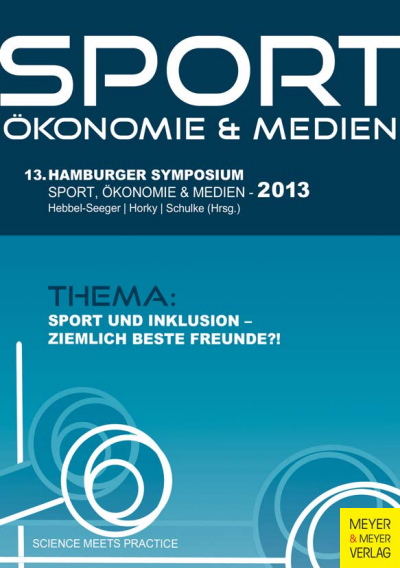
Sport und Inklusion - ziemlich beste Freunde?
- Editors:
- | |
- Publisher:
- 2014
Search publication
Bibliographic data
- Edition
- 1/2014
- Copyright Year
- 2014
- ISBN-Print
- 978-3-89899-865-9
- ISBN-Online
- 978-3-8403-1070-6
- Publisher
- Meyer & Meyer Verlag, Aachen
- Language
- German
- Pages
- 273
- Product Type
- Edited Book
Table of contents
ChapterPages
- Titelei/Inhaltsverzeichnis No access Pages 1 - 15
- Authors:
- 1.1 Vorfilm No accessAuthors:
- 1.2 Der Plot: Inklusion zwischen politischem Ziel und alltäglicher Realität No accessAuthors:
- 1.3 Sport trifft Inklusion No accessAuthors:
- 1.4 Olympisches Opening: Zugang zu inklusiven Sportgroßveranstaltungen international No accessAuthors:
- 1.5 Roadmovie inklusiver Sportveranstaltungen No accessAuthors:
- 1.6 Filmpause No accessAuthors:
- 1.7 Gezoomt: Deutschland No accessAuthors:
- 1.8 Erfolgsfaktoren inklusiver Sportgroßveranstaltungen No accessAuthors:
- 1.9 Neue beste Freunde: Inklusive Sportveranstaltungen in den Medien No accessAuthors:
- 1.10 Abspann No accessAuthors:
- Authors:
- 2.1 Teilhabebericht der Bundesregierung – was ist neu? No accessAuthors:
- 2.2 Lebenslagen und Teilhabechancen als passender Maßstab für Inklusion – oder nur des Kaisers neue Kleider? No accessAuthors:
- 2.3 Lebenslagen aller als Basis – worum es geht No accessAuthors:
- 2.4 Neue Definition von Behinderung – von wem die Rede ist No accessAuthors:
- 2.5 Dimensionen von Vielfalt und Verschiedenheit – wesentliche Wechselwirkungen No accessAuthors:
- 2.6 Zugang zum Sport im Alltag als komplexe Aufgabe No accessAuthors:
- 2.7 Sport und Inklusion – ein sich selbst erfüllender Traum? No accessAuthors:
- 2.8 Ausblick: Sport und Inklusion als ziemlich beste Freunde?! Potenziale und Ambivalenzen No accessAuthors:
- 2.9 Literatur No accessAuthors:
- Authors:
- 3.1 Gedanken zum Inklusionsparadigma No accessAuthors:
- 3.2 Die Inklusionspyramide im Sport behinderter Menschen No accessAuthors:
- Authors:
- 4.1 Gesundheit ist Arbeitsfähigkeit No accessAuthors:
- 4.2 Schutz der emanzipatorischen Arbeitskraft No accessAuthors:
- 4.3 Entwicklung der emanzipatorischen Kraft No accessAuthors:
- 4.4 Der freie Sport als Lernprozess in der Leistungsgesellschaft No accessAuthors:
- 4.5 Wertschätzung betrieblicher Gesundheitsförderung No accessAuthors:
- 4.6 Wertschätzung individueller Entwicklungsfähigkeit No accessAuthors:
- 4.7 Widersprüchliche Beispiele relativer Leistung No accessAuthors:
- 4.8 Sportliche Aktivierung als praktischer Weg der Inklusion No accessAuthors:
- 4.9 Literatur No accessAuthors:
- Authors:
- 5.1 Special Olympics Deutschland (SOD) No accessAuthors:
- 5.2 Das Gesundheitsförderprogramm Healthy Athletes No accessAuthors:
- 5.3 Gesundheitssituation von Menschen mit geistiger Behinderung No accessAuthors:
- 5.4 Projekt „Selbstbestimmt gesünder“ – Gesundheitskompetenzen für Menschen mit geistiger und Mehrfachbehinderung No accessAuthors:
- 5.5 Bereiche und Ergebnisse des Gesundheitsprogramms No accessAuthors:
- 5.6 Ausblick No accessAuthors:
- 5.7 Literatur No accessAuthors:
- Authors: |
- Authors: |
- 6.1.1 Ausgangsbedingungen No accessAuthors: |
- 6.1.2 Ziele des Projekts No accessAuthors: |
- 6.1.3 Rahmenbedingungen No accessAuthors: |
- 6.2 Geplanter Gesamtverlauf des Projekts No accessAuthors: |
- Authors: |
- 6.3.1 Evaluation bestehender Kursprogramme No accessAuthors: |
- 6.3.2 Entwicklung und Durchführung der Kursprogramme No accessAuthors: |
- 6.3.3 Methoden der Datenerfassung No accessAuthors: |
- 6.4 Ergebnisse No accessAuthors: |
- 6.5 Fazit und Ausblick No accessAuthors: |
- 6.6 Literatur No accessAuthors: |
- Authors:
- 7.1 Der Ursprung No accessAuthors:
- 7.2 Das Umfeld No accessAuthors:
- 7.3 Der Gedanke No accessAuthors:
- 7.4 Die Idee No accessAuthors:
- 7.5 Der Weg No accessAuthors:
- 7.6 Das Ziel No accessAuthors:
- 7.7 Die Mechanik No accessAuthors:
- 7.8 Die Themenwelten No accessAuthors:
- 7.9 Die Bedingungen No accessAuthors:
- 7.10 Die Rollen der Beteiligten No accessAuthors:
- 7.11 Die Kommunikation No accessAuthors:
- Authors:
- 8.1 Integration No accessAuthors:
- 8.2 Freizeitgestaltung No accessAuthors:
- 8.3 Inklusion No accessAuthors:
- 8.4 Teilhabe No accessAuthors:
- 8.5 Das Angebot der InSport-Abteilung No accessAuthors:
- Authors:
- 9.1 Einleitung No accessAuthors:
- 9.2 Fragestellung No accessAuthors:
- 9.3 Theoretischer Hintergrund No accessAuthors:
- 9.4 Methodik (der Datenerhebung) No accessAuthors:
- 9.5 Datenauswertung No accessAuthors:
- 9.6 Zusammenfassung und Diskussion der Ergebnisse No accessAuthors:
- 9.7 Literatur No accessAuthors:
- Authors:
- 10.1 CSR beim SV Werder Bremen No accessAuthors:
- 10.2 WERDER BEWEGT – LEBENSLANG No accessAuthors:
- Authors:
- 11.1 Dynamit und gesprengte Maßstäbe: Spiele auf ganz neuem Niveau No accessAuthors:
- 11.2 Übermenschlich statt behindert: Der Stoff, aus dem Medienträume sind No accessAuthors:
- 11.3 Nicht nur der schöne Schein: Wie die FAZ über Behindertensport berichtet No accessAuthors:
- 11.4 Der Weg nach Rio 2016: Vier Thesen zur Zukunft No accessAuthors:
- Authors:
- 12.1 Einleitung No accessAuthors:
- Authors:
- 12.2.1 Gebot der Vielfalt No accessAuthors:
- 12.2.2 Gebot der Relevanz No accessAuthors:
- 12.2.3 Gebot der Professionalität No accessAuthors:
- 12.2.4 Gebot der Rechtmäßigkeit No accessAuthors:
- 12.3 Versuch einer medienethischen Einordnung einer qualitativ hochwertigen Berichterstattung über Menschen mit Beeinträchtigungen No accessAuthors:
- 12.4 Fazit No accessAuthors:
- 12.5 Literatur No accessAuthors:
- Authors:
- 13.1 Einleitung No accessAuthors:
- 13.2 Zielsetzung und Vorgehensweise No accessAuthors:
- 13.3 Definition des Begriffs „Social Media“ No accessAuthors:
- 13.4 Überblick zum Forschungsstand No accessAuthors:
- Authors:
- 13.5.1 Olympic Athletes‘ Hub des IOC No accessAuthors:
- 13.5.2 Social Hub des DOSB No accessAuthors:
- 13.6 Weitere Social-Media-Angebote rund um London 2012 No accessAuthors:
- 13.7 Die Olympiateilnehmer im Social Web No accessAuthors:
- 13.8 Experteninterviews No accessAuthors:
- 13.9 Zusammenfassendes Fazit No accessAuthors:
- 13.10 Literatur No accessAuthors:
- Authors: | |
- 14.1 Einleitung No accessAuthors: | |
- Authors: | |
- 14.2.1 „Freiwurf Hamburg“ No accessAuthors: | |
- 14.2.2 Unified Sports® No accessAuthors: | |
- 14.2.3 Praktische Umsetzung No accessAuthors: | |
- 14.2.4 Die Fragestellung No accessAuthors: | |
- Authors: | |
- 14.3.1 Das Forschungsinstrument No accessAuthors: | |
- 14.3.2 Das Vorgehen No accessAuthors: | |
- Authors: | |
- 14.4.1 Das Miteinander No accessAuthors: | |
- 14.4.2 Das Gegeneinander No accessAuthors: | |
- 14.4.3 Das Trainerverhalten No accessAuthors: | |
- 14.4.4 Das Rollenverhalten No accessAuthors: | |
- 14.4.5 Die Beziehungsentwicklungen No accessAuthors: | |
- Authors: | |
- 14.5.1 Besonderheiten bezüglich des Miteinanders No accessAuthors: | |
- 14.5.2 Konsequenzen für die Trainer No accessAuthors: | |
- 14.6 Fazit No accessAuthors: | |
- 14.7 Literatur No accessAuthors: | |
- Authors: |
- 15.1 Die Idee No accessAuthors: |
- 15.2 Inhalt No accessAuthors: |
- 15.3 Fragestellung/Problemstellung No accessAuthors: |
- 15.4 Erfahrungen No accessAuthors: |
- 15.5 Fazit No accessAuthors: |
- Authors:
- 16.1 Soziales Engagement von Sky No accessAuthors:
- 16.2 Sky und Special Olympics No accessAuthors:
- 16.3 Sky Sport News HD und Behindertensport No accessAuthors:
- 16.4 Fazit No accessAuthors:
- Authors:
- 17.1 Einleitung No accessAuthors:
- 17.2 Geistige Behinderung – ein Definitionsansatz No accessAuthors:
- 17.3 Leistung im Kontext einer entwicklungspsychologischen Perspektive No accessAuthors:
- 17.4 Grundmodell der Verhaltensklärung No accessAuthors:
- 17.5 Sport und Inklusion – Möglichkeiten und Perspektiven No accessAuthors:
- 17.6 Literatur No accessAuthors:
- 18 Autorenverzeichnis No access Pages 264 - 271
- Bildnachweis No access Pages 272 - 273