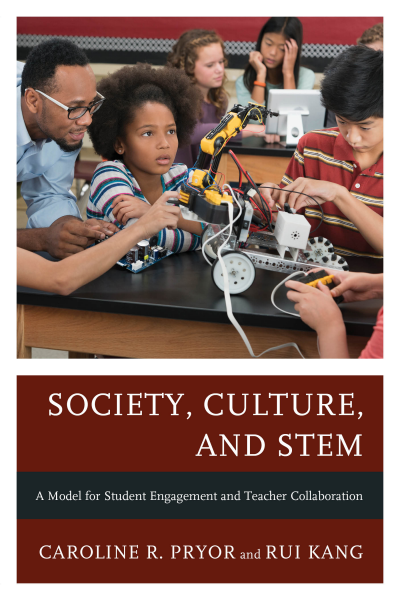
Society, Culture, and STEM
A Model for Student Engagement and Teacher Collaboration- Autor:innen:
- |
- Verlag:
- 2024
Zusammenfassung
Too often students are asked to participate in rather generic classroom activities, such as worksheets, essays, and rote memorization, which may not capture cultural interest or experience. In Society, Culture, and STEM: A Model for Student Engagement and Teacher Collaboration, teachers will learn a team-based approach to incorporating local and international cultural perspectives and experiences into a curriculum of STEM subjects. This book presents a six-phase process, Pryor-Kang Socio-cultural STEM Curriculum Development Model, for designing a socio-cultural STEM curriculum that is integrative, expansive, personal, and achievement-oriented. The Model focuses on a teacher-student-community outreach process, ongoing evaluation, solicitation of feedback, and continuous improvement through curriculum redesign or reconfiguration. In this process, a selected set of curriculum goals, interdisciplinary content learning standards, and resources are coordinated purposefully to capture multiple perspectives and needs. This book provides a newly developed pathway to enhancing STEM learning experiences!
Schlagworte
Publikation durchsuchen
Bibliographische Angaben
- Auflage
- 1/2024
- Copyrightjahr
- 2024
- ISBN-Print
- 978-1-4758-7144-9
- ISBN-Online
- 978-1-4758-7146-3
- Verlag
- Rowman & Littlefield, Lanham
- Sprache
- Englisch
- Seiten
- 224
- Produkttyp
- Monographie
Inhaltsverzeichnis
- Dedication Kein Zugriff
- Contents Kein Zugriff
- Preface Kein Zugriff
- Acknowledgments Kein Zugriff
- Why Integrate Socio-cultural Background with STEM Subjects? Kein Zugriff
- Integrating Socio-cultural Perspectives within STEM Content—An Example Kein Zugriff
- What about Teacher Voice and Beliefs? Kein Zugriff
- How Can This Book Help Teachers Develop a Socio-cultural STEM Curriculum? Kein Zugriff
- How to Use a Socio-cultural STEM Node in Curriculum Development Kein Zugriff
- The Book’s Organization Kein Zugriff
- References Kein Zugriff
- A Pedagogical Framework for Socio-cultural STEM—Community Level Kein Zugriff
- A Pedagogical Framework for Socio-cultural STEM—School Level Kein Zugriff
- A Pedagogical Framework for Socio-cultural STEM—Classroom Level Kein Zugriff
- Summary Kein Zugriff
- References Kein Zugriff
- Key Definitions in Curriculum Development Kein Zugriff
- Identifying a Problem or Challenge Kein Zugriff
- Essential Questions Kein Zugriff
- Using Essential Questions to Develop a Curriculum Theme Kein Zugriff
- Translating a Curriculum Theme into Curriculum Goals and Topics for Units of Study Kein Zugriff
- Summary Kein Zugriff
- References Kein Zugriff
- Part 1: A Framework for Curriculum Development: Node as a Gathering Space Kein Zugriff
- A Model for Developing a Social-cultural STEM Curriculum Kein Zugriff
- Phase 1: Initial Development—Identifying Problems and Essential Questions Kein Zugriff
- Phase 2: Connections—Linking Perspectives on Context and Content Kein Zugriff
- Phase 3: Dissemination—Collecting Feedback for a Draft Curriculum Kein Zugriff
- Phase 4: Integration—Analyzing and Incorporating Participant Responses Kein Zugriff
- Phase 5: Finalization—Planning and Implementing Curriculum Kein Zugriff
- Phase 6: Evaluation and Reconfiguration—Reflecting on and Revising Curriculum Kein Zugriff
- Evaluation of Inputs-Outputs at Each Model Phase Kein Zugriff
- Part 2: Prompts for Team Discussion Kein Zugriff
- Summary Kein Zugriff
- References Kein Zugriff
- Resource 1: Video Inputs-Outputs Kein Zugriff
- Resource 2: Students, Parents/Caregivers, and Community as Contributors Kein Zugriff
- Resource 3: Media and Technology Links: Collaboration-Productivity Kein Zugriff
- Summary Kein Zugriff
- Additional Resources Kein Zugriff
- References Kein Zugriff
- Lesson Plans: Ideas and Examples Kein Zugriff
- REFERENCE Kein Zugriff
- An Educational Imperative—Understanding Local and Global Challenges Kein Zugriff
- Overview of Lesson Plan Topics and Contexts Kein Zugriff
- Lesson Plan 1: Renewable Energy—The Perfect Solution? Kein Zugriff
- Lesson Plan 2: Water Cycle Kein Zugriff
- Lesson Plan 3: Watersheds Kein Zugriff
- Expert Opinions Kein Zugriff
- Conclusion Kein Zugriff
- References Kein Zugriff
- Overview of Lesson Plan Topics and Contexts Kein Zugriff
- Lesson Plan 1: Computers, Counting Machines, and the US Census During the Gilded Age Kein Zugriff
- Lesson Plan 2: Typhoid Mary and Politics of Disease Kein Zugriff
- Lesson Plan 3: To Have and to Hold: Preservation Throughout the Ages Kein Zugriff
- Expert Opinions Kein Zugriff
- Conclusion Kein Zugriff
- References Kein Zugriff
- Overview of Lesson Plan Topics and Contexts Kein Zugriff
- Lesson Plan 1: Polynesian Voyages Kein Zugriff
- Lesson Plan 2: Eastern Medicine Kein Zugriff
- Lesson Plan 3: Indigenous Ways of Knowing Kein Zugriff
- Lesson Plan 4: Ancient Arts, Its Cultural Significance, and Its Preservation Kein Zugriff
- Expert Opinions Kein Zugriff
- Conclusion Kein Zugriff
- References Kein Zugriff
- Overview of Lesson Plan Topics and Contexts Kein Zugriff
- Lesson Plan 1: Integrating Fashion into Robotics for Broadening Participation Kein Zugriff
- Lesson Plan 2: First Amendment Rights at Lafayette Park with Minecraft Programming Kein Zugriff
- Lesson Plan 3: Intelligent Face Mask with E-Textiles Kein Zugriff
- Lesson Plan 4: Hip Hop Music with EarSketch Programming Kein Zugriff
- Expert Opinions Kein Zugriff
- Conclusion Kein Zugriff
- References Kein Zugriff
- Overview of the Lesson Plan Topics and Contexts Kein Zugriff
- Lesson Plan 1: Collaboration in SPACE Kein Zugriff
- Lesson Plan 2: Local Renewable Energy Kein Zugriff
- Lesson Plan 3: Pollution in Our Community Kein Zugriff
- Lesson Plan 4: Taking Action Kein Zugriff
- Expert Opinions Kein Zugriff
- Conclusion Kein Zugriff
- References Kein Zugriff
- Overview of Lesson Plan Topics and Contexts Kein Zugriff
- Lesson Plan 1: The Bioethics of Online Social Media Kein Zugriff
- Lesson Plan 2: Environmental Health and Housing Kein Zugriff
- Lesson Plan 3: Public Health Policy Kein Zugriff
- Lesson Plan 4: Access to Medicine for the Individual and the Community Kein Zugriff
- Expert Opinions Kein Zugriff
- Conclusion Kein Zugriff
- References Kein Zugriff
- APPENDICES Kein Zugriff Seiten 199 - 200
- Appendix A: Content Domain Learning Standards and Resources Kein Zugriff Seiten 201 - 202
- Appendix B: Lesson Plan Template Kein Zugriff Seiten 203 - 204
- Appendix C: Sample Letter to Parents/Caregivers and Community Kein Zugriff Seiten 205 - 206
- Index Kein Zugriff Seiten 207 - 218
- About the Contributors Kein Zugriff Seiten 219 - 222
- About the Authors Kein Zugriff Seiten 223 - 224