, um zu prüfen, ob Sie einen Vollzugriff auf diese Publikation haben.
Monographie Kein Zugriff
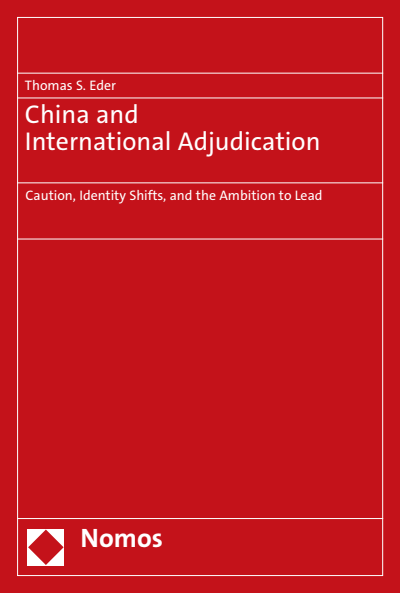
China and International Adjudication
Caution, Identity Shifts, and the Ambition to Lead- Autor:innen:
- Verlag:
- 2021
Zusammenfassung
China will eine „Führungsnation“ im Völkerrecht werden. Dieses Buch zeigt mit einer ersten umfassenden Analyse von Fallrecht und chinesischen akademischen Debatten von 2002 bis 2018, dass die verstärkte Nutzung von internationalen Gerichten Teil eines breiten Unterfangens ist, Chinas wirtschaftliche und politische Erfolge zu konsolidieren, und erneut Großmachtstatus zu erlangen. Handels- und Investmentrecht, Seerecht und territoriale Fragen werden abgedeckt – auch zum Südchinesischen Meer – und ein jahrzehntelanger Prozess zwischen Vorsicht und Ambition nachgezeichnet. Diskussionsmuster und tatsächliches Engagement Chinas in allen Rechtsbereichen zeigen bemerkenswerte Gemeinsamkeiten, lediglich die Zeitpläne sind unterschiedlich.
Publikation durchsuchen
Bibliographische Angaben
- Auflage
- 1/2021
- Copyrightjahr
- 2021
- ISBN-Print
- 978-3-8487-7108-0
- ISBN-Online
- 978-3-7489-2562-0
- Verlag
- Nomos, Baden-Baden
- Sprache
- Englisch
- Seiten
- 589
- Produkttyp
- Monographie
Inhaltsverzeichnis
KapitelSeiten
- Titelei/Inhaltsverzeichnis Kein Zugriff Seiten 1 - 14
- Table of Cases Kein Zugriff Seiten 15 - 34
- National Legislation Kein Zugriff Seiten 35 - 36
- Treaties and Other International Legal Instruments Kein Zugriff Seiten 37 - 50
- I.1. A New Ambition – ‘Guiding’ International Order Kein Zugriff
- I.2. How Nations Behave – China’s Growing Impact on International Adjudication Kein Zugriff
- II.1. Introduction Kein Zugriff
- II.2. Previous Approaches and New Endeavor Kein Zugriff
- II.3.1.1.1. Positivism – Facts of Engagement Kein Zugriff
- II.3.1.1.2. International Law and International Relations – Reasons for Engagement Kein Zugriff
- II.3.1.2.1. A Complicated History Kein Zugriff
- II.3.1.2.2. Reinventing Realism Kein Zugriff
- II.3.1.3. Image and Perception – Structure Relayed Kein Zugriff
- II.3.1.4.1. General Notions Kein Zugriff
- II.3.1.4.2. Articulated Perception and Cognitive Beliefs Kein Zugriff
- II.3.1.4.3. Published Elite Perception Since 2014 Kein Zugriff
- II.3.1.5. Final Remarks on Theory – Composite Approach Kein Zugriff
- II.3.2. Methodology, Structure and Sources Kein Zugriff
- III.1. Introduction Kein Zugriff
- III.2.1.1. Roots – Confucianism Against Legalism Kein Zugriff
- III.2.1.2. Imperial Era – Confucian Legal Thought Kein Zugriff
- III.2.1.3.1. Late Qing and Republican Reforms Kein Zugriff
- III.2.1.3.2.1. Soviet Influence Kein Zugriff
- III.2.1.3.2.2. Sino-Marxism Kein Zugriff
- III.2.1.3.2.3. Pragmatism Kein Zugriff
- III.2.1.4. Conclusion Kein Zugriff
- III.2.2.1. Pre-Imperial Times – A ‘Chinese Community of Nations’? Kein Zugriff
- III.2.2.2. Imperial Era – Hierarchical Tributary System Kein Zugriff
- III.2.2.3.1. Definitional Issues Kein Zugriff
- III.2.2.3.2. Late Qing (1839–1911): Confrontation and Lasting Attitudes Kein Zugriff
- III.2.2.3.3. Republic (1912–1949): Struggle for Renegotiation Kein Zugriff
- III.2.2.4.1. Early Years and Soviet Legal Thought (1949–1957) Kein Zugriff
- III.2.2.4.2.1. Divergence from the Soviet Path Kein Zugriff
- III.2.2.4.2.2. Five Principles of Peaceful Co-Existence Kein Zugriff
- III.2.2.4.3. Pre-reform PRC in the UN (1971–1978) Kein Zugriff
- III.2.2.5.1. A new mindset Kein Zugriff
- III.2.2.5.2. Sources of International Law and Domestic Application Kein Zugriff
- III.2.2.5.3. Sovereignty and Human Rights Kein Zugriff
- III.2.2.5.4. Sovereignty and Intervention Kein Zugriff
- III.2.2.5.5. Sovereignty and Adjudication Kein Zugriff
- III.2.2.6. Conclusion Kein Zugriff
- IV.1. Introduction Kein Zugriff
- IV.2.1.1. China’s Accession to the ICSID Convention Kein Zugriff
- IV.2.1.2.1. Introduction Kein Zugriff
- IV.2.1.2.2. First Generation – Cautious Beginnings Kein Zugriff
- IV.2.1.2.3. Second Generation – Access to ICSID Kein Zugriff
- IV.2.1.2.4. Third Generation – ‘Any Dispute Concerning an Investment’ Kein Zugriff
- IV.2.1.2.5. Fourth Generation – Americanization Kein Zugriff
- IV.2.1.2.6. Comparative View – Last BRIC standing: Chinese exception to the restrictive turn Kein Zugriff
- IV.2.1.3.1.1.1. Tza Yap Shum v Republic of Peru (ICSID) Kein Zugriff
- IV.2.1.3.1.1.2. Ekran Berhad v People’s Republic of China (ICSID) Kein Zugriff
- IV.2.1.3.1.1.3. Sanum v Lao People’s Democratic Republic (ad hoc, PCA) Kein Zugriff
- IV.2.1.3.1.1.4. Beijing Urban v Republic of Yemen (ICSID) Kein Zugriff
- IV.2.1.3.1.1.5. China Heilongjiang v Mongolia (ad hoc, PCA) Kein Zugriff
- IV.2.1.3.1.1.6. Hela Schwarz GmbH v People’s Republic of China (ICSID) Kein Zugriff
- IV.2.1.3.1.1.7. Discussion Kein Zugriff
- IV.2.1.3.1.2.1. Relevant case law Kein Zugriff
- IV.2.1.3.1.2.2. Discussion Kein Zugriff
- IV.2.1.3.2.1. Ping An v Kingdom of Belgium (ICSID) Kein Zugriff
- IV.2.1.3.2.2. Ansung v People’s Republic of China (ICSID) Kein Zugriff
- IV.2.1.3.2.3. Discussion Kein Zugriff
- IV.2.1.3.3.1. Relevant case law Kein Zugriff
- IV.2.1.3.3.2. Discussion Kein Zugriff
- IV.2.1.3.4.1. Relevant case law Kein Zugriff
- IV.2.1.3.4.2. Discussion Kein Zugriff
- IV.2.1.4. Conclusions on China and Investment Arbitration Kein Zugriff
- IV.2.2.1. China’s Accession to the WTO and the WTO DSM Kein Zugriff
- IV.2.2.2.1.1. China on the Complainant Side – Safeguard Measures Kein Zugriff
- IV.2.2.2.1.2. China on the Respondent Side – National Treatment Kein Zugriff
- IV.2.2.2.1.3. Conclusion Kein Zugriff
- IV.2.2.2.2.1 China on the Complainant Side – Countervailing & Anti-Dumping Duties Kein Zugriff
- IV.2.2.2.2.2.1. National Treatment on Internal Taxation and Regulation Kein Zugriff
- IV.2.2.2.2.2.2. TRIPS & Censorship Kein Zugriff
- IV.2.2.2.2.2.3. GATT-GATS Relations & Systemic Position of the Accession Protocol Kein Zugriff
- IV.2.2.2.2.2.4. Settled Cases Kein Zugriff
- IV.2.2.2.2.3. Conclusion Kein Zugriff
- IV.2.2.2.3.1.1 Relevant case law Kein Zugriff
- IV.2.2.2.3.1.2 Discussion Kein Zugriff
- IV.2.2.2.3.2.1.1 Relevant case law: US-Tyres Kein Zugriff
- IV.2.2.2.3.2.1.2 Discussion Kein Zugriff
- IV.2.2.2.3.2.2.1 Relevant case law Kein Zugriff
- IV.2.2.2.3.2.2.2 Discussion Kein Zugriff
- IV.2.2.2.3.3.1 Relevant case law Kein Zugriff
- IV.2.2.2.3.3.2 Discussion Kein Zugriff
- IV.2.2.2.3.4.1 Relevant case law: US-Countervailing Measures (China) Kein Zugriff
- IV.2.2.2.3.4.2 Discussion Kein Zugriff
- IV.2.2.2.3.5.1 Relevant case law Kein Zugriff
- IV.2.2.2.3.5.2 Discussion Kein Zugriff
- IV.2.2.2.3.6.1 Relevant case law Kein Zugriff
- IV.2.2.2.3.6.2 Discussion Kein Zugriff
- IV.2.2.2.3.7 Cases at the Consultation Stage Kein Zugriff
- IV.2.2.2.3.8 Market Economy Status – ‘D-Day’ Gone Wrong & China’s Controlled Frustration Kein Zugriff
- IV.2.2.2.3.9 Conclusion Kein Zugriff
- IV.2.2.2.4.1. Introduction Kein Zugriff
- IV.2.2.2.4.2. Brazil Kein Zugriff
- IV.2.2.2.4.3. India Kein Zugriff
- IV.2.2.2.4.4. South Africa Kein Zugriff
- IV.2.2.2.4.5. Russia Kein Zugriff
- IV.2.2.2.4.6. Concluding Remarks on BRICS Experiences in the WTO DSM Kein Zugriff
- IV.2.2.2.5. Conclusion – China and the WTO DSM Kein Zugriff
- IV.3.1.1. Land Borders Kein Zugriff
- IV.3.1.2. Maritime Borders Kein Zugriff
- IV.3.2.1.1. Background to the Dispute Kein Zugriff
- IV.3.2.1.2. Significance and Limits of Jurisdiction Kein Zugriff
- IV.3.2.1.3. Respective Claims and Legal Steps Taken Kein Zugriff
- IV.3.2.2. East China Sea – Same, Same, But Different Kein Zugriff
- IV.3.2.3. Sino-Indian Border Disputes – Himalayas from Kashmir to Arunachal Pradesh Kein Zugriff
- IV.3.3.1.1. ICJ Advisory Opinion on Kosovo Kein Zugriff
- IV.3.3.1.2. ITLOS Advisory Opinion on Activities in the Area Kein Zugriff
- IV.3.3.1.3. ITLOS Advisory Opinion on Illegal Fishing Kein Zugriff
- IV.3.3.1.4. ICJ Advisory Opinion on Chagos Kein Zugriff
- IV.3.3.2. Engagement with the CLCS Kein Zugriff
- IV.3.4.1. Background Kein Zugriff
- IV.3.4.2.1. China’s Non-Participation Kein Zugriff
- IV.3.4.2.2. The Tribunal’s Jurisdiction Kein Zugriff
- IV.3.4.2.3. The Chinese Government’s Reaction Kein Zugriff
- IV.3.4.3.1 China’s Non-participation Kein Zugriff
- IV.3.4.3.2 Historic Rights and the Nine-Dash Line Kein Zugriff
- IV.3.4.3.3.1 Low-tide Elevations Kein Zugriff
- IV.3.4.3.3.2 ‘Islands’ or ‘Rocks’? Kein Zugriff
- IV.3.4.3.4 Lawfulness of Chinese Actions Kein Zugriff
- IV.3.4.3.5 Aggravation of the Dispute and Future Conduct Kein Zugriff
- IV.3.4.4.1. Political Reactions and Outlook Kein Zugriff
- IV.3.4.4.2.1. Criticism Relating to Jurisdiction Kein Zugriff
- IV.3.4.4.2.2. Criticism Relating to the Merits Kein Zugriff
- IV.3.4.4.2.3. Criticism Relating to the International Rule of Law Kein Zugriff
- IV.3.4.4.2.4. Legal Implications Kein Zugriff
- IV.3.4.4.3. Conclusions – the Way(s) Forward Kein Zugriff
- IV.3.5.1. The BRICS Experience – Stocktake and Comparison Kein Zugriff
- IV.3.5.2. Relevance for China’s Future Path Kein Zugriff
- IV.3.6. Conclusions – Territorial and Law of the Sea Disputes Kein Zugriff
- V.1. Introduction Kein Zugriff
- V.2.1.1. General Attitude – From Stockholm Syndrome to Confident Offense Kein Zugriff
- V.2.1.2.1. General Points of Criticism Kein Zugriff
- V.2.1.2.2. Phase-Dependent Criticism – From Defense to Offense Kein Zugriff
- V.2.1.3.1.1. Research, Training and Cautious Engagement Kein Zugriff
- V.2.1.3.1.2. Demonstrating Compliance Kein Zugriff
- V.2.1.3.1.3. Participating in Reform Negotiations Kein Zugriff
- V.2.1.3.1.4. Using China’s Position As a Developing State Kein Zugriff
- V.2.1.3.1.5. The Role of Individuals Kein Zugriff
- V.2.1.3.2.1. Confidence, Pragmatism and More Active Participation Kein Zugriff
- V.2.1.3.2.2. Continued NME Treatment and Chinese Responses Kein Zugriff
- V.2.2.1. General Attitude – March Towards Liberalism Kein Zugriff
- V.2.2.2.1. Supposed Ambiguities and Interpretation Issues Kein Zugriff
- V.2.2.2.2. Nature and Legitimacy of Investment Arbitration Kein Zugriff
- V.2.2.3.1. Pre-Engagement – Chinese Views on International Investment Arbitration Ahead of the First Case in 2007 Kein Zugriff
- V.2.2.3.2.1. Research and Progress – Steady As She Goes Kein Zugriff
- V.2.2.3.2.2. Reforms and Influence – Making the Case Kein Zugriff
- V.2.2.3.2.3. Identity and Engagement – on What Has Changed Kein Zugriff
- V.2.3. Preliminary Conclusions Kein Zugriff
- V.3.1. General Attitude – From Imperialist Oppressor to Guarantor of Peaceful Dispute Resolution Kein Zugriff
- V.3.2.1. General Criticism – Surprising Similarities Kein Zugriff
- V.3.2.2.1. General Criticism and Jurisdictional Matters Kein Zugriff
- V.3.2.2.2. Criticism on the Merits Kein Zugriff
- V.3.3.1.1. Master the Rules – Research & Training Kein Zugriff
- V.3.3.1.2. Have a Seat at the Table – Reform & Influence Kein Zugriff
- V.3.3.2.1. Negotiations & Joint Development Kein Zugriff
- V.3.3.2.2.1. Criticism of Political Declarations, Negotiations & Joint Development Kein Zugriff
- V.3.3.2.2.2. General Preconditions for and Significance of Engagement Kein Zugriff
- V.3.3.2.2.3. Engaging to Refute Jurisdiction Kein Zugriff
- V.3.3.2.2.4. Advisory Opinions Kein Zugriff
- V.3.3.2.2.5. Trial Balloons: Conciliation, Arbitration & Adjudication – New Mechanisms & Special Separate Tribunals Kein Zugriff
- V.3.3.2.2.6. Full Embrace – Tackling the Issues Head On Kein Zugriff
- V.3.4. Preliminary Conclusions Kein Zugriff
- VI.1. Imperatives of Greatness – of What ‘Has to Be Done’ Kein Zugriff
- VI.2.1. Round One – Trade Law Kein Zugriff
- VI.2.2. Round Two – Investment Law Kein Zugriff
- VI.2.3. Round Three – Law of the Sea and Territorial Disputes Kein Zugriff
- VI.3.1. A Chinese Path – Not Your Ordinary BRIC Kein Zugriff
- VI.3.2. The Way Forward – Engaging to Rise Kein Zugriff
- References Kein Zugriff Seiten 531 - 589