Monographie Open Access Vollzugriff
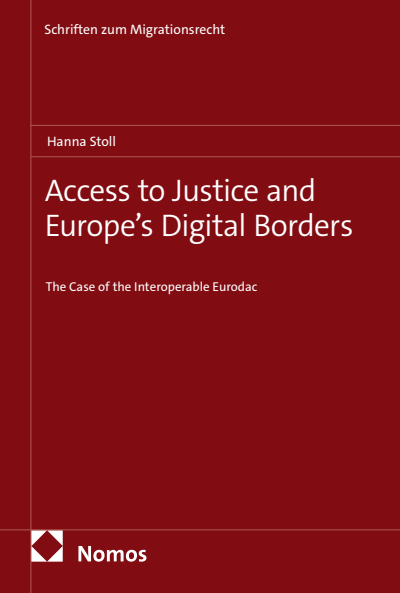
Access to Justice and Europe's Digital Borders
The Case of the Interoperable Eurodac- Autor:innen:
- Reihe:
- Schriften zum Migrationsrecht, Band 53
- Verlag:
- 2026
Zusammenfassung
Mit der fortschreitenden Digitalisierung des europäischen Migrationssystems werden umfangreiche biometrische und personenbezogene Daten in vernetzten EU-Informationssystemen verarbeitet. Dieses Buch untersucht, wie Asylsuchende und irreguläre Migrant:innen Zugang zu ihren Daten sowie deren Berichtigung oder Löschung durchsetzen können, und analysiert die zentralen Informations-, Auskunfts-, Berichtigungs- und Löschungsrechte sowie den Anspruch auf wirksame Beschwerde. Es beleuchtet wesentliche daten- und verfahrensrechtliche Herausforderungen und bezieht die Schweiz und den Westbalkan ein, die als assoziierte oder Beitrittsstaaten in das migrationsbezogene Datengefüge der EU integriert sind. Dieser Titel erscheint auch Open Access.
Schlagworte
Publikation durchsuchen
Bibliographische Angaben
- Auflage
- 1/2026
- Copyrightjahr
- 2026
- ISBN-Print
- 978-3-7560-3548-9
- ISBN-Online
- 978-3-7489-6612-8
- Verlag
- Nomos, Baden-Baden
- Reihe
- Schriften zum Migrationsrecht
- Band
- 53
- Sprache
- Englisch
- Seiten
- 572
- Produkttyp
- Monographie
Inhaltsverzeichnis
KapitelSeiten
- Acknowledgements
- Abbreviations
- I. Background: Externalisation, Digitalisation and the Intertwining of Migration and Security
- II. A Vision: Interoperability and Automated Digital Identities
- III. Research Questions and Structure
- IV. Method
- V. Limitations
- 1. Human Dignity, Privacy and Data Protection in Europe
- a) Why a Universal Concept of Human Dignity Is Important
- b) A Universal Core to Human Dignity
- c) Universalist Human Rights Theories
- d) Conclusions
- 3. Privacy as a Personal Right
- 4. Conclusions
- 1. What Is Access to Justice?
- 2. Access to Justice in International Law
- 3. Access to Justice in European Law
- 4. Access to Justice in the Digital Age
- a) Access to Information
- b) Legal Certainty
- c) Compliance with the Law and Prevention of Abuse
- d) Independence of the Judiciary
- e) Equality and Non-Discrimination
- f) Effective Remedies and Fair Trial
- g) Effectiveness of Judicial Decisions
- III. Conclusions
- I. The European Union’s Interoperable Information Systems
- 1. Remodelling Eurodac as a Comprehensive Biometric and Biographic Information System
- a) Legal Basis and Purpose
- b) Affected Persons
- aa) Components of Eurodac
- bb) Taking of Biometric Data
- cc) Transmission of Data
- dd) Marking of Data
- ee) Processing and Comparing of Data
- aa) Collection of Data
- bb) Storage and Erasure of Data
- cc) Keeping of Records
- dd) Statistics
- aa) Access to Data in the CIR
- aaa) Member States of Origin
- bbb) Designated Authorities
- ccc) Europol
- ddd) ETIAS Central System and ETIAS National Unit
- eee) VIS
- fff) Third Countries, Private Entities and International Organisations
- ggg) eu-LISA
- 1. Connecting the European Union’s Migration Information Systems
- 2. Legal Basis and Purpose: Regulation (EU) 2019/818
- a) European Search Portal (ESP)
- b) shared Biometric Matching Service (sBMS)
- c) Common Identity Repository (CIR)
- d) Multiple-Identity Detector (MID)
- a) The Web Portal
- b) The Central Repository for Reporting and Statistics (CRRS)
- c) Security, Data Controllers and Processors
- a) International Human Rights Law Applicable in Europe
- aa) Rights to Privacy
- bb) Good Administration, Effective Remedy and Fair Trial
- aa) General Data Protection Regulation
- bb) Police Directive
- cc) Data Protection Regulation for EU Institutions and Bodies
- d) Eurodac Regulation and AMMR
- e) Interoperability Regulation
- aaa) Purposes
- bbb) Security Flags
- ccc) Recipients
- ddd) Transfer of Data to Third Countries
- eee) Data Breach
- aaa) The Interoperability System and Automated Processing in the MID
- bbb) Cross-Checking Data
- ccc) Encompassing Access by the Police
- ddd) Controllers with Regard to Eurodac Data
- eee) New Functions
- aa) Asylum, Resettlement, Temporary Protection or Apprehension in an Irregular Situation
- bb) Take-Back Procedures
- aaa) Eurodac Regulation
- bbb) Interoperability Regulation
- aa) The Leaflets
- bb) Receiving Information on the Ground
- aaa) Children
- bbb) Persons with Disabilities
- a) Commentary and Scholars’ Opinions
- b) EU Case Law
- c) National Case Law
- 4. Conclusions
- a) International Human Rights Law Applicable in Europe
- b) EU Human Rights Law: European Charter of Fundamental Rights
- aa) General Data Protection Regulation
- bb) Police Directive
- cc) Data Protection Regulation for EU Institutions and Bodies
- d) Eurodac Regulation
- e) Interoperability Regulation
- aa) Data Subjects
- aaa) Use of Children’s Data (Accompanied and Unaccompanied Minors)
- bbb) Access to Children’s Data
- cc) Persons with Disabilities
- aaa) Applicability of the Interoperability Regulation
- bbb) Applicability of the Eurodac Regulation
- ccc) Access from outside the EU: Is an Ineffective Right Still a Right?
- aaa) Requesting Access or Contesting a Decision
- bbb) Addressee for the Access Request
- ccc) Identification of the Data Subject
- ddd) Form of the Access Request
- eee) Fee for the Access Request
- fff) Restriction of the Right to Access
- ggg) Time Limit for an Answer to the Request
- hhh) Form of the Data Provided
- bb) Eurodac Data in the Interoperability System
- cc) Conclusions
- aaa) Personal Data Relating to Him or Her
- aaa) Eurodac Hit
- bbb) Security Flag
- ccc) Logs and Records on Recipients of Data
- ddd) Reasons for Rejection
- eee) Information Regarding Sharing of Data
- fff) Anonymised Data
- aaa) Data in the CIR and sBMS
- bbb) Data in the MID and Automated Processing
- ccc) Logs Documenting Access
- ddd) Statistical Data
- cc) Conclusions
- a) Access to Information on Law Enforcement Access
- b) Access to Eurodac Data in Migration Procedures
- c) Access to Eurodac by Authorities
- 4. Conclusions
- a) International Human Rights Law Applicable in Europe
- b) EU Human Rights Law: The European Charter of Fundamental Rights
- aa) General Data Protection Regulation
- bb) Data Protection Regulation for EU Institutions and Bodies
- cc) Police Directive
- d) Eurodac Regulation and AMMR
- e) Interoperability Regulation
- a) Who Can Request Rectification, Completion, Erasure and Restriction of Data?
- aaa) Personal Data and Information
- bbb) Eurodac Hit
- ccc) Security Flag
- ddd) Data Retrieved from Eurodac
- eee) Completion of Data Sets
- aaa) Data in the CIR and sBMS
- bbb) Logs and Data Retrieved from the Interoperability Systems
- ccc) Links Indicating Deleted Data
- aaa) Inaccurate Data
- bbb) Unlawfully Recorded Data
- ccc) Retention Periods
- ddd) Not-Ongoing Investigations
- aaa) Data Quality
- bbb) Retention Periods
- ccc) The Web Portal and its Limits
- cc) Standard of Proof
- a) Numbers
- b) Studies
- c) European Case Law
- d) National Case Law
- 4. Conclusions
- a) International Human Rights Instruments
- aa) ECHR
- bb) CFR
- aaa) Eurodac Regulation
- bbb) Interoperability Regulation
- ccc) Conditions for Compensation Claims in the EU
- aa) National Level: Art. 43 AMMR, Asylum and Return Procedures
- bb) EU Level: Preliminary Ruling
- aa) Eurodac Regulation
- bb) Interoperability Regulation
- b) Tasks of the Data Protection Authorities under the GDPR
- 4. Penalties
- 5. Remedies According to the GDPR
- aa) Composite Procedures within the EU
- aaa) Qualifying Information Sharing, Hits and Security Flags
- bbb) Reviewing Preparatory Measures
- ccc) Reviewing ‘Purely Factual Conduct’
- aa) Conditions for Mutual Trust – and its Loss
- bb) Trust in the Age of Automated Administrative Systems
- c) Intensity of Review
- aa) With Regard to Biometric or Biographic Data and Eurodac Hits
- bb) With Regard to Security Flags
- aa) Data Transfer to Third Countries
- bb) Data Transfer within the Schengen Area
- b) Remedy against Access of Law Enforcement Authorities
- c) Remedy against Decisions with Help of EUAA and EBCG Agency Officers
- 8. Conclusions
- 1. Schengen/Dublin-Associated Countries
- aa) Development of Bilateral Relations
- aaa) Schubert-Practice
- bbb) Direct Applicability
- ccc) Parallel Interpretation
- cc) Dispute Resolution According to the Bilateral Agreements
- dd) Differences for Data Subjects in Switzerland and the EU
- aa) Eurodac Regulation
- bb) Interoperability Regulations
- cc) Conclusions
- c) Applicability of the General Data Protection Regulation
- aa) Differences between the ECHR and the CFR
- bb) References to the CFR in the Eurodac and Interoperability Regulations
- aaa) Highest Courts in Switzerland
- bbb) Court of Justice in the EU
- dd) Arguments by Legal Scholars
- ee) Conclusions
- a) The Right to Information
- b) The Right to Access, Rectification and Erasure
- c) Invoking Swiss Rights in the EU
- d) Conclusions
- 1. How Eurodac and Interoperability Are Expanded beyond the Schengen Area
- 2. Conclusions
- 1. Where Do We Stand
- 2. The Dignity of the Data Subject
- a) Implementing the Right to Information
- b) Making the Right to Access Data and Information Robust
- c) Facilitating the Right to Rectification and Erasure
- d) Ensuring an Effective Remedy
- 4. Looking Ahead: Rethinking Migrants’ Data in Europe
- 5. Final Thoughts
- BibliographySeiten 535 - 558 Download Kapitel (PDF)
- CJEU
- European Ombudsman
- ECtHR
- Belgian Courts
- Courts of the United Kingdom
- Dutch Courts
- French Courts
- German Courts
- Irish Courts
- Italian Courts
- Slovenian Courts
- South African Courts
- Swiss Courts