, um zu prüfen, ob Sie einen Vollzugriff auf diese Publikation haben.
Monographie Kein Zugriff
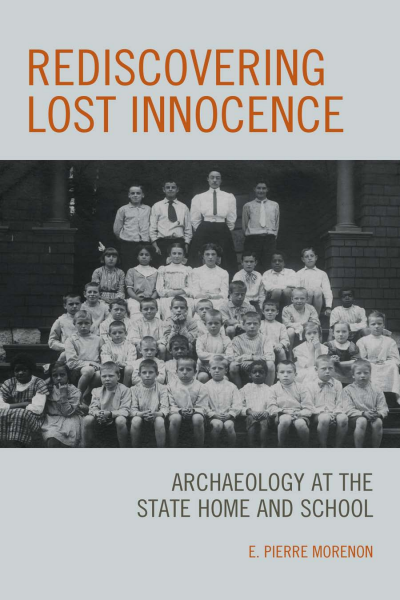
Rediscovering Lost Innocence
Archaeology at the State Home and School
Autor:innen:
Verlag:
2017
Zusammenfassung
In the first half of the nineteenth-century, responsibility for child care primarily rested within families. Needy children were often cared for by community-sponsored efforts that varied widely in quality, as well as by benevolent organizations dedicated to children’s welfare. The late 1800s was marked by major social service infrastructure construction and development. During this period, guided by progressive concerns about the role of the state in responding to societal changes resulting from urbanization and industrialization, Rhode Island took on a more active statewide role in public education, sewers, parks, prisons, and child welfare systems. New ideas about civil rights extended to race, to women, to labor, and to children. Old institutions, such as town almshouses and poor farms, were replaced by state institutions, such as the State Home, which opened in 1885.
One might expect to find a huge record for custodial children well imbedded in regional literatures or social science and history texts, yet this is not the case. The State Home Project began in 2001 with no evocative life histories, and no local or regional childhood narratives about the former residents of the State Home upon which to build. It remains an important place because thousands of children and citizens lived portions of their lives there. Documenting children's educational, social and health experiences are not inconsequential. To be sure, varied narratives about custodial children developed as we dug into the soils, read unexamined case histories, and talked with former residents. Archaeology offers the possibility of recovering lost and missing details, and, in collaboration with other disciplines, creates a rich narrative of a place. These experiences were significant in our past; they are important to us in the present and to future generations. They demonstrate our common history.
Schlagworte
Publikation durchsuchen
Bibliographische Angaben
Copyrightjahr
2017
ISBN-Print
978-0-7591-1096-0
ISBN-Online
978-0-7591-1097-7
Verlag
Rowman & Littlefield, Lanham
Sprache
Englisch
Seiten
321
Produkttyp
Monographie
Inhaltsverzeichnis
KapitelSeiten
Contents Kein Zugriff
1 Forgotten Childhoods Kein Zugriff Seiten 1 - 16
2 Children Lost and Found Kein Zugriff Seiten 17 - 34
3 Child Narratives in Unexamined Records Kein Zugriff Seiten 35 - 50
4 Recording Archaeological Details and Creating New Child Narratives Kein Zugriff Seiten 51 - 76
5 Collaborating Kein Zugriff Seiten 77 - 94
6 Do Archaeologists Overlook Children? Kein Zugriff Seiten 95 - 106
7 Dependent Children in Context Kein Zugriff Seiten 107 - 128
8 Neglected Children as Civic Responsibility Kein Zugriff Seiten 129 - 152
9 From Victorian Landscapes to a Child’s Treatment Center Kein Zugriff Seiten 153 - 184
10 Unearthing Cultural Details Kein Zugriff Seiten 185 - 206
11 Play and Community Relations Kein Zugriff Seiten 207 - 230
12 Bureaucracies, Power, and Punishment Kein Zugriff Seiten 231 - 252
13 Why Don’t I Know This? Kein Zugriff Seiten 253 - 272
Acknowledgments Kein Zugriff Seiten 273 - 276
Appendix A: State Home and School Project Timeline (2001–2010) Kein Zugriff Seiten 277 - 282
Appendix B: Rhode Island State Home and School/O’Rourke Children’s Center: Oral History Project Kein Zugriff Seiten 283 - 288
Appendix C: Post-2002 Archaeological Field Protocol Kein Zugriff Seiten 289 - 290
Bibliography Kein Zugriff Seiten 291 - 314
Index Kein Zugriff Seiten 315 - 320
About the Author Kein Zugriff Seiten 321 - 321
Ähnliche Veröffentlichungen
aus dem Schwerpunkt "Soziologie allgemein"
Sammelband Vollzugriff
Christoph T. Burmeister, Thorsten Hertel, Sophia Richter