, to see if you have full access to this publication.
Monograph No access
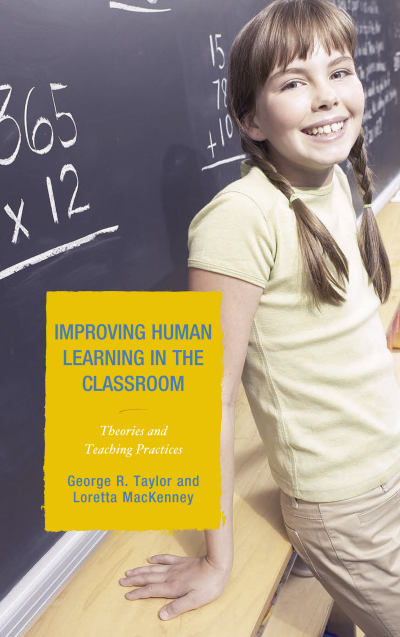
Improving Human Learning in the Classroom
Theories and Teaching Practices
Authors:
|
Publisher:
2008
Summary
Improving Human Learning in the Classroom provides a functional and realistic approach to facilitate learning through a demonstration of commonalities between the various theories of learning. Designed to assist educators in eliciting students' prior knowledge, providing feedback, transfer of knowledge, and promoting self-assessment, Taylor and MacKenney provide proven strategies for infusing various learning theories into a curriculum, guiding educators to find their own strategies for promoting learning in the classroom. Both quantitative and qualitative research methods investigate learning theories and reforms in education. Quantitative data sources build the theoretical framework for educating the student, as well as developing strategies for closing the achievement gap. Taylor and MacKenney fuse personal experiences with solid strategies for human learning.
Search publication
Bibliographic data
Edition
1/2008
Copyright Year
2008
ISBN-Print
978-1-57886-857-5
ISBN-Online
978-1-57886-909-1
Publisher
Rowman & Littlefield, Lanham
Language
English
Pages
316
Product Type
Monograph
Table of contents
ChapterPages
Contents No access
Foreword No access
Preface No access
Acknowledgments No access
Chapter 01. The Psychology of Human Learning No access Pages 1 - 14
Chapter 02. Emotions and Human Motivation in Learning No access Pages 15 - 22
Chapter 03. Behaviorism and Its Impact on Learning Theories No access Pages 23 - 40
Chapter 04. Ivan Petrovich Pavlov No access Pages 41 - 46