, to see if you have full access to this publication.
Monograph No access
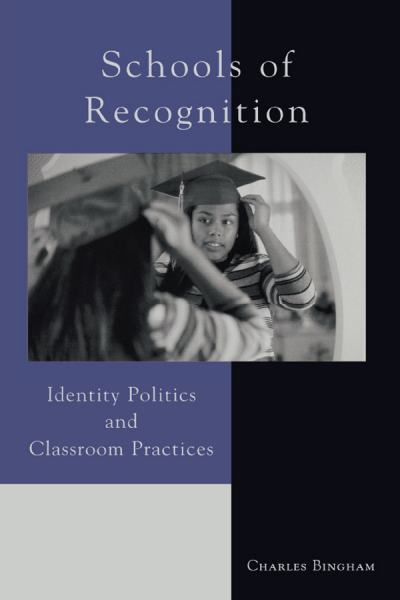
Schools of Recognition
Identity Politics and Classroom Practices
Authors:
Publisher:
2001
Summary
Schools are places where various cultures and identities must be recognized, yet there has been little research into what it means to recognize another person, identity, or culture. Drawing on the writings of Charles Taylor, Martin Buber, Judith Butler, and Jessica Benjamin, Schools of Recognition provides a rich picture of how recognition is negotiated in education. Using political theory, existentialism, queer theory, and psychoanalysis, Bingham shows that recognition can be fostered not only through the books that students read, but also through the ways that they learn to engage with other human beings. Recognition depends not only on receiving acknowledgement, but also on giving acknowledgement. It depends not only on what we learn from others about ourselves, but also on what we are able to teach others about themselves.
Search publication
Bibliographic data
Edition
1/2001
Copyright Year
2001
ISBN-Print
978-0-7425-0196-6
ISBN-Online
978-1-4616-1661-0
Publisher
Rowman & Littlefield, Lanham
Language
English
Pages
169
Product Type
Monograph
Table of contents
ChapterPages
Table of Contents No access
Acknowledgments No access
1: Introduction: Toward a Framework of Recognition No access Pages 1 - 28
2: Encounters in the Public Sphere: Mirroring No access Pages 29 - 56
3: The Other Whom I Don't Understand: Confirmation No access Pages 57 - 86
4: On the Discursive Limits of the Encounter: Subjection No access Pages 87 - 116
5: Recognizing as Being Recognized: Reciprocity No access Pages 117 - 140
6: Thinking through the Encounter: Minding Our Educational Discourses of Recognition No access Pages 141 - 158