Between Streets and Screens
Digital Video Activism and the Right to the City- Authors:
- Publisher:
- 2025
Summary
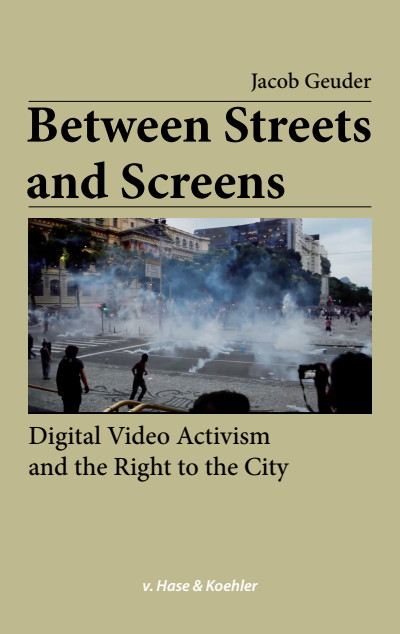
A protestor beaten to the ground in Cape Town, indigenous activists threatened with eviction in Rio, teenagers shot dead by police officers on duty – How do we know about these incidents, which are otherwise rarely reported on? In the past decade, urban citizens recording videos as audiovisual testimony, thereby bearing witness to protests and police violence emerged as a phenomenon from cities across the globe. Who is filming these videos and why? Jacob Geuder explores how digital grassroots video activism came about and how it is shaping urban struggles. Drawing on Henri Lefebvre and focusing on Cape Town and Rio de Janeiro, this nuanced ethnographic study asks how urban movements use digital media to expose police violence, amplify marginalized voices, and challenge neoliberal urbanism. The book examines the unequal distribution of attention across digital platforms, the role of gatekeepers, and the risks faced by videographers documenting state violence.
Keywords
Search publication
Bibliographic data
- Copyright year
- 2025
- ISBN-Print
- 978-3-7758-1437-9
- ISBN-Online
- 978-3-7489-5599-3
- Publisher
- v. Hase & Koehler 1797, Weilerswist-Metternich
- Language
- English
- Pages
- 336
- Product type
- Book Titles
Table of contents
- Preface
- Acknowledgment
- 1. Video Activism as Bottom-Up City MakingPages 15 - 26 Download chapter (PDF)
- 2.1 Manuel Castells and Liberal Narratives of Progress through Technology
- 2.2 Henri Lefebvre Theorizing Space
- 2.3 Interweaving the Digital Thread into the Urban Fabric
- 2.4 Digitalizing the Right to the City?
- 3.1 Research Design and Field Access
- 3.2 Conducting a Critical, Multi-Sited Ethnography
- 3.3 Field Access and Ethnographic Practice on the Ground
- 3.4 Data Collection
- 3.5 Data Analysis
- 3.6 Reflections on Position, Perspectives and Practices
- 4.1 Cape Town, the »mother city«
- 4.2 Rio de Janeiro, the »marvelous city«
- 4.3 Situating Cape Town and Rio de Janeiro in Comparison
- 5.1 Fragmented Media Practices and Intermediaries in Cape Town
- 5.2 Corporate Media Power and Collective Media Activism in Rio de Janeiro
- 5.3 From Traditional Media to Digital Video Activism
- 6.1 Journalists Videos – Reporting behind Police Lines
- 6.2 Witness Videos – The Explosion of Audio-Visual Documentation
- 6.2 Activist Videos – Autogestion in Representation
- 6.4 Emancipatory and Bottom-Up Video Productions
- 7.1 Producing Visibility: Factors and Forms
- 7.2 Gatekeepers in Video Distribution
- 7.3 Tactics and Strategies in the Production of Visibility
- 7.4 The Politics of Visibility
- 8.1 Violence and Urban Movements
- 8.2 Documenting Police Violence and the Threat for Videographers
- 8.3 Shooting-back with videos not bullets
- 8.4 Exposing injustice by documenting violence
- 9.1 Studying Bottom-Up Video Activism
- 9.2 Video Activism in Rio and Cape Town
- 9.3 Video Activist Practices In-Between
- 9.4 Utopian Practices of Video Activism
- List of AbbreviationsPages 268 - 268 Download chapter (PDF)
- List of FiguresPages 269 - 272 Download chapter (PDF)
- 10.1 Videography
- 10.2 List of Interviews
- 10.3 Bibliography