, to see if you have full access to this publication.
Monograph No access
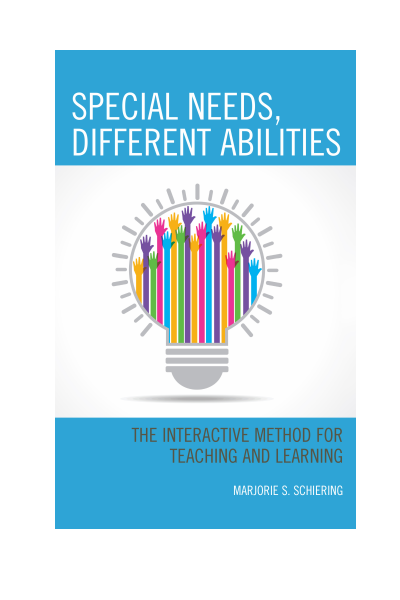
Special Needs, Different Abilities
The Interactive Method for Teaching and Learning
Authors:
Publisher:
2019
Summary
This book describes the Interactive Method (IM) for teaching different abilities, special needs, and all learners. It involves hand’s-on techniques for retention of curriculum and the teaching of thinking; from the elementary through college years. Types of comprehension are defined along with how memory works. Chapters address types of special needs and defines the term and different abilities, in conjunction with creating lessons that result in memory acquisition and transference to personal success on tests or exams, as well as daily situations regarding experiential learning. Also offered are entry level means of instruction for developing a sense of self-confidence, efficacy, reliance and skills necessary for future learning challenges. In conjunction with this is the Reciprocal Thinking Skills Cognition to Metacognition Chart for identification and application of what one is thinking when engaged in the aforementioned IM. A few examples of this are provided through a listing and explanation of the values of this method, lesson objectives and application of these. Personal narratives are provided by teachers and/or parents of children with different abilities before the author’s closing comments respective of one’s being enough and practice of providing lift-up statements to encourage student learners in the academic and social cognition environments.
Keywords
Search publication
Bibliographic data
Edition
1/2019
Copyright Year
2019
ISBN-Print
978-1-4758-4993-6
ISBN-Online
978-1-4758-4995-0
Publisher
Rowman & Littlefield, Lanham
Language
English
Pages
132
Product Type
Monograph
Table of contents
ChapterPages
Contents No access
Foreword No access
Preface No access
Prelude No access
Acknowledgments No access
Introduction No access
1 Reaching/Teaching Varied Learners No access
2 Response to Intervention, Individualized Education Program, Classroom Organization No access
3 Individual Processing Style and Social Cognition No access
4 The Interactive Method No access
5 Memories and Interactive Learning Techniques No access
6 Interactive Learning Technique Pluses, Leadership Building, and Alternative Means of Assessments No access
7 The Reciprocity of Thinking No access
8 The Cognitive Collective No access
9 Definition and Examples of Reciprocal Thinking Phases’ Skills No access
10 IM’s Self-Reliance and the “How-To” of Teaching Thinking No access
11 Objectives of the Interactive Method and Its Components No access
12 Two Personal Perspectives Addressing Special Education No access