, to see if you have full access to this publication.
Edited Book No access
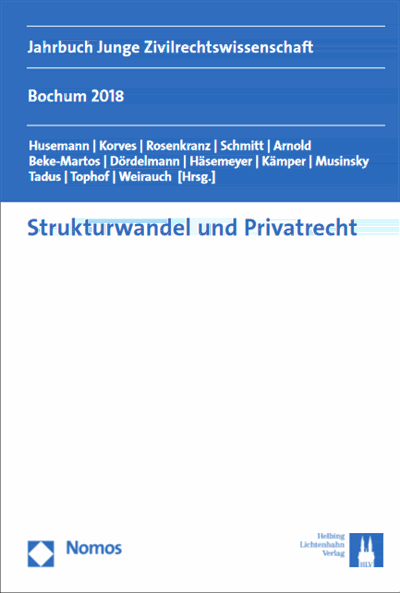
Strukturwandel und Privatrecht
Jahrbuch Junge Zivilrechtswissenschaft- Editors:
- | | | | | | | | | | | |
- Series:
- Jahrbuch junger Zivilrechtswissenschaftler, Volume 3
- Publisher:
- 2019
Keywords
Search publication
Bibliographic data
- Edition
- 1/2019
- Copyright Year
- 2019
- ISBN-Print
- 978-3-8487-5494-6
- ISBN-Online
- 978-3-8452-9679-1
- Publisher
- Nomos, Baden-Baden
- Series
- Jahrbuch junger Zivilrechtswissenschaftler
- Volume
- 3
- Language
- German
- Pages
- 428
- Product Type
- Edited Book
Table of contents
ChapterPages
- Titelei/Inhaltsverzeichnis No access Pages 1 - 10
- Authors:
- Authors:
- I. Strukturwandel – Ein Zeichen der Zeit No accessAuthors:
- Authors:
- 1. Die Herausforderungen des Strukturwandels verstehen – ‚Glauben‘ in einem ‚säkularen Zeitalter‘ No accessAuthors:
- 2. Die Herausforderungen des Strukturwandels verstehen – Gegenwarts- und zukunftsbewusst ‚Kirche sein‘ No accessAuthors:
- 3. Die Vielfalt heutiger Lebenswirklichkeiten begreifen und würdigen – Amoris laetitia und der Begriff der ‚pastoralen Unterscheidung‘ No accessAuthors:
- III. Strukturwandel im Ruhrgebiet – Eine besondere Situation No accessAuthors:
- IV. Strukturwandel im Ruhrgebiet – Heutige und zukünftige Herausforderungen im Bistum Essen No accessAuthors:
- Authors:
- Authors:
- Authors:
- I. Ausgangslage No accessAuthors:
- II. Forschungsfragen und Thesen No accessAuthors:
- III. Methodik und Aufbau des Beitrags No accessAuthors:
- IV. Ziel des Beitrags No accessAuthors:
- V. Begrenzung des Untersuchungsgegenstands No accessAuthors:
- Authors:
- I. Was ist Holokratie? No accessAuthors:
- II. Wie wird in einer holokratischen Organisation gearbeitet bzw. entschieden? No accessAuthors:
- Authors:
- I. Zwingende Organe und Aufgabenzuweisung No accessAuthors:
- II. Organstatus der Funktionsträger No accessAuthors:
- III. Funktionen der Organe und Verhältnis zueinander No accessAuthors:
- Authors:
- 1. Grundsatz No accessAuthors:
- Authors:
- Authors:
- aa) Delegation organschaftlicher Kompetenzen No accessAuthors:
- bb) Ermächtigung durch die Statuten No accessAuthors:
- cc) „Nach Massgabe eines Organisationsreglements“ No accessAuthors:
- dd) Person des Delegationsempfängers No accessAuthors:
- Authors:
- aa) Delegation übertragbarer Aufgaben (e contrario Art. 716 a Abs. 1 OR) No accessAuthors:
- bb) Delegation im Bereich der unübertragbaren Aufgaben No accessAuthors:
- Authors:
- a) Für Delegationsempfänger No accessAuthors:
- Authors:
- aa) Möglicher Delegationsempfänger No accessAuthors:
- bb) Anforderungen an die drei curae No accessAuthors:
- Authors:
- a) Für den Verwaltungsrat No accessAuthors:
- b) Für den Delegationsempfänger No accessAuthors:
- D. Ergebnis No accessAuthors:
- E. Fazit und Ausblick No accessAuthors:
- Authors:
- I. Die Widerstandskraft dispositiven Rechts und private Gestaltungsfreiheit im Vertrag No accessAuthors:
- Authors:
- 1. von Savigny, BGB und das Reichsgericht: Freiheit und Selbstbestimmung als zu verwirklichender Wert No accessAuthors:
- 2. Gegenbewegung und nationalsozialistische Vertragslehre: „Gerechtigkeit“ und „Gemeinschaft“ als zu verwirklichender Wert No accessAuthors:
- 3. Früher BGH und Kodifikation im AGB-Gesetz 1976: Anknüpfen an Ordnungsvorstellungen der Vorkriegszeit – Leitbild des Vertrags No accessAuthors:
- Authors:
- a) Dispositives Recht unter dem Grundgesetz und Schutzpflichten No accessAuthors:
- b) Europäische Vorgaben No accessAuthors:
- c) Deutsche Juristentage 2012 und 2018 No accessAuthors:
- Authors:
- 1. Maßstab der AGB-Kontrolle bei Verträgen zwischen Unternehmern No accessAuthors:
- 2. Ein neuer Impuls: Rechtsökonomisches Verständnis dispositiven Rechts No accessAuthors:
- 3. Die Zukunft: Kompensatorische Vertragsgestaltungen? No accessAuthors:
- IV. Schlussbetrachtung: Das (Vor-)Verständnis von dispositivem Recht und seine Auswirkungen auf die AGB-Kontrolle No accessAuthors:
- Authors:
- A. Einleitung No accessAuthors:
- Authors:
- I. Problemaufriss und Meinungsstand No accessAuthors:
- II. Gesetzliche Grundlage in Österreich No accessAuthors:
- Authors:
- 1. „Flüchtige“ Erklärungen No accessAuthors:
- 2. Wertungen des § 862 a S 1 ABGB No accessAuthors:
- 3. Ergebnis No accessAuthors:
- IV. Folgefrage: Verständnis der Empfangstheorie im ABGB No accessAuthors:
- Authors:
- I. Die „Erklärungstheorie des a. b. G. B.“ als Mittel der Gefahrenverteilung No accessAuthors:
- II. Vorliegen und Bedeutung von Willenserklärungen nach der Vertrauenstheorie No accessAuthors:
- III. Die Empfangstheorie auf Basis der Vertrauenstheorie No accessAuthors:
- D. Herausforderungen moderner Kommunikationsmittel No accessAuthors:
- E. Thesen No accessAuthors:
- Authors:
- Authors:
- I. Einleitung No accessAuthors:
- Authors:
- 1. Wohnraummieter als Verbraucher No accessAuthors:
- 2. Wohnraumvermieter als Unternehmer No accessAuthors:
- Authors:
- 1. Schutz des Wohnraummieters nach §§ 312 ff. BGB No accessAuthors:
- 2. Verbraucherschutz bei Wohnraummietverträgen im Recht der Allgemeinen Geschäftsbedingungen No accessAuthors:
- Authors:
- Authors:
- a) Die Mieterhöhung nach §§ 558 ff. BGB No accessAuthors:
- b) Die Mieterhöhung nach §§ 559 ff. BGB No accessAuthors:
- Authors:
- a) Die Umlagevereinbarung No accessAuthors:
- b) Die Betriebskostenabrechnung No accessAuthors:
- 3. Sonstige Bereiche, in denen eine Differenzierung in Betracht käme No accessAuthors:
- V. Fazit No accessAuthors:
- Authors:
- Authors:
- I. Einführende Gedanken No accessAuthors:
- II. Strukturmerkmale des Medizinrechts im Überblick No accessAuthors:
- III. Rechtliche Aspekte des Strukturwandels No accessAuthors:
- Authors:
- 1. Das Prinzip der Eigenverantwortung No accessAuthors:
- 2. Kostendruck und Standard No accessAuthors:
- 3. Sozialversicherungsrechtliche Qualitätsvorgaben und zivilrechtlicher Haftungsmaßstab No accessAuthors:
- Authors:
- a) Fragestellung No accessAuthors:
- b) Grundlagen der rechtlichen Erörterung No accessAuthors:
- c) Rechtswissenschaftssoziologische Einschläge No accessAuthors:
- d) Das Problem der Normenkollision No accessAuthors:
- e) Die zutreffende Lösungsebene No accessAuthors:
- V. Ausblick No accessAuthors:
- Authors:
- Authors:
- I. Einführung in die Problemstellung No accessAuthors:
- II. Die Gewaltrechte der Bürger im System der Gesamtrechtsordnung No accessAuthors:
- III. Die Funktion des Gewaltrechts aus § 859 BGB No accessAuthors:
- IV. Die Rechtmäßigkeitsvoraussetzungen von Selbsthilfemaßnahmen nach § 859 BGB No accessAuthors:
- V. Die Erstattung von Selbsthilfekosten No accessAuthors:
- VI. Die zeitlichen Grenzen der Selbsthilfe in Abschleppkonstellationen No accessAuthors:
- Authors:
- 1. Haftung für die Schlechtausführung von Selbsthilfemaßnahmen No accessAuthors:
- 2. Haftung bei Verwendung unzulässiger Zwangsmittel No accessAuthors:
- VIII. Zusammenfassung der wesentlichen Ergebnisse No accessAuthors:
- Authors:
- Authors:
- I. Einführung No accessAuthors:
- Authors:
- Authors:
- a) Technische Grundlagen von Kryptowährungen No accessAuthors:
- Authors:
- aa) Zivilrecht No accessAuthors:
- bb) Aufsichtsrecht No accessAuthors:
- Authors:
- a) Funktionsweise und Vertragsbeziehungen im Rahmen des modernen Crowdfundings No accessAuthors:
- Authors:
- aa) Crowdfunding im engeren Sinne No accessAuthors:
- bb) Crowdlending No accessAuthors:
- cc) Crowdinvesting No accessAuthors:
- Authors:
- aa) Erlaubnispflicht der ausgeübten Tätigkeiten No accessAuthors:
- bb) Prospektpflicht No accessAuthors:
- cc) Entwurf einer Crowdfunding-Verordnung durch die Europäische Kommission No accessAuthors:
- Authors:
- 1. Grundsätze des ICO No accessAuthors:
- 2. Die verschiedenen Token No accessAuthors:
- Authors:
- Authors:
- a) Currency-Token No accessAuthors:
- b) Investment-Token No accessAuthors:
- c) Utility-Token No accessAuthors:
- d) Mischformen (Hybrid-Token) No accessAuthors:
- Authors:
- a) Vertragliche Beziehungen No accessAuthors:
- b) Erwerb von Token No accessAuthors:
- Authors:
- Authors:
- a) Prospektpflichten bei ICOs No accessAuthors:
- b) Erlaubnispflichten bei ICOs No accessAuthors:
- 2. Regulierung de lege ferenda? No accessAuthors:
- VI. Zusammenfassung und Ausblick No accessAuthors:
- Authors:
- Authors:
- A. Einführung No accessAuthors:
- Authors:
- Authors:
- Authors:
- a) Erste Phase: Datenbeschaffung (ggf. inkl. Datenvalidierung) No accessAuthors:
- b) Zweite Phase: Datenanalyse (ggf. inkl. Datenvalidierung) No accessAuthors:
- c) Dritte Phase: Umgang mit den Ergebnissen der Analyse (inkl. Präsentation) No accessAuthors:
- Authors:
- a) Einzeldatum No accessAuthors:
- Authors:
- aa) Kommerzieller Wert No accessAuthors:
- bb) Ausschluss belangloser Informationen No accessAuthors:
- cc) Geheimer Charakter No accessAuthors:
- dd) Zwischenergebnis No accessAuthors:
- c) Algorithmen, neuronale Netze und Software-Implementierungen No accessAuthors:
- d) Übergreifendes Kriterium: Angemessene Geheimhaltungsmaßnahmen im Sinne des Art. 2 Nr. 1 lit. c TS-RL No accessAuthors:
- e) Zwischenergebnis No accessAuthors:
- Authors:
- a) Allgemeiner Geltungsbereich der DB-RL: Datenbank im Sinne des Art. 1 DB-RL No accessAuthors:
- Authors:
- aa) Wesentlichkeitskriterium als de-minimis-Schwelle No accessAuthors:
- Authors:
- (1) Extensive Interpretation der Kommission und der überwiegenden Literatur No accessAuthors:
- (2) Gebotene teleologische Interpretation der Abgrenzungskriterien „Ermitteln“ vs. „Erzeugen“ (teleologischer BHB/Hill-Test) No accessAuthors:
- (3) Grenzfälle No accessAuthors:
- (4) Zwischenergebnis: Investitionen in das „Beschaffen“ von Datenbankinhalten in typischen Big Data-Konstellationen No accessAuthors:
- cc) Weitere Anknüpfungspunkte für berücksichtigungsfähige Investitionen in typischen Big Data-Sachverhalten No accessAuthors:
- dd) Ausschluss typischer Big Data-Datenbanken nach der Spin-off-Theorie? No accessAuthors:
- ee) Zwischenergebnis No accessAuthors:
- 4. Fazit No accessAuthors:
- Authors:
- 1. Ausgangspunkt: Vage Legaldefinition im Rahmen des Datenbank- und Geheimnisschutzes No accessAuthors:
- 2. Lösungsvorschläge zur rechtssicheren Konkretisierung des Rechtsinhabers: Privatautonome Regelungen und Registrierung im „Geheimnis- und/oder Datenbankschutzregister“ No accessAuthors:
- Authors:
- 1. Verstärkte „Verdinglichung“ des Geheimnisschutzes durch die Trade-Secrets-Richtlinie – flexible Freistellungen No accessAuthors:
- 2. Extensive Auslegung der Ausschließlichkeitsrechte im Rahmen des Datenbankschutzes – enge statische Ausnahmen No accessAuthors:
- 3. Fazit No accessAuthors:
- C. Fazit und Ausblick: Vereinheitlichung und Reform statt Revolution No accessAuthors:
- Authors:
- Authors:
- A. Die Automatisierung des Straßenverkehrs No accessAuthors:
- Authors:
- I. Optimale Sorgfaltswahl No accessAuthors:
- II. Optimales Aktivitätsniveau No accessAuthors:
- III. Zusammenfassung No accessAuthors:
- C. Haftung des Halters No accessAuthors:
- Authors:
- I. Fahrzeugführer und Sorgfaltswahl No accessAuthors:
- II. Pflichten des Fahrers während der Nutzung der automatisierten Funktion No accessAuthors:
- Authors:
- 1. Kosten der Beweisbeschaffung No accessAuthors:
- 2. Wahrscheinlichkeit des Vorliegens von Fahrlässigkeit im konkreten Fall No accessAuthors:
- 3. Zwischenergebnis zum vermuteten Verschulden No accessAuthors:
- 4. Ausnahme: Übernahmeaufforderung No accessAuthors:
- IV. Zusammenfassung der Fahrerhaftung No accessAuthors:
- Authors:
- Authors:
- 1. Produkthaftung No accessAuthors:
- 2. Verschuldenshaftung nach § 823 BGB No accessAuthors:
- Authors:
- 1. Der effektive Konsumentenpreis als Mittel zur Steuerung der Herstelleraktivität No accessAuthors:
- 2. Tatsächliche Einbeziehung aller Kosten beim Konsumenten No accessAuthors:
- 3. Ausreichende Information über Risiken No accessAuthors:
- III. Zwischenergebnis No accessAuthors:
- F. Innenverhältnis No accessAuthors:
- G. Fazit: Wer sollte für das „auto-Auto“ haften? No accessAuthors:
- Authors:
- A. Vorbemerkung No accessAuthors:
- B. Gang der Untersuchung No accessAuthors:
- Authors:
- I. Das Konzept des Strukturwandels No accessAuthors:
- Authors:
- Authors:
- a) Persönlicher Anwendungsbereich No accessAuthors:
- b) Sachlicher Anwendungsbereich No accessAuthors:
- c) Stellungnahme No accessAuthors:
- 2. Strukturwandel in normativer Hinsicht No accessAuthors:
- Authors:
- Authors:
- 1. Erhöhung der Kreditwürdigkeit bzw. Bonität der Familie No accessAuthors:
- 2. Stärkung der Unterhaltsgemeinschaft „Ehe“ No accessAuthors:
- 3. Gläubigerschützende Funktion No accessAuthors:
- 4. Ergebnis No accessAuthors:
- II. Alternativer Zweckvorschlag No accessAuthors:
- Authors:
- I. Die „Gretchenfrage“: Subjektive vs. objektive Auslegung No accessAuthors:
- Authors:
- 1. Vorstellung der Meta-Regel No accessAuthors:
- 2. Anwendung der Meta-Regel No accessAuthors:
- 3. Ergebnis No accessAuthors:
- Authors:
- I. Das Kohärenz-Prinzip No accessAuthors:
- II. Das Prinzip der hinreichenden Folgerichtigkeit No accessAuthors:
- III. Ergebnis No accessAuthors:
- G. Ergebnis und Ausblick No accessAuthors:
- Authors:
- I. Einleitung: „German Angst“ oder berechtigte Skepsis? No accessAuthors:
- Authors:
- 1. Religionen und das deutsche Recht No accessAuthors:
- Authors:
- a) Auslandssachverhalte No accessAuthors:
- b) Inlandssachverhalte No accessAuthors:
- Authors:
- Authors:
- a) Begriff No accessAuthors:
- b) Behandlung in Deutschland No accessAuthors:
- Authors:
- a) Begriff No accessAuthors:
- b) Behandlung in Deutschland No accessAuthors:
- Authors:
- a) Polygynie No accessAuthors:
- b) Kinderehe No accessAuthors:
- c) Handschuhehe No accessAuthors:
- Authors:
- 1. Religiöser Ehevertrag No accessAuthors:
- Authors:
- a) Wirksamkeit als Ehevertrag? No accessAuthors:
- b) Andere wirksame Regelung? No accessAuthors:
- c) Einordnung als Schenkung oder abstraktes Schuldversprechen? No accessAuthors:
- d) Lösungsversuche No accessAuthors:
- e) Exkurs No accessAuthors:
- V. Fazit und Ausblick No accessAuthors:
- Authors:
- Authors:
- I. Schutzgedanke der Registerpublizität No accessAuthors:
- II. Stiftungsverzeichnisse No accessAuthors:
- III. Funktionen der staatlichen Stiftungsaufsicht No accessAuthors:
- Authors:
- I. Europäischer Harmonisierungstrend im Spannungsverhältnis zum Stiftungskollisionsrecht No accessAuthors:
- II. Gemeinschaftsrechtlicher Gesellschaftsbegriff No accessAuthors:
- III. Bestimmung des Stiftungsstatuts No accessAuthors:
- Authors:
- 1. Panayi Trusts No accessAuthors:
- 2. Polbud No accessAuthors:
- 3. Auswirkungen auf die deutsche Stiftungsaufsicht No accessAuthors:
- Authors:
- I. Rechtsvergleichende Betrachtung der Foundation Governance in europäischen Stiftungsrechtsordnungen No accessAuthors:
- Authors:
- 1. Begünstigte als tragende Säule der Foundation Governance No accessAuthors:
- 2. Privates Kontrollorgan No accessAuthors:
- 3. Fakultatives Organ No accessAuthors:
- 4. Stifterrechte No accessAuthors:
- III. Interessenausgleich und Machtbalance der Stiftungsbeteiligten No accessAuthors:
- D. Resümee und Ausblick No accessAuthors:
- Authors:
- Authors:
- 1. Gesetzgeberischer Hintergrund No accessAuthors:
- 2. Reale Rahmenbedingungen No accessAuthors:
- Authors:
- 1. Klagewellen als bekannte Herausforderung No accessAuthors:
- 2. Abwarten von Präzedenzentscheidungen No accessAuthors:
- 3. Ruhen des Verfahrens bei Vergleichsverhandlungen No accessAuthors:
- 4. Ruhen des Verfahrens aus anderen wichtigen Gründen No accessAuthors:
- 5. Aussetzung bei Vorgreiflichkeit No accessAuthors:
- 6. Auswahl von Pilotverfahren No accessAuthors:
- Authors:
- 1. Klagebefugnis und Mindestbetroffenenzahl No accessAuthors:
- 2. Zuständigkeit No accessAuthors:
- 3. Bekanntmachung der Musterfeststellungsklage No accessAuthors:
- 4. Rechtshängigkeit No accessAuthors:
- Authors:
- a) Anmeldung No accessAuthors:
- b) Rücknahme der Anmeldung No accessAuthors:
- 6. Unzulässigkeit bei fehlender Betroffenenzahl No accessAuthors:
- Authors:
- a) Urteil und Bekanntmachungen zum Urteil No accessAuthors:
- b) Rechtliches Gehör No accessAuthors:
- Authors:
- a) Funktionsweise No accessAuthors:
- b) Verhandlungsbasis No accessAuthors:
- Authors:
- Authors:
- a) Kostenfreiheit des Verfahrens No accessAuthors:
- b) Vergleichsabschluss No accessAuthors:
- c) Folgeprozess nach dem Urteil No accessAuthors:
- d) Zeitersparnis No accessAuthors:
- 2. Beklagteninteresse No accessAuthors:
- 3. Entlastung der Justiz No accessAuthors:
- 4. Bewährung des objektiven Rechts No accessAuthors:
- Authors:
- a) Was ist die gefürchtete Klageindustrie? No accessAuthors:
- b) Massenhafte Verfolgung von Ansprüchen No accessAuthors:
- c) Berechtigter Individualschutz No accessAuthors:
- d) Kein Vorschub durch die Musterfeststellungsklage No accessAuthors:
- V. Schlussbetrachtung No accessAuthors:
- Autorenverzeichnis No access Pages 427 - 428