, to see if you have full access to this publication.
Edited Book No access
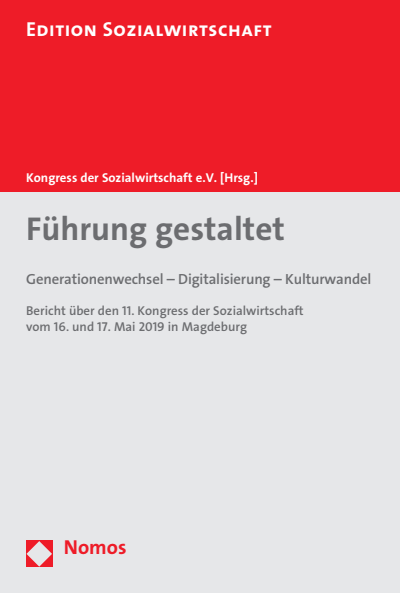
Führung gestaltet
Generationenwechsel - Digitalisierung - Kulturwandel- Editors:
- Series:
- Edition Sozialwirtschaft, Volume 45
- Publisher:
- 2019
Search publication
Bibliographic data
- Edition
- 1/2019
- Copyright Year
- 2019
- ISBN-Print
- 978-3-8487-6252-1
- ISBN-Online
- 978-3-7489-0361-1
- Publisher
- Nomos, Baden-Baden
- Series
- Edition Sozialwirtschaft
- Volume
- 45
- Language
- German
- Pages
- 234
- Product Type
- Edited Book
Table of contents
ChapterPages
- Titelei/Inhaltsverzeichnis No access Pages 1 - 14
- Authors:
- 1. Grundsätzliches No accessAuthors:
- Authors:
- 2.1 Beschäftigungssicherheit No accessAuthors:
- 2.2 Leistungs- und Zielorientierung No accessAuthors:
- 2.3 Einfluss-, Gestaltungs- und Entwicklungsmöglichkeiten No accessAuthors:
- 2.4 Partizipation/Bedeutung von Führung No accessAuthors:
- 2.5 Work-Life-Balance No accessAuthors:
- 3. Die jüngere Generation im Überblick – In Abgrenzung zur älteren Generation No accessAuthors:
- Literatur No accessAuthors:
- Authors:
- 1. Einführung No accessAuthors:
- 2. Megatrend Digitalisierung No accessAuthors:
- Authors:
- Authors:
- a) Kommunikationskultur No accessAuthors:
- b) Neuartige Problemlösungen und Problemlagen No accessAuthors:
- c) Anforderungen der Kostenträger No accessAuthors:
- d) Konkurrenz No accessAuthors:
- 3.2 Pull-Faktoren von Innovation und Disruption No accessAuthors:
- Authors:
- 4.1 Pflege-Plattformen No accessAuthors:
- 4.2 Neuartige Organisationstrukturen No accessAuthors:
- 5. Fazit No accessAuthors:
- Literatur No accessAuthors:
- Authors:
- 1. Social Intrapreneurship lernen No accessAuthors:
- Authors:
- 2.1 Das methodische Vorgehen No accessAuthors:
- 2.2 Das Labor als Schonraum No accessAuthors:
- 2.3 Lernende Teams No accessAuthors:
- 2.4 Administrative Rahmenbedingungen No accessAuthors:
- 3. Fazit No accessAuthors:
- Literatur No accessAuthors:
- Authors: |
- 1. Einführung No accessAuthors: |
- Authors: |
- 2.1 Vorabinformation No accessAuthors: |
- 2.2 Ausgangssituation No accessAuthors: |
- Authors: |
- 2.3.1 Annäherung an die Soziokratie No accessAuthors: |
- Authors: |
- 2.3.2.1 Umgang mit Mobiltelefonen No accessAuthors: |
- 2.3.2.2 Gemeinsame Gestaltung des Leitungsteams No accessAuthors: |
- 2.3.2.3 Diskussionspunkte versus Synchronisationspunkte No accessAuthors: |
- 2.3.2.4 Entscheidungsfindung No accessAuthors: |
- 2.3.2.5 Check-out No accessAuthors: |
- 2.3.2.6 Live protokollieren No accessAuthors: |
- 2.3.2.7 Organisationsentwicklung als fixer Agendapunkt No accessAuthors: |
- 2.3.2.8 Laufender Strategietag No accessAuthors: |
- 2.4 Blick über den Tellerrand No accessAuthors: |
- 2.5 Exkurs No accessAuthors: |
- Authors: |
- 2.6.1 Einflüsse aus der psychologischen Beratung No accessAuthors: |
- 2.6.2 Etablierung einer Fehlerkultur No accessAuthors: |
- 2.7 Verständnis eines Changeprozesses No accessAuthors: |
- Authors: |
- 2.8.1 Kommunikation No accessAuthors: |
- 2.8.2 Einbindung der internen, relevanten Stakeholder No accessAuthors: |
- 2.8.3 Einbindung der externen, relevanten Stakeholder No accessAuthors: |
- 2.9 Weitere Schritte No accessAuthors: |
- 2.10 Status quo und Ausblick No accessAuthors: |
- Authors: |
- 3.1 Agilität hat das Potenzial, die Arbeitswelt grundlegend zu verbessern. No accessAuthors: |
- 3.2 Haltung und Menschenbild für das agile Unternehmen No accessAuthors: |
- 3.3 Rahmenbedingungen für intrinsische Motivation No accessAuthors: |
- Authors: |
- 4.1 Autonomie und Selbststeuerung No accessAuthors: |
- 4.2 Partizipation und Kollaboration No accessAuthors: |
- 4.3 Sinnerleben und Kundenorientierung No accessAuthors: |
- 4.4 Kompetenz und Lernen No accessAuthors: |
- 5. Bedürfnisorientierte Team- und Organisationsentwicklung No accessAuthors: |
- 6. Zusammenfassung No accessAuthors: |
- 7. Fazit Plenumsdiskussion No accessAuthors: |
- Literatur No accessAuthors: |
- Authors: |
- Authors: |
- 1.1 Demografische Besonderheiten der Führungsebene in der Sozialwirtschaft No accessAuthors: |
- 1.2 Strategische Nachfolgeplanung: Über was sprechen wir? No accessAuthors: |
- Authors: |
- 2.1 Vorbereitung: Interne und externe Rahmenbedingungen klären No accessAuthors: |
- 2.2 Vom Suchen und Finden von Führungskräften: Ein strukturierter Prozess als Erfolgsfaktor No accessAuthors: |
- 2.3 Praxisnahe Handlungsempfehlungen: Erfolgsfaktoren und Fallstricke im Generationswechsel No accessAuthors: |
- 3 Fazit und Ausblick No accessAuthors: |
- Literatur No accessAuthors: |
- Authors: | |
- Authors: | |
- 1.1 Das Projekt Belev 2.0 – Gesundes Arbeiten gestalten No accessAuthors: | |
- 1.2 Was steckt hinter dem Projekttitel „Belev 2.0 – Gesundes Arbeiten gestalten“? No accessAuthors: | |
- Authors: | |
- Wesentliche Prinzipien der Organisationentwicklung im Projekt Belev 2.0 No accessAuthors: | |
- Literatur No accessAuthors: | |
- Authors: | |
- 2.1 Das Projekt FÜHR’GESUND No accessAuthors: | |
- Authors: | |
- Tag 1: Gesunde Selbstführung No accessAuthors: | |
- Tag 2: Gesunde Arbeitsbedingungen gestalten No accessAuthors: | |
- Authors: | |
- Wirksamkeit der Qualifizierungen No accessAuthors: | |
- Wirksamkeit der Qualifizierung auf Mitarbeitendenebene No accessAuthors: | |
- Über das Projekt hinaus No accessAuthors: | |
- Literatur No accessAuthors: | |
- Authors:
- 1. Warum reden wir überhaupt über Diversity? No accessAuthors:
- 2. Aber was genau meint Diversität nun? No accessAuthors:
- 3. Glaube nicht alles, was du denkst! No accessAuthors:
- 4. Was bringt Diversity Management? No accessAuthors:
- 5. Einführung eines Diversity Managements No accessAuthors:
- Literatur No accessAuthors:
- Authors: |
- 1. Verankerung in Verband und Unternehmen No accessAuthors: |
- Authors: |
- 2.1 Gleichstellungsbericht No accessAuthors: |
- 2.2 Geschlechtergerechte Sprache No accessAuthors: |
- 2.3 Seminare für Führungskräfte und Mitarbeiter*innen No accessAuthors: |
- 2.4 Unterzeichnung Charta der Vielfalt No accessAuthors: |
- 2.5 Kampagne für queere Lebensweisen No accessAuthors: |
- 2.6 Maßnahmen an unterschiedlichen Aktionstagen No accessAuthors: |
- 3. Zusammenfassung: Personelle Verantwortung in den Strukturen verankern No accessAuthors: |
- Strategieumsetzung mittels passender Finanzierungsstrukturen No access Pages 161 - 168Authors:
- Authors:
- 1. Soziales Unternehmertum als Innovationskraft No accessAuthors:
- 2. Wirksame Lösungen zur Finanzierung sozialer Innovationen No accessAuthors:
- Authors:
- Authors:
- 3.1.1 Geschäftsmodell & soziale Lösung No accessAuthors:
- 3.1.2 Finanzierungsmodell No accessAuthors:
- Authors:
- 3.2.1 Geschäftsmodell & soziale Lösung No accessAuthors:
- 3.2.2 Finanzierungsmodell No accessAuthors:
- Authors:
- 3.3.1 Geschäftsmodell & soziale Lösung No accessAuthors:
- 3.3.2 Finanzierungsmodell No accessAuthors:
- Literatur No accessAuthors:
- Authors:
- 1. Wie funktionieren Plattformen? No accessAuthors:
- 2. Warum sind Plattformen erfolgreich? No accessAuthors:
- 3. Sind soziale Dienstleistungen plattform-kompatibel? No accessAuthors:
- 4. Wo sind die Startlöcher? No accessAuthors:
- 5. Chancen und Risiken von Plattformen für soziale Dienstleistungen No accessAuthors:
- 6. Heiter bis wolkig – Die Aussichten No accessAuthors:
- 7. Fazit No accessAuthors:
- Literatur No accessAuthors:
- Mitpflegeleben – Ein Praxisbeispiel für digitale Plattformen in der Sozialwirtschaft No access Pages 191 - 194Authors:
- Authors: |
- moio.care – Das intelligente Pflegepflaster No accessAuthors: |
- Caritas-Tandem 4.0 No accessAuthors: |
- Allfred: Alltag. Freizeit. Dienstleistung. No accessAuthors: |
- NaWiMi: Nachfolge planen – Mitarbeiter gewinnen – Wissen sichern No accessAuthors: |
- Authors:
- 1. Exposé No accessAuthors:
- 2. You only live once (Du lebst nur einmal) No accessAuthors:
- 3. Millennials No accessAuthors:
- 4. Digitale Kultur muss zeitgemäß geführt werden No accessAuthors:
- 5. Status-quo-Arbeitnehmerbindung No accessAuthors:
- 6. Die Kehrseite: Employee Experience (Arbeitnehmer*innen-Erlebnis) No accessAuthors:
- 7. Experience (Erlebnis) versus Engagement No accessAuthors:
- 8. Wollen die Millennials auch arbeiten? Das neues Leistungsdenken No accessAuthors:
- 9. Innovatives Arbeitsumfeld statt Prestige: Start-up als Spielplatz No accessAuthors:
- 10. Die Gründer*innen-Generation No accessAuthors:
- 11. Möglichst schnell nach vorne. No accessAuthors:
- 12. Ist es in Start-ups wirklich so rosig? No accessAuthors:
- 13. Was benötigt ein Start-up, um schnell zu wachsen? No accessAuthors:
- 14. Vom Micromanagement zur Autonomie No accessAuthors:
- 15. Generation-Y-Werte No accessAuthors:
- 16. Existenzberechtigung, Sinn No accessAuthors:
- 17. Für den Traum eines anderen zu arbeiten No accessAuthors:
- 18. Transformation Führung No accessAuthors:
- 19. Growth Mindset – Wachstumsmentalität No accessAuthors:
- 20. Jede*r mag Erfahrungen No accessAuthors:
- Literatur No accessAuthors:
- Schlusswort No access Pages 219 - 222Authors:
- Autor*innenverzeichnis No access Pages 223 - 230
- Aussteller / Verbände / Institutionen No access Pages 231 - 232
- Kongressleitung No access Pages 233 - 234