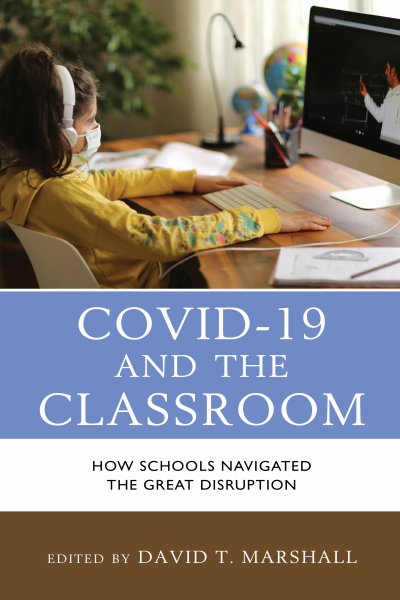
COVID-19 and the Classroom
How Schools Navigated the Great Disruption- Editors:
- Publisher:
- 2022
Summary
COVID-19 and the Classroom: How Schools Navigated the Great Disruption presents social science research that explores how schools navigated the disruption caused by the COVID-19 pandemic from March 2020 through the 2020-21 school year. This book also serves as a history book, documenting what this period was like for those involved in the enterprise of educating children. The book is divided into three sections, allowing for an in-depth exploration of the pandemic’s impact. The first section examines how teachers, parents, and school leaders experienced the pandemic, including what this looked like when schools first closed for in-person instruction. Part two explores how schools reopened, both in the United States and abroad, and discusses the trade-offs associated with these decisions. This section also explored how private schools fared and the rise of “pandemic pods”. The book concludes with a look at how a range of teacher preparation programs continued their work in uncertain times. This volume represents one of the first to share scholarship on how schools negotiated the COVID-19 crisis.
Keywords
Search publication
Bibliographic data
- Edition
- 1/2022
- Copyright Year
- 2022
- ISBN-Print
- 978-1-7936-5143-3
- ISBN-Online
- 978-1-7936-5144-0
- Publisher
- Lexington, Lanham
- Language
- English
- Pages
- 294
- Product Type
- Edited Book
Table of contents
- Dedication No access
- Contents No access
- Acknowledgments No access
- Abbreviations and Acronyms No access
- References No access
- Shifting to Remote Instruction No access
- Challenges Outside of School No access
- Barriers for Students No access
- Self-Efficacy with Online Teaching No access
- Long-Term Impact of Remote Instruction No access
- Recommendations for the Future No access
- Limitations No access
- Concluding Thoughts No access
- Note No access
- References No access
- Current Study No access
- Spring 2020 No access
- Fall 2020 No access
- Spring 2021 No access
- Spring 2020 No access
- Fall 2020 No access
- Spring 2021 No access
- Spring 2020 No access
- Fall 2020 No access
- Spring 2021 No access
- Spring 2020 No access
- Fall 2020 No access
- Spring 2021 No access
- Spring 2020 No access
- Fall 2020 No access
- Spring 2021 No access
- Conclusion No access
- References No access
- Arts Education Programming in NYC Public Schools Before March 2020 No access
- Arts Education Programming in NYC Public Charter Schools Before March 2020 No access
- Arts Education Programming at a Public Charter School Before March 2020 No access
- Arts Education Programming and COVID-19: National Responses No access
- Arts Education Programming and COVID-19: Local Responses from NYC No access
- Arts Education Programming and COVID-19: Local Responses from the NYC Charter Sector No access
- Arts Education and COVID-19: The Response at One New York City Public Charter School No access
- Transition to Remote Learning and Overview of Virtual Role No access
- Implications, Opportunities, and Challenges No access
- Transition to Remote Learning and Overview of Virtual Role No access
- Implications, Opportunities, and Challenges No access
- Transition to Remote Learning and Overview of Virtual Role No access
- Implications, Opportunities, and Challenges No access
- Transition to Remote Learning and Overview of Virtual Role No access
- Implications, Opportunities, and Challenges No access
- Discussion No access
- Conclusion No access
- References No access
- Literature Review No access
- Data No access
- Analysis No access
- The Experiences of Parents and Students No access
- Parents’ Assessment of the Experience No access
- Discussion and Conclusion No access
- References No access
- Current Study No access
- Initial Reactions to COVID-19 No access
- Spring Transition to Remote Instruction No access
- Relationships with Parents No access
- How Schools Reopened in Fall 2020 No access
- Comparison with Surrounding School Districts No access
- Some Students Thrived Online No access
- Educational Technology and Personalized Learning No access
- Remote and Hybrid Learning Options No access
- Social-Emotional Learning No access
- Conclusion No access
- References No access
- The Best Defense Is a Good Offense No access
- Concern for Personnel No access
- Concern for Students No access
- Concern for Parents No access
- Employ Agility No access
- Foster Equity No access
- Intraorganizational Opportunities No access
- Community Stakeholder Relations No access
- Support Networks No access
- Navigate Teaching and Learning No access
- Opportunity to Provide One-to-One Devices to Students No access
- Opportunity to Develop Online Options for Students No access
- Opportunity to Provide Permanent Change in Instruction No access
- Opportunity to Expand Communication No access
- Opportunity to Engage in Collaborative Efforts No access
- Opportunity to Address Long-Term Capital Needs No access
- Exhibit Political Awareness No access
- Conclusion No access
- References No access
- Risks to Children Associated with COVID-19 No access
- School Closures as a Mitigation Strategy No access
- Risks to Children Associated with Lockdowns and School Closures No access
- Learning Remotely No access
- Estimating Learning Loss No access
- State Reopening Plans No access
- School District Learning Modality Plans No access
- How Schools Reopened No access
- ACS—Auburn, Alabama No access
- SFUSD—San Francisco, California No access
- Conclusion No access
- Note No access
- References No access
- A Difficult Comparison No access
- The American Response to the Pandemic: Fear and Spending No access
- Global Responses to COVID-19 in Schools No access
- Consequences of the Pandemic Disruption of Schooling No access
- Conclusion No access
- Note No access
- References No access
- Permanent Closures No access
- Closed School Attributes No access
- Private School Enrollment No access
- Paycheck Protection Program No access
- More Responsive, Including Opening In-Person No access
- Resilient Economy No access
- Conclusion No access
- References No access
- What Are Learning Pods? No access
- Are Learning Pods Legal? No access
- Micro-Schools No access
- Homeschool No access
- Hybrid Schools No access
- Virtual Schools No access
- Tutoring No access
- Traditional Private Schools No access
- Class Size and Other High-Impact Strategies No access
- Are Pods Equitable? No access
- Conclusions and Policy Recommendations No access
- References No access
- Teacher Preparation during COVID-19 No access
- What Happened? A Time Line of Events No access
- Alternative Learning Experiences No access
- Licensure Processes No access
- Closing Out Spring 2020 No access
- Accreditation Changes No access
- Departmental Changes and Logistical Implications No access
- Student Support No access
- Discussion and Conclusion No access
- References No access
- Programmatic Changes and Pedagogical Adaptations No access
- Socioemotional Competence during COVID-19 No access
- Alternative Licensure Programs during COVID-19 No access
- Summer Institute No access
- Cohort Model No access
- Preparing Teachers Remotely No access
- Building Relationships No access
- Feedback from Mentor Groups No access
- Novice Teachers, Online Experts No access
- Classroom Management No access
- Conclusion No access
- References No access
- Teacher Residency Programs No access
- Richmond Teacher Residency No access
- RTR Petersburg No access
- Formative Evaluation Activities No access
- Summative Evaluation Activities No access
- Technology No access
- Home and School Collaboration No access
- Social and Emotional Learning No access
- Recommendations No access
- References No access
- SET Shortages No access
- SETs of Color No access
- Possible Effects of the Coronavirus Pandemic on the SET Workforce No access
- Emerging Evidence about SETs’ Retention and Attrition No access
- Attracting and Retaining SETs No access
- University-School Partnerships No access
- What Is and Is Not Working for Current SETs No access
- Suggestions for Moving Forward No access
- Policy Implications for SET’s Recruitment and Retention No access
- Conclusion No access
- References No access
- Index No access Pages 279 - 282
- About the Editor No access Pages 283 - 284
- About the Authors No access Pages 285 - 294