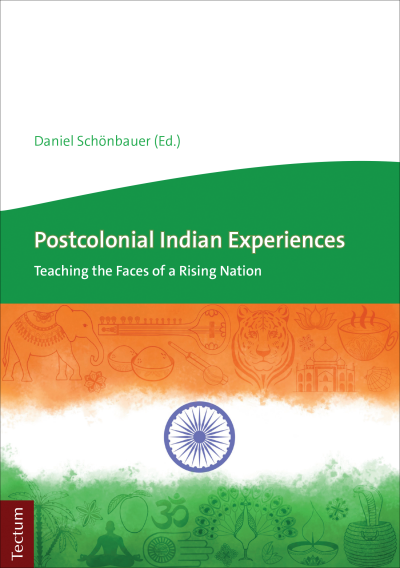
Postcolonial Indian Experiences
Teaching the Faces of a Rising Nation- Editors:
- Publisher:
- 2020
Summary
The 21st century has seen a growing importance of India in foreign language education. Not only has globalisation led to a reshaping of life in India itself, but, on a global scale, the enlarging Indian diaspora has resulted in a spreading and reflection of Indian (diasporic) experiences in economy, literature and (pop)culture. This anthology provides perspectives of how to read and teach these ‘faces’ of postcolonial India. Thereby, it focusses on a variety of literary texts worth implementing in teaching units. The articles take the perspective of literary and cultural studies as base and aim at interconnecting it to major concepts and theories of teaching literature and culture. Finally, it is the aim of this anthology to provide ideas of how to actively teach the different ‘faces’ of postcolonial India in the (advanced) intercultural EFL classroom.
Search publication
Bibliographic data
- Edition
- 1/2020
- Copyright Year
- 2020
- ISBN-Print
- 978-3-8288-4293-9
- ISBN-Online
- 978-3-8288-7205-9
- Publisher
- Tectum, Baden-Baden
- Language
- English
- Pages
- 256
- Product Type
- Edited Book
Table of contents
- Titelei/Inhaltsverzeichnis No access Pages 1 - 9
- Authors: |
- Introduction: Postcolonial Indian Experiences – Teaching ‘the faces’ of a Rising Nation No accessAuthors: |
- From Empire to Globalisation: Historical Perspectives No accessAuthors: |
- Inside Perspectives: Cultural ‘Faces’ of Present-Day India No accessAuthors: |
- India as a Global Community: Diasporic Experiences No accessAuthors: |
- Last but not least…. No accessAuthors: |
- Works cited No accessAuthors: |
- Authors:
- 1.1 Prompt, Headline: 1857 National Revolt No accessAuthors:
- 1.2 Reading, The Kashmir Dispute No accessAuthors:
- Authors:
- 2.1 Reading & Discussion of Saddat Manto’s Story “Toba Tek Singh” (1955) No accessAuthors:
- 2.2 Discussion of Images 1 and 2: Sadhus and Capitalism No accessAuthors:
- 2.3 Discussion of Image 3: A Tale of Sarees and Bikinis No accessAuthors:
- Authors:
- 3.1 Reading and Discussion of Mahasweta Devi’s “Douloti the Bountiful” (1993) No accessAuthors:
- 3.2 Movie Clip: Discussion of Scenes from Rajkumar Hirani’s PK (2014) No accessAuthors:
- 4 External/Diasporic Difference No accessAuthors:
- Bibliography No accessAuthors:
- 1 Introduction No access
- 2.1 ‘Colonial Discourse’ No access
- 2.1 ‘Orientalism’ and ‘Othering’ No access
- 3 Analysis from the Point of View of Teaching as a Foreign Language No access
- 4 Teaching Activities No access
- 5 Conclusion No access
- Bibliography No access
- 1 Introduction No access
- 2.1 Abrogation No access
- 2.2 Displacement No access
- 2.3 Othering No access
- 3.1 Chances No access
- 3.2 Challenges No access
- 4.1 Pre-Reading Activities No access
- 4.2 While-Reading Activities No access
- 4.3 Post-Reading Activities No access
- 4.4 Summary Teaching Activities No access
- 5 Conclusion No access
- Bibliography No access
- 1. Introduction No access
- 2.1 ‘Hybridity’ No access
- 2.2 Double Colonization No access
- 3.1 Chances No access
- 3.2 Challenges No access
- 3.3 Suitability No access
- 4 Teaching Activities No access
- 5 Conclusion No access
- Bibliography No access
- 1 Introduction No access
- 2 Postcolonial Key Concepts in India Becoming No access
- 3 Analysis from the point of view of Teaching English as a Foreign Language No access
- 4 Teaching Activities No access
- 5 Conclusion No access
- Bibliography No access
- 1 Introduction No access
- 2.1 English Vinglish No access
- 2.2.1 Abrogation and Appropriation No access
- 2.2.2 Hybridity No access
- 2.2.3 Othering No access
- 3.1 Chances No access
- 3.2 Challenges No access
- 4.1 Pre-Viewing-Activities No access
- 4.2 While-Viewing-Activities No access
- 4.3 Post-Viewing-Activities No access
- 5 Conclusion No access
- Bibliography No access
- 1 Introduction No access
- 2.1 Othering and Marginality No access
- 2.2 Gender issues and the Subaltern No access
- 3 Analysis from the Point of View of Teaching English as a Foreign Language No access
- 4 Teaching Activities No access
- 5 Conclusion No access
- Bibliography No access
- 1 Introduction No access
- 2.1 Othering No access
- 2.2 Appropriation No access
- 2.3 Contact Zone No access
- 3.1 Chances No access
- 3.2 Challenges No access
- 3.3 Is “Outsider” suitable for the EFL classroom? An Appraisal. No access
- 4.1 Pre-Reading-Activity No access
- 4.2 While-Reading-Activity No access
- 4.3 Post-Reading-Activity No access
- 5 Conclusion No access
- Bibliography No access
- 1 Introduction No access
- 2.1 ‘Diaspora‘ No access
- 2.2 'Homeland’ and ‘exile’ No access
- 2.3 ‘Othering’ and ‘(Non-)Assimilation’ No access
- 3.1 Chances No access
- 3.2 Challenges No access
- 4 Teaching Activities No access
- 5 Conclusion No access
- Bibliography No access
- 1 Introduction No access
- 2.1 Displacement No access
- 2.2 Diaspora No access
- 2.3 Hybridity No access
- 2.4 Othering No access
- 3.1 Chances No access
- 3.2 Challenges No access
- 4.1 Pre-Reading-Activity No access
- 4.2 While-Reading-Activity No access
- 4.3 Post-Reading-Activity No access
- 5 Conclusion No access
- Bibliography No access
- 1 Introduction No access
- 2.1 ‘Diaspora’ No access
- 2.2 ‘Other’ & ‘Othering’ No access
- 2.3 ‘Hybridity’ & ‘Liminality’ No access
- 3 Analysis from the Point of View of Teaching English as a Foreign Language No access
- 4.1 Pre-reading Activity No access
- 4.2 While-reading Activity No access
- 4.3 Post-reading Activity No access
- 5 Conclusion No access
- Bibliography No access
- 1 Introduction No access
- 2.1 Marginality No access
- 2.2 Feminism No access
- 2.3 Binarism No access
- 3.1 Chances No access
- 3.2 Challenges No access
- 3.3 An Appraisal No access
- 4.1 Pre-Reading Activity No access
- 4.2 While-Reading Activity No access
- 4.3 Post-Reading Activity No access
- 5 Conclusion No access
- Bibliography No access
- 1 Introduction No access
- 2.1 Diaspora No access
- 2.2 Liminality No access
- 3.1 Chances No access
- 3.2 Challenges No access
- 4.1 Pre-Reading-Activity No access
- 4.2 While-Reading-Activity No access
- 4.3 Post-Reading-Activity No access
- 5 Conclusion No access
- Bibliography No access
Bibliography (348 entries)
No match found. Try another term.
- Daniel Schönbauer. Introduction: Postcolonial Indian Experiences – Teaching 'the faces' of a rising nation Open Google Scholar DOI: 10.5771/9783828872059
- Alam, F. (2013). The Mythos of Return and Recent Indian English Diasporic Fiction. In Krishna Sen & Rituparna Roy (Eds.), Writing India Anew. Indian English Fiction 2000-2010 (pp. 247-257). Amsterdam: Amsterdam University Press. Open Google Scholar DOI: 10.5771/9783828872059
- Ashcroft, B. & Griffiths, G. & Tiffin, H. (1989). The Empire Writes Back: Theory and Practice in Post-colonial Literatures. London and New York: Routledge. Open Google Scholar DOI: 10.5771/9783828872059
- Dengel-Janic, E. (2007). South Asia. In Lars Eckstein (Ed.), English Literatures Across the Globe (pp. 133- 157). Paderborn: UTB. Open Google Scholar DOI: 10.5771/9783828872059
- Freitag, B. & Gymnich, M. (2005). New English and Postcolonial Literatures im Fremdsprachenunterricht. In Wolfgang Hallet & Ansgar Nünning (Eds.), Neue Ansätze und Konzepte der Literatur- und Kulturdidaktik (pp. 259-276). Trier: WVT. Open Google Scholar DOI: 10.5771/9783828872059
- Krämer, L. (2008). Bollywood in the Classroom. Opportunities and Problems of Teaching Popular Indian Cinema. In Oliver Lindner (Ed.), Teaching India (pp. 107-123). Heidelberg: Winter. Open Google Scholar DOI: 10.5771/9783828872059
- Lindner, O. (2010). India: The Jewel in the Classroom. In: Maria Eisenmann, Nancy Grimm & Laurenz Volkmann (Eds.), Teaching the New English Cultures & Literatures (pp. 59-72). Heidelberg: Winter. Open Google Scholar DOI: 10.5771/9783828872059
- Mukherjee, J. (2006). Unity in Diversity: the Indian Kaleidoscope in the EFL Classroom. In Werner Delanoy & Laurenz Volkmann (Eds.), Cultural Studies in the EFL Classroom (pp. 143-151). Heidelberg: Winter. Open Google Scholar DOI: 10.5771/9783828872059
- Neumann, B. (2009). Fictions of Memory im Fremdsprachenunterricht: Literatur- und Kulturdidaktische Perspektiven auf Literarische Inszenierungen von Erinnerung und Identität. In Wolfgang Hallet & Ansgar Nünning (Eds.), Romandidaktik. Theoretische Grundlagen, Methoden, Lektüreanregungen (pp. 353-370). Trier: WVT. Open Google Scholar DOI: 10.5771/9783828872059
- Volkmann, L. (2008). Interpreter of Maladies / Interpreter of Cultures. Inter- and Transcultural Aspects of Jhumpa Lahiri’s Short Stories. In Oliver Lindner (Ed.), Teaching India (pp. 17-34). Heidelberg: Winter. Open Google Scholar DOI: 10.5771/9783828872059
- Wandel, R. (2006). Still some way to go…Indian English Narratives in the German EFL-Classroom. In Bern-Peter Lange & Mara Pandurang (Eds.), Mediating Indian Writing in English. German Responses (pp. 86-109). Jaipur: Rawat. Open Google Scholar DOI: 10.5771/9783828872059
- Wandel, R. (2013). Teaching India in the German EFL Classroom – Issues and Problems. In Jana Gohrisch & Ellen Grünkemeier (Eds.), Cross/Cultures: Readings in Post-Colonial Literatures and Cultures in English (pp. 387-398). Amsterdam: Rodopi. Open Google Scholar DOI: 10.5771/9783828872059
- Wandel, R. & Bartels, A. & Sutter, M. (2007). Women and Postcolonial Literature in the EFL Classroom. In Helene Decke-Cornill & Laurenz Volkmann (Eds.), Gender Studies and Foreign Language Teaching (pp. 209-226). Tübingen: Narr. Open Google Scholar DOI: 10.5771/9783828872059
- Dr. Pavan Malreddy. The Idea of India – Pedagogical Perspectives Open Google Scholar DOI: 10.5771/9783828872059
- Bhabha, H.K. (ed.). 1990. Nation and Narration. London and New York: Routledge. Open Google Scholar DOI: 10.5771/9783828872059
- Bhabha, H.K. (2004). [1994]. The Location of Culture. London and New York: Routledge. Open Google Scholar DOI: 10.5771/9783828872059
- Chatterjee, P. (1993). [1986]. Nationalist Thought and the Colonial World: A Derivative Discourse. Minneapolis, MN: University of Minnesota Press. Open Google Scholar DOI: 10.5771/9783828872059
- Chunha, R.d. (2014). We have Lost all Sense of Humor? Midday Online, 24 August. https://www.mid-day.com/articles/have-we-lost-our-sense-of-humour/15552157 Open Google Scholar DOI: 10.5771/9783828872059
- Collu, G. (1999). Adivasis and the Myth of Independence: Mahasweta Devi's Douloti the Bountiful. ARIEL: A Review of International English Literature 30 (1), 43-57. Open Google Scholar DOI: 10.5771/9783828872059
- Drew, J. (1999). Cultural Composition: Stuart Hall on Ethnicity and the Discursive Turn. Race, Rhetoric, and the Postcolonial edited by Gary A. Olson and Lynn Worsham (pp. 205–39). Albany, NY: The State University of New York Press. Open Google Scholar DOI: 10.5771/9783828872059
- Dumont, L. (1970). Homo Hierarchicus: The Caste System and its Implications. London: Weidenfeld and Nicolson. Open Google Scholar DOI: 10.5771/9783828872059
- Devi, M. (1993). Douloti the Bountiful. In Imaginary Maps, edited and translated by Gayatri Chakraborty Spivak (pp. 19-94). Calcutta: Thema. Open Google Scholar DOI: 10.5771/9783828872059
- Ghosh, A. (2010). The Shadow Lines. Delhi: Penguin. Open Google Scholar DOI: 10.5771/9783828872059
- Goodness Gracious Me. 1988. “Guru Mararishi Yogi”. BBC 2. Open Google Scholar DOI: 10.5771/9783828872059
- Guha, R. (1983). Elementary Aspects of Peasant Insurgency in Colonial India. Delhi: Oxford University Press. Open Google Scholar DOI: 10.5771/9783828872059
- Hirsch, M., & Miller, N.K. (eds.). (2011). Rites of Return: Diaspora Poetics and the Politics of Memory. Columbia University Press. Open Google Scholar DOI: 10.5771/9783828872059
- History for Space. (2019). Romila Thapar and Gayatri Chakravorty Spivak in Conversation. April 15, 2019, http://www.historyforpeace.pw/news/2744/. Open Google Scholar DOI: 10.5771/9783828872059
- Jonas, M. (1988). An Interview with Nuruddin Farah. Journal of Refugee Studies 1 (1), 74-77. Open Google Scholar DOI: 10.5771/9783828872059
- Manto, S. H. (1955). n.d. Toba Tek Singh. Translated by Frances Pritchett. Available at: http://www.columbia.edu/itc/mealac/pritchett/00urdu/tobateksingh/translation.html Open Google Scholar DOI: 10.5771/9783828872059
- Omvedt, G. (Ed.) (1982). Land, Caste, and Politics in Indian States. Delhi: Authors Guild Publications. Open Google Scholar DOI: 10.5771/9783828872059
- Peters, R. (2006). Terrorists vs Indias. Warner Bros. Records. Available at https://www.youtube.com/watch?v=uTXemscTJWM. Open Google Scholar DOI: 10.5771/9783828872059
- PK. Dir. Rajkumar Hirani. Mumbai, 2014. Film. Open Google Scholar DOI: 10.5771/9783828872059
- Said, E.W. (1993). Intellectual exile: Expatriates and marginals. Grand Street 47, 112-124. Open Google Scholar DOI: 10.5771/9783828872059
- Srinivas, M.N. (1987). The Dominant Caste and Other Essays. New York: Oxford University Press. Open Google Scholar DOI: 10.5771/9783828872059
- Srinivas, M.N. (1984). Some Reflections on the Nature of Caste Hierarchy. Contributions to Indian Sociology 18 (2), 151-167. Open Google Scholar DOI: 10.5771/9783828872059
- The Telegraph. (2001). “A Brief History of Kashmir Conflict”. 24 September. Available at https://www.telegraph.co.uk/news/1399992/A-brief-history-of-the-Kashmir-conflict.html Open Google Scholar DOI: 10.5771/9783828872059
- Tagore, R. (1994). The English Writings of Rabindranath Tagore: A Miscellany (edited by Sisir Kumar Das). New Delhi. Sahitya Academy Press. Open Google Scholar DOI: 10.5771/9783828872059
- Talbot, C. (1995). Inscribing the Other, Inscribing the Self: Hindu-Muslim Identities in pre-colonial India. Comparative Studies in Society and History 37 (4), 692-722. Open Google Scholar DOI: 10.5771/9783828872059
- Wikimedia. “Indian States during the Revolt of 1857”. Available at https://commons.wikimedia.org/wiki/File:Indian_revolt_of_1857_states_map.svg Open Google Scholar DOI: 10.5771/9783828872059
- Natascha Münnich. An Invitation to Colonial India – Alice Perrin’s “The Rise of Ram Din" Open Google Scholar DOI: 10.5771/9783828872059
- Ashcroft, B., Griffiths, G., & Tiffin, H. (2013). Postcolonial studies: The key concepts (3rd ed.). Routledge Key Guides. New York: Routledge. Open Google Scholar DOI: 10.5771/9783828872059
- Bhabha, H. K. (1994). The Location of Culture. New York: Routledge. Open Google Scholar DOI: 10.5771/9783828872059
- Bielicki, J. (2018). Drei Jahre „Wir schaffen das“ – eine Bestandsaufnahme. Retrieved from https://www.sueddeutsche.de/politik/fluechtlinge-in-deutschland- drei-jahre-wir-schaffen-das-eine-bestandsaufnahme-1.4110671 (accessed: 29.12.2018). Open Google Scholar DOI: 10.5771/9783828872059
- British Library. (n.d.). English in India. Retrieved from https://www.bl.uk/learning/langlit/sounds/case-studies/minority-ethnic/asian/ (accessed: 06.01.2019). Open Google Scholar DOI: 10.5771/9783828872059
- Chandler, D., & Munday, R. (2016). Postcolonialism. In D. Chandler & R. Munday (Eds.), A Dictionary of Media and Communication (2nd ed.). Oxford: Oxford University Press. Retrieved from http://www.oxfordreference.com/view/10.1093/acref/9780191800986.001.0001/acref-9780191800986-e-2089?rskey=sBD5li&result=1 (accessed: 06.01.2019). Open Google Scholar DOI: 10.5771/9783828872059
- Hansen, A. J. (2018). Short story. In Encyclopædia Britannica. Retrieved from https://academic.eb.com/levels/collegiate/article/short-story/110454.7 (accessed: 06.01.2019). Open Google Scholar DOI: 10.5771/9783828872059
- Innes, C. L. (2007). Postcolonial Literatures in English. Cambridge: Cambridge University Press. Open Google Scholar DOI: 10.5771/9783828872059
- Kazaki, V., & Wagner, S. (2011). Indien: Land der Gegensätze zwischen Tradition und Moderne. Praxis Englisch: India – between tradition and modernity, 5 (1), 6-7. Open Google Scholar DOI: 10.5771/9783828872059
- Kazim, H. (2018). Rassismus in Deutschland. Hört uns endlich zu. Retrieved from http://www.spiegel.de/kultur/gesellschaft/rassismus-in-deutschland-wir-wollen-nicht-schweigen-a-1220836.html (accessed: 30.12.2018). Open Google Scholar DOI: 10.5771/9783828872059
- Lethbridge, L. (2013). Servants: A Downstairs History of Britain from the Nineteenth Century to Modern Times. New York: W. W. Norton & Company. Open Google Scholar DOI: 10.5771/9783828872059
- Linder, O. (2008). Introduction. In O. Lindner (Ed.), Teaching India (pp. 7-16). Heidelberg: Universitätsverlag Winter. Open Google Scholar DOI: 10.5771/9783828872059
- Macfie, A. L. (Ed.). (2000). Introduction – Orientalism in Crisis. In A. Lyon Macfie (Ed.), Orientalism: A reader (pp. 3-24). New York: New York University Press. Open Google Scholar DOI: 10.5771/9783828872059
- Müller-Hartmann, A., & Schocker-von Ditfurth, M. (2014). Introduction to English Language Teaching. Stuttgart: Klett Lerntraining. Open Google Scholar DOI: 10.5771/9783828872059
- Nu¨nning, A., & Surkamp, C. (2016). Englische Literatur unterrichten. Seelze-Velber: Klett/Kallmeyer. Open Google Scholar DOI: 10.5771/9783828872059
- Nünning, A. (1999). “But man […] is a story-telling animal”. Perspektivenwechsel und Perspektivenvielfalt bei der Behandlung von Short Stories. Der fremdsprachliche Unterricht Englisch, 33 (39), 4-12. Open Google Scholar DOI: 10.5771/9783828872059
- Occident. (n.d.). In Cambridge Dictionary. Retrieved from https://dictionary.cambridge.org/dictionary/english/occident?q=occident (accessed: 06.01.2019) Open Google Scholar DOI: 10.5771/9783828872059
- Perrin, A. (1906). The Rise of Ram Din. In E. Boehmer (Ed.). Empire Writing. An Anthology of Colonial Literature 1870 – 1918 (pp. 329-335). (1998). Oxford & New York: Oxford University Press. Open Google Scholar DOI: 10.5771/9783828872059
- Porter, D. (1983). Orientalism and its Problems. In P. Williams & L. Chrisman (Eds.), Colonial Discourse and postcolonial theory: a reader (pp. 150-161). (1994). New York: Columbia University Press. Open Google Scholar DOI: 10.5771/9783828872059
- Said, E. W. (2003). Orientalism. London: Penguin Books. Open Google Scholar DOI: 10.5771/9783828872059
- Surkamp, C. (2012). Literarische Texte im kompetenzorientierten Fremdsprachenunterricht. In W. Hallet & U. Krämer (Eds.), Kompetenzaufgaben im Englischunterricht: Grundlagen und Unterrichtsbeispiele (pp.77-90). Seelze: Kallmeyer/Klett. Open Google Scholar DOI: 10.5771/9783828872059
- Victorian Secrets. (n.d.). Alice Perrin (1867-1934). Retrieved from https://www.victoriansecrets.co.uk/authors/alice-perrin-1867-1934/ (accessed: 06.01.2019). Open Google Scholar DOI: 10.5771/9783828872059
- Volkmann, L. (2010). Fachdidaktik Englisch: Kultur und Sprache. Tübingen: Narr Francke Attempto Verlag GmbH + Co. KG. Open Google Scholar DOI: 10.5771/9783828872059
- Vygostky, L. S. (1978). Mind in society. Cambridge, MA: MIT Press. Open Google Scholar DOI: 10.5771/9783828872059
- Wandel, R. (2001). Vom 'Raj' zum 'Roy' - Indien im Englischunterricht. Der fremdsprachliche Unterricht Englisch, 35 (50), 4-7. Open Google Scholar DOI: 10.5771/9783828872059
- ---. (2013). Teaching India in the German EFL Classroom – Issues and Problems. In J. Gorisch & E. Grünkemeier (Eds.), Postcolonial Studies Across the Disciplines (pp. 387-398). Leiden: Rodopi. Open Google Scholar DOI: 10.5771/9783828872059
- Williams, P., & Chrisman, L. (1994). Colonial Discourse and post-colonial theory: A reader. Cambridge: University Press. Open Google Scholar DOI: 10.5771/9783828872059
- Wilson, K. (1999). Note-taking in the academic writing process of non-native speaker students: Is it important as a process or a product? Journal of College Reading and Learning, 29 (2), 166-179. Open Google Scholar DOI: 10.5771/9783828872059
- Wisker, G. (2007). Key concepts in postcolonial literature. Basingstoke: Palgrave Macmillan. Open Google Scholar DOI: 10.5771/9783828872059
- Yang, L., & Wilson, K. (2006). Second Language Classroom Reading: A Social Constructivist Approach. The Reading Matrix, 6 (3), 364-372. Open Google Scholar DOI: 10.5771/9783828872059
- Michelle Skruth. Teaching Stories of Partition – Saadat Hasan Manto's "The Return" Open Google Scholar DOI: 10.5771/9783828872059
- Adam, M. M. A. (2013). Enhancing EFL Learners’ Competence through Short Stories: A Study in Four Colleges. Advances in Language and Literary Studies, 4 (1), 154-160. Open Google Scholar DOI: 10.5771/9783828872059
- Alter, S. (1994). Madness and Partition: The Short Stories of Saadat Hasan Manto. Alif: Journal of Comparative Poetics, 14, 91-100. Open Google Scholar DOI: 10.5771/9783828872059
- Ashcroft, B., Griffiths, G., & Tiffin, H. (2000). Post-Colonial Studies. The Key Concepts. Oxford: Routledge. Open Google Scholar DOI: 10.5771/9783828872059
- Bredella, L. (2012). Narratives und interkulturelles Verstehen: Zur Entwicklung von Empathie-, Urteils- und Kooperationsfähigkeit. Tübingen: Narr Francke Attempto Verlag GmbH + Co. KG. Open Google Scholar DOI: 10.5771/9783828872059
- Dengel-Janic, E. (2007). South Asia. In L. Eckstein (Ed.), English Literatures Across the Globe. A Companion (pp. 133-15). Paderborn: Wilhelm Fink Verlag & Co. KG. Open Google Scholar DOI: 10.5771/9783828872059
- Eisenmann, M. (2015). Crossovers – Postcolonial Literature and Transcultural Learning. In W. Delanoy, M. Eisenmann & F. Matz (Eds.), Learning with Literature in the EFL Classroom (pp. 217-236). Frankfurt: Peter Lang Verlag. Open Google Scholar DOI: 10.5771/9783828872059
- Freitag, B., & Gymnich, M. (2007). New English and Postcolonial Literatures im Fremdsprachenunterricht. In W. Hallet & A. Nünning (Eds.), Neue Ansätze und Konzepte der Literatur- und Kulturdidaktik (pp. 259-276). Trier: Wissenschaftlicher Verlag. Open Google Scholar DOI: 10.5771/9783828872059
- Gómez, L. F. (2012). Fostering Intercultural Communicative Competence Through Reading Authentic Literary Texts in an Advanced Colombian EFL Classroom: A Constructivist Perspective. Profile Issues in Teachers’ Professional Development, 14 (1), 49-66. Open Google Scholar DOI: 10.5771/9783828872059
- Grimm, N., Meyer, M., & Volkmann, L. (2015). Teaching English. Tübingen: Narr Francke Attempto Verlag GmbH + Co. KG. Open Google Scholar DOI: 10.5771/9783828872059
- Haß, F. (2017). Fachdidaktik Englisch. Stuttgart: Ernst Klett Sprachen GmbH. Open Google Scholar DOI: 10.5771/9783828872059
- Kabir, A. J. (2005). Gender, Memory, Trauma: Women’s Novels on the Partition of India. Comparative Studies of South Asia, Africa and the Middle East, 25 (1), 177-190. Open Google Scholar DOI: 10.5771/9783828872059
- Lindner, O. (2010). India: The Jewel in the Classroom. In M. Eisenmann, N. Grimm & L. Volkmann (Eds.), Teaching the New English Cultures & Literatures (pp. 59-72). Heidelberg: Universitätsverlag Winter GmbH. Open Google Scholar DOI: 10.5771/9783828872059
- Mann, H. S. (1998). Woman in Decolonization: The National and Textual Politics of Rape in Saadat Hasan Manto and Mahasweta Devi. The Journal of Commonwealth Literature, 33 (2), 127-141. Open Google Scholar DOI: 10.5771/9783828872059
- Manto, S. H. (1997). The Return. In S. H. Manto (Ed.), Mottled Dawn. Fifty Sketches and Stories of Partition. New Delhi: Penguin Books. Open Google Scholar DOI: 10.5771/9783828872059
- Narasimhan-Madhavan, D. (2006). Gender, Sexuality and Violence: Permissible Violence Against Women During The Partition Of India And Pakistan. Hawwa, 4 (2-3), 396-416. Open Google Scholar DOI: 10.5771/9783828872059
- Nünning, A., & Surkamp, C. (2006). Englische Literatur unterrichten. Grundlage und Methoden. Seelze-Velber: Kallmeyer/ Klett Erhard Friedrich Verlag GmbH. Open Google Scholar DOI: 10.5771/9783828872059
- Saint, T. K. (2012). The Long Shadow of Manto’s Partition Narratives: “Fictive” Testimony to Historical Trauma. Social Scientist, 40 (11-12), 53-62. Open Google Scholar DOI: 10.5771/9783828872059
- Surkamp, C. (2012). Literarische Texte im kompetenzorientierten Fremdsprachenunterricht. In W. Hallet & U. Krämer (Eds.), Kompetenzaufgaben im Englischunterricht. Grundlage und Unterrichtsbeispiele (pp. 77-90). Seelze-Velber: Kallmeyer/ Klett Erhard Friedrich Verlag GmbH. Open Google Scholar DOI: 10.5771/9783828872059
- Thaler, E. (2008). Teaching English Literature (2nd ed.). Paderborn: Ferdinand Schöningh GmbH & Co. KG. Open Google Scholar DOI: 10.5771/9783828872059
- ---. (2014). Englisch unterrichten: Grundlagen – Kompetenzen - Methoden. Berlin: Cornelsen Schulverlage GmbH. Open Google Scholar DOI: 10.5771/9783828872059
- Volkmann, L. (2010). Fachdidaktik Englisch: Kultur und Sprache. Tübingen: Narr Francke Attempto Verlag GmbH + Co. KG. Open Google Scholar DOI: 10.5771/9783828872059
- ---. (2013). Intercultural Learning and Postcolonial Studies: “Never the Twain Shall Meet”?. In M. Eisenmann & T. Summer (Eds.), Basic Issues in EFL Teaching and Learning (2nd ed.) (pp. 169-180). Heidelberg: Universitätsverlag Winter GmbH. Open Google Scholar DOI: 10.5771/9783828872059
- Wandel, R. (2013). Teaching India in the German EFL Classroom – Issues and Problems. In J. Gohrisch & E. Grünkemeier (Eds.), Postcolonial Studies Across the Disciplines (pp. 387-398). Amsterdam: Rodopi Verlag. Open Google Scholar DOI: 10.5771/9783828872059
- Yusin, J. (2011). Beyond nationalism: The border, trauma and Partition fiction. SAGE Publications, Thesis Eleven, 105 (1), 23-34. Open Google Scholar DOI: 10.5771/9783828872059
- Kevin Kuypers. Reading and Teaching Post-Independence India in Arundhati Roy's God of Small Things Open Google Scholar DOI: 10.5771/9783828872059
- Ashcroft, B., Griffiths, G., & Tiffin H. (2013). Postcolonial Studies The Key Concepts. London & New York: Routledge. Open Google Scholar DOI: 10.5771/9783828872059
- Ashcroft, B., Griffiths, G., & Tiffin H. (1989). The Empire Writes Back: Theory and Practice in Post-Colonial Literatures in English. London: Taylor and Francis. Open Google Scholar DOI: 10.5771/9783828872059
- Bhabha, H. (1994). The Location of Culture. London: Routledge. Open Google Scholar DOI: 10.5771/9783828872059
- Bakhtin M. (1981). The Dialogic Imagination: Four Essays. In M.. Holquist (Ed.), translated by C. Emerson & M. Holquist. Austin (Texas): University of Texas Press. Open Google Scholar DOI: 10.5771/9783828872059
- Freitag, B., & Gymnich, M. (2007). New English and Postcolonial Literatures im Fremdsprachenunterricht. In W. Hallet & A. Nünning (Eds.), Neue Ansätze und Konzepte der Literatur- und Kulturdidaktik (WVT Handbücher zur Literatur- und Kulturdidaktik) (pp. 259-276). Trier: WVT. Open Google Scholar DOI: 10.5771/9783828872059
- Macauly, T. B. (1835). Minute dated 2nd February 1835. In H. Woodrow (Ed.). (1862). Macaulay’s Minutes on Education in India. Calcutta: The Baptist Mission Press. Open Google Scholar DOI: 10.5771/9783828872059
- English Oxford Living Dictionaries. (2018). Web. https://en.oxforddictionaries.com/definition/hybrid. Oxford University Press. (Last accessed: 29.05.2018). Open Google Scholar DOI: 10.5771/9783828872059
- Roy, A. (2009). The God of Small Things. London: Fourth Estate. Open Google Scholar DOI: 10.5771/9783828872059
- Tickell, A. (2007). Arundhati Roy’s The God of Small Things. Abingdon: Tylor & Francis. Open Google Scholar DOI: 10.5771/9783828872059
- Truax, A. (1997). A Silver Thimble in Her Fist. New York Times. Web. https://archive.nytimes.com/www.nytimes.com/books/97/05/25/reviews/970525.25truaxt.html (Last accessed: 29.05.2018). Open Google Scholar DOI: 10.5771/9783828872059
- Volkmann, L. 2015: Opportunities and Challenges for Transcultural Learning and Global Education via Literature. In W. Delanoy, M. Eisenmann & F. Matz (Eds.), Learning with Literature in the EFL Classroom (pp. 237 – 262). Frankfurt am Main: Internationaler Verlag der Wissenschaften. Open Google Scholar DOI: 10.5771/9783828872059
- Wandel, R. (2013). Teaching India in the German EFL Flassroom – Issues and Problems. In J. Gohrisch & E. Grünkemeier (Eds.), Postcolonial Studies across the Disciplines (pp. 387 – 398). Leiden: Bill Rodopi. Open Google Scholar DOI: 10.5771/9783828872059
- Wolfreys, J., Robbins, R., & Womack, K. (2002). The Key Concepts in Literary Theory. Edinburgh: Edinburgh University Press. Open Google Scholar DOI: 10.5771/9783828872059
- Marc Nöthen. India as a Global Player: Akash Kapur's India Becoming in the EFL Classroom Open Google Scholar DOI: 10.5771/9783828872059
- Achebe, C. (1990). Hopes and Impediments. Selected Essays. New York: Anchor. Open Google Scholar DOI: 10.5771/9783828872059
- Ashcroft, B. (2013). Re-writing India. In K. Sen & R. Roy (Eds.), Writing India Anew. Indian English Fiction 2000 – 2010 (pp. 29–46), Amsterdam: Amsterdam University Press. Open Google Scholar DOI: 10.5771/9783828872059
- Ashcroft, B. et al. (2013). Postcolonial Studies. The Key Concepts (3rd ed.). London/New York: Routledge. Open Google Scholar DOI: 10.5771/9783828872059
- Ashcroft, B. et al. (2005). The Empire Writes Back. Theory and Practice in Post-Colonial Literatures in English (2nd ed.). London: Taylor & Francis. Open Google Scholar DOI: 10.5771/9783828872059
- Bhabha, H. K. (2002). Dissemi Nation: time, narrative, and the margins of the modern nation. In H. K. Bhabha (Ed.), Nation and Narration (pp. 291–320), London/New York: Routledge. Open Google Scholar DOI: 10.5771/9783828872059
- Delanoy, W. (2013). From ‘inter’ to ‘trans’? Or: Quo vadis cultural learning? In M. Eisenmann & T. Summer (Eds.), Basic Issues in EFL Teaching and Learning (2nd adjusted ed.) (pp. 157–165), Heidelberg: Winter. Open Google Scholar DOI: 10.5771/9783828872059
- Edwards, J. D. (2008). Postcolonial Literatures. London: Palgrave Macmillan. Open Google Scholar DOI: 10.5771/9783828872059
- Gunew, S. (2002). Denaturalizing cultural nationalisms: multicultural readings of ‘Australia’. In H. K. Bhabha (Ed.), Nations and Narration (pp. 99–116), London/New York: Routledge. Open Google Scholar DOI: 10.5771/9783828872059
- Kapur, A. (2012a). India Becoming. A Portrait of Life in Modern India. New York: Riverhead Books. Open Google Scholar DOI: 10.5771/9783828872059
- Lindner, O. (2010). India. The jewel in the classroom. In M. Eisenmann et al. (Eds.), Teaching the New English Cultures & Literatures (pp. 59–72), Heidelberg: Winter. Open Google Scholar DOI: 10.5771/9783828872059
- Nünning, A. (2001). Fremdverstehen durch literarische Texte. Von der Theorie zur Praxis. Der fremdsprachliche Unterricht, 35 (53), 4–9. Open Google Scholar DOI: 10.5771/9783828872059
- Smith, S. & Watson, J. (2010). Reading Autobiography. A Guide for Interpreting Life Narratives (2nd ed.). Minneapolis/New York: University of Minnesota Press. Open Google Scholar DOI: 10.5771/9783828872059
- Surkamp, C. (2014). Literarische Texte im kompetenzorientierten Fremdsprachenunterricht. In W. Hallet & U. Krämer (Eds.), Kompetenzaufgaben im Englischunterricht. Grundlagen und Unterrichtsbeispiele (2nd adjusted ed.) (pp. 77–90), Seelze: Klett/Kallmeyer. Open Google Scholar DOI: 10.5771/9783828872059
- Surkamp, C. & Nünning, A. (2016). Englische Literatur unterrichten. Grundlagen und Methoden (4th adjusted ed.). Seelze: Klett. Open Google Scholar DOI: 10.5771/9783828872059
- Teske, D. (2008). Moloch, media city, melting pot and global player. Bombay/Mumbai as topic and theme in integrated subject teaching. In O. Lindner (Ed.), Teaching India (pp. 183–199), Heidelberg: Winter. Open Google Scholar DOI: 10.5771/9783828872059
- Volkmann, L. (2015). Opportunities and challenges for transcultural learning and global education via literature. In W. Delanoy et al. (Eds.), Learning with Literature in the EFL-Classroom (pp. 237–259), Frankfurt am Main: Peter Lang. Open Google Scholar DOI: 10.5771/9783828872059
- Wandel, R. (2010). Teaching India in the German EFL-Classroom. Issues and problems. In M. Eisenmann et al. (Eds.), Teaching the New English Cultures & Literatures (pp. 387–397), Heidelberg: Winter. Open Google Scholar DOI: 10.5771/9783828872059
- West-Pavlov, R. (2005). Transcultural Graffiti. Diasporic Writing and the Teaching of Literary Studies. Amsterdam/New York: Rodopi. Open Google Scholar DOI: 10.5771/9783828872059
- Kapur, A. (2012b). How India became America. The New York Times Online. Sunday Review. Opinion, 9th March, retrieved from https://www.nytimes.com/2012/03/11/opinion/sunday/how-india-became-america.html (accessed: 06.09.2018). Open Google Scholar DOI: 10.5771/9783828872059
- Ministerium für Schule und Weiterbildung des Landes Nordrhein-Westfalen (2014). Kernlehrplan für die Sekundarstufe II Gymnasium/Gesamtschule in Nordrhein-Westfalen. Retrieved from https://www.schulentwicklung.nrw.de/lehrplaene/upload/klp_SII/e/KLP_GOSt_Englisch.pdf (accessed: 06.09.2018). Open Google Scholar DOI: 10.5771/9783828872059
- Rath, S. P. (2000). Home(s) Abroad. Diasporic Identities in Third Space. Jouvert. A Journal of Postcolonial Studies, 4 (3), retrieved from https://legacy.chass.ncsu.edu/jouvert/v4i3/rath1.htm (accessed: 06.09.2018). Open Google Scholar DOI: 10.5771/9783828872059
- Silicon India (2012). How India became America. A review of Kapur’s ‘India Becoming’. Silicon India News – US Edition, 19th March, retrieved from https://www.siliconindia.com/news/general/How-India-Became-America-nid-109568-cid-1.html (accessed: 06.09.2018). Open Google Scholar DOI: 10.5771/9783828872059
- The New York Times Online (2004). Questions for Thomas L. Friedman. The New York Times Online, 11th June, retrieved from https://www.nytimes.com/2004/06/11/readersopinions/thomas-l-friedman.html (accessed: 06.09.2018). Open Google Scholar DOI: 10.5771/9783828872059
- Ved, M. (2015). An American dream in India. New Strait Times (Malaysia) Online, 31st January, retrieved from https://www.lexisnexis.com/hottopics/lnacademic/?verb=sr&csi=151977&sr=HEADLINE(An+American+dream+in+India)%2BAND%2BDATE%2BIS%2B2015 (accessed: 06.09.2018). Open Google Scholar DOI: 10.5771/9783828872059
- Ward, G. C. (2012). State of paradox. ‘India Becoming’ by Akash Kapur. The New York Times Online. Sunday Book Review, 25th May, retrieved from https://www.nytimes.com/2012/05/27/books/review/india-becoming-by-akash-kapur.html (accessed: 06.09.2018). Open Google Scholar DOI: 10.5771/9783828872059
- Christina Büttgen, Carolin Sampels & Christina Strackbein. Approaching Bollywood: The Movie English Vinglish. Teacher's Guide Open Google Scholar DOI: 10.5771/9783828872059
- Ashcroft, B., & Griffiths, G., & Tiffin, H. (1989). The Empire Writes Back. Theory and Practice in Post- Colonial Literatures. London: Routledge. Open Google Scholar DOI: 10.5771/9783828872059
- Ashcroft, B., & Griffiths, G., & Tiffin, H. (2000). Postcolonial Studies. The Key Concepts. London: Routledge. Open Google Scholar DOI: 10.5771/9783828872059
- Döring, T. (2008). Postcolonial Literatures in English. Stuttgart: Klett. Open Google Scholar DOI: 10.5771/9783828872059
- Freitag, B., & Gymnich, M. (2007). New English and Postcolonial Literatures im Fremdsprachenunterricht. In: W. Hallet & A. Nünning (Eds.), Neue Ansätze und Konzepte der Literatur- und Kulturdidaktik (pp. 259-276). Trier: Wissenschaftlicher Verlag. Open Google Scholar DOI: 10.5771/9783828872059
- Govindan, P.P., & Dutta, B. (2008). “From Villain to Traditional Housewife!”. The Politics of Globalization and Women’s Sexuality in the “New” Indian Media. In: A.P. Kavoori & A. Punathambekar (Eds.), Global Bollywood (180-202). New York and London: New York University Press. Open Google Scholar DOI: 10.5771/9783828872059
- Henseler, R., Möller, S., & Surkamp, C. (2011). Filme im Englischunterricht. Grundlagen, Methoden, Genres. Seelze: Kallmeyer, Klett. Open Google Scholar DOI: 10.5771/9783828872059
- India. (n.d.). In: Encyclopaedia Britannica Online. Retrieved from https://www.britannica.com/place/India (last accessed June 3rd 2018). Open Google Scholar DOI: 10.5771/9783828872059
- Krämer, L. (2008). Bollywood in the Classroom. Opportunities and Problems of Teaching Popular Indian Cinema. In: O. Lindner, G. Linke, E. Otto, H. Rossow, G. Stratman, & G. Tönnies (Eds.), Anglistik & Englischunterricht. Teaching India (pp. 107-124), Heidelberg: Winter. Open Google Scholar DOI: 10.5771/9783828872059
- Lindner, O. (2010). India: The Jewel in the Classroom. In: M. Eisenmann, N. Grimm & L. Volkmann (Eds.), Teaching the New English Culture & Literatures (pp. 59-72). Heidelberg: Winter. Open Google Scholar DOI: 10.5771/9783828872059
- Lütge, C. (2012). Mit Filmen Englisch unterrichten. Berlin: Cornelsen. Open Google Scholar DOI: 10.5771/9783828872059
- Pillai, D.A. (2012). Bollywood Journal: “English Vinglish” Is a Masterclass. In: The Wall Street Journal (Ed.). Retrieved from https://blogs.wsj.com/indiarealtime/2012/10/08/bollywood-journal-english-vinglish-is-a-masterclass/ (last accessed May 6th 2018) Open Google Scholar DOI: 10.5771/9783828872059
- Pritchard, A. (2009). Ways of Learning: Learning theories and learning styles in the classroom (2nd edition). London: Taylor & Francis. Open Google Scholar DOI: 10.5771/9783828872059
- Rajadhyaksha, A. (2008). The “Bollywoodization” of the Indian Cinema. Cultural Nationalism in a Global Arena. In: A.P. Kavoori & A. Punathambekar (Eds.), Global Bollywood (pp.17-40). New York and London: New York University Press. Open Google Scholar DOI: 10.5771/9783828872059
- Shinde G. (2012). English Vinglish. India. DVD. Open Google Scholar DOI: 10.5771/9783828872059
- Surkamp, C., Nünning, A. (2016). Englische Literatur unterrichten. 1. Grundlagen und Methoden (4th edition). Seelze: Friedrich Verlag. Open Google Scholar DOI: 10.5771/9783828872059
- Thaler, E. (2014). Teaching English with Movies. Paderborn: Ferdinand Schöningh. Open Google Scholar DOI: 10.5771/9783828872059
- Tieber, C. (Ed.) (2009). Fokus Bollywood. Das indische Kino in wissenschaftlichen Diskursen. Wien, Berlin, Münster: LIT Verlag. Open Google Scholar DOI: 10.5771/9783828872059
- Vardana, A. (2015). English Vinglish Response. Retrieved from http://bollywood-andbeyond.blogspot.de/2015/05/english-vinglish-response-aishwarya.html (last accessed May 6th 2018). Open Google Scholar DOI: 10.5771/9783828872059
- Volkmann, L. (2010). Fachdidaktik Englisch: Kultur und Sprache. Tübingen: Narr. Open Google Scholar DOI: 10.5771/9783828872059
- Wandel, R. (2003). Teaching India in the EFL-Classroom: A Cultural or an Intercultural Approach? In: M. Bayram & P. Grundy (Eds.), Context and Culture in Language Teaching and Learning (pp.72-80). Clevedon: Multilingual Matters. Open Google Scholar DOI: 10.5771/9783828872059
- Wandel, R. (2013). Teaching India in the German EFL Classroom. Issues and Problems. In: J. Gorisch & E. Grünkemeier (Eds.), Postcolonial Studies Across the Disciplines (pp. 387-398). Leiden: Rodopi. Open Google Scholar DOI: 10.5771/9783828872059
- Christina Kattwinkel. Gender and Postcolonial India: An Analysis of Baburao Bagul's "Mother" in the EFL classroom Open Google Scholar DOI: 10.5771/9783828872059
- Ashcroft, B., Griffiths, G., & Tiffin, H. (2007). Postcolonial Studies. The Key Concepts. London: Routledge. Open Google Scholar DOI: 10.5771/9783828872059
- Bagul, B. (1992). Mother. In A. Dangle (Ed.), Poisoned Bread: Translation from Modern Marathi Dalit Literature (pp. 183-190). Bombay: Orient Longman. Open Google Scholar DOI: 10.5771/9783828872059
- Delanoy, W. (2012). From 'Inter' to 'Trans'? Or: Quo Vadis Cultural Learning? In M. Eisenmann & T. Summer (Eds.), Basic Issues in EFL Teaching and Learning (pp. 157-167). Heidelberg: Winter. Open Google Scholar DOI: 10.5771/9783828872059
- Edwards, J.D. (2008). Postcolonial Literature. Basingstoke: Palgrave Macmillan. Open Google Scholar DOI: 10.5771/9783828872059
- Franco, F., Macwan, J., & Ramanathan, S. (2000). The Silken Swing: The Cultural Universe of Dalit Women. Calcutta: Stree Publication. Open Google Scholar DOI: 10.5771/9783828872059
- Kramsch, C. (1993). Context and Culture in Language Teaching. Oxford: Oxford University Press. Open Google Scholar DOI: 10.5771/9783828872059
- Kohli, S. (2017). Gender inequality in India. IJHSSS, 3 (4), 178-185. Open Google Scholar DOI: 10.5771/9783828872059
- Khurana, S.K. (2016). Gender Inequality in India. International Journal of Business Management and Scientific Research, 14, 26-31. Open Google Scholar DOI: 10.5771/9783828872059
- Lindner, O. (2008). Introduction. In O. Lindner (Ed.), Teaching India (pp. 7-17). Heidelberg: Winter. Open Google Scholar DOI: 10.5771/9783828872059
- Mathew, Pheba (2017). Caste system is alive and well, and this Dalit Woman’s story is a wake up call for all Indians. Retrieved from: https://www.thenewsminute.com/article/caste-system-alive-and-well-and-dalit-womans-story-wake-call-all-indians-58049 (last accessed: 18.4.2018). Open Google Scholar DOI: 10.5771/9783828872059
- Mukherjee, J. (2006). Unity in Diversity: The Indian Kaleidoscope in the EFL Classroom. In W. Delanoy & L. Volkmann (Eds.), Cultural Studies in the EFL Classroom (pp. 145-151). Heidelberg: Winter. Open Google Scholar DOI: 10.5771/9783828872059
- Nünning, A. (1999). “But man […] is a story-telling animal”. Perspektivenwechsel und Perspektivenvielfalt bei der Behandlung von Short Stories. Der fremdsprachliche Unterricht. Englisch, 33 (39), 4-12. Open Google Scholar DOI: 10.5771/9783828872059
- Nünning, A. (2001). Fremdverstehen durch literarische Texte: von der Theorie zur Praxis. Der fremdsprachliche Unterricht. Englisch, 35 (53), 4-9. Open Google Scholar DOI: 10.5771/9783828872059
- O’Reilly, A. (2004). Introduction. In A. O’Reilly (Ed.), Mother Outlaws: Theories and Practices of Empowered Mothering (pp. 1-28). Toronto: Women’s Press. Open Google Scholar DOI: 10.5771/9783828872059
- Oxforddictionaries.com (2016). Identity – a definition of identity in English from the Oxford dictionary. Retrieved from: https://en.oxforddictionaries.com/definition/identity (last accessed: 17.4.2018). Open Google Scholar DOI: 10.5771/9783828872059
- Punjani, V. (2013). The Suffering of a Subaltern Mother: A Comprehensive Study of Baburao Bagul’s Short Story “Mother”. IJES, 8 (2), 30-39. Open Google Scholar DOI: 10.5771/9783828872059
- Roy, M. (2010). "Speaking" Subalterns: A Comparative Study of African American and Dalit/Indian Literatures. Graduate Theses and Dissertations. Retrieved from: http://scholarcommons.usf.edu/etd/3441 (last accessed: 13.4.2018). Open Google Scholar DOI: 10.5771/9783828872059
- Sawant, D.G. (2011). Perspectives on Post-colonial Theory: Said, Spivak and Bhabha. Retrieved from: https://www.researchgate.net/publication/271633479 (last accessed: 18.4.2018). Open Google Scholar DOI: 10.5771/9783828872059
- Shankar, S. (2017). Teaching Mulk Raj Anand’s Untouchable: Colonial Context, Nationalism, Caste. The Cambridge Journal of Postcolonial Literary Inquiry, 4 (2), 332-341. Open Google Scholar DOI: 10.5771/9783828872059
- Spivak, G.C. (1988). Can the subaltern speak? In C. Nelson & L. Grossberg (Eds.), Marxism and the Interpretation of Culture (pp. 271-313). Urbana/Chicago: University of Illinois Press. Open Google Scholar DOI: 10.5771/9783828872059
- Surkamp, C. (2012). Literarische Texte im kompetenzorientierten Fremdsprachenunterricht. In W. Hallet & U. Krämer (Eds.), Kompetenzaufgaben im Englischunterricht. Grundlagen und Unterrichtsbeispiele (pp. 77-90). Seelze: Kallmeyer/Klett. Open Google Scholar DOI: 10.5771/9783828872059
- Surve, N. (1994). Lifetime. In V. Dharwadker (Ed.), The Oxford Anthology of Modern Indian Poetry (p. 159). New Delhi: Oxford University Press. Open Google Scholar DOI: 10.5771/9783828872059
- Tharu, S. (1996). The Impossible Subject: Caste and the Gendered Body. Economic and Political Weekly, 31 (22), 1311-1315. Open Google Scholar DOI: 10.5771/9783828872059
- Volkmann, L. (2015). Opportunities and Challenges for Transcultural Learning and Global Education via Literature. In W. Delanoy, M. Eisenmann & F. Matz (Eds.), Learning with Literature in the EFL Classroom (pp. 237-251). Frankfurt am Main: Peter Lang. Open Google Scholar DOI: 10.5771/9783828872059
- Veethi (2014). Baburao Bagul. Retrieved from https://www.veethi.com/india-people/baburao_bagul-profile-3204-25.htm (last accessed: 17.4.2018). Open Google Scholar DOI: 10.5771/9783828872059
- Wandel, R. (2001). Vom ‘Raj’ zu ‘Roy’ – Indien im Englischunterricht. Der fremdsprachliche Unterricht. Englisch, 50, 4-7. Open Google Scholar DOI: 10.5771/9783828872059
- Wandel, R. (2013). Teaching India in the German EFL Classroom – Issues and Problems. In J. Gorisch & E. Grünkemeier (Eds.), Postcolonial Studies Across the Disciplines (pp. 387-398), Leiden: Rodopi. Open Google Scholar DOI: 10.5771/9783828872059
- Wandel et. al. (2007). Women and Postcolonial Literature in the EFL Classroom. In H. Decke-Cornhill & L.Volkmann (Eds.), Gender Studies and Foreign Language Teaching (pp. 209-226). Tübingen: Gunter Narr Verlag. Open Google Scholar DOI: 10.5771/9783828872059
- Julia Falter, Sophie Gnech & Svenja Harzem. (Inter-)cultural Enounters in Meher Pestonji's "Outsider" Open Google Scholar DOI: 10.5771/9783828872059
- Antor, H. (2000). Postcolonial Pedagogy, or Why and How to Teach the New English Literatures. In B. Reitz & S. Rieuwerts (Eds.), Anglistentag 1999 Mainz: Proceedings (pp. 245-262). Trier: WVT. Open Google Scholar DOI: 10.5771/9783828872059
- Ashcroft B., Griffiths, G., & Tiffin, H. (2010). The Empire Writes Back: Theory and Practice in Post-Colonial Literatures (2nd ed.). London: Routledge. Open Google Scholar DOI: 10.5771/9783828872059
- Ashcroft B., Griffiths, G., & Tiffin, H. (2013). Postcolonial Studies: The Key Concepts (3rd ed.). Routledge Key Guides. London: Routledge. Open Google Scholar DOI: 10.5771/9783828872059
- Brons, L. (2015). Othering, an Analysis. Transcience 6 (1), 69-90. Open Google Scholar DOI: 10.5771/9783828872059
- Datta, A. (2016). The Intimate City: Violence, Gender and Ordinary Life in Delhi Slums. Urban Geography 37, 323-342. Open Google Scholar DOI: 10.5771/9783828872059
- Döring, T. (2008). Postcolonial Literatures in English. Stuttgart: Klett. Open Google Scholar DOI: 10.5771/9783828872059
- Edelstein, M. (2005). Multiculturalisms Past, Present, and Future. College English 68 (1), 14-41. Open Google Scholar DOI: 10.5771/9783828872059
- Eisenmann, M. (2015). Crossovers – Postcolonial Literature and Transcultural Learning. In W. Delanoy, M. Eisenmann & F. Matz (Eds.), Learning with Literature in the EFL Classroom (pp. 217-236). Frankfurt: Peter Lang. Open Google Scholar DOI: 10.5771/9783828872059
- Freitag, B., & Gymnich, M. (2007). New English and Postcolonial Literatures im Fremdsprachenunterricht. In W. Hallet & A. Nünning (Eds.), Neue Ansätze und Konzepte der Literatur- und Kulturdidaktik (pp. 259-276). Trier: WVT. Open Google Scholar DOI: 10.5771/9783828872059
- Grimm, N., Meyer, M., & Volkmann, L. (2015). Teaching English. Bachelor-Wissen. Tübingen: Narr Francke Attempto. Open Google Scholar DOI: 10.5771/9783828872059
- Jackett, M. (2007). Teaching English in the World. Something to Speak About: Addressing Sensitive Issues through Literature. The English Journal 96 (4), 102-105. Open Google Scholar DOI: 10.5771/9783828872059
- Jensen, S. (2011). Othering, Identity Formation and Agency. Qualitative Studies 2 (2), 63-78. Open Google Scholar DOI: 10.5771/9783828872059
- Jeyaraj, J. (2004). Liminality and Othering. The Issue of Rhetorical Authority in Technical Discourse. Journal of Business and Technical Communication 18 (1), 9-38. Open Google Scholar DOI: 10.5771/9783828872059
- Lindner, O. (2008a). Introduction. In O. Lindner (Ed.), Teaching India (pp. 7-16). Heidelberg: Winter. Open Google Scholar DOI: 10.5771/9783828872059
- Lindner, O. (2008b). ‘Little India’ vs. Great Britain. Meera Syal’s Life isn’t all Ha Ha Hee Hee. In O. Lindner (Ed.), Teaching India (pp. 69-88). Heidelberg: Winter. Open Google Scholar DOI: 10.5771/9783828872059
- Lindner, O. (2010). India: The Jewel in the Classroom. In M. Eisenmann, N. Grimm & L. Volkmann (Eds.), Teaching the New English Cultures & Literatures (pp. 59-72). Heidelberg: Winter. Open Google Scholar DOI: 10.5771/9783828872059
- Morton, S. (2010). Marginality: Representations of Subalterity, Aboriginality and Race. In S. Chew & D. Richards (Eds.), A Concise Companion to Postcolonial Literature (pp. 162-181). Malden: Wiley-Blackwell. Open Google Scholar DOI: 10.5771/9783828872059
- Mukherjee, J. (2006). Unity in Diversity: The Indian Kaleidoscope in the EFL Classroom. In W. Delanoy & L. Volkmann (Eds.), Cultural Studies in the EFL Classroom (pp. 143-151). Heidelberg: Winter. Open Google Scholar DOI: 10.5771/9783828872059
- Nünning, A. (1999). “But man […] is the story-telling animal”. Perspektivenwechsel und Perspektivenvielfalt bei der Behandlung von Short Stories. Der fremdsprachliche Unterricht. Englisch 33 (39), 4-12. Open Google Scholar DOI: 10.5771/9783828872059
- Nünning, A., & Surkamp, C. (2010). Englische Literatur unterrichten. Grundlagen und Methoden (3rd ed.). Seelze-Velber: Klett/Kallmeyer. Open Google Scholar DOI: 10.5771/9783828872059
- Pestonji, M. (2005). Outsider. In J. Mukherjee (Ed.), Short Stories from India (pp. 85-103). Berlin: Cornelsen. Open Google Scholar DOI: 10.5771/9783828872059
- Pratt, M. (1991). Arts of the Contact Zone. Profession, 33-40. Open Google Scholar DOI: 10.5771/9783828872059
- Real Stories. (2016). Dispatches: Die Straßenkinder von Mumbai (Dokumentation) – Real Stories. Retrieved from https://www.youtube.com/watch?v=oUs88p8wtBM. Last accessed: 31.12.2018. Open Google Scholar DOI: 10.5771/9783828872059
- Teske, D. (2008). Moloch, Media City, Melting Pot and Global Player. Bombay/Mumbai as Topic and Theme in Integrated Subject Teaching. In O. Lindner (Ed.), Teaching India (pp. 183-202). Heidelberg: Winter. Open Google Scholar DOI: 10.5771/9783828872059
- Vichiensing, M. (2017). The Othering in Kazuo Ishiguro’s Never Let Me Go. Advances in Language and Literary Studies 8 (4), 126-135. Open Google Scholar DOI: 10.5771/9783828872059
- Volkmann, L. (2008). Interpreter of Maladies/ Interpreter of Cultures. Inter- and Transcultural Aspects of Jhumpa Lahiri’s Short Stories. In O. Lindner (Ed.), Teaching India (pp. 17-34). Heidelberg: Winter. Open Google Scholar DOI: 10.5771/9783828872059
- Volkmann, L. (2010). Fachdidakitk Englisch: Kultur und Sprache. Tübingen: Narr. Open Google Scholar DOI: 10.5771/9783828872059
- Volkmann, L. (2015). Opportunities and Challenges for Transcultural Learning and Global Education via Literature. In W. Delanoy, Maria Eisenmann & Frauke Matz (Eds.), Learning with Literature in the EFL classroom (pp. 237-262). Open Google Scholar DOI: 10.5771/9783828872059
- Wandel, R., Bartels, A., & Sutter, M. (2007). Women and Postcolonial Literature in the EFL Classroom. In H. Decke-Cornill & L. Volkmann (Eds.), Gender Studies and Foreign Language Teaching (pp. 209-226). Tübingen: Gunter Narr Verlag. Open Google Scholar DOI: 10.5771/9783828872059
- Wandel, R. (2013). Teaching India in the German EFL Classroom. Issues and Problems. In J. Gohrisch & E. Grünkemeier (Eds.), Postcolonial Studies Across the Disciplines. ASNEL Papers 18 (pp. 387-398). Amsterdam/New York: Rodopi. Open Google Scholar DOI: 10.5771/9783828872059
- Wisker, G. (2007). Key Concepts in Postcolonial Literature. Palgrave Key Concepts. Basingstoke/New York: Palgrave Macmillan. Open Google Scholar DOI: 10.5771/9783828872059
- Young, R. (2003). Postcolonialism: A Very Short Introduction. Very Short Introductions. Oxford: Oxford University Press. Open Google Scholar DOI: 10.5771/9783828872059
- Alexander Gaiselmann. 'America, exile and loneliness' – Reading and Teaching First Generation Indian Diasporic Experiences in Lahiri's short story "Mrs. Sen's" Open Google Scholar DOI: 10.5771/9783828872059
- Ahrens, R. (2012). Introduction: Teaching Literature. In M. Eisenmann & T. Summer (Eds.). Basic Issues in EFL Teaching and Learning (pp. 181-190). Heidelberg: Universitätsverlag Winter. Open Google Scholar DOI: 10.5771/9783828872059
- Alam, F. (2013). The Mythos of Return and Recent Indian English Diasporic Fiction. In K. Sen & R. Roy (Eds.), Writing India Anew. Indian English Fiction 2000-2010 (pp. 247-257). Amsterdam: Amsterdam University Press. Open Google Scholar DOI: 10.5771/9783828872059
- Ashcroft, B. (2013). Re-Writing India. In K. Sen & R. Roy (Eds.), Writing India Anew. Indian English Fiction 2000-2010 (pp. 29-46). Amsterdam: Amsterdam University Press. Open Google Scholar DOI: 10.5771/9783828872059
- Ashcroft, B., Griffiths, G., & Tiffin, H. (2013). Postcolonial Studies. The Key Concepts (3rd ed.). London and New York: Routledge. Open Google Scholar DOI: 10.5771/9783828872059
- Ashcroft, B., Griffiths, G., & Tiffin, H. (2002). The Empire Writes Back. (2nd ed.). London and New York: Routledge. Open Google Scholar DOI: 10.5771/9783828872059
- Bredella, L. (2012). Narratives und Interkulturelles Verstehen. Zur Entwicklung von Empathie-, Urteils- und Kooperationsfähigkeit (pp. 11-19). Tübingen: Narr Verlag. Open Google Scholar DOI: 10.5771/9783828872059
- Cohen, R. (2009). Global Diasporas. An Introduction. (2nd ed.) (pp. 1-20). London and New York: Routledge. Open Google Scholar DOI: 10.5771/9783828872059
- Dagnino, A. (2013). Transcultural Literature Literature and Contemporary World Literature(s). CLCWeb: Comparative Literature and Culture, 15 (5), https://doi.org/10.7771/1481-4374.2339 (last accessed 28.04.2019). Open Google Scholar DOI: 10.5771/9783828872059
- Döring, T. (2011). Postcolonial Literatures in English. (4th ed.). Stuttgart: Klett Verlag. Open Google Scholar DOI: 10.5771/9783828872059
- Innes, C.L. (2007). The Cambridge Introduction to Postcolonial Literature in English. Cambridge: Cambridge University Press. Open Google Scholar DOI: 10.5771/9783828872059
- Jayaram, N. (2004). Introduction: The Study of Indian Diaspora. In N. Jayaram (Ed.), The Indian diaspora. Dynamics of Migration (pp. 15-43). New Delhi: Sage. Open Google Scholar DOI: 10.5771/9783828872059
- Joshi, R. (2004). Nations and Alienations: Diaspora in recent Indian fiction. India International Centre Quarterly, 31 (1), 83-93. Retrieved from http://www.jstor.org/stable/23005914. Open Google Scholar DOI: 10.5771/9783828872059
- Khan, I.A. (2013). Relevance of Brainstorming in an EFL classroom. Retrieved from https://www.researchgate.net/publication/260250055_Relevance_of_Brainstorming_in_an_EFL_classroom (last accessed: 10.05.2018). Open Google Scholar DOI: 10.5771/9783828872059
- Lahiri, J. (1999). Mrs Sen’s. In J. Lahiri (Ed.), Interpreter of Maladies (pp. 111-135). New York: Houghton Mifflin Harcourt Publishing Company. Open Google Scholar DOI: 10.5771/9783828872059
- Lindner, O. (2010). India: The Jewel in the Classroom. In M. Eisenmann, N. Grimm & L. Volkmann (Eds.), Teaching the New English Cultures & Literatures (pp. 59-72). Heidelberg: Universitätsverlag Winter GmbH. Open Google Scholar DOI: 10.5771/9783828872059
- Lütge, C. (2012). Developing “Literary Literacy”? Towards a Progression of Literary Learning. In M. Eisenmann & T. Summer (Eds.). Basic Issues in EFL Teaching and Learning (pp. 191-202). Heidelberg: Universitätsverlag Winter. Open Google Scholar DOI: 10.5771/9783828872059
- Nünning, A./ Surkamp, C. (2014). Englische Literatur unterrichten. Unterrichtsmodelle und Materialien. (2nd ed.). Seelze: Klett Kallmeyer. Open Google Scholar DOI: 10.5771/9783828872059
- Saha, A.S. (2009). Exile Literature and the Diasporic Indian Writer. Rupkatha Journal on Interdisciplinary Studies in Humanities 1 (2), 186-196. Open Google Scholar DOI: 10.5771/9783828872059
- Sharma, S. (2004). Perspectives of Indians Abroad. In N. Jayaram (Ed.), The Indian diaspora. Dynamics of Migration (pp. 44-65). New Delhi: Sage. Open Google Scholar DOI: 10.5771/9783828872059
- Volkmann, L. (2008). Interpreter of Maladies/ Interpreter of Cultures, Inter- and Transcultural Aspects of Jhumpa Lahiri’s Short Stories. In O. Lindner (Ed.), Teaching India (pp. 17-34). Heidelberg: Universitätsverlag Winter. Open Google Scholar DOI: 10.5771/9783828872059
- Volkmann, L. (2010). Fachdidaktik Englisch: Kultur und Sprache. Tübingen: Narr Verlag. Open Google Scholar DOI: 10.5771/9783828872059
- Wandel, R. (2013). Teaching India in the German EFL Classroom – Issues and Problems. In J. Gohrisch & E. Grünkemeier (Eds.). Postcolonial Studies Across the Disciplines (pp. 387-398). Amsterdam and New York: Brill Rodopi. Open Google Scholar DOI: 10.5771/9783828872059
- Zong, J., & Batalova, J. (2017). Indian Immigrants in the United States. Retrieved from https://www.migrationpolicy.org/article/indian-immigrants-united-states (last accessed: 08.03.2018). Open Google Scholar DOI: 10.5771/9783828872059
- Laura Commer & Kira Gray. Students Dining with Mr. Pirzada and Jhumpa Lahiri in the EFL Classroom Open Google Scholar DOI: 10.5771/9783828872059
- Adur, S. M., & Narayan, A. (2017). Stories of Dalit Diaspora: Migration, Life Narratives, and Caste in the US. Biography, 40 (1), 244-264. Open Google Scholar DOI: 10.5771/9783828872059
- Ashcroft, B., Griffiths, G., & Tiffin, H. (2013). Postcolonial studies: The key concepts (3rd ed.). Routledge Key Guides. New York: Routledge. Open Google Scholar DOI: 10.5771/9783828872059
- Bundeszentrale für politische Bildung (bpb) (2016, April 26).Was sind Flüchtlinge? Retrieved, February 17, 2018, from http://www.bpb.de/politik/grundfragen/politik-einfach-fuer-alle/226097/was-sind-fluechtlinge Open Google Scholar DOI: 10.5771/9783828872059
- Busch, A. (2017). Informationsinflation: Herausforderungen an die politische Willensbildung in der digitalen Gesellschaft. In Harald Gapski, Monika Oberle, & Walter Staufer (Eds.), Schriftenreihe: Band 10111. Medienkompetenz: Herausforderung für Politik, politische Bildung und Medienbildung (pp. 53–62). Bonn: Bundeszentrale für politische Bildung. Retrieved, February 16, 2018, from http://www.bpb.de/medienkompetenz-schriftenreihe. Open Google Scholar DOI: 10.5771/9783828872059
- Cohen, R. (1996). Diasporas and the nation-state: From victims to challengers. International Affairs, 72(3), 507–520. https://doi.org/10.2307/2625554. Open Google Scholar DOI: 10.5771/9783828872059
- Cohen, R. (2008). Global diasporas: An introduction (2nd ed.). London: Routledge. Open Google Scholar DOI: 10.5771/9783828872059
- Eisenmann, M., Grimm, N., & Volkmann, L. (Eds.). (2010). Introduction. Teaching the New English Cultures and Literatures. Heidelberg: Winter. Open Google Scholar DOI: 10.5771/9783828872059
- Grimm, N., Meyer, M., & Volkmann, L. (2015). Teaching English. Tübingen: Narr Francke Attempto. Open Google Scholar DOI: 10.5771/9783828872059
- Hall, S. (1990). Cultural Identity and Diaspora. In Jonathan Rutherford (Ed.), Identity: Community, culture, difference (pp. 222–237). London: Lawrence & Wishart. Open Google Scholar DOI: 10.5771/9783828872059
- Hall, S. (1997). Caribbean Culture: Future Trends. Caribbean Quarterly, 43 (1/2), 25-33. Hanewinkel, V. (2015, December 15). Fluchtmigration nach Deutschland und Europa: Einige Hintergründe. Retrieved, February 17, 2018, from http://www.bpb.de/gesellschaft/migration/kurzdossiers/217369/fluchtmigration-hintergruende. Open Google Scholar DOI: 10.5771/9783828872059
- Jayaram, N. (2004). Introduction. In Narayana Jayaram (Ed.), The Indian Diaspora: Dynamics of Migration (pp. 19-40). New Dehli, London: Sage. Open Google Scholar DOI: 10.5771/9783828872059
- Lahiri, J. (2000). When Mr. Pirzada Came to Dine. In J. Lahiri (Ed.), Interpreter of Maladies (pp. 23–42). New York: Harper Collins. Open Google Scholar DOI: 10.5771/9783828872059
- Langwald, S. (2015). Diasporic generationality: Identity, generation relationships and diaspora in selected novels from Britain and Canada. Studies in Anglophone literatures and cultures (SALC): vol. 7. Augsburg: Wißner-Verlag. Open Google Scholar DOI: 10.5771/9783828872059
- Ministerium für Schule und Weiterbildung des Landes Nordrhein-Westfalen (2016). Unterrichtliche Voraussetzungen für die schriftlichen Abiturprüfungen an Gymnasien, Gesamtschulen, Waldorfschulen und für Externe- Englisch. Open Google Scholar DOI: 10.5771/9783828872059
- Nünning, A., & Surkamp, C. (2016). Englische Literatur unterrichten (4th ed.). Seelze-Velber: Klett/Kallmeyer. Open Google Scholar DOI: 10.5771/9783828872059
- Panagiotopoulou, A., & Rosen, L. (2017, November 9). Zur Inklusion von geflüchteten Kindern und Jugendlichen in das deutsche Schulsystem. Retrieved, February 17, 2018, from http://www.bpb.de/gesellschaft/migration/kurzdossiers/258059/inklusion-in-das-schulsystem. Open Google Scholar DOI: 10.5771/9783828872059
- Safran, W. (1991). Diasporas in Modern Societies: Myths of Homeland and Return. Diaspora: A Journal of Transnational Studies, 1(1), 83–99. https://doi.org/10.1353/dsp.1991.0004. Open Google Scholar DOI: 10.5771/9783828872059
- Safran, W., Sahoo, A. K., & Lal, B. V. (2009). Indian Diaspora in Transnational Contexts – Introduction. In William Safran, Ajaya Kumar Sahoo & Brij V. Lal (Eds.), Transnational Migrations: The Indian Diaspora (pp. vii-xxxv). New Delhi: Routledge. Open Google Scholar DOI: 10.5771/9783828872059
- United Nations, Department of Economic and Social Affairs, Population Division (2017). International Migration Report 2017: Highlights (ST/ESA/SER.A/404). Open Google Scholar DOI: 10.5771/9783828872059
- Volkmann, L. (2008). Interpreter of Maladies / Interpreter of Cultures. Inter- and Transcultural Aspects of Jhumpa Lahiri’s Short Stories. In Oliver Lindner (Ed.), Anglistik & Englischunterricht: Bd. 72. Teaching India (pp. 17–34). Heidelberg: Universitätsverlag Winter. Open Google Scholar DOI: 10.5771/9783828872059
- Lennart Krieger. Finding an Identity in the Midst of Traditional Values and Cul-tural Pressure: What We Can (Still) Learn from Bali Rai's (un)arranged marriage Open Google Scholar DOI: 10.5771/9783828872059
- Ashcroft, B., Griffiths, G., & Tiffin, H. (2000). Postcolonial Studies: The Key Concepts. London: Routledge. Open Google Scholar DOI: 10.5771/9783828872059
- -------- (2002). The Empire Writes Back (2nd ed.). London: Routledge. Open Google Scholar DOI: 10.5771/9783828872059
- Rai, B. (2010). (un)arranged marriage. Stuttgart: Ernst Klett Sprachen. Open Google Scholar DOI: 10.5771/9783828872059
- Bhabha, H. (1994). The Location of Culture. London & New York: Routledge. Open Google Scholar DOI: 10.5771/9783828872059
- Brown, L. (Ed.). (1993). The New Shorter Oxford English Dictionary (Vol. 1). New York: Oxford University Press. Open Google Scholar DOI: 10.5771/9783828872059
- Brons, L. (2015). Othering, an Analysis. Transcience, 6 (1), 69-90. Open Google Scholar DOI: 10.5771/9783828872059
- Caspari, D. (1997). Übersicht über kreative Umgangsformen mit literarischen Texten. Der Fremdsprachliche Unterricht Englisch, 3, 44-45. Open Google Scholar DOI: 10.5771/9783828872059
- Cohen, R. (2009). Global Diaspora: An Introduction (2nd ed.). London: Routledge. Open Google Scholar DOI: 10.5771/9783828872059
- Döring, T. (2008). Postcolonial Literatures in English. Stuttgart: Klett. Open Google Scholar DOI: 10.5771/9783828872059
- Edwards, J.D. (2008). Postcolonial Literature. Hampshire: Palgrave Macmillan. Open Google Scholar DOI: 10.5771/9783828872059
- Eisenmann, M. (2015). Crossovers – Postcolonial Literature and Transcultural Learning. In W. Delanoy, M. Eisenmann & F. Matz (Eds.), Learning with Literature in the EFL Classroom (pp. 217-236). Frankfurt: Peter Lang. Open Google Scholar DOI: 10.5771/9783828872059
- Freitag, B., & Gymnich, M. (2007). “New English and Postcolonial Literatures Im Fremdsprachenunterricht“. In W. Hallet & A. Nünning (Eds.), Neue Ansätze und Konzepte der Literatur- und Kulturdidaktik (pp. 259-276). Trier: WVT. Open Google Scholar DOI: 10.5771/9783828872059
- Freitag, B. & Rupp, J. (2009). Black and British: Fictions of Migration. In W. Hallet & A. Nünning (Eds.), Romandidaktik – Theoretische Grundlagen, Methoden, Lektüreanregungen (pp. 321-336). Trier: WVT. Open Google Scholar DOI: 10.5771/9783828872059
- Fuchs, J. (2000). Postcolonial Mock-Epic: Abrogation and Appropriation. Studies in the Literary Imagination, 33 (2), 23-43. Open Google Scholar DOI: 10.5771/9783828872059
- Hall, S. (1990). Cultural Identity and Diaspora. In Jonathan Rutherford (Ed.), Identity, Community, Culture, Difference (pp. 222-237). London: Lawrence and Wishart. Open Google Scholar DOI: 10.5771/9783828872059
- Hesse, M. (2009). Teenage Fiction in the active English classroom. Stuttgart: Klett. Open Google Scholar DOI: 10.5771/9783828872059
- ------- (2010). “Disciplining Boys with Marriage Arrangements”: Bali Rai’s (Un)arranged Marriage in the EFL Classroom. In M. Eisenmann (Ed.), Teaching the New English Cultures & Literatures (pp. 183-195). Heidelberg: Winter. Open Google Scholar DOI: 10.5771/9783828872059
- ------- (2016). The English teacher’s handbook of youth literature: Why, what and how to read in the classroom. Stuttgart: Klett. Open Google Scholar DOI: 10.5771/9783828872059
- Hesse, M., & Bögel, M. (2008). Bali Rai (un)arranged marriage) Teacher’s Guide. Stuttgart: Ernst Klett Sprachen. Open Google Scholar DOI: 10.5771/9783828872059
- Jensen, S. (2011). Othering, Identity Formation and Agency. Qualitative Studies 2 (2), 63-78. Open Google Scholar DOI: 10.5771/9783828872059
- Jeyaraj, J. (2004). Liminality and Othering. The Issue of Rhetorical Authority in Technical Discourse. Journal of Business and Technical Communication 18 (1), 9-38. Open Google Scholar DOI: 10.5771/9783828872059
- Lindner, O. (2008). ‘Little India’ vs. Great Britain. Meera Syal’s Life isn’t all Ha Ha Hee Hee. In O. Lindner (Ed.), Teaching India (pp. 69-85). Heidelberg: Winter. Open Google Scholar DOI: 10.5771/9783828872059
- ------- (2010). India: The Jewel in the Classroom. In M. Eisenmann, N. Grimm & L. Volkmann (Eds.), Teaching the New English Cultures & Literatures (pp. 59-72). Heidelberg: Winter. Open Google Scholar DOI: 10.5771/9783828872059
- Linke, G. (2011). Teaching Post/Colonial Culture through Film. In G. Linke (Ed.), Teaching Cultural Studies: Methods – Matters – Materials (pp. 317-336). Heidelberg: Winter. Open Google Scholar DOI: 10.5771/9783828872059
- Mishra, V. (2007). The Literature of Indian Diaspora: theorizing the diasporic imaginary. London & New York: Routledge. Open Google Scholar DOI: 10.5771/9783828872059
- Monti, A. (2008). Society, Culture, Diaspora. A Reading of Indian Literature. New Delhi: Prestigebooks. Open Google Scholar DOI: 10.5771/9783828872059
- Mukherjee, J. (2006). Unity in Diversity: The Indian Kaleidoscope in the EFL Classroom. In W. Delanoy & L. Volkmann (Eds.), Cultural Studies in the EFL Classroom (pp. 143-151). Heidelberg: Winter. Open Google Scholar DOI: 10.5771/9783828872059
- Nünning, A. & Surkamp C. (2012). Englische Literatur unterrichten 1. Grundlagen und Methoden (3rd ed.). Seelze: Kallmeyer. Open Google Scholar DOI: 10.5771/9783828872059
- Pirker, E. U. (2007). Britain. In Lars Eckstein (Ed.), English Literatures Across the Globe (pp. 33-60). Paderborn: UTB. Open Google Scholar DOI: 10.5771/9783828872059
- Pratt, M. L. (1985). Scratches on the Face of the Country; or, What Mr Barrow Saw in the Land of the Bushmen, Critical Inquiry, 12 (1), 138-62. Open Google Scholar DOI: 10.5771/9783828872059
- Said, E. (1993). Culture and Imperialism. London: Chatto & Windus. Open Google Scholar DOI: 10.5771/9783828872059
- Singh, V. (2015). Transforming India’s Concept of Marriage. The New York Times. Retrieved from https://www.nytimes.com/2015/04/26/world/asia/india-arranged-marriages-matrimonial-websites.html (accessed: 24.08.2018). Open Google Scholar DOI: 10.5771/9783828872059
- Volkmann, L. (2010). Fachdidaktik Englisch: Kultur und Sprache. Tübingen: Narr Francke Attempto. Open Google Scholar DOI: 10.5771/9783828872059
- Wandel, R. (2013). Teaching India in the German EFL Classroom. Issues and Problems. In J. Gohrisch & E. Grünkemeier (Eds.), Postcolonial Studies Across the Disciplines. ASNEL Papers 18 (pp. 387-398). Amsterdam/New York: Rodopi. Open Google Scholar DOI: 10.5771/9783828872059
- Wisker, G. (2007). Key Concepts in Postcolonial Literature. Palgrave Key Concepts. Basingstoke/New York: Palgrave Macmillan. Open Google Scholar DOI: 10.5771/9783828872059
- Woyth-Gutberlet, S. (2006). Glimpses of Indian Life in the Classroom: Salman Rushdie’s Short Story “Good Advice is Rarer than Rubies”. In W. Delanoy & L. Volkmann (Eds.), Cultural Studies in the EFL Classroom (pp. 293-300). Heidelberg: Winter. Open Google Scholar DOI: 10.5771/9783828872059
- Sophie Gnech & Svenja Harzem. East meets in Salman Rushdie's "A Good Advice is Rarer than Rubies" Open Google Scholar DOI: 10.5771/9783828872059
- Ashcroft, B., Griffiths, G., & Tiffin, H. (1989). The Empire Writes Back: Theory and Practice in Post-Colonial Literatures in English. London: Taylor & Francis. Open Google Scholar DOI: 10.5771/9783828872059
- Ashcroft B., Griffiths, G., & Tiffin, H. (2007). Postcolonial Studies: The Key Concepts (2nd ed.). Routledge Key Guides. London: Routledge. Open Google Scholar DOI: 10.5771/9783828872059
- Ashcroft B., Griffiths, G., & Tiffin, H. (2013). Postcolonial Studies: The Key Concepts (3rd ed.). Routledge Key Guides. London: Routledge. Open Google Scholar DOI: 10.5771/9783828872059
- Baldwin, D., & Quinn, P. (2007). An Anthology of Colonial and Postcolonial Short Fiction. Boston/New York: Houghton Mifflin Company. Open Google Scholar DOI: 10.5771/9783828872059
- Delanoy, W., & Volkmann, L. (2006). Introduction: Cultural Studies in the EFL Classroom. In W. Delanoy & L. Volkmann (Eds.), Cultural Studies in the EFL Classroom (pp. 11-21). Heidelberg: Winter. Open Google Scholar DOI: 10.5771/9783828872059
- Fletcher, M.D. (1994). Introduction: The Politics of Salman Rushdie’s Fiction. In M.D. Fletcher (Ed.), Reading Rushdie. Perspectives on the fiction of Salman Rushdie (pp. 1-22). Amsterdam: Rodopi. Open Google Scholar DOI: 10.5771/9783828872059
- Lee, K.-W. (1997). Is the Glass Half-Empty or Half-Full? Rethinking the Problems of Postcolonial Revisionism. Cultural Critique, 36, 89-117. Open Google Scholar DOI: 10.5771/9783828872059
- Lindner, O. (2010). India: The Jewel in the Classroom. In M. Eisenmann, N. Grimm & L. Volkmann (Eds.), Teaching the New English Literatures & Cultures (pp. 59-72). Heidelberg: Winter. Open Google Scholar DOI: 10.5771/9783828872059
- Morton, S. (2010). Marginality: Representations of Subalterity, Aboriginality and Race. In S. Chew & D. Richards (Eds.), A Concise Companion to Postcolonial Literature (pp. 162-181). Malden: Wiley-Blackwell. Open Google Scholar DOI: 10.5771/9783828872059
- Ozkazanc-Pan, B. (2012). Postcolonial feminist research: challenges and complexities. Equality, Diversity and Inclusion: An International Journal, 31 (5/6), 573-591. Open Google Scholar DOI: 10.5771/9783828872059
- Rushdie, S. (1995). Good Advice is Rarer than Rubies. In S. Rushdie, East, West (pp. 3-16). London: Vintage Books. Open Google Scholar DOI: 10.5771/9783828872059
- Volkmann, L. (2010). Fachdidaktik Englisch: Kultur und Sprache. Tübingen: Narr. Open Google Scholar DOI: 10.5771/9783828872059
- Wandel, R. (2001). Von Raj zu Roy – Indien im Englischunterricht. Der Fremdsprachliche Unterricht Englisch (2), 4-7. Open Google Scholar DOI: 10.5771/9783828872059
- Wandel, R. (2006). Still some way to go…. Indian English Narratives in the German EFL-Classroom. In B.P. Lange & M. Pandurang (Eds.), Mediating Indian Writing in English: German Responses (pp. 86-109). Berlin: LIT. Open Google Scholar DOI: 10.5771/9783828872059
- Wandel, R. (2013). Teaching India in the EFL Classroom: Issues and Problems. In J. Gohrisch & E. Grünkemeier (Eds.), Cross/Cultures (170), 387-398. Open Google Scholar DOI: 10.5771/9783828872059
- Wandel, R., Bartels, A., & Sutter, M. (2007). Women and Postcolonial Literature in the EFL Classroom. In H. Decke-Cornill & L. Volkmann (Eds.), Gender Studies and Foreign Language Teaching (pp. 209-226). Tübingen: Gunter Narr Verlag. Open Google Scholar DOI: 10.5771/9783828872059
- Williams, P., Vira, B., & Chopra, D. (2011). Marginality, Agency and Power: Experiencing the State in Contemporary India. Pacific Affairs, 84 (1), 7-23. Open Google Scholar DOI: 10.5771/9783828872059
- Wilson-Tagoe, N. (2010). Feminism and Womanism. In S. Chew & D. Richards (Eds.), A Concise Companion to Postcolonial Literature (pp. 120-140). Malden: Wiley-Blackwell. Open Google Scholar DOI: 10.5771/9783828872059
- Woyth-Gutberlet, S. (2006). Glimpses of Indian Life in the Classroom: Salman Rushdie’s Short Story “Good Advice is Rarer than Rubies”. In W. Delanoy & L. Volkmann (Eds.), Cultural Studies in the EFL Classroom (pp. 293-300). Heidelberg: Winter. Open Google Scholar DOI: 10.5771/9783828872059
- Carolin Bialecki. "Hear Me Roar" – Saroo Brierley's Lion in the EFL Classroom Open Google Scholar DOI: 10.5771/9783828872059
- Ahrens, R. (2015). Introduction. In: Delanoy, W., Eisenmann, M. & Matz, F. (Eds.), Learning with Literature in the EFL Classroom (pp. 181-190). Frankfurt: Peter Lang. Open Google Scholar DOI: 10.5771/9783828872059
- Ashcroft, B., Griffiths, G., & Tiffin, H. (2010). The Empire Writes Back: Theory and Practice in Post Colonial Literatures (2nd ed.). London: Routledge. Open Google Scholar DOI: 10.5771/9783828872059
- Ashcroft B., Griffiths, G., & Tiffin, H. (2013). Postcolonial Studies: The Key Concepts (3rd ed.). Routledge Key Guides. London: Routledge. Open Google Scholar DOI: 10.5771/9783828872059
- Bland, J. (2012). Critical Education Potential with Young Adult Literature in Language Education: The Harry Potter Series in the Literature Class. In: M. Eisenmann & T. Summer (Eds.), Basic Issues in EFL Teaching and Learning (pp. 203-216). Heidelberg: Winter. Open Google Scholar DOI: 10.5771/9783828872059
- Bhabha, H. (1994). The Location of Culture. London: Routledge. Open Google Scholar DOI: 10.5771/9783828872059
- Brah, A. (2006). Thinking Through the Concept of Diaspora. In: B. Ashcroft, G. Griffiths & H. Tiffin (Eds.), The Post-Colonial Studies Reader (2nd ed.) (pp. 443-446). London: Routledge. Open Google Scholar DOI: 10.5771/9783828872059
- Brierley, S. (2016). Lion. London: Penguin Books. Open Google Scholar DOI: 10.5771/9783828872059
- Caspari, D. (1997). Übersicht über kreative Umgangsformen mit literarischen Texten. In: Der fremdsprachliche Unterricht. Englisch, 31, 44-45. Open Google Scholar DOI: 10.5771/9783828872059
- Cohen, R. (1999). Diasporas and the nation state: from victims to challengers. In: R. Cohen & S. Vertovec (Eds.) Migration, Diasporas and Transnationalism (pp. 266-279). Cheltenham: Edward Elgar. Open Google Scholar DOI: 10.5771/9783828872059
- diaspora. (2018, September 8). In Merriam-Webster.com. Retrieved from URL: https://www.merriam-webster.com/dictionary/diaspora, last accessed: 27.09.2018. Open Google Scholar DOI: 10.5771/9783828872059
- Delanoy, W. (2012). From 'Inter' to 'Trans'? Or: Quo Vadis Cultural Learning? In: M. Eisenmann & T. Summer (Eds.), Basic Issues in EFL Teaching and Learning (pp. 157-167). Heidelberg: Winter. Open Google Scholar DOI: 10.5771/9783828872059
- Eisenmann, M. (2015). Crossovers – Postcolonial Literature and Transcultural Learning. In: W. Delanoy, M. Eisenmann & F. Matz (Eds.), Learning with Literature in the EFL Classroom (pp. 217-236). Frankfurt: Peter Lang. Open Google Scholar DOI: 10.5771/9783828872059
- Freitag, B., & Gymnich, M. (2005). New English and Postcolonial Literatures im Fremdsprachenunterricht. In: W. Hallet & A. Nünning (Eds.), Neue Ansätze und Konzepte der Literatur- und Kulturdidaktik (pp. 261-275). Trier: WVT. Open Google Scholar DOI: 10.5771/9783828872059
- Grimm, N., Meyer, M., & Volkmann, L. (2015). Teaching English. Tübingen: Narr Francke Attempto. Open Google Scholar DOI: 10.5771/9783828872059
- Kramsch, C. (1993). Context and Culture in Language Teaching. Oxford: Oxford University Press. Open Google Scholar DOI: 10.5771/9783828872059
- Lang, B. (2016, November 22). ‘Lion’ Launches Social Impact Campaign to Help Children in India (EXCLUSIVE). Retrieved from URL: https://variety.com/2016/film/news/lion-heart-campaign-india-1201924715/, last accessed: 27.09.2018. Open Google Scholar DOI: 10.5771/9783828872059
- Lindner, O. (2010). India. The Jewel in the Classroom. In: M. Eisenmann, N. Grimm & L. Volkmann (Eds.). Teaching the New English Cultures & Literatures (pp. 59-72). Heidelberg: Winter. Open Google Scholar DOI: 10.5771/9783828872059
- Mukherjee, J. (2006). Unity in Diversity: The Indian Kaleidoscope in the EFL Classroom. In: W. Delanoy, & L. Volkmann (Eds.), Cultural Studies in the EFL Classroom (pp. 145-151). Heidelberg: Winter. Open Google Scholar DOI: 10.5771/9783828872059
- Nünning, A. (2001). Fremdverstehen durch literarische Texte: von der Theorie zur Praxis. In: Der fremdsprachliche Unterricht. Englisch, 35 (53), 4-9. Open Google Scholar DOI: 10.5771/9783828872059
- Nünning, A., & Surkamp, C. (2010). Englische Literatur unterrichten. Grundlagen und Methoden (3rd ed.). Seelze-Velber: Klett/Kallmeyer. Open Google Scholar DOI: 10.5771/9783828872059
- Railway Children (2018: August 20). Retrieved from URL: https://www.railwaychildren.org.uk/what-we-do/fight-for-street-children/, last accessed: 27.09.2018. Open Google Scholar DOI: 10.5771/9783828872059
- Robinson, D. (2013). Displacement and the Somatics of Postcolonial Culture. Ohio: Ohio University Press. Open Google Scholar DOI: 10.5771/9783828872059
- Safran, W. (1991). Diasporas in Modern Societies: Myths of Homeland and Return. Diaspora: A Journal of Transnational Studies 1 (1), 83-99. Open Google Scholar DOI: 10.5771/9783828872059
- Tsagarousianou, R. (2004). Rethinking the concept of diaspora: mobility, connectivity and communication in a globalised world. In: Communication and Culture. 1 (1), 52–65. Open Google Scholar DOI: 10.5771/9783828872059
- Wandel et. al. (2007). Women and Postcolonial Literature in the EFL Classroom. In: H. Decke-Cornhill & L. Volkmann (Eds.), Gender Studies and Foreign Language Teaching (pp. 209-226). Tübingen: Gunter Narr Verlag. Open Google Scholar DOI: 10.5771/9783828872059
- Wandel, R. (2013). Teaching India in the German EFL Classroom – Issues and Problems. In: J. Gorisch & E. Grünkemeier (Eds.), Postcolonial Studies Across the Disciplines (pp. 387-398). Leiden: Rodopi. Open Google Scholar DOI: 10.5771/9783828872059
- Young, R. (2003). Postcolonialism: A Very Short Introduction. Oxford: Oxford University Press. Open Google Scholar DOI: 10.5771/9783828872059