, um zu prüfen, ob Sie einen Vollzugriff auf diese Publikation haben.
Sammelband Kein Zugriff
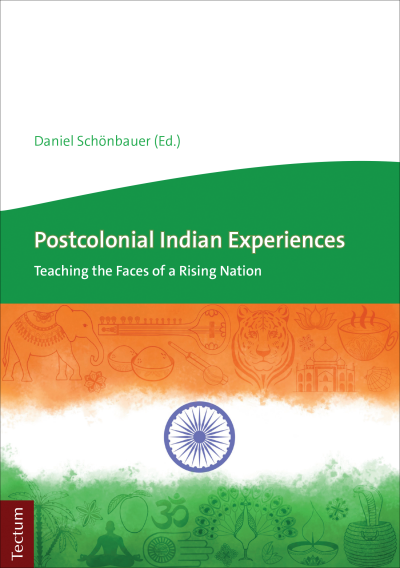
Postcolonial Indian Experiences
Teaching the Faces of a Rising Nation- Herausgeber:innen:
- Verlag:
- 2020
Publikation durchsuchen
Bibliographische Angaben
- Auflage
- 1/2020
- Copyrightjahr
- 2020
- ISBN-Print
- 978-3-8288-4293-9
- ISBN-Online
- 978-3-8288-7205-9
- Verlag
- Tectum, Baden-Baden
- Sprache
- Englisch
- Seiten
- 256
- Produkttyp
- Sammelband
Inhaltsverzeichnis
KapitelSeiten
- Titelei/Inhaltsverzeichnis Kein Zugriff Seiten 1 - 9
- Autor:innen: |
- Introduction: Postcolonial Indian Experiences – Teaching ‘the faces’ of a Rising Nation Kein ZugriffAutor:innen: |
- From Empire to Globalisation: Historical Perspectives Kein ZugriffAutor:innen: |
- Inside Perspectives: Cultural ‘Faces’ of Present-Day India Kein ZugriffAutor:innen: |
- India as a Global Community: Diasporic Experiences Kein ZugriffAutor:innen: |
- Last but not least…. Kein ZugriffAutor:innen: |
- Works cited Kein ZugriffAutor:innen: |
- Autor:innen:
- 1.1 Prompt, Headline: 1857 National Revolt Kein ZugriffAutor:innen:
- 1.2 Reading, The Kashmir Dispute Kein ZugriffAutor:innen:
- Autor:innen:
- 2.1 Reading & Discussion of Saddat Manto’s Story “Toba Tek Singh” (1955) Kein ZugriffAutor:innen:
- 2.2 Discussion of Images 1 and 2: Sadhus and Capitalism Kein ZugriffAutor:innen:
- 2.3 Discussion of Image 3: A Tale of Sarees and Bikinis Kein ZugriffAutor:innen:
- Autor:innen:
- 3.1 Reading and Discussion of Mahasweta Devi’s “Douloti the Bountiful” (1993) Kein ZugriffAutor:innen:
- 3.2 Movie Clip: Discussion of Scenes from Rajkumar Hirani’s PK (2014) Kein ZugriffAutor:innen:
- 4 External/Diasporic Difference Kein ZugriffAutor:innen:
- Bibliography Kein ZugriffAutor:innen:
- 1 Introduction Kein Zugriff
- 2.1 ‘Colonial Discourse’ Kein Zugriff
- 2.1 ‘Orientalism’ and ‘Othering’ Kein Zugriff
- 3 Analysis from the Point of View of Teaching as a Foreign Language Kein Zugriff
- 4 Teaching Activities Kein Zugriff
- 5 Conclusion Kein Zugriff
- Bibliography Kein Zugriff
- 1 Introduction Kein Zugriff
- 2.1 Abrogation Kein Zugriff
- 2.2 Displacement Kein Zugriff
- 2.3 Othering Kein Zugriff
- 3.1 Chances Kein Zugriff
- 3.2 Challenges Kein Zugriff
- 4.1 Pre-Reading Activities Kein Zugriff
- 4.2 While-Reading Activities Kein Zugriff
- 4.3 Post-Reading Activities Kein Zugriff
- 4.4 Summary Teaching Activities Kein Zugriff
- 5 Conclusion Kein Zugriff
- Bibliography Kein Zugriff
- 1. Introduction Kein Zugriff
- 2.1 ‘Hybridity’ Kein Zugriff
- 2.2 Double Colonization Kein Zugriff
- 3.1 Chances Kein Zugriff
- 3.2 Challenges Kein Zugriff
- 3.3 Suitability Kein Zugriff
- 4 Teaching Activities Kein Zugriff
- 5 Conclusion Kein Zugriff
- Bibliography Kein Zugriff
- 1 Introduction Kein Zugriff
- 2 Postcolonial Key Concepts in India Becoming Kein Zugriff
- 3 Analysis from the point of view of Teaching English as a Foreign Language Kein Zugriff
- 4 Teaching Activities Kein Zugriff
- 5 Conclusion Kein Zugriff
- Bibliography Kein Zugriff
- 1 Introduction Kein Zugriff
- 2.1 English Vinglish Kein Zugriff
- 2.2.1 Abrogation and Appropriation Kein Zugriff
- 2.2.2 Hybridity Kein Zugriff
- 2.2.3 Othering Kein Zugriff
- 3.1 Chances Kein Zugriff
- 3.2 Challenges Kein Zugriff
- 4.1 Pre-Viewing-Activities Kein Zugriff
- 4.2 While-Viewing-Activities Kein Zugriff
- 4.3 Post-Viewing-Activities Kein Zugriff
- 5 Conclusion Kein Zugriff
- Bibliography Kein Zugriff
- 1 Introduction Kein Zugriff
- 2.1 Othering and Marginality Kein Zugriff
- 2.2 Gender issues and the Subaltern Kein Zugriff
- 3 Analysis from the Point of View of Teaching English as a Foreign Language Kein Zugriff
- 4 Teaching Activities Kein Zugriff
- 5 Conclusion Kein Zugriff
- Bibliography Kein Zugriff
- 1 Introduction Kein Zugriff
- 2.1 Othering Kein Zugriff
- 2.2 Appropriation Kein Zugriff
- 2.3 Contact Zone Kein Zugriff
- 3.1 Chances Kein Zugriff
- 3.2 Challenges Kein Zugriff
- 3.3 Is “Outsider” suitable for the EFL classroom? An Appraisal. Kein Zugriff
- 4.1 Pre-Reading-Activity Kein Zugriff
- 4.2 While-Reading-Activity Kein Zugriff
- 4.3 Post-Reading-Activity Kein Zugriff
- 5 Conclusion Kein Zugriff
- Bibliography Kein Zugriff
- 1 Introduction Kein Zugriff
- 2.1 ‘Diaspora‘ Kein Zugriff
- 2.2 'Homeland’ and ‘exile’ Kein Zugriff
- 2.3 ‘Othering’ and ‘(Non-)Assimilation’ Kein Zugriff
- 3.1 Chances Kein Zugriff
- 3.2 Challenges Kein Zugriff
- 4 Teaching Activities Kein Zugriff
- 5 Conclusion Kein Zugriff
- Bibliography Kein Zugriff
- 1 Introduction Kein Zugriff
- 2.1 Displacement Kein Zugriff
- 2.2 Diaspora Kein Zugriff
- 2.3 Hybridity Kein Zugriff
- 2.4 Othering Kein Zugriff
- 3.1 Chances Kein Zugriff
- 3.2 Challenges Kein Zugriff
- 4.1 Pre-Reading-Activity Kein Zugriff
- 4.2 While-Reading-Activity Kein Zugriff
- 4.3 Post-Reading-Activity Kein Zugriff
- 5 Conclusion Kein Zugriff
- Bibliography Kein Zugriff
- 1 Introduction Kein Zugriff
- 2.1 ‘Diaspora’ Kein Zugriff
- 2.2 ‘Other’ & ‘Othering’ Kein Zugriff
- 2.3 ‘Hybridity’ & ‘Liminality’ Kein Zugriff
- 3 Analysis from the Point of View of Teaching English as a Foreign Language Kein Zugriff
- 4.1 Pre-reading Activity Kein Zugriff
- 4.2 While-reading Activity Kein Zugriff
- 4.3 Post-reading Activity Kein Zugriff
- 5 Conclusion Kein Zugriff
- Bibliography Kein Zugriff
- 1 Introduction Kein Zugriff
- 2.1 Marginality Kein Zugriff
- 2.2 Feminism Kein Zugriff
- 2.3 Binarism Kein Zugriff
- 3.1 Chances Kein Zugriff
- 3.2 Challenges Kein Zugriff
- 3.3 An Appraisal Kein Zugriff
- 4.1 Pre-Reading Activity Kein Zugriff
- 4.2 While-Reading Activity Kein Zugriff
- 4.3 Post-Reading Activity Kein Zugriff
- 5 Conclusion Kein Zugriff
- Bibliography Kein Zugriff
- 1 Introduction Kein Zugriff
- 2.1 Diaspora Kein Zugriff
- 2.2 Liminality Kein Zugriff
- 3.1 Chances Kein Zugriff
- 3.2 Challenges Kein Zugriff
- 4.1 Pre-Reading-Activity Kein Zugriff
- 4.2 While-Reading-Activity Kein Zugriff
- 4.3 Post-Reading-Activity Kein Zugriff
- 5 Conclusion Kein Zugriff
- Bibliography Kein Zugriff
Literaturverzeichnis (348 Einträge)
Es wurden keine Treffer gefunden. Versuchen Sie einen anderen Begriff.
- Daniel Schönbauer. Introduction: Postcolonial Indian Experiences – Teaching 'the faces' of a rising nation Google Scholar öffnen DOI: 10.5771/9783828872059
- Alam, F. (2013). The Mythos of Return and Recent Indian English Diasporic Fiction. In Krishna Sen & Rituparna Roy (Eds.), Writing India Anew. Indian English Fiction 2000-2010 (pp. 247-257). Amsterdam: Amsterdam University Press. Google Scholar öffnen DOI: 10.5771/9783828872059
- Ashcroft, B. & Griffiths, G. & Tiffin, H. (1989). The Empire Writes Back: Theory and Practice in Post-colonial Literatures. London and New York: Routledge. Google Scholar öffnen DOI: 10.5771/9783828872059
- Dengel-Janic, E. (2007). South Asia. In Lars Eckstein (Ed.), English Literatures Across the Globe (pp. 133- 157). Paderborn: UTB. Google Scholar öffnen DOI: 10.5771/9783828872059
- Freitag, B. & Gymnich, M. (2005). New English and Postcolonial Literatures im Fremdsprachenunterricht. In Wolfgang Hallet & Ansgar Nünning (Eds.), Neue Ansätze und Konzepte der Literatur- und Kulturdidaktik (pp. 259-276). Trier: WVT. Google Scholar öffnen DOI: 10.5771/9783828872059
- Krämer, L. (2008). Bollywood in the Classroom. Opportunities and Problems of Teaching Popular Indian Cinema. In Oliver Lindner (Ed.), Teaching India (pp. 107-123). Heidelberg: Winter. Google Scholar öffnen DOI: 10.5771/9783828872059
- Lindner, O. (2010). India: The Jewel in the Classroom. In: Maria Eisenmann, Nancy Grimm & Laurenz Volkmann (Eds.), Teaching the New English Cultures & Literatures (pp. 59-72). Heidelberg: Winter. Google Scholar öffnen DOI: 10.5771/9783828872059
- Mukherjee, J. (2006). Unity in Diversity: the Indian Kaleidoscope in the EFL Classroom. In Werner Delanoy & Laurenz Volkmann (Eds.), Cultural Studies in the EFL Classroom (pp. 143-151). Heidelberg: Winter. Google Scholar öffnen DOI: 10.5771/9783828872059
- Neumann, B. (2009). Fictions of Memory im Fremdsprachenunterricht: Literatur- und Kulturdidaktische Perspektiven auf Literarische Inszenierungen von Erinnerung und Identität. In Wolfgang Hallet & Ansgar Nünning (Eds.), Romandidaktik. Theoretische Grundlagen, Methoden, Lektüreanregungen (pp. 353-370). Trier: WVT. Google Scholar öffnen DOI: 10.5771/9783828872059
- Volkmann, L. (2008). Interpreter of Maladies / Interpreter of Cultures. Inter- and Transcultural Aspects of Jhumpa Lahiri’s Short Stories. In Oliver Lindner (Ed.), Teaching India (pp. 17-34). Heidelberg: Winter. Google Scholar öffnen DOI: 10.5771/9783828872059
- Wandel, R. (2006). Still some way to go…Indian English Narratives in the German EFL-Classroom. In Bern-Peter Lange & Mara Pandurang (Eds.), Mediating Indian Writing in English. German Responses (pp. 86-109). Jaipur: Rawat. Google Scholar öffnen DOI: 10.5771/9783828872059
- Wandel, R. (2013). Teaching India in the German EFL Classroom – Issues and Problems. In Jana Gohrisch & Ellen Grünkemeier (Eds.), Cross/Cultures: Readings in Post-Colonial Literatures and Cultures in English (pp. 387-398). Amsterdam: Rodopi. Google Scholar öffnen DOI: 10.5771/9783828872059
- Wandel, R. & Bartels, A. & Sutter, M. (2007). Women and Postcolonial Literature in the EFL Classroom. In Helene Decke-Cornill & Laurenz Volkmann (Eds.), Gender Studies and Foreign Language Teaching (pp. 209-226). Tübingen: Narr. Google Scholar öffnen DOI: 10.5771/9783828872059
- Dr. Pavan Malreddy. The Idea of India – Pedagogical Perspectives Google Scholar öffnen DOI: 10.5771/9783828872059
- Bhabha, H.K. (ed.). 1990. Nation and Narration. London and New York: Routledge. Google Scholar öffnen DOI: 10.5771/9783828872059
- Bhabha, H.K. (2004). [1994]. The Location of Culture. London and New York: Routledge. Google Scholar öffnen DOI: 10.5771/9783828872059
- Chatterjee, P. (1993). [1986]. Nationalist Thought and the Colonial World: A Derivative Discourse. Minneapolis, MN: University of Minnesota Press. Google Scholar öffnen DOI: 10.5771/9783828872059
- Chunha, R.d. (2014). We have Lost all Sense of Humor? Midday Online, 24 August. https://www.mid-day.com/articles/have-we-lost-our-sense-of-humour/15552157 Google Scholar öffnen DOI: 10.5771/9783828872059
- Collu, G. (1999). Adivasis and the Myth of Independence: Mahasweta Devi's Douloti the Bountiful. ARIEL: A Review of International English Literature 30 (1), 43-57. Google Scholar öffnen DOI: 10.5771/9783828872059
- Drew, J. (1999). Cultural Composition: Stuart Hall on Ethnicity and the Discursive Turn. Race, Rhetoric, and the Postcolonial edited by Gary A. Olson and Lynn Worsham (pp. 205–39). Albany, NY: The State University of New York Press. Google Scholar öffnen DOI: 10.5771/9783828872059
- Dumont, L. (1970). Homo Hierarchicus: The Caste System and its Implications. London: Weidenfeld and Nicolson. Google Scholar öffnen DOI: 10.5771/9783828872059
- Devi, M. (1993). Douloti the Bountiful. In Imaginary Maps, edited and translated by Gayatri Chakraborty Spivak (pp. 19-94). Calcutta: Thema. Google Scholar öffnen DOI: 10.5771/9783828872059
- Ghosh, A. (2010). The Shadow Lines. Delhi: Penguin. Google Scholar öffnen DOI: 10.5771/9783828872059
- Goodness Gracious Me. 1988. “Guru Mararishi Yogi”. BBC 2. Google Scholar öffnen DOI: 10.5771/9783828872059
- Guha, R. (1983). Elementary Aspects of Peasant Insurgency in Colonial India. Delhi: Oxford University Press. Google Scholar öffnen DOI: 10.5771/9783828872059
- Hirsch, M., & Miller, N.K. (eds.). (2011). Rites of Return: Diaspora Poetics and the Politics of Memory. Columbia University Press. Google Scholar öffnen DOI: 10.5771/9783828872059
- History for Space. (2019). Romila Thapar and Gayatri Chakravorty Spivak in Conversation. April 15, 2019, http://www.historyforpeace.pw/news/2744/. Google Scholar öffnen DOI: 10.5771/9783828872059
- Jonas, M. (1988). An Interview with Nuruddin Farah. Journal of Refugee Studies 1 (1), 74-77. Google Scholar öffnen DOI: 10.5771/9783828872059
- Manto, S. H. (1955). n.d. Toba Tek Singh. Translated by Frances Pritchett. Available at: http://www.columbia.edu/itc/mealac/pritchett/00urdu/tobateksingh/translation.html Google Scholar öffnen DOI: 10.5771/9783828872059
- Omvedt, G. (Ed.) (1982). Land, Caste, and Politics in Indian States. Delhi: Authors Guild Publications. Google Scholar öffnen DOI: 10.5771/9783828872059
- Peters, R. (2006). Terrorists vs Indias. Warner Bros. Records. Available at https://www.youtube.com/watch?v=uTXemscTJWM. Google Scholar öffnen DOI: 10.5771/9783828872059
- PK. Dir. Rajkumar Hirani. Mumbai, 2014. Film. Google Scholar öffnen DOI: 10.5771/9783828872059
- Said, E.W. (1993). Intellectual exile: Expatriates and marginals. Grand Street 47, 112-124. Google Scholar öffnen DOI: 10.5771/9783828872059
- Srinivas, M.N. (1987). The Dominant Caste and Other Essays. New York: Oxford University Press. Google Scholar öffnen DOI: 10.5771/9783828872059
- Srinivas, M.N. (1984). Some Reflections on the Nature of Caste Hierarchy. Contributions to Indian Sociology 18 (2), 151-167. Google Scholar öffnen DOI: 10.5771/9783828872059
- The Telegraph. (2001). “A Brief History of Kashmir Conflict”. 24 September. Available at https://www.telegraph.co.uk/news/1399992/A-brief-history-of-the-Kashmir-conflict.html Google Scholar öffnen DOI: 10.5771/9783828872059
- Tagore, R. (1994). The English Writings of Rabindranath Tagore: A Miscellany (edited by Sisir Kumar Das). New Delhi. Sahitya Academy Press. Google Scholar öffnen DOI: 10.5771/9783828872059
- Talbot, C. (1995). Inscribing the Other, Inscribing the Self: Hindu-Muslim Identities in pre-colonial India. Comparative Studies in Society and History 37 (4), 692-722. Google Scholar öffnen DOI: 10.5771/9783828872059
- Wikimedia. “Indian States during the Revolt of 1857”. Available at https://commons.wikimedia.org/wiki/File:Indian_revolt_of_1857_states_map.svg Google Scholar öffnen DOI: 10.5771/9783828872059
- Natascha Münnich. An Invitation to Colonial India – Alice Perrin’s “The Rise of Ram Din" Google Scholar öffnen DOI: 10.5771/9783828872059
- Ashcroft, B., Griffiths, G., & Tiffin, H. (2013). Postcolonial studies: The key concepts (3rd ed.). Routledge Key Guides. New York: Routledge. Google Scholar öffnen DOI: 10.5771/9783828872059
- Bhabha, H. K. (1994). The Location of Culture. New York: Routledge. Google Scholar öffnen DOI: 10.5771/9783828872059
- Bielicki, J. (2018). Drei Jahre „Wir schaffen das“ – eine Bestandsaufnahme. Retrieved from https://www.sueddeutsche.de/politik/fluechtlinge-in-deutschland- drei-jahre-wir-schaffen-das-eine-bestandsaufnahme-1.4110671 (accessed: 29.12.2018). Google Scholar öffnen DOI: 10.5771/9783828872059
- British Library. (n.d.). English in India. Retrieved from https://www.bl.uk/learning/langlit/sounds/case-studies/minority-ethnic/asian/ (accessed: 06.01.2019). Google Scholar öffnen DOI: 10.5771/9783828872059
- Chandler, D., & Munday, R. (2016). Postcolonialism. In D. Chandler & R. Munday (Eds.), A Dictionary of Media and Communication (2nd ed.). Oxford: Oxford University Press. Retrieved from http://www.oxfordreference.com/view/10.1093/acref/9780191800986.001.0001/acref-9780191800986-e-2089?rskey=sBD5li&result=1 (accessed: 06.01.2019). Google Scholar öffnen DOI: 10.5771/9783828872059
- Hansen, A. J. (2018). Short story. In Encyclopædia Britannica. Retrieved from https://academic.eb.com/levels/collegiate/article/short-story/110454.7 (accessed: 06.01.2019). Google Scholar öffnen DOI: 10.5771/9783828872059
- Innes, C. L. (2007). Postcolonial Literatures in English. Cambridge: Cambridge University Press. Google Scholar öffnen DOI: 10.5771/9783828872059
- Kazaki, V., & Wagner, S. (2011). Indien: Land der Gegensätze zwischen Tradition und Moderne. Praxis Englisch: India – between tradition and modernity, 5 (1), 6-7. Google Scholar öffnen DOI: 10.5771/9783828872059
- Kazim, H. (2018). Rassismus in Deutschland. Hört uns endlich zu. Retrieved from http://www.spiegel.de/kultur/gesellschaft/rassismus-in-deutschland-wir-wollen-nicht-schweigen-a-1220836.html (accessed: 30.12.2018). Google Scholar öffnen DOI: 10.5771/9783828872059
- Lethbridge, L. (2013). Servants: A Downstairs History of Britain from the Nineteenth Century to Modern Times. New York: W. W. Norton & Company. Google Scholar öffnen DOI: 10.5771/9783828872059
- Linder, O. (2008). Introduction. In O. Lindner (Ed.), Teaching India (pp. 7-16). Heidelberg: Universitätsverlag Winter. Google Scholar öffnen DOI: 10.5771/9783828872059
- Macfie, A. L. (Ed.). (2000). Introduction – Orientalism in Crisis. In A. Lyon Macfie (Ed.), Orientalism: A reader (pp. 3-24). New York: New York University Press. Google Scholar öffnen DOI: 10.5771/9783828872059
- Müller-Hartmann, A., & Schocker-von Ditfurth, M. (2014). Introduction to English Language Teaching. Stuttgart: Klett Lerntraining. Google Scholar öffnen DOI: 10.5771/9783828872059
- Nu¨nning, A., & Surkamp, C. (2016). Englische Literatur unterrichten. Seelze-Velber: Klett/Kallmeyer. Google Scholar öffnen DOI: 10.5771/9783828872059
- Nünning, A. (1999). “But man […] is a story-telling animal”. Perspektivenwechsel und Perspektivenvielfalt bei der Behandlung von Short Stories. Der fremdsprachliche Unterricht Englisch, 33 (39), 4-12. Google Scholar öffnen DOI: 10.5771/9783828872059
- Occident. (n.d.). In Cambridge Dictionary. Retrieved from https://dictionary.cambridge.org/dictionary/english/occident?q=occident (accessed: 06.01.2019) Google Scholar öffnen DOI: 10.5771/9783828872059
- Perrin, A. (1906). The Rise of Ram Din. In E. Boehmer (Ed.). Empire Writing. An Anthology of Colonial Literature 1870 – 1918 (pp. 329-335). (1998). Oxford & New York: Oxford University Press. Google Scholar öffnen DOI: 10.5771/9783828872059
- Porter, D. (1983). Orientalism and its Problems. In P. Williams & L. Chrisman (Eds.), Colonial Discourse and postcolonial theory: a reader (pp. 150-161). (1994). New York: Columbia University Press. Google Scholar öffnen DOI: 10.5771/9783828872059
- Said, E. W. (2003). Orientalism. London: Penguin Books. Google Scholar öffnen DOI: 10.5771/9783828872059
- Surkamp, C. (2012). Literarische Texte im kompetenzorientierten Fremdsprachenunterricht. In W. Hallet & U. Krämer (Eds.), Kompetenzaufgaben im Englischunterricht: Grundlagen und Unterrichtsbeispiele (pp.77-90). Seelze: Kallmeyer/Klett. Google Scholar öffnen DOI: 10.5771/9783828872059
- Victorian Secrets. (n.d.). Alice Perrin (1867-1934). Retrieved from https://www.victoriansecrets.co.uk/authors/alice-perrin-1867-1934/ (accessed: 06.01.2019). Google Scholar öffnen DOI: 10.5771/9783828872059
- Volkmann, L. (2010). Fachdidaktik Englisch: Kultur und Sprache. Tübingen: Narr Francke Attempto Verlag GmbH + Co. KG. Google Scholar öffnen DOI: 10.5771/9783828872059
- Vygostky, L. S. (1978). Mind in society. Cambridge, MA: MIT Press. Google Scholar öffnen DOI: 10.5771/9783828872059
- Wandel, R. (2001). Vom 'Raj' zum 'Roy' - Indien im Englischunterricht. Der fremdsprachliche Unterricht Englisch, 35 (50), 4-7. Google Scholar öffnen DOI: 10.5771/9783828872059
- ---. (2013). Teaching India in the German EFL Classroom – Issues and Problems. In J. Gorisch & E. Grünkemeier (Eds.), Postcolonial Studies Across the Disciplines (pp. 387-398). Leiden: Rodopi. Google Scholar öffnen DOI: 10.5771/9783828872059
- Williams, P., & Chrisman, L. (1994). Colonial Discourse and post-colonial theory: A reader. Cambridge: University Press. Google Scholar öffnen DOI: 10.5771/9783828872059
- Wilson, K. (1999). Note-taking in the academic writing process of non-native speaker students: Is it important as a process or a product? Journal of College Reading and Learning, 29 (2), 166-179. Google Scholar öffnen DOI: 10.5771/9783828872059
- Wisker, G. (2007). Key concepts in postcolonial literature. Basingstoke: Palgrave Macmillan. Google Scholar öffnen DOI: 10.5771/9783828872059
- Yang, L., & Wilson, K. (2006). Second Language Classroom Reading: A Social Constructivist Approach. The Reading Matrix, 6 (3), 364-372. Google Scholar öffnen DOI: 10.5771/9783828872059
- Michelle Skruth. Teaching Stories of Partition – Saadat Hasan Manto's "The Return" Google Scholar öffnen DOI: 10.5771/9783828872059
- Adam, M. M. A. (2013). Enhancing EFL Learners’ Competence through Short Stories: A Study in Four Colleges. Advances in Language and Literary Studies, 4 (1), 154-160. Google Scholar öffnen DOI: 10.5771/9783828872059
- Alter, S. (1994). Madness and Partition: The Short Stories of Saadat Hasan Manto. Alif: Journal of Comparative Poetics, 14, 91-100. Google Scholar öffnen DOI: 10.5771/9783828872059
- Ashcroft, B., Griffiths, G., & Tiffin, H. (2000). Post-Colonial Studies. The Key Concepts. Oxford: Routledge. Google Scholar öffnen DOI: 10.5771/9783828872059
- Bredella, L. (2012). Narratives und interkulturelles Verstehen: Zur Entwicklung von Empathie-, Urteils- und Kooperationsfähigkeit. Tübingen: Narr Francke Attempto Verlag GmbH + Co. KG. Google Scholar öffnen DOI: 10.5771/9783828872059
- Dengel-Janic, E. (2007). South Asia. In L. Eckstein (Ed.), English Literatures Across the Globe. A Companion (pp. 133-15). Paderborn: Wilhelm Fink Verlag & Co. KG. Google Scholar öffnen DOI: 10.5771/9783828872059
- Eisenmann, M. (2015). Crossovers – Postcolonial Literature and Transcultural Learning. In W. Delanoy, M. Eisenmann & F. Matz (Eds.), Learning with Literature in the EFL Classroom (pp. 217-236). Frankfurt: Peter Lang Verlag. Google Scholar öffnen DOI: 10.5771/9783828872059
- Freitag, B., & Gymnich, M. (2007). New English and Postcolonial Literatures im Fremdsprachenunterricht. In W. Hallet & A. Nünning (Eds.), Neue Ansätze und Konzepte der Literatur- und Kulturdidaktik (pp. 259-276). Trier: Wissenschaftlicher Verlag. Google Scholar öffnen DOI: 10.5771/9783828872059
- Gómez, L. F. (2012). Fostering Intercultural Communicative Competence Through Reading Authentic Literary Texts in an Advanced Colombian EFL Classroom: A Constructivist Perspective. Profile Issues in Teachers’ Professional Development, 14 (1), 49-66. Google Scholar öffnen DOI: 10.5771/9783828872059
- Grimm, N., Meyer, M., & Volkmann, L. (2015). Teaching English. Tübingen: Narr Francke Attempto Verlag GmbH + Co. KG. Google Scholar öffnen DOI: 10.5771/9783828872059
- Haß, F. (2017). Fachdidaktik Englisch. Stuttgart: Ernst Klett Sprachen GmbH. Google Scholar öffnen DOI: 10.5771/9783828872059
- Kabir, A. J. (2005). Gender, Memory, Trauma: Women’s Novels on the Partition of India. Comparative Studies of South Asia, Africa and the Middle East, 25 (1), 177-190. Google Scholar öffnen DOI: 10.5771/9783828872059
- Lindner, O. (2010). India: The Jewel in the Classroom. In M. Eisenmann, N. Grimm & L. Volkmann (Eds.), Teaching the New English Cultures & Literatures (pp. 59-72). Heidelberg: Universitätsverlag Winter GmbH. Google Scholar öffnen DOI: 10.5771/9783828872059
- Mann, H. S. (1998). Woman in Decolonization: The National and Textual Politics of Rape in Saadat Hasan Manto and Mahasweta Devi. The Journal of Commonwealth Literature, 33 (2), 127-141. Google Scholar öffnen DOI: 10.5771/9783828872059
- Manto, S. H. (1997). The Return. In S. H. Manto (Ed.), Mottled Dawn. Fifty Sketches and Stories of Partition. New Delhi: Penguin Books. Google Scholar öffnen DOI: 10.5771/9783828872059
- Narasimhan-Madhavan, D. (2006). Gender, Sexuality and Violence: Permissible Violence Against Women During The Partition Of India And Pakistan. Hawwa, 4 (2-3), 396-416. Google Scholar öffnen DOI: 10.5771/9783828872059
- Nünning, A., & Surkamp, C. (2006). Englische Literatur unterrichten. Grundlage und Methoden. Seelze-Velber: Kallmeyer/ Klett Erhard Friedrich Verlag GmbH. Google Scholar öffnen DOI: 10.5771/9783828872059
- Saint, T. K. (2012). The Long Shadow of Manto’s Partition Narratives: “Fictive” Testimony to Historical Trauma. Social Scientist, 40 (11-12), 53-62. Google Scholar öffnen DOI: 10.5771/9783828872059
- Surkamp, C. (2012). Literarische Texte im kompetenzorientierten Fremdsprachenunterricht. In W. Hallet & U. Krämer (Eds.), Kompetenzaufgaben im Englischunterricht. Grundlage und Unterrichtsbeispiele (pp. 77-90). Seelze-Velber: Kallmeyer/ Klett Erhard Friedrich Verlag GmbH. Google Scholar öffnen DOI: 10.5771/9783828872059
- Thaler, E. (2008). Teaching English Literature (2nd ed.). Paderborn: Ferdinand Schöningh GmbH & Co. KG. Google Scholar öffnen DOI: 10.5771/9783828872059
- ---. (2014). Englisch unterrichten: Grundlagen – Kompetenzen - Methoden. Berlin: Cornelsen Schulverlage GmbH. Google Scholar öffnen DOI: 10.5771/9783828872059
- Volkmann, L. (2010). Fachdidaktik Englisch: Kultur und Sprache. Tübingen: Narr Francke Attempto Verlag GmbH + Co. KG. Google Scholar öffnen DOI: 10.5771/9783828872059
- ---. (2013). Intercultural Learning and Postcolonial Studies: “Never the Twain Shall Meet”?. In M. Eisenmann & T. Summer (Eds.), Basic Issues in EFL Teaching and Learning (2nd ed.) (pp. 169-180). Heidelberg: Universitätsverlag Winter GmbH. Google Scholar öffnen DOI: 10.5771/9783828872059
- Wandel, R. (2013). Teaching India in the German EFL Classroom – Issues and Problems. In J. Gohrisch & E. Grünkemeier (Eds.), Postcolonial Studies Across the Disciplines (pp. 387-398). Amsterdam: Rodopi Verlag. Google Scholar öffnen DOI: 10.5771/9783828872059
- Yusin, J. (2011). Beyond nationalism: The border, trauma and Partition fiction. SAGE Publications, Thesis Eleven, 105 (1), 23-34. Google Scholar öffnen DOI: 10.5771/9783828872059
- Kevin Kuypers. Reading and Teaching Post-Independence India in Arundhati Roy's God of Small Things Google Scholar öffnen DOI: 10.5771/9783828872059
- Ashcroft, B., Griffiths, G., & Tiffin H. (2013). Postcolonial Studies The Key Concepts. London & New York: Routledge. Google Scholar öffnen DOI: 10.5771/9783828872059
- Ashcroft, B., Griffiths, G., & Tiffin H. (1989). The Empire Writes Back: Theory and Practice in Post-Colonial Literatures in English. London: Taylor and Francis. Google Scholar öffnen DOI: 10.5771/9783828872059
- Bhabha, H. (1994). The Location of Culture. London: Routledge. Google Scholar öffnen DOI: 10.5771/9783828872059
- Bakhtin M. (1981). The Dialogic Imagination: Four Essays. In M.. Holquist (Ed.), translated by C. Emerson & M. Holquist. Austin (Texas): University of Texas Press. Google Scholar öffnen DOI: 10.5771/9783828872059
- Freitag, B., & Gymnich, M. (2007). New English and Postcolonial Literatures im Fremdsprachenunterricht. In W. Hallet & A. Nünning (Eds.), Neue Ansätze und Konzepte der Literatur- und Kulturdidaktik (WVT Handbücher zur Literatur- und Kulturdidaktik) (pp. 259-276). Trier: WVT. Google Scholar öffnen DOI: 10.5771/9783828872059
- Macauly, T. B. (1835). Minute dated 2nd February 1835. In H. Woodrow (Ed.). (1862). Macaulay’s Minutes on Education in India. Calcutta: The Baptist Mission Press. Google Scholar öffnen DOI: 10.5771/9783828872059
- English Oxford Living Dictionaries. (2018). Web. https://en.oxforddictionaries.com/definition/hybrid. Oxford University Press. (Last accessed: 29.05.2018). Google Scholar öffnen DOI: 10.5771/9783828872059
- Roy, A. (2009). The God of Small Things. London: Fourth Estate. Google Scholar öffnen DOI: 10.5771/9783828872059
- Tickell, A. (2007). Arundhati Roy’s The God of Small Things. Abingdon: Tylor & Francis. Google Scholar öffnen DOI: 10.5771/9783828872059
- Truax, A. (1997). A Silver Thimble in Her Fist. New York Times. Web. https://archive.nytimes.com/www.nytimes.com/books/97/05/25/reviews/970525.25truaxt.html (Last accessed: 29.05.2018). Google Scholar öffnen DOI: 10.5771/9783828872059
- Volkmann, L. 2015: Opportunities and Challenges for Transcultural Learning and Global Education via Literature. In W. Delanoy, M. Eisenmann & F. Matz (Eds.), Learning with Literature in the EFL Classroom (pp. 237 – 262). Frankfurt am Main: Internationaler Verlag der Wissenschaften. Google Scholar öffnen DOI: 10.5771/9783828872059
- Wandel, R. (2013). Teaching India in the German EFL Flassroom – Issues and Problems. In J. Gohrisch & E. Grünkemeier (Eds.), Postcolonial Studies across the Disciplines (pp. 387 – 398). Leiden: Bill Rodopi. Google Scholar öffnen DOI: 10.5771/9783828872059
- Wolfreys, J., Robbins, R., & Womack, K. (2002). The Key Concepts in Literary Theory. Edinburgh: Edinburgh University Press. Google Scholar öffnen DOI: 10.5771/9783828872059
- Marc Nöthen. India as a Global Player: Akash Kapur's India Becoming in the EFL Classroom Google Scholar öffnen DOI: 10.5771/9783828872059
- Achebe, C. (1990). Hopes and Impediments. Selected Essays. New York: Anchor. Google Scholar öffnen DOI: 10.5771/9783828872059
- Ashcroft, B. (2013). Re-writing India. In K. Sen & R. Roy (Eds.), Writing India Anew. Indian English Fiction 2000 – 2010 (pp. 29–46), Amsterdam: Amsterdam University Press. Google Scholar öffnen DOI: 10.5771/9783828872059
- Ashcroft, B. et al. (2013). Postcolonial Studies. The Key Concepts (3rd ed.). London/New York: Routledge. Google Scholar öffnen DOI: 10.5771/9783828872059
- Ashcroft, B. et al. (2005). The Empire Writes Back. Theory and Practice in Post-Colonial Literatures in English (2nd ed.). London: Taylor & Francis. Google Scholar öffnen DOI: 10.5771/9783828872059
- Bhabha, H. K. (2002). Dissemi Nation: time, narrative, and the margins of the modern nation. In H. K. Bhabha (Ed.), Nation and Narration (pp. 291–320), London/New York: Routledge. Google Scholar öffnen DOI: 10.5771/9783828872059
- Delanoy, W. (2013). From ‘inter’ to ‘trans’? Or: Quo vadis cultural learning? In M. Eisenmann & T. Summer (Eds.), Basic Issues in EFL Teaching and Learning (2nd adjusted ed.) (pp. 157–165), Heidelberg: Winter. Google Scholar öffnen DOI: 10.5771/9783828872059
- Edwards, J. D. (2008). Postcolonial Literatures. London: Palgrave Macmillan. Google Scholar öffnen DOI: 10.5771/9783828872059
- Gunew, S. (2002). Denaturalizing cultural nationalisms: multicultural readings of ‘Australia’. In H. K. Bhabha (Ed.), Nations and Narration (pp. 99–116), London/New York: Routledge. Google Scholar öffnen DOI: 10.5771/9783828872059
- Kapur, A. (2012a). India Becoming. A Portrait of Life in Modern India. New York: Riverhead Books. Google Scholar öffnen DOI: 10.5771/9783828872059
- Lindner, O. (2010). India. The jewel in the classroom. In M. Eisenmann et al. (Eds.), Teaching the New English Cultures & Literatures (pp. 59–72), Heidelberg: Winter. Google Scholar öffnen DOI: 10.5771/9783828872059
- Nünning, A. (2001). Fremdverstehen durch literarische Texte. Von der Theorie zur Praxis. Der fremdsprachliche Unterricht, 35 (53), 4–9. Google Scholar öffnen DOI: 10.5771/9783828872059
- Smith, S. & Watson, J. (2010). Reading Autobiography. A Guide for Interpreting Life Narratives (2nd ed.). Minneapolis/New York: University of Minnesota Press. Google Scholar öffnen DOI: 10.5771/9783828872059
- Surkamp, C. (2014). Literarische Texte im kompetenzorientierten Fremdsprachenunterricht. In W. Hallet & U. Krämer (Eds.), Kompetenzaufgaben im Englischunterricht. Grundlagen und Unterrichtsbeispiele (2nd adjusted ed.) (pp. 77–90), Seelze: Klett/Kallmeyer. Google Scholar öffnen DOI: 10.5771/9783828872059
- Surkamp, C. & Nünning, A. (2016). Englische Literatur unterrichten. Grundlagen und Methoden (4th adjusted ed.). Seelze: Klett. Google Scholar öffnen DOI: 10.5771/9783828872059
- Teske, D. (2008). Moloch, media city, melting pot and global player. Bombay/Mumbai as topic and theme in integrated subject teaching. In O. Lindner (Ed.), Teaching India (pp. 183–199), Heidelberg: Winter. Google Scholar öffnen DOI: 10.5771/9783828872059
- Volkmann, L. (2015). Opportunities and challenges for transcultural learning and global education via literature. In W. Delanoy et al. (Eds.), Learning with Literature in the EFL-Classroom (pp. 237–259), Frankfurt am Main: Peter Lang. Google Scholar öffnen DOI: 10.5771/9783828872059
- Wandel, R. (2010). Teaching India in the German EFL-Classroom. Issues and problems. In M. Eisenmann et al. (Eds.), Teaching the New English Cultures & Literatures (pp. 387–397), Heidelberg: Winter. Google Scholar öffnen DOI: 10.5771/9783828872059
- West-Pavlov, R. (2005). Transcultural Graffiti. Diasporic Writing and the Teaching of Literary Studies. Amsterdam/New York: Rodopi. Google Scholar öffnen DOI: 10.5771/9783828872059
- Kapur, A. (2012b). How India became America. The New York Times Online. Sunday Review. Opinion, 9th March, retrieved from https://www.nytimes.com/2012/03/11/opinion/sunday/how-india-became-america.html (accessed: 06.09.2018). Google Scholar öffnen DOI: 10.5771/9783828872059
- Ministerium für Schule und Weiterbildung des Landes Nordrhein-Westfalen (2014). Kernlehrplan für die Sekundarstufe II Gymnasium/Gesamtschule in Nordrhein-Westfalen. Retrieved from https://www.schulentwicklung.nrw.de/lehrplaene/upload/klp_SII/e/KLP_GOSt_Englisch.pdf (accessed: 06.09.2018). Google Scholar öffnen DOI: 10.5771/9783828872059
- Rath, S. P. (2000). Home(s) Abroad. Diasporic Identities in Third Space. Jouvert. A Journal of Postcolonial Studies, 4 (3), retrieved from https://legacy.chass.ncsu.edu/jouvert/v4i3/rath1.htm (accessed: 06.09.2018). Google Scholar öffnen DOI: 10.5771/9783828872059
- Silicon India (2012). How India became America. A review of Kapur’s ‘India Becoming’. Silicon India News – US Edition, 19th March, retrieved from https://www.siliconindia.com/news/general/How-India-Became-America-nid-109568-cid-1.html (accessed: 06.09.2018). Google Scholar öffnen DOI: 10.5771/9783828872059
- The New York Times Online (2004). Questions for Thomas L. Friedman. The New York Times Online, 11th June, retrieved from https://www.nytimes.com/2004/06/11/readersopinions/thomas-l-friedman.html (accessed: 06.09.2018). Google Scholar öffnen DOI: 10.5771/9783828872059
- Ved, M. (2015). An American dream in India. New Strait Times (Malaysia) Online, 31st January, retrieved from https://www.lexisnexis.com/hottopics/lnacademic/?verb=sr&csi=151977&sr=HEADLINE(An+American+dream+in+India)%2BAND%2BDATE%2BIS%2B2015 (accessed: 06.09.2018). Google Scholar öffnen DOI: 10.5771/9783828872059
- Ward, G. C. (2012). State of paradox. ‘India Becoming’ by Akash Kapur. The New York Times Online. Sunday Book Review, 25th May, retrieved from https://www.nytimes.com/2012/05/27/books/review/india-becoming-by-akash-kapur.html (accessed: 06.09.2018). Google Scholar öffnen DOI: 10.5771/9783828872059
- Christina Büttgen, Carolin Sampels & Christina Strackbein. Approaching Bollywood: The Movie English Vinglish. Teacher's Guide Google Scholar öffnen DOI: 10.5771/9783828872059
- Ashcroft, B., & Griffiths, G., & Tiffin, H. (1989). The Empire Writes Back. Theory and Practice in Post- Colonial Literatures. London: Routledge. Google Scholar öffnen DOI: 10.5771/9783828872059
- Ashcroft, B., & Griffiths, G., & Tiffin, H. (2000). Postcolonial Studies. The Key Concepts. London: Routledge. Google Scholar öffnen DOI: 10.5771/9783828872059
- Döring, T. (2008). Postcolonial Literatures in English. Stuttgart: Klett. Google Scholar öffnen DOI: 10.5771/9783828872059
- Freitag, B., & Gymnich, M. (2007). New English and Postcolonial Literatures im Fremdsprachenunterricht. In: W. Hallet & A. Nünning (Eds.), Neue Ansätze und Konzepte der Literatur- und Kulturdidaktik (pp. 259-276). Trier: Wissenschaftlicher Verlag. Google Scholar öffnen DOI: 10.5771/9783828872059
- Govindan, P.P., & Dutta, B. (2008). “From Villain to Traditional Housewife!”. The Politics of Globalization and Women’s Sexuality in the “New” Indian Media. In: A.P. Kavoori & A. Punathambekar (Eds.), Global Bollywood (180-202). New York and London: New York University Press. Google Scholar öffnen DOI: 10.5771/9783828872059
- Henseler, R., Möller, S., & Surkamp, C. (2011). Filme im Englischunterricht. Grundlagen, Methoden, Genres. Seelze: Kallmeyer, Klett. Google Scholar öffnen DOI: 10.5771/9783828872059
- India. (n.d.). In: Encyclopaedia Britannica Online. Retrieved from https://www.britannica.com/place/India (last accessed June 3rd 2018). Google Scholar öffnen DOI: 10.5771/9783828872059
- Krämer, L. (2008). Bollywood in the Classroom. Opportunities and Problems of Teaching Popular Indian Cinema. In: O. Lindner, G. Linke, E. Otto, H. Rossow, G. Stratman, & G. Tönnies (Eds.), Anglistik & Englischunterricht. Teaching India (pp. 107-124), Heidelberg: Winter. Google Scholar öffnen DOI: 10.5771/9783828872059
- Lindner, O. (2010). India: The Jewel in the Classroom. In: M. Eisenmann, N. Grimm & L. Volkmann (Eds.), Teaching the New English Culture & Literatures (pp. 59-72). Heidelberg: Winter. Google Scholar öffnen DOI: 10.5771/9783828872059
- Lütge, C. (2012). Mit Filmen Englisch unterrichten. Berlin: Cornelsen. Google Scholar öffnen DOI: 10.5771/9783828872059
- Pillai, D.A. (2012). Bollywood Journal: “English Vinglish” Is a Masterclass. In: The Wall Street Journal (Ed.). Retrieved from https://blogs.wsj.com/indiarealtime/2012/10/08/bollywood-journal-english-vinglish-is-a-masterclass/ (last accessed May 6th 2018) Google Scholar öffnen DOI: 10.5771/9783828872059
- Pritchard, A. (2009). Ways of Learning: Learning theories and learning styles in the classroom (2nd edition). London: Taylor & Francis. Google Scholar öffnen DOI: 10.5771/9783828872059
- Rajadhyaksha, A. (2008). The “Bollywoodization” of the Indian Cinema. Cultural Nationalism in a Global Arena. In: A.P. Kavoori & A. Punathambekar (Eds.), Global Bollywood (pp.17-40). New York and London: New York University Press. Google Scholar öffnen DOI: 10.5771/9783828872059
- Shinde G. (2012). English Vinglish. India. DVD. Google Scholar öffnen DOI: 10.5771/9783828872059
- Surkamp, C., Nünning, A. (2016). Englische Literatur unterrichten. 1. Grundlagen und Methoden (4th edition). Seelze: Friedrich Verlag. Google Scholar öffnen DOI: 10.5771/9783828872059
- Thaler, E. (2014). Teaching English with Movies. Paderborn: Ferdinand Schöningh. Google Scholar öffnen DOI: 10.5771/9783828872059
- Tieber, C. (Ed.) (2009). Fokus Bollywood. Das indische Kino in wissenschaftlichen Diskursen. Wien, Berlin, Münster: LIT Verlag. Google Scholar öffnen DOI: 10.5771/9783828872059
- Vardana, A. (2015). English Vinglish Response. Retrieved from http://bollywood-andbeyond.blogspot.de/2015/05/english-vinglish-response-aishwarya.html (last accessed May 6th 2018). Google Scholar öffnen DOI: 10.5771/9783828872059
- Volkmann, L. (2010). Fachdidaktik Englisch: Kultur und Sprache. Tübingen: Narr. Google Scholar öffnen DOI: 10.5771/9783828872059
- Wandel, R. (2003). Teaching India in the EFL-Classroom: A Cultural or an Intercultural Approach? In: M. Bayram & P. Grundy (Eds.), Context and Culture in Language Teaching and Learning (pp.72-80). Clevedon: Multilingual Matters. Google Scholar öffnen DOI: 10.5771/9783828872059
- Wandel, R. (2013). Teaching India in the German EFL Classroom. Issues and Problems. In: J. Gorisch & E. Grünkemeier (Eds.), Postcolonial Studies Across the Disciplines (pp. 387-398). Leiden: Rodopi. Google Scholar öffnen DOI: 10.5771/9783828872059
- Christina Kattwinkel. Gender and Postcolonial India: An Analysis of Baburao Bagul's "Mother" in the EFL classroom Google Scholar öffnen DOI: 10.5771/9783828872059
- Ashcroft, B., Griffiths, G., & Tiffin, H. (2007). Postcolonial Studies. The Key Concepts. London: Routledge. Google Scholar öffnen DOI: 10.5771/9783828872059
- Bagul, B. (1992). Mother. In A. Dangle (Ed.), Poisoned Bread: Translation from Modern Marathi Dalit Literature (pp. 183-190). Bombay: Orient Longman. Google Scholar öffnen DOI: 10.5771/9783828872059
- Delanoy, W. (2012). From 'Inter' to 'Trans'? Or: Quo Vadis Cultural Learning? In M. Eisenmann & T. Summer (Eds.), Basic Issues in EFL Teaching and Learning (pp. 157-167). Heidelberg: Winter. Google Scholar öffnen DOI: 10.5771/9783828872059
- Edwards, J.D. (2008). Postcolonial Literature. Basingstoke: Palgrave Macmillan. Google Scholar öffnen DOI: 10.5771/9783828872059
- Franco, F., Macwan, J., & Ramanathan, S. (2000). The Silken Swing: The Cultural Universe of Dalit Women. Calcutta: Stree Publication. Google Scholar öffnen DOI: 10.5771/9783828872059
- Kramsch, C. (1993). Context and Culture in Language Teaching. Oxford: Oxford University Press. Google Scholar öffnen DOI: 10.5771/9783828872059
- Kohli, S. (2017). Gender inequality in India. IJHSSS, 3 (4), 178-185. Google Scholar öffnen DOI: 10.5771/9783828872059
- Khurana, S.K. (2016). Gender Inequality in India. International Journal of Business Management and Scientific Research, 14, 26-31. Google Scholar öffnen DOI: 10.5771/9783828872059
- Lindner, O. (2008). Introduction. In O. Lindner (Ed.), Teaching India (pp. 7-17). Heidelberg: Winter. Google Scholar öffnen DOI: 10.5771/9783828872059
- Mathew, Pheba (2017). Caste system is alive and well, and this Dalit Woman’s story is a wake up call for all Indians. Retrieved from: https://www.thenewsminute.com/article/caste-system-alive-and-well-and-dalit-womans-story-wake-call-all-indians-58049 (last accessed: 18.4.2018). Google Scholar öffnen DOI: 10.5771/9783828872059
- Mukherjee, J. (2006). Unity in Diversity: The Indian Kaleidoscope in the EFL Classroom. In W. Delanoy & L. Volkmann (Eds.), Cultural Studies in the EFL Classroom (pp. 145-151). Heidelberg: Winter. Google Scholar öffnen DOI: 10.5771/9783828872059
- Nünning, A. (1999). “But man […] is a story-telling animal”. Perspektivenwechsel und Perspektivenvielfalt bei der Behandlung von Short Stories. Der fremdsprachliche Unterricht. Englisch, 33 (39), 4-12. Google Scholar öffnen DOI: 10.5771/9783828872059
- Nünning, A. (2001). Fremdverstehen durch literarische Texte: von der Theorie zur Praxis. Der fremdsprachliche Unterricht. Englisch, 35 (53), 4-9. Google Scholar öffnen DOI: 10.5771/9783828872059
- O’Reilly, A. (2004). Introduction. In A. O’Reilly (Ed.), Mother Outlaws: Theories and Practices of Empowered Mothering (pp. 1-28). Toronto: Women’s Press. Google Scholar öffnen DOI: 10.5771/9783828872059
- Oxforddictionaries.com (2016). Identity – a definition of identity in English from the Oxford dictionary. Retrieved from: https://en.oxforddictionaries.com/definition/identity (last accessed: 17.4.2018). Google Scholar öffnen DOI: 10.5771/9783828872059
- Punjani, V. (2013). The Suffering of a Subaltern Mother: A Comprehensive Study of Baburao Bagul’s Short Story “Mother”. IJES, 8 (2), 30-39. Google Scholar öffnen DOI: 10.5771/9783828872059
- Roy, M. (2010). "Speaking" Subalterns: A Comparative Study of African American and Dalit/Indian Literatures. Graduate Theses and Dissertations. Retrieved from: http://scholarcommons.usf.edu/etd/3441 (last accessed: 13.4.2018). Google Scholar öffnen DOI: 10.5771/9783828872059
- Sawant, D.G. (2011). Perspectives on Post-colonial Theory: Said, Spivak and Bhabha. Retrieved from: https://www.researchgate.net/publication/271633479 (last accessed: 18.4.2018). Google Scholar öffnen DOI: 10.5771/9783828872059
- Shankar, S. (2017). Teaching Mulk Raj Anand’s Untouchable: Colonial Context, Nationalism, Caste. The Cambridge Journal of Postcolonial Literary Inquiry, 4 (2), 332-341. Google Scholar öffnen DOI: 10.5771/9783828872059
- Spivak, G.C. (1988). Can the subaltern speak? In C. Nelson & L. Grossberg (Eds.), Marxism and the Interpretation of Culture (pp. 271-313). Urbana/Chicago: University of Illinois Press. Google Scholar öffnen DOI: 10.5771/9783828872059
- Surkamp, C. (2012). Literarische Texte im kompetenzorientierten Fremdsprachenunterricht. In W. Hallet & U. Krämer (Eds.), Kompetenzaufgaben im Englischunterricht. Grundlagen und Unterrichtsbeispiele (pp. 77-90). Seelze: Kallmeyer/Klett. Google Scholar öffnen DOI: 10.5771/9783828872059
- Surve, N. (1994). Lifetime. In V. Dharwadker (Ed.), The Oxford Anthology of Modern Indian Poetry (p. 159). New Delhi: Oxford University Press. Google Scholar öffnen DOI: 10.5771/9783828872059
- Tharu, S. (1996). The Impossible Subject: Caste and the Gendered Body. Economic and Political Weekly, 31 (22), 1311-1315. Google Scholar öffnen DOI: 10.5771/9783828872059
- Volkmann, L. (2015). Opportunities and Challenges for Transcultural Learning and Global Education via Literature. In W. Delanoy, M. Eisenmann & F. Matz (Eds.), Learning with Literature in the EFL Classroom (pp. 237-251). Frankfurt am Main: Peter Lang. Google Scholar öffnen DOI: 10.5771/9783828872059
- Veethi (2014). Baburao Bagul. Retrieved from https://www.veethi.com/india-people/baburao_bagul-profile-3204-25.htm (last accessed: 17.4.2018). Google Scholar öffnen DOI: 10.5771/9783828872059
- Wandel, R. (2001). Vom ‘Raj’ zu ‘Roy’ – Indien im Englischunterricht. Der fremdsprachliche Unterricht. Englisch, 50, 4-7. Google Scholar öffnen DOI: 10.5771/9783828872059
- Wandel, R. (2013). Teaching India in the German EFL Classroom – Issues and Problems. In J. Gorisch & E. Grünkemeier (Eds.), Postcolonial Studies Across the Disciplines (pp. 387-398), Leiden: Rodopi. Google Scholar öffnen DOI: 10.5771/9783828872059
- Wandel et. al. (2007). Women and Postcolonial Literature in the EFL Classroom. In H. Decke-Cornhill & L.Volkmann (Eds.), Gender Studies and Foreign Language Teaching (pp. 209-226). Tübingen: Gunter Narr Verlag. Google Scholar öffnen DOI: 10.5771/9783828872059
- Julia Falter, Sophie Gnech & Svenja Harzem. (Inter-)cultural Enounters in Meher Pestonji's "Outsider" Google Scholar öffnen DOI: 10.5771/9783828872059
- Antor, H. (2000). Postcolonial Pedagogy, or Why and How to Teach the New English Literatures. In B. Reitz & S. Rieuwerts (Eds.), Anglistentag 1999 Mainz: Proceedings (pp. 245-262). Trier: WVT. Google Scholar öffnen DOI: 10.5771/9783828872059
- Ashcroft B., Griffiths, G., & Tiffin, H. (2010). The Empire Writes Back: Theory and Practice in Post-Colonial Literatures (2nd ed.). London: Routledge. Google Scholar öffnen DOI: 10.5771/9783828872059
- Ashcroft B., Griffiths, G., & Tiffin, H. (2013). Postcolonial Studies: The Key Concepts (3rd ed.). Routledge Key Guides. London: Routledge. Google Scholar öffnen DOI: 10.5771/9783828872059
- Brons, L. (2015). Othering, an Analysis. Transcience 6 (1), 69-90. Google Scholar öffnen DOI: 10.5771/9783828872059
- Datta, A. (2016). The Intimate City: Violence, Gender and Ordinary Life in Delhi Slums. Urban Geography 37, 323-342. Google Scholar öffnen DOI: 10.5771/9783828872059
- Döring, T. (2008). Postcolonial Literatures in English. Stuttgart: Klett. Google Scholar öffnen DOI: 10.5771/9783828872059
- Edelstein, M. (2005). Multiculturalisms Past, Present, and Future. College English 68 (1), 14-41. Google Scholar öffnen DOI: 10.5771/9783828872059
- Eisenmann, M. (2015). Crossovers – Postcolonial Literature and Transcultural Learning. In W. Delanoy, M. Eisenmann & F. Matz (Eds.), Learning with Literature in the EFL Classroom (pp. 217-236). Frankfurt: Peter Lang. Google Scholar öffnen DOI: 10.5771/9783828872059
- Freitag, B., & Gymnich, M. (2007). New English and Postcolonial Literatures im Fremdsprachenunterricht. In W. Hallet & A. Nünning (Eds.), Neue Ansätze und Konzepte der Literatur- und Kulturdidaktik (pp. 259-276). Trier: WVT. Google Scholar öffnen DOI: 10.5771/9783828872059
- Grimm, N., Meyer, M., & Volkmann, L. (2015). Teaching English. Bachelor-Wissen. Tübingen: Narr Francke Attempto. Google Scholar öffnen DOI: 10.5771/9783828872059
- Jackett, M. (2007). Teaching English in the World. Something to Speak About: Addressing Sensitive Issues through Literature. The English Journal 96 (4), 102-105. Google Scholar öffnen DOI: 10.5771/9783828872059
- Jensen, S. (2011). Othering, Identity Formation and Agency. Qualitative Studies 2 (2), 63-78. Google Scholar öffnen DOI: 10.5771/9783828872059
- Jeyaraj, J. (2004). Liminality and Othering. The Issue of Rhetorical Authority in Technical Discourse. Journal of Business and Technical Communication 18 (1), 9-38. Google Scholar öffnen DOI: 10.5771/9783828872059
- Lindner, O. (2008a). Introduction. In O. Lindner (Ed.), Teaching India (pp. 7-16). Heidelberg: Winter. Google Scholar öffnen DOI: 10.5771/9783828872059
- Lindner, O. (2008b). ‘Little India’ vs. Great Britain. Meera Syal’s Life isn’t all Ha Ha Hee Hee. In O. Lindner (Ed.), Teaching India (pp. 69-88). Heidelberg: Winter. Google Scholar öffnen DOI: 10.5771/9783828872059
- Lindner, O. (2010). India: The Jewel in the Classroom. In M. Eisenmann, N. Grimm & L. Volkmann (Eds.), Teaching the New English Cultures & Literatures (pp. 59-72). Heidelberg: Winter. Google Scholar öffnen DOI: 10.5771/9783828872059
- Morton, S. (2010). Marginality: Representations of Subalterity, Aboriginality and Race. In S. Chew & D. Richards (Eds.), A Concise Companion to Postcolonial Literature (pp. 162-181). Malden: Wiley-Blackwell. Google Scholar öffnen DOI: 10.5771/9783828872059
- Mukherjee, J. (2006). Unity in Diversity: The Indian Kaleidoscope in the EFL Classroom. In W. Delanoy & L. Volkmann (Eds.), Cultural Studies in the EFL Classroom (pp. 143-151). Heidelberg: Winter. Google Scholar öffnen DOI: 10.5771/9783828872059
- Nünning, A. (1999). “But man […] is the story-telling animal”. Perspektivenwechsel und Perspektivenvielfalt bei der Behandlung von Short Stories. Der fremdsprachliche Unterricht. Englisch 33 (39), 4-12. Google Scholar öffnen DOI: 10.5771/9783828872059
- Nünning, A., & Surkamp, C. (2010). Englische Literatur unterrichten. Grundlagen und Methoden (3rd ed.). Seelze-Velber: Klett/Kallmeyer. Google Scholar öffnen DOI: 10.5771/9783828872059
- Pestonji, M. (2005). Outsider. In J. Mukherjee (Ed.), Short Stories from India (pp. 85-103). Berlin: Cornelsen. Google Scholar öffnen DOI: 10.5771/9783828872059
- Pratt, M. (1991). Arts of the Contact Zone. Profession, 33-40. Google Scholar öffnen DOI: 10.5771/9783828872059
- Real Stories. (2016). Dispatches: Die Straßenkinder von Mumbai (Dokumentation) – Real Stories. Retrieved from https://www.youtube.com/watch?v=oUs88p8wtBM. Last accessed: 31.12.2018. Google Scholar öffnen DOI: 10.5771/9783828872059
- Teske, D. (2008). Moloch, Media City, Melting Pot and Global Player. Bombay/Mumbai as Topic and Theme in Integrated Subject Teaching. In O. Lindner (Ed.), Teaching India (pp. 183-202). Heidelberg: Winter. Google Scholar öffnen DOI: 10.5771/9783828872059
- Vichiensing, M. (2017). The Othering in Kazuo Ishiguro’s Never Let Me Go. Advances in Language and Literary Studies 8 (4), 126-135. Google Scholar öffnen DOI: 10.5771/9783828872059
- Volkmann, L. (2008). Interpreter of Maladies/ Interpreter of Cultures. Inter- and Transcultural Aspects of Jhumpa Lahiri’s Short Stories. In O. Lindner (Ed.), Teaching India (pp. 17-34). Heidelberg: Winter. Google Scholar öffnen DOI: 10.5771/9783828872059
- Volkmann, L. (2010). Fachdidakitk Englisch: Kultur und Sprache. Tübingen: Narr. Google Scholar öffnen DOI: 10.5771/9783828872059
- Volkmann, L. (2015). Opportunities and Challenges for Transcultural Learning and Global Education via Literature. In W. Delanoy, Maria Eisenmann & Frauke Matz (Eds.), Learning with Literature in the EFL classroom (pp. 237-262). Google Scholar öffnen DOI: 10.5771/9783828872059
- Wandel, R., Bartels, A., & Sutter, M. (2007). Women and Postcolonial Literature in the EFL Classroom. In H. Decke-Cornill & L. Volkmann (Eds.), Gender Studies and Foreign Language Teaching (pp. 209-226). Tübingen: Gunter Narr Verlag. Google Scholar öffnen DOI: 10.5771/9783828872059
- Wandel, R. (2013). Teaching India in the German EFL Classroom. Issues and Problems. In J. Gohrisch & E. Grünkemeier (Eds.), Postcolonial Studies Across the Disciplines. ASNEL Papers 18 (pp. 387-398). Amsterdam/New York: Rodopi. Google Scholar öffnen DOI: 10.5771/9783828872059
- Wisker, G. (2007). Key Concepts in Postcolonial Literature. Palgrave Key Concepts. Basingstoke/New York: Palgrave Macmillan. Google Scholar öffnen DOI: 10.5771/9783828872059
- Young, R. (2003). Postcolonialism: A Very Short Introduction. Very Short Introductions. Oxford: Oxford University Press. Google Scholar öffnen DOI: 10.5771/9783828872059
- Alexander Gaiselmann. 'America, exile and loneliness' – Reading and Teaching First Generation Indian Diasporic Experiences in Lahiri's short story "Mrs. Sen's" Google Scholar öffnen DOI: 10.5771/9783828872059
- Ahrens, R. (2012). Introduction: Teaching Literature. In M. Eisenmann & T. Summer (Eds.). Basic Issues in EFL Teaching and Learning (pp. 181-190). Heidelberg: Universitätsverlag Winter. Google Scholar öffnen DOI: 10.5771/9783828872059
- Alam, F. (2013). The Mythos of Return and Recent Indian English Diasporic Fiction. In K. Sen & R. Roy (Eds.), Writing India Anew. Indian English Fiction 2000-2010 (pp. 247-257). Amsterdam: Amsterdam University Press. Google Scholar öffnen DOI: 10.5771/9783828872059
- Ashcroft, B. (2013). Re-Writing India. In K. Sen & R. Roy (Eds.), Writing India Anew. Indian English Fiction 2000-2010 (pp. 29-46). Amsterdam: Amsterdam University Press. Google Scholar öffnen DOI: 10.5771/9783828872059
- Ashcroft, B., Griffiths, G., & Tiffin, H. (2013). Postcolonial Studies. The Key Concepts (3rd ed.). London and New York: Routledge. Google Scholar öffnen DOI: 10.5771/9783828872059
- Ashcroft, B., Griffiths, G., & Tiffin, H. (2002). The Empire Writes Back. (2nd ed.). London and New York: Routledge. Google Scholar öffnen DOI: 10.5771/9783828872059
- Bredella, L. (2012). Narratives und Interkulturelles Verstehen. Zur Entwicklung von Empathie-, Urteils- und Kooperationsfähigkeit (pp. 11-19). Tübingen: Narr Verlag. Google Scholar öffnen DOI: 10.5771/9783828872059
- Cohen, R. (2009). Global Diasporas. An Introduction. (2nd ed.) (pp. 1-20). London and New York: Routledge. Google Scholar öffnen DOI: 10.5771/9783828872059
- Dagnino, A. (2013). Transcultural Literature Literature and Contemporary World Literature(s). CLCWeb: Comparative Literature and Culture, 15 (5), https://doi.org/10.7771/1481-4374.2339 (last accessed 28.04.2019). Google Scholar öffnen DOI: 10.5771/9783828872059
- Döring, T. (2011). Postcolonial Literatures in English. (4th ed.). Stuttgart: Klett Verlag. Google Scholar öffnen DOI: 10.5771/9783828872059
- Innes, C.L. (2007). The Cambridge Introduction to Postcolonial Literature in English. Cambridge: Cambridge University Press. Google Scholar öffnen DOI: 10.5771/9783828872059
- Jayaram, N. (2004). Introduction: The Study of Indian Diaspora. In N. Jayaram (Ed.), The Indian diaspora. Dynamics of Migration (pp. 15-43). New Delhi: Sage. Google Scholar öffnen DOI: 10.5771/9783828872059
- Joshi, R. (2004). Nations and Alienations: Diaspora in recent Indian fiction. India International Centre Quarterly, 31 (1), 83-93. Retrieved from http://www.jstor.org/stable/23005914. Google Scholar öffnen DOI: 10.5771/9783828872059
- Khan, I.A. (2013). Relevance of Brainstorming in an EFL classroom. Retrieved from https://www.researchgate.net/publication/260250055_Relevance_of_Brainstorming_in_an_EFL_classroom (last accessed: 10.05.2018). Google Scholar öffnen DOI: 10.5771/9783828872059
- Lahiri, J. (1999). Mrs Sen’s. In J. Lahiri (Ed.), Interpreter of Maladies (pp. 111-135). New York: Houghton Mifflin Harcourt Publishing Company. Google Scholar öffnen DOI: 10.5771/9783828872059
- Lindner, O. (2010). India: The Jewel in the Classroom. In M. Eisenmann, N. Grimm & L. Volkmann (Eds.), Teaching the New English Cultures & Literatures (pp. 59-72). Heidelberg: Universitätsverlag Winter GmbH. Google Scholar öffnen DOI: 10.5771/9783828872059
- Lütge, C. (2012). Developing “Literary Literacy”? Towards a Progression of Literary Learning. In M. Eisenmann & T. Summer (Eds.). Basic Issues in EFL Teaching and Learning (pp. 191-202). Heidelberg: Universitätsverlag Winter. Google Scholar öffnen DOI: 10.5771/9783828872059
- Nünning, A./ Surkamp, C. (2014). Englische Literatur unterrichten. Unterrichtsmodelle und Materialien. (2nd ed.). Seelze: Klett Kallmeyer. Google Scholar öffnen DOI: 10.5771/9783828872059
- Saha, A.S. (2009). Exile Literature and the Diasporic Indian Writer. Rupkatha Journal on Interdisciplinary Studies in Humanities 1 (2), 186-196. Google Scholar öffnen DOI: 10.5771/9783828872059
- Sharma, S. (2004). Perspectives of Indians Abroad. In N. Jayaram (Ed.), The Indian diaspora. Dynamics of Migration (pp. 44-65). New Delhi: Sage. Google Scholar öffnen DOI: 10.5771/9783828872059
- Volkmann, L. (2008). Interpreter of Maladies/ Interpreter of Cultures, Inter- and Transcultural Aspects of Jhumpa Lahiri’s Short Stories. In O. Lindner (Ed.), Teaching India (pp. 17-34). Heidelberg: Universitätsverlag Winter. Google Scholar öffnen DOI: 10.5771/9783828872059
- Volkmann, L. (2010). Fachdidaktik Englisch: Kultur und Sprache. Tübingen: Narr Verlag. Google Scholar öffnen DOI: 10.5771/9783828872059
- Wandel, R. (2013). Teaching India in the German EFL Classroom – Issues and Problems. In J. Gohrisch & E. Grünkemeier (Eds.). Postcolonial Studies Across the Disciplines (pp. 387-398). Amsterdam and New York: Brill Rodopi. Google Scholar öffnen DOI: 10.5771/9783828872059
- Zong, J., & Batalova, J. (2017). Indian Immigrants in the United States. Retrieved from https://www.migrationpolicy.org/article/indian-immigrants-united-states (last accessed: 08.03.2018). Google Scholar öffnen DOI: 10.5771/9783828872059
- Laura Commer & Kira Gray. Students Dining with Mr. Pirzada and Jhumpa Lahiri in the EFL Classroom Google Scholar öffnen DOI: 10.5771/9783828872059
- Adur, S. M., & Narayan, A. (2017). Stories of Dalit Diaspora: Migration, Life Narratives, and Caste in the US. Biography, 40 (1), 244-264. Google Scholar öffnen DOI: 10.5771/9783828872059
- Ashcroft, B., Griffiths, G., & Tiffin, H. (2013). Postcolonial studies: The key concepts (3rd ed.). Routledge Key Guides. New York: Routledge. Google Scholar öffnen DOI: 10.5771/9783828872059
- Bundeszentrale für politische Bildung (bpb) (2016, April 26).Was sind Flüchtlinge? Retrieved, February 17, 2018, from http://www.bpb.de/politik/grundfragen/politik-einfach-fuer-alle/226097/was-sind-fluechtlinge Google Scholar öffnen DOI: 10.5771/9783828872059
- Busch, A. (2017). Informationsinflation: Herausforderungen an die politische Willensbildung in der digitalen Gesellschaft. In Harald Gapski, Monika Oberle, & Walter Staufer (Eds.), Schriftenreihe: Band 10111. Medienkompetenz: Herausforderung für Politik, politische Bildung und Medienbildung (pp. 53–62). Bonn: Bundeszentrale für politische Bildung. Retrieved, February 16, 2018, from http://www.bpb.de/medienkompetenz-schriftenreihe. Google Scholar öffnen DOI: 10.5771/9783828872059
- Cohen, R. (1996). Diasporas and the nation-state: From victims to challengers. International Affairs, 72(3), 507–520. https://doi.org/10.2307/2625554. Google Scholar öffnen DOI: 10.5771/9783828872059
- Cohen, R. (2008). Global diasporas: An introduction (2nd ed.). London: Routledge. Google Scholar öffnen DOI: 10.5771/9783828872059
- Eisenmann, M., Grimm, N., & Volkmann, L. (Eds.). (2010). Introduction. Teaching the New English Cultures and Literatures. Heidelberg: Winter. Google Scholar öffnen DOI: 10.5771/9783828872059
- Grimm, N., Meyer, M., & Volkmann, L. (2015). Teaching English. Tübingen: Narr Francke Attempto. Google Scholar öffnen DOI: 10.5771/9783828872059
- Hall, S. (1990). Cultural Identity and Diaspora. In Jonathan Rutherford (Ed.), Identity: Community, culture, difference (pp. 222–237). London: Lawrence & Wishart. Google Scholar öffnen DOI: 10.5771/9783828872059
- Hall, S. (1997). Caribbean Culture: Future Trends. Caribbean Quarterly, 43 (1/2), 25-33. Hanewinkel, V. (2015, December 15). Fluchtmigration nach Deutschland und Europa: Einige Hintergründe. Retrieved, February 17, 2018, from http://www.bpb.de/gesellschaft/migration/kurzdossiers/217369/fluchtmigration-hintergruende. Google Scholar öffnen DOI: 10.5771/9783828872059
- Jayaram, N. (2004). Introduction. In Narayana Jayaram (Ed.), The Indian Diaspora: Dynamics of Migration (pp. 19-40). New Dehli, London: Sage. Google Scholar öffnen DOI: 10.5771/9783828872059
- Lahiri, J. (2000). When Mr. Pirzada Came to Dine. In J. Lahiri (Ed.), Interpreter of Maladies (pp. 23–42). New York: Harper Collins. Google Scholar öffnen DOI: 10.5771/9783828872059
- Langwald, S. (2015). Diasporic generationality: Identity, generation relationships and diaspora in selected novels from Britain and Canada. Studies in Anglophone literatures and cultures (SALC): vol. 7. Augsburg: Wißner-Verlag. Google Scholar öffnen DOI: 10.5771/9783828872059
- Ministerium für Schule und Weiterbildung des Landes Nordrhein-Westfalen (2016). Unterrichtliche Voraussetzungen für die schriftlichen Abiturprüfungen an Gymnasien, Gesamtschulen, Waldorfschulen und für Externe- Englisch. Google Scholar öffnen DOI: 10.5771/9783828872059
- Nünning, A., & Surkamp, C. (2016). Englische Literatur unterrichten (4th ed.). Seelze-Velber: Klett/Kallmeyer. Google Scholar öffnen DOI: 10.5771/9783828872059
- Panagiotopoulou, A., & Rosen, L. (2017, November 9). Zur Inklusion von geflüchteten Kindern und Jugendlichen in das deutsche Schulsystem. Retrieved, February 17, 2018, from http://www.bpb.de/gesellschaft/migration/kurzdossiers/258059/inklusion-in-das-schulsystem. Google Scholar öffnen DOI: 10.5771/9783828872059
- Safran, W. (1991). Diasporas in Modern Societies: Myths of Homeland and Return. Diaspora: A Journal of Transnational Studies, 1(1), 83–99. https://doi.org/10.1353/dsp.1991.0004. Google Scholar öffnen DOI: 10.5771/9783828872059
- Safran, W., Sahoo, A. K., & Lal, B. V. (2009). Indian Diaspora in Transnational Contexts – Introduction. In William Safran, Ajaya Kumar Sahoo & Brij V. Lal (Eds.), Transnational Migrations: The Indian Diaspora (pp. vii-xxxv). New Delhi: Routledge. Google Scholar öffnen DOI: 10.5771/9783828872059
- United Nations, Department of Economic and Social Affairs, Population Division (2017). International Migration Report 2017: Highlights (ST/ESA/SER.A/404). Google Scholar öffnen DOI: 10.5771/9783828872059
- Volkmann, L. (2008). Interpreter of Maladies / Interpreter of Cultures. Inter- and Transcultural Aspects of Jhumpa Lahiri’s Short Stories. In Oliver Lindner (Ed.), Anglistik & Englischunterricht: Bd. 72. Teaching India (pp. 17–34). Heidelberg: Universitätsverlag Winter. Google Scholar öffnen DOI: 10.5771/9783828872059
- Lennart Krieger. Finding an Identity in the Midst of Traditional Values and Cul-tural Pressure: What We Can (Still) Learn from Bali Rai's (un)arranged marriage Google Scholar öffnen DOI: 10.5771/9783828872059
- Ashcroft, B., Griffiths, G., & Tiffin, H. (2000). Postcolonial Studies: The Key Concepts. London: Routledge. Google Scholar öffnen DOI: 10.5771/9783828872059
- -------- (2002). The Empire Writes Back (2nd ed.). London: Routledge. Google Scholar öffnen DOI: 10.5771/9783828872059
- Rai, B. (2010). (un)arranged marriage. Stuttgart: Ernst Klett Sprachen. Google Scholar öffnen DOI: 10.5771/9783828872059
- Bhabha, H. (1994). The Location of Culture. London & New York: Routledge. Google Scholar öffnen DOI: 10.5771/9783828872059
- Brown, L. (Ed.). (1993). The New Shorter Oxford English Dictionary (Vol. 1). New York: Oxford University Press. Google Scholar öffnen DOI: 10.5771/9783828872059
- Brons, L. (2015). Othering, an Analysis. Transcience, 6 (1), 69-90. Google Scholar öffnen DOI: 10.5771/9783828872059
- Caspari, D. (1997). Übersicht über kreative Umgangsformen mit literarischen Texten. Der Fremdsprachliche Unterricht Englisch, 3, 44-45. Google Scholar öffnen DOI: 10.5771/9783828872059
- Cohen, R. (2009). Global Diaspora: An Introduction (2nd ed.). London: Routledge. Google Scholar öffnen DOI: 10.5771/9783828872059
- Döring, T. (2008). Postcolonial Literatures in English. Stuttgart: Klett. Google Scholar öffnen DOI: 10.5771/9783828872059
- Edwards, J.D. (2008). Postcolonial Literature. Hampshire: Palgrave Macmillan. Google Scholar öffnen DOI: 10.5771/9783828872059
- Eisenmann, M. (2015). Crossovers – Postcolonial Literature and Transcultural Learning. In W. Delanoy, M. Eisenmann & F. Matz (Eds.), Learning with Literature in the EFL Classroom (pp. 217-236). Frankfurt: Peter Lang. Google Scholar öffnen DOI: 10.5771/9783828872059
- Freitag, B., & Gymnich, M. (2007). “New English and Postcolonial Literatures Im Fremdsprachenunterricht“. In W. Hallet & A. Nünning (Eds.), Neue Ansätze und Konzepte der Literatur- und Kulturdidaktik (pp. 259-276). Trier: WVT. Google Scholar öffnen DOI: 10.5771/9783828872059
- Freitag, B. & Rupp, J. (2009). Black and British: Fictions of Migration. In W. Hallet & A. Nünning (Eds.), Romandidaktik – Theoretische Grundlagen, Methoden, Lektüreanregungen (pp. 321-336). Trier: WVT. Google Scholar öffnen DOI: 10.5771/9783828872059
- Fuchs, J. (2000). Postcolonial Mock-Epic: Abrogation and Appropriation. Studies in the Literary Imagination, 33 (2), 23-43. Google Scholar öffnen DOI: 10.5771/9783828872059
- Hall, S. (1990). Cultural Identity and Diaspora. In Jonathan Rutherford (Ed.), Identity, Community, Culture, Difference (pp. 222-237). London: Lawrence and Wishart. Google Scholar öffnen DOI: 10.5771/9783828872059
- Hesse, M. (2009). Teenage Fiction in the active English classroom. Stuttgart: Klett. Google Scholar öffnen DOI: 10.5771/9783828872059
- ------- (2010). “Disciplining Boys with Marriage Arrangements”: Bali Rai’s (Un)arranged Marriage in the EFL Classroom. In M. Eisenmann (Ed.), Teaching the New English Cultures & Literatures (pp. 183-195). Heidelberg: Winter. Google Scholar öffnen DOI: 10.5771/9783828872059
- ------- (2016). The English teacher’s handbook of youth literature: Why, what and how to read in the classroom. Stuttgart: Klett. Google Scholar öffnen DOI: 10.5771/9783828872059
- Hesse, M., & Bögel, M. (2008). Bali Rai (un)arranged marriage) Teacher’s Guide. Stuttgart: Ernst Klett Sprachen. Google Scholar öffnen DOI: 10.5771/9783828872059
- Jensen, S. (2011). Othering, Identity Formation and Agency. Qualitative Studies 2 (2), 63-78. Google Scholar öffnen DOI: 10.5771/9783828872059
- Jeyaraj, J. (2004). Liminality and Othering. The Issue of Rhetorical Authority in Technical Discourse. Journal of Business and Technical Communication 18 (1), 9-38. Google Scholar öffnen DOI: 10.5771/9783828872059
- Lindner, O. (2008). ‘Little India’ vs. Great Britain. Meera Syal’s Life isn’t all Ha Ha Hee Hee. In O. Lindner (Ed.), Teaching India (pp. 69-85). Heidelberg: Winter. Google Scholar öffnen DOI: 10.5771/9783828872059
- ------- (2010). India: The Jewel in the Classroom. In M. Eisenmann, N. Grimm & L. Volkmann (Eds.), Teaching the New English Cultures & Literatures (pp. 59-72). Heidelberg: Winter. Google Scholar öffnen DOI: 10.5771/9783828872059
- Linke, G. (2011). Teaching Post/Colonial Culture through Film. In G. Linke (Ed.), Teaching Cultural Studies: Methods – Matters – Materials (pp. 317-336). Heidelberg: Winter. Google Scholar öffnen DOI: 10.5771/9783828872059
- Mishra, V. (2007). The Literature of Indian Diaspora: theorizing the diasporic imaginary. London & New York: Routledge. Google Scholar öffnen DOI: 10.5771/9783828872059
- Monti, A. (2008). Society, Culture, Diaspora. A Reading of Indian Literature. New Delhi: Prestigebooks. Google Scholar öffnen DOI: 10.5771/9783828872059
- Mukherjee, J. (2006). Unity in Diversity: The Indian Kaleidoscope in the EFL Classroom. In W. Delanoy & L. Volkmann (Eds.), Cultural Studies in the EFL Classroom (pp. 143-151). Heidelberg: Winter. Google Scholar öffnen DOI: 10.5771/9783828872059
- Nünning, A. & Surkamp C. (2012). Englische Literatur unterrichten 1. Grundlagen und Methoden (3rd ed.). Seelze: Kallmeyer. Google Scholar öffnen DOI: 10.5771/9783828872059
- Pirker, E. U. (2007). Britain. In Lars Eckstein (Ed.), English Literatures Across the Globe (pp. 33-60). Paderborn: UTB. Google Scholar öffnen DOI: 10.5771/9783828872059
- Pratt, M. L. (1985). Scratches on the Face of the Country; or, What Mr Barrow Saw in the Land of the Bushmen, Critical Inquiry, 12 (1), 138-62. Google Scholar öffnen DOI: 10.5771/9783828872059
- Said, E. (1993). Culture and Imperialism. London: Chatto & Windus. Google Scholar öffnen DOI: 10.5771/9783828872059
- Singh, V. (2015). Transforming India’s Concept of Marriage. The New York Times. Retrieved from https://www.nytimes.com/2015/04/26/world/asia/india-arranged-marriages-matrimonial-websites.html (accessed: 24.08.2018). Google Scholar öffnen DOI: 10.5771/9783828872059
- Volkmann, L. (2010). Fachdidaktik Englisch: Kultur und Sprache. Tübingen: Narr Francke Attempto. Google Scholar öffnen DOI: 10.5771/9783828872059
- Wandel, R. (2013). Teaching India in the German EFL Classroom. Issues and Problems. In J. Gohrisch & E. Grünkemeier (Eds.), Postcolonial Studies Across the Disciplines. ASNEL Papers 18 (pp. 387-398). Amsterdam/New York: Rodopi. Google Scholar öffnen DOI: 10.5771/9783828872059
- Wisker, G. (2007). Key Concepts in Postcolonial Literature. Palgrave Key Concepts. Basingstoke/New York: Palgrave Macmillan. Google Scholar öffnen DOI: 10.5771/9783828872059
- Woyth-Gutberlet, S. (2006). Glimpses of Indian Life in the Classroom: Salman Rushdie’s Short Story “Good Advice is Rarer than Rubies”. In W. Delanoy & L. Volkmann (Eds.), Cultural Studies in the EFL Classroom (pp. 293-300). Heidelberg: Winter. Google Scholar öffnen DOI: 10.5771/9783828872059
- Sophie Gnech & Svenja Harzem. East meets in Salman Rushdie's "A Good Advice is Rarer than Rubies" Google Scholar öffnen DOI: 10.5771/9783828872059
- Ashcroft, B., Griffiths, G., & Tiffin, H. (1989). The Empire Writes Back: Theory and Practice in Post-Colonial Literatures in English. London: Taylor & Francis. Google Scholar öffnen DOI: 10.5771/9783828872059
- Ashcroft B., Griffiths, G., & Tiffin, H. (2007). Postcolonial Studies: The Key Concepts (2nd ed.). Routledge Key Guides. London: Routledge. Google Scholar öffnen DOI: 10.5771/9783828872059
- Ashcroft B., Griffiths, G., & Tiffin, H. (2013). Postcolonial Studies: The Key Concepts (3rd ed.). Routledge Key Guides. London: Routledge. Google Scholar öffnen DOI: 10.5771/9783828872059
- Baldwin, D., & Quinn, P. (2007). An Anthology of Colonial and Postcolonial Short Fiction. Boston/New York: Houghton Mifflin Company. Google Scholar öffnen DOI: 10.5771/9783828872059
- Delanoy, W., & Volkmann, L. (2006). Introduction: Cultural Studies in the EFL Classroom. In W. Delanoy & L. Volkmann (Eds.), Cultural Studies in the EFL Classroom (pp. 11-21). Heidelberg: Winter. Google Scholar öffnen DOI: 10.5771/9783828872059
- Fletcher, M.D. (1994). Introduction: The Politics of Salman Rushdie’s Fiction. In M.D. Fletcher (Ed.), Reading Rushdie. Perspectives on the fiction of Salman Rushdie (pp. 1-22). Amsterdam: Rodopi. Google Scholar öffnen DOI: 10.5771/9783828872059
- Lee, K.-W. (1997). Is the Glass Half-Empty or Half-Full? Rethinking the Problems of Postcolonial Revisionism. Cultural Critique, 36, 89-117. Google Scholar öffnen DOI: 10.5771/9783828872059
- Lindner, O. (2010). India: The Jewel in the Classroom. In M. Eisenmann, N. Grimm & L. Volkmann (Eds.), Teaching the New English Literatures & Cultures (pp. 59-72). Heidelberg: Winter. Google Scholar öffnen DOI: 10.5771/9783828872059
- Morton, S. (2010). Marginality: Representations of Subalterity, Aboriginality and Race. In S. Chew & D. Richards (Eds.), A Concise Companion to Postcolonial Literature (pp. 162-181). Malden: Wiley-Blackwell. Google Scholar öffnen DOI: 10.5771/9783828872059
- Ozkazanc-Pan, B. (2012). Postcolonial feminist research: challenges and complexities. Equality, Diversity and Inclusion: An International Journal, 31 (5/6), 573-591. Google Scholar öffnen DOI: 10.5771/9783828872059
- Rushdie, S. (1995). Good Advice is Rarer than Rubies. In S. Rushdie, East, West (pp. 3-16). London: Vintage Books. Google Scholar öffnen DOI: 10.5771/9783828872059
- Volkmann, L. (2010). Fachdidaktik Englisch: Kultur und Sprache. Tübingen: Narr. Google Scholar öffnen DOI: 10.5771/9783828872059
- Wandel, R. (2001). Von Raj zu Roy – Indien im Englischunterricht. Der Fremdsprachliche Unterricht Englisch (2), 4-7. Google Scholar öffnen DOI: 10.5771/9783828872059
- Wandel, R. (2006). Still some way to go…. Indian English Narratives in the German EFL-Classroom. In B.P. Lange & M. Pandurang (Eds.), Mediating Indian Writing in English: German Responses (pp. 86-109). Berlin: LIT. Google Scholar öffnen DOI: 10.5771/9783828872059
- Wandel, R. (2013). Teaching India in the EFL Classroom: Issues and Problems. In J. Gohrisch & E. Grünkemeier (Eds.), Cross/Cultures (170), 387-398. Google Scholar öffnen DOI: 10.5771/9783828872059
- Wandel, R., Bartels, A., & Sutter, M. (2007). Women and Postcolonial Literature in the EFL Classroom. In H. Decke-Cornill & L. Volkmann (Eds.), Gender Studies and Foreign Language Teaching (pp. 209-226). Tübingen: Gunter Narr Verlag. Google Scholar öffnen DOI: 10.5771/9783828872059
- Williams, P., Vira, B., & Chopra, D. (2011). Marginality, Agency and Power: Experiencing the State in Contemporary India. Pacific Affairs, 84 (1), 7-23. Google Scholar öffnen DOI: 10.5771/9783828872059
- Wilson-Tagoe, N. (2010). Feminism and Womanism. In S. Chew & D. Richards (Eds.), A Concise Companion to Postcolonial Literature (pp. 120-140). Malden: Wiley-Blackwell. Google Scholar öffnen DOI: 10.5771/9783828872059
- Woyth-Gutberlet, S. (2006). Glimpses of Indian Life in the Classroom: Salman Rushdie’s Short Story “Good Advice is Rarer than Rubies”. In W. Delanoy & L. Volkmann (Eds.), Cultural Studies in the EFL Classroom (pp. 293-300). Heidelberg: Winter. Google Scholar öffnen DOI: 10.5771/9783828872059
- Carolin Bialecki. "Hear Me Roar" – Saroo Brierley's Lion in the EFL Classroom Google Scholar öffnen DOI: 10.5771/9783828872059
- Ahrens, R. (2015). Introduction. In: Delanoy, W., Eisenmann, M. & Matz, F. (Eds.), Learning with Literature in the EFL Classroom (pp. 181-190). Frankfurt: Peter Lang. Google Scholar öffnen DOI: 10.5771/9783828872059
- Ashcroft, B., Griffiths, G., & Tiffin, H. (2010). The Empire Writes Back: Theory and Practice in Post Colonial Literatures (2nd ed.). London: Routledge. Google Scholar öffnen DOI: 10.5771/9783828872059
- Ashcroft B., Griffiths, G., & Tiffin, H. (2013). Postcolonial Studies: The Key Concepts (3rd ed.). Routledge Key Guides. London: Routledge. Google Scholar öffnen DOI: 10.5771/9783828872059
- Bland, J. (2012). Critical Education Potential with Young Adult Literature in Language Education: The Harry Potter Series in the Literature Class. In: M. Eisenmann & T. Summer (Eds.), Basic Issues in EFL Teaching and Learning (pp. 203-216). Heidelberg: Winter. Google Scholar öffnen DOI: 10.5771/9783828872059
- Bhabha, H. (1994). The Location of Culture. London: Routledge. Google Scholar öffnen DOI: 10.5771/9783828872059
- Brah, A. (2006). Thinking Through the Concept of Diaspora. In: B. Ashcroft, G. Griffiths & H. Tiffin (Eds.), The Post-Colonial Studies Reader (2nd ed.) (pp. 443-446). London: Routledge. Google Scholar öffnen DOI: 10.5771/9783828872059
- Brierley, S. (2016). Lion. London: Penguin Books. Google Scholar öffnen DOI: 10.5771/9783828872059
- Caspari, D. (1997). Übersicht über kreative Umgangsformen mit literarischen Texten. In: Der fremdsprachliche Unterricht. Englisch, 31, 44-45. Google Scholar öffnen DOI: 10.5771/9783828872059
- Cohen, R. (1999). Diasporas and the nation state: from victims to challengers. In: R. Cohen & S. Vertovec (Eds.) Migration, Diasporas and Transnationalism (pp. 266-279). Cheltenham: Edward Elgar. Google Scholar öffnen DOI: 10.5771/9783828872059
- diaspora. (2018, September 8). In Merriam-Webster.com. Retrieved from URL: https://www.merriam-webster.com/dictionary/diaspora, last accessed: 27.09.2018. Google Scholar öffnen DOI: 10.5771/9783828872059
- Delanoy, W. (2012). From 'Inter' to 'Trans'? Or: Quo Vadis Cultural Learning? In: M. Eisenmann & T. Summer (Eds.), Basic Issues in EFL Teaching and Learning (pp. 157-167). Heidelberg: Winter. Google Scholar öffnen DOI: 10.5771/9783828872059
- Eisenmann, M. (2015). Crossovers – Postcolonial Literature and Transcultural Learning. In: W. Delanoy, M. Eisenmann & F. Matz (Eds.), Learning with Literature in the EFL Classroom (pp. 217-236). Frankfurt: Peter Lang. Google Scholar öffnen DOI: 10.5771/9783828872059
- Freitag, B., & Gymnich, M. (2005). New English and Postcolonial Literatures im Fremdsprachenunterricht. In: W. Hallet & A. Nünning (Eds.), Neue Ansätze und Konzepte der Literatur- und Kulturdidaktik (pp. 261-275). Trier: WVT. Google Scholar öffnen DOI: 10.5771/9783828872059
- Grimm, N., Meyer, M., & Volkmann, L. (2015). Teaching English. Tübingen: Narr Francke Attempto. Google Scholar öffnen DOI: 10.5771/9783828872059
- Kramsch, C. (1993). Context and Culture in Language Teaching. Oxford: Oxford University Press. Google Scholar öffnen DOI: 10.5771/9783828872059
- Lang, B. (2016, November 22). ‘Lion’ Launches Social Impact Campaign to Help Children in India (EXCLUSIVE). Retrieved from URL: https://variety.com/2016/film/news/lion-heart-campaign-india-1201924715/, last accessed: 27.09.2018. Google Scholar öffnen DOI: 10.5771/9783828872059
- Lindner, O. (2010). India. The Jewel in the Classroom. In: M. Eisenmann, N. Grimm & L. Volkmann (Eds.). Teaching the New English Cultures & Literatures (pp. 59-72). Heidelberg: Winter. Google Scholar öffnen DOI: 10.5771/9783828872059
- Mukherjee, J. (2006). Unity in Diversity: The Indian Kaleidoscope in the EFL Classroom. In: W. Delanoy, & L. Volkmann (Eds.), Cultural Studies in the EFL Classroom (pp. 145-151). Heidelberg: Winter. Google Scholar öffnen DOI: 10.5771/9783828872059
- Nünning, A. (2001). Fremdverstehen durch literarische Texte: von der Theorie zur Praxis. In: Der fremdsprachliche Unterricht. Englisch, 35 (53), 4-9. Google Scholar öffnen DOI: 10.5771/9783828872059
- Nünning, A., & Surkamp, C. (2010). Englische Literatur unterrichten. Grundlagen und Methoden (3rd ed.). Seelze-Velber: Klett/Kallmeyer. Google Scholar öffnen DOI: 10.5771/9783828872059
- Railway Children (2018: August 20). Retrieved from URL: https://www.railwaychildren.org.uk/what-we-do/fight-for-street-children/, last accessed: 27.09.2018. Google Scholar öffnen DOI: 10.5771/9783828872059
- Robinson, D. (2013). Displacement and the Somatics of Postcolonial Culture. Ohio: Ohio University Press. Google Scholar öffnen DOI: 10.5771/9783828872059
- Safran, W. (1991). Diasporas in Modern Societies: Myths of Homeland and Return. Diaspora: A Journal of Transnational Studies 1 (1), 83-99. Google Scholar öffnen DOI: 10.5771/9783828872059
- Tsagarousianou, R. (2004). Rethinking the concept of diaspora: mobility, connectivity and communication in a globalised world. In: Communication and Culture. 1 (1), 52–65. Google Scholar öffnen DOI: 10.5771/9783828872059
- Wandel et. al. (2007). Women and Postcolonial Literature in the EFL Classroom. In: H. Decke-Cornhill & L. Volkmann (Eds.), Gender Studies and Foreign Language Teaching (pp. 209-226). Tübingen: Gunter Narr Verlag. Google Scholar öffnen DOI: 10.5771/9783828872059
- Wandel, R. (2013). Teaching India in the German EFL Classroom – Issues and Problems. In: J. Gorisch & E. Grünkemeier (Eds.), Postcolonial Studies Across the Disciplines (pp. 387-398). Leiden: Rodopi. Google Scholar öffnen DOI: 10.5771/9783828872059
- Young, R. (2003). Postcolonialism: A Very Short Introduction. Oxford: Oxford University Press. Google Scholar öffnen DOI: 10.5771/9783828872059