, to see if you have full access to this publication.
Edited Book No access
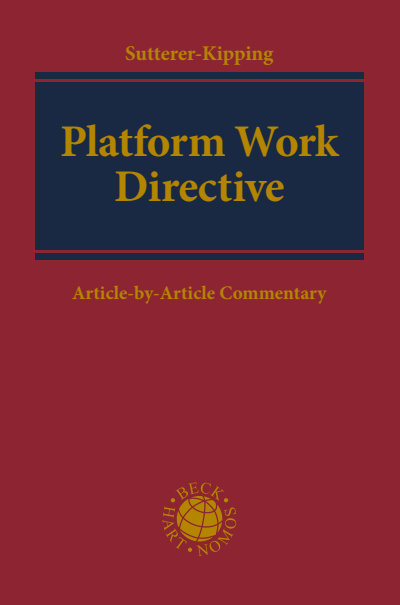
Platform Work Directive
Article-by-Article Commentary- Editors:
- Publisher:
- 2026
Summary
Digitalisation is reshaping work, with labour platforms at the centre. Millions in Europe already work via platforms, often without legal clarity on employment status. The EU Platform Work Directive responds with EU-wide rules on employment classification, algorithmic management and legal redress—marking a milestone in European labour law. ‘Platform Work Directive – Article-by-Article Commentary’ provides the first systematic, practical analysis, linking the Directive to the P2B Regulation, the GDPR and the AI Act, situating it in EU social policy and highlighting implementation challenges across Member States. Edited by Dr. Amélie Sutterer-Kipping.
Search publication
Bibliographic data
- Edition
- 1/2026
- Copyright Year
- 2026
- ISBN-Print
- 978-3-7560-2423-0
- ISBN-Online
- 978-3-7489-7533-5
- Publisher
- Nomos, Baden-Baden
- Language
- English
- Pages
- 340
- Product Type
- Edited Book
Table of contents
ChapterPages
- Foreword No access
- Authors No access
- Abbreviations No access
- Authors:
- I. General features No access
- II. Structure of the Platform Work Directive No access
- III. Contents of the Commentary No access
- Authors: |
- a) Employment Status No access
- b) No protection against the termination of their relationship No access
- c) Social protection No access
- d) Earnings No access
- e) Working time No access
- 2. Algorithmic management No access
- 3. Conclusion No access
- 1. National courts dealing with employment status of platform workers No access
- 2. National legislation on working conditions and social protection of platform workers No access
- 3. Collective bargaining No access
- 4. Instruments and Actions at EU Level No access
- B. The Platform Work Directive – high and low lights No access
- C. Guidelines on collective agreements regarding the working conditions of self-employed persons No access
- D. Conclusion No access
- Authors:
- A. Introduction No access
- B. Digital platforms: opportunities and challenges for solo self-employed persons No access
- 1. Objective of the P2B Regulation No access
- a) Personal Scope No access
- b) Substantive Scope No access
- aa) General transparency requirements No access
- bb) Amendment of the terms and conditions No access
- aa) Obligation to state reasons No access
- bb) Time requirements No access
- aa) Transparency requirements for online intermediation services No access
- bb) Specification of transparency requirements No access
- d) Differentiated treatment (Art. 7 P2B Regulation) No access
- e) Data access (Art. 9 P2B Regulation) No access
- f) Best price clauses (Art. 10 P2B Regulation) No access
- g) Judicial proceeding by representative organisation or associations Art. 14 P2B Regulation No access
- 1. P2B Regulation and Digital Market Act (DMA) No access
- 2. P2B Regulation and Digital Service Act (DSA) No access
- III. Outlook No access
- D. Conclusion No access
- Authors:
- I. Concept of the Swedish model No access
- II. Legal status and challenges for platform workers in Sweden No access
- I. Case law developments in the gig-sector No access
- II. The coming implementation of the Platform Work Directive in Sweden No access
- C. Concluding remarks No access
- Authors:
- I. Competence under EU Law and fundamental rights No access
- II. Concept of protection No access
- 1. Temporary Agency Work Directive (2008/104/EC) No access
- 2. P2B Regulation (EU 2019/1150) No access
- 3. AI Act No access
- 4. GDPR No access
- 1. Facilitating the determination of the correct employment status No access
- 2. Promoting transparency, fairness, human oversight, safety, and accountability in algorithmic management No access
- 3. Enhancing overall transparency within platform work, including in cross-border situations No access
- II. Structure of the Directive No access
- III. Normative relevance No access
- I. Personal scope of application (Article 1(2)) No access
- II. Territorial Scope (Article 1(3)) No access
- Authors:
- A. General remarks No access
- 1. Provided, at least in part, at a distance by electronic means No access
- 2. Provided at the request of a recipient – multi-party constellations No access
- a) Organisation of Work No access
- b) Performed by individuals No access
- c) In return for payment No access
- d) Offline and location-based platform work No access
- aa) By electronic means No access
- bb) Monitoring, supervising or evaluating the work performance or the activities carried out within the work environment No access
- cc) Which are used for and which support those purposes No access
- dd) Including by collecting personal data No access
- aa) By electronic means No access
- bb) Used to take or support decisions No access
- cc) Significant affect for persons performing platform work No access
- c) Conclusion No access
- II. Goods-related platforms No access
- 1. Work organised through a digital labour platform No access
- 2. Performed in the Union No access
- 3. By an individual No access
- 4. On the basis of a contractual relationship between the digital labour platform or an intermediary, and the individual No access
- II. Persons performing platform work No access
- III. Platform worker No access
- IV. Intermediary No access
- V. Workers’ representatives No access
- VI. Representatives of persons performing platform work No access
- D. Concluding Remarks No access
- Authors:
- A. Policy background No access
- I. Intermediaries No access
- II. Same level of protection No access
- III. Appropriate mechanisms No access
- Authors:
- I. Proposal of the European Commission No access
- II. Genesis of the provision No access
- 1. Procedures covered by Art. 4 No access
- 2. The concept of ‘employment relationship’ No access
- II. Appropriate and effective procedures No access
- III. Primacy of facts No access
- IV. Clear identification of employer and employer’s obligations No access
- Authors:
- A. Policy background No access
- I. Rebuttable legal presumption No access
- 1. Margin for concretisation by the Member States No access
- 2. The relevance of CJEU case law No access
- III. Rebutting the legal presumption No access
- IV. Administrative or judicial proceedings No access
- V. Non-retroactivity No access
- Article 6 Framework of supporting measures No access Pages 125 - 126Authors:
- Authors: | | |
- I. Legal definitions of algorithmic management and related terms in the Platform Work Directive No access
- II. Definitions in scholarship No access
- 1. Automated monitoring systems and automated decision-making systems No access
- 2. Chapter III and the GDPR have different scopes of application No access
- B. Algorithmic Management in the Workplace No access
- C. Objectives of Chapter III Algorithmic Management No access
- I. Chapter III: Algorithmic Management and GDPR No access
- II. Chapter III Algorithmic Management and AI Act No access
- E. Conclusion No access
- Article 7 Limitations on the processing of personal data by means of automated monitoring systems or automated decision-making systems Limitations on the processing of personal data No access Pages 142 - 146Authors: | | |
- Article 8 Data-protection impact assessment No access Pages 146 - 147Authors: | | |
- Article 9 Transparency with regard to automated monitoring systems and automated decision-making systems Transparency with regard to automated monitoring systems No access Pages 147 - 151Authors: | | |
- Article 10 Human oversight of automated monitoring systems and automated decision-making systems Human oversight of automated monitoring systems No access Pages 151 - 153Authors: | | |
- Article 11 Human review No access Pages 153 - 155Authors: | | |
- Article 12 Safety and health No access Pages 155 - 157Authors: | | |
- Article 13 Information and consultation No access Pages 157 - 157Authors: |
- Article 14 Provision of information to workers No access Pages 157 - 158Authors: |
- Authors: |
- A. Introduction No access
- I. Collective rights and algorithmic management No access
- II. Collective rights and enforcement No access
- III. Workers’ representatives No access
- C. Exogenous barriers to the exercise of collective labour rights No access
- I. Overarching regulatory reforms No access
- II. Enhancing the preparedness of collective representation systems No access
- III. Mobilising litigation channels No access
- E. Concluding remarks No access
- Article 16 Declaration of platform work No access Pages 181 - 181Authors: |
- Article 17 Access to relevant information on platform work No accessAuthors: |
- Article 18 Right to redress No access Pages 182 - 182Authors: |
- Article 19 Procedures on behalf or in support of persons performing platform work No access Pages 182 - 182Authors: |
- Authors: |
- I. Background No access
- II. Legal context: Enforcement No access
- 1. Enabling trust No access
- 2. Enabling solidarity No access
- I. EU competence No access
- 1. Art. 12 CFR No access
- 2. Art. 28 CFR No access
- III. Relationship to Art. 25 No access
- I. Regulate obligations for digital labour platforms No access
- II. Role of social partners No access
- III. Direct application? No access
- I. Digital labour platforms No access
- II. Persons performing platform work No access
- III. Representatives No access
- 1. Possibility to contact each other No access
- 2. Possibility to communicate with each other No access
- 1. Possibility to contact representatives No access
- 2. Possibility to be contacted by representatives No access
- 3. Possibility to communicate with representatives No access
- III. Contact and communication with the digital labour platform No access
- I. Platforms’ digital infrastructure No access
- II. Similarly effective means No access
- I. Contact and communicate privately and securely No access
- II. No access or monitoring by digital labour platforms No access
- III. Data Protection No access
- Articles 21 to 32 omitted No access Pages 202 - 203Authors: |
- Authors: |
- A. Facts and figures on the phenomenon of platform work in Austria No access
- I. Case law on the status and temporary agency work of persons performing platform work No access
- II. Establishment of works councils at delivery platforms No access
- III. Communication with works councils and trade unions No access
- IV. Collective Agreement for Bicycle Couriers No access
- V. Inclusion of self-employed persons in collective agreements No access
- C. Status of implementation of the Directive No access
- Authors:
- A. Introduction: digital labour platforms in Benelux No access
- B. Existing legal framework and motions to transpose the Platform Work Directive No access
- I. Definition of employee status No access
- II. Legal presumption of employee status No access
- III. Assessment of platform workers’ status in case law No access
- IV. Platform work as a gamechanger? No access
- D. Algorithmic management No access
- E. Collective organisation of platform workers No access
- F. Conclusions No access
- Authors:
- I. Employment Status of persons performing platform work: a regulation that the French authorities did not want No access
- II. Algorithmic management: a more consensual aspect No access
- III. Where do we stand? No access
- I. The law: between legislation and case law No access
- 1. Determinants of the presumption No access
- 2. A strengthening of the presumption mechanism No access
- 3. Codification of the presumption No access
- 1. The platforms concerned No access
- 2. Arrangements specific to platforms for making workers available No access
- 1. Triggering the presumption: procedures. No access
- 2. Triggering the presumption: individuals No access
- 3. Triggering the presumption: effects No access
- I. Transposition of the law as it stands No access
- 1. An area of maximum harmonisation No access
- 2. A model No access
- 1. Measures relating to the algorithmic management work No access
- 2. Involvement of workers’ representatives and representatives of persons performing platform work No access
- Authors:
- A. Introduction No access
- B. Quantitative aspects of platform work No access
- I. The triangular relationship between platform worker, platform operator and client No access
- 1. The general concept of an employee as a starting point No access
- 2. The classification of platform workers No access
- III. Platform workers as employee-like persons No access
- IV. Platform workers as homeworkers No access
- D. Political initiatives for legal regulations No access
- E. Implementation of the Platform Work Directive No access
- I. Code of Conduct of platform operators No access
- II. Initiatives of trade unions No access
- III. Self-empowerment of platform workers No access
- G. Concluding remarks No access
- Authors:
- A. Introduction No access
- B. Digital labour platform No access
- 1. Dependence (or subordination) and platform work No access
- 2. Legal presumption against an employment relationship No access
- 1. Primacy of facts No access
- 2. Legal presumption in favour of the employment relationship No access
- III. Need for transposition No access
- D. Algorithmic management No access
- E. Collective rights No access
- F. Results No access
- Authors: | | |
- A. Introduction No access
- B. Employment status No access
- I. Data Protection No access
- II. Ex-ante and ex-post transparency No access
- III. Health and safety No access
- D. Role and Involvement of workers’ representative No access
- E. Postscript: Recent legislative developments No access
- Authors:
- A. Introduction No access
- I. Legal status of persons performing platform work No access
- 1. Personal scope No access
- 2. Material scope No access
- 3. Temporal and formal requirements No access
- I. European presumption and its transposition to the Spanish legal system No access
- II. Common rights No access
- 1. Information and consultation No access
- 2. Health and safety No access
- 3. Protection from dismissal and equivalent measures No access
- D. Concluding remarks No access
- Index No access Pages 311 - 324