, to see if you have full access to this publication.
Edited Book No access
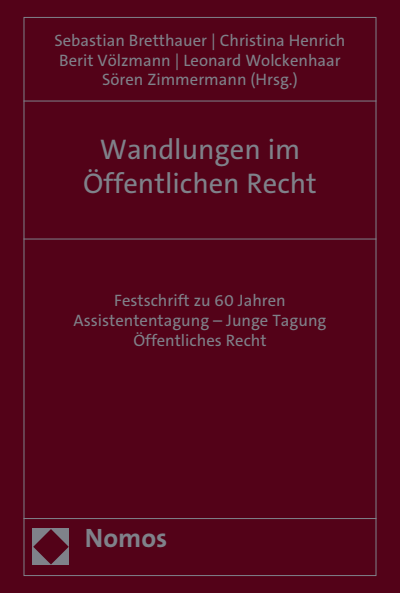
Wandlungen im Öffentlichen Recht
Festschrift zu 60 Jahren Assistententagung – Junge Tagung Öffentliches Recht- Editors:
- | | | |
- Publisher:
- 2020
Search publication
Bibliographic data
- Edition
- 1/2020
- Copyright Year
- 2020
- ISBN-Print
- 978-3-8487-6383-2
- ISBN-Online
- 978-3-7489-0512-7
- Publisher
- Nomos, Baden-Baden
- Language
- German
- Pages
- 660
- Product Type
- Edited Book
Table of contents
ChapterPages
- Titelei/Inhaltsverzeichnis No access Pages 1 - 14
- Editorial: Zeitgeschichte No access Pages 15 - 20Authors:
- Authors:
- Authors:
- 1. Die Zeitschrift „Der Staat“ No accessAuthors:
- 2. Die Staatsrechtslehrertagung als Negativfolie No accessAuthors:
- II. „Schulen“ und „Generationen“ No accessAuthors:
- III. Wandel und Kontinuität No accessAuthors:
- Authors:
- I. „68“ No accessAuthors:
- II. Irgendwie Tagung No accessAuthors:
- III. Im Übergang No accessAuthors:
- IV. „68“ als „Zeitgeist“ & Konflikt No accessAuthors:
- V. Sozialisation statt Sozialismus No accessAuthors:
- Authors: |
- I. Die Rechtswissenschaftliche Fakultät seit Ende der Sechzigerjahre No accessAuthors: |
- II. Entwicklungstendenzen in den Achtzigerjahren No accessAuthors: |
- III. Aufbruchstimmung an der Sektion im Winter 1989/1990 No accessAuthors: |
- IV. Erneuerung als Annäherung No accessAuthors: |
- V. Bemühungen zur Neuordnung des Studiums – Wiederbegründung der Rechtswissenschaftlichen Fakultät No accessAuthors: |
- VI. Die ignorierte Wiederbegründung und die Abwicklung der Rechtswissenschaftlichen Fakultät No accessAuthors: |
- VII. Befristung der Anstellungs- und Berufungsverhältnisse – ein Widerspruch zum Einigungsvertrag No accessAuthors: |
- VIII. Die neue Fakultätskonzeption und der personelle Bestand No accessAuthors: |
- IX. Das Schicksal des wissenschaftlichen Nachwuchses No accessAuthors: |
- Authors: |
- 1. Strukturkommission und Einsetzung des Gründungsdekans No accessAuthors: |
- 2. Das „Tandemprinzip“ No accessAuthors: |
- 3. Ein Gefühl des Miteinanders No accessAuthors: |
- 4. Wiedergründung der Rechtswissenschaftlichen Fakultät im November 1992 No accessAuthors: |
- Authors:
- I. Warum erinnern No accessAuthors:
- Authors:
- 1. Allgemeine Beobachtungen No accessAuthors:
- 2. „Zweite Schuld“ und „zweite Aufarbeitung“ der NS-Vergangenheit No accessAuthors:
- 3. „Schlechter Wandel“ oder: Was ist Vergessen, was ist Erinnern? No accessAuthors:
- Authors:
- Authors:
- a) Der „Staub“ No accessAuthors:
- b) Der „Schlegelberger“ No accessAuthors:
- c) Der „Dreher“ No accessAuthors:
- Authors:
- a) Der „Palandt“ No accessAuthors:
- b) Der „Maunz/Dürig“ No accessAuthors:
- IV. Ausblick No accessAuthors:
- Editorial: Staat und Recht No access Pages 89 - 94Authors:
- Authors:
- I. Die Lage um 1960 No accessAuthors:
- II. Zwei konstitutive Grenzen No accessAuthors:
- Authors:
- 1. Die Grenze zwischen privat und öffentlich No accessAuthors:
- 2. Die Grenze zwischen außen und innen No accessAuthors:
- IV. Staat und Verfassung im globalen Kontext No accessAuthors:
- Authors:
- Authors:
- 1. Georg Jellineks Allgemeine Staatslehre und der politische Hintergrund der Monarchie No accessAuthors:
- 2. Die Methodologie Jellineks: Zwei-Seiten-Lehre des Staates No accessAuthors:
- II. Staatstheorie als Kulturwissenschaft No accessAuthors:
- III. Die drei Schichten des modernen Staates No accessAuthors:
- Authors:
- 1. Ordnungsbildung in Fragmenten No accessAuthors:
- 2. Postindustrielle Gesellschaft und Ökonomie No accessAuthors:
- 3. Die personale Wende des Individualismus No accessAuthors:
- Authors:
- I. Einleitung No accessAuthors:
- Authors:
- 1. Begriff No accessAuthors:
- 2. Ausgangspunkt noch immer: Georg Jellineks Drei-Elemente-Lehre No accessAuthors:
- III. Die Metapher vom Baustil No accessAuthors:
- Authors:
- 1. Wandel No accessAuthors:
- 2. Funktionaler Wandel No accessAuthors:
- 3. Formeller Wandel No accessAuthors:
- 4. Materieller Wandel No accessAuthors:
- V. Wandel des Umfelds, Wandel des Baustils – ein Ausblick No accessAuthors:
- Authors:
- I. Der Begriff der Internationalisierung No accessAuthors:
- II. Die Präambel des Grundgesetzes No accessAuthors:
- Authors:
- Authors:
- a) Die Rechtsprechung des Bundesverfassungsgerichts als Konkretisierung No accessAuthors:
- b) Die Rolle der EMRK als Auslegungshilfe No accessAuthors:
- Authors:
- a) Art. 24 GG – Übertragung von Hoheitsrechten No accessAuthors:
- b) Art. 23 GG – Integrationsvorbereitende Änderungen der Verfassung No accessAuthors:
- c) Grenzen einer europäischen Integration No accessAuthors:
- IV. Ausblick No accessAuthors:
- Authors:
- I. Einleitung No accessAuthors:
- Authors:
- 1. Öffentliches Recht No accessAuthors:
- 2. Transnationalisierung No accessAuthors:
- 3. Abgrenzung No accessAuthors:
- Authors:
- 1. Entstehung von Verknüpfungen No accessAuthors:
- 2. Grenzen des staatlichen Vorgehens No accessAuthors:
- IV. Kooperative Ansätze No accessAuthors:
- V. Schlussfolgerung No accessAuthors:
- Authors:
- I. Einleitung No accessAuthors:
- II. Begriff No accessAuthors:
- III. Realität No accessAuthors:
- IV. Legalität No accessAuthors:
- V. Legitimität No accessAuthors:
- VI. Interlegalität No accessAuthors:
- VII. Schluss No accessAuthors:
- Editorial: Gleichheit No access Pages 193 - 198Authors:
- Authors:
- I. Abstrakte Allgemeinheit No accessAuthors:
- II. Abstrakte Besonderheit No accessAuthors:
- III. Konkrete Besonderheit No accessAuthors:
- IV. Konkrete Allgemeinheit No accessAuthors:
- V. Aufhebung der Gleichheit in der Freiheit No accessAuthors:
- Authors:
- I. Einführung No accessAuthors:
- Authors:
- 1. Rassismus No accessAuthors:
- 2. Ausländer- und Fremdenfeindlichkeit No accessAuthors:
- 3. Alltagsrassismus No accessAuthors:
- 4. Institutioneller Rassismus No accessAuthors:
- Authors:
- 1. Vorüberlegung: Recht aus antirassistischer Perspektive No accessAuthors:
- 2. Defizitäres Rassismusverständnis des deutschen Rechts No accessAuthors:
- 3. Vermeintliche „Farbenblindheit“ der herrschenden Meinung No accessAuthors:
- Authors:
- a) Bagatellisierung rassistischer Diskriminierungserfahrungen No accessAuthors:
- b) Rassistische Stereotype im Recht No accessAuthors:
- Authors:
- Authors:
- a) Problematik der fehlenden Datengrundlage No accessAuthors:
- b) Empirische Einschätzungen zur ATÖR No accessAuthors:
- 2. Thematische Unterrepräsentanz rassismuskritischer Themen No accessAuthors:
- 3. Erklärungsansätze No accessAuthors:
- a) Barrieren des Zugangs zum Jurastudium No accessAuthors:
- b) Inhalte des Studiums No accessAuthors:
- c) Wahrnehmung von Rechtsberufen No accessAuthors:
- d) Exklusives Selbstverständnis der Disziplin No accessAuthors:
- e) Ausschlussmechanismen in Aus- und Weiterbildung No accessAuthors:
- V. Ausblick No accessAuthors:
- Authors:
- I. Intergeschlechtlichkeit und Recht No accessAuthors:
- II. From the local to the global – and back again No accessAuthors:
- Authors:
- 1. Annahmen über das Geschlecht No accessAuthors:
- 2. Allgemeines Persönlichkeitsrecht und Diskriminierungsschutz No accessAuthors:
- 3. Geschlechtliche Identität als Aspekt des Privatlebens No accessAuthors:
- 4. Gleichheit ohne Freiheit – Freiheit ohne Gleichheit? No accessAuthors:
- IV. Das „Ende“ der Zweigeschlechtlichkeit? No accessAuthors:
- Authors:
- I. Einleitung No accessAuthors:
- II. Forschungskontext No accessAuthors:
- III. Datencorpus und Vorgehen No accessAuthors:
- Authors:
- 1. Altersstruktur No accessAuthors:
- 2. Geburtsland und geographische Herkunft No accessAuthors:
- 3. Staatsangehörigkeit No accessAuthors:
- 4. Geschlecht No accessAuthors:
- 5. Religionszugehörigkeit No accessAuthors:
- 6. Aktuelle Lebensform und Kinder No accessAuthors:
- 7. Status, Beschäftigungssituation, Karriereintentionen No accessAuthors:
- 8. Bildungsabschnitte Studium und Promotion No accessAuthors:
- 9. Gesundheitliche Faktoren No accessAuthors:
- 10. Soziale Herkunft und „Bildungserbe“ No accessAuthors:
- V. Fazit No accessAuthors:
- Authors: |
- I. Einleitung No accessAuthors: |
- II. Juristisches Studium und juristische Prüfungen No accessAuthors: |
- Authors: |
- 1. Jurastudierende im Wandel der Zeiten No accessAuthors: |
- 2. Hochschullehrende: Wo sind die Professorinnen? No accessAuthors: |
- Authors: |
- 1. Frauen- und Geschlechterbilder in juristischen Ausbildungsmaterialien No accessAuthors: |
- 2. Auswirkungen von Stereotypen in der juristischen Ausbildung No accessAuthors: |
- V. Frauenfördermaßnahmen in der Rechtswissenschaft No accessAuthors: |
- Authors: |
- 1. Frauen, Gleichheit und Diskriminierung in der Staatsrechtslehre No accessAuthors: |
- 2. Frauen, Gleichheit und Diskriminierung auf der ATÖR No accessAuthors: |
- Authors: |
- 1. Stereotype überwinden, Wissensproduktion reflektieren, Diskriminierung verhindern No accessAuthors: |
- 2. Antidiskriminierungsrecht als Gegenstand der juristischen Ausbildung No accessAuthors: |
- VIII. Ausblick No accessAuthors: |
- Authors:
- I. Einleitung – Konstruierte Kontinuitäten No accessAuthors:
- Authors:
- 1. Assistent*in? Wissenschaftliche Mitarbeiter*in? Wissenschaftler*in? No accessAuthors:
- 2. Mitgemeint oder Sternchen? No accessAuthors:
- Authors:
- 1. Begriff No accessAuthors:
- 2. Geschichtslosigkeit der ATÖR? Die Erfindung einer Tradition No accessAuthors:
- IV. Kein Wandel ohne Verfassung? No accessAuthors:
- Authors:
- 1. What’s in a name? No accessAuthors:
- 2. Warum hier? No accessAuthors:
- Editorial: Medien und Methoden No access Pages 331 - 334Authors:
- Authors:
- I. Konstanz von Karrierebedingungen und -zwängen No accessAuthors:
- II. Digitalisierung als disruptiver Megatrend No accessAuthors:
- III. Die deutsche Blogosphäre No accessAuthors:
- Authors:
- 1. Blogjargon No accessAuthors:
- 2. Digitalisierte Schriftlichkeit No accessAuthors:
- 3. Milde Rückwirkungen auf den juristischen Diskurs No accessAuthors:
- V. Die Zukunft vernetzter Wissenschaftskommunikation No accessAuthors:
- Authors:
- Authors:
- 1. Die aktuelle Diskussion um eine Begriffsbildung No accessAuthors:
- 2. Frühe strategische Verfahren aus dem Umweltbereich No accessAuthors:
- 3. Besonderheiten strategischer Prozessführung im Umweltrecht No accessAuthors:
- II. Wandlungsprozesse in den wissenschaftlichen Beiträgen zu strategischen Prozessen No accessAuthors:
- III. Wie hast du’s mit der Politik? Zur Rolle der Wissenschaft im Öffentlichen Recht No accessAuthors:
- IV. Schlussbemerkung No accessAuthors:
- Authors:
- I. Einleitung No accessAuthors:
- II. Diskurs und die Praxis von Interdisziplinarität in der Rechtswissenschaft No accessAuthors:
- III. Gesellschaftstheorie und Recht No accessAuthors:
- IV. Recht(skämpfe) als gesellschaftstheoretischer Gegenstand No accessAuthors:
- Authors:
- I. Einleitung No accessAuthors:
- II. Zweiteilung rechtsdogmatischer Deliberation: Deskription und Präskription No accessAuthors:
- III. Bezugsrahmen rechtsdogmatischer Deliberation: Handlungen der Rechtsakteure No accessAuthors:
- IV. Normative Rechtsdogmatik: Deliberation über rechtliche und nicht-rechtliche Gründe No accessAuthors:
- V. Nutzen und Plausibilität No accessAuthors:
- VI. Schluss No accessAuthors:
- Authors:
- I. Einführung No accessAuthors:
- Authors:
- 1. Methodische Probleme der Rechtsvergleichung in der Praxis No accessAuthors:
- 2. Die Rolle der Wissenschaft No accessAuthors:
- III. Herausforderungen für deutsche Verfassungsrechtler*innen No accessAuthors:
- IV. Fazit No accessAuthors:
- Authors: |
- I. Einleitung No accessAuthors: |
- Authors: |
- 1. Forschungsinteresse und Annahmen No accessAuthors: |
- 2. Verfassungsökonomik, neue Wohlfahrtsökonomie, Institutionenökonomik No accessAuthors: |
- III. Staatliches Handeln als Methodengegenstand der ÖAR No accessAuthors: |
- IV. Verhaltensökonomik und Nudging No accessAuthors: |
- V. Ausblick No accessAuthors: |
- Editorial: Rechtsgebiete besonderen Wandels No access Pages 443 - 446Authors:
- Authors:
- I. Einleitung No accessAuthors:
- II. Das EU-Umweltrecht heute: status quo No accessAuthors:
- III. Zu den Herausforderungen des EU-Umweltrechts No accessAuthors:
- IV. Mögliche Entwicklungsschritte No accessAuthors:
- V. Fazit No accessAuthors:
- Authors:
- I. Einführung: Das Datenschutzrecht im Spiegel der Assistententagungen No accessAuthors:
- II. Vom Heilsbringer zum Schreckensgespenst No accessAuthors:
- III. Von der Datensicherheitsgesetzgebung zum Datenschutzrecht No accessAuthors:
- IV. Vom Schutz Privater zur Bändigung privater Datenmacht No accessAuthors:
- V. Von der Begrenzung zur Legitimierung staatlicher Eingriffe No accessAuthors:
- Authors:
- 1. Datenschutz als Unionsaufgabe: vom Handelshemmnis zum Individualgrundrecht No accessAuthors:
- 2. Pfadabhängiges Sekundärrecht: von der Richtlinie zur Verordnung No accessAuthors:
- 3. Datenschutz im Jurisdiktionskonflikt: vom zentralen zum dezentralen Grundrechtsschutz No accessAuthors:
- VII. Ausblick No accessAuthors:
- Authors:
- I. Im Auge der Emergenz No accessAuthors:
- II. Empirie: Digitalisierung der Verwaltung No accessAuthors:
- Authors:
- 1. Prinzipielle Veränderungen: offenes Regierungs- und Verwaltungshandeln No accessAuthors:
- 2. Verwaltungsrechtliche Regelungen imaginierter Technik No accessAuthors:
- 3. Dimensionen und Funktionen des Rechts jenseits der Begrenzung der Technik No accessAuthors:
- IV. Reflexion: Digitalisierung und Verwaltungsrechtswissenschaft No accessAuthors:
- V. Schlussfolgerung für die Assistententagungen der Zukunft No accessAuthors:
- Authors:
- I. Grundlagen des Sicherheitsrechts No accessAuthors:
- Authors:
- 1. Umgang mit Risikotechnologien No accessAuthors:
- 2. Innere und äußere Sicherheit No accessAuthors:
- III. Fazit und Ausblick No accessAuthors:
- Authors:
- Authors:
- 1. Nationales Sozialrecht No accessAuthors:
- 2. Europäisches Sozialrecht No accessAuthors:
- II. Nachwuchssorgen der SozialrechtlerInnen No accessAuthors:
- Authors:
- 1. Entstehung eines Sozialverwaltungsverfahrensrechts No accessAuthors:
- 2. Fortführung verwaltungsrechtlicher Traditionen No accessAuthors:
- Authors:
- 1. § 44 SGB X No accessAuthors:
- 2. Rechtsmissbräuchliche Verwendung von § 44 SGB X No accessAuthors:
- V. Fazit No accessAuthors:
- Authors:
- I. Einleitung No accessAuthors:
- II. Absicherung von Standardrisiken des Erwerbslebens No accessAuthors:
- Authors:
- Authors:
- a) Ausschluss von Arzneimitteln zum täglichen Gebrauch No accessAuthors:
- b) Steuerung durch Zuzahlungen der Versicherten No accessAuthors:
- 2. Ende des Solidaritätsprinzips? No accessAuthors:
- 3. Konsumverhalten No accessAuthors:
- Authors:
- 1. Der allgemein anerkannte Stand der medizinischen Erkenntnisse No accessAuthors:
- 2. Health Technology Assessment (HTA) und evidenzbasierte Medizin (EbM) No accessAuthors:
- 3. Grenzen wissenschaftlicher Entscheidungsmaßstäbe No accessAuthors:
- 4. Nikolausbeschluss No accessAuthors:
- V. Fazit und Ausblick No accessAuthors:
- Authors:
- Authors:
- 1. Einschränkungen des Asylgrundrechts No accessAuthors:
- 2. Restriktion durch Verfahrensbeschleunigung No accessAuthors:
- Authors:
- 1. Ordnungsrechtlicher Ursprung No accessAuthors:
- 2. Fortschreitende Subjektivierung No accessAuthors:
- 3. Systematische Einordnung No accessAuthors:
- Authors:
- 1. Rechtliche Steuerung der Integration No accessAuthors:
- 2. Migrationsrechtliches Integrationsrecht No accessAuthors:
- 3. Erweiterung der Perspektive No accessAuthors:
- 4. Systematische Einordnung No accessAuthors:
- IV. Schlussbetrachtung No accessAuthors:
- Authors:
- I. Säulen staatlichen Gemeinwesens No accessAuthors:
- Authors:
- 1. Demokratisierung, Verrechtlichung und Individualisierung No accessAuthors:
- 2. Internationalisierung, Risikoorientierung und Ökonomisierung No accessAuthors:
- 3. Europäisierung, Supranationalisierung und Zentralisierung No accessAuthors:
- III. Zukunft der Staatlichkeit in Ungewissheit No accessAuthors:
- Authors:
- Authors:
- 1. Materielle Grundrechtsbindungen im Mehrebenensystem Europa No accessAuthors:
- 2. Prozessuale Entfaltung im Mehrebenensystem Europa No accessAuthors:
- Authors:
- 1. Gleiches Schutzniveau der grundrechtlichen Gewährleistungen No accessAuthors:
- 2. Unechter Widerspruch No accessAuthors:
- 3. Echter Widerspruch No accessAuthors:
- Authors:
- 1. Bundesverfassungsgericht, Urteil vom 12.06.2018 (Beamtenstreik) No accessAuthors:
- 2. Die konventionsrechtliche Problemlage No accessAuthors:
- 3. Kategorisierung der Spannungslage No accessAuthors:
- 4. Die produktive Kraft der Spannungslage No accessAuthors:
- 5. Lösungsansätze und Konsequenzen No accessAuthors:
- IV. Ausblick No accessAuthors:
- V. Ergebnis No accessAuthors:
- Gruß No access Pages 609 - 612Authors:
- Authors:
- Liebe Gäste, No accessAuthors:
- Bisherige Tagungen No access Pages 623 - 652
- Verzeichnis der Autor*innen No access Pages 653 - 658
- Verzeichnis der Herausgeber*innen No access Pages 659 - 660