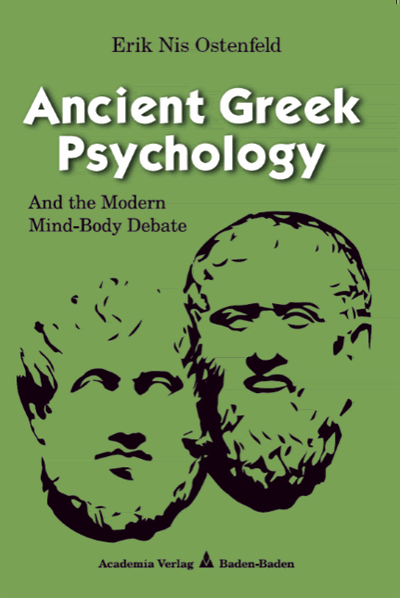
The mind-body problem is central to the modern philosophical and cultural debate because we cannot understand what man is until we understand what consciousness is and how it interacts with the body. Although many suggestions have been offered, no convincing account has as yet appeared. Perhaps it was all mistaken ideology from the start? A crucial (and fatal?) distinction was made by modern natural science in the 17th century between the subjective/qualitative and the objective/quantitative.
The ancient Greeks, notably Plato and Aristotle, focused not on consciousness and experience, but on goal-directed reason/form, and the contrast was not mechanical matter, but the particular. The latter owed its intelligibility and being to reason and form and did not, therefore, constitute a realm of its own. Hence the ancient picture of man did not fall apart either. According to this study, the soul is conceived of as a dynamictelic aspect of the human organism.
Considering the problems and consequent scepticism that confronts modern reductionism and the recent appearance of holistic ideology in many areas it is suggested that we take a fresh look at the alternative conceptual framework of our ancient Greek ancestors.
Keywords
Search publication
Bibliographic data
Edition
2/2019
Copyright Year
2019
ISBN-Print
978-3-89665-759-6
ISBN-Online
978-3-89665-760-2
Publisher
Academia, Baden-Baden
Series
Academia Philosophical Studies
Volume
63
Language
German
Pages
180
Product Type
Monograph
Table of contents
ChapterPages
Titelei/Inhaltsverzeichnis No access Pages I - 6
Introduction No access Pages 7 - 8
Criteria of the Mental No access Pages 9 - 22
Contrasts in Plato No access Pages 23 - 34
Platonic Dualism No access Pages 35 - 36
Plato versus Descartes No access Pages 37 - 41
Reasons versus Causes No access
Plato No access
Soul as essence (form) No access
Soul as efficient cause No access
Soul as capacity No access
Intellect No access
Later Plato Reconsidered No access
Behaviourism No access
Sense-perception in Plato and Aristotle No access
Rationality No access
Reason versus Senses No access
Qualia No access
Conclusions No access Pages 106 - 108
The Socratic soul No access
The separable simple substance soul and the embodied tripartite soul No access