, to see if you have full access to this publication.
Monograph No access
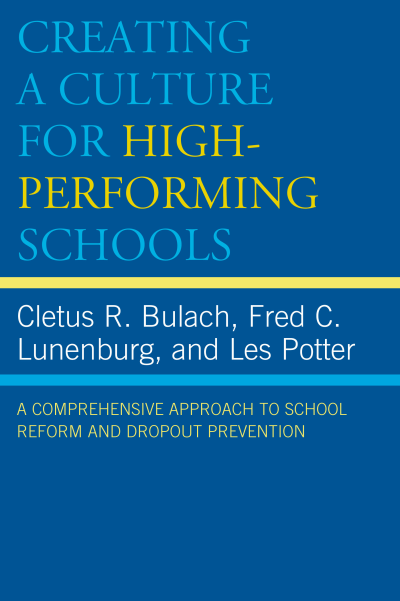
Creating a Culture for High-Performing Schools
A Comprehensive Approach to School Reform and Dropout Prevention
Authors:
| |
Publisher:
2008
Summary
A high performing school is described as one where student achievement is high and student and teacher absenteeism is low. Student behavior is such that teachers seldom have to control them or tell them what to do. This results in greater time on task, higher teacher morale, low teacher absenteeism, and improved parental support. One other distinctive feature of a high performing school is that the student peer group is a positive force and not a negative force. The end result is a school culture where faculty and students trust and care about each other, and there is a cooperative attitude.
Search publication
Bibliographic data
Edition
1/2008
Copyright Year
2008
ISBN-Print
978-1-57886-796-7
ISBN-Online
978-1-57886-889-6
Publisher
Rowman & Littlefield, Lanham
Language
English
Pages
336
Product Type
Monograph
Table of contents
ChapterPages
Contents No access
Preface No access
Chapter 01. A Four-Step Process for Identifying and Reshaping the Culture of a School: Phase 1 No access
Chapter 02. Implementing a Plan to Improve the Climate and Culture of the School: Phase 1 Continued No access
Chapter 03. Power and Authority: Nine Techniques for Motivating Faculty and Students No access
Chapter 04. Four Types of School Culture No access
Chapter 05. A Character Education Program That Is the Foundation of a High-Performing School: Phase 4 No access
Chapter 06. Six Strategies for Enhancing a School’s Culture and Climate No access
Chapter 07. Cultivating Community, Culture, and Learning No access
Chapter 08. Professional Development No access
Chapter 09. Management of the Program No access
Chapter 10. Developing Interpersonal Relations No access
Chapter 11. Self-Disclosure No access
Chapter 12. Developing Trust No access
Chapter 13. Values Clarification No access
Chapter 14. Improving Communication Skills No access
Chapter 15. Resolving Conflicts No access
Chapter 16. Design for Learning No access
Chapter 17. Assessing Students’ Interests and Attitudes No access
Chapter 18. Conferencing: Reporting Student Progress No access