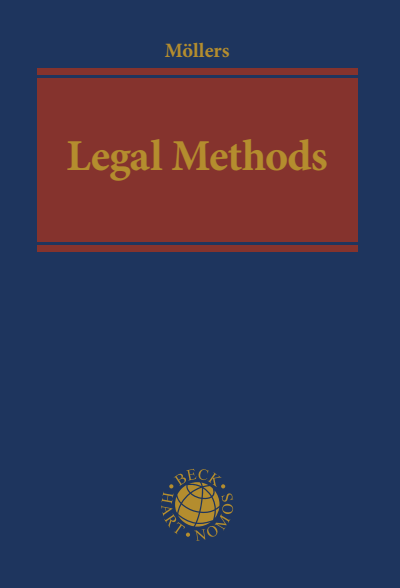
Legal Methods
How to work with legal arguments- Authors:
- Series:
- Beck International
- Publisher:
- 2021
Summary
Möllers
Legal Methods Legal decisions are accepted if they are well reasoned. German law is exemplary for its technique of legal interpretation and legal construction. This landmark book provides lawyers with more than a hundred legal argumentation figures that are used by lawyers across Europe and the world to justify their legal decisions. It aims to put lawyers in a position to develop legal solutions step by step, and to increase the cogency of their argumentation. Using an interdisciplinary and legal-doctrinal context, it looks at legal sources, traditional and modern concepts of argumentation, the challenging substantiation and construction of law, the influence of the constitution and European law as a higher-ranking law, determination of the limits of permissible further development of the law and – very relevant for legal practice – the hermeneutics of facts.
Search publication
Bibliographic data
- Edition
- 1/2021
- Copyright Year
- 2021
- ISBN-Print
- 978-3-406-74397-9
- ISBN-Online
- 978-3-406-77930-5
- Publisher
- C.H.BECK Recht - Wirtschaft - Steuern, München
- Series
- Beck International
- Language
- English
- Pages
- 586
- Product Type
- Monograph
Table of contents
- Titelei/Inhaltsverzeichnis No access Pages I - XL
- Databases for German, European and foreign legislative acts No access Pages XLI - XLIII
- Principal Works Cited No access Pages XLIII - 1
- 1. Determining the meaning of a legal text No access
- 2. Legal methodology as a postmodern methodology – content of this book No access
- 3. The influence of European law on discovering the law No access
- 4. The worldwide relevance of figures of argumentation in the justification of legal decisions No access
- 1. Constitutional requirements for a judicial decision No access
- 2. Methodology as theory of legitimacy to limit the judge’s power No access
- 3. The style of reasoning and citation practice of courts in Europe No access
- 1. The claim to truth and contentious lawyers No access
- 2. The purpose of the theory of argumentation No access
- 3. Legal figures of argumentation No access
- 4. Weighting of argumentation concepts No access
- 1. Legal methodology and the claim to justice No access
- 2. Legal methodology as a value-based theory of legitimacy and argumentation No access
- 3. Legal certainty and justice as legal concepts No access
- V. Summary of chapter 1 No access Pages 38 - 40
- 1. Criteria for describing law No access
- 2. Differentiating law from morality, ethics and political correctness No access
- 1. Statutes as a source of law in Germany No access
- 2. Higher-ranking law: The hierarchy of the law and the lex superior rule as a conflict-of-law rule No access
- 3. The hierarchy of German law No access
- 4. Amendments, legal certainty, and protection of legitimate expectation No access
- 1. European law as supranational law No access
- 2. The autonomous interpretation of European law No access
- 3. The principle of conferral No access
- 4. Higher-ranking law: The supremacy of Union law over national law No access
- 1. Sources of law at the international level No access
- 2. The autonomous interpretation of international agreements No access
- 3. The hierarchy of international law No access
- 4. International law and national law No access
- 1. The relevance of natural law No access
- 2. Primacy of natural law over the unambiguous law of injustice (Radbruch formula) No access
- 3. Positive forms of natural law No access
- VI. Summary of chapter 2 No access Pages 75 - 76
- 1. The previous dualistic approach: restricted definition of sources of law, and sources of legal knowledge No access
- 2. The broad definition of legal sources – linked legal structures as an alternative to the hierarchy of law No access
- 3. Mediating perspective: The theory of secondary sources of law No access
- 4. Beyond legal positivism and natural law No access
- 1. The role of customary law No access
- 2. The doctrine of secondary sources of law No access
- 3. Strictly binding precedent as an exception in German legal circles No access
- 1. Administrative regulations No access
- 2. Private rule-setting and the demarcation to standard terms and conditions, contracts and soft law No access
- 3. Legal consequences No access
- 4. Recommendations and administrative provisions under EU law No access
- 1. The obligation to take account of comparative law during interpretation under European law, uniform international law, and international law No access
- 2. Case groups using non-binding comparative law No access
- 3. The legal quality of foreign judgments: Between persuasive authority and mere source of legal knowledge No access
- 4. The importance of comparative law for the ECJ and the ECtHR No access
- V. Academic legal literature No access Pages 106 - 107
- VI. Summary of chapter 3 No access Pages 107 - 109
- 1. Deductive syllogism and subsumption No access
- 2. The four traditional canons of interpretation No access
- 3. Criticism of the four interpretation methods and the subsumption model No access
- 4. Interpretation, substantiation and development of the law No access
- 1. Grammatical interpretation as the start of the interpretation process No access
- 2. Tools to determine clear or ambiguous wording No access
- 3. The clarity rule of the wording (acte clair doctrine, literal rule, textualism) as an interpretation concept No access
- 4. Limits of the wording and the prohibition of analogy No access
- 5. The importance of the wording for the ECJ No access
- 1. Meaning No access
- 2. Individual systematic interpretation concepts No access
- 3. Conflict-of-law rules No access
- 4. Systematic interpretation by the ECJ No access
- 1. Historical interpretation in the broad and narrow sense No access
- 2. Legislative intent in the materials of the concrete norm No access
- 3. The meaning of the history of the legislation for the ECJ No access
- V. Summary of chapter 4 No access Pages 161 - 162
- 1. On telos, the ratio legis No access
- 2. Determining the purpose of the law No access
- 3. The jurisprudence of interests and the jurisprudence of values No access
- 1. Contravention of the general rules of logic No access
- 2. Circular argument (petitio principii) No access
- 3. Leap in conclusion (saltus in concludendo) No access
- 4. Avoiding circumvention of the law No access
- 5. Avoidance of rule contradictions, approximation of norms and maintaining the scope of a norm No access
- 6. Individual figures of argumentation of the ECJ No access
- 1. Terminology, and relevance for impact-oriented interpretation No access
- 2. The limits of impact-oriented interpretation No access
- 3. Individual figures of argumentation No access
- 4. Impact-oriented argumentation at the ECJ No access
- 1. Aims and methods of the law and economics approach No access
- 2. The limits of the economic approach No access
- 3. The importance for legal methodology No access
- 4. Economic considerations of the ECJ No access
- V. Summary of chapter 5 No access Pages 207 - 208
- 1. Wording No access
- 2. System No access
- 3. Historical interpretation No access
- 4. Telos, impact-oriented and economic analysis No access
- 1. The dispute as a long-running issue in legal methodology No access
- 2. Subjective theory No access
- 3. Objective theory No access
- 4. The subjective-objective theory as a unified theory No access
- 5. Subjective and objective interpretation No access
- 1. Teleological reduction No access
- 2. The dispute about the definition of an omission No access
- 3. Individual analogy (statutory analogy) No access
- 4. General analogy (legal analogy) No access
- 5. Ordinary forms of development of the law at the European level No access
- 1. Missing link to a constituent element No access
- 2. Multiple regulatory purposes No access
- V. Summary of chapter 6 No access Pages 257 - 259
- 1. Interpretation versus substantiation No access
- 2. General clauses – curse or blessing? No access
- 1. General clauses and rule examples in German law No access
- 2. General clauses and rule examples in criminal law No access
- 3. Substantiation of general clauses by the European legislature No access
- 1. German law No access
- 2. European law No access
- 1. The similarity between individual analogy and the comparative case method No access
- 2. The binding nature of court decisions No access
- 3. The comparative case method of the ECJ No access
- 4. Individual arguments in case law No access
- 5. The legal comparative method: the ‘how’ No access
- V. Summary of chapter 7 No access Pages 288 - 289
- 1. The basics No access
- 2. Application in German law No access
- 3. Application in European law No access
- 1. Case groups No access
- 2. Case groups in European law No access
- 1. Attribution criteria of different case groups as a Bewegliche System No access
- 2. Developing new case groups – a flux No access
- 3. Establishing a new case group under European law No access
- IV. Summary of chapter 8 No access Pages 305 - 306
- 1. The use of legal doctrine for legal methodology No access
- 2. Legal doctrine and legal methodology No access
- 3. Differentiating legal ideas, legal principles and legal concepts No access
- 1. The justification of the legal principle as a first step: recourse to statute or induction No access
- 2. The substantiation of legal principles as a necessary second step No access
- 1. Inductive derivation of pacta sunt servanda No access
- 2. Freedom of contract and apparently contradictory legal principles No access
- 1. Approaches in the academic literature No access
- 2. Private autonomy as self-determination for both parties No access
- 3. The legal-doctrinal justification of the various legal concepts with a lack of the right to self-determination No access
- 4. The substantiation and establishment of legal concepts through the principle of self-determination No access
- 1. Challenges in deriving principles at the European level No access
- 2. General legal principles in European law No access
- VI. Summary of chapter 9 No access Pages 336 - 337
- 1. Balancing as construction No access
- 2. The structure of balancing No access
- 3. Legal doctrinal conclusions from the balancing No access
- 4. The examination of fundamental rights as a successful construction of law No access
- 1. The objective scope of protection of fundamental rights No access
- 2. Interference and restrictions No access
- 3. Justifying the interference (Schranken or restrictions) No access
- 4. Limits of restrictability (Schranken-Schranke), in particular proportionality No access
- 1. Comparison of the substantiation of fundamental rights and freedoms No access
- 2. European fundamental rights No access
- 3. European fundamental freedoms – differences to German law No access
- 1. Conflicting principles in private law No access
- 2. Balancing legal principles using the example of the contract with protective effect in favour of third parties as a legal concept of conflicting legal principles No access
- 3. The principle of proportionality in private law No access
- V. Summary of chapter 10 No access Pages 372 - 373
- 1. Fundamental rights and the Basic Law as an objective set of values No access
- 2. The effect of fundamental rights on private individuals No access
- 3. The effect of the Constitution on case law No access
- 1. Invalidity of an unconstitutional law No access
- 2. Exceptions from invalidity No access
- 3. Disputed arguments in constitutional law No access
- 1. Constitutionally-oriented interpretation as an interpretation concept No access
- 2. Constitutionally-oriented interpretation as a simple balancing rule in private law No access
- 1. Fundamental issues regarding interpretation in conformity with the Constitution No access
- 2. Interpretation in conformity with the Constitution in public law No access
- 3. Interpretation in conformity with the Constitution in private law No access
- 1. The contradictory case law of the Federal Constitutional Court No access
- 2. Development of the law in conformity with the Constitution as a legal concept No access
- 3. Case groups of permissible development of the law in conformity with the Constitution No access
- 4. Limits to development of the law in conformity with the Constitution in the case of infringements of fundamental rights by third parties – the dispute of the constitutional Senates No access
- VI. Summary of chapter 11 No access Pages 404 - 406
- 1. The relationship between direct applicability, primacy of application, and interpretation in conformity with European law No access
- 2. Direct applicability or direct effect of European law No access
- 3. Third-party effect of primary law on private individuals No access
- 1. European terminology No access
- 2. The two-step interpretation in conformity with primary law No access
- 3. The relationship between primacy of application and interpretation in conformity with Union law No access
- 1. Primacy effect of regulations and interpretation in conformity with regulations No access
- 2. Primacy effect of directives and broad interpretation in conformity with the directive No access
- 3. Narrow horizontal interpretation in conformity with the directive No access
- 4. Development of the law in conformity with the directive No access
- 5. Further questions on the implementation of directives No access
- 6. Duty of referral and subsidiary duty of compliance with recommendations No access
- 7. Summary No access
- 1. The obligation to clearly transpose European law No access
- 2. Preliminary ruling procedure and obligation to refer a preliminary ruling according to Article 267 of the TFEU No access
- 3. The state liability claim under EU law No access
- 4. Recovery of subsidy unlawful under EU law No access
- 1. Principle of interpretation in conformity with international law No access
- 2. Similarities and differences No access
- 3. Appraisal No access
- VI. Summary of chapter 12 No access Pages 444 - 447
- 1. The boundaries of permissible development of the law as a permanent dispute in legal methodology No access
- 2. The consequences of permissible or improper development of the law No access
- 3. Methodological blindfold No access
- 4. Definitions of the limits of permissible development of the law No access
- 5. Arguments to avoid improper development of the law No access
- 1. Clarity and openness of the wording No access
- 2. Working on the system – omissions and the closed system No access
- 3. The intent of the legislature and the change in life circumstances reflected in the law (objective interpretation) No access
- 4. The purpose as justification for development of the law No access
- 1. Impact-oriented considerations in development of the law No access
- 2. Unfair hardship with obvious legal protection gap and inactivity of the legislature No access
- 3. Consensus, support from comparative law, and increase in legal certainty No access
- 1. Protection of fundamental rights of the injured party and impairment of fundamental rights of third parties No access
- 2. Impairment of fundamental rights and protection of legitimate expectations No access
- 3. Protection of legitimate expectations where the case law changes No access
- 4. The principle of legality as an expression of the citizen’s legitimate expectations No access
- 1. Development of the law in conformity with primary law and regulations No access
- 2. Development of national law in conformity with the directive and its limits No access
- 3. Individual expectations as a limit to permissible development of the law No access
- 1. Separation of powers and the limits of the courts No access
- 2. Reservation of the power to legislate and the competence of Parliament No access
- 3. Conflict of jurisdiction between the courts No access
- 4. Substantiation and development of the law No access
- 1. Rules of precedence, presumption and burden of argumentation No access
- 2. Balancing rules No access
- 3. The relationship between the five-step system and the balancing rules No access
- VIII. Summary of chapter 13 No access Pages 488 - 489
- 1. Traditional versus postmodern methodology No access
- 2. A modern methodology No access
- 1. The interaction of facts and legal norms No access
- 2. Hermeneutics of the facts for determining the case area No access
- 3. The norm range No access
- 1. Postmodern methodology: identifying the law versus creating the law No access
- 2. Legal creativity – the process of discovery No access
- 3. Topics doctrine and legal creativity No access
- 4. Legal thinking as part of modern methodology No access
- 1. The basics as neighbouring disciplines No access
- 2. State theory, legal doctrine and philosophy of law No access
- 1. Method chaos and pluralism of methods No access
- 2. Six examination steps to determine the legal solution No access
- 3. The fourfold weighting of the figures of argumentation No access
- 4. Conclusions No access
- VI. Summary of chapter 14 No access Pages 531 - 533
- VII. The value of judicial methodology – a final word No access Pages 533 - 535
- I. Legal methodology as a theory of legitimacy and justification No access Pages 535 - 535
- II. Sources of law No access Pages 535 - 536
- III. Secondary sources of law and sources of legal knowledge No access Pages 536 - 537
- IV. Wording, systematics and history as traditional methods of interpretation No access Pages 537 - 538
- V. Telos, logic and impact-oriented interpretation No access Pages 538 - 540
- VI. Teleological counter concepts and simple forms of legal development No access Pages 540 - 541
- VII. Substantiation of the law by the legislature, the administration and the courts No access Pages 541 - 542
- VIII. The Bewegliche System, case groups and case group comparison as substantiation methods No access Pages 542 - 543
- IX. Legal doctrine and general legal principles No access Pages 543 - 544
- X. Balancing as substantiation No access Pages 544 - 545
- XI. The Constitution as higher-ranking law No access Pages 545 - 545
- XII. The primacy of European law and international law No access Pages 545 - 547
- XIII. Limits to development of the law No access Pages 547 - 550
- XIV. A modern legal methodology No access Pages 550 - 551
- Appendix. Selected figures of argumentation No access Pages 551 - 557
- Table of Cases No access Pages 557 - 567
- Databases for German, European and foreign cases No access Pages 567 - 569
- Index No access Pages 569 - 586
Bibliography (69 entries)
No match found. Try another term.
- Principal Works Cited¹ Open Google Scholar DOI: 10.17104/9783406779305
- 1 Only the most important works on legal methodology have been included in the bibliography. Further references can be found before the respective chapters. Open Google Scholar DOI: 10.17104/9783406779305
- Adomeit, Klaus/Hähnchen, Susanne, Rechtstheorie mit Juristischer Methodenlehre, 7th ed. Heidelberg 2018. Open Google Scholar DOI: 10.17104/9783406779305
- Bailey, Diggory/Norbury, Luke, Bennion on Statutory Interpretation, 7th ed. London 2017. Open Google Scholar DOI: 10.17104/9783406779305
- Beaucamp, Guy/Treder, Lutz, Methoden und Technik der Rechtsanwendung, 2nd ed. Heidelberg 2011. Open Google Scholar DOI: 10.17104/9783406779305
- Bengoetxea, Joxerramon, The Legal Reasoning of the European Court of Justice: Towards a European Jurisprudence, Oxford 1993. Open Google Scholar DOI: 10.17104/9783406779305
- Bobek, Michal, Comparative Reasoning in European Supreme Courts, Oxford 2013. Open Google Scholar DOI: 10.17104/9783406779305
- Braun, Johann, Deduktion und Invention, Tübingen 2016. Open Google Scholar DOI: 10.17104/9783406779305
- Burton, Steven J., An Introduction to Law and Legal Reasoning, 3rd ed. New York 2007. Open Google Scholar DOI: 10.17104/9783406779305
- Bydlinski, Franz, Juristische Methodenlehre und Rechtsbegriff, 2nd ed. Vienna 1991, reprinted 2011. Open Google Scholar DOI: 10.17104/9783406779305
- Bydlinski, Franz/Bydlinski, Peter, Grundzüge der juristischen Methodenlehre, 3rd ed. Vienna 2018. Open Google Scholar DOI: 10.17104/9783406779305
- Canaris, Claus-Wilhelm, Systemdenken und Systembegriff in der Jurisprudenz, 2nd ed. Berlin 1983. Open Google Scholar DOI: 10.17104/9783406779305
- Canaris, Claus-Wilhelm, Grundrechte und Privatrecht, Berlin 1999. Open Google Scholar DOI: 10.17104/9783406779305
- Carter, Lief/Burke, Thomas F., Reason in Law, 9th ed. Chicago 2016. Open Google Scholar DOI: 10.17104/9783406779305
- Coing, Helmut, Juristische Methodenlehre, Berlin 1972. Open Google Scholar DOI: 10.17104/9783406779305
- Cross, Rupert/Harris, James W., Precedent in English Law, 4th ed. Oxford 1991, reprinted 2004. Open Google Scholar DOI: 10.17104/9783406779305
- Engisch, Karl (author)/Würtenberger, Thomas/Otto, Dirk (eds.), Einführung in das Juristische Denken, 12th ed. Stuttgart 2018. Open Google Scholar DOI: 10.17104/9783406779305
- Hart, Henry M./Sacks, Albert M., The Legal Process: Basic Problems in the Making and Application of Law, Westbury 1994. Open Google Scholar DOI: 10.17104/9783406779305
- Fikentscher, Wolfgang, Methoden des Rechts in vergleichender Darstellung, Vol. 5, Tübingen 1975–1977. Open Google Scholar DOI: 10.17104/9783406779305
- Gast, Wolfgang, Juristische Rhetorik, 5th ed. Heidelberg 2015. Open Google Scholar DOI: 10.17104/9783406779305
- Hager, Günter, Rechtsmethoden in Europa, Tübingen 2009. Open Google Scholar DOI: 10.17104/9783406779305
- Hager, Günter, Strukturen des Privatrechts in Europa, Tübingen 2012. Open Google Scholar DOI: 10.17104/9783406779305
- Henninger, Thomas, Europäisches Privatrecht und Methode, Tübingen 2013. Open Google Scholar DOI: 10.17104/9783406779305
- Heusinger, Bruno, Rechtsfindung und Rechtsfortbildung im Spiegel richterlicher Erfahrung, Cologne 1975. Open Google Scholar DOI: 10.17104/9783406779305
- Kaufmann, Arthur, Das Verfahren der Rechtsgewinnung. Eine rationale Analyse, Munich 1999. Open Google Scholar DOI: 10.17104/9783406779305
- Koch, Hans-Joachim/Rüßmann, Helmut, Juristische Begründungslehre, Munich 1982. Open Google Scholar DOI: 10.17104/9783406779305
- Koller, Peter, Theorie des Rechts, 2nd ed. Vienna 1997. Open Google Scholar DOI: 10.17104/9783406779305
- Kramer, Ernst, Juristische Methodenlehre, 5th ed. Bern 2016. Open Google Scholar DOI: 10.17104/9783406779305
- Krüper, Julian (ed.), Grundlagen des Rechts, 3rd ed. Baden-Baden 2016. Open Google Scholar DOI: 10.17104/9783406779305
- Langenbucher, Katja (ed.), Europäisches Privat- und Wirtschaftsrecht, 4th ed. Baden-Baden 2017. Open Google Scholar DOI: 10.17104/9783406779305
- Larenz, Karl, Methodenlehre der Rechtswissenschaft, 6 th ed. Berlin 1991. Open Google Scholar DOI: 10.17104/9783406779305
- Larenz, Karl/Canaris, Claus-Wilhelm, Methodenlehre der Rechtswissenschaft – Studienausgabe, 3rd ed. Berlin 1996. Open Google Scholar DOI: 10.17104/9783406779305
- Levi, Edward H., An Introduction to Legal Reasoning, Chicago 1950. Open Google Scholar DOI: 10.17104/9783406779305
- Looschelders, Dirk/Roth, Wolfgang, Juristische Methodik im Prozeß der Rechtsanwendung, Berlin 1996. Open Google Scholar DOI: 10.17104/9783406779305
- MacCormick, Neil, Legal Reasoning and Legal Theory, 2nd ed. Oxford 1994. Open Google Scholar DOI: 10.17104/9783406779305
- MacCormick, Neil/Summers, Robert S. (eds.), Interpreting Statutes. A Comparative Study, Aldershot 1991. Open Google Scholar DOI: 10.17104/9783406779305
- MacCormick, Neil/Summers, Robert S. (eds.), Interpreting Precedents. A Comparative Study, Aldershot 1997. Open Google Scholar DOI: 10.17104/9783406779305
- Mahlmann, Matthias, Rechtsphilosophie und Rechtstheorie, 5 th ed. Baden-Baden 2019. Open Google Scholar DOI: 10.17104/9783406779305
- Martens, Sebastian A. E., Methodenlehre des Unionsrechts, Tübingen 2013. Open Google Scholar DOI: 10.17104/9783406779305
- Mastronardi, Philippe, Juristisches Denken, 2nd ed. Bern 2003. Open Google Scholar DOI: 10.17104/9783406779305
- Müller, Friedrich/Christensen, Ralph, Juristische Methodik. Grundlegung für die Arbeitsmethoden der Rechtspraxis, Vol. I, 11th ed. Berlin 2013. Open Google Scholar DOI: 10.17104/9783406779305
- Müller, Friedrich/Christensen, Ralph, Juristische Methodik, Europarecht, Vol. II, 3rd ed. Berlin 2012. Open Google Scholar DOI: 10.17104/9783406779305
- Muthorst, Olaf, Grundlagen der Rechtswissenschaft. Methode – Begriff – System, Munich 2011. Open Google Scholar DOI: 10.17104/9783406779305
- Neumann, Ulfrid, Juristische Argumentationslehre, Darmstadt 1986. Open Google Scholar DOI: 10.17104/9783406779305
- Pawlowski, Hans-Martin, Einführung in die Juristische Methodenlehre, 2nd ed. Heidelberg 2000. Open Google Scholar DOI: 10.17104/9783406779305
- Pawlowski, Hans-Martin, Methodenlehre für Juristen, 3rd ed. Heidelberg 1999. Open Google Scholar DOI: 10.17104/9783406779305
- Potacs, Michael, Auslegung im öffentlichen Recht, Baden-Baden 1994. Open Google Scholar DOI: 10.17104/9783406779305
- Puppe, Ingeborg, Kleine Schule des juristischen Denkens, 3rd ed. Stuttgart 2014. Open Google Scholar DOI: 10.17104/9783406779305
- Raisch, Peter, Juristische Methoden: Vom antiken Rom bis zur Gegenwart, Heidelberg 1995. Open Google Scholar DOI: 10.17104/9783406779305
- Reimer, Franz, Juristische Methodenlehre, Baden-Baden 2016. Open Google Scholar DOI: 10.17104/9783406779305
- Riesenhuber, Karl (ed.), Europäische Methodenlehre, 3rd ed. Berlin 2015; translated as Riesenhuber, Karl (ed.), European Legal Methodology, Cambridge, 2018. Open Google Scholar DOI: 10.17104/9783406779305
- Röhl, Klaus, Grundlagen der Methodenlehre I: Aufgaben und Kritik, II: Rechtspraxis, Auslegungsmethoden, Kontext des Rechts, in: Enzyklopädie zur Rechtsphilosophie, 2/2013, retrievable at www.enzyklopaedie-rechtsphiliosophie.net. Open Google Scholar DOI: 10.17104/9783406779305
- Röhl, Klaus/Röhl, Hans Christian, Allgemeine Rechtslehre, 3rd ed. Cologne 2008. Open Google Scholar DOI: 10.17104/9783406779305
- Rückert, Joachim/Seinecke, Ralf, Methodik des Zivilrechts – von Savigny bis Teuber, Baden-Baden 3rd ed. 2017. Open Google Scholar DOI: 10.17104/9783406779305
- Rüthers, Bernd, Die unbegrenzte Auslegung, Tübingen 1968 (8th ed. 2017) Open Google Scholar DOI: 10.17104/9783406779305
- Rüthers, Bernd/Fischer, Christian/Birk, Axel, Rechtstheorie, 10th ed. Munich 2018. Open Google Scholar DOI: 10.17104/9783406779305
- Scalia, Antonin/Garner, Bryan A., Reading Law, St. Paul 2012. Open Google Scholar DOI: 10.17104/9783406779305
- Schapp, Jan, Methodenlehre des Zivilrechts, Tübingen 1998. Open Google Scholar DOI: 10.17104/9783406779305
- Schwacke, Peter, Juristische Methodik, 5th ed. Stuttgart 2011. Open Google Scholar DOI: 10.17104/9783406779305
- Seiler, Wolfgang, Höchstrichterliche Entscheidungsbegründung und Methode im Zivilrecht, Baden-Baden 1992. Open Google Scholar DOI: 10.17104/9783406779305
- Schmalz, Dieter, Methodenlehre für das juristische Studium, 4th ed. Baden-Baden 1998. Open Google Scholar DOI: 10.17104/9783406779305
- Twining, William, How To Do Things with Rules, 5th ed. Cambridge 2010. Open Google Scholar DOI: 10.17104/9783406779305
- Vandevelde, Kenneth J., Thinking Like a Lawyer. An Introduction to Legal Reasoning, 2nd ed. Boulder 2011. Open Google Scholar DOI: 10.17104/9783406779305
- Vesting, Thomas, Rechtstheorie, 2nd ed. Munich 2015; translated as Vesting, Thomas, Legal Theory, Oxford, 2018. Open Google Scholar DOI: 10.17104/9783406779305
- Vogel, Joachim, Juristische Methodik, Berlin 1998. Open Google Scholar DOI: 10.17104/9783406779305
- Vogenauer, Stefan, Die Auslegung von Gesetzen in England und auf dem Kontinent, Vol. 2, Tübingen 2001. Open Google Scholar DOI: 10.17104/9783406779305
- Wank, Rolf, Die Auslegung von Gesetzen, 6th ed. Munich 2015. Open Google Scholar DOI: 10.17104/9783406779305
- Wienbracke, Mike, Juristische Methodenlehre, Heidelberg 2013. Open Google Scholar DOI: 10.17104/9783406779305
- Zippelius, Reinhold, Juristische Methodenlehre, 11th ed. Munich 2012. Open Google Scholar DOI: 10.17104/9783406779305