, to see if you have full access to this publication.
Monograph No access
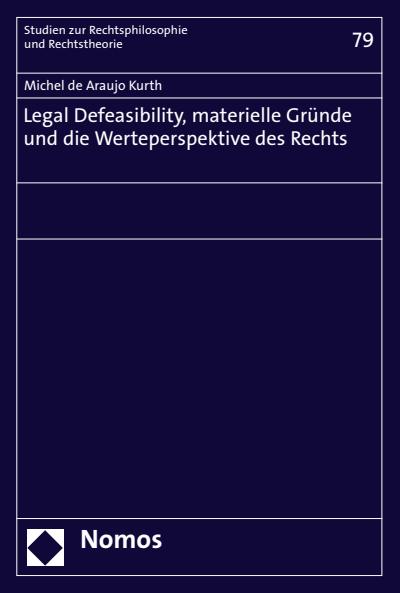
Legal Defeasibility, materielle Gründe und die Werteperspektive des Rechts
- Authors:
- Series:
- Studien zur Rechtsphilosophie und Rechtstheorie, Volume 79
- Publisher:
- 2022
Keywords
Search publication
Bibliographic data
- Edition
- 1/2022
- Copyright Year
- 2022
- ISBN-Print
- 978-3-8487-8115-7
- ISBN-Online
- 978-3-7489-2532-3
- Publisher
- Nomos, Baden-Baden
- Series
- Studien zur Rechtsphilosophie und Rechtstheorie
- Volume
- 79
- Language
- German
- Pages
- 303
- Product Type
- Monograph
Table of contents
ChapterPages
- Titelei/Inhaltsverzeichnis No access Pages 1 - 14
- I. Thematische Einführung No access
- II. Problemaufriss No access
- III. Gang der Darstellung No access
- IV. Methode der Untersuchung No access
- I. Grundstruktur der Regelanfechtung No access
- II. Explizite Ausnahmen No access
- III. Implizite Ausnahmen und implizite Anfechtung No access
- IV. Starke implizite Anfechtbarkeit No access
- I. Einleitung No access
- II. Was ist Anfechtbares Schließen? No access
- III. Distinktionsthese und Abhängigkeitsthese No access
- IV. Anfechtbarkeit von Regeln und Begriffen als Argument für Anfechtbares Schließen in der Praxis und als Argument gegen die Tauglichkeit der klassischen Logik No access
- 1. Strukturen anfechtbaren Schließens als Argument für die Anfechtbarkeit der juristischen Begründung No access
- 2. Rechtfertigungsanfechtung als eine Form von rechtlicher Anfechtbarkeit? No access
- 3. Asymmetrische Darlegungs- und Beweislastverteilung im Prozessrecht als Argument für die Anfechtbarkeit der juristischen Begründung No access
- VI. Fazit No access
- 1. Die systematische Bedeutung der Nichtaufzählbarkeitsthese No access
- 2. Widerlegende und begründende Bedingungen No access
- 3. Gemäßigte und anspruchsvolle Fassung der Nichtaufzählbarkeitsthese No access
- 4. Elementare Angemessenheitsbedingungen für Ausnahmen No access
- a. Bestimmte deskriptive Ausdrücke No access
- b. Vage normative Ausdrücke No access
- c. Richard Turs und Jose Moresos Vorschlag rechtliche Regeln durch offene Formulierungen mit normativen Ausnahmeklauseln zu repräsentieren No access
- d. Konkrete normative Begriffe No access
- e. Abstrakte Ausnahmetypen No access
- f. Konkrete Ausnahmetypen No access
- a. Generalisierbarkeitskriterium für Ausnahmen No access
- b. Rechtshängigkeit als Zeitbedingung No access
- c. Einschränkung auf normativ gerechtfertigte Ausnahmen/Verbot von Ad-hoc-Ausnahmen No access
- 1. ARGUMENT 1 No access
- a. Was ist eine neue Anwendungssituation? No access
- b. Vorstellungkraft und die Fähigkeit zur gerechtfertigten Vorhersage No access
- a. Das Regel/Prinzip-Modell No access
- aa. Fallkonstellation 1 (Wechsel des Rangverhältnisses bei gleichbleibender Menge relevanter Prinzipien) No access
- bb. Fallkonstellation 2 (Wechsel des Rangverhältnisses infolge der Änderung der Menge relevanter Prinzipien) No access
- c. Ausformulierung des dritten Arguments No access
- 1. Veränderung empirischer Gegebenheiten No access
- a. intern ausgelöste normative Veränderungen No access
- aa. wertebasierte Gründetheorie No access
- bb. Der Einfluss gesellschaftlicher Wertevorstellungen auf materielle Gründe No access
- cc. Sind veränderte Gewichtungsverhältnisse zwischen materiellen Gründen infolge veränderter Wertevorstellungen immer möglich? No access
- 3. Weitere Einwände gegen ARGUMENT 3 No access
- 4. Zwischenergebnis und systematische Konsequenzen No access
- 5. Fazit und weitere systematische Konsequenzen No access
- I. Schauers Angriffsziele No access
- II. Schauers Argumente gegen deskriptiv notwendige Regelanfechtungen No access
- III. Pragmatische Anfechtung No access
- IV. Normative Anfechtung No access
- V. Pragmatisch-institutionelle Anfechtung No access
- VI. Relativierung von Schauers Argumenten gegen deskriptiv notwendige Regelanfechtungen No access
- VII. Schauers Argumente gegen normativ notwendige Regelanfechtungen und Regelanfechtbarkeit No access
- VIII. Die Eliminierbarkeitsthese No access
- a. Die Verbindung zwischen Wertungen des Rechts und materiellen Gründen No access
- b. Die Struktur von Gründen No access
- c. Rechtliche materielle Gründe als Tatsachen des Förderns und des Verhinderns der Beeinträchtigung von rechtlichen Werten No access
- d. Überlappung zwischen moralischen und rechtlichen Werten No access
- 2. Analyse der Defeasibility rechtlicher Regeln auf Basis der wertebasierten Gründetheorie No access
- 1. Widerspruch zwischen zwei Sollensurteilen als Ausgangspunkt für Anfechtungen No access
- 2. Die Struktur der Anfechtung No access
- 3. Das Problem der Widerstandskraft rechtlicher Regeln No access
- 4. Die Regel als Autoritätsgrund No access
- 5. Alternative Konzeptionen zur Sicherung des Eigengewichts rechtlicher Regeln No access
- 6. Ersetzung des Kombinationsmodells durch ein Zwei-Ebenen-Modell No access
- 7. Aufgabenverteilung auf der Rechtfertigungsebene No access
- 8. Die materielle Anfechtung und Regelanwendungsanfechtung No access
- 1. Die eigenständige Bedeutung der materiellen Anfechtung No access
- a. Warum die Eliminierbarkeitsthese keine Auswirkungen auf die materielle Anfechtung hat No access
- aa. Zwei Inkonsistenzeinwände No access
- bb. Einwand der Identität von materieller und moralischer Anfechtung No access
- cc. Einwand von der nicht durchführbaren Unterscheidung zwischen moralischer und materieller Anfechtung auf der Grundlage der wertebasierten Gründetheorie No access
- § 7 Schlussbetrachtung und Zusammenfassung der wesentlichen Ergebnisse No access Pages 287 - 296
- Literaturverzeichnis No access Pages 297 - 303
Bibliography (120 entries)
No match found. Try another term.
- Alexander, Larry/ Kress, Kenneth: „Against Legal Principles“, in: Marmor, Andrei (Hrsg.): Law and Interpretation. Essays in Legal Philosophy 279, Oxford 1995, S. 279-329. Open Google Scholar DOI: 10.5771/9783748925323
- Alexander, Larry: „Legal Objectivity and the Illusion of Legal Principles“: Klatt, Matthias (Hrsg.): Institutionalized Reason: The Jurisprudence of Robert Alexy, Oxford 2012, S. 115-132. Open Google Scholar DOI: 10.5771/9783748925323
- Alexy, Robert: „Rechtsregeln und Rechtsprinzipien“, in: ARSP Beiheft 25 (1985), S.13-29. Open Google Scholar DOI: 10.5771/9783748925323
- Alexy, Robert: Theorie der Grundrechte, Frankfurt am Main 1994. Open Google Scholar DOI: 10.5771/9783748925323
- Alexy, Robert: „Die logische Analyse juristischer Entscheidungen“, in: ders. (Hrsg.): Recht, Vernunft, Diskurs. Studien zur Rechtsphilosophie, Frankfurt am Main 1995a, S.13-52. Open Google Scholar DOI: 10.5771/9783748925323
- Alexy, Robert: „Zum Begriff des Rechtsprinzips“, in: ders. (Hrsg.): Recht, Vernunft, Diskurs. Studien zur Rechtsphilosophie, Frankfurt am Main 1995b. Open Google Scholar DOI: 10.5771/9783748925323
- Alexy, Robert: „Juristische Interpretation“, in: ders. (Hrsg.): Recht, Vernunft, Diskurs. Studien zur Rechtsphilosophie, Frankfurt am Main 1995c, S. 71-94. Open Google Scholar DOI: 10.5771/9783748925323
- Alexy, Robert: „Book Review. Henry Prakken. Logical Tools for Modeling Legal Arguments. A Study of Defeasible Reasoning in Law“, in: Argumentation 14 (2000), S. 65-72. Open Google Scholar DOI: 10.5771/9783748925323
- Alexy, Robert: „Zur Struktur der Rechtsprinzipien“, in: Schilcher, Bernd/ Koller, Peter/ Funk, Bernd-Christian (Hrsg.): Regeln, Prinzipien und Elemente im System des Rechts, Wien 2000, S. 31-53. Open Google Scholar DOI: 10.5771/9783748925323
- Atienza, Manuel/ Manereo, Juan Ruiz: „Rules, Principles and Defeasibility“, in: Beltrán, Jordi Ferrer/ Ratti, Giovanni Battista (Hrsg.): The Logic of Legal Requirements. Essays on Defeasibility, Oxford 2012, S.238-254. Open Google Scholar DOI: 10.5771/9783748925323
- Austin, John Langshaw: How to do things with words, 2. Aufl., Cambridge 1975. Open Google Scholar DOI: 10.5771/9783748925323
- Bäcker, Carsten: „Der Syllogismus als Grundstruktur des juristischen Begründens?“, in: Rechtstheorie 40 (2009) S. 404-424. Open Google Scholar DOI: 10.5771/9783748925323
- Bäcker, Carsten: „Rules, Principles, and Defeasibility“, in: Borowski, Martin (Hrsg.): On the Nature of Legal Principles, Stuttgart 2010, S. 79-93. Open Google Scholar DOI: 10.5771/9783748925323
- Bäcker, Carsten: Begründen und Entscheiden. Kritik und Rekonstruktion der Alexyschen Diskurstheorie des Rechts, 2. Aufl., Baden-Baden 2012. Open Google Scholar DOI: 10.5771/9783748925323
- Bayón, Juan Carlos: „Why is legal reasoning defeasible?“, in: Soeteman, Arend (Hrsg.): Pluralism and Law, Dordrecht 2001, S. 327-346 Open Google Scholar DOI: 10.5771/9783748925323
- Beltrán, Jordi Ferrer/ Battista Ratti, Giovanni (Hrsg.): The Logic of Legal Requirements. Essays on Defeasibility, Oxford 2012. Open Google Scholar DOI: 10.5771/9783748925323
- Beltrán, Jordi Ferrer/ Battista Ratti, Giovanni: „Defeasibility and Legality: A Survey“, in: ders., (Hrsg.): The Logic of Legal Requirements. Essays on Defeasibility, Oxford 2012, S. 11-39. Open Google Scholar DOI: 10.5771/9783748925323
- Blöser, Claudia/ Janvid, Mikael/ Matthiessen Ole, Hannes/ Willaschek, Marcus, in: ders. (Hrsg.): Defeasibility in Philosophy. Knowledge, Agency, Responsibility, and the Law, Amsterdam 2013, S. 1-9 Open Google Scholar DOI: 10.5771/9783748925323
- Boonin, Leonard: „Concerning the Defeasibility of Legal Rules“, in: Philosophy and Phenomenological Research 26 (1966), S. 371-378. Open Google Scholar DOI: 10.5771/9783748925323
- Brandt, Richard: „The Concept of Welfare“, in: Sherman Roy, Krupp (Hrsg.): The Structure of Economic Science, Prentice Hall 1966, S. 257-76. Open Google Scholar DOI: 10.5771/9783748925323
- Brożek, Bartosz: „Law and Defeasibility. A few Comments on the Logic of Legal Requirements“ in: Revus 23 (2014), S.165-170. Open Google Scholar DOI: 10.5771/9783748925323
- Bulygin, Eugenio: “Review of Jaap Hage’s Law and Defeasibility“, in: Artificial Intelligence and Law 11 (2003), S. 245-250. Open Google Scholar DOI: 10.5771/9783748925323
- Bung, Jochen: Subsumtion und Interpretation, Baden-Baden 2004. Open Google Scholar DOI: 10.5771/9783748925323
- Celano, Bruno: „True Exceptions. Defeasibility and Particularism“, in: Beltrán, Jordi Ferrer/ Battista Ratti, Giovanni (Hrsg.): The Logic of Legal Requirements. Essays on Defeasibility, Oxford 2012, S. 268-288. Open Google Scholar DOI: 10.5771/9783748925323
- Chang, Ruth (Hrsg.): Incommensurability, Incomparability, and Practical Reason, Cambridge 1997. Open Google Scholar DOI: 10.5771/9783748925323
- Chang, Ruth: “The Possibility of Parity”, in: Ethics 112 (2002), S. 659-688. Open Google Scholar DOI: 10.5771/9783748925323
- D'Almeida, Luis Duarte: Allowing for Exceptions: A Theory of Defences and Defeasibility in Law, Oxford 2015. Open Google Scholar DOI: 10.5771/9783748925323
- Dancy, Jonathan: Ethics Without Principles, Oxford 2004. Open Google Scholar DOI: 10.5771/9783748925323
- Dworkin, Ronald: Taking Rights Seriously, Cambridge 1978. Open Google Scholar DOI: 10.5771/9783748925323
- Engisch, Karl: Einführung in das juristische Denken, 9. Auflage, Stuttgart 1997. Open Google Scholar DOI: 10.5771/9783748925323
- Fischer, Thomas: Strafgesetzbuch, 66. Auflage, München 2018. Open Google Scholar DOI: 10.5771/9783748925323
- Fuller, Lon: „Positivism and Fidelity to Law—A Reply to Professor Hart“, in: Harvard Law Review 71 (1958), 630–672. Open Google Scholar DOI: 10.5771/9783748925323
- Gertken, Jan: Prinzipien in der Ethik, Münster 2014. Open Google Scholar DOI: 10.5771/9783748925323
- Ginsberg, Matthew: „Chapter 1. Introduction“, in: ders. (Hrsg.): Readings in Nonmonotonic Reasoning, Los Altos 1987, S.1-19. Open Google Scholar DOI: 10.5771/9783748925323
- Goddon, David/ Walton, Douglas: „Defeasibility in Judicial Opinion: Logical or Procedural?“, in: Informal Logic 28 (2008), S. 6-19. Open Google Scholar DOI: 10.5771/9783748925323
- Gordon, Thomas „The importance of nonmonotonicity for legal reasoning“ in: Fiedler, Herbert/ Haft, Fritjof/ Traunmüller, Roland (Hrsg.): Expert Systems in Law: Impacts on Legal Theory and Computer Law, Tübingen 1988, S. 111–126. Open Google Scholar DOI: 10.5771/9783748925323
- Gordon, Thomas: The Pleadings Game. An Artificial Intelligence Model of Procedural Justice, Dordrecht 1993. Open Google Scholar DOI: 10.5771/9783748925323
- Günther, Klaus: Der Sinn für Angemessenheit. Anwendungsdiskurse in Moral und Recht, Frankfurt 1988. Open Google Scholar DOI: 10.5771/9783748925323
- Günther Klaus: „Ein normativer Begriff der Kohärenz für eine Theorie der juristischen Argumentation“, in: Rechtstheorie 20 (1989), S. 163-190. Open Google Scholar DOI: 10.5771/9783748925323
- Günther, Klaus: „Hirnforschung und strafrechtlicher Schuldbegriff“, in: Kritische Justiz 39 (2006), S. 116-133. Open Google Scholar DOI: 10.5771/9783748925323
- Hage, Jaap: “A Theory of Legal Reasoning and Logic to Match“, in: Artificial Intelligence and Law 4, S. 199-273. Open Google Scholar DOI: 10.5771/9783748925323
- Hage, Jaap: „Law and Defeasibility“, in: Artificial Intelligence and Law 11 (2003), S. 211-243. Open Google Scholar DOI: 10.5771/9783748925323
- Hage, Jaap: Reasoning with rules. An essay on legal reasoning and its underlying logic, Dordrecht 2010. Open Google Scholar DOI: 10.5771/9783748925323
- Hare, Richard: Moral Thinking. Its Levels, Method and Point, New York 1981. Open Google Scholar DOI: 10.5771/9783748925323
- Harman, Gilbert: „Practical Aspects of Theoretical Reasoning“, in: Rawling, Piers/ Mele, Alfred (Hrsg.): The Oxford Handbook of Rationality. Oxford 2004, S.45-56 Open Google Scholar DOI: 10.5771/9783748925323
- Hart, H.L.A.: „The Ascription of Responsibility and Rights“, in: Proceedings of the Aristotelian Society 49 (1948-49), S. 171-194.Hart, H.L.A.: “Positivism and the Separation of Law and Morals“, in: Harvard Law Review 71 (1958), S. 593-629. Open Google Scholar DOI: 10.5771/9783748925323
- Hart, H.L.A.: The Concept of Law, 2. Auflage, Oxford 1994 (Erstveröffentlichung 1961). Open Google Scholar DOI: 10.5771/9783748925323
- Holton, Richard: „Modelling Legal Rules“, in: Marmor, Andrei/ Soames, Scott (Hrsg.): Philosophical Foundations of Language and the Law, Oxford 2011, S. 165-183. Open Google Scholar DOI: 10.5771/9783748925323
- Hsieh, Nien-hê: „Incommensurable Value“, in: Zalta, Edward (Hrsg.): The Stanford Encyclopedia of Philosophy, 2016, URL: https://plato.stanford.edu/entries/value-incommensurable/ Open Google Scholar DOI: 10.5771/9783748925323
- Kearns, Stephen/ Star, Daniel: „Reasons as evidence“ in: Shafer-Landau, Russ (Hrsg.): Oxford Studies in Metaethics. Vol. 4, Oxford 2009, S. 215-242 Open Google Scholar DOI: 10.5771/9783748925323
- Klatt, Matthias: Die praktische Konkordanz von Kompetenzen, Tübingen 2014. Open Google Scholar DOI: 10.5771/9783748925323
- Koch, Hans Joachim/ Rüßmann, Helmut: Juristische Begründungslehre, München 1982. Open Google Scholar DOI: 10.5771/9783748925323
- Koons, Robert: „Defeasible Reasoning“, in: Zalta, Edward (Hrsg.): The Stanford Encyclopedia of Philosophy, 2017, URL: https://plato.stanford.edu/entries/reasoning-defeasible/. Open Google Scholar DOI: 10.5771/9783748925323
- Kress, Kenneth: „Legal Indeterminacy“, in: California Law Review 77 (1989), S. 283-337. Open Google Scholar DOI: 10.5771/9783748925323
- Langenbucher, Katja: „Das Dezisionismusargument in der deutschen und US-amerikanischen Rechtstheorie“, in: Archiv für Rechts- und Sozialphilosophie 88 (2002), S. 398-406. Open Google Scholar DOI: 10.5771/9783748925323
- Larenz, Karl: Methodenlehre der Rechtswissenschaft, Berlin 1960. Open Google Scholar DOI: 10.5771/9783748925323
- Leiter, Brian: “Legal Indeterminacy“; in: Legal Theory 4 (1995), S. 481-492. Open Google Scholar DOI: 10.5771/9783748925323
- MacCormick, Neil: „Law as an institutional fact“, in: MacCormick, Neil/Weinberger, Ota (Hrsg.): An institutional Theory of Law. New Approaches to Legal Positivism, Dordrecht 1986a, S. 49-77. Open Google Scholar DOI: 10.5771/9783748925323
- MacCormick, Neil: „On Analytical Jurisprudence“, in: MacCormick, Neil/Weinberger, Ota (Hrsg.): An institutional Theory of Law. New Approaches to Legal Positivism, Dordrecht 1986b, S. 93-111 Open Google Scholar DOI: 10.5771/9783748925323
- MacCormick, Neil: „Defeasibility in Law and Logic“, in: Bankowski, Zenon/White Ian/Hahn, Ulrike (Hrsg.): Informatics and the Foundations of Legal Reasoning, Dordrecht 1996, S. 99-117. Open Google Scholar DOI: 10.5771/9783748925323
- Maguire, Barry: „The value based theory of reasons“, in: Ergo (2016), S. 232-262. Open Google Scholar DOI: 10.5771/9783748925323
- Mantel, Susanne: Determined by Reasons, Milton 2018. Open Google Scholar DOI: 10.5771/9783748925323
- Marín, Rafael Hernández: „Defeasible Properties“, in: Beltrán, Jordi Ferrer/ Battista Ratti, Giovanni (Hrsg.): The Logic of Legal Requirements. Essays on Defeasibility, Oxford 2012, S. 137-151. Open Google Scholar DOI: 10.5771/9783748925323
- Marmor, Andrei: Philosophy of Law, Princeton 2011. Open Google Scholar DOI: 10.5771/9783748925323
- Marmor, Andrei: „Defeasibility and Pragmatic Indeterminacy in Law“, in: University of Southern Californina Law School. Legal Studies Working Paper Series 157 (2015), S. 1-23. Open Google Scholar DOI: 10.5771/9783748925323
- McNaughton, David/ Rawling, Piers: „Unprincipled Ethics“; in: Hooker, Brad/ Little Margaret (Hrsg.): Moral Particularism, Oxford 2000, S. 256-276. Open Google Scholar DOI: 10.5771/9783748925323
- McNaughton, David/ Rawling, Piers: „Motivating Reasons and Normative Reasons“, in: Star, Daniel (Hrsg.): The Oxford Handbook of Reasons and Normativity, Oxford 2018, S.171-197. Open Google Scholar DOI: 10.5771/9783748925323
- Medonca, Daniel: „Exceptions“ in: Beltrán, Jordi Ferrer/ Battista Ratti, Giovanni (Hrsg.): The Logic of Legal Requirements. Essays on Defeasibility, Oxford 2012, S. 202-209. Open Google Scholar DOI: 10.5771/9783748925323
- Moreso, José Juan: „Legal Defeasibility and the Connection between Law and Morality“, in: in: Beltrán, Jordi Ferrer/ Battista Ratti, Giovanni (Hrsg.): The Logic of Legal Requirements. Essays on Defeasibility, Oxford 2012, S. 225-237. Open Google Scholar DOI: 10.5771/9783748925323
- Mulligan, Kevin/ Correia, Fabrice: „Facts“, in: Edward Zalta (Hrsg.): Stanford Encyclopedia of Philosophy (2017). URL: https://plato.stanford.edu/index.html. Open Google Scholar DOI: 10.5771/9783748925323
- Neumann, Ulfrid: „Der ‚mögliche Wortsinn‘ als Auslegungsgrenze in der Rechtsprechung der Strafsenate des BGH“, in: von Savigny, Eike/ Neumann, Ulf/ Rahlf, Joachim (Hrsg.): Juristische Dogmatik und Wissenschaftstheorie, München 1976, S. 42-60. Open Google Scholar DOI: 10.5771/9783748925323
- Neumann, Ulfrid: „Die Geltung von Regeln, Prinzipien und Elementen im Rechtsystem“, in: Schilcher, Bernd/ Koller, Peter/ Funk, Bernd-Christian (Hrsg.): Regeln, Prinzipien und Elemente im System des Rechts, Wien 2000, S.115-129. Open Google Scholar DOI: 10.5771/9783748925323
- Neumann, Ulfrid: „Theorie der juristischen Argumentation“, in: Hassemer, Winfrid/ Neumann, Ulfrid/ Saliger, Frank (Hrsg.): Einführung in die Rechtsphilosophie und Rechtstheorie der Gegenwart, 9. Auflage, Heidelberg 2016, S. 303-316. Open Google Scholar DOI: 10.5771/9783748925323
- Palandt/ Ellenberger, Jürgen: Palandt. Bürgerliches Gesetzbuch, 77. Aufl., München 2018. Open Google Scholar DOI: 10.5771/9783748925323
- Peczenik, Aleksander: On Law and Reason, Dordrecht 1989. Open Google Scholar DOI: 10.5771/9783748925323
- Pollock, John: “The Structure of Epistemic Justification“, in: American Philosophical Quarterly 78 (1970), S. 62-78. Open Google Scholar DOI: 10.5771/9783748925323
- Pollock, John: Contemporary Theories of Knowledge, Totowa 1986. Open Google Scholar DOI: 10.5771/9783748925323
- Pollock, John: „Defeasible Reasoning“, in: Cognitive Science 11 (1987), S. 481-518. Open Google Scholar DOI: 10.5771/9783748925323
- Pollock, John: Cognitive Carpentry, Cambridge 1995. Open Google Scholar DOI: 10.5771/9783748925323
- Poscher, Ralf: „Einsichten, Irrtümer und Selbstmissverständnisse der Prinzipientheorie“, in: Sieckmann, Jan (Hrsg.): Die Prinzipientheorie der Grundrechte. Studien zur Grundrechtstheorie Robert Alexys, Baden-Baden 2007, S. 59-80. Open Google Scholar DOI: 10.5771/9783748925323
- Posner, Richard: „The Jurisprudence of Skepticism“, in: Michigan Law Review 86 (1988), S. 827-891. Open Google Scholar DOI: 10.5771/9783748925323
- Prakken, Henry/ Sartor, Giovanni: „A dialectical model of assessing conflicting arguments in legal reasoning“, in: Artificial Intelligence and Law 4 (1996), S. 331-368. Open Google Scholar DOI: 10.5771/9783748925323
- Prakken, Henry: Logical Tools for Modelling Legal Arguments. A Study of Defeasible Reasoning in Law, Dordrecht 1997. Open Google Scholar DOI: 10.5771/9783748925323
- Prakken, Henry/ Sartor, Giovanni: „The Three Faces of Defeasibility in the Law“, in: Ratio Juris 17 (2004), S. 118-139. Open Google Scholar DOI: 10.5771/9783748925323
- Prakken, Henry: „A formal model of adjudication dialogues“, in: Artificial Intelligence and Law 16 (2008), S.305-328. Open Google Scholar DOI: 10.5771/9783748925323
- Prakken, Henry: „An overview of formal methods of argumentation and their application in philosophy“, in: Studies in Logic Vol. 4 (2011), S. 65-85. Open Google Scholar DOI: 10.5771/9783748925323
- Ratschow, Eckart: Rechtswissenschaft und formale Logik, Baden-Baden 1998. Open Google Scholar DOI: 10.5771/9783748925323
- Raz, Joseph: „Legal Principles and the Limits of Law“, in: Yale Law Journal 81 (1972), S. 823-854. Open Google Scholar DOI: 10.5771/9783748925323
- Raz, Joseph: Practical Reasons and Norms, Oxford 1975a. Open Google Scholar DOI: 10.5771/9783748925323
- Raz, Joseph: „Reasons for Action, Decisions and Norms“, in: Mind (1975b), S.488-491. Open Google Scholar DOI: 10.5771/9783748925323
- Raz, Joseph: „Authority, Law and Morality“, in: ders. (Hrsg.): Ethics in the Public Domain, Oxford 1994, S. 210-238. Open Google Scholar DOI: 10.5771/9783748925323
- Raz, Joseph: „Legal Positivism and the Sources of Law“, in: ders. (Hrsg.): The Authority of Law, Oxford 2009, S. 37-53. Open Google Scholar DOI: 10.5771/9783748925323
- Raz, Joseph: From Normativity to Responsibility, Oxford 2011. Open Google Scholar DOI: 10.5771/9783748925323
- Redondo, Cristina Maria: „Legal Reasons: Between Universalism and Particularism“, in: Journal of Moral Philosophy 2 (2005), S. 47-68. Open Google Scholar DOI: 10.5771/9783748925323
- Rodríguez, Jorge: „Against Defeasibility of Legal Rules“, in: Beltrán, Jordi Ferrer/ Battista Ratti, Giovanni (Hrsg.): The Logic of Legal Requirements. Essays on Defeasibility, Oxford 2012, S. 89-108. Open Google Scholar DOI: 10.5771/9783748925323
- Rüthers, Bernd: Die unbegrenzte Auslegung. Zum Wandel der Privatrechtsordnung im Nationalsozialismus, Münster, 1967. Open Google Scholar DOI: 10.5771/9783748925323
- Sartor, Giovanni: „Defeasibility in Legal Reasoning“, in: Rechtstheorie 24 (1993), S. 281-316. Open Google Scholar DOI: 10.5771/9783748925323
- Sartor, Giovanni: „Modelling Reasoning with Precedents in a Formal Dialogue Game“, in: Artificial Intelligence and Law 6 (1998), S. 231-238. Open Google Scholar DOI: 10.5771/9783748925323
- Scanlon, Michael Thomas: What We Owe to Each Other, Harvard 1998. Open Google Scholar DOI: 10.5771/9783748925323
- Schauer Frederick, „Exceptions“, in: The University of Chicago Law Review 58 (1991), S. 871-899. Open Google Scholar DOI: 10.5771/9783748925323
- Schauer, Frederick: Playing by the Rules. A Philosophical Examination of Rule-Based Decision-Making in Law and in Life, Oxford 1991. Open Google Scholar DOI: 10.5771/9783748925323
- Schauer, Frederick: „On the supposed defeasibility of legal rules“, in: Freeman, Michael (Hrsg.): Current Legal Problems 1998. Volume 51. Legal Theory at the end of the Millennium, Oxford 1998, S. 223-240. Open Google Scholar DOI: 10.5771/9783748925323
- Schauer, Frederick: „A Critical Guide to Vehicles in the Park“, in: New York University Law Review 83 (2008), S. 1109-1135. Open Google Scholar DOI: 10.5771/9783748925323
- Schauer, Frederick: „Is Defeasibility and Essential Property of Law?“, in: Beltrán, Jordi Ferrer/ Battista Ratti, Giovanni (Hrsg.): The Logic of Legal Requirements. Essays on Defeasibility, Oxford 2012, S. 77-88. Open Google Scholar DOI: 10.5771/9783748925323
- Schauer, Frederick: „On the Open Texture of Law“, in: Blöser, Claudia/ Janvid, Mikael/ Mathiessen Ole, Hannes/ Willaschek, Marcus (Hrsg.): Defeasibility in Philosophy. Knowledge, Agency, Responsibility, and the Law, Amsterdam 2013, S. 197-217. Open Google Scholar DOI: 10.5771/9783748925323
- Schroeder, Mark: Slaves of the Passion, Oxford 2007. Open Google Scholar DOI: 10.5771/9783748925323
- Searle, John: Speech Acts. An Essay in the Philosophy of Language, 2. Aufl., Cambridge 1969. Open Google Scholar DOI: 10.5771/9783748925323
- Searle, John: The Construction of Social Reality, New York, The Free Press, 1995. Open Google Scholar DOI: 10.5771/9783748925323
- Smith, Michael: The Moral Problem, Oxford 1994. Open Google Scholar DOI: 10.5771/9783748925323
- Sourlas, Paul: Rechtsprinzipien als Handlungsgründe. Studien zur Normativität des Rechts, Baden-Baden 2011. Open Google Scholar DOI: 10.5771/9783748925323
- Sunstein, Cass: „Incommensurability and Valuation in Law“, in: Michigan Law Review 92 (1993), S. 779-860. Open Google Scholar DOI: 10.5771/9783748925323
- Susskind, Richard: Expert Systems in Law: A Jurisprudential Inquiry, Oxford 1988. Open Google Scholar DOI: 10.5771/9783748925323
- Tur, Richard: „Defeasibilism“, in: Oxford Journal of Legal Studies 21 (2001), S. 355-368. Open Google Scholar DOI: 10.5771/9783748925323
- Tur, Richard: „Defeasibility and Adjudication“, in: Beltrán, Jordi Ferrer/ Battista Ratti, Giovanni (Hrsg.): The Logic of Legal Requirements. Essays on Defeasibility, Oxford 2012, S. 362-377. Open Google Scholar DOI: 10.5771/9783748925323
- Von Savigny, Eike: „Konflikte zwischen Wortlaut und Billigkeit in der Rechtsprechung des BGH“, in: von Savigny, Eike/ Neumann, Ulf/ Rahlf, Joachim (Hrsg.): Juristische Dogmatik und Wissenschaftstheorie, München 1976, S. 60-79. Open Google Scholar DOI: 10.5771/9783748925323
- Waluchow, Wilfrid: „Defeasibility and Legal Positivism“, in: Beltrán, Jordi Ferrer/ Battista Ratti, Giovanni (Hrsg.): The Logic of Legal Requirements. Essays on Defeasibility, Oxford 2012, S. 254-26. Open Google Scholar DOI: 10.5771/9783748925323
- Wang, Peng-Hsiang: „Are Rules Exclusionary Reasons in Legal Reasoning?“, in: Borowski, Martin (Hrsg.): On the Nature of Legal Principles, Stuttgart 2010, S. 37-49. Open Google Scholar DOI: 10.5771/9783748925323
- Wang, Peng-Hsiang: Defeasibility in der juristischen Begründung, Baden-Baden 2003. Open Google Scholar DOI: 10.5771/9783748925323
- Willaschek, Marcus: „Der Begriff der Willensfreiheit im deutschen Strafrecht“, in: Bottek, Carl/ Hiekel, Susanne (Hrsg.): Lebenswelt und Wissenschaft. XXI. Deutscher Kongreß für Philosophie 15.-19. September 2008 an der Universität Duisburg – Essen. Kolloquienbeiträge, Hamburg 2011, S. 1185-1203. Open Google Scholar DOI: 10.5771/9783748925323
- Williams, Bernard: Internal and External Reasons, in: ders. (Hrsg.): Moral Luck, Cambridge 1981, S.101-113 Open Google Scholar DOI: 10.5771/9783748925323