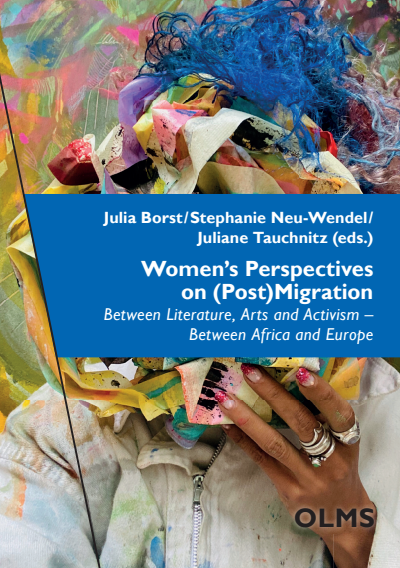
Women's Perspectives on (Post)Migration
Between Literature, Arts and Activism – Between Africa and Europe- Editors:
- | |
- Publisher:
- 2023
Summary
This volume takes a closer look at women’s perspectives on (post-)migration and explores the uncertainties, frictions, struggles and opportunities emerging from that context. It revolves around African and Afrodescendant female writers and artists and refers to the uncomfortable stories they tell, stories about what it means to have migrated to, live in, or have been born in Romance-speaking Europe. Their voices reveal positionings of the ‘female Other’ that oscillate between alienation and belonging, moving between African, European and other (diasporic) spaces. The scholarly articles, from the disciplines of literary and cultural studies, explore literature, theatre, film and the internet and cover a variety of countries and Romance languages. The volume engages simultaneously in a dialogue with writers and activists: it includes short and micro stories by Melibea Obono and Ubah Cristina Ali Farah as well as interviews with Amina Marini, Mimina Icir Di Muro and Aminata Aidara, Kaha Mohamed Aden, Igiaba Scego and Desirée Bela-Lobedde.
Keywords
Search publication
Bibliographic data
- Copyright Year
- 2023
- ISBN-Print
- 978-3-487-16351-2
- ISBN-Online
- 978-3-487-42355-5
- Publisher
- Georg Olms Verlag, Baden-Baden
- Language
- English
- Pages
- 0
- Product Type
- Edited Book
Table of contents
- Titelei/InhaltsverzeichnisPages 1 - 8 Download chapter (PDF)
- Authors: | |Download chapter (PDF)
- Works Cited
- Authors:Download chapter (PDF)
- 1. Introduction
- 2. Differing female positionings
- 3. Breaking with the autobiographical testimony – L'últim patriarca by Najat El Hachmi
- Works Cited
- Authors:Download chapter (PDF)
- 1. Révélation à la lumière du 'drame social' et du 'drame esthétique'
- 2. Efficacité esthétique de Révélation
- 3. Écriture scénique de Révélation : au-delà des identités afropéennes de Miano
- Bibliographie
- Authors: | |Download chapter (PDF)
- 1. Cosa pensavi quand’eri piccola dell’Altro Continente? Quello da cui provenivano uno o entrambi tuoi genitori?
- 2. E che idee avevi, se ne avevi, delle persone appartenenti a minoranze, bianche o nere che fossero, con le quali entravi in contatto?
- 3. Quand’eri bambino/a hai mai discriminato qualcuno per il suo aspetto?
- 4. E sei stata vittima di discriminazione?
- Authors:Download chapter (PDF)
- “Trasformo il pianto in una lingua […]”: agency in Oltre Babilonia di Igiaba Scego
- Passare allo ‘spazio’ delle relazioni: Madre piccola di Ubah Cristina Ali Farah
- Riassunto
- Bibliografia
- Authors:Download chapter (PDF)
- 1. Introducing the two novels
- 2. A focus on masculinities
- 3. Relational histories
- 4. Hostile fathers, alienated mothers and nurturing grandmothers
- Works Cited
- Authors: |Download chapter (PDF)
- Bibliografia
- Authors:Download chapter (PDF)
- 1. Introduction
- 2. Identity and recognition: Honneth, Butler, Mbembe, inter alia
- 3. Between Africa and Europe. Identity, recognition and language in the work of Ken Bugul
- 4. Self- and external perception. Memory, identity and recognition in the work of Fatou Diome
- 5. Conclusion – Between resignation and empowerment and the liberating function of literary writing
- Works Cited
- Authors:Download chapter (PDF)
- 1. Introduction
- 2. L’afroromania : ethnoscapes selon Arjun Appadurai
- 3. Les femmes de descendance africaine doublement subordonnées: race et gender selon hooks
- 4. Conclusion
- Bibliographie
- Authors:Download chapter (PDF)
- Simonetta Puleio / Stephanie Neu-Wendel: Introduzione
- Ubah Cristina Ali Farah: Medea e Amir
- Sandra
- Authors:Download chapter (PDF)
- 1. Orlanda Amarílis and Benjamin’s “chronotope”
- 2. Cais-do-Sodré Té Salamansa (1974): Emigrants’ Stories
- 3. Immigrants’ Experiences in Lisbon
- 4. Gender Violence and Emigration
- 5. The Postcolonial Perspective
- 6. Final Remarks
- Works Cited
- Authors: |Download chapter (PDF)
- Afrodiasporic Communities and Aesthetic Activism in Cyberspace
- Afrofeminist Blogs as Tools of Self-Affirmation and Empowerment – An Overview of Examples from France, Spain and Italy
- Badassafrofem and Les Bavardages de Kiyémis (France): Reclaiming and Re-Signifying Black Bodies
- Afroféminas and Desirée Bela-Lobedde’s Online Activism (Spain): Challenging Eurocentric Beauty Standards and Celebrating Black Bodies
- Nappytalia (Italy): “Natural” Hairstyles as Self-Affirmation and Markers of Diversity
- Conclusion
- Works Cited
- Authors:Download chapter (PDF)
- Stress and coping theories
- Conclusion
- Works Cited
- Authors:Download chapter (PDF)
- Bibliografía
- Authors: |Download chapter (PDF)
- Bibliografía
- Authors:Download chapter (PDF)
- 1. Introduction
- 2. Une écriture frontalière
- 3. Les voix féminines de Blues pour Élise
- 4. L’analyse du potentiel subversif de la langue et du langage des Afropéennes
- 5. Conclusion
- Bibliographie
- Authors:Download chapter (PDF)
- The Story of Kehinde
- Back in Africa
- Bahia Houses
- The Relevance of the “Color Defect”
- Works Cited
- Authors:Download chapter (PDF)
- Julia Borst / Danae Gallo González: Notas introductorias a Melibea Obono y su obra literaria
- La obra literaria de Melibea Obono (en español y traducida a otraslenguas)
- Melibea Obono: Mberbí: el llanto más grande de las mujeres
- Authors:Download chapter (PDF)
- Le couple mixte aux Antilles : chiffres versus littérature
- Couple mixte face à l’histoire et à l’inconscient antillais
- « Counterarchival source » : L’importance de la voix de la femme noire. Non M. Fanon, nous ne souhaitons pas toutes être lactifiées
- Conclusion
- Bibliographie
- ContributorsPages 437 - Download chapter (PDF)