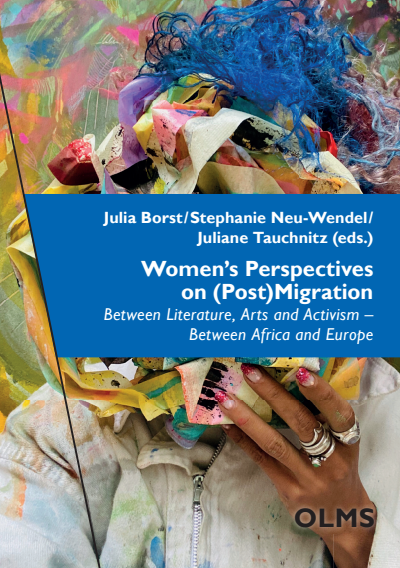
Women's Perspectives on (Post)Migration
Between Literature, Arts and Activism – Between Africa and Europe- Herausgeber:innen:
- | |
- Verlag:
- 2023
Zusammenfassung
Dieser Band wirft einen genaueren Blick auf die Perspektiven von Frauen auf (Post-)Migration und untersucht die Unsicherheiten, Reibungen, Kämpfe und Chancen, die sich aus diesem Kontext ergeben. Er konzentriert sich auf afrikanische und afrodeszendente Schriftstellerinnen und Künstlerinnen und bezieht sich auf die unbequemen Geschichten, die sie erzählen, Geschichten darüber, was es bedeutet, in das romanischsprachige Europa migriert zu sein, dort zu leben oder dort geboren worden zu sein. Ihre Stimmen offenbaren Positionierungen des "weiblichen Anderen", die zwischen Entfremdung und Zugehörigkeit oszillieren und sich zwischen afrikanischen, europäischen und anderen (diasporischen) Räumen bewegen. Die wissenschaftlichen Beiträge aus den Bereichen Literatur- und Kulturwissenschaften befassen sich mit Literatur, Theater, Film und Internet und decken eine Vielzahl von Ländern und romanischen Sprachen ab. Der Band tritt gleichzeitig in einen Dialog mit Schriftstellern und Aktivisten: Er enthält Kurz- und Mikrogeschichten von Melibea Obono und Ubah Cristina Ali Farah sowie Interviews mit Amina Marini, Mimina Icir Di Muro und Aminata Aidara, Kaha Mohamed Aden, Igiaba Scego und Desirée Bela-Lobedde.
Schlagworte
Publikation durchsuchen
Bibliographische Angaben
- Copyrightjahr
- 2023
- ISBN-Print
- 978-3-487-16351-2
- ISBN-Online
- 978-3-487-42355-5
- Verlag
- Georg Olms Verlag, Baden-Baden
- Sprache
- Englisch
- Seiten
- 0
- Produkttyp
- Sammelband
Inhaltsverzeichnis
- Titelei/InhaltsverzeichnisSeiten 1 - 8 Download Kapitel (PDF)
- Autor:innen: | |Download Kapitel (PDF)
- Works Cited
- Autor:innen:Download Kapitel (PDF)
- 1. Introduction
- 2. Differing female positionings
- 3. Breaking with the autobiographical testimony – L'últim patriarca by Najat El Hachmi
- Works Cited
- Autor:innen:Download Kapitel (PDF)
- 1. Révélation à la lumière du 'drame social' et du 'drame esthétique'
- 2. Efficacité esthétique de Révélation
- 3. Écriture scénique de Révélation : au-delà des identités afropéennes de Miano
- Bibliographie
- Autor:innen: | |Download Kapitel (PDF)
- 1. Cosa pensavi quand’eri piccola dell’Altro Continente? Quello da cui provenivano uno o entrambi tuoi genitori?
- 2. E che idee avevi, se ne avevi, delle persone appartenenti a minoranze, bianche o nere che fossero, con le quali entravi in contatto?
- 3. Quand’eri bambino/a hai mai discriminato qualcuno per il suo aspetto?
- 4. E sei stata vittima di discriminazione?
- Autor:innen:Download Kapitel (PDF)
- “Trasformo il pianto in una lingua […]”: agency in Oltre Babilonia di Igiaba Scego
- Passare allo ‘spazio’ delle relazioni: Madre piccola di Ubah Cristina Ali Farah
- Riassunto
- Bibliografia
- Autor:innen:Download Kapitel (PDF)
- 1. Introducing the two novels
- 2. A focus on masculinities
- 3. Relational histories
- 4. Hostile fathers, alienated mothers and nurturing grandmothers
- Works Cited
- Autor:innen: |Download Kapitel (PDF)
- Bibliografia
- Autor:innen:Download Kapitel (PDF)
- 1. Introduction
- 2. Identity and recognition: Honneth, Butler, Mbembe, inter alia
- 3. Between Africa and Europe. Identity, recognition and language in the work of Ken Bugul
- 4. Self- and external perception. Memory, identity and recognition in the work of Fatou Diome
- 5. Conclusion – Between resignation and empowerment and the liberating function of literary writing
- Works Cited
- Autor:innen:Download Kapitel (PDF)
- 1. Introduction
- 2. L’afroromania : ethnoscapes selon Arjun Appadurai
- 3. Les femmes de descendance africaine doublement subordonnées: race et gender selon hooks
- 4. Conclusion
- Bibliographie
- Autor:innen:Download Kapitel (PDF)
- Simonetta Puleio / Stephanie Neu-Wendel: Introduzione
- Ubah Cristina Ali Farah: Medea e Amir
- Sandra
- Autor:innen:Download Kapitel (PDF)
- 1. Orlanda Amarílis and Benjamin’s “chronotope”
- 2. Cais-do-Sodré Té Salamansa (1974): Emigrants’ Stories
- 3. Immigrants’ Experiences in Lisbon
- 4. Gender Violence and Emigration
- 5. The Postcolonial Perspective
- 6. Final Remarks
- Works Cited
- Autor:innen: |Download Kapitel (PDF)
- Afrodiasporic Communities and Aesthetic Activism in Cyberspace
- Afrofeminist Blogs as Tools of Self-Affirmation and Empowerment – An Overview of Examples from France, Spain and Italy
- Badassafrofem and Les Bavardages de Kiyémis (France): Reclaiming and Re-Signifying Black Bodies
- Afroféminas and Desirée Bela-Lobedde’s Online Activism (Spain): Challenging Eurocentric Beauty Standards and Celebrating Black Bodies
- Nappytalia (Italy): “Natural” Hairstyles as Self-Affirmation and Markers of Diversity
- Conclusion
- Works Cited
- Autor:innen:Download Kapitel (PDF)
- Stress and coping theories
- Conclusion
- Works Cited
- Autor:innen:Download Kapitel (PDF)
- Bibliografía
- Autor:innen: |Download Kapitel (PDF)
- Bibliografía
- Autor:innen:Download Kapitel (PDF)
- 1. Introduction
- 2. Une écriture frontalière
- 3. Les voix féminines de Blues pour Élise
- 4. L’analyse du potentiel subversif de la langue et du langage des Afropéennes
- 5. Conclusion
- Bibliographie
- Autor:innen:Download Kapitel (PDF)
- The Story of Kehinde
- Back in Africa
- Bahia Houses
- The Relevance of the “Color Defect”
- Works Cited
- Autor:innen:Download Kapitel (PDF)
- Julia Borst / Danae Gallo González: Notas introductorias a Melibea Obono y su obra literaria
- La obra literaria de Melibea Obono (en español y traducida a otraslenguas)
- Melibea Obono: Mberbí: el llanto más grande de las mujeres
- Autor:innen:Download Kapitel (PDF)
- Le couple mixte aux Antilles : chiffres versus littérature
- Couple mixte face à l’histoire et à l’inconscient antillais
- « Counterarchival source » : L’importance de la voix de la femme noire. Non M. Fanon, nous ne souhaitons pas toutes être lactifiées
- Conclusion
- Bibliographie
- ContributorsSeiten 437 - Download Kapitel (PDF)