, to see if you have full access to this publication.
Monograph No access
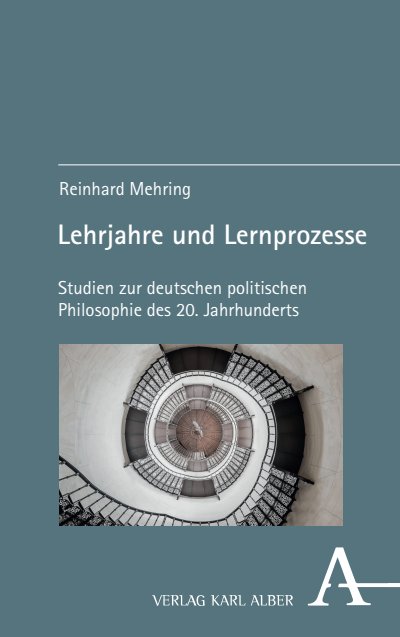
Lehrjahre und Lernprozesse
Studien zur deutschen politischen Philosophie des 20. Jahrhunderts
Authors:
Publisher:
2025
Summary
Lerning processes. Studies on German political philosophy in the 20. Century. Text from 25 years. This book pursues the path of German political philosophy in the 20th century, starting with Max Weber, with a systematic focus on a ‘constitutional theory’ as a struggle for the self-assertion of individuality and freedom. The focus falls on ‘Heidelberg’ authors (Radbruch, Jaspers, Arendt) and representatives of ‘Berlin’ national liberalism (from Schleiermacher to Spranger). The anti-liberal antipodes (Schmitt, Heidegger) are thematised as such only in passing and by way of contrast. The Federal German academic discourse is described as a struggle to preserve the Humboldt model of the ‘research university’ based on the academic experience of one's own teachers and ‘years of apprenticeship’. The collection Lehrjahre und Lernprozesse is thus also a piece of intellectual autobiography.
Keywords
Search publication
Bibliographic data
Edition
1/2025
Copyright Year
2025
ISBN-Print
978-3-495-99038-4
ISBN-Online
978-3-495-99039-1
Publisher
Karl Alber, Baden-Baden
Language
German
Pages
308
Product Type
Monograph
Table of contents
ChapterPages
Vorwort No access
I. Max Webers politische Philosophie No access
1. Die Anknüpfung durch Karl Jaspers No access
2. Kollektivistische Wendung des politischen Denkens: Martin Heidegger No access
III. Schlußbemerkungen No access
I. Schmitts verfassungstheoretischer Ansatz No access
II. Die Begründung von Freiheit als Aufgabe akademischer Philosophie No access
III. Begriffsbestimmung politischer Philosophie No access
IV. Politik als Form kollektiver Selbstbestimmung No access
I. Fragestellung No access
II. Gustav Radbruch: das soziale Individuum No access
III. Erik Wolf: das Individuum als Rechtsperson No access
III. Karl Larenz: die Rechtsperson als Volksgenosse No access
IV. Schluß No access
I. Jenseits von Kierkegaard und Nietzsche No access
II. Das Nietzsche-Buch von 1936 No access
I. Zur Schlemihl-Identifikation No access
II. Romantische Entdeckung der jüdischen Geschichte No access
III. Grundzüge der Rahel-Biographie No access
IV. Autobiographische Lesart No access
V. Gestaltwandel des Paria No access
VI. Der Rektor des „Geschlechtes derer von Schlemihl“: Julius Eduard Hitzig No access
I. Fragestellung No access
II. Von Kant zu Schiller No access
III. Schleiermachers Ansatz zu einer dialektischen Theorie Allgemeiner Pädagogik No access
IV. Pfade philosophischer Reflexion: die Spannung von Individuum und Gesellschaft No access
V. Zur Reformulierung individualistischer Bildungsphilosophie No access
I. Thematik No access
II. Von Dilthey zu Spranger No access
III. Litts eigener Ansatz No access
IV. Platon statt Hegel? Zur philosophischen Differenz Sprangers mit Litt No access
I. Konservatismus No access
II. Sprangers Nachkriegskonservatismus No access
III. Sprangers Gedanken zur staatsbürgerlichen Erziehung No access
I. Vom Streit um die Emanzipation des Faches: das Habilitationsverfahren No access
II. Analyse der Habilitationsschrift No access
X. Der letzte Kulturprotestant: Wilhelm Hennis zum 100. Geburtstag (2023) No access
I. Zur Ausgangslage No access
II. Zur Linie der Geschichte des politischen Denkens No access
III. Objektive Ironie eines „modernen Odysseus“ No access
XII. Würzburg/Berlin: Erinnerungen an Hasso Hofmann 1991/93 (2022) No access
I. Das historiographische Wagnis der philosophischen Traditionskonstruktion No access
II. Zur universitären Rolle der Philosophie No access
II. Jenseits von Humboldt: der „Geist“ der heutigen Universitätspolitik No access
XIV. Ende der Universität? Mutmaßungen eines „verschrotteten“ Privatdozenten (2002) No access
1. Stefan Breuers Revision der „Kritischen Theorie“ (2018) No access
2. Jens Hackes Krisenanalyse (2018) No access
A. Unsterbliche (2004) No access
B. Isolde als Sirene: Tristans Narrheit als Wahrheitsereignis (2013) No access
4. Der doppelte Mozart: Borchmeyer und Assmann (2005) No access
5. Rainer Martens Glückscredo (2023) No access
6. Vittorio Hösles Geschichte des deutschen „Geistes“ (2014) No access
7. Andreas Urs Sommers Möglichkeitsphilosophiegeschichte (2012) No access
8. Zur Bearbeitung vorgeschlagen: Notiz zu Goethe (2025) No access
XVI. Nachwort zur vorliegenden Sammlung No access
I. Der neue Hitler? No access
II. Der Mensch als „offene Frage“ No access
III. Sein und Sollen: Demokratiedämmerung normativ und faktisch No access
Nachweise No access Pages 307 - 308
Similar publications
from the topics "Bildungssysteme & Hochschulpolitik"
Volume No access
Vierteljahresschrift für Behindertenpädagogik und Integration Behinderter in Praxis, Forschung und Lehre