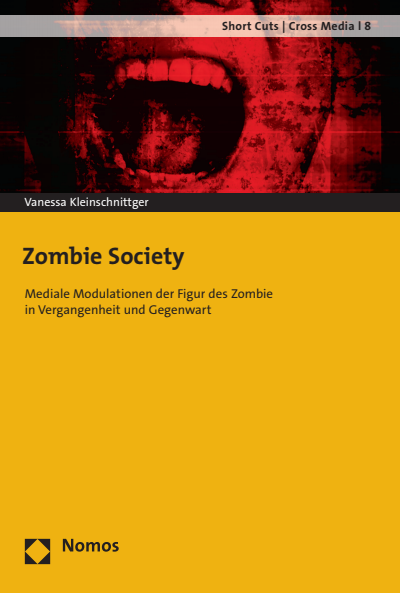
Zombie Society
Mediale Modulationen der Figur des Zombie in Vergangenheit und Gegenwart- Autor:innen:
- Reihe:
- Short Cuts | Cross Media, Band 8
- Verlag:
- 2015
Zusammenfassung
Zombies sind in den letzten Jahren omnipräsent: Sie erscheinen nicht nur in Filmen, sondern als crossmediales Phänomen auch in Games, Büchern und TV-Serien; sie werden als akademische Metapher und philosophische Denkfigur eingesetzt und dienen sinnbildlich der Verdeutlichung komplexer Abläufe in statistischen Modellen. Angesichts dessen stellt sich die Frage, durch welche Eigenschaften sich der Zombie auszeichnet und wie davon ausgehend dieser gegenwärtige Boom zu erklären ist.
Die Dissertation widmet sich der systematischen Untersuchung der Figur des Zombie und seiner diversen crossmedialen Modulationen, klärt deren Ursprünge und Entwicklungen sowie ihre Bedeutung in Vergangenheit und Gegenwart. Es zeigt sich: Die Auseinandersetzung mit dem Zombie ist mehr als ein blutiges Horror-Vergnügen – sie kann gar wichtige Funktionen im Rahmen von Lebensbewältigung und Identitätsbildung übernehmen.
Publikation durchsuchen
Bibliographische Angaben
- Auflage
- 1/2015
- Copyrightjahr
- 2015
- ISBN-Print
- 978-3-8487-2423-9
- ISBN-Online
- 978-3-8452-6582-7
- Verlag
- Nomos, Baden-Baden
- Reihe
- Short Cuts | Cross Media
- Band
- 8
- Sprache
- Deutsch
- Seiten
- 215
- Produkttyp
- Monographie
Inhaltsverzeichnis
- Titelei/Inhaltsverzeichnis Kein Zugriff Seiten 1 - 8
- Einleitung: der Zombie in Vergangenheit und Gegenwart Kein Zugriff Seiten 9 - 16
- Herkunft und Genese des Zombie Kein Zugriff Seiten 17 - 57
- Die mediale Entwicklung des Zombie Kein Zugriff Seiten 58 - 139
- Der Zombie in der theoretischen Analyse Kein Zugriff Seiten 140 - 174
- Der Zombie in der Rezeption: ein Fallbeispiel Kein Zugriff Seiten 175 - 197
- Schlusswort Kein Zugriff Seiten 198 - 201
- Literaturverzeichnis Kein Zugriff Seiten 202 - 215
Literaturverzeichnis (189 Einträge)
Es wurden keine Treffer gefunden. Versuchen Sie einen anderen Begriff.
- Ackermann, Hans-W./Gauthier, Jeanine (1991): „The Ways and Nature of the Zombi“. In: The Journal of American Folklore, 104 (414), S. 466–494. Google Scholar öffnen DOI: 10.5771/9783845265827
- Allen, Nick (2010): „Haiti Earthquake: Voodoo High Priest Claims Aid Monopolised by Christians“. The Telegraph, 01.02.2010. URL: http://www.telegraph.co.uk/ news/worldnews/centralamericaandthecaribbean/haiti/7119572/Haiti-earthquake-voodoo-high-priest-claims-aid-monopolised-by-Christians.html [Stand: 25.05.2015]. Google Scholar öffnen DOI: 10.5771/9783845265827
- Amann, Caroline (2011): „Abjekt“. Lexikon der Filmbegriffe. URL: http://filmlexikon. Google Scholar öffnen DOI: 10.5771/9783845265827
- uni-kiel.de/index.php?action=lexikon&tag=det&id=4515 [Stand: 25.05.2015]. Google Scholar öffnen DOI: 10.5771/9783845265827
- Aufenanger, Stefan (1994): „Strukturanalytische Rezeptionsforschung“. In: Hiegemann, Susanne/Swoboda, Wolfgang H. (Hrsg.): Handbuch der Medienpädagogik. Opladen: Leske + Budrich, S. 403–412. Google Scholar öffnen DOI: 10.5771/9783845265827
- Badley, Linda (1995): Film, Horror, and the Body Fantastic. Westport (Conn.) [et al.]: Greenwood Press. Google Scholar öffnen DOI: 10.5771/9783845265827
- Badley, Linda (2008): „Zombie Splatter Comedy from Dawn to Shawn: Cannibal Carnevalesque“. In: McIntosh, Shawn/Leverette, Marc (Hrsg.): Zombie Culture: Autopsies of the Living Dead. Lanham: The Scarecrow Press, S. 35–53. Google Scholar öffnen DOI: 10.5771/9783845265827
- Bandini, Pietro (1999): Voodoo. Von Hexen, Zombies und schwarzer Magie. München: Knaur. Google Scholar öffnen DOI: 10.5771/9783845265827
- Bauer, Richard (2011): „Per SMS die Cholera bekämpfen: ‚Mikroben töten keine Haitianer’ – Mit unkonventionellen Mitteln gegen Irrglauben und Unwissen“. Neue Zürcher Zeitung, 05.03.2011. URL: http://www.nzz.ch/aktuell/international/per-sms-die-cholera-bekaempfen-1.9772110 [Stand: 25.05.2015]. Google Scholar öffnen DOI: 10.5771/9783845265827
- BBC News (2003): „Haiti Makes Voodoo Official“. BBC News, 30.04.2003. URL: http://news.bbc.co.uk/2/hi/americas/2985627.stm [Stand: 25.05.2015]. Google Scholar öffnen DOI: 10.5771/9783845265827
- Beck, Ulrich/Sennett, Richard/Grefe, Christiane (2000): „Freiheit statt Kapitalismus“. Die Zeit, 06.04.2000. URL: http://www.zeit.de/2000/15/200015.beck_sennett_.xml [Stand: 20.09.2014]. Google Scholar öffnen DOI: 10.5771/9783845265827
- Berger, Peter L. (1975): Das Unbehagen in der Modernität. Frankfurt: Campus Verlag. Google Scholar öffnen DOI: 10.5771/9783845265827
- Berger, Peter L./Luckmann, Thomas (1969): Die gesellschaftliche Konstruktion der Wirklichkeit eine Theorie der Wissenssoziologie. Frankfurt a.M: S. Fischer Verlag. Google Scholar öffnen DOI: 10.5771/9783845265827
- Bishop, Kyle (2009): „Dead Man Still Walking: Explaining the Zombie Renaissance“. In: The Journal of Popular Culture, 37 , S. 16–25. Google Scholar öffnen DOI: 10.5771/9783845265827
- Bishop, Kyle William (2010): American Zombie Gothic. The Rise and Fall (and Rise) of the Walking Dead in Popular Culture. Jefferson, N.C: McFarland & Company. Google Scholar öffnen DOI: 10.5771/9783845265827
- Blackburn, Robin (1997): The Making of New World Slavery. From the Baroque to the Modern, 1492-1800. London: Verso. Google Scholar öffnen DOI: 10.5771/9783845265827
- Boluk, Stephanie/Lenz, Wylie (Hrsg.) (2011a): Generation Zombie: Essays on the Living Dead in Modern Culture. Jefferson, N.C/London: Mcfarland & Co Inc. Google Scholar öffnen DOI: 10.5771/9783845265827
- Boluk, Stephanie/Lenz, Wylie (2011b): „Introduction: Generation Z, th Age of Apocalypse“. In: Boluk, Stephanie/Lenz, Wylie (Hrsg.): Generation Zombie: Essays on the Living Dead in Modern Culture. Jefferson, N.C/London: Mcfarland & Co Inc, S. 1–17. Google Scholar öffnen DOI: 10.5771/9783845265827
- Capcom (2015a): „Platinum Titles“. URL: http://capcom.co.jp/ir/english/business/ Google Scholar öffnen DOI: 10.5771/9783845265827
- million.html [Stand: 25.05.2015]. Google Scholar öffnen DOI: 10.5771/9783845265827
- Capcom (2015b): „Total Sales Units Data“. URL: http://capcom.co.jp/ir/english/ Google Scholar öffnen DOI: 10.5771/9783845265827
- business/salesdata.html [Stand: 25.05.2015]. Google Scholar öffnen DOI: 10.5771/9783845265827
- Charlton, Michael/Neumann-Braun, Klaus (1992): Medienkindheit - Medienjugend: eine Einführung in die aktuelle kommunikationswissenschaftliche Forschung. München: Quintessenz-Verlag. Google Scholar öffnen DOI: 10.5771/9783845265827
- Charlton, Michael/Neumann, Klaus (1986): Medienkonsum und Lebensbewältigung in der Familie: Methode und Ergebnisse der strukturanalytischen Rezeptionsforschung, mit fünf Falldarstellungen. München-Weinheim: Psychologie Verlags Union. Google Scholar öffnen DOI: 10.5771/9783845265827
- Christie, Deborah/Lauro, Sarah Juliet (Hrsg.) (2011): Better Off Dead: the Evolution of the Zombie as Post-Human. New York: Fordham University Press. Google Scholar öffnen DOI: 10.5771/9783845265827
- o. A. (1685): „Le code noir ou Edit du roy“. Versailles. Google Scholar öffnen DOI: 10.5771/9783845265827
- Cosentino, Donald (1988a): „More on ‚Voodoo’“. In: African Arts. 21 (3), S. 77. Google Scholar öffnen DOI: 10.5771/9783845265827
- Cosentino, Donald (1988b): „The Final Word on ‚Voodoo’“. In: African Arts. 21 (3). Google Scholar öffnen DOI: 10.5771/9783845265827
- Coupeau, Steeve (2008): The History of Haiti. Westport, Conn: Greenwood Press. Google Scholar öffnen DOI: 10.5771/9783845265827
- Courlander, Harold (1988a): „Still More on ‚Voodoo’“. In: African Arts. 21 (3), S. 77. Google Scholar öffnen DOI: 10.5771/9783845265827
- Courlander, Harold (1988b): „The Word Voodoo“. In: African Arts. 21 (2), S. 88. Google Scholar öffnen DOI: 10.5771/9783845265827
- Craige, John Houston (1933): Black Bagdad. New York: Minton, Balch. Google Scholar öffnen DOI: 10.5771/9783845265827
- Davis, Wade (1988): Passage of Darkness. The Ethnobiology of the Haitian Zombie. Chapel Hill (N.C.) [et al.]: The University of North Carolina Press. Google Scholar öffnen DOI: 10.5771/9783845265827
- Davis, Wade (1985): The Serpent and the Rainbow. New York: Simon and Schuster. Google Scholar öffnen DOI: 10.5771/9783845265827
- Debien, Gabriel (1974): Les esclaves aux Antilles françaises (XVIIe-XVIIIe siècles). Basse-Terre: Soc. d’Histoire de la Guadeloupe. Google Scholar öffnen DOI: 10.5771/9783845265827
- Degoul, Franck (2011): „‚We Are the Mirror of Your Fears’“: Haitian Identity and Zombification“. In: Christie, Deborah/Lauro, Sarah Juliet (Hrsg.): Better Off Dead: the Evolution of the Zombie as Post-Human. New York: Fordham University Press, S. 24–38. Google Scholar öffnen DOI: 10.5771/9783845265827
- Deleuze, Gilles (1977): Anti-Oedipus. Frankfurt a. M: Suhrkamp. Google Scholar öffnen DOI: 10.5771/9783845265827
- Dendle, Peter (2001): The Zombie Movie Encyclopedia. Jefferson, N.C: McFarland. Google Scholar öffnen DOI: 10.5771/9783845265827
- Dendle, Peter (2012): The Zombie Movie Encyclopedia, Volume 2: 2000-2010. 2. Aufl. Jefferson, N.C: McFarland. Google Scholar öffnen DOI: 10.5771/9783845265827
- Dendle, Peter (2011): „Zombie Movies and the ‚Millennial Generation’“. In: Christie, Deborah/Lauro, Sarah Juliet (Hrsg.): Better Off Dead: the Evolution of the Zombie as Post-Human. New York: Fordham University Press, S. 175–186. Google Scholar öffnen DOI: 10.5771/9783845265827
- Deren, Maya (1953): Divine Horsemen the Living Gods of Haiti. London: Thames and Hudson. Google Scholar öffnen DOI: 10.5771/9783845265827
- Derksen, Craig/Hick, Darren Hudson (2011): „Your Zombie and You: Identity, Emotion, and the Undead“. In: Moreman, Christopher M./Rushton, Cory James (Hrsg.): Zombies Are Us: Essays on the Humanity of the Walking Dead. Jefferson, NC: McFarland, S. 11–23. Google Scholar öffnen DOI: 10.5771/9783845265827
- Desmangles, Leslie Gérald (1992): The Faces of the Gods. Vodou and Roman Catholicism in Haiti. Chapel Hill (N.C.): University of North Carolina. Google Scholar öffnen DOI: 10.5771/9783845265827
- Dillard, R. H. W. (1987): „Night of the Living Dead: It’s Not Like Just a Wind That’s Passing Through“. In: Waller, Gregory A. (Hrsg.): American Horrors: Essays on the Modern American Horror Film. Urbana/Chicago: University of Illinois Press, S. 14–29. Google Scholar öffnen DOI: 10.5771/9783845265827
- Dubois, Laurent (2012): Haiti. The Aftershocks of History. New York: Metropolitan Books. Google Scholar öffnen DOI: 10.5771/9783845265827
- Duncan, Glen (2011): „Zone One - By Colson Whitehead - Book Review“. The New York Times, 28.10.2011. URL: http://www.nytimes.com/2011/10/30/books/review/zone-one-by-colson-whitehead-book-review.html [Stand: 25.05.2015]. Google Scholar öffnen DOI: 10.5771/9783845265827
- Van Duser, Winifred (1945): „Ending Career Packed With Melodrama“. Democratic Advocate. Westminster, 02.11.1945. Google Scholar öffnen DOI: 10.5771/9783845265827
- Facebook (2015a): „Facebook Hilfebereich ‚Was ist eine Gemeinschaftsseite?’“. Facebook. URL: https://www.facebook.com/help/187301611320854 [Stand: 25.05.2015]. Google Scholar öffnen DOI: 10.5771/9783845265827
- Facebook (2015b): „Facebook Hilfebereich „Seiten-Grundlagen““. Facebook. URL: https://www.facebook.com/help/281592001947683 [Stand: 25.05.2015]. Google Scholar öffnen DOI: 10.5771/9783845265827
- Financial Times (2015): „Zombie Bank Definition from Financial Times Lexicon“. URL: http://lexicon.ft.com/Term?term=zombie-bank [Stand: 25.05.2015]. Google Scholar öffnen DOI: 10.5771/9783845265827
- Flaig, Egon (2009): Weltgeschichte der Sklaverei. München: C.H. Beck (Beck’sche Reihe). Google Scholar öffnen DOI: 10.5771/9783845265827
- Fleming, Mike (2013): „Undead Mashup ‚Pride, Prejudice And Zombies’ Gets Resurrected“. Deadline. URL: http://www.deadline.com/2013/03/undead-mashup-pride-prejudice-and-zombies-gets-resurrected [Stand: 25.05.2015]. Google Scholar öffnen DOI: 10.5771/9783845265827
- Franck, Georg (1998): Ökonomie der Aufmerksamkeit. Ein Entwurf. 2. Druck. München: Carl Hanser. Google Scholar öffnen DOI: 10.5771/9783845265827
- Freist, Roland (2012): „Internetspionage. Vorsicht vor Zombie-Cookies: Das müssen Sie wissen“. PC Welt. URL: http://www.pcwelt.de/ratgeber/Super-Cookies-spionieren-Sie-aus-4868761.html [Stand: 25.05.2015]. Google Scholar öffnen DOI: 10.5771/9783845265827
- Freud, Sigmund (1919): „Das Unheimliche“. In: Imago. Zeitschrift für Anwendung der Psychoanalyse auf die Geisteswissenschaften, 5/6 , S. 297–324. Google Scholar öffnen DOI: 10.5771/9783845265827
- Fürst, Michael (2011): „Zombies Over the Rainbow. Konstruktion von Geschlechtsidentität im schwulen Zombiefilm“. In: Fürst, Michael/Krautkrämer, Florian/Wiemer, Serjoscha (Hrsg.): Untot: Zombie, Film, Theorie. München: Belleville, S. 99–120. Google Scholar öffnen DOI: 10.5771/9783845265827
- Fürst, Michael/Krautkrämer, Florian/Wiemer, Serjoscha (Hrsg.) (2011): Untot: Zombie, Film, Theorie. München: Belleville. Google Scholar öffnen DOI: 10.5771/9783845265827
- Galland, Antoine (Übersetzer) (1822): Les mille et une nuits: contes arabes. Paris: J. A. S. Collin de Planey. Google Scholar öffnen DOI: 10.5771/9783845265827
- Goffman, Erving (1980): Rahmen-Analyse. Ein Versuch über die Organisation von Alltagserfahrungen. Frankfurt a.M: Suhrkamp Verlag. Google Scholar öffnen DOI: 10.5771/9783845265827
- Goldschmidt, Richard (1940): The Material Basis of Evolution. New Haven: Yale University Press. Google Scholar öffnen DOI: 10.5771/9783845265827
- Graybeal, Jay A. (2001): „‚William Buehler Seabrook’ Carroll County Times Article for 28 October 2001“. Carrol County Times, 28.10.2001. URL: http://www.hsccmd.org/ Google Scholar öffnen DOI: 10.5771/9783845265827
- Documents/Carroll%20County%20Times%20Yesteryears/2001/10-28-2001.pdf [Stand: 25.05.2015]. Google Scholar öffnen DOI: 10.5771/9783845265827
- Habermas, Jürgen (1985): Der philosophische Diskurs der Moderne zwölf Vorlesungen. Frankfurt am Main: Suhrkamp. Google Scholar öffnen DOI: 10.5771/9783845265827
- Habermas, Jürgen (1981b): Theorie des kommunikativen Handelns. 2 Bde. 1.-4. Aufl. Frankfurt a.M: Suhrkamp. Google Scholar öffnen DOI: 10.5771/9783845265827
- Halberstam, Judith (1995): Skin Shows: Gothic Horror and the Technology of Monsters. Durham and London: Duke University Press. Google Scholar öffnen DOI: 10.5771/9783845265827
- Hamako, Eric (2011): „Zombie Orientals Ate My Brain! Orientalism in Contemporary Zombie Stories“. In: Moreman, Christopher M./Rushton, Cory James (Hrsg.): Race, Oppression and the Zombie. Essays on Cross-Cultural Appropriations of the Caribbean Tradition. Jefferson: McFarland, S. 107–123. Google Scholar öffnen DOI: 10.5771/9783845265827
- Hardman, John (1999): „The Great Depression and the New Deal“. URL: http://www.stanford.edu/class/e297c/poverty_prejudice/soc_sec/hgreat.htm [Stand: 25.05.2015]. Google Scholar öffnen DOI: 10.5771/9783845265827
- Haupts, Tobias (2012): „Ein Zombie am Glockenseil zum Frühstück“. Schnitt das Filmmagazin, 67 (3), S. 37–38. Google Scholar öffnen DOI: 10.5771/9783845265827
- Häussler, G. (o. J.): „Das Zombie-Argument von David Chalmers“. Qualia-Problem. URL: http://qualiaproblem.wordpress.com/2012/12/13/das-zombie-argument-von-david-chalmers/ [Stand: 25.05.2015]. Google Scholar öffnen DOI: 10.5771/9783845265827
- Heffernan, Kevin (2002): „Inner-City Exhibition and the Genre Film: Distributing ‚Night of the Living Dead’ (1968)“. In: Cinema Journal, 41 (3), S. 59–77. Google Scholar öffnen DOI: 10.5771/9783845265827
- Heinl, Robert Debs/Gordon Heinl, Nancy/Heinl, Michael (1996): Written in Blood. The Story of the Haitian People 1492-1995. 2nd ed. Lanham (Md.) [et al.]: University Press of America. Google Scholar öffnen DOI: 10.5771/9783845265827
- Hines, Terence (2008): „Zombies and Tetrodotoxin“. In: Skeptical Inquirer, 32 (3). URL: http://www.csicop.org/si/show/zombies_and_tetrodotoxin/ [Stand: 20.09.2014]. Google Scholar öffnen DOI: 10.5771/9783845265827
- Hoberman, James/Rosenbaum, Jonathan (1983): Midnight Movies. New York [et al.]: Harper and Row. Google Scholar öffnen DOI: 10.5771/9783845265827
- Horster, Detlef (2013): „Habermas, Jürgen“. In: Bedorf, Thomas/Gelhard, Andreas (Hrsg.) Die deutsche Philosophie im 20. Jahrhundert: ein Autorenhandbuch. Darmstadt: WBG (Wissenschaftliche Buchgesellschaft), S. 128–132. Google Scholar öffnen DOI: 10.5771/9783845265827
- Hurston, Zora Neale (1990): Tell my Horse. Voodoo and Life in Haiti and Jamaica. New York: Harper Perennial. Google Scholar öffnen DOI: 10.5771/9783845265827
- Hutter, Thomas (2014): „Facebook: Neue Insights zur Nutzung von Facebook in Deutschland“. URL: http://www.thomashutter.com/index.php/2014/05/facebook-neue-insights-zur-nutzung-von-facebook-in-deutschland/ [Stand: 25.05.2015]. Google Scholar öffnen DOI: 10.5771/9783845265827
- Idesheim, Rainer (2012): „The Walking Dead: Zombie-Marathon beschert RTL II starke Quoten“. URL: http://www.serienjunkies.ch/news/walking-dead-zombie-marathon-beschert-40197.html [Stand: 25.05.2015]. Google Scholar öffnen DOI: 10.5771/9783845265827
- IMDb (2015a): „Warm Bodies (2013) – Box office/business“. URL: http://www.imdb. Google Scholar öffnen DOI: 10.5771/9783845265827
- com/title/tt1588173/business?ref_=tt_dt_bus [Stand: 25.05.2015]. Google Scholar öffnen DOI: 10.5771/9783845265827
- IMDb (2015b): „World War Z (2013) – Box office/business“. URL: http://www.imdb. Google Scholar öffnen DOI: 10.5771/9783845265827
- com/title/tt0816711/business?ref_=tt_dt_bus [Stand: 25.05.2015]. Google Scholar öffnen DOI: 10.5771/9783845265827
- IMDb (2015c): „Dawn of the Dead (1978) – Box office/business“. URL: http://www. Google Scholar öffnen DOI: 10.5771/9783845265827
- imdb.com/title/tt0077402/business?ref_=tt_dt_bus [Stand: 25.05.2015]. Google Scholar öffnen DOI: 10.5771/9783845265827
- IMDb (2015d): „Resident Evil (2002) – Box office/business“. URL: http://www. Google Scholar öffnen DOI: 10.5771/9783845265827
- imdb.com/title/tt0120804/business?ref_=tt_dt_bus [Stand: 25.05.2015]. Google Scholar öffnen DOI: 10.5771/9783845265827
- Inglis, David (2011): „Putting the Undead to Work: Wade Davis, Haitian Vodou, and the Social Uses of the Zombie“. In: Moreman, Christopher M./Rushton, Cory James (Hrsg.): Race, oppression and the zombie essays on cross-cultural appropriations of the Caribbean tradition. Jefferson: McFarland, S. 42–59. Google Scholar öffnen DOI: 10.5771/9783845265827
- James, C. L. R. (2001): The Black Jacobins. Toussaint L’Ouverture and the San Domingo Revolution. London: Penguin Books. Google Scholar öffnen DOI: 10.5771/9783845265827
- Jentsch, Ernst (1906): „Zur Psychologie Des Unheimlichen“. In: Psychiatrisch-neurologische Wochenschrift, 8 (22), S. 195–198, 203–205. Google Scholar öffnen DOI: 10.5771/9783845265827
- Jones, Sam (2015): „Aid, cholera and protest: Life in Haiti five years after the earthquake“. theguardian.com, 12.01.2015. URL: http://www.theguardian.com/global-development/2015/jan/12/haiti-earthquake-five-years-on-village-solidarite [Stand: 25.05.2015]. Google Scholar öffnen DOI: 10.5771/9783845265827
- Kahn, Ali S. (2011): „Preparedness 101: Zombie Apocalypse“. CDC. URL: http://blogs.cdc.gov/publichealthmatters/2011/05/preparedness-101-zombie-apocalypse [Stand: 25.05.2015]. Google Scholar öffnen DOI: 10.5771/9783845265827
- Kao, C Y/Yasumoto, T (1990): „Tetrodotoxin in ‚zombie powder’“. In: Toxicon: official journal of the International Society on Toxinology, 28 (2), S. 129–132. Google Scholar öffnen DOI: 10.5771/9783845265827
- Kee, Chera (2011): „‚They Are Not Men... They Are Dead Bodies’: From Cannibal to Zombie and Back Again“. In: Christie, Deborah/Lauro, Sarah Juliet (Hrsg.): Better Off Dead: the Evolution of the Zombie as Post-Human. New York: Fordham University Press, S. 9–23. Google Scholar öffnen DOI: 10.5771/9783845265827
- Kofler, Karin/Güntert, Andreas (2012): „Selbstvermarktung: Das Ego-Projekt“. Bilanz, 04.04.2012. URL: http://www.bilanz.ch/unternehmen/selbstvermarktung-das-ego-projekt [Stand: 25.05.2015]. Google Scholar öffnen DOI: 10.5771/9783845265827
- Köhne, Julia/Kuschke, Ralph/Meteling, Arno (Hrsg.) (2012): Splatter Movies, Essays zum modernen Horrorfilm. 3., überarb. A. Berlin: Bertz + Fischer. Google Scholar öffnen DOI: 10.5771/9783845265827
- Kordas, Ann (2011): „New South, New Immigrants, New Women, New Zombies: The Historical Development of the Zombie in American Popular Culture“. In: Moreman, Christopher M./Rushton, Cory James (Hrsg.): Race, Oppression and the Zombie. Essays on Cross-Cultural Appropriations of the Caribbean Tradition. Jefferson: McFarland, S. 15–30. Google Scholar öffnen DOI: 10.5771/9783845265827
- Kristeva, Julia (1982): Powers of Horror: An Essay on Abjection. New York: Columbia University Press. Google Scholar öffnen DOI: 10.5771/9783845265827
- Krzywinska, Tanya (2008): „Zombies in Gamespace: Form, Context, and Meaning in Zombie-Based Video Games“. In: McIntosh, Shawn/Leverette, Marc (Hrsg.): Zombie Culture: Autopsies of the Living Dead. Lanham: The Scarecrow Press, S. 153–168. Google Scholar öffnen DOI: 10.5771/9783845265827
- Laist, Randy (2011): „Soft Murders: Motion Pictures and Living Death in Diary of the Dead“. In: Boluk, Stephanie/Lenz, Wylie (Hrsg.): Generation Zombie: Essays on the Living Dead in Modern Culture. Mcfarland & Co Inc, S. 101–112. Google Scholar öffnen DOI: 10.5771/9783845265827
- Lauer, Robert H/Handel, Warren H. (1977): Social Psychology. The Theory and Application of Symbolic Interactionism. Atlanta, Ga. Google Scholar öffnen DOI: 10.5771/9783845265827
- Lauro, Sarah Juliet/Embry, Karen (2008): „A Zombie Manifesto: The Nonhuman Condition in the Era of Advanced Capitalism“. In: boundary 2, 35 (1), S. 85–108. Google Scholar öffnen DOI: 10.5771/9783845265827
- Leverette, Marc (2008): „The Funk of Forty Thousand Years; or, How the (Un)Dead Get Their Groove On“. In: McIntosh, Shawn/Leverette, Marc (Hrsg.): Zombie Culture: Autopsies of the Living Dead. Lanham: The Scarecrow Press, S. 185–212. Google Scholar öffnen DOI: 10.5771/9783845265827
- Leverette/McIntosh, Shawn (2008): „Introduction: Giving the Living Dead Their Due“. In: McIntosh, Shawn/Leverette, Marc (Hrsg.): Zombie Culture: Autopsies of the Living Dead. Lanham: The Scarecrow Press, S. 1–17. Google Scholar öffnen DOI: 10.5771/9783845265827
- Lewis, Tyson E. (2011): „Ztopia: Lessons in Post-Vital Politics in George Romero’s Zombie Films“. In: Boluk, Stephanie/Lenz, Wylie (Hrsg.): Generation Zombie: Essays on the Living Dead in Modern Culture. Jefferson, N.C/London: Mcfarland & Co Inc, S. 90–100. Google Scholar öffnen DOI: 10.5771/9783845265827
- Leyburn, James Graham (1945): The Haitian People. 2nd print. New Haven (Conn.): Yale Univ. Press. Google Scholar öffnen DOI: 10.5771/9783845265827
- Littlewood, Roland/Douyon, Chavannes (1997): „Clinical Findings in Three Cases of Zombification“. In: The Lancet, 350 (9084), S. 1094–1096. Google Scholar öffnen DOI: 10.5771/9783845265827
- Mackenzie, Steven (2013): „George A Romero Interview: ‚The Walking Dead is Just a Soap Opera With the Occasional Zombie’“. URL: http://www.bigissue.com/features/ Google Scholar öffnen DOI: 10.5771/9783845265827
- interviews/3181/george-romero-interview-walking-dead-just-soap-opera-occasional-zombie [Stand: 25.05.2015]. Google Scholar öffnen DOI: 10.5771/9783845265827
- Maier, Christian (2011): „Festschmaus für Fans. Der italienische Zombiefilm“. In: Fürst, Michael/Krautkrämer, Florian/Wiemer, Serjoscha (Hrsg.): Untot: Zombie, Film, Theorie. München: Belleville, S. 85–96. Google Scholar öffnen DOI: 10.5771/9783845265827
- Marzagalli, Silvia (2009): Comprendre la traite négrière atlantique. Bordeaux: CRDP d’Aquitaine. Google Scholar öffnen DOI: 10.5771/9783845265827
- McConnell, Mariana (2008): „Interview: George A. Romero On Diary Of The Dead“. cinemablend.com. URL: http://www.cinemablend.com/new/Interview-George-A-Romero-On-Diary-Of-The-Dead-7818.html [Stand: 25.05.2015]. Google Scholar öffnen DOI: 10.5771/9783845265827
- McIntosh, Shawn (2008): „The Evolution of the Zombie: The Monster That Keeps Coming Back“. In: McIntosh, Shawn/Leverette, Marc (Hrsg.) Zombie Culture: Autopsies of the Living Dead. Lanham: The Scarecrow Press, S. 1–17. Google Scholar öffnen DOI: 10.5771/9783845265827
- McIntosh, Shawn/Leverette, Marc (Hrsg.) (2008): Zombie Culture: Autopsies of the Living Dead. Lanham, Md: Scarecrow Press. Google Scholar öffnen DOI: 10.5771/9783845265827
- metacritic.com (2015): „The Last of Us Critic Reviews for PlayStation 3“. URL: http://www.metacritic.com/game/playstation-3/the-last-of-us/critic-reviews [Stand: 25.05.2015]. Google Scholar öffnen DOI: 10.5771/9783845265827
- Meteling, Arno (2012): „Endspiele. Erhabene Groteske in Braindead, Koroshiya 1 und House of 1000 Corpses“. In: Köhne, Julia/Kuschke, Ralph/Meteling, Arno (Hrsg.): Splatter Movies, Essays zum modernen Horrorfilm. 3., überarb. A. Berlin: Bertz + Fischer, S. 51–66. Google Scholar öffnen DOI: 10.5771/9783845265827
- Meteling, Arno (2006): Monster: Zu Körperlichkeit und Medialität im modernen Horrorfilm. Bielefeld: transcript. Google Scholar öffnen DOI: 10.5771/9783845265827
- Métraux, Alfred (1998): Voodoo in Haiti. 3. Auflage. Vastorf: Merlin-Verlag. Google Scholar öffnen DOI: 10.5771/9783845265827
- Metz, Markus/Seeßlen, Georg (2012): Wir Untote! Über Posthumane, Zombies, Botox-Monster und andere Über- und Unterlebensformen in Life Science & Pulp Fiction. Berlin: Matthes & Seitz. Google Scholar öffnen DOI: 10.5771/9783845265827
- Moreland, Sean (2011): „Shambling Towards Mount Improbable to Be Born: American Evolutionary Anxiety and the Hopeful Monsters of Matheson’s I Am Legend and Romero’s Dead Films“. In: Boluk, Stephanie/Lenz, Wylie (Hrsg.): Generation Zombie: Essays on the Living Dead in Modern Culture. Jefferson, N.C/London: Mcfarland & Co Inc, S. 77–89. Google Scholar öffnen DOI: 10.5771/9783845265827
- Moreman, Christopher M./Rushton, Cory James (Hrsg.) (2011a): Race, Oppression and the Zombie. Essays on Cross-Cultural Appropriations of the Caribbean Tradition. Jefferson: McFarland. Google Scholar öffnen DOI: 10.5771/9783845265827
- Moreman, Christopher M./Rushton, Cory James (Hrsg.) (2011b): Zombies Are Us: Essays on the Humanity of the Walking Dead. Jefferson, N.C: McFarland. Google Scholar öffnen DOI: 10.5771/9783845265827
- Mori, Masahiro (2012): „The Uncanny Valley“. IEEE Spectrum. URL: http://spectrum. Google Scholar öffnen DOI: 10.5771/9783845265827
- ieee.org/automaton/robotics/humanoids/the-uncanny-valley [Stand: 25.05.2015]. Google Scholar öffnen DOI: 10.5771/9783845265827
- Müller, Olivier (2010): „Zombies als ontologische Provokation – Körper, Drastik, Geschichte“. Konferenz-Papier, „Die Untoten - Life Sciences & Pulp Fiction“. URL: http://www.untot.info/26-0-Oliver-Mueller-Zombies-als-ontologische-Provokation-Koerper-Drastik-Geschichte.html [Stand: 25.05.2015]. Google Scholar öffnen DOI: 10.5771/9783845265827
- Munz, Philip u. a. (Hrsg.) (2009): „When Zombies Attack! Mathematical Modelling of an Outbreak of Zombie Infection“. In: Infectious Disease Modelling Research Progress, S. 133–150. URL: http://mysite.science.uottawa.ca/rsmith43/Zombies.pdf [Stand: 25.05.2015]. Google Scholar öffnen DOI: 10.5771/9783845265827
- Nelson, Jerry (2014): „Medical Marijuana Sought by More Veterans“. URL: http://guardianlv.com/2014/02/medical-marijuana-sought-by-more-veterans [Stand: 25.05.2015]. Google Scholar öffnen DOI: 10.5771/9783845265827
- Neumann-Braun, Klaus (2005): „Strukturanalytische Rezeptionsforschung“. In: Mikos, Lothar/Wegener, Claudia (Hrsg.): Handbuch Qualitative Medienforschung. Konstanz: UVK UTB, S. 58–66. Google Scholar öffnen DOI: 10.5771/9783845265827
- New York Times (2012): „Best Sellers – Paperback Nonfiction“. NYTimes.com, 08.01.2012. URL: http://query.nytimes.com/gst/fullpage.html?res=9805E0DA123EF93BA Google Scholar öffnen DOI: 10.5771/9783845265827
- 35752C0A9649D8B63&module=Search&mabReward=relbias%3As [Stand: 20.09.2014]. Google Scholar öffnen DOI: 10.5771/9783845265827
- New York Times (2013): „Best Sellers – Paperback Trade Fiction“. NYTimes.com, 28.04.2013. URL: http://www.nytimes.com/best-sellers-books/2013-04-28/trade-fiction-paperback/list.html [Stand: 25.05.2015]. Google Scholar öffnen DOI: 10.5771/9783845265827
- Nicholls, David (1979): From Dessalines to Duvalier. Race, Colour and National Independence in Haiti. Cambridge [etc.]: Cambridge University Press. Google Scholar öffnen DOI: 10.5771/9783845265827
- Nohr, Rolf F. (2011): „Virale Zombifizierung. ‚Who’s to say we’re not all zombies?’“. In: Fürst, Michael/Krautkrämer, Florian/Wiemer, Serjoscha (Hrsg.): Untot: Zombie, Film, Theorie. München: Belleville, S. 259–273. Google Scholar öffnen DOI: 10.5771/9783845265827
- O’Brien, Brad (2008): „Vita, Amore, e Morte - and Lots of Gore: The Italian Zombie Film“. In: McIntosh, Shawn/Leverette, Marc (Hrsg.): Zombie Culture: Autopsies of the Living Dead. Lanham: The Scarecrow Press, S. 55–70. Google Scholar öffnen DOI: 10.5771/9783845265827
- O’Connell, Michael (2014): „TV Ratings: ‚The Walking Dead’ Gives Finale Best With 15.7 Million Viewers“. Hollywood Reporter. URL: http://www.hollywoodreporter.com/ Google Scholar öffnen DOI: 10.5771/9783845265827
- live-feed/tv-ratings-walking-dead-gives-692262 [Stand: 25.05.2015]. Google Scholar öffnen DOI: 10.5771/9783845265827
- Onken, Anne (2011): „Die Karriereplanung beginnt schon lange vor dem Abi“. Welt Online. 14.02.2011. URL: http://www.welt.de/wirtschaft/karriere/bildung/article12510787/ Google Scholar öffnen DOI: 10.5771/9783845265827
- Die-Karriereplanung-beginnt-schon-lange-vor-dem-Abi.html [Stand: 25.05.2015]. Google Scholar öffnen DOI: 10.5771/9783845265827
- Padwick, Constance E. (1924): „Notes on the Jinn and the Ghoul in the Peasant Mind of Lower Egypt“. In: Bulletin of the School of Oriental and African Studies, 3 (03), S. 421–446. Google Scholar öffnen DOI: 10.5771/9783845265827
- Paffenroth, Kim (2006): Gospel of the Living Dead: George Romero’s Visions of Hell on Earth. Waco, Texas: Baylor University Press. Google Scholar öffnen DOI: 10.5771/9783845265827
- Parsons, Elsie Clews (1928): „Spirit Cult in Hayti“. In: Journal de la Société des Américanistes, 20 (1), S. 157–179. Google Scholar öffnen DOI: 10.5771/9783845265827
- Patterson, Natasha (2008): „Cannibalizing Gender and Genre: A Feminist Re-Vision of George Romero’s Zombie Films“. In: McIntosh, Shawn/Leverette, Marc (Hrsg.): Zombie Culture: Autopsies of the Living Dead. Lanham: The Scarecrow Press, S. 103–118. Google Scholar öffnen DOI: 10.5771/9783845265827
- Pegg, Simon (2008): „The dead and the quick“. The Guardian. 04.11.2008. URL: http://www.guardian.co.uk/media/2008/nov/04/television-simon-pegg-dead-set [Stand: 25.05.2015]. Google Scholar öffnen DOI: 10.5771/9783845265827
- Peisner, David (2013): „Robert Kirkman QA: Writer Created ‚The Walking Dead’“. URL: http://www.rollingstone.com/movies/news/robert-kirkman-i-can-do-1-000-issues-of-the-walking-dead-20131008 [Stand: 25.05.2015]. Google Scholar öffnen DOI: 10.5771/9783845265827
- Philips, Gyllian (2011): „White Zombie and the Creole: William Seabrook’s The Magic Island and American Imperialism in Haiti“. In: Boluk, Stephanie/Lenz, Wylie (Hrsg.): Generation Zombie: Essays on the Living Dead in Modern Culture. Jefferson, N.C/London: Mcfarland & Co Inc, S. 27–40. Google Scholar öffnen DOI: 10.5771/9783845265827
- QRT (2006): Zombologie Teqste. Berlin: Merve Verlag. Google Scholar öffnen DOI: 10.5771/9783845265827
- Rapp, Uri (1973): Handeln und Zuschauen. Untersuchungen über den theatersoziologischen Aspekt der menschlichen Interaktion. Darmstadt: Luchterhand. Google Scholar öffnen DOI: 10.5771/9783845265827
- Rautzenberg, Markus (2011): „Uncanny Valles. Kleine Bildtheorie der Zombifikation“. In: Fürst, Michael/Krautkrämer, Florian/Wiemer, Serjoscha (Hrsg.): Untot: Zombie, Film, Theorie. München: Belleville, S. 225–234. Google Scholar öffnen DOI: 10.5771/9783845265827
- Al-Rawi, Ahmed K. (2009b): „The Arabic Ghoul and its Western Transformation“. In: Folklore, 120 (3), S. 291–306. Google Scholar öffnen DOI: 10.5771/9783845265827
- Al-Rawi, Ahmed K. (2009a): „The Mythical Ghoul in Arabic Culture“. In: Cultural Analysis, 8 , S. 45–69. Google Scholar öffnen DOI: 10.5771/9783845265827
- Reitter, James (2011): „Religion, Blasphemy, and Tradition in the Films of Lucio Fulci“. In: Moreman, Christopher M./Rushton, Cory James (Hrsg.): Zombies Are Us: Essays on the Humanity of the Walking Dead. Jefferson, N.C: McFarland, S. 100–111. Google Scholar öffnen DOI: 10.5771/9783845265827
- Rhodes, Gary Don (2001): White Zombie: Anatomy of a Horror Film. Jefferson, N.C: McFarland. Google Scholar öffnen DOI: 10.5771/9783845265827
- Rogers, Martin (2008): „Hybridity and Post-Human Anxiety in 28 Days Later“. In: McIntosh, Shawn/Leverette, Marc (Hrsg.): Zombie Culture: Autopsies of the Living Dead. Lanham: The Scarecrow Press, S. 119–133. Google Scholar öffnen DOI: 10.5771/9783845265827
- Rushton, Cory James/Moreman, Christopher M. (2011): „Introduction: Race, Colonialism, and the Evolution of the ‚Zombie’“. In: Moreman, Christopher M./Rushton, Cory James (Hrsg.): Race, oppression and the zombie essays on cross-cultural appropriations of the Caribbean tradition. Jefferson: McFarland, S. 1–14. Google Scholar öffnen DOI: 10.5771/9783845265827
- Russell, Jamie (2008): Book of the Dead: The Complete History of Zombie Cinema. Godalming Surrey: FAB Press. Google Scholar öffnen DOI: 10.5771/9783845265827
- Russell, Jamie (2012): „Manchmal kommen sie wieder. Der Zombie als neues Phänomen der Popkultur“. Schnitt das Filmmagazin, 67 (3), S. 8–11. Google Scholar öffnen DOI: 10.5771/9783845265827
- Scheunemann, Egbert (2009): „Habermas auf fünf Seiten“. URL: http://www.egbert-scheunemann.de/Habermas-auf-fuenf-Seiten.pdf [Stand: 25.05.2015]. Google Scholar öffnen DOI: 10.5771/9783845265827
- Schmidt, Hans R. (2010): Ich lerne wie ein Zombie: Plädoyer für das Abschaffen von ADHS. Auflage: 1., Auflage. Freiburg, Br.: Centaurus Verlag & Media. Google Scholar öffnen DOI: 10.5771/9783845265827
- Seabrook, William B. (1929): The magic Island. New York: Harcourt, Brace and Company. Google Scholar öffnen DOI: 10.5771/9783845265827
- Seeßlen, Georg (2010): George A. Romero und seine Filme. Bellheim: Edition Phantasia. Google Scholar öffnen DOI: 10.5771/9783845265827
- Senn, Bryan (1998): Drums of terror voodoo in the cinema. Baltimore, Md: Midnight Marquee Press. Google Scholar öffnen DOI: 10.5771/9783845265827
- Shaviro, Steven (1993): The Cinematic Body. Minneapolis [et al.]: Univ. of Minnesota Press (Theory out of bounds). Google Scholar öffnen DOI: 10.5771/9783845265827
- Spenser, St. John (1884): Hayti, or, the Black Republic. London: Smith, Elder and Co. Google Scholar öffnen DOI: 10.5771/9783845265827
- Stiglegger, Marcus (2012): „Neugier auf das ‚Innere des Anderen’“. In: Köhne, Julia/Kuschke, Ralph/Meteling, Arno (Hrsg.): Splatter Movies, Essays zum modernen Horrorfilm. 3., überarb. A. Berlin: Bertz + Fischer. Google Scholar öffnen DOI: 10.5771/9783845265827
- Stiglegger, Marcus (2010): Terrorkino: Angst/Lust und Körperhorror. Auflage: 1. Berlin: Bertz und Fischer. Google Scholar öffnen DOI: 10.5771/9783845265827
- Suellentrop, Chris (2012): „Walking Dead Game Departs From Zombie Clichés“. The New York Times, 08.05.2012. URL: http://www.nytimes.com/2012/05/09/arts/video-games/walking-dead-game-departs-from-zombie-cliches.html [Stand: 25.05.2015]. Google Scholar öffnen DOI: 10.5771/9783845265827
- Sutherland, Meghan (2007): „Rigor/Mortis: The Industrial Life of Style in American Zombie Cinema. (Undetermined)“. In: Framework, 48 (1), S. 64–78. Google Scholar öffnen DOI: 10.5771/9783845265827
- Szpiro, George (2013): „Cholera in Haiti: Klage gegen die Uno“. NZZ, 14.10.2013. URL: http://www.nzz.ch/aktuell/international/auslandnachrichten/klage-gegen-die-uno-1.18166024 [Stand: 25.05.2015]. Google Scholar öffnen DOI: 10.5771/9783845265827
- Taylor, Spencer (1933): „Books of the Hour and their Makers: Black Bagdad by John. H. Craige“. The Miami News, 20.05.1933. Google Scholar öffnen DOI: 10.5771/9783845265827
- Triangali, Tobias (2014): „‚The Walking Dead’ auf Fox fährt Rekordquote ein: Erfolgreichste deutsche TV-Premiere einer Serie im Pay-TV“. URL: http://www.presseportal.de/pm/107769/2662019/-the-walking-dead-auf-fox-faehrt-rekordquote-ein-erfolgreichste-deutsche-tv-premiere-einer-serie-im [Stand: 25.05.2015]. Google Scholar öffnen DOI: 10.5771/9783845265827
- Truitt, Brian (2013): „‚Walking Dead’ Celebrates 10 Positively Undead Years“. URL: http://www.usatoday.com/story/life/2013/10/08/the-walking-dead-10th-anniversary/ Google Scholar öffnen DOI: 10.5771/9783845265827
- 2829893 [Stand: 25.05.2015]. Google Scholar öffnen DOI: 10.5771/9783845265827
- Ulysse, Gina Athena (2013): „Recognition of Vodou, a Major Milestone for Haiti“. Haitian Times, 07.05.2013. Google Scholar öffnen DOI: 10.5771/9783845265827
- VideoRaider (2010): „Zombie – Eine Retrospektive“. URL: http://www.schnittberichte. Google Scholar öffnen DOI: 10.5771/9783845265827
- com/artikel.php?ID=46#Ia [Stand: 25.05.2015]. Google Scholar öffnen DOI: 10.5771/9783845265827
- Walther, Michael (2014): „Facebook Schweiz: Wachstum dank ü50“. bernetblog.ch. URL: http://bernetblog.ch/2014/07/02/facebook-schweiz [Stand: 25.05.2015]. Google Scholar öffnen DOI: 10.5771/9783845265827
- Van de Water, F. (1929): „Critique of The Magic Island, William B. Seabrook“. New York Evening Post, 12.01.1929. Google Scholar öffnen DOI: 10.5771/9783845265827
- Weise, Matthew J. (2011): „How the Zombie Changed Videogames“. In: Moreman, Christopher M./Rushton, Cory James (Hrsg.): Zombies Are Us: Essays on the Humanity of the Walking Dead. Jefferson, N.C: McFarland, S. 151–168. Google Scholar öffnen DOI: 10.5771/9783845265827
- Wikipedia (2015a): „List of zombie video games“. Wikipedia, the free encyclopedia. URL: http://en.wikipedia.org/wiki/List_of_zombie_video_games [Stand: 25.05.2015]. Google Scholar öffnen DOI: 10.5771/9783845265827
- Wikipedia (2015b): „List of zombie films“. Wikipedia, the free encyclopedia. URL: http://en.wikipedia.org/wiki/List_of_zombie_films [Stand: 25.05.2015]. Google Scholar öffnen DOI: 10.5771/9783845265827
- Willems, Herbert (1997): Rahmen und Habitus. Zum theoretischen und methodischen Ansatz Erving Goffmans: Vergleiche, Anschlüsse und Anwendungen. Frankfurt (a.M.): Suhrkamp. Google Scholar öffnen DOI: 10.5771/9783845265827
- Wood, Robin (1986): Hollywood from Vietnam to Reagan. New York: Columbia University Press. Google Scholar öffnen DOI: 10.5771/9783845265827
- Wood, Robin (2003): Hollywood from Vietnam to Reagan ... and beyond. Exp. and rev. ed. New York: Columbia Univ. Press. Google Scholar öffnen DOI: 10.5771/9783845265827
- Wulff, Hans Jürgen (2012): „MacGuffin“. Lexikon der Filmbegriffe. URL: http://filmlexikon.uni-kiel.de/index.php?action=lexikon&tag=det&id=472 [Stand: 25.05.2015]. Google Scholar öffnen DOI: 10.5771/9783845265827
- yankeeclassic.com (2002): „Miskatonic University Library Periodical Reading Room - Weird Tales“. URL: http://www.yankeeclassic.com/miskatonic/library/stacks/periodicals/ Google Scholar öffnen DOI: 10.5771/9783845265827
- weirdta/wt1923/yrmagcat.htm [Stand: 25.05.2015]. Google Scholar öffnen DOI: 10.5771/9783845265827
- Yasumoto, T/Kao, C Y (1986): „Tetrodotoxin and the Haitian zombie“. In: Toxicon: official journal of the International Society on Toxinology, 24 (8), S. 747–749. Google Scholar öffnen DOI: 10.5771/9783845265827
- Youde, Jeremy (2012): „Biosurveillance, human rights, and the zombie plague“. In: Global Change, Peace & Security, 24 (1), S. 83–93. Google Scholar öffnen DOI: 10.5771/9783845265827
- Zani, Steven/Meaux, Kevin (2011): „Lucio Fulci and the Decaying Definition of Zombie Narratives“. In: Christie, Deborah/Lauro, Sarah Juliet (Hrsg.): Better Off Dead: the Evolution of the Zombie as Post-Human. New York: Fordham University Press, S. 98–115. Google Scholar öffnen DOI: 10.5771/9783845265827
- Zimmer, Thomas (2012): „Zur Entstehung des Quality-TV : Wie Fernsehserien das Kino einholten“. moviepilot.de. URL: http://www.moviepilot.de/news/wie-fernsehserien-das-kino-einholten-114731 [Stand: 25.05.2015]. Google Scholar öffnen DOI: 10.5771/9783845265827
- Zombiepedia (2015): „Zombie Wiki - Zombies, Undead, Survival Guide“. URL: http://zombie.wikia.com [Stand: 25.05.2015]. Google Scholar öffnen DOI: 10.5771/9783845265827