, um zu prüfen, ob Sie einen Vollzugriff auf diese Publikation haben.
Monographie Teilzugriff
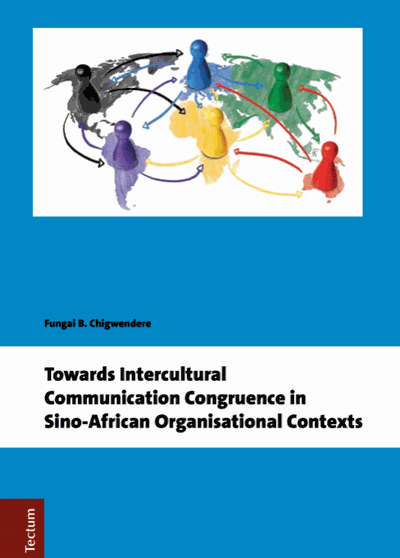
Towards Intercultural Communication Congruence in Sino-African Organisational Contexts
- Autor:innen:
- Verlag:
- 2018
Publikation durchsuchen
Bibliographische Angaben
- Auflage
- 1/2018
- Copyrightjahr
- 2018
- ISBN-Print
- 978-3-8288-4234-2
- ISBN-Online
- 978-3-8288-7121-2
- Verlag
- Tectum, Baden-Baden
- Sprache
- Englisch
- Seiten
- 282
- Produkttyp
- Monographie
Inhaltsverzeichnis
KapitelSeiten
- Titelei/Inhaltsverzeichnis Teilzugriff Seiten 1 - 22
- Introduction Kein Zugriff
- 1.1.1 Significance of the Sino-African context Kein Zugriff
- 1.2.1 Contemporary approaches to and theories of intercultural communication Kein Zugriff
- 1.2.2 Intercultural communication congruence in Sino-African organisational contexts: the state of research Kein Zugriff
- 1.3.1 Main study aim Kein Zugriff
- 1.3.2.1 Objectives of the study of theory (literature study) Kein Zugriff
- 1.3.2.2 Theoretical (literature study) research questions Kein Zugriff
- 1.3.3.1 Empirical objectives Kein Zugriff
- 1.3.3.2 Empirical research questions Kein Zugriff
- 1.4 Significance of the Study Kein Zugriff
- 1.5.1 Study of theory Kein Zugriff
- 1.5.2 Empirical study Kein Zugriff
- 1.6 Demarcation of Study Kein Zugriff
- 1.7 Definition of Terms Kein Zugriff
- 1.8 Structure of Thesis Kein Zugriff
- Introduction Kein Zugriff
- 2.1 Defining Intercultural Communication Kein Zugriff
- 2.2.1 History of the study of intercultural communication Kein Zugriff
- a. The psychosocial approach Kein Zugriff
- b. The skills approach Kein Zugriff
- c. Behavioural approach Kein Zugriff
- d. Knowledge of the “other” approach Kein Zugriff
- e. Common ground and acceptance of differences approach Kein Zugriff
- 2.2.2.2 The interpretive approaches Kein Zugriff
- 2.2.2.3 The critical approaches Kein Zugriff
- 2.2.2.4 Summary Kein Zugriff
- 2.2.3.1 Cultural convergence theory Kein Zugriff
- 2.2.3.2 Anxiety uncertainty management theory Kein Zugriff
- 2.2.3.3 Face negotiation theory Kein Zugriff
- 2.3.1 Language differences Kein Zugriff
- 2.3.2 Non-verbal communication Kein Zugriff
- 2.3.3 Culture and value differences Kein Zugriff
- 2.3.4 Ethnocentrism Kein Zugriff
- 2.3.5 Stereotyping and prejudice Kein Zugriff
- 2.3.6 Anxiety felt by the “strangers” in communication Kein Zugriff
- 2.4.1.1 Communication orientation Kein Zugriff
- 2.4.1.2 Manner of communication Kein Zugriff
- 2.4.2 Effectiveness in communication Kein Zugriff
- 2.4.3 Appropriateness in communication Kein Zugriff
- 2.5.1 A cross-cultural approach to enhanced intercultural communication Kein Zugriff
- 2.5.2 Cultural, cross-cultural and intercultural communication Kein Zugriff
- 2.6 Summary Kein Zugriff
- Introduction Kein Zugriff
- 3.1.1.1 Self-perceptions Kein Zugriff
- 3.1.2 Worldview Kein Zugriff
- 3.1.3 Communication Kein Zugriff
- 3.1.4 The relationship between culture and communication Kein Zugriff
- a. The individualism vs collectivism dimension in communication Kein Zugriff
- b. Low and high context communication Kein Zugriff
- c. High versus low face needs Kein Zugriff
- 3.1.5.2 Summary Kein Zugriff
- 3.2.1.1 Criterion 1: Values, guiding philosophies (incorporating self-perceptions) Kein Zugriff
- 3.2.1.2 Criterion 2: The nature of communication Kein Zugriff
- 3.2.1.3 Criterion 3: The objective of communication Kein Zugriff
- 3.2.1.4 Criterion 4: Degree of interaction in communication Kein Zugriff
- 3.2.1.5 Criterion 5: Thinking process and communication Kein Zugriff
- 3.2.2 Relationship between IC awareness enablers, communication orientation, manner of communication and intercultural communication awareness Kein Zugriff
- 3.2.3 Framework for comparing the manner of communication Kein Zugriff
- 3.3 Summary Kein Zugriff
- Introduction Kein Zugriff
- 4.1.1.1 Developing IC awareness through understanding communication orientation and the manner of communication Kein Zugriff
- 4.1.1.2 Intercultural communication awareness-engendered consequences and possibilities Kein Zugriff
- 4.1.1.3 Enhanced intercultural communication Kein Zugriff
- 4.2 The Generic Theoretical Intercultural Communication Congruence Framework in the Context of the Present Study Kein Zugriff
- 4.3 Summary Kein Zugriff
- Understanding communication orientation and manner of communication in Western, African and Chinese cultural contexts Kein Zugriff
- Introduction Kein Zugriff
- 5.1.1. Western culture Kein Zugriff
- a. The supremacy of the community Kein Zugriff
- b. The utility of the individual Kein Zugriff
- c. The sanctity of authority Kein Zugriff
- d. Respect for old age Kein Zugriff
- e. Religion as a way of life Kein Zugriff
- 5.1.2.2 Ubuntu Kein Zugriff
- 5.1.2.3 Humanism Kein Zugriff
- a. Jen (benevolence and humanness) Kein Zugriff
- b. Influence of family and insiders (zi-jiren) versus outsiders Kein Zugriff
- c. Hierarchy and role relationships Kein Zugriff
- d. Bao (reciprocity) Kein Zugriff
- e. Guanxi (relationships/connections) Kein Zugriff
- f. Mianzi (face) Kein Zugriff
- 5.1.4 Summary Kein Zugriff
- 5.2.1.1 Self-perceptions Kein Zugriff
- 5.2.2 Nature of communication Kein Zugriff
- 5.2.3 Objective of communication Kein Zugriff
- 5.2.4 Degree of interaction Kein Zugriff
- 5.2.5 Thinking process Kein Zugriff
- 5.2.6 Summary Kein Zugriff
- 5.3 The Manner of Communication in Western, African and Chinese Cultural Contexts Kein Zugriff
- 5.4 Theoretical IC Congruence (TICC) Framework Specific to Sino-African Organisational Contexts Kein Zugriff
- 5.5 Summary Kein Zugriff
- Introduction Kein Zugriff
- 6.1.1 Research paradigm Kein Zugriff
- 6.2 Research Design Kein Zugriff
- 6.3.1 Traditional literature review and synthesis Kein Zugriff
- 6.3.2.1 Planning the quasi-systematic review Kein Zugriff
- a. Timeframe for literature sourcing Kein Zugriff
- b. Inclusion and exclusion of articles Kein Zugriff
- 6.3.3.1 Meta-synthesis in the context of the present study Kein Zugriff
- 6.3.4 Quality assessment and ethical issues: study of theory Kein Zugriff
- a. Definition of an “expert” Kein Zugriff
- 6.4.2.1 Sample and sampling procedure Kein Zugriff
- a. In-depth interviews Kein Zugriff
- b. Interview structure and intention Kein Zugriff
- 6.4.3.1 Confirmability Kein Zugriff
- 6.4.3.2 Transferability Kein Zugriff
- 6.4.3.3 Dependability Kein Zugriff
- 6.4.3.4 Credibility Kein Zugriff
- 6.4.3.5 Triangulation Kein Zugriff
- 6.4.4 Ethical considerations Kein Zugriff
- 6.4.5.1 Level of analysis Kein Zugriff
- 6.4.5.2 Procedures of analysis Kein Zugriff
- 6.5 Summary Kein Zugriff
- Intercultural communication awareness in Sino-African organisational contexts Kein Zugriff
- Introduction Kein Zugriff
- 7.1.1 Distribution of cultural grouping Kein Zugriff
- 7.1.2 Distribution of gender Kein Zugriff
- 7.1.3 Distribution of age Kein Zugriff
- 7.1.4 Distribution of ethnic group Kein Zugriff
- 7.1.5 Distribution of position and education Kein Zugriff
- 7.1.6 Distribution of industry sector Kein Zugriff
- 7.1.7 Distribution of experience in months Kein Zugriff
- 7.2 Presentation of Findings Kein Zugriff
- 7.3.1.1 Human centredness Kein Zugriff
- 7.3.1.2 Consensus-seeking Kein Zugriff
- 7.3.1.3 Respectful Kein Zugriff
- 7.3.1.4 Humble Kein Zugriff
- 7.3.1.5 Speaking in a direct manner Kein Zugriff
- 7.3.1.6 Showing emotions Kein Zugriff
- 7.3.1.7 Communalistic Kein Zugriff
- 7.3.1.8 Following rules and protocol Kein Zugriff
- 7.3.1.9 Family orientation Kein Zugriff
- 7.3.1.10 Etiquette Kein Zugriff
- 7.3.1.11 Summary Kein Zugriff
- 7.3.2.1 African people are human-centred Kein Zugriff
- 7.3.2.2 African people are arrogant Kein Zugriff
- 7.3.2.3 African people are direct Kein Zugriff
- 7.3.2.4 African people are humble Kein Zugriff
- 7.3.2.5 African people are family-orientated Kein Zugriff
- 7.3.2.6 African people talk a lot Kein Zugriff
- 7.3.2.7 African people are curious Kein Zugriff
- 7.3.2.8 African people show emotions Kein Zugriff
- 7.3.2.9 Summary Kein Zugriff
- 7.3.3.1 Discussion Kein Zugriff
- 7.4.1.1 Follow rules and protocol Kein Zugriff
- 7.4.1.2 Face-giving and face-saving – mianzi Kein Zugriff
- 7.4.1.3 In-group focus Kein Zugriff
- 7.4.1.4 Indirect manner Kein Zugriff
- 7.4.1.5 Pursuit of harmony Kein Zugriff
- 7.4.1.6 Hierarchical Kein Zugriff
- 7.4.1.7 Little talk Kein Zugriff
- 7.4.1.8 Nonverbal communication Kein Zugriff
- 7.4.1.9 Respect Kein Zugriff
- 7.4.1.10 Relationships – guanxi Kein Zugriff
- 7.4.1.11 Showing emotions Kein Zugriff
- 7.4.1.12 Summary Kein Zugriff
- 7.4.2.1 Chinese people follow rules and protocol Kein Zugriff
- 7.4.2.2 Chinese people have an in-group focus Kein Zugriff
- 7.4.2.3 Chinese people keep their own culture Kein Zugriff
- 7.4.2.4 Chinese people communicate nonverbally Kein Zugriff
- 7.4.2.5 Chinese people are abrupt Kein Zugriff
- 7.4.2.6 Chinese people are insincere Kein Zugriff
- 7.4.2.7 Chinese people are authoritative Kein Zugriff
- 7.4.2.8 Chinese people do not show emotions Kein Zugriff
- 7.4.2.9 Status-driven communication Kein Zugriff
- 7.4.2.10 Chinese people are calm in manner Kein Zugriff
- 7.4.2.11 Chinese people do not say “no” Kein Zugriff
- 7.4.2.12 Strong concern for face-giving and face-saving – mianzi Kein Zugriff
- 7.4.2.13 Communication is hierarchical Kein Zugriff
- 7.4.2.14 Chinese people are honourable Kein Zugriff
- 7.4.2.15 Chinese people do not talk much Kein Zugriff
- 7.4.2.16 Chinese people are rude Kein Zugriff
- 7.4.2.17 Chinese people value relationships – guanxi Kein Zugriff
- 7.4.2.18 Chinese people are indirect Kein Zugriff
- 7.4.2.19 Summary Kein Zugriff
- 7.4.3.1 Discussion Kein Zugriff
- 7.5.1 Summary Kein Zugriff
- 7.6.1 Summary Kein Zugriff
- 7.7.1.1 Business and social contexts Kein Zugriff
- 7.7.1.2 Organisational typology Kein Zugriff
- 7.7.1.3 Race Kein Zugriff
- 7.7.1.4 Level of education Kein Zugriff
- 7.7.1.5 Class Kein Zugriff
- 7.7.2.1 Mix of Western and African ways Kein Zugriff
- 7.7.2.2 Similarity between Chinese and African ways Kein Zugriff
- 7.7.3.1 Stereotypes Kein Zugriff
- 7.7.3.2 Differences in work ethic Kein Zugriff
- 7.7.3.3 Ethnocentrism Kein Zugriff
- 7.7.3.4 Motives for interaction Kein Zugriff
- 7.7.3.5 Preconceptions Kein Zugriff
- 7.7.3.6 Personal circumstances Kein Zugriff
- 7.7.3.7 Prejudice Kein Zugriff
- 7.7.3.8 No communication occurs Kein Zugriff
- 7.7.4 Summary Kein Zugriff
- Manner of communication Kein Zugriff
- Orientation to rules and protocol Kein Zugriff
- Individual dispositions Kein Zugriff
- Within-culture intercultural communication variations Kein Zugriff
- Intercultural communication influences Kein Zugriff
- 7.8.2.1 Cultural orientation Kein Zugriff
- 7.8.2.2 Manner of communication Kein Zugriff
- 7.8.2.3 Orientation to rules and protocol Kein Zugriff
- 7.8.2.4 Individual dispositions Kein Zugriff
- 7.8.2.5 Within-culture variations Kein Zugriff
- 7.8.2.6 Intercultural communication awareness influences Kein Zugriff
- 7.9 Summary Kein Zugriff
- Brief Synopsis of the Research Kein Zugriff
- 8.1.1.1 Cultural orientation Kein Zugriff
- 8.1.1.2 Manner of communication Kein Zugriff
- 8.1.1.3 Orientation to rules and protocol Kein Zugriff
- 8.1.1.4 Individual dispositions Kein Zugriff
- 8.1.1.5 Intercultural communication influences Kein Zugriff
- 8.1.1.6 Intercultural communication variations Kein Zugriff
- 8.1.2.1 Cultural orientation in Sino-African organisational contexts Kein Zugriff
- 8.1.2.2 Manner of communication in Sino-African organisational contexts Kein Zugriff
- 8.1.2.3 Orientation to rules and protocol in Sino-African organisational contexts Kein Zugriff
- 8.1.2.4 Individual dispositions in Sino-African organisational contexts Kein Zugriff
- 8.1.2.5 Intercultural communication influences in Sino-African organisational contexts Kein Zugriff
- 8.1.2.6 Intercultural communication variations in Sino-African organisational contexts Kein Zugriff
- 8.2.1 Main contribution Kein Zugriff
- 8.2.2 Study of theory Kein Zugriff
- 8.2.3. Empirical qualitative study Kein Zugriff
- 8.2.4 Methodology Kein Zugriff
- 8.3.1 Study of theory Kein Zugriff
- 8.3.2 Empirical qualitative study Kein Zugriff
- 8.4 Recommendations for Future Research Kein Zugriff
- 8.5 Conclusion Kein Zugriff
- 9 References Kein Zugriff Seiten 241 - 264
- 10 Annexures Kein Zugriff Seiten 265 - 282
Literaturverzeichnis (342 Einträge)
Es wurden keine Treffer gefunden. Versuchen Sie einen anderen Begriff.
- 9 References Google Scholar öffnen DOI: 10.5771/9783828871212
- References Google Scholar öffnen DOI: 10.5771/9783828871212
- Abe, H. and Wiseman, R. L., 1983. A cross-cultural confirmation of the dimensions of intercultural effectiveness. International Journal of Intercultural Relations, 7(1), pp. 53–67. Google Scholar öffnen DOI: 10.5771/9783828871212
- Ajei, M. O., 2007. Africa’s development: the imperatives of indigenous knowledge and values. Ph.D. University of South Africa. Available at: http://uir.unisa.ac.za/bitstream/handle/10500/1266/thesis.pdf?Sequence=1[Accessed 2 March 2016]. Google Scholar öffnen DOI: 10.5771/9783828871212
- Alberts, J. K., Nakayama, T. K. and Martin, J. N., 2010. Human Communication in Society. 2nd ed. US: Pearson Education. Google Scholar öffnen DOI: 10.5771/9783828871212
- Alden, C. and Davies, M., 2006. A profile of the operations of Chinese multinationals in Africa. South African journal of international affairs, 13(1), pp. 83–96. Google Scholar öffnen DOI: 10.5771/9783828871212
- Alden, C., Large, D. and De Oliveira, R. S., 2008. China returns to Africa: A rising power and a continent embrace. New York: Columbia University Press. Google Scholar öffnen DOI: 10.5771/9783828871212
- Alden, C. and Park, Y. J., 2013. Upstairs and downstairs dimensions of China and the Chinese in South Africa. pp. 643–662. In: U. Pillay, G. Hagg and F. Nyamnjoh, eds. 2012. State of the Nation: Tackling poverty and inequality. Pretoria: HSRC Press. Google Scholar öffnen DOI: 10.5771/9783828871212
- Alexander, B. K., Arasaratnam, L. A, Avant-Mier, R., Durham, A., Flores, L., Leeds-Hurwitz, W., Mendoza, S. L., Oetzel, J., Osland, J., Tsuda, Y., Yin, J. and Halualani, R., 2014. Defining and Communicating What “Intercultural” and “Intercultural Communication” Means to Us. Journal of International and Intercultural Communication, 7(1), pp. 14–37. Google Scholar öffnen DOI: 10.5771/9783828871212
- Allen, P. M. and Varga, L., 2007. Complexity: The Co-evolution of Epistemology, Axiology and Ontology. Nonlinear Dynamics, Psychology, and Life Sciences, 11(1), pp. 19–50. Google Scholar öffnen DOI: 10.5771/9783828871212
- Allwood, J., 1985. Intercultural Communication. Translated from Swedish by J. Allwoood. In: J. Allwood, ed. 1985. Tvärkulturell kommunikation, Papers in Anthropological Linguistics 12. Dept of Linguistics, University of Göteborg. [online] Available at: http://sskkii.gu.se/jens/publications/docs001-050/041E.pdf. [Accessed 24 October 2017]. Google Scholar öffnen DOI: 10.5771/9783828871212
- Andersen, P. A, Hetch, M. L., Hoobler, G. D. and Smallwood, M., 2003. Nonverbal communication across cultures. In: W. B. Gudykunst, ed. 2003. Cross cultural and intercultural communication. London: Sage. pp. 73–90. Google Scholar öffnen DOI: 10.5771/9783828871212
- Aneas, M. A. and Sandin, M. P., 2009. Intercultural and Cross-cultural communication research: Some reflections about culture and qualitative methods. Research. Forum Qualitative Social Research, [e-journal] 10(1), pp. 1–13. Available at: http://nbn-resolving.de/urn:nbn:de:0114-fqs0901519. [Accessed 27 October 2013]. Google Scholar öffnen DOI: 10.5771/9783828871212
- Anedo, O., 2012. China-Africa culture differences in business relations. African Journal of Political Science and International Relations, 6(4), pp. 92–96. Google Scholar öffnen DOI: 10.5771/9783828871212
- Ani, N. C, 2013. Appraisal of African Epistemology in the Global System. Alternation, 20(1), pp. 295–320. Google Scholar öffnen DOI: 10.5771/9783828871212
- Applebaum, B., 2000. On the Meaning and Necessity of a White, Anti-Racist Identity. In: L. Stone, Ed. 2000. Philosophy of Education Society. Urbana: Illinois. pp. 306–317. Google Scholar öffnen DOI: 10.5771/9783828871212
- Ardichvilli, A., Maurer, M., Li, W., Wentling, T. and Stuedemann, R., 2006. Cultural Influences on knowledge sharing through online communities of practice. Journal of Knowledge Management, 10(1), pp. 94–107. Google Scholar öffnen DOI: 10.5771/9783828871212
- Arsene, C., 2014. Chinese employers and their Ugandan workers: Tensions, frictions and cooperation in an African city. Journal of Current Chinese Affairs, 43(1), pp. 139–176. Google Scholar öffnen DOI: 10.5771/9783828871212
- Asante, M. K., 1987. The Afrocentric idea. Philadelphia, PA: Temple University Press. Google Scholar öffnen DOI: 10.5771/9783828871212
- Asante, M. K., 1991. The Afrocentric Idea in education. Journal of Negro Education, 60, pp. 170–79. Google Scholar öffnen DOI: 10.5771/9783828871212
- Asante, M. K., 1999. Afrocentric Theories of Communication. In: J. L. Lucaites, C. M. Condit and S. Caudill, eds.1999. Contemporary Rhetorical Theories: A Reader. New York: The Guilford Press. pp. 552–562. Google Scholar öffnen DOI: 10.5771/9783828871212
- Asante, M. K. 2005. “Blackness as an Ethical Trope: Toward a Post Western Assertion.” In, G. Yancy, Ed. 2005. White on White/Black on Black. Lanham: Rowman and Littlefield. pp. 203–216. Google Scholar öffnen DOI: 10.5771/9783828871212
- Asante, M. K. and Vora, E., 1983. In: W. B. Gudykunst, ed. 1983. Toward multiple philosophical approaches. International and Intercultural Communication Annual, VII, pp. 293–298. Google Scholar öffnen DOI: 10.5771/9783828871212
- Åsvoll, H., 2014. Abduction, deduction and induction: can these concepts be used for an understanding of methodological processes in interpretative case studies? International Journal of Qualitative Studies in Education, 27(3) pp. 289–307. Google Scholar öffnen DOI: 10.5771/9783828871212
- Baah, A. Y. and Jauch, H. eds., 2009. Chinese investments in Africa: A labour perspective. [Pdf] African Labour Research Network. Available at: https://www.fnv.nl/site/over-de-fnv/internationaal/mondiaal-fnv/documenten/english/publications/Chinese_investments_in_Africa_final_report1.pdf[Accessed 18 October 2017]. Google Scholar öffnen DOI: 10.5771/9783828871212
- Bakan, D., 1996. Some reflections about narrative research and hurt and harm’. In: R. Josselson, ed. Ethics and Process in the Narrative Study of Lives. Thousand Oaks, CA: Sage. pp. 3–8. Google Scholar öffnen DOI: 10.5771/9783828871212
- Barnett, G. A. and Kincaid, D. L., 1983. A mathematical theory of cultural convergence. In: W. B. Gudykunst, ed. 1983. Intercultural communication theory: Current perspectives. Beverly Hills, CA: Sage. pp. 171–179. Google Scholar öffnen DOI: 10.5771/9783828871212
- Barnett, G. A. and Lee, M., 2003. Issues in Intercultural Communication Research. In: W. B. Gudykunst, ed. Cross Cultural and Intercultural Communication. Thousand Oakes, California: Sage. pp. 259–273. Google Scholar öffnen DOI: 10.5771/9783828871212
- Barnett-Page, E. and Thomas, J., 2009. Methods for the synthesis of qualitative research: A critical review. BMC Medical Research Methodology, 1(9), pp. 1–26, [online] Available at: http://bmcmedresmethodol.biomedcentral.com/papers/10.1186/1471-2288-9-59. [Accessed 28 January 2017]. Google Scholar öffnen DOI: 10.5771/9783828871212
- Beebe, S. A., Beebe, S. J. and Redmond, M. V., 2011. Interpersonal Communication: Relating to Others. 6th ed. United States: Pearson Education. Google Scholar öffnen DOI: 10.5771/9783828871212
- Bell, D. A. A. and Metz, T., 2011. Confucianism and Ubuntu: Reflections and a dialogue between Chinese and African Traditions. Journal of Chinese Philosophy, 38, pp. 78–95. Google Scholar öffnen DOI: 10.5771/9783828871212
- Berger, C. R., 2005. Interpersonal Communication: Theoretical Perspectives, Future Prospects. Journal of Communication, 55(3), pp. 415–447. Google Scholar öffnen DOI: 10.5771/9783828871212
- Bernard, H. R., 2006. Research Methods in Anthropology: Qualitative and Quantitative Approaches.4th ed. Lanham: Altamira Press. Google Scholar öffnen DOI: 10.5771/9783828871212
- Biddle, C., 2012. Individualism vs. Collectivism: Our Future, Our Choice. The Objective Standard, 7(1). [online] Available at: https://www.theobjectivestandard.com/issues/2012-spring/individualism-collectivism/ [Accessed 1 March, 2016]. Google Scholar öffnen DOI: 10.5771/9783828871212
- Blommaert, J., 1998. Different approaches to intercultural communication: A critical survey. In: Plenary lecture Lernen und Arbeiten in einer international vernetzten und multikulturellen Gesellschaft. Expertentagung Universität Bremen, Institut für Projektmanagement und Witschaftsinformatik (IPMI), 27–28 February 1998. [online] Communicatie, Informatie, Educatie. Available at: http://www.cie.ugent.be/CIE/blommaert1.htm [Accessed April 2016]. Google Scholar öffnen DOI: 10.5771/9783828871212
- Boafo, S. T. K. ed., 1989. Communication and Culture: African Perspectives. Nairobi: Africa Church Information Services. Google Scholar öffnen DOI: 10.5771/9783828871212
- Bogner, A. and Menz, W., 2009. The Theory-Generating Expert Interview: Epistemological Interest, Forms of Knowledge, Interaction. In: A. Bogner, B. Littig and W. Menz, eds. Interviewing Experts. Hamshire, UK: Palgrave Macmillan. pp. 43–80. Google Scholar öffnen DOI: 10.5771/9783828871212
- Booth, A., Papaioannou, D. and Sutton, A., 2012. Systematic Approaches to a successful literature review. London: Sage. Google Scholar öffnen DOI: 10.5771/9783828871212
- Bourgeois III, L. J., 1979. Towards a Method of Middle-Range Theorising. The Academy of Management Review, 4(3), pp. 443–447. Google Scholar öffnen DOI: 10.5771/9783828871212
- Boyne, S., 2009. The Phd literature review: its structure and contribution. In: M. Jolly and P. K. Wong, eds. 2009. The Proceedings of the Plymouth Postgraduate Symposium. UK: University of Plymouth. pp. 229–315. [online] Available at: http://www.academia.edu/413909/Boyne_S._2009_The_phd_literature_review_its_structure_and_contribution_in_Jolly_M._and_Wong_P._K._eds_The_Proceedings_of_the_Plymouth_Postgraduate_Symposium_2009_University_of_Plymouth_UK_pp.299–315. [Accessed 1 March 2016]. Google Scholar öffnen DOI: 10.5771/9783828871212
- Brautigam, D., 2003. Close encounters: Chinese business networks as industrial catalysts in Sub-Saharan Africa. African Affairs, 102, pp. 447–467. Google Scholar öffnen DOI: 10.5771/9783828871212
- Brautigam, D., 2011. China in Africa: what can Western donors learn? [Pdf] Norfund. Available at: https://www.norfund.no/getfile.php.133986/Bilder/Publications/Norfund_China_in_Africa.pdf [Accessed 22 April 2017]. Google Scholar öffnen DOI: 10.5771/9783828871212
- Brautigam, D. and Xiaoyang, T., 2011. African Shenzhen: China’s special economic zones in Africa. The Journal of Modern African Studies, 49(1), pp. 27–54. Google Scholar öffnen DOI: 10.5771/9783828871212
- Brinkmann, S., 2014. Doing without data. Qualitative Inquiry, 20(6), pp. 720–725. Google Scholar öffnen DOI: 10.5771/9783828871212
- Bryman, A., 2004. Social research methods. 2nd ed. New York: Oxford University Press. Google Scholar öffnen DOI: 10.5771/9783828871212
- Bücker, J. J. L. E., Furrer, O., Poutsma, E. and Buyens, D., 2014. The impact of cultural intelligence on communication effectiveness, job satisfaction and anxiety for Chinese host country managers working for foreign multinationals. The International Journal of Human Resource Management, 25(4), pp. 2068–2087. Google Scholar öffnen DOI: 10.5771/9783828871212
- Burgoon, J. K., Berger, C. R. and Waldron, V. R., 2000. Mindfulness and Interpersonal Communication. Journal of Social Issues, 56(1), pp. 105–127. Google Scholar öffnen DOI: 10.5771/9783828871212
- Cardon, P. W., 2008. A critique of hall’s contexting model: A meta-analysis of literature on intercultural business and technical communication. Journal of Business and Technical Communication, 22, pp. 399–428. Google Scholar öffnen DOI: 10.5771/9783828871212
- Cardon, P. W. and Scott, J. C., 2003. Chinese business face: Communication behaviours and teaching approaches. Business Communication Quarterly, 66(4), pp. 9–22. Google Scholar öffnen DOI: 10.5771/9783828871212
- Chaney, L. H. and Martin, J. S., 2007. Intercultural business communication. 4th ed. Upper Saddle River, NJ: Pearson Prentice Hall. Google Scholar öffnen DOI: 10.5771/9783828871212
- Chang, Y. Y., 2008. Cultural “faces” of interpersonal communication in the USA and China. Intercultural Studies, XVII (1), pp. 299–313. Google Scholar öffnen DOI: 10.5771/9783828871212
- Chen, G. M., 2002. The past, present, and future of Chinese communication study. China Media Reports, (2), pp. 4–12. Google Scholar öffnen DOI: 10.5771/9783828871212
- Chen, G. M., 2011. An Introduction to key concepts in understanding the Chinese: Harmony as the foundation of Chinese Communication. China Media Research, 7(4), pp. 1–12. Google Scholar öffnen DOI: 10.5771/9783828871212
- Chen, G. M., 2015. Seeking Common Ground While Accepting Differences through Tolerance: U. S.?– China Intercultural Communication in the Global Community. In: L. A. Samovar, R. E. Porter, E. R. McDaniel and C. Sexton Roy, eds. 2015. Intercultural Communication: A Reader.14th ed. Boston: Cengage Learning. pp. 465–471. Google Scholar öffnen DOI: 10.5771/9783828871212
- Chen, G. M. and Chung, J., 1994. The Impact of Confucianism on Organisational Communication. Communication Quarterly, 42(2), pp. 93–105. Google Scholar öffnen DOI: 10.5771/9783828871212
- Chen, G. M. and Starosta, W. J., 1997. A review of the concept of intercultural sensitivity. Human Communication, 1, pp. 1–16. Google Scholar öffnen DOI: 10.5771/9783828871212
- Chen, G. M. and Starosta, W. J., 2003. Asian approaches to human communication: A dialogue. Intercultural Communication Studies, 12, pp. 1–15. Google Scholar öffnen DOI: 10.5771/9783828871212
- Chigwendere, F. B., 2017. Towards Intercultural Communication Congruence in Sino-African Organisational Contexts. Unpublished PhD Thesis. Rhodes University. Google Scholar öffnen DOI: 10.5771/9783828871212
- Chipandambira, N., 2015. Proverbs that show the collectivistic nature of Zimbabwean Shona culture. [phone call] (Personal communication, 15 August 2015). Google Scholar öffnen DOI: 10.5771/9783828871212
- Chong, H. Y., 1994. Abduction? Deduction? Induction? Is There a Logic of Exploratory Data Analysis? In: American Educational Research Association, Annual meeting of the American Educational Research Association. New Orleans, L. A, 4–8 April 1994. [Pdf]. Available at: http://files.eric.ed.gov/fulltext/ED376173.pdf [Accessed 14 August 2017] Google Scholar öffnen DOI: 10.5771/9783828871212
- Cole, C., Chase, S., Couch, O. and Clark, M., 2011. Research Methodologies and Professional Practice: Considerations and Practicalities. The Electronic Journal of Business Research Methods, [e-journal] 9(2), pp. 141–151. [online] Available at: www.ejbrm.com [Accessed 8 October 2016]. Google Scholar öffnen DOI: 10.5771/9783828871212
- Collier, M. J., 2015. Cultural Identity and Intercultural Communication. In: L. A. Samovar, R. E. Porter, E. R. McDaniel and C. Sexton Roy, eds. Intercultural Communication: A Reader, 14th ed. Boston: Cengage Learning. pp. 53–61. Google Scholar öffnen DOI: 10.5771/9783828871212
- Collier, M. J., Hegde, R. S., Lee, W. S., Nakayama, T. K. and Yep, G. A., 2001. Dialogue on the edges: Ferment in communication and culture. In M. J. Collier, ed. 2001. International and Intercultural Communication Annual 24: Transforming communication about culture: Critical new directions. Thousand Oaks, CA: Sage. pp. 219–280. Google Scholar öffnen DOI: 10.5771/9783828871212
- Collier, M. J., Ribeau, S. A. and Hetch, M. L., 1986. Intracultural communication rules and outcomes within three domestic cultures. International journal of Intercultural Relations, 10, pp. 439–457. Google Scholar öffnen DOI: 10.5771/9783828871212
- Conrad, C. and Poole, M. S., 1998. Communication: Toward the twenty-first century. 4th ed. Fort Worth, TX: Harcout, Brace and Jananovich. Google Scholar öffnen DOI: 10.5771/9783828871212
- Creswell, J. W., 2007. Qualitative inquiry and research design: Choosing among five traditions. Thousand Oaks, CA: Sage. Google Scholar öffnen DOI: 10.5771/9783828871212
- Creswell, J. W. and Miller, D. L., 2000. Determining validity in qualitative inquiry. Theory into Practice, 39(3), pp. 124–131. Google Scholar öffnen DOI: 10.5771/9783828871212
- Cronin, P., Ryan, F. and Coughlan, M., 2008. Undertaking a literature review: A step by step approach. British Journal of Nursing, 17(1), pp. 38–43. Google Scholar öffnen DOI: 10.5771/9783828871212
- Crotty, M., 1998. The Foundations of Social Research: Meaning and Perspective in the Research Process. London: Sage. Google Scholar öffnen DOI: 10.5771/9783828871212
- Croucher, S. M., Sommier, M. and Rahmani, D., 2015. Intercultural communication: Where we’ve been, where we’re going, issues we face. Communication Research and Practice, 1(1), pp. 71–87. Google Scholar öffnen DOI: 10.5771/9783828871212
- Cruz, W., 2001. Differences in non-verbal communication styles between cultures: The Latino Anglo perspective. Leadership and Management in Engineering, pp. 51–53. Google Scholar öffnen DOI: 10.5771/9783828871212
- Cui, G. and Awa, N. E., 1992. Measuring intercultural effectiveness: An integrative approach. International Journal of Intercultural Relations, 16(3), pp. 311–328. Google Scholar öffnen DOI: 10.5771/9783828871212
- Dai, X., 2010. Intercultural Communication in China: Thirty years Review. [Pdf] People’s Republic of China: Shanghai Normal University. Available at: https://www2.hu-berlin.de/aks/PDF/Dai%20Xiaodong%20IC_Theory_in_China%20ppt.pdf [Accessed 22 August 2014]. Google Scholar öffnen DOI: 10.5771/9783828871212
- Daigneault, P. M., Jacob, S. and Ouimet, M., 2014. Using systematic review methods within a Ph.D. dissertation in political science: challenges and lessons learned from practice. International Journal of Social Research Methodology, 17(3), [online] Available at: http://www.tandfonline.com/doi/abs/10.1080/13645579.2012.730704?journalCode=tsrm20#.UeanwIcVGSo [Accessed 25 October 2017]. Google Scholar öffnen DOI: 10.5771/9783828871212
- Dainton, M., 2004. Explaining theories of interpersonal communication. [online] Available at: http://www.sagepub.com/upm-data/4984_Dainton_Chapter_3.pdf. [Accessed 5 June, 2015]. Google Scholar öffnen DOI: 10.5771/9783828871212
- Dainton, M. and Zelley, E. D., 2015. Applying Communication Theory for a Professional Life. California: Sage. Google Scholar öffnen DOI: 10.5771/9783828871212
- Dean, O. and Popp, G. E., 1990. Intercultural Communication Effectiveness as Perceived By American Managers in Saudi Arabia and French Managers in the U. S. International Journal of Intercultural Relations, 14, pp. 40–424. Google Scholar öffnen DOI: 10.5771/9783828871212
- Denyer, D. and Tranfield, D., 2009. Producing a systematic review. [online] Available at: http://gent.uab.cat/diego_prior/sites/gent.uab.cat.diego_prior/files/01_a_01_Denyer-Tranfield-Producing-a-Systematic-Review.pdf [Accessed, 25 October, 2017]. Google Scholar öffnen DOI: 10.5771/9783828871212
- Devito, J. A., 2013. Interpersonal messages. Foundations of interpersonal communication. [online] Available at: http://www.pearsonhighered.com/assets/hip/us/hip_us_pearsonhighered/samplechapter/0205943608.pdf. [Accessed 28 May 2015]. Google Scholar öffnen DOI: 10.5771/9783828871212
- De Vries, R. E., Bakker-Pieper, A., Siberg, R. A., Van Gameren, K. and Vlug, M., 2009. The Content and Dimensionality of Communication Styles. Communication Research, 36(2), pp. 178–206. Google Scholar öffnen DOI: 10.5771/9783828871212
- Dhliwayo, E., 2007. A critical study of the praise singer yesterday, today and tomorrow. Masters of Arts. University of South Africa. Google Scholar öffnen DOI: 10.5771/9783828871212
- Dietz, M. C., Orr, G. and Xing, J., 2008. How Chinese companies can succeed abroad. [Pdf] McKinsey on Finance. Available at: file:///C:/Users/Management/Downloads/MoF_Issue_28_Summer%2008.pdf [Accessed 18 October 2017] Google Scholar öffnen DOI: 10.5771/9783828871212
- Ding, D. D., 2006. An Indirect Style in Business Communication. Journal of Business and Technical Communication, 20(1), pp. 87–100. Google Scholar öffnen DOI: 10.5771/9783828871212
- Downe-Wamboldt, B., 1992. Content analysis: method, applications and issues. Healthcare for Women International, 13, pp. 313–321. Google Scholar öffnen DOI: 10.5771/9783828871212
- Dunkerley, K. J. and Robinson, E. P., 2002. Similarities and differences in perceptions and evaluations of the communication styles of American and British mangers. Journal of language and social psychology, 21(4), pp. 393–409. Google Scholar öffnen DOI: 10.5771/9783828871212
- Earley. C. and Mosakowski, E., 2004. Cultural Intelligence. [online] Harvard Business Review. Available at: https://hbr.org/2004/10/cultural-intelligence [Accessed 11 August 2017]. Google Scholar öffnen DOI: 10.5771/9783828871212
- Eaton, L. and Louw, J., 2000. Culture and Self in Africa: Individualism-collectivism predictions. The Journal of Psychology, 140(2), pp. 210–217. Google Scholar öffnen DOI: 10.5771/9783828871212
- Eisenhardt, K. M., 1989. Theory Theories from Case Study Research. The Academy of Management Review, 14(4), pp. 532–550. Google Scholar öffnen DOI: 10.5771/9783828871212
- Fang, T., 2003. A Critique of Hofstede’s Fifth National Culture Dimension. International Journal of Cross Cultural Management, 3(3), pp. 347–368. Google Scholar öffnen DOI: 10.5771/9783828871212
- Fang, T., 2011. Yin Yang: A New Perspective on Culture. Management and Organization Review, 8(1), pp. 25–50. Google Scholar öffnen DOI: 10.5771/9783828871212
- Fang, T. and Faure, G. O., 2011. Chinese communication characteristics: A Yin Yang perspective. International Journal of Intercultural Relations, 5, pp. 320–333. Google Scholar öffnen DOI: 10.5771/9783828871212
- Fang, T., Zhao. S. and Worm, V., 2008. The changing Chinese culture and business behaviour. International Business Review, 17(2), pp. 141–145. Google Scholar öffnen DOI: 10.5771/9783828871212
- Faniran, J. O., 2014. Toward a Theory of African Communication. In: C. Christian and K. Nordenstreng, eds. 2014. Communication Theories in a Multi-Cultural World. New York: Peter Lang. pp. 146–159. Google Scholar öffnen DOI: 10.5771/9783828871212
- Faure, G. O. and Fang, T., 2008. Changing Chinese Values, Keeping up with the paradoxes. International Business Review. 17, pp. 194–207. Google Scholar öffnen DOI: 10.5771/9783828871212
- Fay, R. and Spintahourakis-katsillis, J. A., 2000. Communicating in Another Language: The Influence of culture. pp. 53–84. [online] Available at: https://www.academia.edu/3604675/_Chapter_12_The_influence_of_culture_on_communication [Accessed 7 May 2015]. Google Scholar öffnen DOI: 10.5771/9783828871212
- Feng, G. and Mu, X., 2010. Cultural challenges to Chinese Oil companies in Africa and their strategies. Energy Policy. 38 (11), pp. 7250–7256. Google Scholar öffnen DOI: 10.5771/9783828871212
- Francesca, A. M. and Gold, B. A., 2005. International Organisational Behaviour: Texts, Cases and Exercises. New Jersey: Pearson Prentice Hall. Google Scholar öffnen DOI: 10.5771/9783828871212
- Gallois, C., Giles, H., Jones, E., Cargile, A. C. and Ota, H., 1995. Accommodating Intercultural Encounters: Elaborations and Extensions. In: R. L Wiseman, ed. Intercultural Communication Theory. Thousand Oaks, CA: Sage. pp. 115–147. Google Scholar öffnen DOI: 10.5771/9783828871212
- Gan, S., 2014. How to do business with China: An inside view on Chinese culture and etiquette. United Kingdom: AuthorHouse. Google Scholar öffnen DOI: 10.5771/9783828871212
- Gao, G. and Ting-Toomey, S., 1998. Communicating effectively with the Chinese. Thousand Oakes, California: Sage. Google Scholar öffnen DOI: 10.5771/9783828871212
- Geertz, C., 1973. “Thick Description: Toward an Interpretive Theory of Culture”. In: C. Geertz, ed. The Interpretation of Cultures: Selected Essays. New York: Basic Books. Google Scholar öffnen DOI: 10.5771/9783828871212
- Gelo, O., Braakman, D. and Benetka, G., 2008. Quantitative and qualitative research: Beyond the debate. Integrative Psychological and Behavioural Science, 42(3), pp. 266–290. Google Scholar öffnen DOI: 10.5771/9783828871212
- Giese, K., 2014. Perceptions, Practices and Adaptations: Understanding Chinese-African Interactions in Africa. Journal of Current Chinese Affairs, 43(1), pp. 3–8. Google Scholar öffnen DOI: 10.5771/9783828871212
- Golafshani, N., 2003. Understanding reliability and validity in qualitative research. The Qualitative Report, 8(4), pp. 597–606. [online] Available: http://www.nova.edu/ssss/QR/QR8-4/golafshani.pdf [Accessed 30 September 2016]. Google Scholar öffnen DOI: 10.5771/9783828871212
- Grunig, L. A., Grunig, J. E. and Ehling, W. P., 1992. What is an effective organisation? In: J. E. Grunig, ed. 1992. Excellence in Public Relations and communication management. Hillsdale, NJ: Lawrence Erlbaum. Google Scholar öffnen DOI: 10.5771/9783828871212
- Gu, J., 2009. China’s private enterprises in Africa and the implications for African development. The European Journal of Development Research, 21(4), pp. 570–587. Google Scholar öffnen DOI: 10.5771/9783828871212
- Gu, F. F., Hung, K. and Tse, D. K., 2008. When does Guanxi matter? Issues of capitalisation and its dark sides. Journal of Marketing, 72, pp. 12–28. Google Scholar öffnen DOI: 10.5771/9783828871212
- Guba, E. G., 1990. The alternative paradigm dialogue. In: E. G. Guba, 1990. The paradigm dialogue. California: Sage. pp. 17–27. Google Scholar öffnen DOI: 10.5771/9783828871212
- Guba, E. G. and Lincoln, Y. S., 1994. Competing paradigms in qualitative research. In: N. K. Denzin and Y. S. Lincoln, eds. Handbook of qualitative research. Thousand Oaks, CA: Sage. Google Scholar öffnen DOI: 10.5771/9783828871212
- Gudykunst, W. B., 1995. Anxiety/Uncertainty Management (AUM) theory: Current status. In: R. L. Wiseman, ed. 1995. Intercultural communication theory. Thousand Oaks, CA: Sage. pp. 8–58. Google Scholar öffnen DOI: 10.5771/9783828871212
- Gudykunst, W. B., 1998. Applying anxiety/uncertainty management (AUM) theory to intercultural adjustment training. International Journal of Intercultural Relations, 22, pp. 227–250. Google Scholar öffnen DOI: 10.5771/9783828871212
- Gudykunst, W. B., 2003. Intercultural Communication theories. In: W. B. Gudykunst, ed. 2003. Cross-Cultural and intercultural communication. Thousand Oakes, California: Sage. pp. 167–189. Google Scholar öffnen DOI: 10.5771/9783828871212
- Gudykunst, W. B., Matsumoto, Y., Ting-Toomey, S., Nishida, T., Kim, K. and Heyman, S., 1996. The influence of cultural individualism-collectivism, self-construal’s, and individual values on communication styles across cultures. Human Communication Research, 22(4), pp. 510–543. Google Scholar öffnen DOI: 10.5771/9783828871212
- Gudykunst, W. B. and Nishida, T., 2001. Anxiety, uncertainty, and perceived effectiveness of communication across relationships and cultures. International Journal of Intercultural Relations, 25(1), pp. 55–71. Google Scholar öffnen DOI: 10.5771/9783828871212
- Gudykunst, W., B. and Ting-Toomey, S., 1988. Culture and interpersonal communication. New park, California: Sage. Google Scholar öffnen DOI: 10.5771/9783828871212
- Guest, G., Bunce, A. and Johnson, L., 2006. How Many Interviews Are Enough?: An Experiment with Data Saturation and Variability. Field Methods, 18(59), pp. 59–82. Google Scholar öffnen DOI: 10.5771/9783828871212
- Guitel, V. D., 2006. Intercultural or Cross-cultural Management? The confirmation of a research field and the issue concerning the definition and development of an intercultural competency for expatriates and international managers. [online] Available at: file:///C:/Users/funchi/Downloads/12_Intercultural%20or%20Crosscultural%20Management.pdf. [Accessed 16 August 2013]. Google Scholar öffnen DOI: 10.5771/9783828871212
- Guliwe, T., Mkhonta, S. and Vickers, B., 2009. Chinese investments in South Africa. In: Y. Baah and H. Jauchi, eds. 2009. Chinese investments in Africa: A labour perspective. African Labour Research Network. pp. 300–332. Google Scholar öffnen DOI: 10.5771/9783828871212
- Hall, E. T., 1959. The Silent Language. Garden City, New York: Doubleday. Google Scholar öffnen DOI: 10.5771/9783828871212
- Hall, E. T., 1976. Beyond Culture. New York: Doubleday. Google Scholar öffnen DOI: 10.5771/9783828871212
- Hall, E. T. and Hall, M. R., 1990. Understanding Cultural Differences, Germans, French and Americans. Yarmouth: Intercultural Press. Google Scholar öffnen DOI: 10.5771/9783828871212
- Halualani, R. T., Mendoza, S. L. and Drzewiecka, J. A., 2009. “Critical” Junctures in Intercultural Communication Studies: A Review. The Review of Communication, 9(1), pp. 17–35. Google Scholar öffnen DOI: 10.5771/9783828871212
- Halualani, R. T. and Nakayama, T. K., 2013. Critical Intercultural Communication studies. In: T. K Nakayama and R. T. Halualani, eds. 2013. The Handbook of Critical Intercultural Communication. Oxford: Blackwell Publishing. pp. 1–16. Google Scholar öffnen DOI: 10.5771/9783828871212
- Ham-Baloyi, W. T. and Jordan, P., 2016. Systematic review as a research method in postgraduate nursing education. Health SA Gesonheid, 21, pp. 120–128. Google Scholar öffnen DOI: 10.5771/9783828871212
- Hammer, M. R, Gudykunst, W. B. and Wiseman, R. L., 1978. Dimensions of intercultural effectiveness: An exploratory study. International Journal of Intercultural Relations, 2(4), pp. 382–393. Google Scholar öffnen DOI: 10.5771/9783828871212
- Handley, R. C., 2016. Exploring the relationship between leadership styles and quality of work life: a case study of a Chinese-South African joint venture. Masters Thesis. Rhodes University. Google Scholar öffnen DOI: 10.5771/9783828871212
- Hannigan, T. P., 1990. Traits, attitudes, and skills that are related to intercultural effectiveness and their implications for cross-cultural training: A review of the literature. International Journal of Intercultural Relations, 4(1), pp. 89–111. Google Scholar öffnen DOI: 10.5771/9783828871212
- Hart, C., 1998. Going a literature review: Releasing the Social Science research imagination. London: Sage. Google Scholar öffnen DOI: 10.5771/9783828871212
- Hartmann, D., Gerteis, J. and Croll. P. R., 2009. An Empirical Assessment of Whiteness Theory: Hidden from How Many? Social Problems, 56 (3), pp. 403–424. Google Scholar öffnen DOI: 10.5771/9783828871212
- Higgins, J. P. T, and Green, S. eds., 2011. Cochrane Handbook for Systematic Reviews of Interventions Version 5.1.0. [Online] The Cochrane Collaboration. Available at: www.cochrane-handbook.org. [Accessed 22 March 2016]. Google Scholar öffnen DOI: 10.5771/9783828871212
- Higgs, P., 2010. ‘Towards an indigenous African epistemology of community in education research’. Procedia Social and Behavioural Sciences, 2, pp. 2414–2421. Google Scholar öffnen DOI: 10.5771/9783828871212
- Hill, L. B. and Faulk, E., 2005. Towards a Comprehensive Perspective for Intercultural Communication Study: Directions for IAICS. Intercultural Communication Studies, XIV (2), pp. 38–52. Google Scholar öffnen DOI: 10.5771/9783828871212
- Hilton, C. and Kameda, N., 1999. Email and the internet as international business communication teaching and research tools: A case study. Journal of Education for business, 35(4), pp. 181–185. Google Scholar öffnen DOI: 10.5771/9783828871212
- Hofstede, G., 1980. Motivation, leadership and organisation: Do American theories apply abroad? Organisational Dynamics, pp. 42–63. Google Scholar öffnen DOI: 10.5771/9783828871212
- Hofstede, G., 1991. Cultures and Organizations: Software of the Mind. London: McGrawHill. Google Scholar öffnen DOI: 10.5771/9783828871212
- Hofstede, G., 1997. Culture and Organisations: Software of the Mind. New York: McGraw-Hill. Google Scholar öffnen DOI: 10.5771/9783828871212
- Hofstede, G., 2011. Dimensionalizing Cultures: The Hofstede Model in Context. Online Readings in Psychology and Culture, [e-journal] 2(1). http://dx.doi.org/10.9707/2307-0919.1014 [Accessed 15 November 2015]. Google Scholar öffnen DOI: 10.5771/9783828871212
- Hofstede, G. and Bond, M. H., 1988. The Confucius Connection. From Cultural Roots to Economic Growth. Organisational Dynamics, pp. 5–21. Google Scholar öffnen DOI: 10.5771/9783828871212
- Holliday, A., Hyde, M. and Kullman, J., 2010. Intercultural Communication: An Advanced Resource book for students. 2nd ed. London: Routledge. Google Scholar öffnen DOI: 10.5771/9783828871212
- Houghton, C., Casey, D., Shaw, D. and Murphy, K., 2013. Rigour in qualitative case-study research. Nurse Researcher, 20(4), pp. 12––7. Google Scholar öffnen DOI: 10.5771/9783828871212
- Hsieh, H. F. and Shannon, S. E., 2005. Three Approaches to Qualitative Content Analysis. Qualitative Health Research, 1(9), pp. 1277–1288. Google Scholar öffnen DOI: 10.5771/9783828871212
- Hu, Y. and Fan, W., 2011. An exploratory study on intercultural communication research contents and methods: A survey based on international and domestic journals published from 2001 to 2005. International Journal of Intercultural Relations, 35, pp. 554–566. Google Scholar öffnen DOI: 10.5771/9783828871212
- Huang, Y. H., 2010. Theorising Chinese Communication Research: A holistic framework for comparative studies. Chinese Journal of Communication. 3(1), pp. 95–113. Google Scholar öffnen DOI: 10.5771/9783828871212
- Huang, Q., Davison, R. M. and Gu, J., 2008. Impact of personal and cultural factors on knowledge sharing in China. Asia Pacific Journal of Management, 25, pp. 451–471. Google Scholar öffnen DOI: 10.5771/9783828871212
- Hussey, J. and Hussey, R., 1997. Business Research: A Practical Guide for Undergraduate and Postgraduate Studies. London: Macmillan. Google Scholar öffnen DOI: 10.5771/9783828871212
- Igboin, B. O., 2011 Colonialism and African Cultural Values. African Journal of History and Culture, 3(6), pp. 93–106. Google Scholar öffnen DOI: 10.5771/9783828871212
- Jackson, T., 1999. Managing change in South Africa: Developing people and Organizations. International Journal of Human Resource Management, 10(2), pp. 306–326. Google Scholar öffnen DOI: 10.5771/9783828871212
- Jackson, T., 2012. Post colonialism and organisational knowledge in the wake of China’s presence in Africa: Interrogating South-South Relations. Organisations, 19(2), pp. 181–204. Google Scholar öffnen DOI: 10.5771/9783828871212
- Jackson, T., Louw, L. and Zhao, S., 2011. Chinese Organisation and Management in Sub-Saharan Africa: Towards a cross-cultural research agenda. In: Seventh International Symposium on Multinational Business Management?– Enterprise Management in a Transitional Economy and Post Financial Crisis. Nanjing, China, 5–6 June 2011. [Pdf] Available at:http://www.ru.ac.za/media/rhodesuniversity/content/management/documents/resources/chinainafrica_researchagenda.pdf [Accessed 20 October 2017]. Google Scholar öffnen DOI: 10.5771/9783828871212
- Jameson, D. A., 2007. Reconceptualising cultural identity and its role in intercultural business communication. Journal of Business Communication, 44(3), pp. 199–235. Google Scholar öffnen DOI: 10.5771/9783828871212
- Jesson, J. K., Matheson, L. and Lacey, F. M., 2011. Doing you Literature Review: Traditional and Systematic Techniques. London: Sage. Google Scholar öffnen DOI: 10.5771/9783828871212
- Kane, O., 2014. Bridging Research and Expertise: Dominant West African Trends in Communication studies. Canadian Journal of Communication, 39, pp. 127–143. Google Scholar öffnen DOI: 10.5771/9783828871212
- Kang, J. and Hyun, S. S., 2012. Effective communication styles for the customer-oriented service employee: Inducing dedicational behaviours in luxury restaurant patrons. International Journal of Hospitality Management, 31, pp. 772–785. Google Scholar öffnen DOI: 10.5771/9783828871212
- Kaplinsky, R. and Morris, M., 2009. Chinese FDI in Sub-Saharan Africa: Engaging with Large Dragons. The European Journal of Development Research, 21, p. 551. Google Scholar öffnen DOI: 10.5771/9783828871212
- Karsten, L., and Illa, H., 2005. Ubuntu as a key African management concept: contextual background and practical insights for knowledge application. Journal of Managerial Psychology, 20(7), pp. 607–620. Google Scholar öffnen DOI: 10.5771/9783828871212
- Khoza, R. J., 2005. Let Africa Lead: African Transformational Leadership for the 21st Century Business. Sunninghill: Vezubuntu Publishers. Google Scholar öffnen DOI: 10.5771/9783828871212
- Khoza, R. J., 2011. Attuned Leadership: African Humanism As Compass. Cape Town: CPT Printers. Google Scholar öffnen DOI: 10.5771/9783828871212
- Kigongo, J. K., 2002. The Relevance of African Ethics to Contemporary African Society. In: A. T Dalfovo (ed), Ethic, Human Rights, and Development in Africa: Ugandan Philosophical Studies, Washington DC, Cultural Heritage and Contemporary Change, 11(8), pp. 51–67. Google Scholar öffnen DOI: 10.5771/9783828871212
- Kim, M. S., 2005. Culture-based conversational constraints theory: Individual and culture level analysis. In: W. B. Gudykunst, ed. 2005. Theorising about Intercultural Communication. California: Sage. pp. 93–117. Google Scholar öffnen DOI: 10.5771/9783828871212
- Kim, M. S., 2007. The Four Cultures of Cultural Research. Communication Monographs, 74 (2), pp. 27– 285. Google Scholar öffnen DOI: 10.5771/9783828871212
- Kincaid, D. L. ed., 1987. Communication Theory: Eastern and Western Perspectives. San Diego, CA: Academic Press. Google Scholar öffnen DOI: 10.5771/9783828871212
- Kittler, M. G., Rygl, D. and Mackinnon, A., 2011. Beyond Culture or Beyond Control? Reviewing the use of Halls high/low context concept. International Journal of Cross Cultural Management, 11, pp. 63–82. Google Scholar öffnen DOI: 10.5771/9783828871212
- Kluckhohn, F. R. and Strodtbeck, F., 1961. Variations in value orientations. Westport, CT: Greenwood. Google Scholar öffnen DOI: 10.5771/9783828871212
- Koch, T., 1994. Establishing rigour in qualitative research: the decision trail. Journal of Advanced Nursing, 19(5), pp. 976–986. Google Scholar öffnen DOI: 10.5771/9783828871212
- Koester, J. and Olebe, M., 1988. The behavioural assessment scale for intercultural communication effectiveness. International Journal of Intercultural Relations, 12, pp. 233–246. Google Scholar öffnen DOI: 10.5771/9783828871212
- Kondracki, N. L. and Wellman, N. S., 2002. Content analysis: Review of methods and their applications in nutrition education. Journal of Nutrition Education and Behaviour, 34, pp. 224–230. Google Scholar öffnen DOI: 10.5771/9783828871212
- Korzenny, F. and Korzenny, B. A. G., 1984. Quantitative Approaches: An overview. In: W. B. Gudykunst and Y. Y. Kim, eds. 1984. Methods for intercultural Communication research. Beverly Hills, CA: Sage. pp. 85–94. Google Scholar öffnen DOI: 10.5771/9783828871212
- Kriz, A., Gummesson, E. and Quazi, A., 2014. Methodology meets culture: Relational and Guanxi-oriented research in China. International Journal of Cross Cultural Management, 14(1), pp. 27–46. Google Scholar öffnen DOI: 10.5771/9783828871212
- Kroeber, A. L. and Kluckhohn, C., 1952. Culture: A critical review of concepts and definitions. Cambridge: Massachusetts. Google Scholar öffnen DOI: 10.5771/9783828871212
- Kubota, R., 2012. In: C. B. Paulston, S. F. Kiesling and E. S. Rangel, eds. 2012. The Handbook of Intercultural Discourse and Communication. 1st ed. West Sussex: Blackwell. pp. 90–109. Google Scholar öffnen DOI: 10.5771/9783828871212
- Kumaradivelu, B., 2008. In: A. Holliday, M. Hyde, J. Kullman, eds. 2010. Intercultural communication: An advanced book for students. 2nd ed. Oxford: Routledge. pp. 76–79. Google Scholar öffnen DOI: 10.5771/9783828871212
- Ladegaard, H. J. and Jenks, C. J., 2015. Language and intercultural communication in the workplace: critical approaches to theory and practice. Language and Intercultural Communication, 15 (1), pp. 1–12. Google Scholar öffnen DOI: 10.5771/9783828871212
- LaFrance, M. and Mayo, C., 1978. Cultural aspects of non-verbal communication. International Journal of Intercultural Relations. Google Scholar öffnen DOI: 10.5771/9783828871212
- Lampert, B. and Mohan, G., 2015. Making Space for African Agency in China-Africa Engagements: Ghanaian and Nigerian Patrons Shaping Chinese Enterprise. In: A. W. Gadzala, ed. 2005. Africa and China: How Africans and Their Governments are Shaping Relations with China. Lanham: Rowman and Littlefield. pp. 109–126. Google Scholar öffnen DOI: 10.5771/9783828871212
- Lee, Y., 2010. Home versus host- Identifying with either, both or neither. The relationship between dual cultural identities and intercultural effectiveness. International Journal of Cross Cultural Management, 10(1), pp. 55–76. Google Scholar öffnen DOI: 10.5771/9783828871212
- Lee, C. J. G., 2012. ‘Reconsidering constructivism in qualitative research’. Educational philosophy and theory, 44, pp. 403–412. Google Scholar öffnen DOI: 10.5771/9783828871212
- Leeds-Hurwitz, W., 2013. Writing the Intercultural History of Intercultural Communication. In Nakayama, T. K. and R. T., Halualani, eds. 2013. The Handbook of Critical Intercultural Communication. Oxford: Blackwell Publishing. Pp. 21–33. Google Scholar öffnen DOI: 10.5771/9783828871212
- Leung, K., 2008. Chinese Culture, modernization and international business. International Business Review, 17, pp. 184–187. Google Scholar öffnen DOI: 10.5771/9783828871212
- Levy, Y. and Ellis, T. J., 2006. A systems approach to conduct an effective literature review in support of information systems research. Information Science Journal, 9, pp. 182–212. Google Scholar öffnen DOI: 10.5771/9783828871212
- Lim, T. A., 2003. Languages and verbal communication. In: W. B. Gudykunst, ed. Cross Cultural and Intercultural Communication. London: Sage. pp. 53–71. Google Scholar öffnen DOI: 10.5771/9783828871212
- Lin, G., 2009. Higher Education Research Methodology- Literature Method. International Education Studies, 2(4), pp. 179–181. Google Scholar öffnen DOI: 10.5771/9783828871212
- Lincoln, Y. S., and Guba, E. G., 1985. Naturalistic inquiry. Beverly Hills, CA: Sage. Google Scholar öffnen DOI: 10.5771/9783828871212
- Littig, B., 2009. Interviewing the Elite?– Interviewing Experts: Is There a Difference? In: A. Bogner, B. Littig and W. Menz, eds. Expert interviews-An introduction to a new methodological debate. Hamshire, UK: Palgrave Macmillan. pp. 98–116. Google Scholar öffnen DOI: 10.5771/9783828871212
- Littlejohn, S. W. and Foss, K. A., 2008. Theories of human communication. [e-book] Belmont, CA: Thomson/Wadsworth. Available at: https://www.nelsonbrain.com/content/littlejohn95877_0495095877_02.01_chapter01.pdf [Accessed 21 December 2015]. Google Scholar öffnen DOI: 10.5771/9783828871212
- Littlejohn, S. W. and Foss, K. A., 2010. Theories of Human Communication. 10th ed. Long Groove, IL: Waveland Press. Google Scholar öffnen DOI: 10.5771/9783828871212
- Liu, H., 2009. Chinese Business: Landscapes and Strategies. New York, NY: Routledge. Google Scholar öffnen DOI: 10.5771/9783828871212
- Liu, S., 2012. Rethinking Intercultural Competence: Local and Global Nexus. Journal of Multicultural Discourses, 7(3), pp. 299–275. Google Scholar öffnen DOI: 10.5771/9783828871212
- Liu, S., Volcic, Z. and Gallois, C., 2011. Introducing Intercultural Communication: Global Cultures and Contexts. London: Sage. Google Scholar öffnen DOI: 10.5771/9783828871212
- Lockett, M., 1988. Culture and the problems of Chinese Management. Organisational Studies, 9(4), pp. 475–496. Google Scholar öffnen DOI: 10.5771/9783828871212
- Lovitt, C. R., 1999. Rethinking the role of culture in international professional communication. In: C. R. Lovitt and D. Goswami, eds. Exploring the rhetoric of international professional communication: an agenda for teachers and researchers. Amityville, NY: Baywood. pp. 1–13. Google Scholar öffnen DOI: 10.5771/9783828871212
- Luo, Y., 2008. The Changing Chinese Culture and business behaviour: The perspective of intertwinement between guanxi and corruption. International Business Review, 17, pp. 188–193. Google Scholar öffnen DOI: 10.5771/9783828871212
- Lustig, M. W. and Koester. J., 1993. Intercultural Competence?– Interpersonal Communication across Cultures. New York: Harper Collins. Google Scholar öffnen DOI: 10.5771/9783828871212
- Ma, R., 2011. Social Relations (Guanxi): A Chinese Approach to Interpersonal Communication. China Media Research, 7(4). pp. 25–33. Google Scholar öffnen DOI: 10.5771/9783828871212
- Mabuza, L. T., 2015. The influence of organisational culture on a high commitment work system and organisational commitment: the case of a Chinese multinational corporation in South Africa. Masters. Rhodes University. Google Scholar öffnen DOI: 10.5771/9783828871212
- Madzingira, N., 2001. Culture, Communication and Development in Africa. [Pdf] UNDP Human Development Report. Available at: unpan1.un.org/intradoc/groups/public/documents/IDEP/UNPAN003348.pdf [Accessed 23 October 2017]. Google Scholar öffnen DOI: 10.5771/9783828871212
- Mangaliso, M. P., 2001. Building competitive advantage from “Ubuntu”: management lessons from South Africa. The Academy of Management Executive, 15(3), pp. 23–34. Google Scholar öffnen DOI: 10.5771/9783828871212
- Maomeka, A. A., 1989. Communication and African Culture: A Sociological Analysis. In: S. T. K. Bofao, ed.1989. Communication and Culture: African Perspectives. Nairobi: Africa Church Information Services. Google Scholar öffnen DOI: 10.5771/9783828871212
- Maomeka, A. A., 1997. Communalistic Societies/; Community and self-respect as African Values. In: C. Christians and M. Traber, eds. 2014. Communication ethics and universal values. Thousand Oakes, California: Sage. pp. 170–193. Google Scholar öffnen DOI: 10.5771/9783828871212
- Martin, N. J., and Nakayama, T. K. 1999. Thinking dialectically about culture and communication. Communication Theory, 9(1), pp. 1–25. Google Scholar öffnen DOI: 10.5771/9783828871212
- Martin, J. N. and Nakayama, T. K., 2010. Intercultural Communication in Contexts. New York: McGraw Hill. Google Scholar öffnen DOI: 10.5771/9783828871212
- Martin, J. N. and Nakayama, T. K., 2013. In: T. K. Nakayama and R. T. Halualani, eds. 2013. The Handbook of Critical Intercultural Communication. Oxford: Blackwell Publishing. pp. 59–83. Google Scholar öffnen DOI: 10.5771/9783828871212
- Martin, J. N. and Nakayama, T. K., 2015. Reconsidering intercultural (communication) competence in the workplace: a dialectical approach. Language and Intercultural Communication, 15(1), pp. 13–28. Google Scholar öffnen DOI: 10.5771/9783828871212
- Mathews, L. C. and Thakkar, B., 2012. The Impact of Globalization on Cross Cultural Communication. In: H. Cuadra-Montiel, ed. 2012. Globalization- Education and management agendas. Ch.13. [Pdf] Intech. Available at: http://cdn.intechopen.com/pdfs-wm/38267.pdf [Accessed 15 December 2016]. Google Scholar öffnen DOI: 10.5771/9783828871212
- Matondo, M. J. P., 2012. Cross-Cultural Value Comparisons between Chinese and Sub-Saharan Africans. International Journal of Business and Social Science, 3(11), pp. 38–45. Google Scholar öffnen DOI: 10.5771/9783828871212
- Mayer, C. H., 2008. Managing Conflict across cultures, values and identities: A case study in the South African automotive industry. Ph. D. Rhodes University. Google Scholar öffnen DOI: 10.5771/9783828871212
- Mayer, C-H., Boness, C. M. and Louw, L., 2017. Perceptions of Chinese and Tanzanian employees regarding intercultural collaboration. SA Journal of Human Resource Management, [e- journal] 15(0). https://doi.org/10.4102/sajhrm.v15i0.921. [Accessed 25 October 2017)]. Google Scholar öffnen DOI: 10.5771/9783828871212
- Mayring, P., 2000. Qualitative content analysis. Forum: Qualitative Social Research, [e-journal] 1(2). Available at: http://www.qualitative-research.net/index.php/fqs/article/view/1089/2385 [Accessed May 28, 2017]. Google Scholar öffnen DOI: 10.5771/9783828871212
- Mazama, A., 2001. The Afrocentric Paradigm: Contours and Definitions. Journal of Black Studies, 31(4), pp. 387–405. Google Scholar öffnen DOI: 10.5771/9783828871212
- Mazrui, A. A., 2005. The Re-invention of Africa: Edward Said, V. Y. Mudimbe, and Beyond. Research in African Literatures, 36(3), pp. 68–82. Google Scholar öffnen DOI: 10.5771/9783828871212
- Mbigi, L., 1997. The African dream in management. Randburg: Knowledge Resources. Google Scholar öffnen DOI: 10.5771/9783828871212
- Mbigi, L. and Maree, J., 1995. Ubuntu: The Spirit of African Transformation Management. Randburg: Knowledge Resources. Google Scholar öffnen DOI: 10.5771/9783828871212
- McFarlin, D. B., Coster, E. A. and Mogale-Pretorius, C., 1999. South African management development in the twenty-first century. Moving toward an Africanized model. Journal of Management Development, 18(1), pp. 63–78. Google Scholar öffnen DOI: 10.5771/9783828871212
- McSweeney, B., 2002. Hofstede’s model of national cultural differences and their consequences: A triumph of faith?– A failure of analysis. Human Relations, 55(1), pp. 89–118. Google Scholar öffnen DOI: 10.5771/9783828871212
- Men, T., 2014. Place-based and Place-bound Realities: A Chinese Firms Embeddedness in Tanzania. Journal of Current Chinese Affairs, 43(1), pp. 103–138. Google Scholar öffnen DOI: 10.5771/9783828871212
- Mendenhall, M. E., Stevens, M. J., Bird, A., Oddou, G. R. and Maznevski, M. L., 2008. Specification of the content domain of the intercultural effectiveness scale. The Kozai Monograph Series, 1(2), pp. 3–22. Google Scholar öffnen DOI: 10.5771/9783828871212
- Mendoza, S. L., 2013. Reflections on bridging paradigms: How not to throw out the baby of collective representation with the functionalist bathwater in critical intercultural communication. In: T. K. Nakayama and R. T. Halualani, eds. 2013. The Handbook of Critical Intercultural Communication. Oxford: Blackwell Publishing. pp. 98–111. Google Scholar öffnen DOI: 10.5771/9783828871212
- Metz, T., 2014. Harmonising Global ethics in the future: A proposal to add south and east to west. Journal of Global Ethics, 10(2), pp. 146–155. Google Scholar öffnen DOI: 10.5771/9783828871212
- Metz, T., 2015. Values in China as compared to Africa. In: H. Du Plessis, T. Metz, G. Raza, R. Poplak, D. Cisse, M. Davies, Y. Zhao, G. Le Pere, A. Ross and M. Lauzon-Lacroix, eds. 2015. The Rise and Decline and Rise of China: Searching for an Organizing Philosophy. South Africa: Real African Publishers. Google Scholar öffnen DOI: 10.5771/9783828871212
- Meuser, M. and Nagel, U., 2009. The Expert Interview and Changes in Knowledge Production. In: A. Bogner, B. Littig and W. Menz, eds. Expert interviews- an introduction to a new methodological debate. Hamshire, UK: Palgrave Macmillanpp. pp. 17–42. Google Scholar öffnen DOI: 10.5771/9783828871212
- Microsoft Word Office Support, 2017. Create or run a macro. [online] Available at: https://support.office.com/en-us/article/Create-or-run-a-macro-C6B99036-905C-49A6-818A-DFB98B7C3C9C [Accessed 26 August 2017]. Google Scholar öffnen DOI: 10.5771/9783828871212
- Miemis, V., 2010. What is an expert? Emergent by Design. [online] Available at: https://emergentbydesign.com/2010/02/25/what-is-an-expert/. [Accessed 29 October 2015]. Google Scholar öffnen DOI: 10.5771/9783828871212
- Miike, Y., 2002. Theorising Culture and Communication in the Asian Context: An Assumptive Foundation. In: G. M. Chen, ed. Culture and Communication an East Asian Perspective. Intercultural Communication Studies, 11(1), pp. 1–21. Google Scholar öffnen DOI: 10.5771/9783828871212
- Miike, Y., 2003. Toward an alternative metatheory of human communication: An Asiacentric vision. Intercultural Communication Studies, 12(4), pp. 39–64. Google Scholar öffnen DOI: 10.5771/9783828871212
- Miike, Y., 2004. Rethinking humanity, culture, and communication: Asiacentric critiques and contributions. Human Communication: A Journal of the Pacific and Asian Communication Association, 7(1), pp. 62–82. Google Scholar öffnen DOI: 10.5771/9783828871212
- Miike, Y., 2006. Non-Western Theory in Western Research? An Asiacentric Agenda for Asian Communication Studies. Review of Communication, 6(1–2), pp. 4–31. Google Scholar öffnen DOI: 10.5771/9783828871212
- Miike, Y., 2007. An Asiacentric reflection on Eurocentric bias in Communication Theory. Communication Monographs, 74(2), pp. 272–278. Google Scholar öffnen DOI: 10.5771/9783828871212
- Miike, Y., 2013. Culture as text and culture as theory: Asiacentricity and its raison d’etre in Intercultural Communication Research. In: T. K. Nakayama and R. T. Halualani, eds. 2013. The Handbook of Critical Intercultural Communication. Oxford: Blackwell Publishing. pp. 190–215. Google Scholar öffnen DOI: 10.5771/9783828871212
- Miike, Y. and Yin, J., 2015. Asiacentricity and shapes of the future: Envisioning the field of intercultural communication in the globalisation era. In: L. A. Samovar, R. E. Porter, E. R. McDaniel and C. Sexton Roy, eds. Intercultural Communication: A Reader. 14th ed. Boston: Cengage Learning. pp. 449–465. Google Scholar öffnen DOI: 10.5771/9783828871212
- Miller, A. N., Deeter, C., Trelstad, A., Hawk, M., Ingram, G. and Ramirez, A., 2013. Still the Dark Continent: A content analysis of research about Africa and by African scholars in 18 major communication-related journals. Journal of International and Intercultural Communication, 6(4), pp. 317–333. Google Scholar öffnen DOI: 10.5771/9783828871212
- Mingers, J., 2012. Abduction: the missing link between deduction and induction. A comment on Ormerod’s’rational inference: deductive, inductive and probabilistic thinking. The Journal of the Operational Research Society, 63(6) pp. 860–861. Google Scholar öffnen DOI: 10.5771/9783828871212
- Minnameier, G., 2010. The Logicality of Abduction, Deduction and Induction. In: M. Bergman, S. Paavola, A. V. Pietarinen and H. Rydenfelt, eds. 2010. Ideas in Action: Proceedings of the Applying Peirce Conference. Helsinki, Finland: Pragmatism Network. pp. 239–251. [online] Available at: http://www.nordprag.org/nsp.1/Minnameier.pdf [Accessed 27 January 2018]. Google Scholar öffnen DOI: 10.5771/9783828871212
- Moon, D. G., 2013. Critical reflections on culture and critical intercultural communication. In: T. K. Nakayama and R. T. Halualani, eds. 2013. The Handbook of Critical Intercultural Communication. Oxford: Blackwell Publishing. pp. 34–52. Google Scholar öffnen DOI: 10.5771/9783828871212
- Monson, J. and Rupp, S., 2013. Africa and China: new engagements, new research. African Studies Review, 56(1), pp. 21–44. Google Scholar öffnen DOI: 10.5771/9783828871212
- Mutere, M., 2012. Towards an Africa-centered and pan-African theory of communication: Ubuntu and the oral-aesthetic perspective, Communicatio, 38(2), pp. 147–163. Google Scholar öffnen DOI: 10.5771/9783828871212
- Myers, L. J., 1987. The Deep Structure of Culture: Relevance of Traditional African Culture in Contemporary Life. Journal of Black Studies, 18(1), pp. 72–85. Google Scholar öffnen DOI: 10.5771/9783828871212
- Naidoo, P., 2011. Intercultural communication: A comparative study of Japanese and South African work practice. Ph. D. University of Zululand. Google Scholar öffnen DOI: 10.5771/9783828871212
- Nair-Venugopal, S., 2015. Issues of language and competence in intercultural business contexts. Language and Intercultural Communication. 15(1), pp. 29–45. Google Scholar öffnen DOI: 10.5771/9783828871212
- Narh, P., 2013. Philosophical Foundation of knowledge creation on Africa. [Pdf] Farafina Institute’s Discussion Papers Series. Available at: http://www.farafina-institute.org/attachments/article/119/Philosophical%20foundation%20of%20knowledge%20creation%20on%20Africa.pdf [Accessed 23 October 2017]. Google Scholar öffnen DOI: 10.5771/9783828871212
- Neuliep. J. W., 2012. The Relationship among Intercultural Communication Apprehension, Ethnocentrism, Uncertainty Reduction, and Communication Satisfaction during Initial Intercultural Interaction: An Extension of Anxiety and Uncertainty Management (AUM) Theory. Journal of Intercultural Communication Research, 41(1), pp. 1–16. Google Scholar öffnen DOI: 10.5771/9783828871212
- Nkomo, S. M., 2013. A postcolonial and anti-colonial reading of African leadership and management in organisation studies: tensions, contradictions and possibilities. Organisation, 18(3), pp. 265–386. Google Scholar öffnen DOI: 10.5771/9783828871212
- Ntuli, C. D., 2012. Intercultural Misunderstanding in South Africa: An Analysis of Nonverbal Communication Behaviour in Context. Intercultural Communication Studies, XXI (2), pp. 20–31. Google Scholar öffnen DOI: 10.5771/9783828871212
- Nussbaum, B., 2003. African Culture and Ubuntu. World Business Academy, 17(1), pp. 1–12. Google Scholar öffnen DOI: 10.5771/9783828871212
- Nwosu, P. O., Taylor, D. S., and Blake, C. A., 1998. Communication and development: Imperatives for an Afrocentric Methodology. In: J. D. Hamlet, ed. 1998. Afrocentric Visions: Studies in Culture and Communication. California: Thousand Oakes. pp. 229–246. Google Scholar öffnen DOI: 10.5771/9783828871212
- Obonyo, L., 2011. Towards a theory of communication for Africa: The Challenges for emerging democracies. Communicatio: South African Journal for Communication Theory and Research, 37(1), pp. 1–20. Google Scholar öffnen DOI: 10.5771/9783828871212
- O’connor, H. and Gibson, N., 2003. A Step-by-Step Guide to Qualitative Data Analysis. Pimatiziwin: A Journal of Aboriginal and Indigenous Community Health 1(1), pp. 63–90. [online] Available at: http://www.pimatisiwin.com/uploads/1289566991.pdf. [Accessed, 8 November, 2016]. Google Scholar öffnen DOI: 10.5771/9783828871212
- Oetzel, J., 2014. Intercultural health communication. In: T. L. Thompson, ed. 2014. Encyclopaedia of Heath Communication. Sage Publications. pp. 735–738. Google Scholar öffnen DOI: 10.5771/9783828871212
- Okech, J. E. A., Pimpleton, A. M., Vannatta, R. and Champe, J., 2015. Intercultural Communication: An Application to Group Work. The Journal for Specialists in Group Work, 40 (3), pp. 268–293. Google Scholar öffnen DOI: 10.5771/9783828871212
- Ono, K. A., 2013. Reflections on Problematizing ‘Nation’ in Intercultural communication research. In: T. K. Nakayama and R. T. Halualani, eds. 2013. The Handbook of Critical Intercultural Communication. Oxford: Blackwell Publishing. pp. 84–97. Google Scholar öffnen DOI: 10.5771/9783828871212
- Park, Y, J. and Alden, C., 2013. ‘Upstairs’ and ‘Downstairs’ dimensions of China and the Chinese in South Africa In: State of the Nation, 2012. Tackling Poverty and Inequality. Pretoria: HSRC Press. pp. 611–630. Google Scholar öffnen DOI: 10.5771/9783828871212
- Paterson, S., 2014. Perceptions of organisational commitment within a selected Chinese organisation in South Africa: A case study approach. Masters. Rhodes University. Google Scholar öffnen DOI: 10.5771/9783828871212
- Patton, M. Q, 1999. Enhancing the Quality and Credibility of Qualitative Analysis. HSR: Health Services Research, 34(5), pp. 1189–1208. Google Scholar öffnen DOI: 10.5771/9783828871212
- Patton, M. Q., 2002. Qualitative evaluation and research methods. 3rd ed. Thousand Oaks, CA: Sage Publications. Google Scholar öffnen DOI: 10.5771/9783828871212
- Payne, G. and Payne, J., 2004. Key Concepts in Social Research. London: Sage. Google Scholar öffnen DOI: 10.5771/9783828871212
- Pfadenhauer, M., 2009. At Eye Level: The Expert Interview?– a Talk between Expert and Quasi-expert. In: A. Bogner, B. Littig and W. Menz, eds. Expert interviews-and introduction to a new methodological debate. Hamshire, UK: Palgrave Macmillan. pp. 81–97. Google Scholar öffnen DOI: 10.5771/9783828871212
- Phatak, A. V., Bhagat, R. S. and Kashlak, R. J., 2005. International Management: Managing in a Diverse and Dynamic Global Environment. New York: McGraw Hill. Google Scholar öffnen DOI: 10.5771/9783828871212
- Pietersen, H. J., 2005. Western Humanism, African Humanism and Work Organizations. SA Journal of Industrial Psychology, 31(3), pp. 54–61. Google Scholar öffnen DOI: 10.5771/9783828871212
- Pigato, M. and Tang, W., 2015. China and Africa: Expanding Economic Ties in an Evolving Global Context. In: Investing in Africa Forum, Partnering to accelerate investment, industrialization and results in Africa. Addis Ababa, Ethiopia, 25 March 2015. Washington, DC: World Bank. Google Scholar öffnen DOI: 10.5771/9783828871212
- Ping, H. and Yan, T., 2013. The Comparison of Chinese and American Interpersonal Relationships. International Academic Workshop on Social Science (IAW-SC 2013), pp. 1118–1120. Google Scholar öffnen DOI: 10.5771/9783828871212
- Polit D. F. and Beck C. T., 2004. Nursing Research. Principles and Methods. Philadelphia, PA.: Lippincott Williams and Wilkins. Google Scholar öffnen DOI: 10.5771/9783828871212
- Ponterotto, J. G., 2005. Qualitative Research in Counselling Psychology: A Primer on Research Paradigms and Philosophy of Science. Journal of Counselling Psychology, 52(2), pp. 126–136. Google Scholar öffnen DOI: 10.5771/9783828871212
- Praeg. S. L. and Magadla, S., 2014. Ubuntu: Curating the archive. UKZN Press. Google Scholar öffnen DOI: 10.5771/9783828871212
- Reichertz, J., 2009. Abduction: The Logic of Discovery of Grounded Theory. Forum: Qualitative Social Research, [e- journal] 11(1). http://dx.doi.org/10.17169/fqs-11.1.1412. Google Scholar öffnen DOI: 10.5771/9783828871212
- Remenyi, D., 2013. Case Study Research: The quick guide series. 2nd ed. Reading, UK: Academic Publishing International. Google Scholar öffnen DOI: 10.5771/9783828871212
- Ristic, I., 2013. Intracultural, Intercultural, Cross-Cultural, and International Communication: What’s the Difference? [online] igoristic wordpress. Available at: https://igorristic.wordpress.com/2013/03/12/intracultural-intercultural-cross-cultural-and-international-communication-whats-the-difference/ [Accessed, 7 June 2013]. Google Scholar öffnen DOI: 10.5771/9783828871212
- Rogers, E. M., 2003. Diffusion of innovations. 5th ed. New York: Free Press. Google Scholar öffnen DOI: 10.5771/9783828871212
- Romney, K. A., Batchelder, W. H. and Weller, S. C., 1986. Culture as Consensus: A Theory of Culture and Informant Accuracy. American Anthropologist, 88(2), pp. 313–338. Google Scholar öffnen DOI: 10.5771/9783828871212
- Rubin, J. H. and Rubin S. J., 1995. Qualitative interviewing, the Art of Hearing Data. Thousand Oakes, California: Sage. Google Scholar öffnen DOI: 10.5771/9783828871212
- Salazar, L. F., Crosby, R. A., and Diclemente, R. J., 2015. Research Methods in Health Promotion. 2nd ed. San-Francisco, CA: Jossey-Bass. Google Scholar öffnen DOI: 10.5771/9783828871212
- Salo-Lee, L., 2006. Introduction to Intercultural Communication. [online] Moniviestin. Available at: https://moniviestin.jyu.fi/ohjelmat/hum/viesti/en/ics/. [Accessed: 4 February, 2016]. Google Scholar öffnen DOI: 10.5771/9783828871212
- Samovar, L. A. and Porter, R. E., 1995. Communication between Cultures. 2nd ed. Belmont, CA: Wadsworth. Google Scholar öffnen DOI: 10.5771/9783828871212
- Sanjari, M., Bahramnezhad, F., Fomani, F. K., Shoghi, M. and Cheraghi, M. A., 2014. Ethical challenges of researchers in qualitative studies: the necessity to develop a specific guideline. Journal of Medical Ethics and History of Medicine, 7(4). [online] Available at: https://www.ncbi.nlm.nih.gov/pmc/articles/PMC4263394/ [Accessed, 5 October 2016]. Google Scholar öffnen DOI: 10.5771/9783828871212
- Sarantakos, S., 1993. Social Research. South Melbourne: Macmillan Education. Google Scholar öffnen DOI: 10.5771/9783828871212
- Saunders, M., Lewis, P., and Thornhill, A., 2009. Research Methods for Business Students. 5th ed. Edinburgh: Pearson Education Google Scholar öffnen DOI: 10.5771/9783828871212
- Schein, E. H., 1990. Organisational culture. American Psychologist, 45(2), pp. 109–119. Google Scholar öffnen DOI: 10.5771/9783828871212
- Schein, E. H., 2010, Organisational Culture and Leadership. 4th ed. San Francisco: John Wiley and Sons. Google Scholar öffnen DOI: 10.5771/9783828871212
- Schiele. J. H., 1990. Organisational Theory from an African perspective. Journal of Black Studies, 21(2), pp. 145–161. Google Scholar öffnen DOI: 10.5771/9783828871212
- Schwandt, T. A., 2001. Dictionary of qualitative inquiry. 2nd ed. Thousand Oaks: Sage. Google Scholar öffnen DOI: 10.5771/9783828871212
- Schwartz, S. H., 1992. Universals in the content and structure of values: theoretical advances and empirical tests in 20 countries. Advances in Experimental Social Psychology, 25, pp. 1–65. Google Scholar öffnen DOI: 10.5771/9783828871212
- Schwartz, S. H., 1994. Are there universal aspects in the structure and content of human values? Journal of Social Issues, 50(4), pp. 19–45. Google Scholar öffnen DOI: 10.5771/9783828871212
- Schwartz, S. H., 1996. Value priorities and behaviour: Applying of theory of integrated value systems. In: C. Seligman, J. M. Olson, and M. P. Zanna, eds. The Psychology of Values: The Ontario Symposium, 8. Hillsdale, NJ: Erlbaum: pp. 1–24. Google Scholar öffnen DOI: 10.5771/9783828871212
- Schwartz, S. H., 2009. Culture matters: National value cultures, sources, and consequences. In: R. S. Wyer, C-Y. Chiu and Y-Y. Hong, eds. Understanding culture: Theory, research, and application. New York: Psychology Press. pp. 127–150. Google Scholar öffnen DOI: 10.5771/9783828871212
- Schwartz, S. H., 2012. An Overview of the Schwartz Theory of Basic Values. Online Readings in Psychology and Culture, [e-journal] 2(1). http://dx.doi.org/10.9707/2307-0919.1116 [Accessed 18 November 2015]. Google Scholar öffnen DOI: 10.5771/9783828871212
- Scotland, J., 2012. Exploring the Philosophical Underpinnings of Research: Relating Ontology and Epistemology to the Methodology and Methods of the Scientific, Interpretive, and Critical Research Paradigms. English Language Teaching. 5 (9), pp. 9–16. Google Scholar öffnen DOI: 10.5771/9783828871212
- Seale, C., 1999. Quality in qualitative research. Qualitative Inquiry, 5(4), pp. 465–478. Google Scholar öffnen DOI: 10.5771/9783828871212
- Shen, X., 2015. Private Chinese investment in Africa: Myths and realities. Development Policy Review, 33(1), pp. 83–106. Google Scholar öffnen DOI: 10.5771/9783828871212
- Shenton, A. K., 2004. Strategies for Ensuring Trustworthiness in Qualitative Research Projects. Education for Information, 22(2), pp. 63–75. Google Scholar öffnen DOI: 10.5771/9783828871212
- Shonhiwa, S., 2008. The Effective cross-cultural manager: A guide for business leaders in Africa. Cape Town: Zebra Press. Google Scholar öffnen DOI: 10.5771/9783828871212
- Shuter, R., 2012. The Centrality of Culture and Indigenous Values. China Media Research, 8(3), pp. 1–10, [online] Available at: http://epublications.marquette.edu/cgi/viewcontent.cgi?article=1091&context=comm_fac. Accessed 23 October 2017. Google Scholar öffnen DOI: 10.5771/9783828871212
- Singh, K. D., 2015. Creating Your Own Qualitative Research Approach: Selecting, Integrating and Operationalizing Philosophy, Methodology and Methods. Vision (09722629), 19(2), pp. 132–146. Google Scholar öffnen DOI: 10.5771/9783828871212
- Skow, L. and Samovar, L. A., 2015. Cultural Patterns of the Maasai. In: L. A. Samovar, R. E. Porter, E. R. McDaniel and C. Sexton Roy, eds. Intercultural Communication: A Reader. 14th ed. Boston: Cengage Learning. pp. 141–149. Google Scholar öffnen DOI: 10.5771/9783828871212
- Skulmoski, G. J., Hartman, F. T. and Krahn, J., 2007. The Delphi Method for Graduate Research. Journal of Information Technology Education, 6, pp. 1–21, [online] Available at : https://www.learntechlib.org/p.111405/ [Accessed 22 October, 2017]. Google Scholar öffnen DOI: 10.5771/9783828871212
- Slabbert, A. and Ukpere, W. I., 2011. A comparative analysis of the Chinese and South African work ethic. International Journal of Social Economics, 38(8), pp. 734–74. Google Scholar öffnen DOI: 10.5771/9783828871212
- Smith, P. B., 2011. Communication Styles as Dimensions of National Culture. Journal of Cross-Cultural Psychology, 42(2), pp. 216–233. Google Scholar öffnen DOI: 10.5771/9783828871212
- Solderholm, G. W., 2013. Beyond Literature Review of Hall’s Context Dimension: Scale Development, Validation and Empirical Findings within a Norwegian Study. International Journal of Business and Management, 8(10), pp. 27–40. Google Scholar öffnen DOI: 10.5771/9783828871212
- Spitzberg, B. H., 2000. A model of intercultural communication competence. In: L. A. Samovar and R. E. Porter, eds. Intercultural Communication Competence: A Reader. 9th ed. Belmont, CA: Wadsworth. pp. 375–387. Google Scholar öffnen DOI: 10.5771/9783828871212
- Srivastava, A. and Thomson, S. B., 2009. Framework Analysis: A Qualitative Methodology for Applied Research Note Policy Research. Journal of Administration and Governance, 4(2), pp. 72–79. Google Scholar öffnen DOI: 10.5771/9783828871212
- Starosta, W. J., and Chen, G. M., 2013. Expanding the Circumference of Intercultural Communication Study. In: T. K. Nakayama and R. T. Halualani, eds. The Handbook of Intercultural Communication. Oxford: Wiley Blackwell. pp. 130–146. Google Scholar öffnen DOI: 10.5771/9783828871212
- Stenbacka, C., 2001. Qualitative research requires quality concepts of its own. Management Decision, 39(7), pp. 551–555. Google Scholar öffnen DOI: 10.5771/9783828871212
- Sun, I. Y., Jayaram, K. and Kassiri, O., 2017. Dance of the lions: How are Africa and China engaging, and how will the partnership evolve? [Pdf] McKinsey and Company. Available at: https://www.google.co.za/search?q=Dance+of+the+lions%3A+How+are+Africa+and+China+engaging%2C+and+how+will+the+partnership+evolve%3F+%5B&oq=Dance+of+the+lions%3A+How+are+Africa+and+China+engaging%2C+and+how+will+the+partnership+evolve%3F+%5B&aqs=chrome.69i57.809j0j4&sourceid=chrome&ie=UTF-8 [Accessed 29 October 2017]. Google Scholar öffnen DOI: 10.5771/9783828871212
- Tang, Y., 2014. The Paradox of Chinese Communication: The case of keki. China Media Research, 10(4), pp. 69–78. Google Scholar öffnen DOI: 10.5771/9783828871212
- Tashakkori, A. and Teddlie, C., 1998. Mixed Methodology: Combining qualitative and quantitative approaches. Thousand Oakes, California: Sage. Google Scholar öffnen DOI: 10.5771/9783828871212
- Terre Blanche, M. T., Durrheim, K. and Painter, D., 2006. Research in Practice: Applied methods for the social sciences. Cape Town: University of Cape Town Press. Google Scholar öffnen DOI: 10.5771/9783828871212
- Tervalon, M. and Murray-Garcia, J., 1998. Cultural humility versus cultural competence: A critical distinction in defining physician training outcomes in multicultural education. Journal of Healthcare for the Poor and Underserved, 9(2), pp. 117–125. Google Scholar öffnen DOI: 10.5771/9783828871212
- Ting-Toomey, S., 1988. Intercultural conflict styles: A face negotiation theory. In: Y. Y. Kim and W. B. Gudykunst, eds. 1988. Theories in intercultural communication. Newbury Park, CA: Sage. pp. 213–238. Google Scholar öffnen DOI: 10.5771/9783828871212
- Ting-Toomey, S. and Kurogi, A., 1998. Facework competence in intercultural conflict: An updated face-negotiation theory. International Journal of Intercultural Relations, 22, pp. 187–225. Google Scholar öffnen DOI: 10.5771/9783828871212
- Traber, R., 1989. African Communication: Problems and Prospects. Africa Media Review, 3 (3) pp. 86–97. Google Scholar öffnen DOI: 10.5771/9783828871212
- Tranfield, D., Denyer, D. and Smart, P., 2003. Towards a Methodology for developing evidence-informed management knowledge by means of systematic review. British Journal of Management, 14, pp. 207–222. Google Scholar öffnen DOI: 10.5771/9783828871212
- Trompenaars, F. and Hampden-Turner, C., 1993. Riding the Waves of Culture: Understanding Diversity in Global Business. London: Nicholas Brealey Publishing. Google Scholar öffnen DOI: 10.5771/9783828871212
- Tung, R. L., Worm, V. and Fang, T., 2008. Sino-Western Business Negotiations Revisited—30 Years after China’s Open Door Policy. Organizational Dynamics, 37(1), pp. 60–74. Google Scholar öffnen DOI: 10.5771/9783828871212
- Tylor-Powell, E. and Renner, M., 2003. Analysing qualitative data. Program development and evaluation. [Pdf] Madison Wisconsin: University of Wisconsin-Extension. Available at: https://learningstore.uwex.edu/assets/pdfs/g3658-12.pdf [Accessed 26 August 2017] Google Scholar öffnen DOI: 10.5771/9783828871212
- University of Louisville Research Guides, 2016. Critical Thinking and Academic Research. [online] Available at: http://louisville.libguides.com/criticalthinking [Accessed 30 March 2016]. Google Scholar öffnen DOI: 10.5771/9783828871212
- Uwah, I., 2012. Identity and culture in theorising African perspectives of communication: The case of an African cinematic model. Communicatio: South African Journal for Communication Theory and Research, 38(2), pp. 181–194. Google Scholar öffnen DOI: 10.5771/9783828871212
- Van Den Heuvel, H., 2008. ‘Hidden Messages’ Emerging From Afrocentric Management Perspectives. Acta Commercii, pp. 51–54. Google Scholar öffnen DOI: 10.5771/9783828871212
- Van Der Colff, L., 2003. Leadership lessons from the Africa tree. Management Decision Journal, 41(3), pp. 257–261. Google Scholar öffnen DOI: 10.5771/9783828871212
- Varner, I. I. and Palmer, T. M., 2005. The role of cultural self-knowledge in successful expatriation. Singapore Management Review, 27(1), pp. 1–25. Google Scholar öffnen DOI: 10.5771/9783828871212
- Verderber, K. S. and Verderber, R. F., 2008. Communicate. 12th ed. Belmont, California: Wadsworth. Google Scholar öffnen DOI: 10.5771/9783828871212
- Victor, D., 1992. International business communication. New York: Harper Collins. Google Scholar öffnen DOI: 10.5771/9783828871212
- Von Schirach, P. M., 2012. China’s Point man for Africa in an interview admits that Chinese companies operating in the continent follow unorthodox practices to get business?– “Bags of money on the table, and bribes”. [online] Schirach reports. Available at: http://schirachreport.com/index.php. 2012/04/07/chinas-point-man-for-africa-in-an-interview-admits-that-chinese-companies-operating-in-the-continent-follow-unorthodox-practices-to-get-business-bags-of-money-on-the-table-and-bribes [Accessed 11 May 2012]. Google Scholar öffnen DOI: 10.5771/9783828871212
- Wah, S. S., 2001. Chinese cultural values and their implication to Chinese management. Singapore Management Review, 23(2), pp. 75–83. Google Scholar öffnen DOI: 10.5771/9783828871212
- Wahyuni, D., 2012. The research design maze, Understanding paradigms, cases and methodologies. Journal of Applied Management Accounting Research, 10(1), pp. 69–80. [online] Available at: https://www.researchgate.net/profile/Dina_Wahyuni5/publication/256024036_The_Research_Design_Maze_Understanding_Paradigms_Cases_Methods_and_Methodologies/links/55c0099908aed621de13a5c7.pdf [Accessed 21 March 2016]. Google Scholar öffnen DOI: 10.5771/9783828871212
- Waneless, D., 2007. Ubuntu: We all belong to each other. International Congregational Journal, 7(1), pp. 117–119. Google Scholar öffnen DOI: 10.5771/9783828871212
- Washington, M. C., 2013. Intercultural business communication: An analysis of ethnocentrism in a globalized Business environment. Journal of Business and Management, 1(1), pp. 20–27. Google Scholar öffnen DOI: 10.5771/9783828871212
- Watt, D., 2007. On Becoming a Qualitative Researcher: The Value of Reflexivity. The Qualitative Report, 12(1), pp. 82–101. http://www.nova.edu/ssss/QR/QR12-1/watt.pdf. Google Scholar öffnen DOI: 10.5771/9783828871212
- Web finance Inc, 2017. Online Business Dictionary. [online]. Web finance Inc. Available at: http://www.businessdictionary.com/definition/effectiveness.html. [Accessed 5th November 2017]. Google Scholar öffnen DOI: 10.5771/9783828871212
- Wei, X. and LI, Q., 2013. The Confucian Value of Harmony and its Influence on Chinese Social Interactions. Cross-Cultural Communication, 9, pp. 60–66. Google Scholar öffnen DOI: 10.5771/9783828871212
- Welman, J. and Kruger, S. J., 2001. Research methodologies. 2nd ed. Cape Town: Oxford Southern Africa. Google Scholar öffnen DOI: 10.5771/9783828871212
- Westropp, S., 2012. Cultural Comparison of China and Sub-Saharan Africa. Otago Management Graduate Review, 10, pp. 67–87. Google Scholar öffnen DOI: 10.5771/9783828871212
- Williams, A., 2015. Proverbs that show the collectivistic nature of South African Tswana culture. [conversation] (Personal communication, 17 August 2017) Google Scholar öffnen DOI: 10.5771/9783828871212
- Wilson, D., 1987. Traditional Systems of Communication in Modern African Development an Analytical Viewpoint. Africa Media Review, 1(2), pp. 87–104. Google Scholar öffnen DOI: 10.5771/9783828871212
- Winter, G., 2000. A comparative discussion of the notion of validity in qualitative and quantitative research. The Qualitative Report, 4(3–4). [online] Available at: http://www.nova.edu/ssss/QR/QR4-3/winter.html. [Accessed September 30, 2016]. Google Scholar öffnen DOI: 10.5771/9783828871212
- Wiseman, R. L., 2003. Intercultural Communication Competence. In: W. B. Gudykunst, ed. 2003. Cross Cultural and Intercultural Communication. London: Sage. pp. 191–208. Google Scholar öffnen DOI: 10.5771/9783828871212
- World Book, 2009. The World Book Dictionary. Chicago, IL: World Book. Google Scholar öffnen DOI: 10.5771/9783828871212
- Xie, A., Rau, P. L, Tseng, Y., Su, H. and Zhao, C., 2009. Cross-cultural influence on communication effectiveness and user interface design. International Journal of Intercultural Relations, 33, pp. 1–20. Google Scholar öffnen DOI: 10.5771/9783828871212
- Xu, K., 2013. Theorizing Difference in Intercultural Communication: A Critical Dialogic Perspective. Communication Monographs, 80(3), pp. 379–397. Google Scholar öffnen DOI: 10.5771/9783828871212
- Yao, X., 2000. An Introduction to Confucianism. Cambridge: University of Cambridge Press. Google Scholar öffnen DOI: 10.5771/9783828871212
- Yin, R. K., 2009. Case study research: Design and methods. 4th ed. Los Angeles: Sage. Google Scholar öffnen DOI: 10.5771/9783828871212
- Yoshitake, M., 2002. Anxiety/Uncertainty Management (AUM) Theory: A critical examination of an Intercultural Communication Theory. Intercultural Communication Studies, XI (2), pp. 177–194. Google Scholar öffnen DOI: 10.5771/9783828871212
- Yu, J. (2012) China’s geoeconomic strategy: firms with Chinese characteristics: the role of companies in Chinese foreign policy. IDEAS reports?– special reports, K., Nicholas (ed.) SR012. LSE IDEAS, The London School of Economics and Political Science, London, UK. Available at: http://eprints.lse.ac.uk/44205/ [Accessed 20 March 2018]. Google Scholar öffnen DOI: 10.5771/9783828871212
- Yum, J. O., 2015. The impact of Confucianism on Interpersonal Relationships and Communication Patterns in East Asia. Communication Monographs, 55, pp. 374–388. In: L. A. Samovar, R. E. Porter, E. R. McDaniel and C. Sexton Roy, eds. 2015. Intercultural Communication: A Reader.14th ed. Boston: Cengage Learning. pp. 110–120. Google Scholar öffnen DOI: 10.5771/9783828871212
- Yum, J. O., 1988. The impact of Confucianism on Interpersonal Relationships and Communication Patterns in East Asia. Communication Monographs, 55, pp. 374–388. Google Scholar öffnen DOI: 10.5771/9783828871212
- Zhang, Q., 2014. Misinterpretations pf intercultural communication among Chinese foreign language educators. Theory and Practice in Language Studies, 4(5), pp. 917–922. Google Scholar öffnen DOI: 10.5771/9783828871212
- Zhu, J. and Bao, Y., 2010. The Pragmatic comparison of Chinese and Western Politeness in Cross Cultural Communication. Journal of Language Teaching and Research, 1(6), pp. 848–851. Google Scholar öffnen DOI: 10.5771/9783828871212