Monographie Open Access Vollzugriff
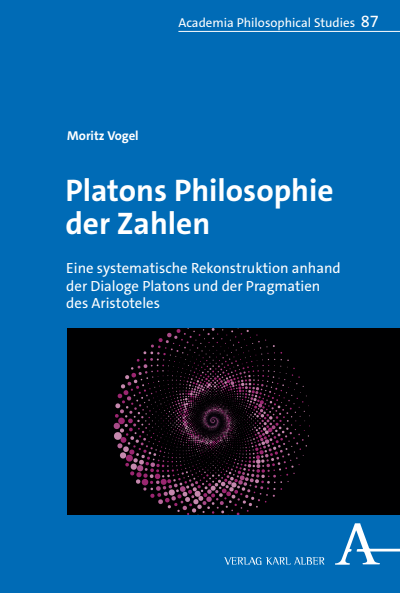
Plato in Poland 1800–1950
Types of Reception – Authors – Problems- Autor:innen:
- Reihe:
- Academia Philosophical Studies, Band 75
- Verlag:
- 2021
Zusammenfassung
Das vorliegende Buch unternimmt den Versuch, die polnische Platon-Rezeption einem breiten Publikum zugänglich zu machen. Die Jahre 1800–1950 umfassen die Schwerpunkte der Geschichte der polnischen Philosophie: Die Rezeption westlicher philosophischer Strömungen, die Entwicklung der Lemberg-Warschauer Schule, des Neo-Messianismus und der Neo-Scholastik. Das Buch erörtert, wie diese Phänomene in der modernen polnischen Philosophie zur Interpretation von Platon beigetragen haben.
Publikation durchsuchen
Bibliographische Angaben
- Copyrightjahr
- 2021
- ISBN-Print
- 978-3-89665-946-0
- ISBN-Online
- 978-3-89665-947-7
- Verlag
- Academia, Baden-Baden
- Reihe
- Academia Philosophical Studies
- Band
- 75
- Sprache
- Englisch
- Seiten
- 480
- Produkttyp
- Monographie
Inhaltsverzeichnis
KapitelSeiten
- Titelei/InhaltsverzeichnisSeiten 1 - 10 Download Kapitel (PDF)
- 0.1 The scope of the research
- 0.2 The problem of reception in studies on the history of philosophy
- 1.1 A.I. Zabellewicz, J.K. Szaniawski, and Polish Kantianism in relation to Plato
- 1.2 F. A. Kozłowski and Hegelianism
- 1.3 W. Tatarkiewicz and the Marburg neo-Kantianism
- 2.1 Plato as material to be improved according to P. Semenenko
- 2.2 Plato as an opponent of democracy and a precursor of socialism from the perspective of B. Limanowski
- 2.3 Plato as a revolutionary from the perspective of a conservative thinker, W. Dzieduszycki
- 2.4 Plato as a precursor of modern democracy as viewed by E. Jarra, a philosopher of law
- J. Adamski as an advocate of using Plato for the purposes of neo-scholasticism
- The early works of S. Pawlicki and the development of his method in the history of philosophy
- The unfinished Plato in the History of Greek Philosophy
- Plato’s late works in Pawlicki’s manuscripts
- Reception and assessment of Pawlicki’s interpretation of Plato
- W. Potempa and his critical assessment of Pawlicki’s Christianised Plato
- Early preparatory studies
- Opus vitae in English and Plato’s philosophical development
- Reaction to Plato’s Logic in Poland
- Reaction of English and German-speaking researchers to Plato’s Logic
- The neo-Kantians and Lutosławski’s Plato
- Polemic with Paul Shorey
- The ideological link between Plato and Messianism
- Epilogue: Plato as a remedy for the post-war situation
- Published works
- Manuscripts
- The literary origins of his work
- The Symposium as the inauguration of his work as a translator
- The Lvov series of translations
- The Warsaw series of translations
- Philosophical symmachy
- Digression: Witwicki’s Plato and the Lvov-Warsaw school
- Epilogue: Plato as jointly responsible for World War II and the post-war situation
- Z. Jordan and the methods of the Lvov school applied to Plato
- Plato as a starting point for B. Bornstein’s speculative philosophy
- ConclusionsSeiten 429 - 440 Download Kapitel (PDF)
- BibliographySeiten 441 - 474 Download Kapitel (PDF)
- Appendix: Chronological list of Polish translations of Plato’s dialoguesSeiten 475 - 480 Download Kapitel (PDF)