, to see if you have full access to this publication.
Edited Book No access
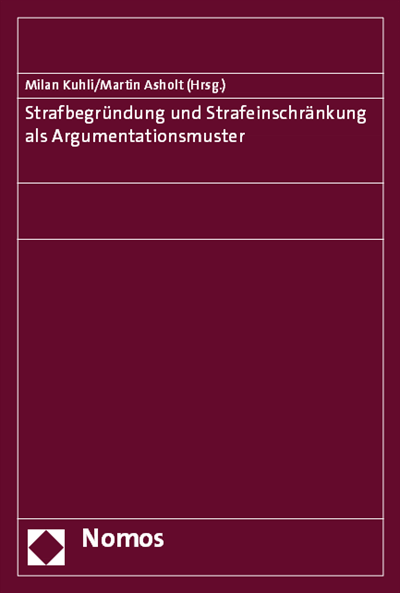
Strafbegründung und Strafeinschränkung als Argumentationsmuster
- Editors:
- |
- Publisher:
- 2017
Search publication
Bibliographic data
- Edition
- 1/2017
- Copyright Year
- 2017
- ISBN-Print
- 978-3-8487-1334-9
- ISBN-Online
- 978-3-8452-5423-4
- Publisher
- Nomos, Baden-Baden
- Language
- German
- Pages
- 306
- Product Type
- Edited Book
Table of contents
ChapterPages
- Titelei/Inhaltsverzeichnis No access Pages 1 - 8
- Authors: |
- I. Zum Projekt eines liberalen und rationalen Strafrechts No accessAuthors: |
- Authors: |
- 1. Eine erste Annäherung: Vergleich zweier Entscheidungsalternativen No accessAuthors: |
- Authors: |
- a. Wahlfeststellung No accessAuthors: |
- b. Mehrpersonenverhältnisse No accessAuthors: |
- c. Bezugnahme No accessAuthors: |
- III. Zurück zum Ausgangspunkt: Zur Frage eines legitimen Argumentationsmusters No accessAuthors: |
- Authors:
- A. No accessAuthors:
- Authors:
- I. No accessAuthors:
- II. No accessAuthors:
- III. No accessAuthors:
- IV. No accessAuthors:
- Authors:
- I. No accessAuthors:
- II. No accessAuthors:
- III. No accessAuthors:
- D. No accessAuthors:
- Authors:
- Erste These: Die juristische Auslegung muss von der kontrafaktischen Rationalität des (Gesetzes-)Textes ausgehen. No accessAuthors:
- Zweite These: Die juristische Hermeneutik ist stets auf Text und Kontext angewiesen. No accessAuthors:
- Dritte These: Die juristische Hermeneutik enthält in ihrer Struktur ein Moment praktischer Anwendung. No accessAuthors:
- Vierte These: Die juristische Hermeneutik weist eine pragmatische Dimension auf. No accessAuthors:
- Fünfte These: Die Rechtsinterpretation ist auf gesellschaftliche Diskurse angewiesen. No accessAuthors:
- Sechste These: Die strafrechtliche Auslegung ist Teil eines rechtspolitischen Begrenzungsdiskurses. No accessAuthors:
- Authors:
- I. Altes Gesetz, neuer Sachverhalt und die Methodenfrage No accessAuthors:
- Authors:
- 1. RGSt 32, 165 No accessAuthors:
- 2. BGHSt 10, 375 No accessAuthors:
- 3. BGHSt 47, 55 No accessAuthors:
- III. Der Sinn des Wortes und der Zweck des Gesetzes – ein Fazit No accessAuthors:
- Authors:
- A. Einleitung No accessAuthors:
- Authors:
- I. Was kann „enge“ und „im Zweifel beschuldigtenfreundliche“ Auslegung heißen? No accessAuthors:
- II. Begründungsstrukturen No accessAuthors:
- Authors:
- I. „Semantischer Vertrauensschutz“ No accessAuthors:
- II. Weitere Restriktionsfaktoren No accessAuthors:
- D. Ausblick No accessAuthors:
- Authors:
- A. Einführung und Untersuchungsgegenstand No accessAuthors:
- Authors:
- I. Die Problematik phänomenaler Inhaltszuschreibung No accessAuthors:
- II. Differenzierung nach dem Sollen und nach dem Können No accessAuthors:
- Authors:
- Authors:
- 1. Strafrechtswürdigkeit No accessAuthors:
- 2. Strafrechtsbedürftigkeit No accessAuthors:
- 3. Konkretisierung mittels Rechtsgüterschutz und Verhältnismäßigkeitsprüfung No accessAuthors:
- Authors:
- 1. Schutzfähigkeit No accessAuthors:
- 2. Strafrechtstauglichkeit No accessAuthors:
- D. Anwendungsbeispiele No accessAuthors:
- E. Vom Argumentationsstrauß zum Begründungs-/Einschränkungsnetz No accessAuthors:
- Authors:
- A. Einleitung No accessAuthors:
- B. Das Problem: GM und Tatstrafrecht No accessAuthors:
- Authors:
- I. Darstellung No accessAuthors:
- II. Plausibilität No accessAuthors:
- Authors:
- I. Unbestimmtheit bei der Strafzumessung No accessAuthors:
- II. Unbestimmtheit bei der Strafbegründung No accessAuthors:
- Authors:
- I. Bedenken im Hinblick auf den Gleichheitsgrundsatz No accessAuthors:
- II. Bedenken im Hinblick auf die Gedankenfreiheit No accessAuthors:
- F. Schlussfolgerung und Kritik No accessAuthors:
- Authors:
- A. Einleitung No accessAuthors:
- B. Interessenkonflikte auf Rechtfertigungsebene No accessAuthors:
- Authors:
- I. Verhaltensnormen und Sanktionsnormen No accessAuthors:
- II. Allgemeine Rechtfertigungsgründe und Strafunrechtsausschlussgründe No accessAuthors:
- Authors:
- 1. Doppelfunktionalität der klassischen Rechtfertigungsgründe No accessAuthors:
- 2. Kriterien zur Einordnung der klassischen Rechtfertigungsgründe No accessAuthors:
- Authors:
- 1. Verhaltensrechtfertigungsgründe No accessAuthors:
- 2. Strafbarkeitsausschlussgründe No accessAuthors:
- D. Rechtfertigungsgründe aus dem Strafprozessrecht No accessAuthors:
- E. Auswirkungen für den handelnden Amtsträger No accessAuthors:
- F. Ergebnis No accessAuthors:
- Authors:
- A. Gegenstand und Inhalt des Zweifelssatzes No accessAuthors:
- Authors:
- I. Zur Erforderlichkeit des Tatnachweises im frühmittelalterlichen Parteiprozess No accessAuthors:
- II. Zur Beweisbedürftigkeit in modernen adversatorischen Parteiverfahren No accessAuthors:
- III. Tatnachweis und Zweifel in Ausprägungen des mittelalterlichen und des gemeinen Inquisitionsverfahrens No accessAuthors:
- IV. Die „Verdachtsstrafe“ als Ausnahme vom Grundsatz der Beweisbedürftigkeit No accessAuthors:
- C. Folgerungen No accessAuthors:
- D. Ergebnis No accessAuthors:
- Authors:
- A. Einleitung No accessAuthors:
- B. Gesetzliche Grundlagen No accessAuthors:
- Authors:
- I. Selbstbelastungsprivileg und Schweigerecht No accessAuthors:
- II. Berücksichtigung beider Aspekte in der deutschen Gesetzgebung No accessAuthors:
- Authors:
- I. Verlassen des Schutzraumes No accessAuthors:
- II. Verfälschung der freien Beweiswürdigung No accessAuthors:
- Authors:
- I. In dubio pro reo No accessAuthors:
- II. Liberalismus No accessAuthors:
- F. Schlussfolgerung No accessAuthors:
- Authors:
- Authors:
- 1. Strafbegründung – Strafausschluss No accessAuthors:
- 2. Die Problematik der Wahlfeststellung No accessAuthors:
- Authors:
- 1. Echte und Unechte Wahlfeststellung No accessAuthors:
- 2. Die Beweiskonstellation bei der echten Wahlfeststellung No accessAuthors:
- 3. §§ 242, 259 StGB No accessAuthors:
- 4. Strict liability? No accessAuthors:
- 5. Schuldvermutung? No accessAuthors:
- III Die Wahlfeststellung als Zombie-Norm No accessAuthors:
- Authors:
- I. Einführung No accessAuthors:
- II. Opportunität zwischen Strafbegründung und -einschränkung No accessAuthors:
- III. Materielle und prozessuale Lösung No accessAuthors:
- IV. Einstellungsvorschriften und Gesetzlichkeitsprinzip No accessAuthors:
- V. Begründungserfordernisse No accessAuthors:
- VI. Reformüberlegungen No accessAuthors:
- VII. Fazit No accessAuthors:
- Authors:
- Authors:
- I. Aufklärungshilfe und Strafzumessung No accessAuthors:
- II. Zur Vorzugswürdigkeit expliziter gesetzlicher Regelungen No accessAuthors:
- Authors:
- I. Zur Zulässigkeit einer Schuldunterschreitung No accessAuthors:
- II. Aufklärungshilfe und Prävention No accessAuthors:
- III. Beurteilung anhand der bestehenden Kronzeugenregelungen No accessAuthors:
- IV. Staatlicher Strafverzicht, Ermittlungsnotstand und Unrechtsgefälle No accessAuthors:
- C. Fazit No accessAuthors:
- Authors:
- Authors:
- Authors:
- Authors:
- a) Urheber der Fiktion No accessAuthors:
- b) Gegenstand der Fiktion No accessAuthors:
- 2. Fiktionen und Vermutungen No accessAuthors:
- II. Zweck von Fiktionen No accessAuthors:
- III. Eingrenzung des Untersuchungsgegenstandes No accessAuthors:
- Authors:
- I. § 8 Abs. 3 AMG No accessAuthors:
- II. § 2 Abs. 4 AMG No accessAuthors:
- Authors:
- 1. Konsequenzen für die Strafbarkeit des Fahrschülers No accessAuthors:
- 2. Konsequenzen für die Strafbarkeit des Fahrlehrers No accessAuthors:
- Authors:
- Authors:
- Authors:
- a) Analogieverbot No accessAuthors:
- Authors:
- aa) Generelle Bedenken hinsichtlich des Rückgriffs auf außerstrafrechtliche Fiktionen? No accessAuthors:
- bb) Bestimmtheit der Fiktion selbst No accessAuthors:
- cc) Bestimmtheit der Einbeziehung No accessAuthors:
- c) Zwischenergebnis No accessAuthors:
- 2. Freie Beweiswürdigung und in dubio pro reo No accessAuthors:
- 3. Unschuldsvermutung No accessAuthors:
- 4. Einheit der Rechtsordnung – Auflösung von Wertungswidersprüchen No accessAuthors:
- II. Außerstrafrechtliche Fiktionen und das Erfordernis der Schutzzweckkohärenz No accessAuthors:
- D. Zusammenfassung der wesentlichen Ergebnisse No accessAuthors:
- Authors:
- A. Transnationale und internationale Einflusslinien auf die deutsche Strafrechtspflege No accessAuthors:
- Authors:
- Authors:
- 1. Die drei Alternativen des § 7 StGB und der Streit über den Umfang der Fremdrechtsanwendung No accessAuthors:
- Authors:
- a) Zur Teleologie der Fremdrechtsanwendung in § 7 StGB No accessAuthors:
- b) Strafbarkeitsbegründender und -einschränkender Doppelcharakter des § 7 StGB im Lichte rechtsstaatlich-demokratischer (Mindest-) Anforderungen No accessAuthors:
- 3. Folgerungen für die Auslegung des § 7 StGB No accessAuthors:
- Authors:
- 1. Die beiderseitige Strafbarkeit und deren Auslegung im Rechtshilferecht No accessAuthors:
- 2. Die beiderseitige Strafbarkeit als Legitimationspfeiler für die Leistung von Rechtshilfe No accessAuthors:
- 3. Folgerungen No accessAuthors:
- Authors:
- 1. Die begrenzte Anerkennung eines transnationalen ne bis in idem im deutschen Recht No accessAuthors:
- 2. Ordre public-Einschränkung eines transnationalen ne bis in idem No accessAuthors:
- 3. Zur Funktion des transnationalen ne bis in idem und dessen nur begrenzter Anerkennung im deutschen Recht No accessAuthors:
- C. Synthese No accessAuthors:
- Autorenverzeichnis No access Pages 301 - 306