, to see if you have full access to this publication.
Monograph No access
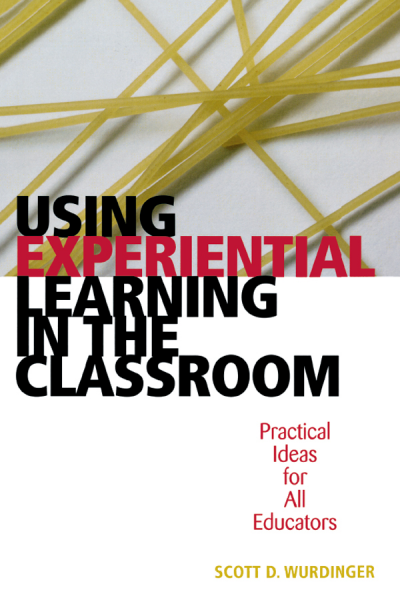
Using Experiential Learning in the Classroom
Practical Ideas for All Educators
Authors:
Publisher:
2005
Summary
While research and common sense tells us that experiential learning is more effective than the more traditional process of information assimilation (where teachers lecture, test, and grade), high school, college, and university teachers continue to use paper-and-pencil tests as their primary grading and assessment tool. Many students fail to see the relevance of these sort of tests and are bored with passive methods of learning. Using Experiential Learning in the Classroom: Practical Ideas for All Educators explains what experiential learning is, why it works, and how it can be used in both high school and post-secondary educational settings. Tools for assessing experiential learning are also provided. A must-have resource for high school teachers and college professors.
Search publication
Bibliographic data
Edition
1/2005
Copyright Year
2005
ISBN-Print
978-1-57886-240-5
ISBN-Online
978-1-4616-5539-8
Publisher
Rowman & Littlefield, Lanham
Language
English
Pages
101
Product Type
Monograph
Table of contents
ChapterPages
Table of Contents No access
Preface No access
Acknowledgments No access
1: Changing Teaching Formats No access Pages 1 - 6
2: What is Experiential Learning? No access Pages 7 - 16
3: Why Experiential Learning Works No access Pages 17 - 30
4: Experiential Schools No access Pages 31 - 48
5: Using Experiential Learning Classroom Settings No access Pages 49 - 66
6: Assessing Experiential Learning No access Pages 67 - 88