, to see if you have full access to this publication.
Monograph No access
Art and Creativity in a New Guinea Society
The Kwoma in Cross-Cultural Perspective
Authors:
Publisher:
2022
Summary
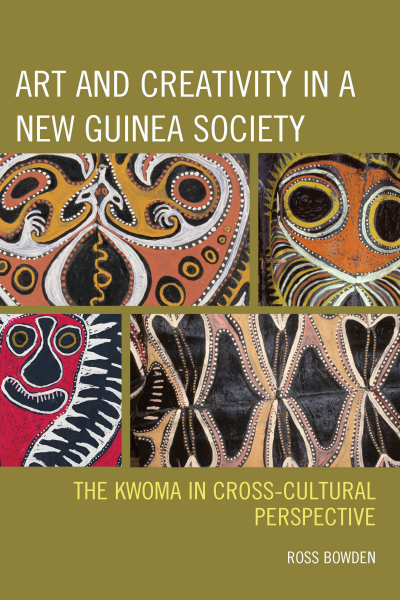
The Kwoma, the subject of this book, are one of a number of peoples in the Sepik River region of northern Papua New Guinea who have created some of the most distinctive visual art in the Pacific. Through case studies of their painting, sculpture, architecture and ritual this book examines in detail how people in this society understand their art as a cultural phenomenon. This includes how they understand its origins in the spirit world, how they judge quality in art and how they understand artistic creativity. The book contrasts Kwoma beliefs with the radically different approach to art found in the modern West. The modern Western concept of art first emerged not in the eighteenth century in the Enlightenment, or even later, as anthropologists and art historians often assume, but several centuries earlier in the Renaissance. The book gives an account of radical changes that took place culturally in Europe between the twelfth and sixteenth centuries in the way human intellectual creativity was understood, and how this gave rise to a new concept of art, one that remains unchanged in the modern West today.
Keywords
Search publication
Bibliographic data
Edition
1/2022
Copyright Year
2022
ISBN-Print
978-1-7936-1136-9
ISBN-Online
978-1-7936-1137-6
Publisher
Lexington, Lanham
Language
English
Pages
144
Product Type
Monograph
Table of contents
ChapterPages
Contents No access
List of Figures No access
Acknowledgements No access
Introduction No access
Kwoma and Other Sepik Art in International Collections No access
Impact of New Guinea and Other Indigenous Art on the Development of Twentieth-Century Western Art No access
Research on Sepik Art No access
The Conditions of Fieldwork No access
Background to the Kwoma No access
Social Groups No access
Social Change No access
Notes No access
Unique Features of Individual Men’s Houses No access
Constructing a Men’s House No access
The Supernatural Origins of Men’s Houses and Their Art No access
Wayipanal Men’s House and Its Supernatural Origin (Bangwis Village) No access
Wambon Men’s House (Washkuk Village) No access
Notes No access
Kwoma Rituals in Historical Perspective No access
Ritual Moieties No access
The Sculptures No access
The Ceremonies No access
Interpreting the Ritual Art No access
The Myth of Origin of the Yena, Minja and Nokwi Rituals and Their Art No access
Notes No access
No Work of Art Unique Culturally No access
Decaying Men’s Houses Demolished or Abandoned No access
Ceremonial Figures Replaced When They Began to Decay No access
Repatriation of Artworks No access
Memory of Who Produced Which Objects Quickly Forgotten No access
The Names of the Great Artists of the Past Quickly Forgotten No access
‘Anonymity’ of Artists No access
Technical Skill versus Creativity No access
No Term Equivalent to ‘Art’ No access
Notes No access
Other Societies with a Similar Understanding of Art No access
A New Understanding of Human Creativity No access
Changes in Art No access
The Emergence of the Modern Western Concept of Art No access
Illustrations of the Way Conceptual Originality Is Recognized in the Renaissance and Beyond No access
Negative Criticism No access
Notes No access
Why Kwoma Have No Term Equivalent to ‘Art’ No access
Critical Discourses Surrounding Art No access
Creativity in Kwoma Art No access
Bourdieu on Art No access
Judging Indigenous Art from a Western Perspective No access