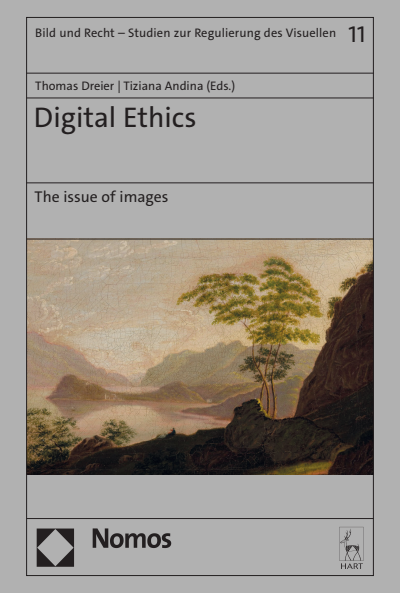
Digital Ethics
The issue of images- Editors:
- |
- Series:
- Bild und Recht - Studien zur Regulierung des Visuellen, Volume 11
- Publisher:
- 2022
Summary
Digital images raise ethical issues that have so far received only little attention. The discrete pixels of digital images can be freely combined. Compared to the dissemination of analog images the net enables dis-proportionately greater control over how digital images are to be distributed. As of today, the consequences for contemporary visual communication as well as for the cultural visual memory are all but clear. Can there be an applied ethics of digital images at all? What could be the content of such a normative ethics? And what is the relationship between ethics and the law of digital images? This volume brings together the contributions to an interdisciplinary German-Italian conference at Villa Vigoni, sponsored by the DFG. With contributions byProf. Gianmaria Ajani, Prof. Tiziana Andina, Dr. Eva-Maria Bauer, Dr. Davide Dal Sasso, Prof. Dr. Thomas Dreier, PD Dr. Johannes Eichenhofer, Prof. Maurizio Ferraris, Prof. Dr. Christophe Geiger, Prof. Dr. Dr. h.c. Werner Gephart, Olivia Hägle, Prof. Wybo Houkes, Dr. Lisa Käde, Prof. Massimo Leone, Lorenz Müller-Tamm, Dr. Eberhard Ortland, Prof. Dr. Benjamin Raue, Ass. Prof. Cosetta Saba, Prof. Dr. Reinold Schmücker, Ass. Prof. Enrico Terrone and Prof. Dr. Wolfgang Ullrich.
Keywords
Search publication
Bibliographic data
- Copyright Year
- 2022
- ISBN-Print
- 978-3-8487-8841-5
- ISBN-Online
- 978-3-7489-3401-1
- Publisher
- Nomos, Baden-Baden
- Series
- Bild und Recht - Studien zur Regulierung des Visuellen
- Volume
- 11
- Language
- English
- Pages
- 426
- Product Type
- Edited Book
Table of contents
- Titelei/InhaltsverzeichnisPages 1 - 8 Download chapter (PDF)
- Authors: |Download chapter (PDF)
- Authors: |
- Authors: |
- a) What is to be understood by digital image ethics?Authors: |
- b) Changes brought about by digital and networking technologiesAuthors: |
- Authors: |
- a) Practical levelAuthors: |
- b) Semantical levelAuthors: |
- Authors: |
- a) Questions to be askedAuthors: |
- b) Consequential ethicsAuthors: |
- 4. Law and ethicsAuthors: |
- Authors: |
- 1. Transalpine considerationsAuthors: |
- 2. The parts of this bookAuthors: |
- Authors: |
- a) The ethical frameworkAuthors: |
- b) Images, art and societyAuthors: |
- c) Binary encoding and artificial intelligence: The dissolution of the visual objectAuthors: |
- d) Technology, ethics and legal normsAuthors: |
- e) Ethics and fundamental rightsAuthors: |
- ReferencesAuthors: |
- Authors:Download chapter (PDF)
- I. PrefaceAuthors:
- II. “Travelling” as a Medium of Communication and DiscoveryAuthors:
- III. Letters, Circulars, and Broadcast ChainsAuthors:
- IV. How We Participate in Foreign LifeAuthors:
- V. The Power of the “Image”Authors:
- VI. ConclusionAuthors:
- ReferencesAuthors:
- Authors:Download chapter (PDF)
- I. IntroductionAuthors:
- II. Digital Ethics Today: A SnapshotAuthors:
- Authors:
- 1. The problem of justificationAuthors:
- 2. The problem of applicationAuthors:
- Authors:
- 1. The need for applied ethicsAuthors:
- 2. Applied ethics is different from everyday moral judgingAuthors:
- 3. The “seat in life” of applied ethicsAuthors:
- V. The Task of Digital Image EthicsAuthors:
- Authors:
- 1. The Principle of Unconditionally Permissible Use of all Vocabulary of a Visual LanguageAuthors:
- 2. The Principle of the Legitimacy of Taking Photographs in MuseumsAuthors:
- 3. The Principle of Prohibiting Deception by Manipulated PhotographsAuthors:
- ReferencesAuthors:
- Authors:Download chapter (PDF)
- ReferencesAuthors:
- Authors:Download chapter (PDF)
- I. Prologue: The Virus and the WebAuthors:
- II. Privacy, Post-Truth, and Documedia Surplus ValueAuthors:
- Authors:
- 1. Quantity: big dataAuthors:
- 2. Quality: rich dataAuthors:
- 3. Relation: secret dataAuthors:
- 4. Modality: real dataAuthors:
- 5. The unfair exchangeAuthors:
- IV. Epilogue: Objections and AnswersAuthors:
- ReferencesAuthors:
- Authors:Download chapter (PDF)
- I. IntroductionAuthors:
- Authors:
- Authors:
- a) PlanningAuthors:
- b) ProcessingAuthors:
- Authors:
- a) DispositionsAuthors:
- b) RealityAuthors:
- Authors:
- Authors:
- a) FormsAuthors:
- b) HybridizationsAuthors:
- Authors:
- a) InteractionAuthors:
- b) Identification CriteriaAuthors:
- IV. ConclusionAuthors:
- ReferencesAuthors:
- Authors:Download chapter (PDF)
- I. The Democratization of the Image ToolsAuthors:
- II. From Analogue Images to Forms of OralityAuthors:
- III. Aby Warburg’s “Pathosformeln”Authors:
- IV. Selfies and EmojisAuthors:
- V. The Vivification of the Images: MemesAuthors:
- VI. The Application of Social Media Tools to Classical ArtworksAuthors:
- VII. ...and The Future? – Consequences for Authorship and CopyrightAuthors:
- ReferencesAuthors:
- Authors:Download chapter (PDF)
- I. Referencing as a Cultural PhenomenonAuthors:
- Authors:
- 1. Historical use of referencing and appropriationAuthors:
- 2. Appropriation artAuthors:
- 3. Referencing as a medium of communicationAuthors:
- Authors:
- 1. Consent pursuant to § 23 (1) sentence 2 UrhGAuthors:
- 2. Citation according to § 51 UrhGAuthors:
- 3. Caricature or parody according to § 51a UrhGAuthors:
- Authors:
- a) A broad understanding of pastiche in the Explanatory Memorandum to the German Act implementing the DSM-DirectiveAuthors:
- b) A narrow understanding of pasticheAuthors:
- c) Pastiche does not achieve a systemic changeAuthors:
- V. Concluding RemarksAuthors:
- ReferencesAuthors:
- Authors:Download chapter (PDF)
- I. Digital ImagesAuthors:
- II. The Transgenerational BondAuthors:
- III. Transgenerational ActionsAuthors:
- IV. Transgenerational ImagesAuthors:
- ReferencesAuthors:
- Authors:Download chapter (PDF)
- I. Iconoclasm as a Means of Innovation and ReappraisalAuthors:
- II. Iconoclasm and IconoclashAuthors:
- III. Digital Preservation and RestorationAuthors:
- IV. Provisional ConclusionAuthors:
- ReferencesAuthors:
- Authors:Download chapter (PDF)
- I. The Intimate Nature of the Visual FakeAuthors:
- II. The Visual Fake, Technology, and EvolutionAuthors:
- III. Conventionality and Motivation in the Technology of the Visual FakeAuthors:
- IV. The Third Way of SemioticsAuthors:
- V. Semiotics as Discipline of the FakeAuthors:
- VI. The Background of Reflection: Advances and LacunaeAuthors:
- VII. The Tasks Ahead for a Semioethics of the Visual FakeAuthors:
- VIII. Conclusions: On Fakes and VirusesAuthors:
- ReferencesAuthors:
- Authors:Download chapter (PDF)
- I. IntroductionAuthors:
- Authors:
- Authors:
- a) Starting point: art forgeryAuthors:
- b) Making history with fake photographsAuthors:
- c) “Face swap” as preliminary stageAuthors:
- Authors:
- a) Deep learningAuthors:
- b) AutoencoderAuthors:
- c) Generative adversarial networkAuthors:
- 3. The power of images: why images are more than simple information mediaAuthors:
- Authors:
- 1. State of the art: what AI is already capable ofAuthors:
- Authors:
- a) Consequences for the individual as a social beingAuthors:
- b) Potentially affected rightsAuthors:
- c) Indirect consequences: disinformationAuthors:
- Authors:
- a) Legal mechanismsAuthors:
- b) Technical solutionsAuthors:
- c) Social measuresAuthors:
- d) CombinationAuthors:
- IV. ConclusionAuthors:
- ReferencesAuthors:
- Authors:Download chapter (PDF)
- I. Semantic InformationAuthors:
- II. Syntactic InformationAuthors:
- III. Structural InformationAuthors:
- IV. Context of CreationAuthors:
- V. ConclusionAuthors:
- References:Authors:
- Authors:Download chapter (PDF)
- I. IntroductionAuthors:
- Authors:
- 1. The codification of the right to one’s own image in the KUG: an overviewAuthors:
- 2. Images in the scope of European data protection lawAuthors:
- Authors:
- 1. Opening clauses in the GDPRAuthors:
- Authors:
- a) Journalistic and artistic purposesAuthors:
- b) Other purposesAuthors:
- c) Opening clauses and already existing lawsAuthors:
- 3. The (legal) discrepancy between capturing images and their publicationAuthors:
- IV. Concluding Remarks: The Future of Image Protection LawAuthors:
- ReferencesAuthors:
- Authors:Download chapter (PDF)
- I. Introductory NoteAuthors:
- II. A New Agenda for Copyright LawsAuthors:
- III. AI-Generated Art and CreativityAuthors:
- IV. AI-Made Art and the LawAuthors:
- V. AI-Made Art and the Art WorldAuthors:
- VI. Concluding RemarksAuthors:
- ReferencesAuthors:
- Authors:Download chapter (PDF)
- I. Digitization in Economic TransactionsAuthors:
- II. ‘Servitization’ and Cloud-Based Image StorageAuthors:
- III. Seeking Moral and Practical ContinuityAuthors:
- Authors:
- 1. AccumulatingAuthors:
- 2. AccessingAuthors:
- 3. CuratingAuthors:
- 4. DeletingAuthors:
- V. ConclusionsAuthors:
- ReferencesAuthors:
- Authors:Download chapter (PDF)
- I. What It’s All About and what Consequences Does it Entail?Authors:
- Authors:
- 1. From public goods to technical protection measuresAuthors:
- Authors:
- a) Legislative solutionsAuthors:
- b) Reactions of the courtsAuthors:
- c) Additional issues described in legal literatureAuthors:
- Authors:
- a) Is there really a problem?Authors:
- b) Advantages of technological restrictionsAuthors:
- Authors:
- 1. Case scenariosAuthors:
- 2. Structural issuesAuthors:
- 3. Ethical considerationsAuthors:
- IV. Concluding RemarksAuthors:
- ReferencesAuthors:
- Authors:Download chapter (PDF)
- I. IntroductionAuthors:
- II. CensorshipAuthors:
- III. Reasons for CensorshipAuthors:
- IV. Algorithmic Judgment and the Pragmatics of Pictorial Speech ActsAuthors:
- ReferencesAuthors:
- Authors:Download chapter (PDF)
- Authors:
- 1. Fear of algorithms and technologyAuthors:
- 2. Improvements through regulationAuthors:
- 3. Present impact of algorithmsAuthors:
- Authors:
- 1. RegulationAuthors:
- 2. AlgorithmAuthors:
- 3. Regulating algorithmsAuthors:
- Authors:
- 1. Initiating regulation through algorithm type-specific guidelinesAuthors:
- Authors:
- a) EU General Data Protection Regulation (GDPR)Authors:
- b) Ranking: regulation in a B2B contextAuthors:
- c) Automated administrative acts in GermanyAuthors:
- 3. SummaryAuthors:
- Authors:
- 1. Algo.RulesAuthors:
- 2. Google model cardsAuthors:
- V. What Comes Next?Authors:
- ReferencesAuthors:
- Authors:Download chapter (PDF)
- Authors:
- 1. What “images” are we talking about?Authors:
- 2. Depictions, illustrations, data, information, metaphors, imaginations: the multiformity of the concept of imageAuthors:
- 3. Wording in the following: “inner” and “outer” images, “self-images” and “foreign images”Authors:
- Authors:
- Authors:
- a) State symbolsAuthors:
- b) “Guiding images” of the state or individual state organsAuthors:
- c) Dealing with “outer” images beyond states symbols and guiding principles (“image regimes”)Authors:
- 2. Fundamental rightsAuthors:
- 3. Prospect on the further argumentationAuthors:
- Authors:
- 1. Soraya before the Italian courtsAuthors:
- 2. Caroline before the German courtsAuthors:
- 3. Caroline before the European Court of Human Rights (ECtHR)Authors:
- 4. Comparison between the three decisionsAuthors:
- Authors:
- 1. Impact on “outer” imagesAuthors:
- 2. Impact on “inner” imagesAuthors:
- 3. Impact on the relationship between the “inner” and “outer image”Authors:
- V. In the End: Constitutional Requirements for the Dissemination of Digital ImagesAuthors:
- ReferencesAuthors:
- Authors:Download chapter (PDF)
- Authors:
- 1. Appropriation art’s discontents with copyrightAuthors:
- 2. The traditional approach: narrow interpretation of exceptions and internal control by fundamental rightsAuthors:
- Authors:
- 1. Fundamental Rights and the CJEUAuthors:
- 2. Fundamental Rights and the ECtHRAuthors:
- 3. Other national jurisdictionsAuthors:
- Authors:
- 1. Resistance to change: the improper use of the proportionality test by the judiciary in copyright casesAuthors:
- 2. CJEU: Internalization of a (limited) room to manoeuvre using fundamental rightsAuthors:
- IV. Proposal of a European Style “Fair Use” Grounded in Freedom of ExpressionAuthors:
- V. The U.S. “Fair Use” ExceptionAuthors:
- VI. A proposal for a European “Fair Use” TestAuthors:
- VII. ConclusionAuthors:
- ReferencesAuthors:
- About the authorsPages 417 - 426 Download chapter (PDF)