, to see if you have full access to this publication.
Book Titles No access
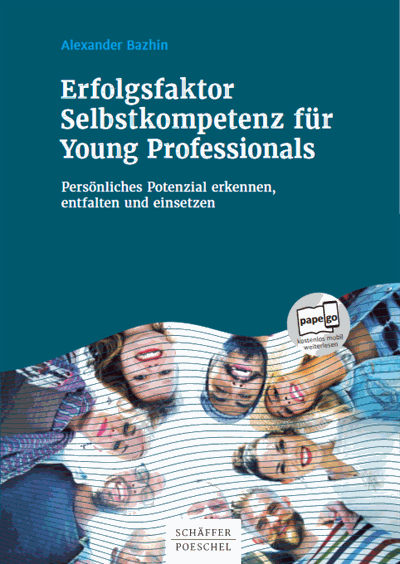
Erfolgsfaktor Selbstkompetenz für Young Professionals
Persönliches Potenzial erkennen, entfalten und einsetzen- Authors:
- Publisher:
- 2018
Keywords
Search publication
Bibliographic data
- Copyright year
- 2018
- ISBN-Print
- 978-3-7910-4318-0
- ISBN-Online
- 978-3-7910-4320-3
- Publisher
- Schäffer-Poeschel, Stuttgart
- Language
- German
- Pages
- 219
- Product type
- Book Titles
Table of contents
ChapterPages
- Titelei/Inhaltsverzeichnis No access Pages CI - X
- 1 WORUM: Worum geht es eigentlich? – eine Einführung No access Pages 1 - 4
- 2 WARUM: Warum brauche ich das Buch? No access Pages 5 - 6
- 3 WAS: Was sind die Schlüsselkompetenzen? No access Pages 7 - 10
- 4.1.1 »Mensch« und »Ich« No access
- 4.1.2 Ich als Persönlichkeit No access
- 4.1.3 Riemann-Thomann-Modell No access
- 4.2.1 Was sind die Gefühle und Emotionen? No access
- 4.2.2 Wozu Gefühle und Emotionen? No access
- 4.2.3 »Pseudo-Gefühle« No access
- 4.2.4 Kerngefühle No access
- 4.2.5 Gefühle erkennen und benennen No access
- 4.2.6 Regulation No access
- 4.2.7 Was passiert mit Emotionen im Alter? No access
- 4.3.1 Was macht meinen Wert aus? No access
- 4.3.2 Selbstwertgefühl und RTK No access
- 4.3.3 Loben oder Kritisieren? No access
- 4.4.1 Johari-Fenster No access
- 4.4.2 Johari-Fenster und Persönlichkeit No access
- 4.4.3 Preisund Feedbackgeben No access
- 4.5.1 Ich-Zustände nach Berne No access
- 4.5.2 Wozu das Ganze? No access
- 4.6.1 Führst du manchmal Selbstgespräche? No access
- 4.6.2 Wie sieht das Modell aus? No access
- 4.6.3 Wo funktioniert das Modell? – Anwendungsbereiche No access
- 4.7 Abschließende Anmerkungen zum Kapitel No access
- 5.1.1 Worüber verfüge ich? No access
- 5.1.2 Realistische Abschätzung der Fähigkeiten No access
- 5.1.3 Veränderungen in Bezug auf Talente und Fähigkeiten unter Berücksichtigung des RTK No access
- 5.2.1 Kreativität als Selbstkompetenz No access
- 5.2.2 Wovon hängt Kreativität ab? No access
- 5.2.3 Kreativität und RTK No access
- 5.3.1 Verantwortung No access
- 5.3.2 Autonomie No access
- 5.3.3 Authentizität No access
- 5.3.4 Kooperationsfähigkeit No access
- 5.3.5 Die vier »Big-Brothers« und Persönlichkeit No access
- 5.4.1 Ordnung vs. Chaos No access
- 5.4.2 Perfektionismus No access
- 5.4.3 Sind meine inneren Widersacher meine Schwäche? No access
- 5.5 Abschließende Anmerkungen zum Kapitel No access
- 6.1.1 Motivation als individuelle Kompetenz oder: Was ist die Motivation? No access
- 6.1.2 Bedürfnisse als Motive No access
- 6.1.3 Die Fähigkeit sich selbst und andere zu motivieren No access
- 6.1.4 RTK und Motivation No access
- 6.1.5 Kerngefühle und Motivation No access
- 6.1.6 Motivation und Alter No access
- 6.1.7 Was hat Motivation mit Pygmalion und Galatea zu tun? No access
- 6.2.1 Was hat Angela Merkel mit der Volition zu tun? No access
- 6.2.2 Anatomie der Volition No access
- 6.2.3 Volition und RTK No access
- 6.2.4 Kognitive Kontrolle der Volition No access
- 6.2.5 Volition als Energiequelle No access
- 7.1.1 Erfolg ist nicht gleich Glück No access
- 7.1.2 Positive Psychologie No access
- 7.2.1 Was ist für mich Erfolg? No access
- 7.2.2 Merkmale des Erfolgs No access
- 7.2.3 Erfolg im Beruf No access
- 7.2.4 Beruflicher Erfolg als Zusammenspiel von Schlüsselkompetenzen und Bedürfnissen No access
- 7.3.1 Was ist Glück bzw. was bedeutet es glücklich zu sein? No access
- 7.3.2 Wovon hängt die Glücksempfindung ab? Anatomie und Physiologie des Glückes No access
- 7.3.3 Warum glücklich sein? No access
- 7.3.4 Glücklich im Beruf sein No access
- 7.3.5 Ist es möglich, den Glückszustand zu fördern? No access
- 7.3.6 Glückszustand und RTK No access
- 7.4 Abschließende Anmerkungen zum Kapitel No access
- 8 Schluss No access Pages 205 - 206
- 9 Danksagung No access Pages 207 - 208
- 10 Literaturverzeichnis No access Pages 209 - 214
- Stichwortverzeichnis No access Pages 215 - 218
- Zum Autor No access Pages 219 - 219