, to see if you have full access to this publication.
Monograph No access
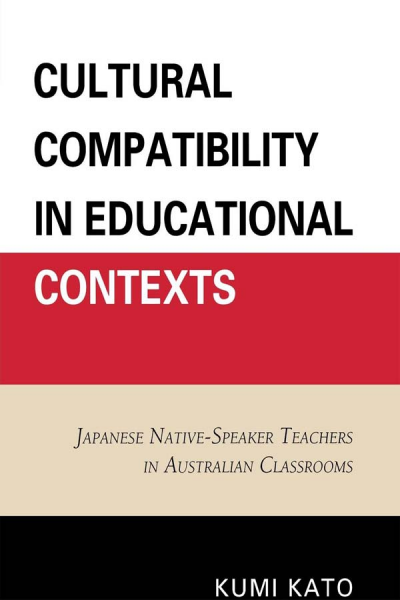
Cultural Compatibility in Educational Contexts
Japanese Native-Speaker Teachers in Australian Classrooms
Authors:
Publisher:
2010
Summary
Cultural Compatibility in Educational Contexts examines the mechanism of control and efficacy underlying specific cultural contexts, intercultural value differences, and consequential conflicts, which invisibly and unintentionally cause communication difficulties and negative performances. This specific study centers on Japanese language classrooms in Australia taught by native Japanese speakers. Comparative studies were carried out in classrooms in both Japan and Australia, and identified specific teaching strategies perceived to be effective in each cultural context. The book concludes by asserting that the notion of culture in the educational context goes beyond ethnic and linguistic differences; an awareness of cultural compatibility should be recognized as one of the professional responsibilities of all educators. This is particularly relevant to multicultural societies such as Australia, where both teaching and learning populations are increasingly diverse, as well as being applicable to other social contexts.
Search publication
Bibliographic data
Edition
1/2010
Copyright Year
2010
ISBN-Print
978-0-7618-5023-6
ISBN-Online
978-0-7618-5024-3
Publisher
Hamilton Books, Lanham
Language
English
Pages
235
Product Type
Monograph
Table of contents
ChapterPages
Table of Contents No access
Tables No access
Abbreviations No access
Preface No access
Acknowledgments No access
Introduction No access
1.1. Introduction: Producer, Process and Product No access
1.2. Self, Selves and Identity No access
1.3. Knowing Self through the Other No access
1.4. Knowing the Other through Self No access
1.5. Influence of the Self on the Nature of the Data No access
1.6. Textual Representation: A Story of Multi-Voices No access
1.7. Conclusion No access
2.1. Introduction No access
2.2. Research as a Learning Process No access
2.3. Questions, Aims and Rationale No access
2.4. Overview of the Study No access
2.5. Conclusion No access
3.1. Introduction No access
3.2. Culture in the Classroom No access
3.3. Cultural Compatibility in Teaching and Learning No access
3.4. The Culture of Learning: Japanese and Australian Classrooms No access
3.5. The Study No access
3.6. Students' Perceptions about the Host Country's Classroom Culture No access
3.7. Students' Observation of the Host Country's Classroom Culture No access
3.8. Conclusion No access
4.1. Introduction No access
4.2. Australia's Awareness of Countries with Geographical, Economic and Political Significance No access
4.3. Promotion of Asian Languages No access
4.4. Japanese Language Education in Queensland Schools No access
4.5. Rapid Growth of Japanese Language Education and Consequent Teacher Shortage No access
4.6. Teacher Qualifications No access
4.7. Teaching Approaches Promoted in LOTE Education No access
4.8. The JNS Teachers No access
4.9. The JNS Teacher Trainees' Classroom Experience No access
4.10. Findings and Analysis No access
4.11. The First-Year JNS Teachers' Classroom Experience No access
4.12. Findings and Analysis No access
4.13. Discussions about Support for JNS Teachers' Professional Development No access
4.14. Conclusion No access
5.1. Introduction No access
5.2. The Study - Aims of the Two Stages No access
5.3. The Nature of Teachers' Classroom Language Use No access
5.4. Communicative Competence in Classrooms No access
5.5. Directives No access
5.6. Development of a Framework for Analysis: Expanding the Definition of Directives No access
5.7. Summary and Integrated Framework No access
5.8. Teachers' Background No access
5.9. Arrangements for Classroom Observation No access
5.10. Stage I Findings and Analysis No access
5.11. Stage 2 Findings and Analysis No access
5.12. Conclusion No access
6.1. Introduction No access
6.2. Research as a Self-Development Process - Reflections on Producer, Process and Product No access
6.3. Making the Invisible Visible and Defining the Assumed Undefinable No access
6.4. Research Implications No access
6.7. Application of the Research to Other Educational Contexts: Broadening the Horizon of Cross-Culturalness No access