, to see if you have full access to this publication.
Monograph No access
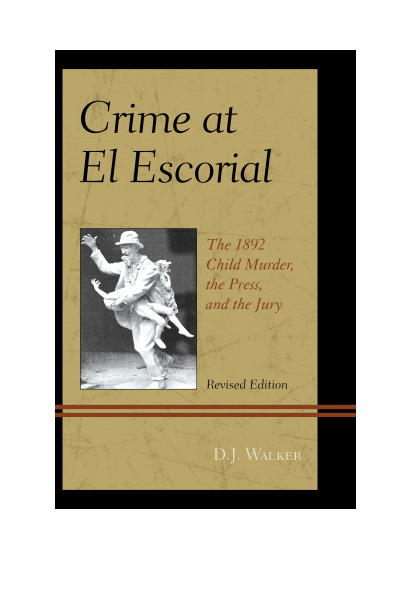
Crime at el Escorial
The 1892 Child Murder, the Press, and the Jury
Authors:
Publisher:
2014
Summary
Crime at El Escorial presents a comparative social and judicial analysis of an 1892 child murder, drawing from newspaper archives among other historical documents. D.J. Walker discusses the role of Spain’s intellectual elite in crystallizing dissatisfaction with the popular jury through its criticism of the “masses” and the impact of journalists’ fictionalized representations of the murder on public opinion.
Keywords
Search publication
Bibliographic data
Edition
1/2014
Copyright Year
2014
ISBN-Print
978-0-7618-6355-7
ISBN-Online
978-0-7618-6356-4
Publisher
Hamilton Books, Lanham
Language
English
Pages
215
Product Type
Monograph
Table of contents
ChapterPages
Contents No access
List of Illustrations No access
Acknowledgments No access
Introduction No access Pages 1 - 12
1 Mass Taste and Crime Reporting in the Spanish Press of the 1890s No access Pages 13 - 58
2 Fictionalizing the Escorial Crime No access Pages 59 - 104
3 The Escorial Case as Rural Gothic No access Pages 105 - 140
4 The Case of the “Niño de El Escorial” and the Attack on the Jury No access Pages 141 - 164