, to see if you have full access to this publication.
Monograph No access
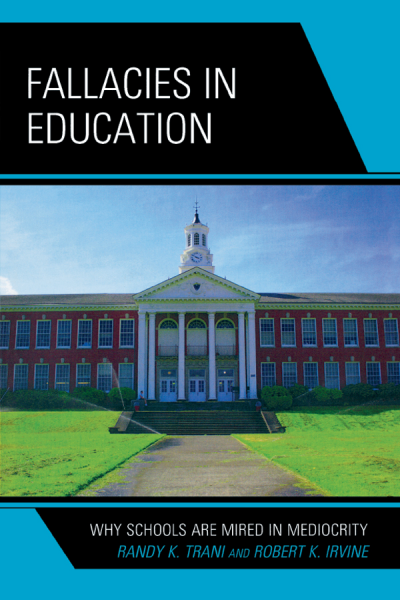
Fallacies in Education
Why Schools Are Mired in Mediocrity
Authors:
|
Publisher:
2010
Summary
This book argues for a complete reassessment of the ways schools are conceived, organized, operated and managed. Authors Trani and Irvine challenge traditional assumptions about grade levels, teachers, students and administrators in pursuit of higher student achievement and academic excellence. Building on the methods that turned an average school district into one widely recognized as one of the best in the nation, this book argues for fundamental, logical changes to the way Americans operate their public schools. Fallacies in Education is purposefully written to support community-based changes to schools that encourage superior achievement and educational results. This book provides a pathway for concerned parents, administrators, teachers and citizens to improve their schools with their current resources. The techniques used in Corbett to produce an academic renaissance can be used everywhere and this book provides a starting point for schools to strive for academic achievement and excellence in education. The book demonstrates how every school can better serve their students and deliver a better education without increasing costs or incurring new ones.
Search publication
Bibliographic data
Edition
1/2010
Copyright Year
2010
ISBN-Print
978-1-60709-467-8
ISBN-Online
978-1-60709-469-2
Publisher
Rowman & Littlefield, Lanham
Language
English
Pages
227
Product Type
Monograph
Table of contents
ChapterPages
Table of Contents No access
Acknowledgments No access
Chapter One: Introduction No access Pages 1 - 4
Chapter Two: Common Knowledge That Gets in the Way of Excellence No access Pages 5 - 30
Chapter Three: Six Secrets to Creating an Excellent School No access Pages 31 - 50
Chapter Four: School Size and Excellence: Is Bigger More Efficient? Or, Commonly Held Beliefs about the Benefits of Big Schools No access Pages 51 - 68
Chapter Five: Configuring Instruction for Excellence: Continuous-Progress Model Versus Grade Level, Curriculum-Oriented Model No access Pages 69 - 86
Chapter Six: Middle School: A New Approach Leads to Excellence No access Pages 87 - 112
Chapter Seven: High School: Excellence in the Spotlight No access Pages 113 - 128
Chapter Eight: Creating and Maintaining a Culture of Excellence No access Pages 129 - 140
Chapter Nine: Tailor School, Schedules, and Approaches to the Local Community No access Pages 141 - 150
Chapter Twelve: The Future and Thoughts on Trends Toward and Away from Excellence No access Pages 191 - 196
Chapter Thirteen: How to Create an Excellent School if You Are a: Parent. Teacher, Student, Administrator. or School Board Member No access Pages 197 - 206
Chapter Fourteen: Pathway to Excellence: Next Steps and Conclusions No access Pages 207 - 218
Appendix Multi-Age Resources and FAQs No access Pages 219 - 226