, to see if you have full access to this publication.
Edited Book No access
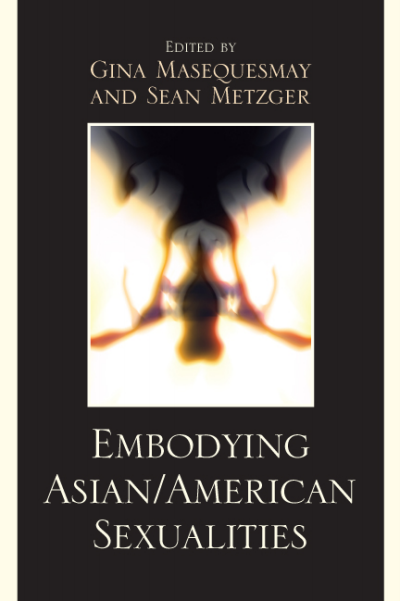
Embodying Asian/American Sexualities
Editors:
|
Publisher:
2009
Summary
This book is conceived as a reader for use in American studies, Asian American studies, ethnic studies, gender studies, lesbian/gay/bisexual/transgender studies, performance studies, and queer studies. It also contains new scholarship on Asian/American sexualities that would be useful for faculty and students. In particular, this volume highlights materials that receive little academic attention such as works on Southeast Asian migrants, mixed race cultural production, and Asian/American pornography. As an interdisciplinary anthology, this collection weaves together various forms of 'knowledge'_autobiographical accounts, humanistic research, community-based work, and artistic expression. Responsive to the imbrication of knowledge and power, the authors aspire to present a diverse sample of discourses that construct Asian/American bodies. They maintain that the body serves as the primary interface between the individual and the social, yet, as Elizabeth Grosz noted over a decade ago, feminist theory, and gender and sexuality studies more generally, 'has tended, with some notable exceptions, to remain uninterested in or unconvinced about the relevance of refocusing on bodies in accounts of subjectivity.' This volume attempts to address this concern.
Search publication
Bibliographic data
Edition
1/2009
Copyright Year
2009
ISBN-Print
978-0-7391-2903-6
ISBN-Online
978-0-7391-3351-4
Publisher
Lexington, Lanham
Language
English
Pages
188
Product Type
Edited Book
Table of contents
ChapterPages
Contents No access
Acknowledgments No access
Introduction: Embodying Asian/American Sexualities No access Pages 1 - 22
Chapter 1. The Rice Room: Scenes from a Bar No access Pages 23 - 28
Chapter 2. Pornography and Its Dis/Contents No access Pages 29 - 42
Chapter 3. The One that She Wants: Margaret Cho, Mediatization, and Autobiographical Performance No access Pages 43 - 50
Chapter 4. Novell-aah!: A Short Play No access Pages 51 - 60
Chapter 5. And the Crow Cries Before He Dies No access Pages 61 - 72
Chapter 6. Queer Theory and Anti-Racism Education No access Pages 73 - 88
Chapter 7. The Anxiety over Borders No access Pages 89 - 104
Chapter 8. An Interview with Pauline Park No access Pages 105 - 114
Chapter 9. Public Agendas and Private Struggles No access Pages 115 - 126
Chapter 10. Family, Citizenship, and Selfhood in Luong Ung’s First They Killed My Father No access Pages 127 - 144
Chapter 11. Homosexuality and Korean Immigrant Protestant Churches No access Pages 145 - 156
Chapter 12. Finding Fellatio No access Pages 157 - 172