, to see if you have full access to this publication.
Edited Book No access
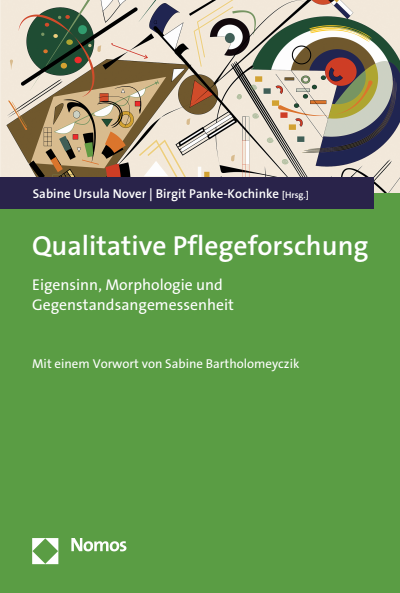
Qualitative Pflegeforschung
Eigensinn, Morphologie und Gegenstandsangemessenheit- Editors:
- |
- Publisher:
- 2021
Keywords
Search publication
Bibliographic data
- Edition
- 1/2021
- Copyright Year
- 2021
- ISBN-Print
- 978-3-8487-6905-6
- ISBN-Online
- 978-3-7489-2152-3
- Publisher
- Nomos, Baden-Baden
- Language
- German
- Pages
- 438
- Product Type
- Edited Book
Table of contents
ChapterPages
- Titelei/Inhaltsverzeichnis No access Pages 1 - 12
- Authors: |
- Ausgangslage No accessAuthors: |
- Der Aufbau des Buches No accessAuthors: |
- Kapitel I Grundlagen No accessAuthors: |
- Kapitel II Methodische Zugänge No accessAuthors: |
- II.1 Im Fokus: Erleben und Kommunikation No accessAuthors: |
- II.2 Im Fokus: Professionalität und Bewältigung No accessAuthors: |
- Authors: |
- Kapitel III Methodologien und Forschungsprogramme No accessAuthors: |
- III.1 Im Fokus: Methodologien No accessAuthors: |
- Ethnografie No accessAuthors: |
- Metaphernanalyse No accessAuthors: |
- Authors: |
- III. 3.2 Im Fokus: Forschungsprogramme No accessAuthors: |
- Mentale Felder No accessAuthors: |
- Theorie-Praxis-Transfer No accessAuthors: |
- Partizipationsparadigma No accessAuthors: |
- Big Data No accessAuthors: |
- Kapitel IV Resüme No accessAuthors: |
- I.2.1 Zur Methodologie qualitativer Forschung. Wie die Güte der qualitativen Forschung sichern? No access Pages 27 - 48Authors:
- Authors: |
- Das heuristische Modell der Spannungsfelder in der Pflegepraxis No accessAuthors: |
- Literatur No accessAuthors: |
- Authors: | |
- Authors: | |
- Authors: | |
- Kontakt zu Gatekeeper*innen No accessAuthors: | |
- Kontakt zu Angehörigen No accessAuthors: | |
- Kontakt zu Personen in unterschiedlichen Demenzphasen No accessAuthors: | |
- Erhebung und Analyse der Forschungsdaten No accessAuthors: | |
- 1.2 Intrapersonale Konflikte von Forschenden im Projekt RoboLand No accessAuthors: | |
- Authors: | |
- Literatur: No accessAuthors: | |
- Authors:
- 1 Psychosoziale Intervention und Lebensqualität von Menschen mit Demenz No accessAuthors:
- 2 Professionelles Märchenerzählen No accessAuthors:
- 3 Forschungsfragen No accessAuthors:
- Authors:
- 4.1 Qualitativ No accessAuthors:
- 4.2 Mehrperspektivisch No accessAuthors:
- 4.3 Partizipativ No accessAuthors:
- 4.4 Zugang, Sampling, Ein- und Ausschlusskriterien No accessAuthors:
- 4.5 Die Datenerhebung durch Videoaufzeichnungen No accessAuthors:
- 4.6 Memos No accessAuthors:
- Authors:
- 5.1 Eröffnung und Vereinbarungen No accessAuthors:
- 5.2 Die Analyse des Startbilds No accessAuthors:
- 5.3 Die Analysen von Standbildern im 5-Minuten-Takt No accessAuthors:
- 5.4 Schneller Durchlauf des gesamten Filmabschnitts No accessAuthors:
- 5.5 Sequenzielle Analysen No accessAuthors:
- 5.6 Wiederholungen No accessAuthors:
- 5.7 Gegenüberstellung Erst- und Schlussaufnahme No accessAuthors:
- 5.8 Abschluss No accessAuthors:
- Authors:
- 6.1 Sample und Datenmaterial No accessAuthors:
- 6.2 Ergebnisse zur Angemessenheit des methodischen Vorgehens No accessAuthors:
- Literatur No accessAuthors:
- Authors: |
- Einleitung No accessAuthors: |
- 1. Nicht der Mensch sein können, der man sein soll – Menschen mit Demenz No accessAuthors: |
- 2. Wie die Forschung mit dem Pflegeparadoxon umgeht No accessAuthors: |
- Authors: |
- 3.1 Menschen mit Demenz als eingeschränkte Akteure No accessAuthors: |
- 3.2 Menschen mit Demenz als Akteure im vollumfänglichen Sinne No accessAuthors: |
- Fazit No accessAuthors: |
- Literatur No accessAuthors: |
- Authors:
- 1. Gegenstand: Forscher*innensubjektivität – Störfaktor oder Erkenntnisquelle? No accessAuthors:
- 2. Methode: Doing Ethnography am Beispiel von Demenz-Care No accessAuthors:
- 3. Probleme: Grenzerfahrungen und das forschende Selbst No accessAuthors:
- 4. Perspektive: Das unliebsame Selbst der Forschenden als Erkenntnisquelle!? No accessAuthors:
- 5. Literatur No accessAuthors:
- Authors: |
- 1. Einleitung No accessAuthors: |
- 2. Lebensweltanalytische Ethnographie zur Erkundung pflegerischen Handelns No accessAuthors: |
- Authors: |
- Verbalsprachlicher Ausdruck – und deren Deutungen No accessAuthors: |
- 4. Ausblick No accessAuthors: |
- 5. Literatur No accessAuthors: |
- Authors:
- 1. Anlass No accessAuthors:
- 2. Begründung No accessAuthors:
- Authors:
- Authors:
- 25.4.2013 No accessAuthors:
- 14.5.2014 No accessAuthors:
- 7.5.2015 No accessAuthors:
- Ehemann No accessAuthors:
- Authors:
- Authors:
- 4.1.1. Forschungstagebuch No accessAuthors:
- 4.1.2. Beobachtungsprotokoll No accessAuthors:
- 4.1.3. Das ero-epische Gespräch No accessAuthors:
- Authors:
- 4.2.1. Die Auseinandersetzung mit dem eigenen Unbewussten No accessAuthors:
- 4.2.2. Die psychoanalytische Reflexion der Angst und Gegenübertragung No accessAuthors:
- Authors:
- Literaturverzeichnis No accessAuthors:
- Authors:
- 1. Das Projekt und seine Fragestellung No accessAuthors:
- 2. Das Projekt und seine Vorgehensweise No accessAuthors:
- 3. Datenanalyse No accessAuthors:
- 4. Team No accessAuthors:
- 5. Teilnehmende Beobachtung und beobachtende Teilnahme No accessAuthors:
- Authors:
- 6.1 Beobachtung ist immer auch Intervention No accessAuthors:
- 6.2 Betroffen ist die gesamte Familienkonfiguration No accessAuthors:
- 6.3 Zwei Elefanten im Raum der Beobachtung No accessAuthors:
- 6.4 Beobachtung im Mikro- und Nanobereich No accessAuthors:
- 6.5 Wider den Gesundheitsimperativ oder order at all points No accessAuthors:
- 6.6 Fremdkrise und Selbstkrise No accessAuthors:
- Literatur: No accessAuthors:
- Authors:
- 1 Unterstützungsfaktor Methode No accessAuthors:
- Authors:
- Erstes Fazit No accessAuthors:
- 3 Unterstützungsfaktor Methodenwerkstatt No accessAuthors:
- 4 Fazit No accessAuthors:
- Literatur No accessAuthors:
- Authors:
- Authors:
- Methode No accessAuthors:
- Herausforderungen und Grenzen No accessAuthors:
- Perspektiven No accessAuthors:
- Literatur No accessAuthors:
- Authors:
- Anlass und Stellenwert No accessAuthors:
- Forschungspraktische Herausforderung No accessAuthors:
- Methodenwahl No accessAuthors:
- Lernprozess No accessAuthors:
- Fazit No accessAuthors:
- Literatur No accessAuthors:
- Authors:
- Vorgehen No accessAuthors:
- Projektrahmen No accessAuthors:
- Ziel No accessAuthors:
- Lern/Tagebuch als methodisches Erhebungsinstrument No accessAuthors:
- Methode der Auswertung No accessAuthors:
- Ergebnisse No accessAuthors:
- Einschätzung No accessAuthors:
- Theoretischer Hintergrund No accessAuthors:
- Authors:
- Literaturverzeichnis No accessAuthors:
- Authors:
- Gegenstand No accessAuthors:
- Methodik No accessAuthors:
- Teilnehmende Beobachtung und Shadowing No accessAuthors:
- Methodische und ethische Probleme No accessAuthors:
- Perspektive No accessAuthors:
- Literatur No accessAuthors:
- Authors: |
- 1. Gegenstand No accessAuthors: |
- 2. Methode No accessAuthors: |
- Authors: |
- 3.1. Auswahl des Samples No accessAuthors: |
- 3.2. Barrieren beim Zugang zur Community No accessAuthors: |
- 3.3. Durchführbarkeit der Erhebungen, bzw. Intervention innerhalb der Lebenswelt der Forscherin und des Forschers No accessAuthors: |
- 3.4. Nähe und Distanz zum Forschungsthema No accessAuthors: |
- 3.5. Existenzielle Extremsituationen bei der Datenerhebung No accessAuthors: |
- 4. Diskussion und Perspektive No accessAuthors: |
- Literatur No accessAuthors: |
- Authors:
- Zum Hintergrund und Kontext No accessAuthors:
- Authors:
- Ziele der Untersuchung und Fallbestimmung No accessAuthors:
- Objektiv hermeneutische Fallrekonstruktionen zum informellen Versorgungshandeln No accessAuthors:
- Datenerhebung No accessAuthors:
- Datenanalyse No accessAuthors:
- Theoretischer Ertrag der Fallrekonstruktionen: ein Phasenmodell zum informellen Versorgungshandeln und informelle Versorgungskonzepte No accessAuthors:
- Authors:
- Zum Umgang mit unbequemen Befunden – ein forschungsethisches Dilemma No accessAuthors:
- Forschungsethische Ansprüche und objektive hermeneutische Fallrekonstruktionen No accessAuthors:
- Literatur No accessAuthors:
- Authors: |
- Schwierigkeiten in der Metaphernerkennung No accessAuthors: |
- Schwierigkeiten in der metaphorischen Konzeptbildung No accessAuthors: |
- Schwierigkeiten in der Interpretation von metaphorischen Konzepten No accessAuthors: |
- Literaturverzeichnis No accessAuthors: |
- Authors: | |
- Einleitung No accessAuthors: | |
- Wohnen und Wohnwünsche von Menschen mit komplexer Behinderung No accessAuthors: | |
- Authors: | |
- Heuristischer Rahmen zur (Wohn-)Wunscherhebung im Projekt No accessAuthors: | |
- Prozess der Wohnwunschermittlung im Projekt No accessAuthors: | |
- Ethnographie als Zugang zum Wohnen und Leben No accessAuthors: | |
- Evaluation der Erprobung der Methoden der Wohnwunschermittlung No accessAuthors: | |
- Diskussion und Fazit No accessAuthors: | |
- Literatur No accessAuthors: | |
- Authors:
- 1 Exkurs: Versinken in scheinbar ‚alten‘ Texten – Vergangenheit wird lebendig No accessAuthors:
- 2 Partizipative Forschung und Entwicklung – zwei Seiten derselben Medaille? No accessAuthors:
- 3 Partizipative Methoden stützen den Prozess und sichern das Ergebnis No accessAuthors:
- 4 Implikationen für aktuelle Schulentwicklungsprozesse und künftige Forschungsvorhaben No accessAuthors:
- 5 Literatur No accessAuthors:
- Authors:
- Einleitung No accessAuthors:
- Gruppenbasierte Datenerhebung als Methode No accessAuthors:
- Authors:
- Inhaltlicher Gegenstand und theoretische Einbettung No accessAuthors:
- Gruppenzusammensetzung, Teilnehmerstruktur und Rekrutierung No accessAuthors:
- Erweiterte Formen der Durchführung gruppenbasierter Datenerhebung No accessAuthors:
- Herausforderungen No accessAuthors:
- Perspektive No accessAuthors:
- Literaturverzeichnis No accessAuthors:
- Authors: | |
- 1. Ursprünge pflegefokussierter ethnographischer Forschung No accessAuthors: | |
- 2. Ethnographische Forschung in der Nussschale No accessAuthors: | |
- Authors: | |
- Feldzugang No accessAuthors: | |
- Intimität als Chance und Herausforderung No accessAuthors: | |
- Authors: | |
- Forschungsethische Herausforderungen No accessAuthors: | |
- Auswertung und Präsentation der Ergebnisse No accessAuthors: | |
- 4. Eignung ethnographischer Forschung No accessAuthors: | |
- 5. Literaturverzeichnis No accessAuthors: | |
- Authors:
- Authors:
- Einleitung No accessAuthors:
- Das Kreuz mit der Sprache im Kontext des Originären von Pflege und Hebammenkunde No accessAuthors:
- Methodologie und Subjektivität No accessAuthors:
- Forschungsleib No accessAuthors:
- Forschungsleib im Interview No accessAuthors:
- Validierung im Interviewprozess No accessAuthors:
- Kurze Anmerkung zur Auswertung No accessAuthors:
- Fazit No accessAuthors:
- Literatur No accessAuthors:
- Authors:
- 1. Die Pflegewissenschaft und die Metapher No accessAuthors:
- 2. Metaphern für Erkrankungen in Lebenswelt und Medien No accessAuthors:
- 3. Metaphern in der krankheitsbezogenen Interaktion No accessAuthors:
- 4. Metaphern der professionellen Akteur*innen No accessAuthors:
- 5. Metaphern in der Geschichte des Fachdiskurses No accessAuthors:
- 6. Metaphern in der Didaktik der Pflege No accessAuthors:
- Authors:
- a) Indikation klären, Zielbereiche identifizieren No accessAuthors:
- b) Der kontrastierende Hintergrund und die Eigenanalyse No accessAuthors:
- c) Erhebung des Materials No accessAuthors:
- d) Systematische Metaphernidentifikation No accessAuthors:
- e) Interpretation mithilfe einer Heuristik No accessAuthors:
- f) Triangulation, Gütekriterien, Verallgemeinerung No accessAuthors:
- g) Darstellung No accessAuthors:
- 8. Fazit No accessAuthors:
- Literatur No accessAuthors:
- Authors: |
- 1. Die Idee des „mentalen Feldes“ No accessAuthors: |
- 2. Das „mentale Feld“ der Pflege No accessAuthors: |
- 3. Erfahrungen mit dem Forschungstool „mentales Feld“ in der universitären Lehre No accessAuthors: |
- Literatur No accessAuthors: |
- Authors:
- Einleitung No accessAuthors:
- 1. Die Ausgangssituation: Wie können Forschungsergebnisse an die Praxis rückgemeldet werden? No accessAuthors:
- 2. Verbindung von Theorie und Praxis: Hintergründe, Methoden und Ergebnisse des Implementierungsprozesses No accessAuthors:
- 3. Theorie, Praxis, Intervention: Aufgabe und Rolle der qualitativen Sozial- und Pflegeforschung No accessAuthors:
- Literatur: No accessAuthors:
- Authors:
- 1. Fokus: No accessAuthors:
- Authors:
- Unterschiedlich gestufte Partizipationspostulate No accessAuthors:
- Authors:
- 3.1 Zustandekommen und Anlage des Projekts – Bedingungen und Folgen der Partizipationspraxis No accessAuthors:
- Zusammenfassung: Lessons learned No accessAuthors:
- 3.2 Projektdurchführung – Bedingungen und Folgen der Partizipationspraxis No accessAuthors:
- Der ungelöste Partizipationskonflikt No accessAuthors:
- Zusammenfassung: Lessons learned No accessAuthors:
- 4. Das Partizipationsparadigma als Herausforderung für Forschende in der Pflege No accessAuthors:
- Literatur No accessAuthors:
- Authors: | | |
- 1. Einleitung No accessAuthors: | | |
- 2. Werte und Merkmale partizipativer Forschung No accessAuthors: | | |
- Authors: | | |
- Authors: | | |
- Das Drei-Säulen-Modell: Bildung, Begleitung und Öffentlichkeit No accessAuthors: | | |
- 3.2 Responsive Evaluation: Kollaborative Bewertung und konstruktives Voranschreiten No accessAuthors: | | |
- Authors: | | |
- 4.1 Achtsamkeit gegenüber dem Praxiswissen in stationären Langzeitpflegeeinrichtungen No accessAuthors: | | |
- 4.2 Narrative Inquiry: Prozessorientierung, Zusammenarbeit und Kreativität No accessAuthors: | | |
- 5 Fazit No accessAuthors: | | |
- Literatur No accessAuthors: | | |
- Authors:
- Authors:
- 1. Einführung No accessAuthors:
- 2. Geschichte und Entwicklung des qualitativen Data Minings No accessAuthors:
- Authors:
- a) Äußeres Kontextrad (Methoden-Kontextrad) No accessAuthors:
- b) Inneres Kontextrad (Gegenstands-Kontextrad) No accessAuthors:
- c) Rahmenmantel No accessAuthors:
- d) Zielachse No accessAuthors:
- a) Synoptisch-fokussierendes Prinzip No accessAuthors:
- b) Professionell-advokatives Prinzip No accessAuthors:
- 4. Kritische Betrachtung, Limitierung und Ausblick No accessAuthors:
- 5. Literatur No accessAuthors:
- Authors: |
- 1. Das heuristische Modell der Spannungsfelder in der Pflegepraxis No accessAuthors: |
- 2. Das hermeneutische Modell der Spannungsfelder in der Forschungspraxis No accessAuthors: |
- 3. Die Güte der Forschung No accessAuthors: |
- Gegenstandsangemessenheit No accessAuthors: |
- 2. Erklärungswert von Methoden No accessAuthors: |
- 3. Ethik No accessAuthors: |
- 4. Kommunikation No accessAuthors: |
- 5. Selbstreflexion No accessAuthors: |
- Zu den Autor*innen No access Pages 431 - 434
- Register No access Pages 435 - 438