, to see if you have full access to this publication.
Monograph No access
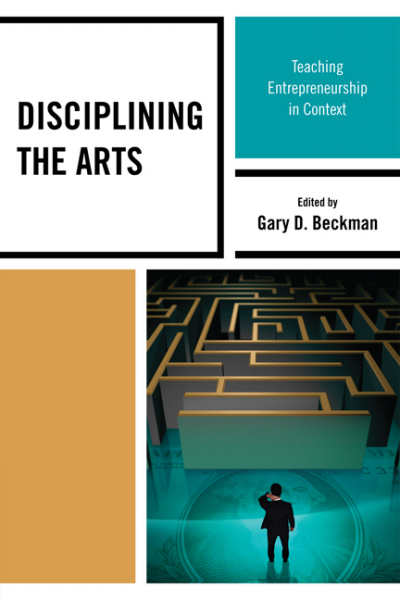
Disciplining the Arts
Teaching Entrepreneurship in Context
Authors:
Publisher:
2010
Summary
Increasingly, the availability of entrepreneurship education is becoming a factor in college choice as fine arts students demand training that helps them create an arts-based career after graduation. For too long, the arts academy has ignored the long-term career outcomes of its graduates and has only recently begun to meaningfully address how students can earn a living as working artists and arts entrepreneurs. Written to address this challenge, Disciplining the Arts explores the policy, programming, and curricular issues in the emerging field of arts entrepreneurship. By articulating the need, purpose and outcomes for arts entrepreneurship education, listening to graduates and identifying models, this essay collection begins an important conversation on preparing students for arts self-employment.
Search publication
Bibliographic data
Edition
1/2010
Copyright Year
2010
ISBN-Print
978-1-60709-199-8
ISBN-Online
978-1-60709-201-8
Publisher
Rowman & Littlefield, Lanham
Language
English
Pages
184
Product Type
Monograph
Table of contents
ChapterPages
Contents No access
Acknowledgments No access
Introduction No access
Chapter 1: Some Immodest Proposals (and Hunches) for Conservatory Education No access
Chapter 2: Why Music Entrepreneurship and Why in College Music Training? No access
Chapter 3: Disciplining Arts Entrepreneurship Education: A Call to Action No access
Chapter 4: Art and Innovation: Claiming a New and Larger Role in the Modern Academy No access
Chapter 5: Can Too Many Know Too Much? The Ethics of Education in Music Entrepreneurship No access
Chapter 6: An Overnight Success in Only Twenty Short Years: A Commentary from the Green Room No access
Chapter 7: Venturing Outward: A Graduate Student Advocates for the Study of Arts Entrepreneurship No access
Chapter 8: Teaching Entrepreneurship by Conservatory Methods No access
Chapter 9: Making Connections: Music Education and Arts Entrepreneurship No access
Chapter 10: The Compleat Pianist: Leveraging Entrepreneurial Mentorship to Foster a Renewed Vision of Piano Pedagogy No access
Chapter 11: Entrepreneurial Thinking in the PreK–12 Music Classroom: Examining the Relevancy of Twenty-First-Century Music Education and Its Potential to Meet the Needs of Students, Communities, and the Creative Economy No access
Chapter 12: Music and Entrepreneurship in the Liberal Arts: A Model for an Interdisciplinary Minor to Augment Current Music Curricula No access
Chapter 13: Entrepreneurship and Career Services in Context: Issues, Challenges, and Strategies No access
Chapter 14: I’mART: A Framework for Artists to Evaluate Opportunities No access
Chapter 15: The Importance of Case Studies in Arts Entrepreneurship Curricula No access
Chapter 16: Real-World Musicology: Integrating Entrepreneurship throughout the Music Curriculum and Beyond No access
Chapter 17: So What’s the Point? An Introductory Discussion on the Desired Outcomes of Arts Entrepreneurship Education No access