, to see if you have full access to this publication.
Comment No access
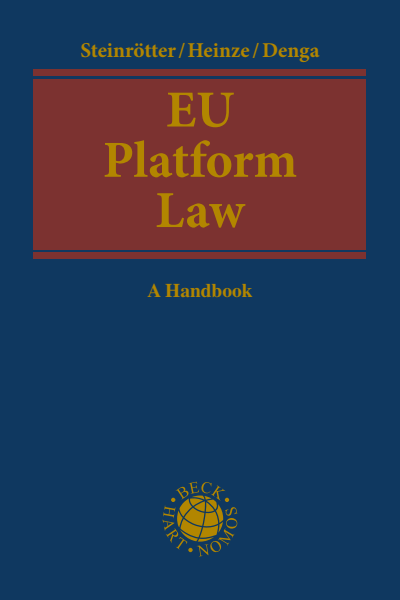
EU Platform Law
DSA | DMA | P2B Regulation | EMFA | DGA | DA | AI Act | DSM Directive | PAR- Editors:
- Publisher:
- 2024
Summary
The European regulatory package on online platforms fundamentally changes the digital framework. The intertwining of new regulations such as the Digital Services Act and the Digital Markets Act is highly complicated. The New Platform Law The handbook explains the interplay of the European legal acts in a comprehensible way and explains the practical effects for providers of digital services, the companies concerned as well as commercial and private users. The advantages of the handbook comprehensible even for non-legal professionals puts forward recommendations for action in practice published at the earliest possible time to give you the opportunity to make necessary adjustments in good time
Keywords
Search publication
Bibliographic data
- Edition
- 1/2025
- Copyright Year
- 2024
- ISBN-Print
- 978-3-8487-8891-0
- ISBN-Online
- 978-3-7489-2946-8
- Publisher
- Nomos, Baden-Baden
- Language
- English
- Pages
- 714
- Product Type
- Comment
Table of contents
ChapterPages
- Titelei/Inhaltsverzeichnis No access Pages 1 - 18
- Authors:
- A. Preliminary remarks No access
- B. From the E‑Commerce Directive to the Digital Services Act No access
- C. Legal policy background No access
- D. Goals No access
- E. Overarching regulatory concept No access
- F. Outlook No access
- Authors: |
- A. Overview No access
- I. Information society services No access
- II. Information provided by a recipient No access
- 1. Mere conduit services, Art. 3(g)(i), 4(1) DSA No access
- 2. Caching services, Art. 3(g)(ii), Art. 5(1) DSA No access
- 3. Hosting services, Art. 3(g)(iii), Art. 6(1) DSA No access
- aa) Dissemination of information to the public No access
- bb) No real or insignificant secondary work activity No access
- cc) Exemption for micro- and small enterprises No access
- dd) Online platforms allowing consumers to conclude distance contracts with traders No access
- b) Online search engines No access
- c) Very large online platforms and very large online search engines No access
- 1. Place of establishment or recipients located in the European Union No access
- 2. Offerings for recipients No access
- II. Continuation of the country-of-origin principle No access
- D. Intertemporal scope of application No access
- Authors:
- 1. Liability regimes as a pillar of the European fair balance on platforms No access
- 2. Impact of fundamental rights on the liability rules No access
- a) Full harmonisation of the limitation of liability No access
- b) Art. 4 to 8 of the DSA as negative liability regulations and limitation of responsibility No access
- a) Horizontal regulation for intermediaries No access
- b) Liability in a multi-level system: Separation of substantive and intermediary liability No access
- a) Copyright specific exception for online content-sharing service providers No access
- b) Limited development of liability rules No access
- c) Limitation of liability in a regulatory context No access
- 6. The liability rules of the DSA as partial harmonisation in the European multi-level system No access
- a) Information society services No access
- b) Officers, employees and agents No access
- a) Technical approach No access
- b) Provision of the information No access
- a) Active role and neutrality in the case law of the CJEU No access
- b) The characteristics of neutrality under the DSA No access
- c) Abuse of rights No access
- d) Good Samaritan Rule No access
- 4. No obligation to monitor; no pro-active investigation No access
- a) Principles No access
- b) Application No access
- a) Caching service No access
- b) Additional requirements for the application No access
- a) Services covered No access
- b) No knowledge of illegal activity No access
- c) No circumstantial knowledge in the case of claims for damages No access
- d) Expeditious action No access
- e) Special rule for liability under consumer protection law No access
- 1. Legal consequences if the liability exemptions apply No access
- 2. Legal consequences if the liability exemptions do not apply No access
- a) Mandatory involvement of state authorities or courts No access
- b) Injunctive orders No access
- 2. Prohibition of general monitoring and proportionality No access
- 3. Content of the orders No access
- 4. Costs of the measures No access
- 5. Transposition in Member States No access
- 6. Requirements for orders to take action against unlawful content No access
- 7. Requirements for information orders No access
- 8. Transmission of information on orders No access
- Authors:
- A. Introduction No access
- a) Formal requirements No access
- aa) Content requirements for all providers of intermediary services No access
- bb) Further requirements for special target groups No access
- c) Summary No access
- a) Extensions of the transparency report according to Art. 15 DSA No access
- b) Obligation to publish the average number of monthly active recipients No access
- c) Disclosure of the reasons for recipient restrictions following the provision of illegal content No access
- a) Supplementary information for the transparency report No access
- b) Additional information within the scope of publication pursuant to Art. 24(2) DSA No access
- c) Additional transparency obligations No access
- 4. Summary No access
- 1. Provisions for online platforms No access
- 2. Provisions for very large online platforms and very large online search engines. No access
- 3. Appreciation No access
- 1. Regulations for all providers of intermediary services No access
- 2. Regulations for online platforms No access
- 3. Additional regulations for providers of very large online platforms and very large online search engines No access
- IV. Granting access to data No access
- V. Codes of Conduct No access
- VI. Appreciation No access
- I. The Digital Markets Act No access
- II. The P2B-Regulation No access
- III. Regulation on combating the dissemination of terrorist content online (EU) 2021/784 No access
- D. Summary No access
- Authors:
- A. Overview No access
- I. Hosting service providers No access
- II. Online platforms No access
- III. Hybrid or mixed services No access
- IV. Exemptions for small enterprises (Art. 19) No access
- 1. Scope of application: Illegal content No access
- 2. Procedural details No access
- 3. Knowledge and liability No access
- II. Remedial decision and user notification No access
- III. Statement of reasons for restrictions on uploading users (Art. 17) No access
- IV. Notification of criminal offences to public authorities (Art. 18) No access
- I. Private platform governance as a regulatory principle No access
- II. Enforcement requirements for terms and conditions (Art. 14) No access
- 1. Application of the EU Unfair Terms Directive No access
- 2. Impact of fundamental rights in particular No access
- 3. Exemplary case law guidelines from an EU member state's perspective No access
- IV. Put-back claim No access
- 1. General systematics and DSA framework No access
- 2. Eligibility to file and subject matter of complaints No access
- 3. Procedural requirements No access
- 4. Decision and remedial action No access
- 1. General No access
- 2. Eligibility to file, subject matter, and principles of dispute settlement proceedings No access
- 3. Decision and costs No access
- 4. Certification requirements for dispute settlement bodies No access
- 1. General No access
- 2. Accelerated notice handling No access
- 3. Status requirements for Trusted Flaggers No access
- 1. General No access
- 2. Suspension for uploading illegal content No access
- 3. Suspension for misuse of reporting and complaint procedures No access
- 4. Requirements for anti-misuse decisions No access
- V. State court proceedings No access
- F. Criticism No access
- G. Relationship to other provisions and miscellaneous No access
- Authors:
- I. Scope of application No access
- II. Overview of the increased obligations for systemically important platforms No access
- III. Successful regulation through supervised self-regulation? No access
- IV. Overregulation and overblocking No access
- 1. Basic concept No access
- 2. Calculation of the number of users No access
- 3. Adjustment of the threshold value No access
- 4. Designation decision of the Commission and required information basis No access
- 5. Rapid change in the number of users No access
- 6. Cancellation of the designation No access
- 7. Notification, publication and start of application No access
- 1. Basic concept No access
- a) Dissemination of illegal content No access
- b) Any actual or foreseeable adverse effects on the exercise of fundamental rights No access
- c) Actual or foreseeable adverse effects on social debate, electoral processes and public safety No access
- d) Other risks No access
- 3. Platform-dependent factors for influencing systemic risks No access
- 4. Obligation to transmit and retain data No access
- III. Risk mitigation No access
- 1. Basic concept No access
- 2. Special measures No access
- 3. Definition of crisis No access
- 4. Requirements for the Commission decision No access
- 5. Procedure for the adoption of resolutions No access
- 6. Right of choice of the provider No access
- 7. Dialogue between supplier and Commission No access
- 8. The Commission’s right of supervision No access
- 9. Right of amendment and extension of the Commission No access
- 10. Reporting obligation of the Commission No access
- 1. Basic concept No access
- 2. Subject of the examination No access
- 3. Providers’ duty of cooperation and handling of confidential information No access
- 4. Requirements for the independent audit bodies No access
- 5. Minimum content of the audit report No access
- 6. Gaps in the report No access
- 7. Consequences of a non-“positive” audit report No access
- 8. Possibility of supplementing the Commission No access
- VI. Recommender systems No access
- 1. Basic concept No access
- 2. Archiving obligation No access
- 3. Minimum content of the archive No access
- 4. Exception for removed or blocked advertising No access
- 5. Guidelines of the Commission No access
- 1. Basic concept No access
- 2. Data access for monitoring and evaluation of providers No access
- 3. Research data access No access
- a) Qualification of the researchers No access
- b) Communication of the research request No access
- c) Admissibility and appropriateness of a research request No access
- d) Requests for amendments by suppliers No access
- e) Immediate access to publicly available data No access
- f) Termination of research data access No access
- 1. Basic concept No access
- 2. Structure and tasks No access
- 3. Management of the compliance department No access
- 4. Compliance obligations of the provider’s management body No access
- 1. Basic concept No access
- 2. Content of the special transparency reporting obligations No access
- 3. Transmission and publication of the documents No access
- 1. Basic concept No access
- 2. Cost recovery No access
- 3. Legal acts on fee setting and methodology No access
- 4. Nature of the revenue No access
- 5. Reporting obligation No access
- XII. Temporal applicability No access
- Authors:
- I. Basic concept No access
- II. Principle of voluntariness No access
- III. Overview of the instruments of voluntary self-regulation No access
- I. Basic concept No access
- II. Areas of voluntary standard-setting No access
- I. Basic concept No access
- II. Right of the Commission to request No access
- III. Performance indicators and reports No access
- IV. Commission monitoring and evaluation law No access
- 1. Basic concept No access
- 2. Actors involved in the elaboration No access
- 3. Minimum content of the codes of conduct No access
- 4. Period of elaboration and date of entry into force No access
- 1. Basic concept No access
- 2. Minimum target No access
- 3. Period of elaboration and period of entry into force No access
- I. Basic concept No access
- II. Crisis situation No access
- III. Elements of a crisis protocol No access
- IV. Protection of fundamental rights No access
- V. Aimed measures No access
- VI. Consequences of a defective crisis protocol No access
- Authors:
- A. Introduction No access
- I. Competences No access
- 1. Introduction No access
- 2. Requirements for Digital Services Coordinators No access
- a) Introduction No access
- b) Powers of investigation No access
- c) Enforcement powers No access
- 4. Penalties No access
- I. Mutual assistance No access
- II. Cross-border cooperation among Digital Services Coordinators No access
- III. Referral to the European Commission No access
- IV. Joint investigations No access
- D. Information sharing system No access
- I. Introduction No access
- 1. Introduction No access
- 2. Requests for information and power to take interviews and statements No access
- 3. Power to conduct inspections No access
- 4. Interim measures No access
- 5. Commitments No access
- 6. Monitoring actions No access
- a) Procedure No access
- b) Enhanced supervision of remedies No access
- 2. Fines and periodic penalty payments No access
- 3. Limitation period for the imposition and the enforcement of penalties No access
- 4. Request for access restrictions and cooperation with national courts No access
- Authors:
- A. Introduction No access
- B. Digital Markets Act (DMA) No access
- 1. Online intermediation services No access
- 2. Online search engines No access
- a) Prominence of goods or services No access
- b) Relevance of search results No access
- a) Type and place of information for online intermediation services: ‘plain and intelligible’ in the GTCs No access
- aa) General No access
- bb) General clause No access
- cc) Specifications No access
- dd) Limits of the transparency obligations No access
- ee) Guideline competence No access
- ff) Interim result No access
- a) Place of transparency requirements No access
- aa) Reasons for the ranking No access
- bb) Duty to update No access
- cc) Consideration of the web design No access
- dd) Limits of the transparency obligation and guideline competence No access
- aa) Private enforcement No access
- bb) Public enforcement No access
- cc) Collective enforcement No access
- dd) Possibility to sue under the Unfair Competition Act No access
- aa) Out-of-court dispute resolution for online mediation services No access
- bb) Collective enforcement No access
- cc) Enforcement of individual rights No access
- c) Differences between the legal acts No access
- 1. No priority application of the DSA due to the lex posterior rule No access
- 2. P2B Regulation is not a lex specialis in relation to the DSA No access
- 3. Consequences of the supplementary application of the P2B Regulation No access
- I. Ranking in the UCP Directive No access
- II. Ranking in the CRD No access
- III. Interaction with the DSA No access
- I. Data processing for compliance with a legal obligation No access
- 1. Invalidity of consent No access
- 2. Principles of data processing (Art. 5 GDPR) No access
- 3. Data protection by design (Art. 25 GDPR) No access
- III. Profiling requirements No access
- IV. Result No access
- I. Scope of application No access
- II. Liability and privilege under the DSA and DSM Directive No access
- III. Prevention of future violations No access
- IV. Reporting and redress system No access
- V. Internal complaint-handling system No access
- VI. Result No access
- Authors:
- A. Introduction No access
- I. Special features of digital markets No access
- II. Limits of competition law No access
- I. Internal market No access
- II. Contestable markets No access
- III. Fairness No access
- I. Basic idea No access
- 1. Gatekeepers No access
- 2. Core platform services No access
- 1. Specific obligations No access
- 2. No effects analysis No access
- IV. Enforcement No access
- E. Alternatives No access
- Authors: |
- 1. Online intermediation services (Art. 2 no. 2(a)) No access
- 2. Online search engines (Art. 2 no. 2(b)) No access
- 3. Online social networking services (Art. 2 no. 2(c)) No access
- 4. Video-sharing platform services (Art. 2 no. 2(d)) No access
- 5. Number-independent interpersonal communications services (Art. 2 no. 2(e)) No access
- 6. Operating systems (Art. 2 no. 2(f)) No access
- 7. Web browsers (Art. 2 no. 2(g)) No access
- 8. Virtual assistants (Art. 2 no. 2(h)) No access
- 9. Cloud computing services (Art. 2 no. 2(i)) No access
- 10. Online advertising services (Art. 2 no. 2(j)) No access
- 11. New platform services No access
- 1. Business users and end users No access
- a) Undertaking No access
- b) General requirements No access
- c) Gatekeeper status due to fulfilment of thresholds (quantitative criteria, Art. 3(2) DMA) No access
- d) Obligation to notify (Art. 3(3) DMA) and designation based on thresholds (Art. 3(4) DMA) No access
- e) Gatekeeper designation below the thresholds based on qualitative criteria (Art. 3(8) DMA) No access
- f) Consequences of the designation as gatekeeper No access
- g) Review of gatekeeper status by Commission No access
- h) Review of gatekeeper designation by the courts No access
- 1. Establishment and residence of the gatekeeper irrelevant No access
- 2. Establishment and location of users in the Union No access
- 3. Offering or provision of platform services to users No access
- IV. Entry into force and application No access
- B. Sectoral exemption for telecommunications services No access
- I. Union and national competition law (Art. 1(6) DMA) and private enforcement No access
- II. Other Union law No access
- III. Other national law (Art. 1(5) DMA) No access
- I. Private international law No access
- II. Public international law No access
- Authors:
- A. Introduction No access
- I. General principles No access
- II. Specification, Art. 8 DMA No access
- 1. Suspension, Art. 9 DMA No access
- 2. Exemption, Art. 10 DMA No access
- IV. Updating, Art. 12 DMA No access
- V. Anti-circumvention, Art. 13 DMA No access
- 1. Online marketplaces No access
- 2. App stores No access
- II. Search engines No access
- III. Social networks No access
- IV. Video-sharing platforms No access
- V. Number-independent interpersonal communication services No access
- VI. Operating systems No access
- VII. Web browsers No access
- VIII. Virtual assistants No access
- IX. Cloud computing No access
- X. Online advertising services No access
- Authors:
- A. Introduction No access
- 1. Gatekeeper position and presumption No access
- 2. Non-achievement of the thresholds (Art. 17(1)) No access
- 3. Rebuttal of the presumption (Art. 17(3)) No access
- 1. Principles No access
- a) Presumption of Art. 18(3) No access
- b) Systematics beyond Art. 18(3)? No access
- 3. Maintaining, strengthening or expanding the gatekeeper position No access
- 1. Proposals to amend the DMA No access
- 2. New services No access
- 3. New practices No access
- I. Competence No access
- II. Initial suspicion No access
- III. Initiation ex officio No access
- IV. Initiation due to a request No access
- V. Opening decision No access
- I. Powers of the Commission No access
- II. Rights and obligations of undertakings No access
- 1. General remarks No access
- 2. Market investigation for designating gatekeepers No access
- 3. Market investigation into systematic non-compliance No access
- 4. Market investigation into new services and new practices No access
- 1. Form and procedure No access
- a) Principles No access
- b) Designation of gatekeepers without an entrenched and durable position No access
- 1. Form and procedure No access
- a) Behavioural remedies No access
- b) Structural remedies No access
- c) Commitments No access
- 3. Enforcement No access
- 1. Report No access
- 2. Legislative proposal No access
- 3. Draft delegated act No access
- F. Resumption and review No access
- I. Opening decision No access
- II. Legal acts terminating the investigation No access
- Authors:
- A. Overview No access
- 1. Initial suspicion No access
- 2. Information by third parties, Art. 27 DMA No access
- 3. No hierarchy No access
- II. Requests for information, Art. 21 DMA No access
- III. Interviews and taking statements, Art. 22 DMA No access
- IV. Inspections, Art. 23 DMA No access
- V. Commitments, Art. 25 DMA No access
- VI. Monitoring, Art. 26 DMA No access
- C. Behavioural or structural remedies, Art. 18 DMA No access
- 1. Formal opening of proceedings No access
- a) Infringements of substantive law, Art. 30(1), (2) DMA No access
- b) Infringements of procedural law No access
- 3. Fault No access
- a) Assessment criteria No access
- b) Cap of fines No access
- c) Judicial review of fines imposed No access
- II. Periodic penalty payments, Art. 31 DMA No access
- 1. Limitation period for the imposition of penalties, Art. 32 DMA No access
- 2. Limitation period for the enforcement of penalties, Art. 33 DMA No access
- I. Non-compliance decision, Art. 29 DMA No access
- II. Interim measures, Art. 24 DMA No access
- F. Professional secrecy, Art. 36 DMA No access
- I. General duty of cooperation and consultation of national authorities, Art. 1(7)(2), Art. 37 DMA No access
- II. Support of the European Commission No access
- III. Investigations by the national competition authorities No access
- Authors:
- A. Introduction No access
- I. Business users No access
- II. Corporate website users No access
- a) Provision at the individual request of the recipient No access
- b) Provision at a distance No access
- c) Electronic delivery No access
- d) Service normally provided for remuneration No access
- a) Transactions No access
- b) Facilitation No access
- 3. Contractual relationship as a basis No access
- 1. Digital service No access
- 2. Search engine No access
- 3. General-purpose search No access
- III. Services explicitly excluded No access
- I. Business users established in the EU No access
- II. Directed at consumers in the EU No access
- Authors:
- A. Introduction No access
- I. Regulatory purposes as standards of interpretation No access
- II. Applicable law No access
- 1. Online intermediation services and business users No access
- 2. Differences to the German law on terms and conditions No access
- 3. Explanations as de facto market conduct No access
- I. Clear and understandable wording No access
- II. Easily available No access
- a) Abstract duty to implement contractual clauses No access
- b) Legitimate reasons No access
- c) Implementation of a block due to the terms and conditions No access
- 2. Information on additional distribution opportunities No access
- 3. Information on intellectual property rights No access
- 1. Retroactive amendments No access
- 2. Duty to inform No access
- 3. Implementation period No access
- 4. Right of termination of the business user No access
- 1. Absolute voidness No access
- 2. Substantive scope of the voidness No access
- 3. Legal consequences of voidness No access
- VI. Information on ancillary goods and services No access
- 1. Restrictions on the possibilities for offers on other terms by other means No access
- 2. Statement of reasons No access
- 1. Information provided No access
- a) Access to data by the provider of online intermediation services No access
- b) Access by business users to their provided data No access
- c) Access by business users to generally available data No access
- d) Provision of data to third parties No access
- 3. Checklist No access
- 1. Concept of ranking No access
- 2. Specific features for providers of online search engines No access
- a) Main parameters No access
- aa) Offer characteristics No access
- bb) Relevance of the offer for consumers No access
- cc) Design of the corporate website No access
- c) Influencing the ranking in return for payment No access
- d) Inspection of third-party notices in the event of changes or delistings No access
- 1. Controlled business users No access
- 2. Duty to explain No access
- 3. Specific features for providers of online search engines No access
- a) Differentiated access to data No access
- b) Differentiated ranking measures No access
- c) Differentiated charges No access
- d) Differentiated access to pre-placement services No access
- XI. Information about termination by business users No access
- XII. Remaining data access after expiration of the contract No access
- Authors:
- A. Introduction No access
- 1. Purpose of internal complaint-handling systems No access
- a) Relationship to the DSA No access
- b) Obligated parties according to Art. 11 P2B Regulation No access
- aa) Terms and conditions No access
- bb) Evaluation and publication of reports No access
- 3. Possible subjects of the proceedings No access
- aa) Easy accessibility No access
- bb) Free of charge No access
- cc) Handling within a reasonable time frame No access
- dd) Transparency, equal treatment and appropriateness No access
- b) Procedure No access
- 1. Purpose of mediation No access
- a) Obligated parties according to Art. 12 P2B Regulation No access
- aa) Impartiality and independence No access
- bb) Affordable conditions No access
- cc) Language of mediation No access
- dd) Seat of the mediator No access
- ee) Availability without undue delay No access
- ff) Knowledge of the mediator No access
- c) Special mediation organisations No access
- a) Principle of good faith No access
- b) Information obligations No access
- a) Competitive relationship between business users and providers of online intermediation services No access
- aa) Blocking effect of Sec. 8a UWG No access
- bb) Extension effect of Sec. 8a UWG No access
- (1) Wording of Sec. 8a UWG No access
- (2) Systematic approach and materials No access
- (3) Effet utile No access
- (4) Result No access
- 2. Contractual claims No access
- 3. Tort claims No access
- a) Proper establishment No access
- b) Permanent representation of collective interests No access
- c) Activity with non-profit making character No access
- d) No undue influence by any third party providers of financing No access
- 2. Public bodies No access
- 3. List of entities entitled to bring an action No access
- II. Filing a collective action No access
- III. Registries of unlawful acts No access
- D. Monitoring by the European Commission No access
- E. Voluntary commitments through codes of conduct No access
- Authors:
- A. Introduction and problem description No access
- I. The special significance of media No access
- II. Concrete threat to media freedom and pluralism No access
- III. Social media platforms and the media No access
- IV. The special case of Hungary and Poland No access
- V. Fundamental rights and the state’s duty to protect No access
- I. Criticising the legal basis – a German tradition No access
- II. The reference to Art. 167 TFEU No access
- 1. Decisive factor No access
- 2. Prohibition of harmonisation No access
- 3. Considerations of fundamental rights No access
- 4. The role of the ECJ No access
- 5. Conclusion No access
- D. Regulatory objective of the EMFA No access
- I. Overview and scope No access
- 1. Rights of recipients of media services, Art. 3 EMFA No access
- 2. Rights of media service providers, Art. 4 EMFA No access
- 3. Public service media provider, Art. 5 EMFA No access
- 4. Transparency duties of media service providers, Art. 6 EMFA No access
- III. National regulatory authorities or bodies, Art. 7 EMFA No access
- IV. European Board for Media Services, Art. 8–12 EMFA No access
- V. Regulatory cooperation and convergence, Art. 14–17 EMFA No access
- VI. Provision of media services in a digital environment, Art. 18–20 EMFA No access
- VII. Media market measures and procedures, Art. 21–24 EMFA No access
- VIII. Audience measurement, Art. 24 EMFA No access
- IX. Allocation of state advertising, Art. 25 EMFA No access
- F. Conclusion No access
- Authors:
- I. Objective No access
- 1. Which services fall within the scope of application? No access
- 2. No establishment of new access or re-use rights No access
- 1. Embedded in the European data strategy No access
- 2. No change to sector-specific Union law for access to and re-use of data No access
- 3. Interplay between DGA and GDPR No access
- 1. Data intermediation services No access
- 2. 'Data intermediation services provider recognised in the Union' No access
- 3. Additional definitions No access
- 1. Notification obligation (Art. 11 DGA) No access
- a) No use of data for own purposes (Art. 12(a) DGA) No access
- b) Prohibition of tying (Art. 12(b) DGA) No access
- c) Use of metadata (Art. 12(c) DGA) No access
- d) Format conversions and interoperability (Art. 12(d) DGA) No access
- e) Additional tools and services (Art. 12(e) DGA) No access
- f) Fair, transparent, and non-discriminatory access (Art. 12(f) DGA) No access
- g) Fraud and abuse prevention (Art. 12(g) DGA) No access
- h) Business continuity (Art. 12(h) DGA) No access
- i) Interoperability (Art. 12(i) DGA) No access
- j) Prevention of unlawful data access/unlawful data transfer (Art. 12(j) DGA) No access
- k) Obligation to report infringements (Art. 12(k) DGA) No access
- l) Security level (Art. 12(l) DGA) No access
- m) Services for data subjects (Art. 12(m) DGA) No access
- n) Tools for obtaining consent or permissions (Art. 12(n) DGA) No access
- o) Obligation to maintain a log record (Art. 12(o) DGA) No access
- 3. Designation of a legal representative in the EU No access
- 1. Designation and cooperation with other authorities No access
- 2. Monitoring of compliance with the DGA requirements and penalty options No access
- I. Concept of 'data altruism' and 'data altruism organisation recognised in the Union' No access
- 1. General requirements for registration No access
- 2. Registration procedure No access
- 3. Transparency requirements No access
- 4. Specific requirements to safeguard the rights and interests of data subjects and data holders No access
- 5. Rulebook No access
- III. Competent authorities and monitoring of compliance No access
- I. Conditions for the re-use of protected data No access
- II. Specific requirements for the transfer of non-personal data to third countries No access
- III. Avoidance of exclusive contracts for re-use No access
- E. Penalties No access
- F. Reception and outlook: How effective will the DGA be? No access
- Authors: |
- A. Introduction and aim of the chapter No access
- I. Data in IoT ecosystems and the platform economy No access
- II. Data concentration in IoT markets No access
- III. Data and EU data strategy No access
- IV. Basic ideas on access and use and their implications No access
- I. Objectives and legal nature No access
- II. Chapters and provisions No access
- III. Enforcement No access
- I. GDPR No access
- II. DMA No access
- III. Relationship to other existing provisions No access
- I. Platforms as addressees No access
- II. In situ rights and contractual access conditions No access
- III. Access rights for users and third parties No access
- IV. Equitable (optimal) distribution of data and creation of aftermarkets No access
- F. Regulatory approach and enforcement No access
- G. Summary No access
- Authors:
- I. Legislative process No access
- II. Platform definition No access
- B. Commission guidelines No access
- 1. AI systems No access
- 2. General-purpose AI models No access
- 3. General-purpose AI systems No access
- 1. Providers placing on the market or putting into service in the Union No access
- 2. Deployers established or located within the Union No access
- 3. Providers and deployers established or located in a third country No access
- 4. Importers and distributors No access
- 5. Product manufacturers, authorised representatives and affected persons No access
- III. Temporal scope No access
- IV. Exceptions No access
- D. Responsibilities along the AI value chain No access
- E. AI literacy No access
- I. Subliminal techniques beyond a person’s consciousness and purposefully manipulative or deceptive techniques No access
- II. Techniques to exploit vulnerabilities No access
- III. Social scoring No access
- IV. Predictive policing No access
- V. Scraping of facial images No access
- VI. AI systems to infer emotions in the areas of workplace and education No access
- VII. Biometric categorisation No access
- VIII. Biometric real-time remote identification No access
- 1. Providers No access
- 2. Deployers No access
- 1. Additional horizontal layer No access
- 2. Assessment documentation No access
- a) Biometrics No access
- b) Critical (digital) infrastructure No access
- c) Education and vocational training No access
- d) Employment, workers management and access to self-employment No access
- e) Access to and enjoyment of essential private services and essential public services and benefits No access
- f) Administration of justice and democratic processes No access
- g) Further high-risk use cases No access
- 1. Direct interaction with natural persons No access
- 2. Content generation No access
- 1. Emotion recognition and biometric categorisation systems No access
- a) Deep fakes No access
- b) Texts on matters of public interest No access
- III. Implementation of the transparency obligations No access
- I. Obligations for providers of GPAI models No access
- II. Obligations for providers of GPAI models with systemic risk No access
- 1. Recommender systems No access
- 2. Risk assessment and mitigation of risks No access
- 3. Content moderation – generative AI No access
- 4. Chat bots No access
- 5. Dark patterns No access
- 1. Generative AI No access
- 2. Other relevant regulations No access
- K. Supervision, enforcement, and sanctions No access
- Authors:
- A. Introduction No access
- I. Legitimation No access
- 1. Main purpose; large amount No access
- 2. Organising the content No access
- 3. Promoting the content for profit No access
- III. Communication to the public by the service provider No access
- 1. No liability privilege No access
- a) Types of authorisation No access
- b) No obligation to contract No access
- c) ‘Best efforts’ in the absence of permission No access
- a) Upload filters and required information No access
- b) User rights No access
- c) Sufficiently substantiated notice No access
- 4. Burden of presentation and proof No access
- V. Relationship between Art. 17 DSM Dir and the DSA No access
- I. Introduction No access
- II. Object of protection No access
- III. Exploitation rights and limitations No access
- IV. Outlook No access
- Authors:
- A. Introduction No access
- I. Substantive scope of application No access
- 1. Provider of political advertising services, Art. 3 no. 6 PAR No access
- 2. Political advertising publisher, Art. 3 no. 13 PAR No access
- 3. Sponsor, Art. 3 no. 10 PAR No access
- 4. Controller, Art. 3 no. 14 PAR No access
- I. Principle of non-discrimination, Art. 5(1) PAR No access
- II. Temporary ban of foreign-controlled political advertising services, Art. 5(2) PAR No access
- I. Identification of political advertising services, Art. 7 PAR No access
- II. Record-keeping obligations, Art. 9 PAR No access
- III. Labelling and transparency requirements for political advertisement, Art. 11 PAR No access
- IV. Transparency notice, Art. 12 PAR No access
- V. European repository for online political advertisements, Art. 13 PAR No access
- VI. Periodic reporting on political advertising services, Art. 14 PAR No access
- 1. Obligation to set up a notification mechanism, Art. 15(1)–(3) PAR No access
- 2. Handling of notifications, Art. 15(4)–(10) PAR No access
- VIII. Transmission obligations, Art. 16–17 PAR No access
- 1. General requirements for the use of personal data, Art. 18(1) PAR No access
- 2. Ban of targeting and ad-delivery techniques on very young people, Art. 18(2) PAR No access
- II. Additional transparency requirements, Art. 19 PAR No access
- F. Supervision and enforcement, Art. 21–26 PAR No access
- Index No access Pages 693 - 714